The Academy Awards have announced the nominees for the short list of the documentary short category at the 90th Academy Awards. They are listed below in alphabetical order.
Alone
Edith+Eddie
Heaven Is a Traffic Jam on the 405
Heroin(e)
Kayayo – The Living Shopping Baskets
Knife Skills
116 Cameras
Ram Dass, Going Home
Ten Meter Tower
Traffic Stop
This list will be reduced to five on 23rd January 2018.
Those in the UK with access to Netflix can watch Heroin(e) now.
Fifteen films remain in the race to win the Documentary Feature prize at the Academy Awards. The remaining five features will be announced on Tuesday 23rd January 2018.
Abacus: Small Enough to Jail
Chasing Coral
City of Ghosts
Ex Libris – The New York Public Library
Faces Places
Human Flow
Icarus
An Inconvenient Sequel: Truth to Power
Jane
LA 92
Last Men in Aleppo
Long Strange Trip
One of Us
Strong Island
Unrest
Those in the UK with access to Netflix can watch Icarus now.
The nominees for the Visual Effects category for the 90th Academy Awards® are, in alphabetical order:
Alien: Covenant
Blade Runner 2049
Dunkirk
Guardians of the Galaxy Vol. 2
Kong: Skull Island
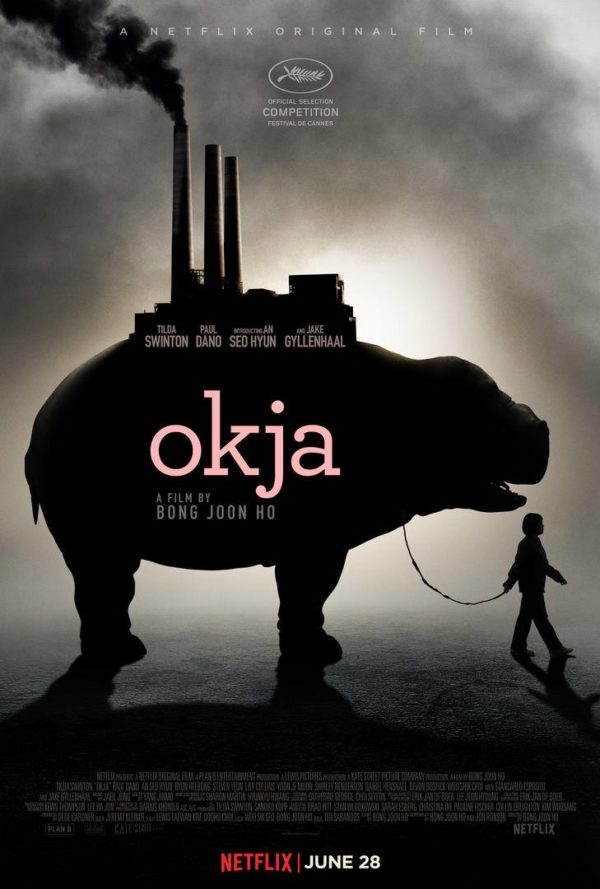
Okja
The Shape of Water
Star Wars: The Last Jedi
Valerian and the City of a Thousand Planets
War for the Planet of the Apes
The list will be further narrowed down to five, after which the final nominees will be announced on Tuesday 23rd January 2018.
I’ve created another film quiz for you to consume this holiday period. No prizes on offer, just some wholesome fun for you to devour with your friends and families this Christmas and New Year.
Which two actors presented the infamous Best Film Academy Award at this year’s ceremony, fumbling the result and announcing the wrong winner?
Which American cinema chain came under fire in April when they announced they would allow customers to use their phones during films?
Which film won the Palme d’Or at the Cannes Film Festival in May this year?
Park Chan-Wook directed the brilliant film The Handmaiden this year, but what is the director’s nationality?
Which song was played in the famous “shopping for coffee” sequence at the start of the film Baby Driver? Half a point each for the artist and the song.
Which three countdown times were given at the start of Dunkirk to signify the start point for each of the three intertwining stories?
In the film Blade Runner 2049, what was the name of the company responsible for creating replicants?
Name the New Zealand director behind the Marvel superhero film Thor: Ragnarok.
The film The Disaster Artist depicts the creation of an infamous film by Tommy Wiseau. Name that film!
Which British comedian starred as Captain Edrison Peavey of the First Order in the film Star Wars: The Last Jedi?
Round Two – Academy Awards
Simply name the nine films that were nominated for Best Film at the 89th Academy Awards, presented in 2017. Have a bonus point for getting them all right!
The announcement of a new Blade Runner film after a 35 year gap was always bound to be met with trepidation from the loyal fans of the original. Ridley Scott’s sci-fi epic, first released in 1982, has undergone something of a cult status transformation and is now generally viewed as one of the greatest sci-fi films of all time, holding a 91% audience rating on results aggregator Rotten Tomatoes and serving as a touch point for films of all genres for generations. Surely bringing back the film for a rather needless sequel, re-treading old ground that fans didn’t want to revisit, would only result in failure.
Actually, the countless versions of the original film available to view indicate just how willing Scott was to wring the masterpiece for every drop of life, managing to go unnoticed as he George Lucased every scene and finally settled on 2007’s The Final Cut. The main reason he got away with it? Two-fold. Firstly, Blade Runner has fewer fans than Star Wars. Secondly, Scott was actually improving on the original.
So, thinking about it Blade Runner 2049 makes perfect sense. It can build on the existing fanbase, re-ignite interest in the original film and give a new and ambitious director a crack at creating something truly original and perhaps turn the cult film into a blockbuster franchise.
The man tasked with doing this is Denis Villeneuve, a director who crafted two excellent films in recent years in the form of drug crime-thriller Sicario and futuristic sci-fi Arrival.
Did he achieve everything the fans and studio had wanted prior to seeing the film? Not really. But the final result is absolutely astonishing and perhaps better than anyone could have possibly hoped for.
Set in 2049, the plot focuses on Ryan Gosling’s “K”, an agent working for the LAPD as a “Blade Runner”. It is his job to hunt down and eliminate rogue replicants – bioengineered humans who have been integrated into society to serve specific jobs, essentially working as slaves. K lives with a holographic girlfriend named Joi (Ana de Armas), a product of the replicant manufacturing company The Wallace Corporation, a company building on the work started by the Tyrell Corporation and headed up by Niander Wallace (Jared Leto). After K finds some potentially revelatory evidence that a replicant may have been a female replicant that gave birth to a child, his superior Lieutenant Joshi (Robin Wright) orders him to destroy the evidence to prevent an unpreventable conflict between humans and replicants should the knowledge reach the public. Going against his boss’s orders, K chooses to investigate a mysterious replicant named Rachael, with all routes pointing towards a former blade runner named Rick Deckard (Harrison Ford).
Villeneuve’s vision, created alongside cinematographer Roger Deakins, has turned out to be one of the most visually stunning spectacles of the year. A shoo-in for a Visual Effects nomination at the Academy Awards, the dull, desolate misery of the original film are replaced with brilliant orange hues, polarised colour palettes and sensory overloads. That it still feels part of the same universe seems unlikely, but it definitely does.
Ryan Gosling is perfectly cast as K, a replicant battling with questions about his own mortality. The pacing to some may feel slow, but in reality it is a deliberate choice. As K discovers more pieces about the puzzle, we as the viewer are given space to breathe and think about the very same questions. It an overpoweringly intelligent way to deliver a film and puts a lot of faith into the viewers that they are intelligent enough to process what is going on.
Questions remained about the character Joi throughout its cinematic release, and beyond. Criticism focused on the fact that Joi exists only to serve the needs of Ryan Gosling, and is totally dependant on him. My take on her was entirely different – indeed her inclusion felt like a genuine triumph. As a character, she has been created to show huge developments in replicants since the original film, but also poses further questions to the viewer. If a product could be bought straight off the shelf to stimulate every human emotion just as required, would that be a good thing or a bad thing for the human race? Does removing real emotion through human interaction make us any “less human than human”?
Director Villeneuve responded to the criticism, stating:
“Cinema is a mirror on society. Blade Runner is not about tomorrow; it’s about today. And I’m sorry, but the world is not kind on women. There’s a sense in American cinema: you want to portray an ideal world. You want to portray a utopia. That’s good—dreams for a better world, to advocate for something better, yes. But if you look at my movies, they are exploring today’s shadows. The first Blade Runner is the biggest dystopian statement of the last half century. I did the follow-up to that, so yes, it’s a dystopian vision of today. Which magnifies all the faults. That’s what I’ll say about that.” [full article here]
Incidentally, Julia Alexander wrote a superb and balanced article on the matter on the website Polygon, which is well worth checking out.
Box office
Blade Runner 2049’s performance at the global box office may well have done it out of further sequels, no doubt to the disappointment of Warner Bros. It made money – $258m based on a $150m budget (as of 24th December 2017) – but not enough money. It feels like a risky prospect to pump more money into the franchise when the likely drop-off in profit would potentially lead to a loss-maker.
This is a double-edged sword. 2049 feels like a fitting end to the original film, complimenting it whilst not ruining its mystery and intrigue. It would be difficult to achieve a third great film in the saga, so a studio unwilling to make any more instalments is a positive. However, it felt refreshing to see a genuinely thought-provoking blockbuster that left me contemplating the contents for weeks. It’s sad to think there will be fewer of these in the future.
Verdict
Blade Runner 2049 is a breath of fresh air for cinema in 2017. Villeneuve should get substantial credit for pulling off the near-impossible. He’s created a visually-stunning masterpiece that builds on the original without ruining any of it. Whether it will be talked about as much as Ridley Scott’s original in 35 years’ time remains to be seen, but for now it feels like a more-than-worthy addition to the story. Simply brilliant.
Short films
There were three short films created to bridge the gap between the original film and the new instalment, which can be viewed in chronological order below.
They don’t ruin anything about the film, but they do compliment it quite well. Very much worth watching.
“20th Century Woman avoids the usual cinematic tropes and instead explores how men are often defined by the women around them. With characters this believable and brilliant performances across the board, this is a film well worth seeing.”
“There aren’t many moments in cinema where you start to watch the opening scene and an uncontrollable giddy smile engulfs your face, such is the joy of what is unfolding on the screen. It needs to be a brilliant idea, executed to perfection and in a language that speaks to you. Baby Driver, Edgar Wright’s latest cinematic masterpiece, achieves just that. But the moment I knew it was a truly great film was when I realised the credits were rolling and my smile hadn’t left.”
“Park Chan-wook’s latest release is a twisting psychological thriller steeped in eroticism and oozing class that works its audience brilliantly. The only drawback was that I didn’t have time to see it a second time.”
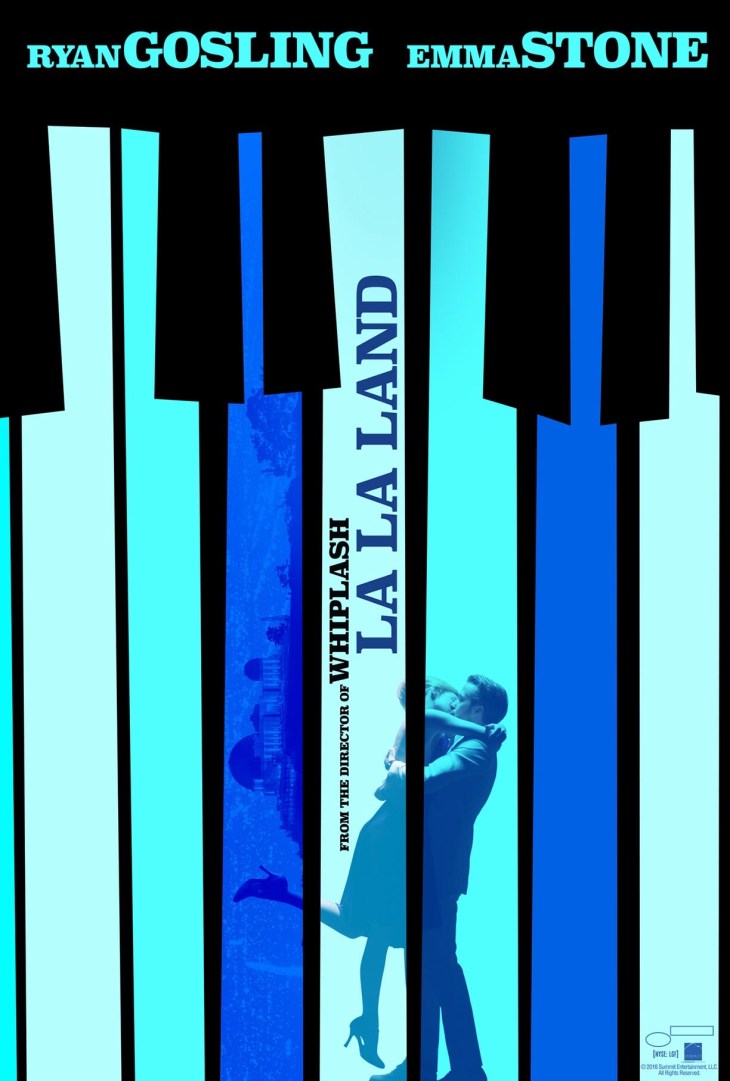
“Every once in a while you will go into a film knowing almost nothing about what you’re going to see and get absolutely blown away by a surprisingly perfect masterpiece. As you get further into your film-watching life, enjoying these moments becomes increasingly rare, so when a film like ‘La La Land’ comes along, you can’t help but be overcome by giddy excitement.”
“Lady Bird is, simply, a joy to watch. From start to finish the balance between humorous dialogue and well-paced plot progression is very fine indeed. The result puts it as a frontrunner for awards season next year.”
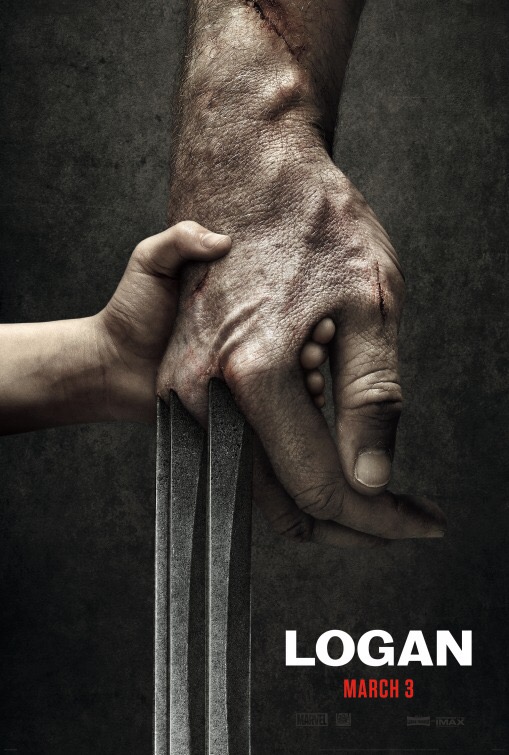
“A wisely-timed and fitting ending to the franchise and Jackman’s input into the character. It’s hard to believe it but this is the tenth time we’ve seen the character – seven X-Men films have now been made, along with three Wolverine-focussed standalone films. It seems impossible to think anyone will fill the role, meaning this could be the last time we see the character for many years, possibly ever. It could well be the best superhero/mutant-hero film ever made.”
“Given so many people have Netflix and can watch this film at no extra cost, it’s a no-brainer to seek it out and watch it. It might be the start of a new era of high quality original cinema heading first to home streaming platforms. Given the state of the year-to-date box office, it’s a movement everyone should be supporting.”
Gloria Grahame was one of the leading stars of Hollywood’s film noir era. With a film career that spanned the 1940s to the 1970s, she enjoyed commercial and critical success for her varied roles, including the seductive Violet Bick in It’s A Wonderful Life (1946), her Oscar-nominated role as Ginny Tremaine in Crossfire (1947), headstrong neighbour Laurel Gary in In A Lonely Place (1950) and the shallow Rosemary Bartlow in The Bad and The Beautiful (1957), the latter of which earned her an Academy Award win.
In 1974, Gloria had been diagnosed with breast cancer. Following successful treatment, the cancer went into remission.
By 1978, she had relocated to Liverpool to work on a play, co-habiting with a young man named Peter Turner, who was just 26-years-old. It was Turner with whom she formed an unlikely romance and ended up having a relationship with him that lasted until the end of her life.
Grahame was 57 when she died in October 1981.
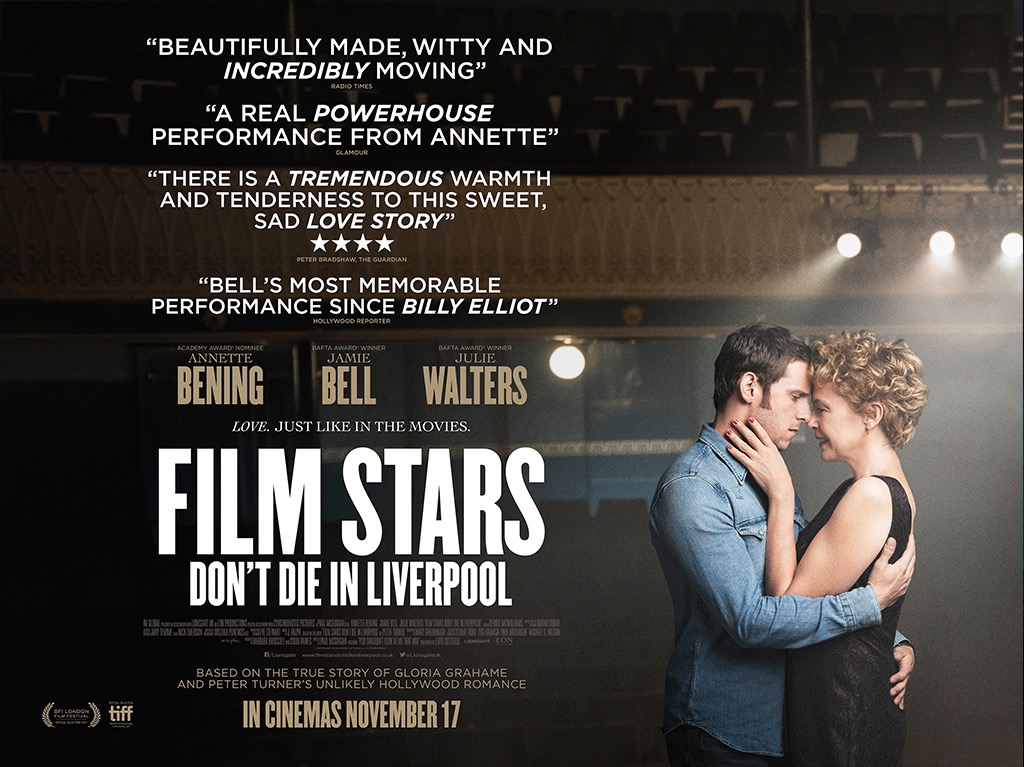
Film Stars Don’t Die In Liverpool
An adaptation of Peter Turner’s book of the same title, the film covers the final two years of Grahame’s life, spent largely in Liverpool, and less so in Manhattan, as she played out this romantic relationship with Turner. It is at turns baffling and equally heartbreaking that a woman who had once lived next door to Lauren Becall and Humphrey Bogart would end her life in a small council house in Liverpool, far from the glamorous life she so obviously thrived on in her earlier years.
One of the most important aspects of a believable romantic film is the chemistry between those portraying the central characters. Jamie Bell and Annette Bening have it in buckets, never once failing to be brilliantly convincing. Whether it’s the scene in which she spontaneously instigates a spot of disco dancing in her spacious flat, or casually and flintily orders a pint at the local pub as though it’s the most natural thing in the world, it is clear the are completely at ease with one another.
Benning paints a frustrated picture of Grahame. Her angry response at Turner suggesting she is older than she believed she was is jarring and unexpected and reveals a lot about her character. She may have delivered a memorably-celebrated performance as Ado Annie in the blockbuster musical Oklahoma! in 1955, but she felt too old for the part even at the age of 32 (the part typically demands an actress around ten years younger than this’d she was just two years younger than James Whitmore who portrayed her fathering the film). Her continued desire to have relationships with younger men may be viewed as untoward in the current climate, but it was perhaps indicative that she simply saw herself as younger than she was and unable to accept that she was ageing.
But this is a subtle and developing romance. Peter enters the relation naively, discovering more about the woman he loves as time progresses. There’s a memorable scene where he goes to watch a Grahame picture at a retrospective at a local arthouse cinema, which reveals to him just how successful she was. Later on, the heartbreaking scene as she reads Shakespeare on an empty stage with Turner – thus fulfilling a lifelong dream – is one that really packs an emotional punch.
The attention to detail on the scenery and props is exemplary, invoking the 1980s era perfectly. It’s easy to portray a caricature of the 1980s in anything set there, but this feels as miserable and as outdated as you’d expect a port town in 1981 to feel.
The soundtrack goes some way to furthering this overall impression. Tracks from Elvis Costello, A Taste of Honey and Elton John add to the sense of the age. There is also a beautifully wistful new composition from Elvis Costello titled “You Shouldn’t Look At Me That Way”, which is surely a strong contender for an Oscar nomination this year.
Film Stars Don’t Die In Liverpool is a beautiful and heartbreaking film with some strong performances and a final result that makes it one of the best dramas of the year.











 Cinema, etc.