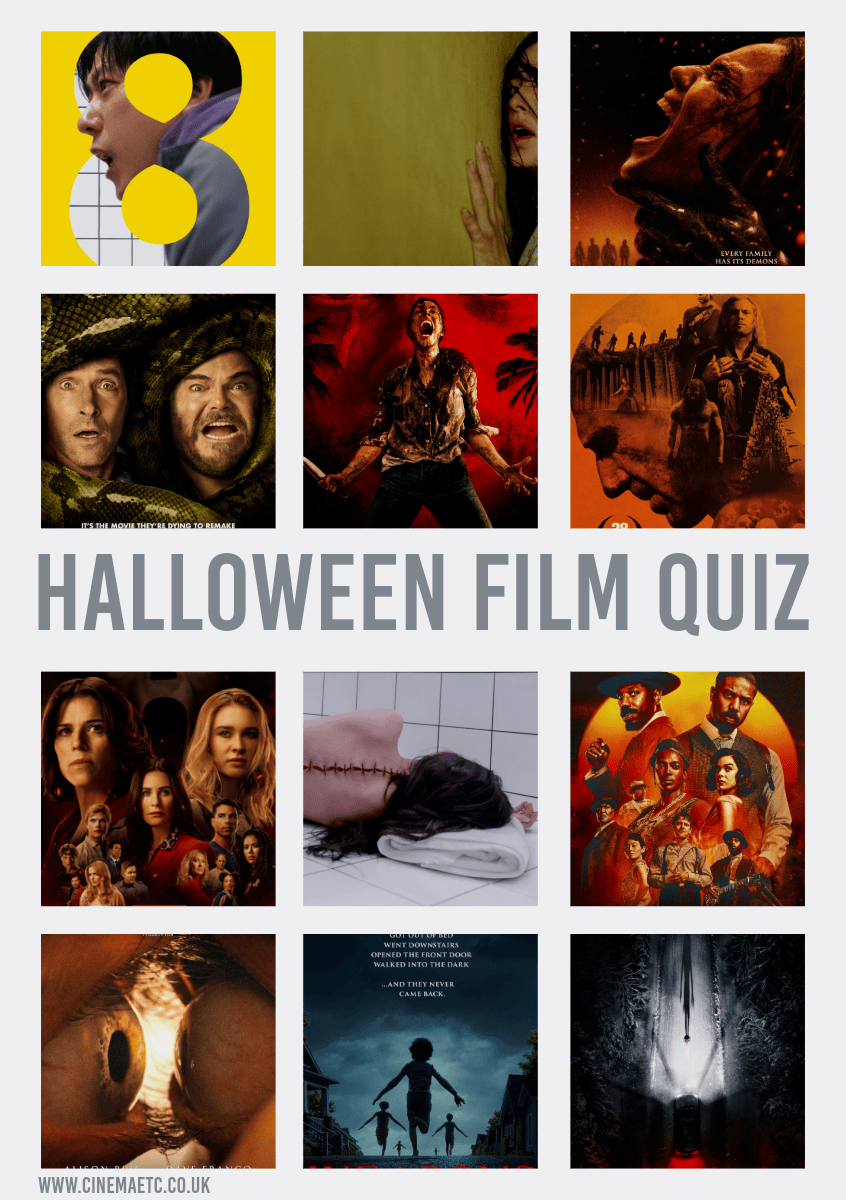
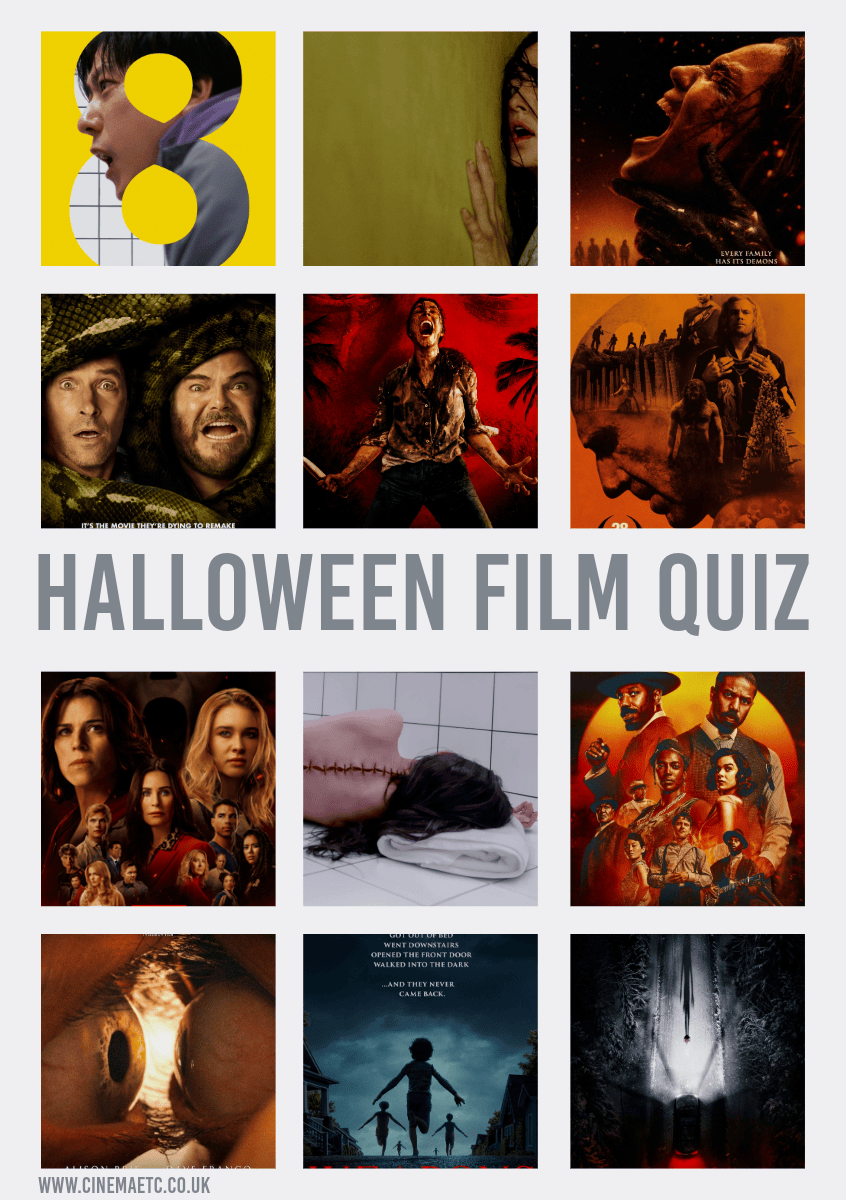
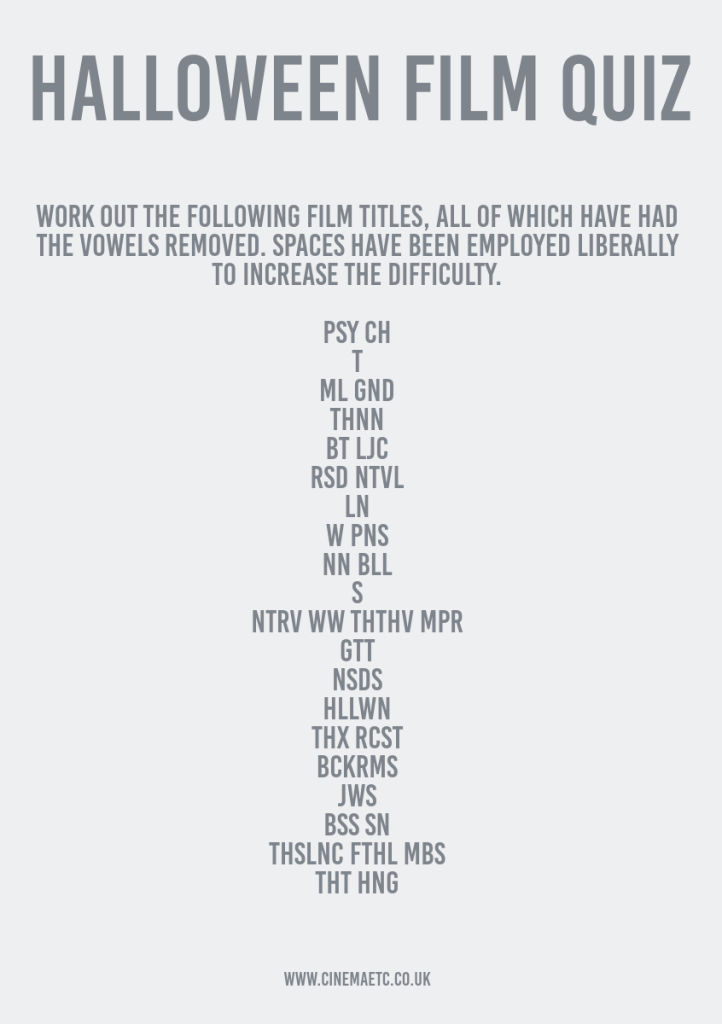
I have finally got around to creating another Halloween film quiz. The recent editions have been very popular! Simply print the pictures off and away you go. There’s no prize for this, just a bit of fun for people at home or in the office.
I’ll publish the answers in a separate post. Enjoy!
I don’t often advertise my singing and musical ventures here, but I thought this was too relevant to not mention…
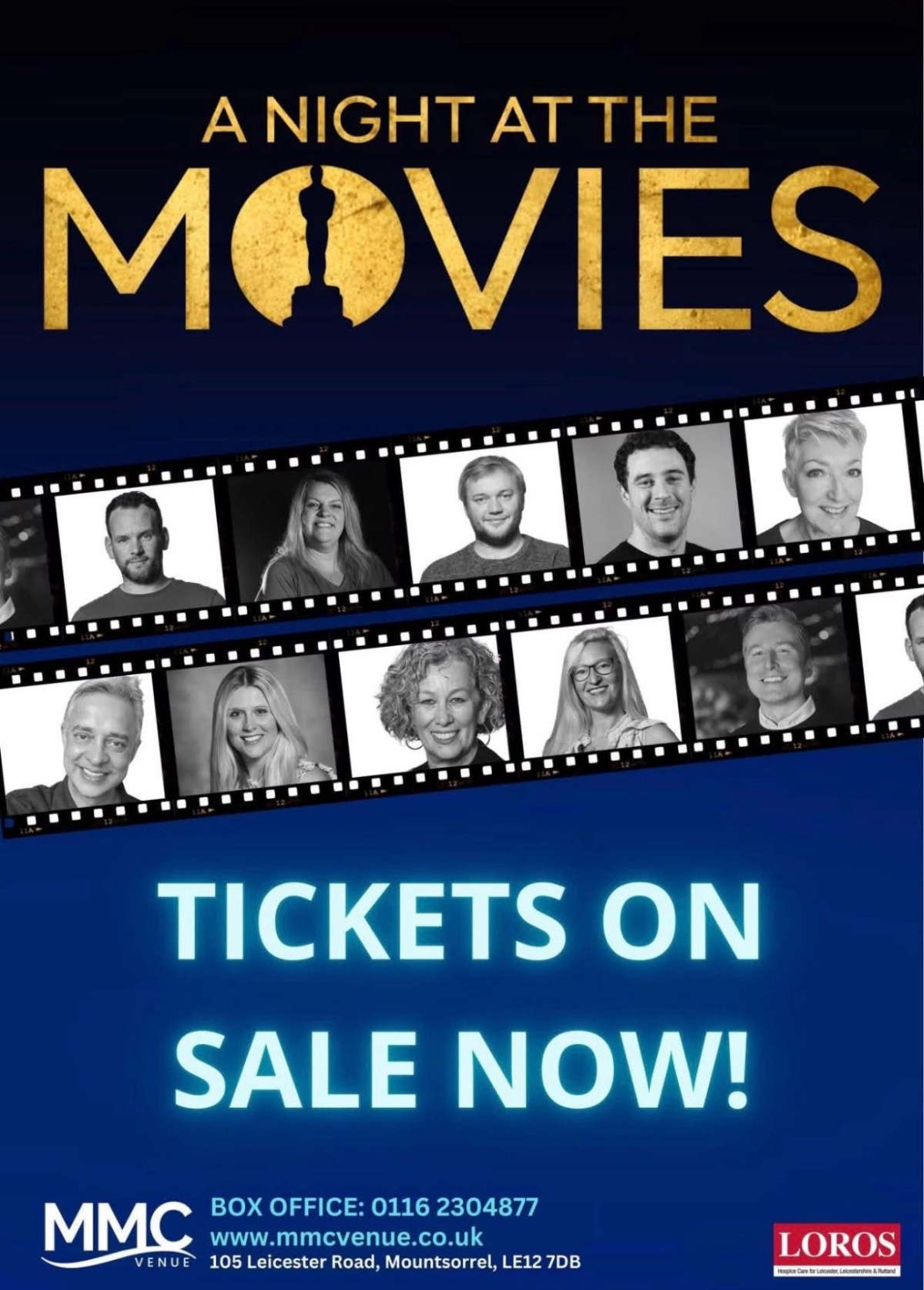
A Night At The Movies is an upcoming concert I am taking part in. The show is a celebration of the soundtrack of our lives, featuring unforgettable songs from Hollywood blockbusters, James Bond, movie musicals, British cinema and more!
Local performers, including myself, return to the MMC Venue in Mountsorrel for a one-night-only charity concert supporting LOROS Hospice.
We started rehearsing recently and it is sounding absolutely amazing. I’ll be taking on a couple of solos and a duet, but you’ll need to buy a ticket to find out what songs I’m singing!
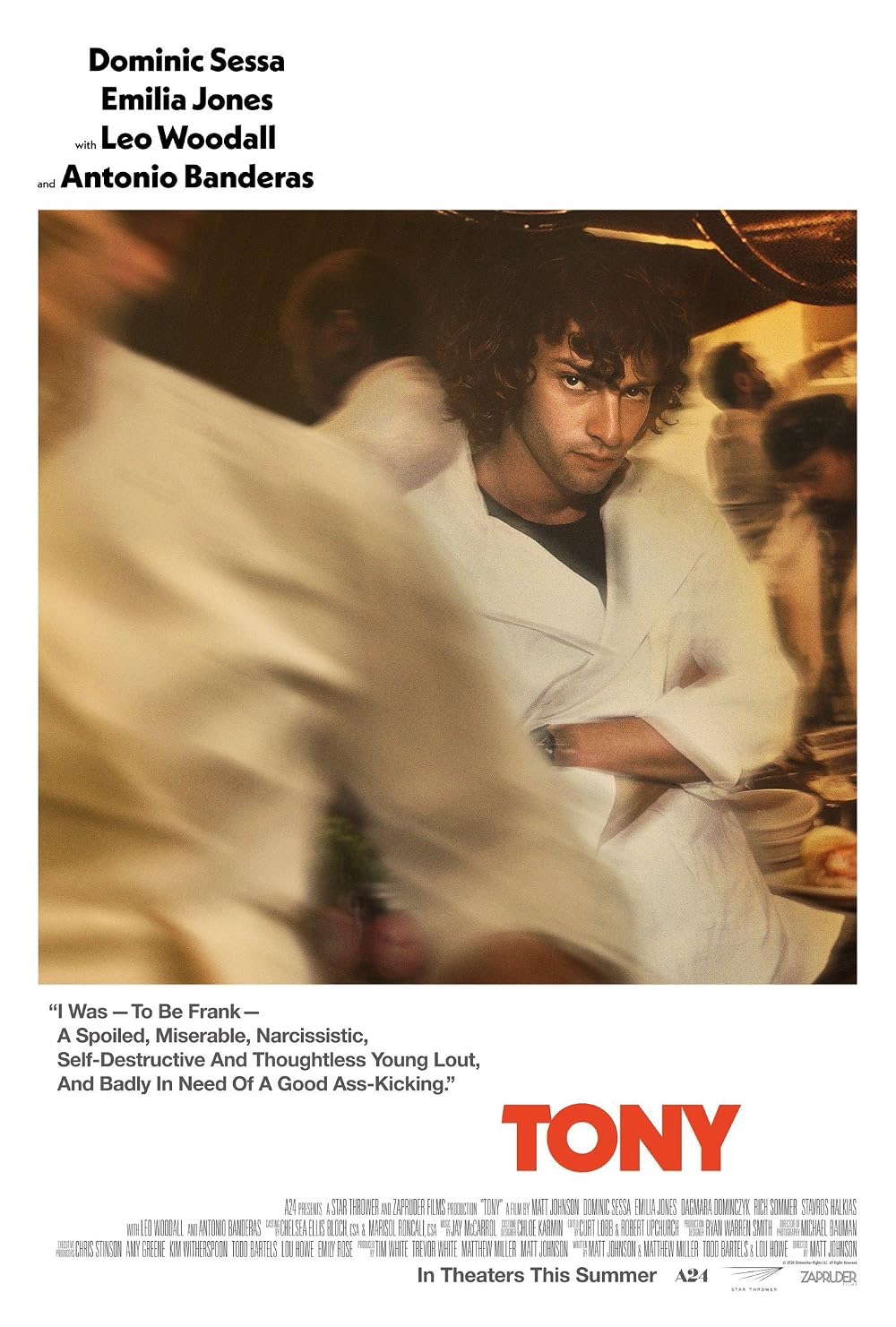
Matt Johnson has had a busy time of it recently. The hilarious ‘Nirvanna The Band The Show The Movie’ was released to great fanfare and critical acclaim. It was a film he created, wrote, directed and appeared in. A mere six months later he is back, this time with ‘Tony’, a biopic about celebrity chef Anthony Bourdain. And it is glorious.
‘Tony’ is based on Bourdain’s 2000 memoir Kitchen Confidential, which covers his early life in the 1970s. It shows his journey as a young and directionless teenager as he seemingly accidentally becomes a chef in Provincetown, Massachusetts.
The book was a key reason he transitioned from simply a well-renowned chef to a household name in the USA. A previous attempt to adapt the memoir was cancelled prior to completion of the first season, despite a rising Bradley Cooper appearing in the title role.
So how does this version fair? The first thing to say is that I’ve never read the book and my knowledge of his career was very limited, so I was judging it on whether it worked as a film rather than a faithful adaptation of the book or Bourdain as a person. Dominic Sessa, who gained critical acclaim in The Holdovers, delivers a fantastic turn in the lead role. He strikes a balance perfectly between being undeniably irritating and so likeable that you just want everything to work out for him. Emilia Jones plays opposite him as his love interest Nancy (who Bourdain would later marry in real life). Her character is afforded a maturity and experience opposite the titular role that allows her to play around with her suspicion that he’s one of life’s biggest truth fabricators.
Antonio Banderas is equally warm and vulnerable in the role as the nameless chef who takes Anthony under his wing and provides him with both a job and a place to live. His character is beautifully written and unfolds throughout the film as we learn more about him as a person and his past.
The costume design and music choices are really on point, and add to the authenticity of the film. Equally important is the role of Jay McCarroll’s score, which perhaps plays a supporting role to the more prominent needle drops, including a sumptuous placement of Old Cape Cod by Patti Page, juxtaposing the likes of The Stooges and War that are found elsewhere during the film.
I don’t think it makes me want to find out more about Anthony Bourdain’s life, or read his books. It portrays him as more of a rock star than a passionate chef, which seems to go with his legacy. Regardless, the overall result is pacey, emotional and stylish – American cinema at its best.
It is likely to be one of my top films of the year.
Why do some bands suddenly disappear? Band disagreements, running out of steam or the lead singer going solo are often quite high on the list. The classic is “artistic differences”, which is a catch-all for “we hate each other now”.
Another frequent contender is a legal battle with the record label or management. The mystery of Space’s long-lost third album seems to fall close to this.
Let’s go back to December 1998 to set the scene. If you were watching television at the time, chances are you’d have seen an advert for the latest Honda Accord model.
Space’s cover of ‘We Gotta Get Out Of This Place’
In the background, you’d have also enjoyed listening to Space’s gloriously spooky version of ‘We Gotta Get Out Of This Place’, originally a hit for The Animals in 1965. This was featured on a double-disc single release called ‘The Bad Days EP’, which paired the cover with two remixes of songs from their top-5 album ‘Tin Planet’, and two new songs. It hit a peak of number 20 on the UK charts, a strong performance for the 4th single from the album. It was their 8th top 40 single in two-and-a-half years, and it seemed at this point they were just going from strength to strength.
Fans of the band, myself included, were eagerly awaiting their next move. Midway through the next year, they were featured on another iconic cover of a classic song when they appeared on the popular Tom Jones album Reload with a duet of The Kinks’ ‘Sunny Afternoon’. The album was released by Gut Records, which was home to both Jones and Space at the time. It was the perfect stop-gap before they came back properly with their 3rd album.
Only, the album never appeared. The commercially-minded and pretty infectious song ‘Diary of a Wimp’ stalled in the charts at number 49 when it was released in July 2000. The public were shifting their focus away from the indie darlings of the 90s and were seemingly buying music by newer artists – Coldplay debuted the same week with their breakthrough hit ‘Yellow’, and other acts like Blink-182, Eminem and David Gray featured more prominently on that week’s chart.
England had flopped out of the Euro 2000 tournament the week before, and there was a subdued mood across the nation. Am I blaming the lack of support for the happy-go-lucky track on Phil Neville? Well… even I would admit that’s a bit far fetched. Perhaps it suffered from a lack of radio play and promotion at the time. That’s a huge shame for one of Space’s most accessible songs.
The song was due to be released on what would have been their third album, ‘Love You More Than Football’. But the album never saw the light of day, despite being fully recorded, mixed and ready to go, replete with album artwork.
According to their comprehensive anthology from 2019, the album was “enmired in legal hassles after the lowly chart placing of its lead-off single… (which) resulted in Murphy quitting the band… and a slow decline in their fortunes.”
As a result, fans of the band only had the five songs that featured on the single (the title track plus b-sides ‘Hell of a Girl’, ‘Why Can’t We Turn On The Lights’, ‘If I Ever’ and ‘Raymond’) to guess what the album sounded like.
Space – ‘Diary of a Wimp’
In 2002 the track ‘Gravity’ was also made available via a Greatest Hits compilation, further frustrating fans by showing what was clearly the sound of a band that had created something quite special in the studio. The song is acoustic led, with a beautiful orchestral backing arrangement serving as a counterpoint for Tommy Scott’s yearning vocals.
It wasn’t until 2019 that a fully remixed and mastered version of the album would see an official release, via the aforementioned anthology release. Firstly, I would say that the name of the album and cover artwork does not scream vibes of a band that wanted to be taken seriously. But the music held within the album should be.
The title track itself is a lovely bit of pop music, and there are more nuggets to be found within. ‘Voices’ sees the band at their melodic best, with the refrain “If you ask me once again I’ll swear to God, I’ll kill you then I’ll ask you questions when you’re gone” proving that any message can sound beautiful if sung the right way.
Space have always been a band that knew how to have fun and play around with different sounds. The sinister track ‘Evil Things’ is broken up with a weird cinematic dialogue which finishes with a man shouting “But you’re still not having fun!”, and as the chorus kicks back in we can hear the sound of mysterious keyboard noises knocking around to disarm us. It absolutely works in a way only Space can really pull off.
The overall vibe is that of lost love, and revenge and emotional turmoil are also prominent themes. It all comes together with the song ‘Despise’ – a catchy hook, cinematic spookiness, lost and forlorn loner lyrics. It’s typical of the early Space sound, and one I wish I’d heard 25 years ago. Still, hearing it now isn’t exactly a bad thing either!
If you were a fan of their first two albums and have somehow come across this article, I can’t recommend this album enough. It’s now available on all major streaming services and deserves to be heard, even if it’s late for its own party.
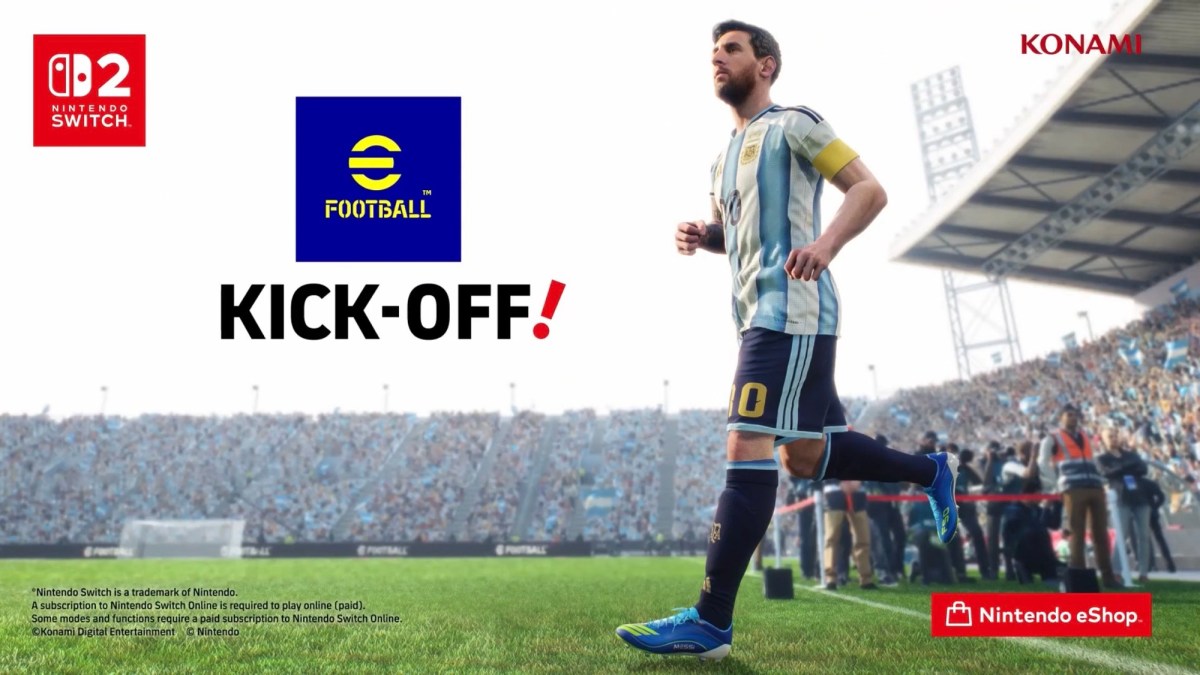
The latest football game from Konami has arrived on Switch 2 with little-to-no fanfare. With roots firmly in its franchise predecessor Pro Evolution Soccer/Winning Eleven, the game focuses on gameplay and ease of access. It’s a lesson that its noisy neighbour could and should learn from.
The first thing that strikes you when you load up the game is just how easy it is to navigate around the menus. The first thing you see is a choice of Solo, Local or Multiplayer. In my favoured mode (solo), the options are again limited: Quick Match, World Tour or International Cup. It’s a simplicity that feels like a breath of fresh air in comparison to the bulky, clunky process you need to follow on EA FC (and have done for years) – a sea of updates, inboxes to check, packets to open. There’s none of that here, just straight to the pitch and on with the next match.
I spent a lot of time in World Tour mode, which will remind long-time players of Master League at least in part. Here, you take over management duties for a squad of generic players (plus Messi if you buy it early enough). By playing matches against increasingly difficult opposition, you unlock better players. This is done one of two ways. Either you choose a player from the squad of the team you beat, or you save up points from each win (300-500) and spend them in the Hall of Fame. It’s a fun grind that allows you to progress at a decent pace. Importantly, there are no hidden charges or loot boxes here. You can only progress by winning.
The gameplay itself feels just like Pro Evo in its heyday. Quick passing, intelligent player movements, satisfying finishes. The controls haven’t changed much, with a few extra modifications that are introduced via training games and mini challenges within the matches. The physics engine is realistic and basically becomes unnoticeable very quickly, which is a good sign that the team at Konami got it right.
The game doesn’t have loads of authentic teams and kits, but that never feels like a huge let down. Of course, every realistic football game will inevitably be compared to FIFA, the dominant force in the genre for a long time. The balance of power has always swung between the two franchises, with FIFA effectively killing off Pro Evo a few years ago in 2020. FIFA had the market share and the consumers voted for the game with the team and player licences. I was never fully behind the idea that you could pay to improve your team, even though that is the way of a lot of video games now. The gameplay always let the franchise down, and that issue has carried itself over to the rebranded EA FC.
I’d take this cheaper and very enjoyable game over the alternative every single time. Strong recommend.
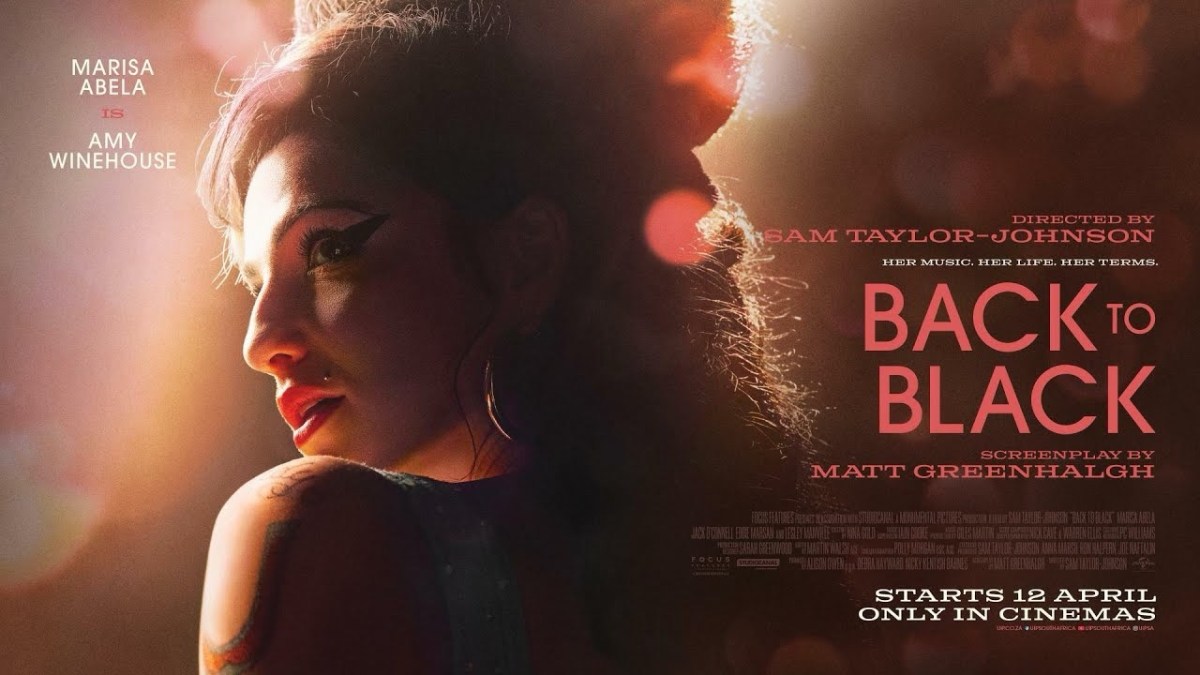
Big-budget biopics have become a popular box office draw, with Queen, Elton John, Bruce Springsteen and Robbie Williams all getting the Hollywood treatment in recent years. Sam Taylor-Johnson’s retelling of Amy Winehouse’s rise to fame is certainly not a bad film, but it falls short in many ways.
Let’s start with the story itself. The narrative that has been concocted doesn’t align with the reality and what really happened in her life. My memory of her successful music career was that she exploded into public consciousness with the song ‘Rehab’, her first in a new-sounding musical approach she’d found alongside Mark Ronson, who produced the smash-hit album ‘Back to Black’. Seemingly for narrative reasons, this song is not focused on until much later in the film, and Mark Ronson is only mentioned a couple of times rather than being a key part of the story. The implication is that she was already a huge popstar, when in reality her first album debuted at #60 in the UK charts and was outperformed that week by new releases by Michael Ball, S Club 8, Myleene Klass and Daniel O’Donnell. Not to undermine any of their careers, but none are expecting a big screen retelling of their musical successes any time soon.
Of course, chopping and changing the ordering and minor facts is something we’ve come to expect with these kinds of films, and it’s a topic I explored in my previous article ‘Fact vs Fiction – How far is too far for biopics?’. As I said at the time, there is a a fine balance between telling a truthful story and telling an entertaining and dramatic story.
The problem I have with ‘Back to Black’ is that it does neither.
What it does well is provide a platform to showcase Winehouse’s wonderful music. The music took over the world for well over a year, soundtracking big nights out, house parties, dinner parties, car journeys and everything in between. The titular album was one of the last big sellers when it comes to physical media, shipping almost 2m copies in the UK alone in 2008. You only need about a third of that now. Anyone who sees this film and who lived through that period will surely be seeking out her music in the aftermath of their first viewing.
It’s not a surprise that her alleged struggles with alcohol and substance abuse and subsequent health decline after the success of the ‘Back to Black’ album are not a key part of the film. However, by choosing the much safer route the whole film feels a bit vanilla. As a standalone piece, it kind of works. But the world knows so much more about her life and knows it has been left out for a reason.
As a result, it doesn’t really land and it feels like a struggle to enjoy.
I had a sudden realisation the other day. My daughter is going to see Mamma Mia the musical soon. After she’d watched the film version, I thought it would be fun to show her some original ABBA performances. This led to a bit of a fun chat about how music videos have evolved over the years, and how much of a big deal they were when I was young.
Nowadays, of course, music videos are consumed very differently. The likes of Top of the Pops, the Pepsi Chart Show, and even just MTV, are simply not available anymore. I’m 41 now, and it isn’t especially obvious how to discover great new music now. I listen to a wide range of new music, but I couldn’t tell you how I found out about some of the newer bands I like. I’ve been listening to Kingfishr recently, but I really don’t know how they found their way into my music rotations.
In the 1990s, when I was in my peak discovery phase, I knew what the routes were. The aforementioned music video programmes were reliable, and I often tuned into MTV2 to the Sara Cox or Zane Lowe shows to find out interesting new tunes. There was also a plethora of trendy music magazines, reliable radio channels and also a thriving mixtape community at school.
In 2026, how do we consume music videos? the landscape has certainly changed. If you’re relying on YouTube, then you’re in luck. 99% of the entire history of the music video is there, usually in at least HD quality. Also, you’ve got a fair amount of live footage, TV appearances and anything else you can think of.
The catch? You need to know what you’re searching for in the first place. I knew there was a new Rolling Stones single on the way, so knew to search the video out on YouTube. The video itself is a wondrous piece of art, with Ana Taylor-Joy and Charles Melton playing out an intense argument with a luscious Mick Jagger falsetto accompanying it.
With all this in mind, I started to wonder if other people would be interested in a curated list of music videos to sit back and play on their TV, allowing them to focus on the music video without the need to have a phone at hand to click onto the next song. So, I decided I’d do it for you.
Cinema Etc’s New Music Videos Monthly
Hopefully if you click through to the above link, you can access the playlist on Apple Music. You can either watch it on your devices or sync to your TV.
The first playlist is a fair mix of established acts, A-list pop stars and a few upcoming artists that I think you’ll enjoy.
Let me know how you find the list and if you know of anything else I should be checking out, especially if there’s a cool new video to enjoy!
Irish filmmaker John Carney shot to prominence in 2007, when his romantic musical drama ‘Once’ became an unexpected hit. What had started as a little film that cost just $150,000 to make ended up grossing over $23m at the global box office, won an Academy Award for Best Original song, and was later remade into a stage musical. The warmth shone through the end product to make a connection with the audiences beyond anything that Carney could have ever dreamed of.
Since then, he has focused a lot of his directorial output on the musical genre. These have been fairly consistent in their quality despite varying box office returns. First there was 2013’s Begin Again, a saccharine effort starring Keira Knightley and Mark Ruffalo. Then in 2016 he helmed Sing Street, an Irish-set bittersweet musical that again outperformed expectations. Finally, Flora and Son, a Gary Clark collaboration, performed poorly with a limited release in 2023 before moderate success when it arrived on Apple TV+.
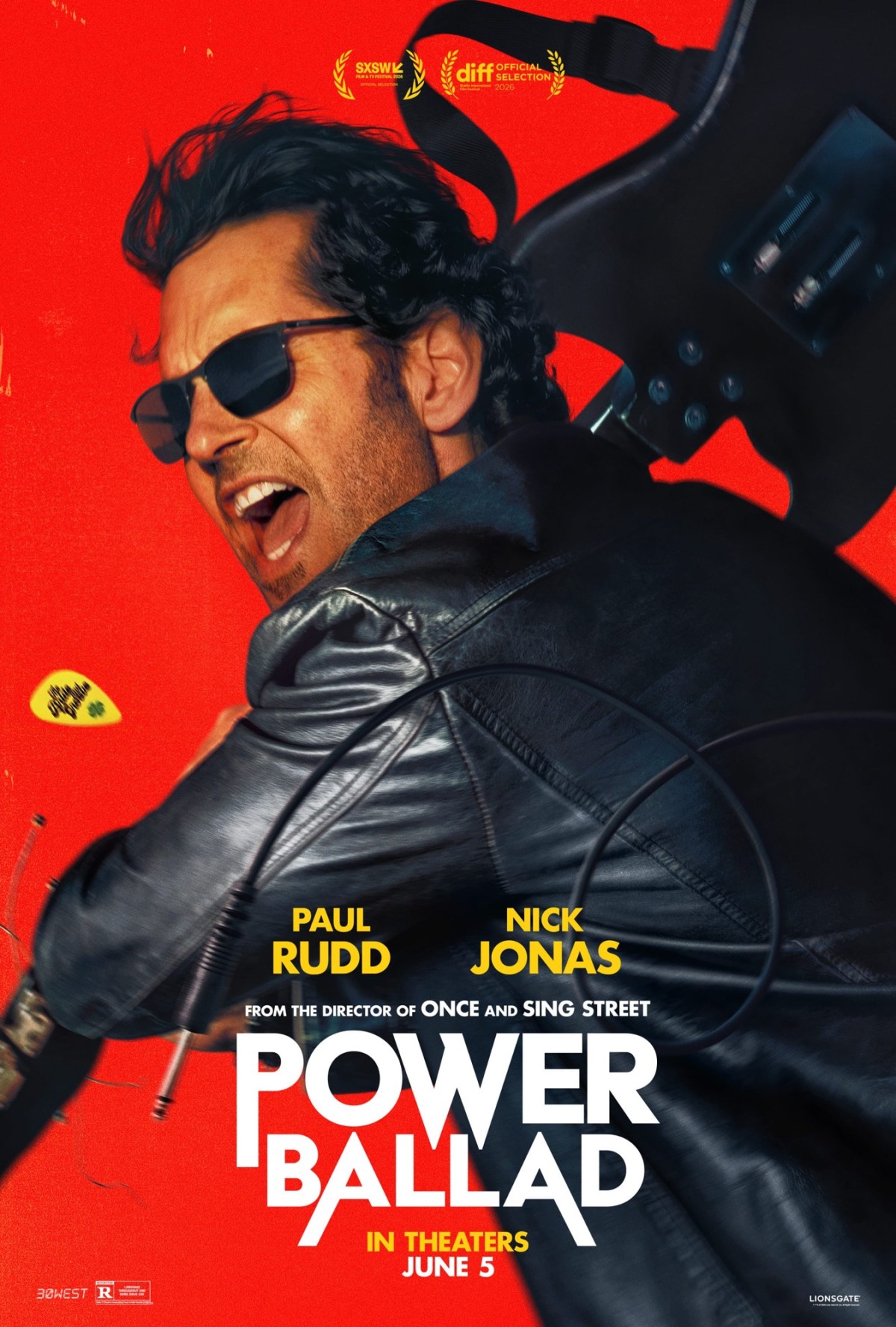
And so we come to Power Ballad, his latest musical comedy. This time, Paul Rudd takes centre stage as Rick Power, the front man of a jobbing wedding band called The Bride and Groove. We are introduced to the band in the middle of a very successful performance at a wedding party, which goes awry when Rick decides to use his formerly successful rock band’s biggest hit as the encore. Inevitably the audience doesn’t dig the sound and the show falls flat. This is a great springboard for his story – he has made a compromise on his personal success by fully committing to family life with his wife and daughter, but is still writing songs with no platform to showcase them.
We are then introduced to Danny Wilson, played by Nick Jonas. He is a struggling former boyband member that is looking to write a hit comeback single. When a chance meeting between him and Rick leads to them jamming out a few song ideas, Nick takes one of Rick’s songs and uses it as the lead single on his new album. The catch? Rick didn’t give him permission and he isn’t credited on the song.
As a member of a very unserious dad rock band who had flashes of musical success in my youth, a lot of the film resonated hard with me. John Carney is a talented songwriter himself, and he is uniquely adept at showing the songwriting process in a realistic manner. I really enjoyed Paul Rudd’s performance in the lead role, which is both lightly humorous and soaked with emotional baggage too.
As a piece of cinema, I have only one small gripe with Power Ballad. The whole film hinges on the magic of one single song as it becomes the most popular piece of music in the entire world. Unfortunately, the song itself is not quite of that quality. It’s not a bad song by any means, but it does have an unlikely callback to another recent musical comedy: K-Pop Demon Hunters. When you watch that film and the same snowballing success happens with ‘Golden’, it’s believable because that song is pop perfection. ‘How To Write A Song (Without You)’ isn’t really hitting that level, and it undermines the entire plot.
Frustratingly, the song that does hit that mark from a previous John Carney film is ‘Falling Slowly’. We do briefly see a busker belting it out in central Dublin, giving us a glimpse of what could have been if that song had been used in this film.
Overall, despite a few limitations, this is a very good film. If you want a bit of uplifting musical comedy in your life, then this is the film for you.