Film review: Tony (Matt Johnson, 2026)

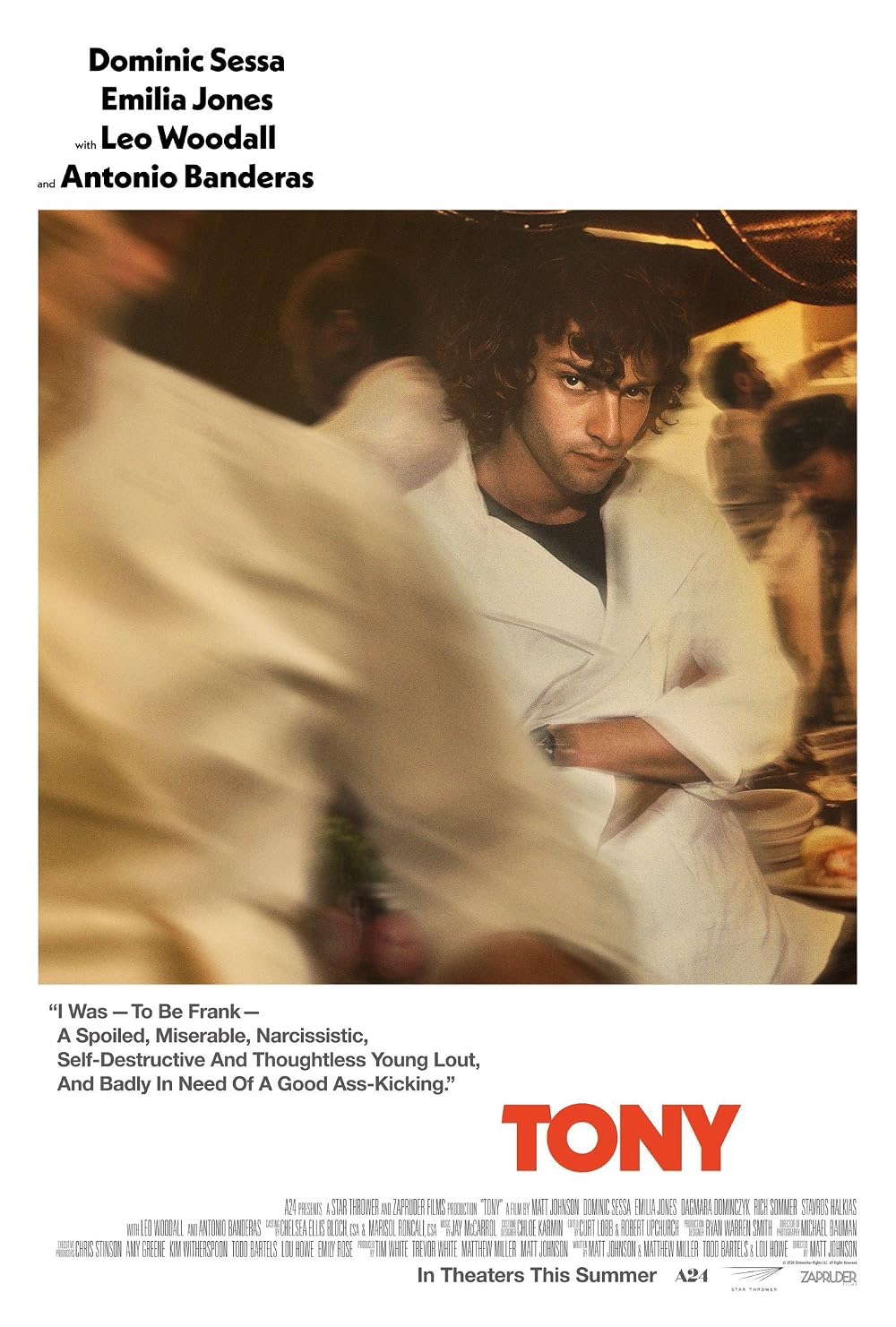
Matt Johnson has had a busy time of it recently. The hilarious ‘Nirvanna The Band The Show The Movie’ was released to great fanfare and critical acclaim. It was a film he created, wrote, directed and appeared in. A mere six months later he is back, this time with ‘Tony’, a biopic about celebrity chef Anthony Bourdain. And it is glorious.

‘Tony’ is based on Bourdain’s 2000 memoir Kitchen Confidential, which covers his early life in the 1970s. It shows his journey as a young and directionless teenager as he seemingly accidentally becomes a chef in Provincetown, Massachusetts.

The book was a key reason he transitioned from simply a well-renowned chef to a household name in the USA. A previous attempt to adapt the memoir was cancelled prior to completion of the first season, despite a rising Bradley Cooper appearing in the title role.

So how does this version fair? The first thing to say is that I’ve never read the book and my knowledge of his career was very limited, so I was judging it on whether it worked as a film rather than a faithful adaptation of the book or Bourdain as a person. Dominic Sessa, who gained critical acclaim in The Holdovers, delivers a fantastic turn in the lead role. He strikes a balance perfectly between being undeniably irritating and so likeable that you just want everything to work out for him. Emilia Jones plays opposite him as his love interest Nancy (who Bourdain would later marry in real life). Her character is afforded a maturity and experience opposite the titular role that allows her to play around with her suspicion that he’s one of life’s biggest truth fabricators.

Antonio Banderas is equally warm and vulnerable in the role as the nameless chef who takes Anthony under his wing and provides him with both a job and a place to live. His character is beautifully written and unfolds throughout the film as we learn more about him as a person and his past.

The costume design and music choices are really on point, and add to the authenticity of the film. Equally important is the role of Jay McCarroll’s score, which perhaps plays a supporting role to the more prominent needle drops, including a sumptuous placement of Old Cape Cod by Patti Page, juxtaposing the likes of The Stooges and War that are found elsewhere during the film.

I don’t think it makes me want to find out more about Anthony Bourdain’s life, or read his books. It portrays him as more of a rock star than a passionate chef, which seems to go with his legacy. Regardless, the overall result is pacey, emotional and stylish – American cinema at its best.

It is likely to be one of my top films of the year.
Film Review: Back to Black (Sam Taylor-Johnson, 2024)

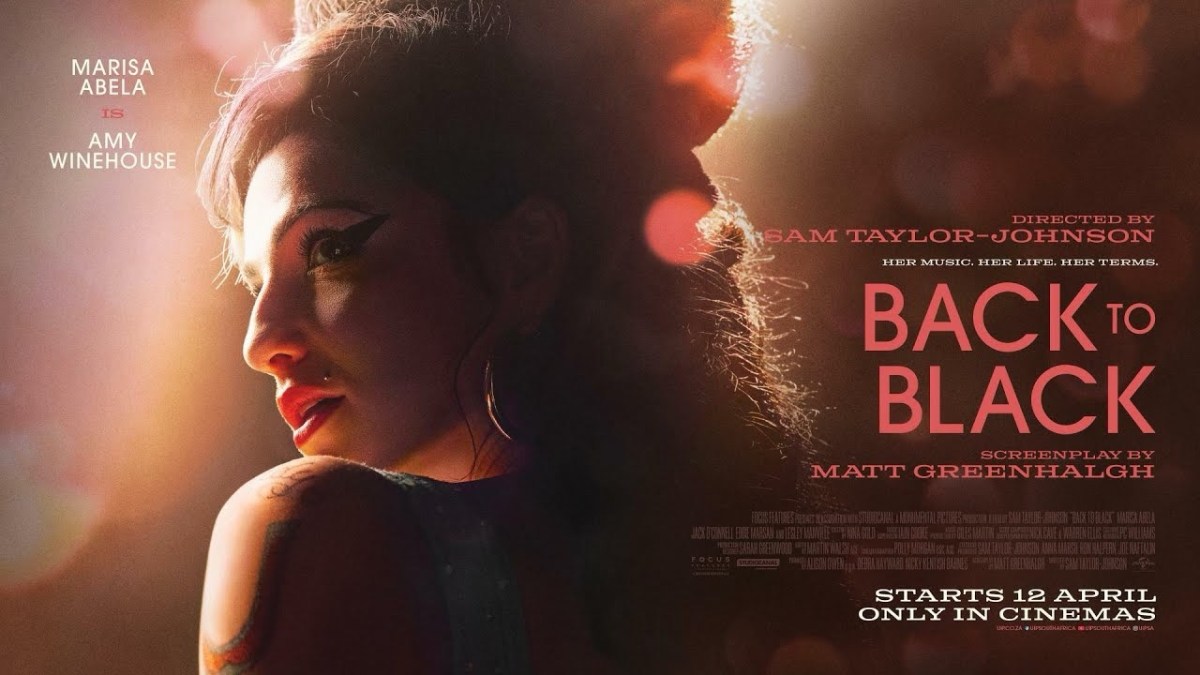
Big-budget biopics have become a popular box office draw, with Queen, Elton John, Bruce Springsteen and Robbie Williams all getting the Hollywood treatment in recent years. Sam Taylor-Johnson’s retelling of Amy Winehouse’s rise to fame is certainly not a bad film, but it falls short in many ways.

Let’s start with the story itself. The narrative that has been concocted doesn’t align with the reality and what really happened in her life. My memory of her successful music career was that she exploded into public consciousness with the song ‘Rehab’, her first in a new-sounding musical approach she’d found alongside Mark Ronson, who produced the smash-hit album ‘Back to Black’. Seemingly for narrative reasons, this song is not focused on until much later in the film, and Mark Ronson is only mentioned a couple of times rather than being a key part of the story. The implication is that she was already a huge popstar, when in reality her first album debuted at #60 in the UK charts and was outperformed that week by new releases by Michael Ball, S Club 8, Myleene Klass and Daniel O’Donnell. Not to undermine any of their careers, but none are expecting a big screen retelling of their musical successes any time soon.

Of course, chopping and changing the ordering and minor facts is something we’ve come to expect with these kinds of films, and it’s a topic I explored in my previous article ‘Fact vs Fiction – How far is too far for biopics?’. As I said at the time, there is a a fine balance between telling a truthful story and telling an entertaining and dramatic story.

The problem I have with ‘Back to Black’ is that it does neither.

What it does well is provide a platform to showcase Winehouse’s wonderful music. The music took over the world for well over a year, soundtracking big nights out, house parties, dinner parties, car journeys and everything in between. The titular album was one of the last big sellers when it comes to physical media, shipping almost 2m copies in the UK alone in 2008. You only need about a third of that now. Anyone who sees this film and who lived through that period will surely be seeking out her music in the aftermath of their first viewing.

It’s not a surprise that her alleged struggles with alcohol and substance abuse and subsequent health decline after the success of the ‘Back to Black’ album are not a key part of the film. However, by choosing the much safer route the whole film feels a bit vanilla. As a standalone piece, it kind of works. But the world knows so much more about her life and knows it has been left out for a reason.

As a result, it doesn’t really land and it feels like a struggle to enjoy.

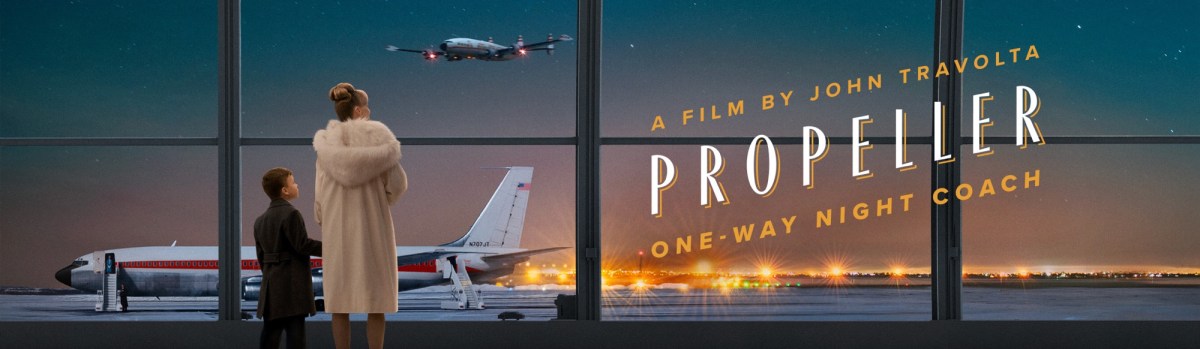
Film review – Propeller One-Way Night Coach (John Travolta, 2026)

Quite soon into the opening of John Travolta’s directorial debut, you may find yourself audibly gasping. Or perhaps saying things like “What’s going on here?” or “Why?” or “Is this a parody?”Perhaps, like me, you paused it to work out what the back story about this kind-of film was. Maybe you’ve come across this very article and feel like you wrote it yourself.

In many ways, ‘Propeller One-Way Night Coach’ is unlike any other film you’ve ever seen. Unique in many ways. It sets the bar quite low, then runs head first into it. Indeed, The Telegraph writer Robbie Collin declared that it was like “watching a toddler run into a lamp post”. It’s hard to disagree.

Watching the opening credits, there are some classy animated visuals that set the scene quite well, with a vintage jazz track providing additional vibes. Sure, it says ‘John Travolta’ a few times more than is necessary, but I’m on board.

Then the narration kicks in. Nothing can prepare you for the effort required to stay engaged with this narration. It makes Harrison Ford’s infamous voiceover for Blade Runner sound like Robin Williams doing a standup routine after 10 cans of Red Bull.

The story itself is quite a simple recounting of how Travolta, as a child, fell in love with planes. It is easygoing, formed as an adaptation of his children’s book of the same name from almost 30 years ago. It isn’t bad exactly. It’s a very personal book for him, and I’m sure it’s great for aviation enthusiasts. Undertaking a passion project is often where movie magic happens. I shudder to bring up Citizen Kane in relation to this film but here we are.

I just absolutely don’t think this needed to be adapted for the small screen and it felt like a complete waste of time to watch it. It falls into the category of being so blandly bad that you should absolutely not watch it, not even ironically.

Sorry John. I, like you, gave it a go. I think we both wasted our time.

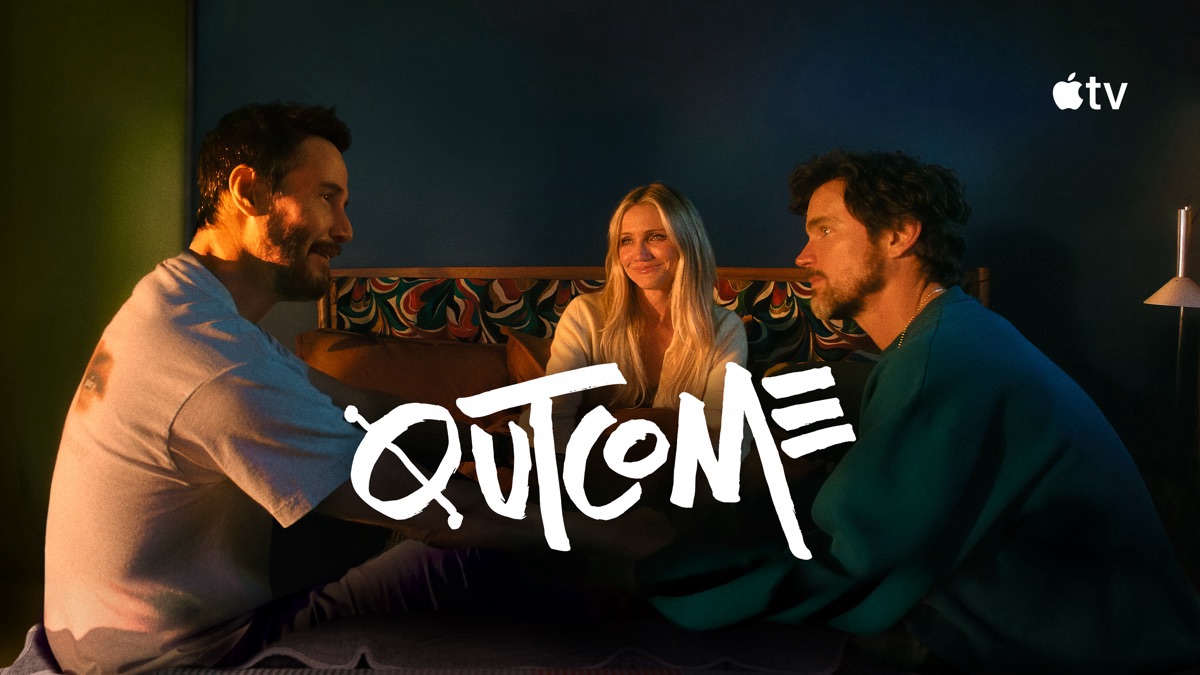
Film review – Outcome (Jonah Hill, 2026)

A film directed by the extremely talented Jonah Hill, starring Keanu Reeves, and with supporting roles from Cameron Diaz, Martin Scorsese, David Spade and Drew Barrymore, should really be better than this. But alas, it is not. And I am struggling to work out why.

The ambitious plot rattles along with a snappy script, as we explore the fallout of a mysterious video being used to bribe the fictional beloved movie star Reef Hawk (Reeves). Under the advice of his lawyer Ira Slitz (Hill), Hawk embarks on a journey of reconciliation, as he seeks out and apologises to everyone he feels he has annoyed throughout his career.

There’s nothing wrong with this, and there are some hilarious turns along the way. Susan Lucci showing up as Hawk’s mother and demanding he discusses their relationship as a scene in her Real Housewives TV show is a real highlight, as is Drew Barrymore featuring in a solitary scene as a caricature of herself.

One critical issue is the performance of Keanu Reeves. As th focal point of the plot, his role needed to be delivered perfectly. It’s actually a very risky role, as it asks the viewer to find sympathy for a rich and famous man who has been caught out in an act of perversion. It is no mistake that certain shots linger in foyers with the like of Kevin Spacey and Kanye West prominently positioned in the backdrop. Reeves is not offensive in his portrayal, and the message seems to be that we shouldn’t be overly judgemental until we’ve seen the details of these scandals. But his acting, as is often the case, feels like the handbrake has been left on – emotionally stitled, and lacking the hues and colours required of a fairly complex role.

The net result is something that isn’t particularly enjoyable, feels extremely flat and is an altogether missed opportunity.

Trailer for Outcome, streaming now on Apple TV+

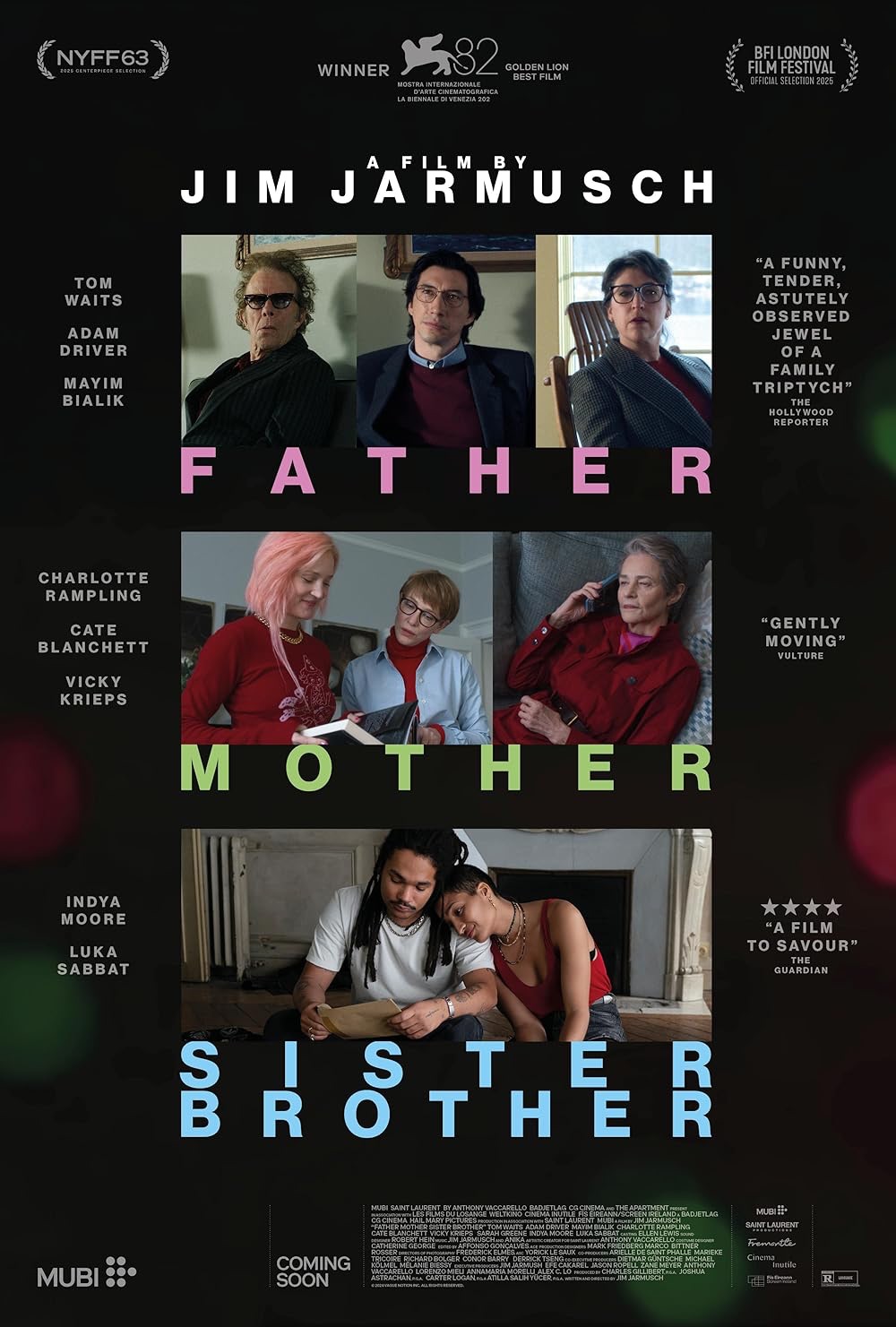
Film review – Father Mother Sister Brother (Jim Jarmusch, 2026)

Jim Jarmusch returns after a six-year break with Father Mother Sister Brother, a comedy-drama anthology that explores the relationship between parents and their children. It’s a welcome return for fans of the auteur, providing an entertaining and thought-provoking entry to his filmography without stepping too far outside common ground.

The film tells three stories in three separate cities: New Jersey, Dublin and Paris. Each vignette is a variation on the same theme, with two siblings reconnect with their parents after a time of separation. It’s a starting point that allows Jarmusch to explore in depth the connection and disconnect that often exists between generations of the same family.

Common elements and callbacks are sprinkled throughout. In each, a comedic exchange occurs around the phrase “Bob’s Your Uncle”. An expensive Rolex watch is given prominence in each tale. There is a mutual appreciation of the social sharing of a cup of coffee or tea, in a way that harks back stylistically to Jarmusch’s previous anthology film Coffee and Cigarettes. 

The stories work extremely well together, and deserve to be enjoyed as a single body. For it is not in the details of each story that the real impact is made. Instead, the overarching themes are teased out over the three stories: familial dysfunction, alienated parents, strained relationships. The fact these play out across a global landscape feels deliberate too – this is not an isolated situation but one seen time and time again by adults with loving parents.

This is a stylish and thoughtful piece that is well acted. It delivers on expectations without overachieving. Sometimes that’s enough.

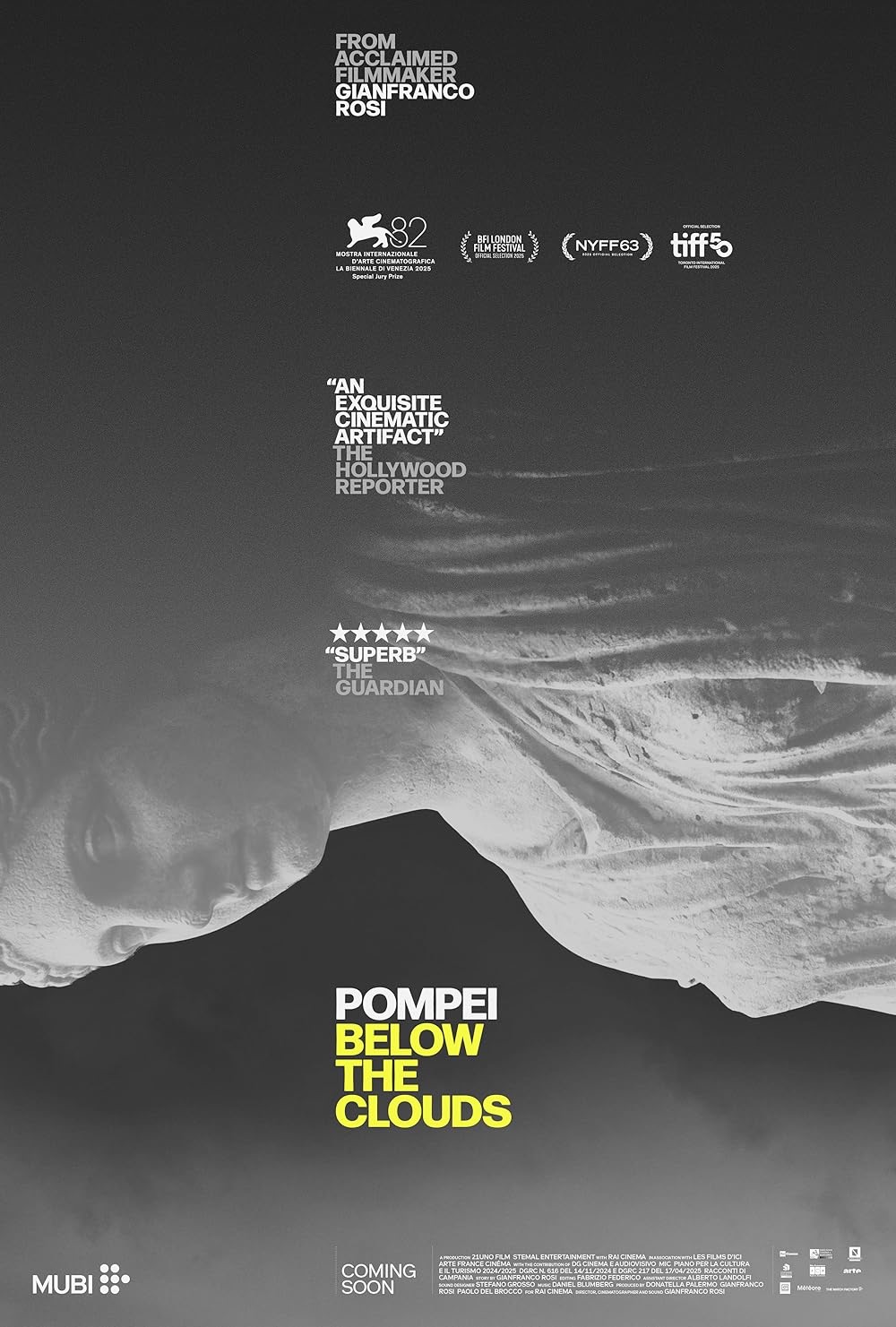
Film review – Pompei: Below The Clouds (Gianfranco Rosi, 2026)

A carriage rocks slowly over a modern train line. An emergency service desk responds to the fears and panics of a city. A dilapidated old cinema screens images from forgotten masterpieces to an empty auditorium. Japanese archeolegists slowly and methodically uncover relics from the past.

And so it goes.

For almost two hours, Gianfranco Rosi’s carefully curated imagery builds up an astonishing portrait of modern Naples, a city that exists in the shadow of Mount Vesuvius and its terrifying presence.

Pompei: Below The Clouds is an undoubtedly beautiful documentary. The black and white cinematography serves as the perfect means to showcase the contrasting darks and lights within the images Rosi has captured. The soundscape builds on this, with low industrial hums and raw chatter giving even more gravitas to the proceedings.

There is no singular narrative here. The multiple threads sit alongside each other, serving to create something much more than the sum of their parts. Each one plays a role in bringing to life the city as it is now, steeped in its inescapable past. Think of it as a very distant cousin of Love Actually; an unexpectedly stylish family member you didn’t know existed until the Easter gathering, who you now find much more interesting than anyone and anything within eyesight.

Pompei: Below the Clouds is a film that needs your attention. Streaming on MUBI in the UK, if you are planning to watch at home then you need to find a full night of peace to fully allow yourself to be immersed. It’s deserving of this focus.

Official trailer for Pompei: Below the Clouds

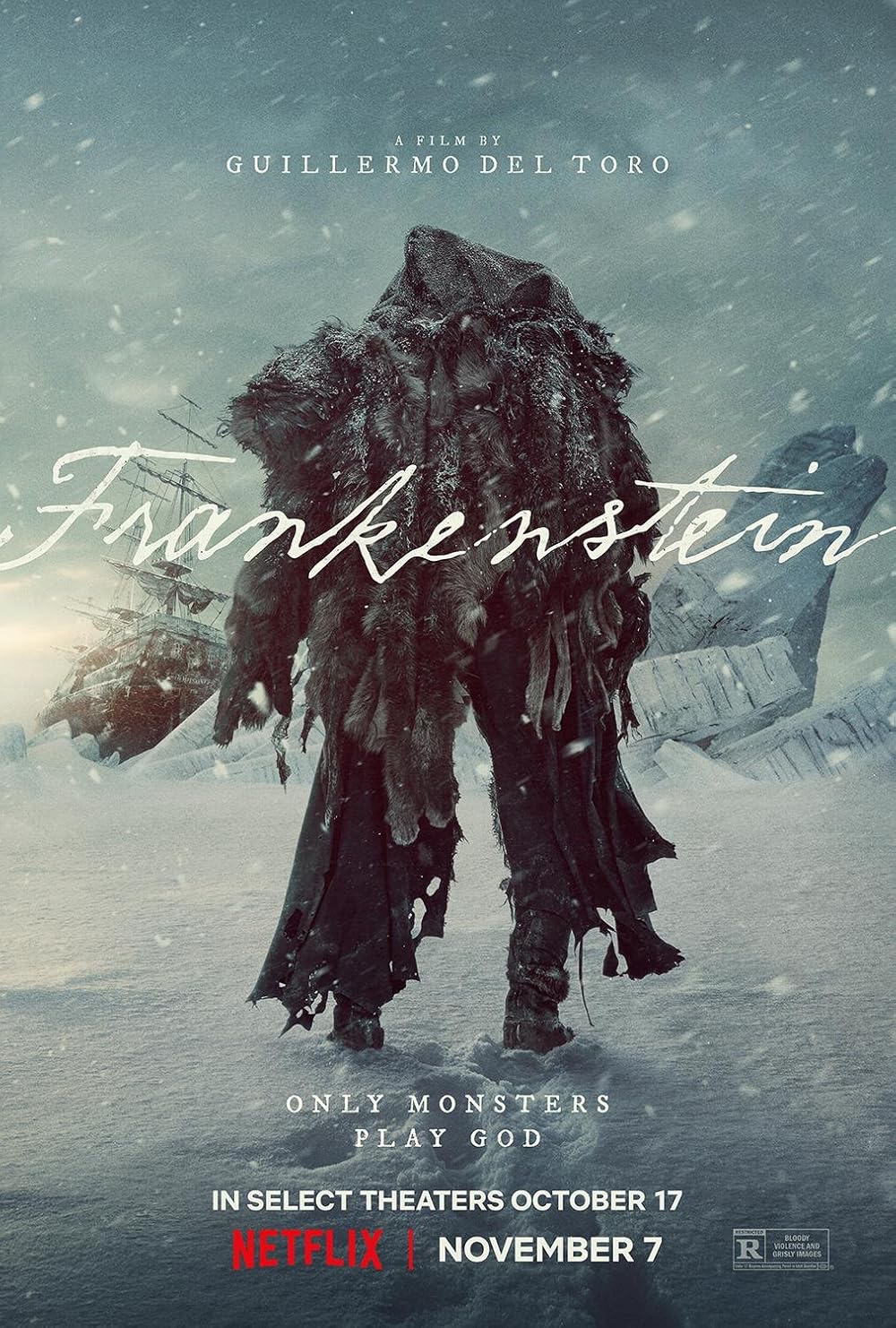
Film review: Frankenstein (Guillermo Del Toro, 2025)

Frankenstein is a gothic novel, first published over 200 years ago. It remains Mary Shelley’s best known and most celebrated work, with an estimated 400 feature films having been made with the character as a central or supporting role. Filmmakers such as Danny Boyle, Kenneth Branagh and Mel Brooks have put their own spin on the character, and there seems to be an insatiable appetite for movie makers and cinema goers to revisit the monster.

And so, in 2025, master of gothic horror Guillermo Del Toro has blessed us with his own interpretation of the work. Screening as part of the 2025 London Film Festival, it’s an interpretation that feels luxurious in scale.

The story is told in a way that remains faithful to the original novel, mixing up the ordering to create a much more effective narrative for the purpose of the big screen, much in the same way as the 1994 Kenneth Branagh adaptation did. This version opens at the original ending, with a mysterious one-legged man (Oscar Isaac) appearing out of nowhere at a shipwrecked expedition to the North Pole, chased down by an even more mysterious hooded monster (Jacob Elordi), seemingly impossible to be halted in his pursuit of vengeance. The rest of the story is told through flashbacks to how they got there, with some very strong performances across a talented and varied ensemble cast that includes Charles Dance, Mia Goth and Christoph Waltz.

Following Pacific Rim (2015), a film that many consider a misstep in his career, Del Toro has had four exceptional critically acclaimed features: the daring gothic romance Crimson Peak, Oscar-winning The Shape Of Water, psychological thriller Nightmare Alley, and his first foray into feature animation with the beautifully realised Pinocchio. Adding this powerful fifth film into the mix will only cement his position as one of modern cinema’s true masters.

At 150 minutes, it isn’t for the fainthearted. It’s hard to condense it into anything less, without losing a lot of the story. When it arrives on Netflix later in the year, I’m sure many will take the opportunity to have a break at the start of Act II. However, this is a film that deserves to be seen on the biggest of screens, to allow the total immersion into something quite grand.

Glorious.

Film review: The Lost Bus (Paul Greengrass, 2025)

The Lost Bus is an intense action thriller based on the 2018 Camp Fire incident in Paradise, California. The action focuses on bus driver Kevin (Matthew McConaughey), who volunteers to retrieve and carry 22 children and their teacher Mary (America Ferrera) to safety.

At 130 minutes this film has plenty of time to explore sub-plots and give backgrounds to the main characters. Despite the length, it doesn’t feel like it drags at any point. Part of this is due to a careful mixture of suspense building as the town of Paradise is engulfed in the red-orange mist of the wildfire, with intimate camerawork and a relentless score from James Newton Howard working in unison to heighten the unfolding disaster.

Paul Greengrass is a master of this kind of film now, having established and honed his skills in the Bourne franchise, along with films like Green Zone and Captain Phillips. His last film, Western drama News of the World, also made its way to Apple TV+, and it was a happy partnership that led to multiple Oscar nominations in 2021. Whether this film will also be recognised in the same way remains to be seen, but it would hardly be undeserving.

What’s the deal with the Wes Anderson and Roald Dahl Netflix collaboration?

You may have noticed on Netflix recently a handful of sepia-tinged thumbnails popping up in your Trending Now or Recommends lists. Based on the lack of advertising generally, all you are left with is the titles alone: Poison, The Rat Catcher, The Swan and The Wonderful Story of Henry Sugar.

These curiosities make up a series of four adaptations of Roald Dahl short stories by the distinctive director Wes Anderson. Bringing together a wonderful ensemble cast – including Rupert Friend, Richard Ayoade, Benedict Cumberbatch, Ben Kingsley, Dev Patel and Ralph Fiennes – the four shorts really are quite special. Marrying the distinctive styles of two great storytellers from very different eras, there is a high-art uniqueness that lands in a place that feels fresh and intriguing.

As I finished watching my favourite of the bunch – the sharp-scripted Poison, about a man struggling under the threat of an imminent deadly poisonous snake bite – I wondered whether these could have been made twenty years ago. Or even ten years ago? I could only think of one outlet for them, which would be as part of the festive programming of a terrestrial channel, probably on Boxing Day, when the rigidities of multi-part series and familiarities are relaxed as the nation forgoes its own schedules to Quality Street and sherry.

I’m thrilled these four short films have seen the light of day, although I also wonder whether they’ve been done a disservice in the manner of release. With little fanfare, they’ve just appeared in the faces of the casual scroller, with more than a little whiff of that U2 x iPhone collab we all loved so much. I know someone who accidentally watched the longest of the bunch – The Wonderful Story of Henry Sugar – and wondered what on Earth was going on. With no explanation, it’s easy to see why the unfinished stylings of Wes Anderson could confuse. Actors look at the camera, the prop department hand items to the scenes apologetically, the elaborate sets are shifted as if they were part of an experimental theatre piece. These quirks that elevate the experience for fans of Anderson risk perturbing casual viewers, or indeed fans of Roald Dahl’s more popular output.

With results this good, perhaps Netflix decided that was a risk they were willing to take.