Those Magnificent Men in their Flying Machines; Or, How I Flew from London to Paris in 25 Hours 11 Minutes (Ken Annakin, 1965)

On 14th July 1965, NASA’s Mariner 4 spaceship performed the first flyby of Mars, returning the first ever pictures of another planet and providing Earth with closeup observations of the surface. It was a time where the world was gripped by the space race, seeing two world powers at loggerheads to prove their technological superiority.

Just one month earlier, Ken Annakin’s epic ensemble comedy Those Magnificent Men in their Flying Machines hit cinemas globally. A homage to the beginnings of manned flight, the story follows fourteen pilots in brilliant replicas of 1910 aircraft as they attempt to fly from London to Paris (via Dover) to win a £10,000 prize put up by Lord Rawnsley (Robert Mawley), a British newspaper magnate. Mixing madcap humour with a loving recreation of the excitement once felt by the world for the flying machines now seen as highly primative, the film not only captured the essence of 1910 but also the imagination of the 1965 cinema-going public.

One of the main threads that runs throughout the film is the love triangle between the magnate’s daughter Patricia Rawnsley (Sarah Miles), her fiancé Richard Mays (James Fox) and rugged American Orvil Newton (Stuart Whitman), the latter two of which are also competing in the race. This thread serves as a springboard for a small amount of humour but allows the bigger laughs to be built around this central plot.

Many of the other characters conform to the national stereotypes: the Prussian Colonel Manfred von Holstein (Gert Fröbe, fresh from his titular role as bond villain Goldfinger) can’t do anything without a set of instructions; French womaniser Pierre Dubois (Jean Pierre Cassel) spends the whole film flirting with identical women (all played by Irena Demick) from different European countries in one of the film’s best running gags; Yamamoto (Japanese megastar Yujiro Ishihara) is a well-spoken Japanese naval officer who all the competitors fear will easily win the race. Elsewhere there are rewarding cameos from Tony Hancock, Benny Hill and Eric Sykes.

The main theme tune contains a highly infectious melody that has remained in the public conscience far beyond the popularity of the film itself. Ron Goodwin’s music is introduced alongside a humorous caricatured animation provided by Ronald Searle and it serves as the perfect introduction to the film. Beware – it gets stuck in your head and will refuse to leave for days.

There's a hint of Wacky Races throughout.

There’s a hint of Wacky Races throughout.

Whilst the concept behind Those Magnificent Men in their Flying Machines closely follows It’s A Mad, Mad, Mad, Mad World – released two years earlier in 1963 – to dismiss it as a carbon copy is to do it a disservice. There’s more on offer here than a simple rehash.

It also spawned a sequel that would be more easily associated to this film but for the fact its name was changed for most releases from Those Daring Young Men in Their Jaunty Jalopies to Monte Carlo or Bust. That film has a nearly identical premise, with many reprised roles, but is set around cars rather than planes.

There’s plenty on offer here to warrant a first viewing and those that grew up with it won’t be disappointed by revisiting it.

Those Magnificent Men and Their Flying Machines is available to buy now from Amazon on extortionate Blu-ray or DVD.

[Note] Huge thanks to Ahoy Small Fry for the recommendation on this!

Comic Con – The Best of the Trailers

So this year’s San Diego Comic Con has come to a close for another year. As usual, there were trailers aplenty. Here’s a selection of some of the more interesting ones.

The Walking Dead – Season 6 trailer

I’ve been reading the comic books of The Walking Dead and I’m currently about six comics ahead of the break point of the last season. Whilst the recent stories in the TV show have held pretty true to the comics, I’m hoping they take a divergence from the original stories soon. The trailer suggests this is the case as I’m having difficulty matching it up. Looks absolutely tremendous, with the focus appearing to be a difference of opinion between Rick and pretty much the entire group.

Fear The Walking Dead

On a similar theme, there’s going to be a new spin-off series to The Walking Dead titled Fear The Walking Dead. It follows a completely different set of characters though is set in the same universe. It’s a sort of prequel to the series and focuses on one Los Angeles family as the zombie apocalypse breaks out. It looks very similar to World War Z, but with Robert Kirkman on board it will doubtless have all the magic required to make it work.

Adventure Time stop motion episode Bad Jubies

One episode from the upcoming Season 7 of Adventure Time is going to be stop motion 3D. Looks pretty interesting. Jake, Finn and the gang are facing bad weather and are also made of play dough! Disaster is imminent. Whether it will be canon or not remains to be seen.

Superman v Batman: Dawn of Justice – Extended Trailer

Expanding on the previous trailer and giving us a glimpse of the finer details of the plot and some new characters (including Jesse Eisenberg’s Lex Luther), this trailer is huge news. I’m willing to give this movie a chance and I think most are. It is the film that everyone has wanted to see for a long time. And, dare I say it, I didn’t think Man of Steel was a bad film at all.

Star Wars: The Force Awakens – Comic Con Reel

“Real sets, practical effects” opens the behind-the-scenes footage reel for the new Star Wars film. Those four words are all any fan has wanted since the underwhelming Episodes I-III. Well, I guess “No Jar Jar Binks” comes a close second. This is footage that just gets me massively excited. There is finally going to be a great Star Wars film released in my lifetime, knocking Caravan of Courage into second place.

Ash v Evil Dead

Will it be terrible? Probably. The new TV series puts Bruce Campbell back into the thick of it as mankind’s only hope against the Deadite uprising. It looks corny but will be good for some laughs.

Deadpool – Leaked Trailer

There’s some shady footage of the Deadpool trailer doing the rounds. I’m not going to link to it but it looks tremendous. Go seek it out.

Death Mills (Billy Wilder, 1946)

I talked previously about my interest in the upcoming release of the film Concentration Camps: A Factual Survey (on limited release at the moment across the UK, though no sign of a Blu-ray/DVD release as yet). Whilst this BFI restoration has been receiving plenty of attention, it isn’t the only film of its type that exists. One other such film is Death Mills, directed by Billy Wilder. In truth, the film is actually a truncated version of the longer Factual Surveys, with Wilder selecting only 22 minutes of footage to create a short film.

The films in question had a very particular purpose: to capture the first looks inside the concentration camps that had been in operation during World War II; to ensure that the atrocities inside the camps were filmed for the whole world to see and could never be forgotten, despite the Nazi Party’s best attempts to cover them up. Another important purpose was to ensure they were shown to all Germans to show them exactly what was happening at the camps, to avoid any shadow of doubt for denial.

The contents of the film are visually shocking and not for the faint-hearted. It is a wholly distressing watch. The impact of the images, which speak for themselves, is heightened by an effective score and a doom-laden voiceover. It’s one thing to see the camps being portrayed in a fictionalised film, but something else completely to see the reality first-hand. The images, quite simply, are the darkest I have ever seen committed to film.

At the time this was made, Billy Wilder was one of the hottest directorial talents in the world. He had won the Academy Awards for Best Director and Best Original Screenplay for The Lost Weekend in 1945, a year after the release of critically acclaimed Double Indemnity (which was nominated for seven Academy Awards and still regularly appears on greatest films lists). Despite his Western-sounding name, he had in fact been born Samuel Wilder in Austria-Hungary (in a region now part of Poland) and later escaped in the early 1930s to Paris in light of the rise of the Nazi Party. He eventually made his way to Hollywood in 1933, though his family remained in Poland and were murdered during the Holocaust. It is for this reason that Wilder would have felt so passionately about taking part in the project, making his visit to the camp in Auschwitz all-the-more poignant as at the time he believed this to be the place of death for his mother, grandmother and stepfather (though in fact this was later disproved by Wilder biographer Andreas Hutter). Interestingly, the film doesn’t make a particular point of detailing quite how many Jewish people were killed in the Holocaust, perhaps because the exact figures weren’t quite understood at the time.

This is a deliberately distressing film but one of such importance as a historical document that it deserves to be watched. It is important it is made available now so that those who lost their lives so needlessly are never forgotten.

Gate of Hell / 地獄門 (Teinosuke Kinugasa, 1953)

Teinosuke Kinugasa’s film Gate of Hell was a global smash upon its original release, winning the Palme d’Or at the Cannes Film Festival in 1954, plus a couple of Academy Awards. Now re-released sixty years on by Masters of Cinema and Criterion, cinemaphiles are able to enjoy the film all over again, allowing a whole new generation to appreciate a masterful piece of cinema.

Set in 1159 Japan, the plot centres around Morito Endo (played by Kazuo Hasegawa), who is involved with evacuating Sanjō Palace in Kyoto during a revolt. A woman, Lady Kesa (Machiko Kyō) volunteers as decoy for the shogun’s sister, and he is amongst those asked to transport her out of the palace and lure the attackers away from the real princess. The plan is successful, and as a reward for his heroism he is offered a gift of his choosing. Unfortunately, he requests Kesa’s hand in marriage, only to find out that she is already wed. For a proud samurai, this is a disastrous embarrassment, and the film from then on deals with the emotional effect this has on Morito, Kesa and Kesa’s husband Wataru Watanabe (played by Isao Yamagata).

IMG_9354-0.JPG

The film looks and sounds brilliant from the start, with the recently developed Eastmancolor used to bring 12th Century Japan to life. It is an alternative view of the shogun era of Japan, which so often at the time had been detailed in popular films by the likes of Akira Kurosawa and Yasujirō Ozu, but in black and white. I can only imagine what it must have been like to see this film back in 1954 and be blown away by the loud visuals and intricate costumes.

That said, a film wouldn’t endure for sixty years without a fantastic story and excellent acting, and this film has those in abundance. It’s paced perfectly and at 90 minutes there isn’t much in the way of filler. The actors are on top form too, harking back to the recently-diminished silent film era with long periods of silence counteracted with extreme close ups as emotions engulf their faces. It is a clever technique and one that would have helped set it apart when it reached Western audiences.

IMG_9353-0.JPG

Sourced from the 1954 New York Times review of Gate Of Hell, the comments from Jun Tsuchiya, Consul General of Japan, add context to the success of the film and the impact it had on the wider reputation of Japan globally. Speaking at the premiere, he said “The successful entree of Japanese films in the world market, may well have not only cultural, but also, I venture to suggest, economic consequences for both our countries. To me, it is entirely conceivable that the export of superior films will greatly help my country in its present unremitting struggle to become self-sufficient, to rely on trade, not aid.”

It is interesting to think of those comments in terms of the global view of Japan today. Buoyed by the hyper-acceleration of popularity of new technology and most global brands from Japan being technology-based (Sony and Nintendo spring to mind), it is ironic that they pulled themselves out of financial struggles to launch themselves forwards by looking so far into their past, especially when in this case the film’s initial popularity seems to be in part down to the use of cutting-edge film colouring technology.

Gate of Hell is out now on Masters of Cinema and Criterion Blu-ray and DVD.

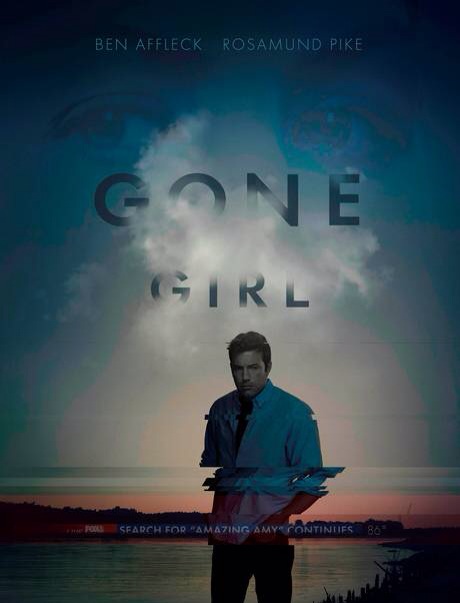
Gone Girl (David Fincher, 2014)

Based on the novel of the same name by Gillian Flynn, Gone Girl deals with some pretty hefty topics: dishonesty, the media, the recession. It’s a powerhouse of a film and one that will surely be busy come the awards season next year.

The film opens with a title sequence of quickly cut still-camera shots of various (at the time) inconsequential locations, soundtracked by an uneasy score by Fincher favourites Trent Reznor and Atticus Ross. The manner in which this is portrayed, as if someone is recounting evidence from memory, is designed to throw the viewer. The cast and main crew are also listed, but they aren’t on screen for long before fading away. It put me on edge and was a very original and effective way to set the tone before any of the plot unfolded. This discomforting tone was continued throughout, usually exacerbated by the jarring score.

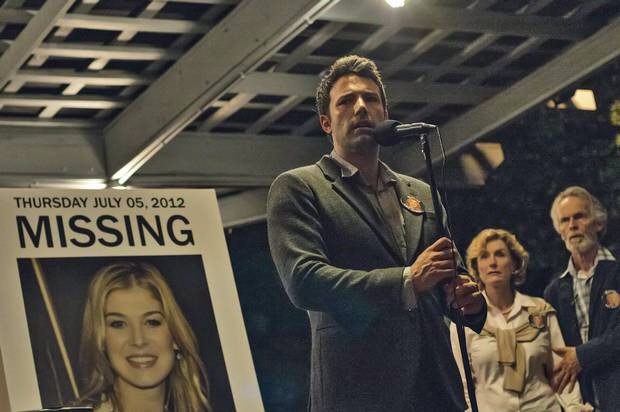
The plot centres around Affleck, very effective in the role of Nick Dunne, a man accused of murdering his wife Amy (played by Rosamund Pike). He vehemently denies the accusations, but slowly realises that proving his innocence is not going to be a straightforward task. The journey is one that had me gripped from start to finish, and on several occasions my wife and I looked at each other in shock at the new twists we were being thrown – the sign of a wonderful thriller.

IMG_9339.JPG

Affleck’s career about-turn is quite astonishing. After starting off promisingly in the late 1990s, by 2005 his reputation within the industry had withered and it was even worse amongst the general public, his name being dragged through the tabloids time-after-time and dwarfing any positive publicity that might have been doing the rounds for his cinematic outputs (though when you release Daredevil and Gigli in consecutive years those kinds of reviews are harder to find). When he finally came back with critically-acclaimed films like Hollywoodland and Gone Baby Gone, the cinema-goers didn’t jump on the bandwagon immediately, probably because by this point he was seen as tabloid fodder rather than a respectable artist. It is perhaps this experience with the wider media that gave Affleck a reality on which to base such a memorable performance, with Dunne struggling against the media to maintain his reputation amid accusations that seem to take on a life of their own, certainly beyond the police investigation (and probably influencing their opinions too). It’s a perfectly pitched performance from a highly skilled actor.

The film is not without its limitations. The ending seemed a little bit confused, as though everyone involved couldn’t decide where or how to end it and tagging on a couple of extra scenes that maybe could have been cut. There is a lack of resolution that leaves us wanting a little bit more, which isn’t always a bad thing but in this case frustrating. It was perhaps intentional, though I can’t immediately offer a reason why it was intentional. It’s hard to discuss without ruining the ending, so I’ll leave it there.

Rosamund Pike is an absolute revelation as Amazing Amy. I’d be surprised if she’s overlooked in Oscar season for a performance as good as this. Equally, Neil Patrick Harris plays a convincing and effective role as Desi Collings, the disturbed and disturbing ex with twisted motives to get involved with the situation.

This is the first feature film adaptation of Flynn’s work – the second will be released next month in the form of the Charlize Theron-starring Dark Places – and you can clearly see the influence of her background working in the media. The subtext of the plot is really a lambasting of the modern media and their influence on people’s lives, sacrificing one person’s privacy for the sake of a good story for the wider population to enjoy.

Ben Affleck is going from strength to strength and Gillian Flynn has given us a completely gripping story and one that offers plenty of promise for her future writing output. With the mighty David Fincher at the helm and adding another top quality title to his catalogue of first class films, seeing it is a no brainer.

Gone Girl is out in cinemas worldwide now.

BFI London Film Festival 2014 Preview

This week sees the start of this year’s BFI London Film Festival and I’ll be heading down to London tomorrow to see as many as I can in three days.

Here’s what I chose:

French Riviera (Andre Téchiné, France, 2014)
Black Coal, Thin Ice / 白日焰火 (Diao Yinan, China, 2014)
The Imitation Game (Morton Tyldum, United Kingdom, 2014)
The Duke of Burgundy (Peter Strickland, United Kingdom, 2014)
’71 (Yann Demange, United Kingdom, 2014)
Giovanni’s Island / ジョバンニの島 (Mizuho Nishikubo, Japan, 2014)

Frustratingly I double-booked myself for the Biophilia Sonic Gala so I will have to miss out, though I’m now extremely popular with my brother’s girlfriend who is seeing it for free!

Expect some reviews over the next week or so of these films. Have a great one if you’re also heading down. Maybe I’ll see you there!!

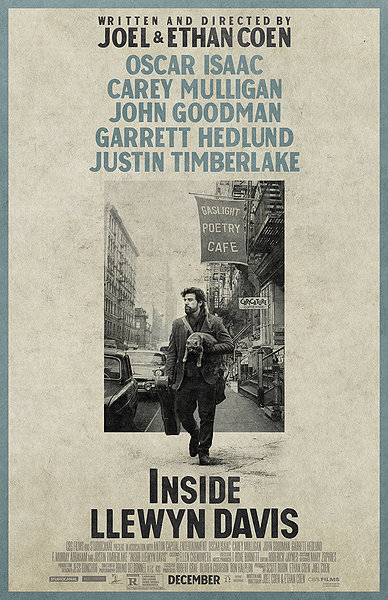
Inside Llewyn Davis (Joel Coen and Ethan Coen, 2014)

Before I start I must confess I’m a huge Coen brothers fan. So much so that I recently went on a day-long course at Broadway Cinema (which was excellent by the way). I look forward to every Coen brothers release and when it’s coupled with a Palme d’Or win then you know you’re in for an entertaining two hours.

The looping storyline concerns the struggling titular character, a performing artist in New York’s Greenwich village, as he tries to make ends meet and regain the popularity he once had with his former singing partner Mike Timlin (who has since committed suicide). It is packed full of astonishing musical performances, not least from Oscar Isaac (previously famed for the King to Russell Crowe’s Robin Hood, though set to become quite well known when he stars in the upcoming Star Wars Episode VII). Joining him are Justin Timberlake and Carey Mulligan as the main stars of the film, though they are definitely in supporting roles. There are also cameos from heaps of great actors, my favourite being the highly comical contribution from John Goodman.

Llewyn Davis Singing

The soundtrack is clearly the driving force behind the storyline. One of the greatest achievements the Coens manage is to allow our attention to be fully dedicated to the music. It’s never a case of starting a song and cutting away to a montage or separate conversation whilst the song goes through the motions of a second verse or middle 8. It is clear they are truly passionate about the music that drives the story and in almost every case the song is uninterrupted from start to finish. It could well be the greatest Coen Brothers soundtrack yet, and if you’ve heard the O Brother Where Art Thou? OST then you know what a compliment that is.

If you’re looking for something to lift your mood, steer clear. Indeed, if you are a struggling artist yourself, you might also want to give it a wide berth unless you are just interested solely in excellent musicianship. With someone this talented struggling to make ends meet and not showing any sign of getting anywhere with his music, you might leave convinced to never pick the guitar up again. If you can put all that aside and simply appreciate the (perhaps surprisingly) excellent musicianship captured so perfectly here then you’re bound to be a happy viewer.

This film is not going to go down as one of the great Coen Brothers films. It just doesn’t have the indescribable magic of, say, The Big Lebowski or Fargo. It is by no means a terrible film, but I just don’t think it has the widespread appeal of some of their other releases. It’s well worth checking out, though I recommend you give it your full attention.

Inside Llewyn Davis is out now in UK cinemas.

12 Years a Slave (Steve McQueen, 2014)

12 Years A Slave is a unique film in many ways. Most of the cast are complete unknowns. The budget was very low ($20m USD). There isn’t a massive push to advertise it anywhere, with very few trailers being seen at the cinema and on TV (I do the former quite regularly and I think I’ve seen one). Despite this, it has seemingly grown popular through word of mouth. This is something that’s very difficult to achieve when most of its momentum has come before the release date.

The pattern is similar to that of Shawshank Redemption, though at the time that film really didn’t start well at the box office. It became a sleeper hit and enjoyed success many months after the initial release, thanks to continued praise from critics and several awards nominations and wins.

Indeed, Shawshank’s Dufresne isn’t wholly unlike Northup, the main character in 12 Years. Both are imprisoned against their will for entirely the wrong reasons and are determined to see that justice is realised somehow. It is the kind of story that keeps you captivated and as time goes on you become more and more engrossed in the fact that these people should get the happy ending they deserve.

Steve McQueen is a very clever director. With his background in the visual arts (he won the Turner Prize in 1999), he adds an artistic flair to every shot he takes. Much like his debut Hunger, almost every shot could be framed and put on the wall to enjoy in its own right. The cinematography is just that good. Equally, he doesn’t shy away from allowing the camera to linger on our characters as they encounter struggles. One shot in particular sticks in your mind, when Soloman is partially hung in his first plantation and having to stand on the tips of his toes to draw the smallest of breaths. A less confident director would have cut away several times to show other subplots developing, sporadically cutting back to show he is still in pain. McQueen’s choice to stay with him is an example of how bold he is prepared to be and it is one of the most striking parts of the film.

I got confused by some of the sound editing. Several times there was an active choice to allow clashes between the score and the natural sounds of the scene, and most of the time it didn’t really work. The choice was obviously made to let the clash signify discomfort, and was occasionally exacerbated by bleeding audio into the following shots or scene, and in one particular scene, where Eliza was uncontrollably crying, it was overly confusing and distracted me from what I was supposed to be watching.

That aside, it is rightly being considered to sweep the board at this year’s Oscars. I don’t think it will, because there are too many very strong contenders with no outright frontrunner. If it gets none, there will of course be uproar. However, the same could also be said of Gravity, Dallas Buyers’ Club, Captain Phillips, American Hustle, The Wolf of Wallstreet. The list goes on. It is a tough year to pick a winner in each and every category. The deliberation forced on the Academy panel is a sign of what a fantastic year it has been to be a fan of cinema.

12 Years a Slave in out in UK cinemas now.

Starred Up (David Mackenzie, 2014)

Screened in competition for Best British Film at the BFI London Film Festival 2013, Starred Up was a film I knew very little about but had high expectations for, and it didn’t disappoint.

We are introduced to the lead character Eric Love, portrayed by Jack O’Connell (Skins, This is England), who has been “starred up” from a young offenders’ institution to a jail for adults for excessive violence. As the story develops, we go on a personal journey with him as he struggles to deal with the fact he is no longer the king pin in his new home.

Helping him on his journey is prison therapist Oliver, played brilliantly by Rupert Friend (Homeland). He builds up a close relationship with both him and several fellow inmates also going through the therapy sessions. It is in these sessions that we begin to learn a different side to our protagonist, one that he hides from everyone else he comes into contact with in the prison.

20140117-172108.jpg

The twist in the tale lies in the fact Eric’s father is also incarcerated in the same jail, and this is where his struggle lies. He is finally able to spend time with his father, but cannot cope with the fact that in spite of all the larger inmates and all the guards, the one person who has control over him is the one that he blames for being in prison in the first place. It is this dynamic that really allows O’Connell to flex his acting muscles, and show he can play much more than the jack-the-lad tough guy. As an actor, he has a serious amount of talent on offer and at such a young age must feel like the world is his to take on.

Much of the praise for the successes the film enjoys must go to screenwriter Jonathan Asser. Asser won the LFF Best British Newcomer award for this film, and it’s easy to understand why. It’s an authentic and intelligent script that draws on his own personal experiences and it ensures that what could have been a run-of-the-mill prison drama becomes much more than that – a study of an individual’s struggle against authority and personal responsibility.

Starred Up is released in UK cinemas on 21st March 2014.

See a clip of the film here or the trailer here.<br />
20140117-172100.jpg