Here it is! The final trailer for Star Wars has just been released. Get it whilst it’s hot!


The 2015 BFI London Film Festival came to a close this evening with the European Premiere of Danny Boyle’s Steve Jobs. With all the stars out on the red carpet, it had all the hallmarks of a blockbuster finale on the scale of any of the Apple product launches we’ve become so accustomed to.
The biopic plays out in three distinct acts, all during iconic Jobs-headed product launches: the 1984 launch of the first Macintosh home computer; the 1988 launch of the NeXT Computer for NeXT Inc. (the company Jobs set up after being forced out of Apple); and ending with the 1998 launch of the first iMac computer.
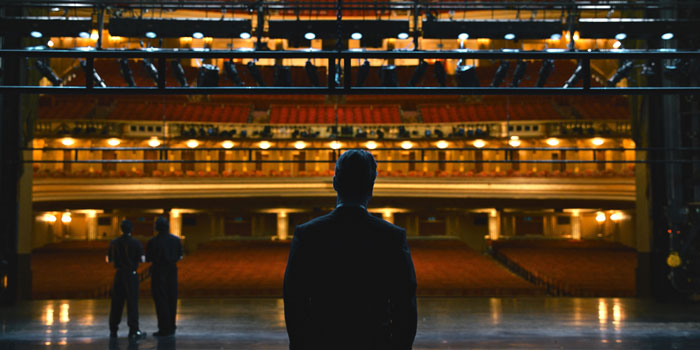
Jobs worth
It is actually a difficult watch throughout. It is basically two hours of arguments, eventually becoming tiring. It does successfully portray the frantic and intense atmosphere of a huge-scale product launch in a very real manner. It fails, however, to convince that this is a good platform for great cinema.
Michael Fassbender plays the Steve Jobs we see here to perfection, capturing the nuances required of someone who is heartless to the extent of being cruel. Kate Winslet’s turn as Joanna Hoffman is steadier than her accent, and Seth Roger puts in an adequate performance as Steve Wozniak. The standout performance is quite minor but nontheless critical: Michael Stuhbarg is exceptional as the bullied inventor Andy Hertzfield.
The biggest success is the genius move to film the picture on era-appropriate equipment. The three scenes were each filmed using totally different techniques: 1984 was captured on beautiful 16mm film, 1988 on 35mm film and 1998 on digital film. The evolution of technology is reflected in the format change and portrays each era in a manner that would have been impossible with digital post-production.
Whilst it isn’t a let down, it will be difficult to find a sustainable market for this film. It’s not a straight biopic, it isn’t hugely in favour of Apple, nor is it against it. It’s a struggle to watch and is unlikely to have people raving about its successes as they leave the cinema.
It could be Danny Boyle’s Newton moment.
Steve Jobs is released in cinemas in the UK in November.
Further Viewing
If you enjoyed the film so much you’re interested in some further viewing, then check out the below videos. In the film you see the 40 minutes building up to the release of three products, but never get to see the keynotes themselves.
1984 – Original Macintosh home computer
The original keynote:
The Superbowl “1984” advert:
1988 – NeXT
The 1988 keynote speech isn’t available on YouTube, but this ABC news segment is a close fit:
1998 – iMac
The full video in all its glory:
Not much to add really other than… EXCITED!

Let’s cast our minds back to May 1999. There was a huge amount of anticipation about the upcoming Star Wars prequel, titled The Phantom Menace. There had been a huge campaign in the proceeding years with the original trilogy being remastered and rereleased at cinemas to much fanfare. However, the prospect of a new Star Wars film was on another level.
So what made everyone so excited? Wasn’t The Phantom Menace terrible?
At the time, George Lucas directing again after a long time on the sidelines wasn’t met with derision. Indeed, it was welcomed. The first film, released 22 years earlier, is still considered by many to be the best in the series so there was scant evidence to suggest this would be a stinker.
Secondly, the trailer made it look tremendous.
We all wondered who this Phantom guy was with the double lightsaber. He looked entirely badass and mysterious and looked like a fantastic potential antagonist to our heroes.
Speaking of which, let’s look at who we had on our side. The main characters were to be played by Ewan McGregor and Liam Neeson, both freshly popular actors with a lot of talent between them. There was a lot of excitement about how well Ewan would cope with filling the role of a young Alec Guiness. Yoda span some pearls of wisdom in the teaser and the chance to get to see him before he went off to Dagobah was tantalising. Elsewhere, knowing we’d see Samuel L. Jackson and Natalie Portman alongside C3PO and R2D2 meant all ’round there was a huge amount of promise.

Darth “Bad-ass” Maul gave us hope
The pod races looked cool too.
It’s worth noting that on release, The Phantom Menace was by no means a critical flop. Roger Ebert said it was “an astonishing achievement in imaginative filmmaking”, giving it 3.5 out of 4. Even in 2008 Empire Magazine put it in their Top 500 list of all-time greatest movies. The momentum of hatred for it has just grown over time, as the technology has been left behind and the realisation that a film essentially about trade disputes doesn’t quite cut it.
So why mention it now? Well, it’s just a word of warning that we’re in the same boat now. There’s no way any of the big magazines will rate it below 3/5, probably much higher. Everything looks perfect and there’s no reason to think it will be a flop.
Just think twice before you buy that next piece of merchandise. Hopefully you aren’t buying the action figure of 2015’s Jar Jar Binks.
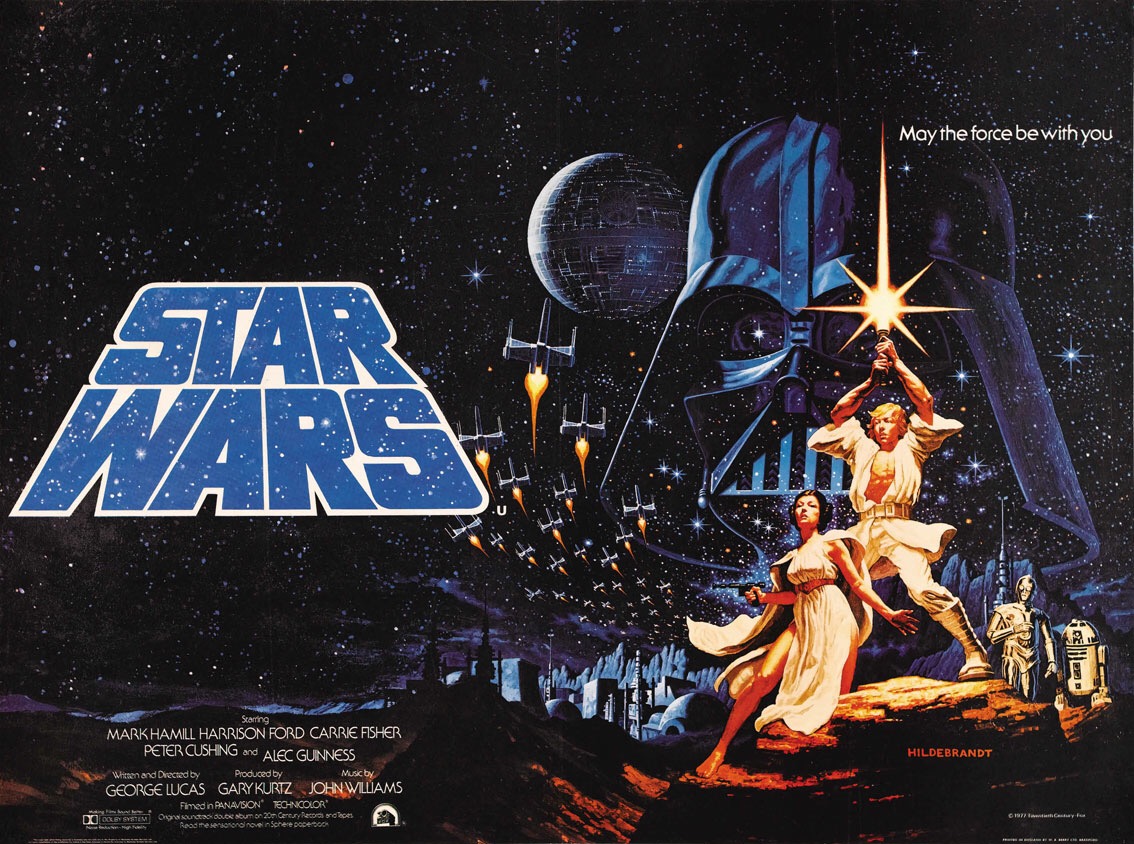
The countdown has begun to Star Wars VII: The Force Awakens. It is now just 67 days until the big day. What better time me than now to celebrate the fantastic series with a week dedicated to all things Star Wars?
Check back tomorrow for the first article – a review of Jon Spira’s excellent documentary Elstree 1976.

Nancy Meyers has a rich history in crowd-pleasing comedies. Her writing and directing credits include What Women Want, both Father of the Brides, It’s Complicated, The Holiday and Something’s Gotta Give. The basic premise of her latest, The Intern, is that a 70-year-old widower Ben Whittaker (Robert De Niro) signs up the the senior intern programme of a rapidly-growing start-up business, only to be assigned as the personal assistant to company director Jules (Anne Hathaway), a woman seemingly struggling to keep up with the demands of her new-found success whilst balancing it with her house-husband Matt (Anders Holm) and daughter Paige (JoJo Kushner). Initially resistant of Ben, she soon grows to his warm personality and old-fashioned sentiments, leading to doubts over the future of her personal and professional life.
This may sounds like middle-of-the-road schmaltz, but it works. Some softening colour washes, a pleasant-on-the-ear soundtrack, straight-from-GAP outfits, showroom offices and houses. It’s a look at the modern world from the rose-tinted perspective of middle-to-upper-class old people, coming together to appeal to women of anywhere between the age of about 30 upwards. It is easy on the eye and easy on the soul, but to dismiss it as just that would be wholly unfair.
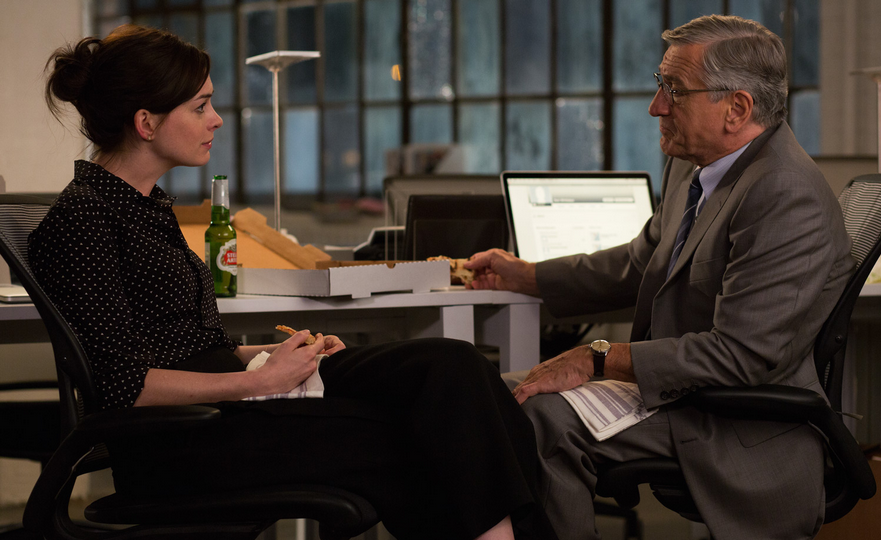
By design, Meyers has created a picture that on the surface is just a pleasant and slow-paced monorail ride through the life of Ben and Jules. However, there is quite a lot of power in the messages it is portraying. First of all, it is telling women to not lie down and take the easy road when it comes to business, despite constantly being told that attempting to be the CEO of a business isn’t correct of a woman. Secondly, just because you have a child, don’t assume that you need to forfeit your career to ensure your partner can maintain his whilst you stay at home and look after your child. Thirdly, don’t feel guilty if your partner doesn’t get any of this.
I’m not sure how this film would fair in the Bechdel Test, which scores films on how sexist the content is by checking how many named female characters are involved with conversations with other women about something that isn’t men. Unfortunately, it would probably score low because the film drowns Jules in a sea of men to highlight the isolation she is experiencing in her career (other key female characters in the office are her emotional assistant and a masseuse). It may also be seen as unfortunate that she relies on a father-figure to guide her through her issues rather than working them out herself, but that’s the nature of the beast and it isn’t at all detrimental to the overall impact of the film in the final act.
There are a few failures. Husband Matt completely loses his essence about halfway through and doesn’t seem fixed in reality, undermining the effect of his actions and Jules’s reaction to them. Too often she brings emotion to the forefront of the company – one scene is obviously playing for laughs but when she’s prioritising the retrieval of a personal e-mail over issues that could destroy the company, the thought can’t be avoided that perhaps she isn’t the right person to sit at the top.
Overall, the film is a success and will no doubt please the crowds to which its box office rivals won’t appeal. It’s slightly early for the Christmas crowds and will not be remembered when the awards season is upon us, but it if you need some surprisingly thought-provoking entertainment there are far worse ways to spend two hours.
The Intern is released at cinemas in the UK on 2nd October 2015.

What Happened, Miss Simone? is a 2015 documentary about American singer and songwriter Nina Simone. Combining archival footage and interviews with close friends and relatives, the film broadly covers the key periods of her life, building up a picture of her off-stage persona in the process.
Such was the nature of her personality, it is a documentary that was destined to be extremely interesting. Indeed, it is quite easy to accuse it as being a by-the-numbers film: get some footage of her onstage, source a few interviews with her, get the close family on board and let them speak from their point of view and build up a picture of her. That may be the case here, but it doesn’t mean it’s a bad film.
The film was sanctioned by daughter Lisa Simone Kelly, who is also listed as one of the film’s executive producers. This is a wise move. Not withstanding the access to personal diaries this would have undoubtedly provided to Garbus, this is crucial because Lisa is able to provide a unique insight into her mother from a point-of-view nobody else could offer.
There are several other documentaries that cover the same ground, perhaps most notably Nina Simone: The Legend (Frank Lords, 1992), which offer their own viewpoint on her life. What Happened, Miss Simone? stands alone as a film in its own right, though perhaps lacks the detail needed to offer any real insight into any particular point in her life. In particular, her time as a civil rights activist is given around half-an-hour – enough to whet viewers’ appetites but not enough to explore her involvement and impact. Equally, not a single song is allowed to air from start to finish, diminishing the effect of her powerful performances.
Worth a watch, but it serves only as an introduction to the artist as it only really touches the surface.
What Happened, Miss Simone? is available exclusively on Netflix.
[Note] If you’re interested in what she could do at her peak, here’s a majestic performance of her song “Feelings” live at the Montreux Jazz Festival in 1976.
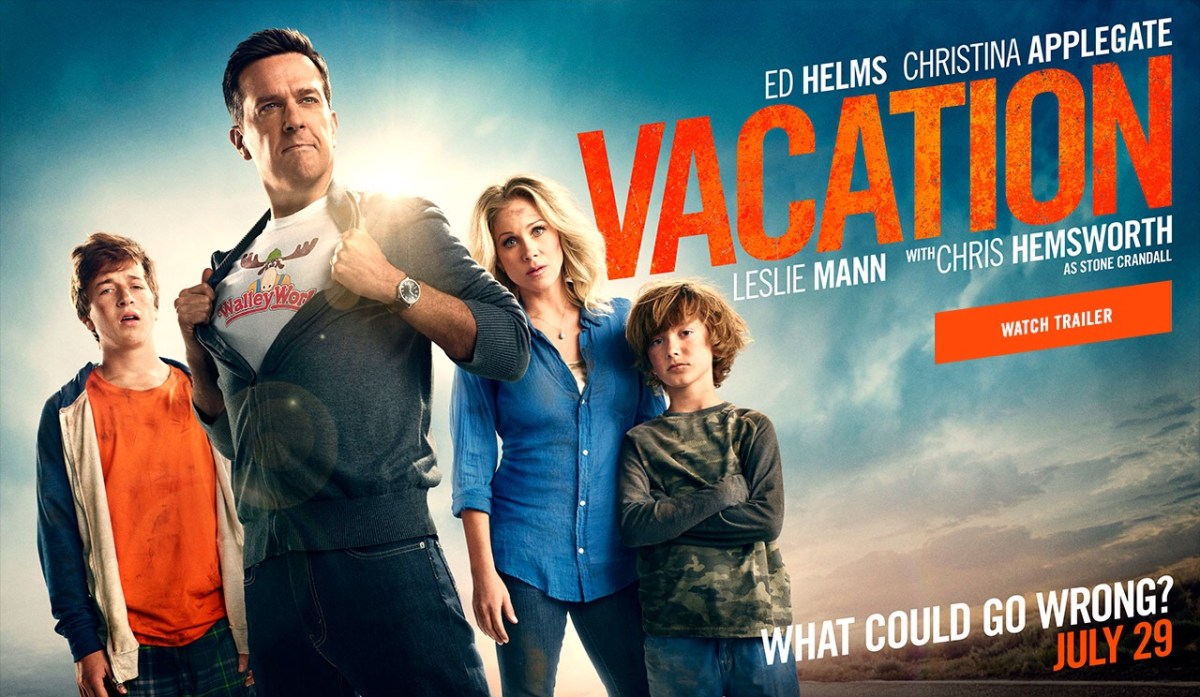
The newest addition to the Vacation legacy is an attempt to reboot the previously successful franchise and bring the story to a whole new audience. It’s a shame then that it fails to do either and also tarnishes the memory of the originals in the process.
It stars Ed Helms as the now grown up Rusty, who we know as the son of the old Griswold family. He now has a family of his own to look after. Following in his father’s footsteps, he decides to reboot their family bonds by taking his wife Debbie (Christina Applegate) and two sons Kevin (Steve Stebbins) and James (Skyler Gisondo) to Walley World. Hilarity ensues.
The opening twenty minutes or so as they set up the characters is delivered in a very tedious manner and doesn’t really achieve the desired results of showing a truly dysfunctional family. There are some cheap gags as the four family members conform to some stereotypical character traits before the real action gets going and some fun starts, but to have such a slow start to a big summer comedy is a risky move that contributes to the film’s downfall.
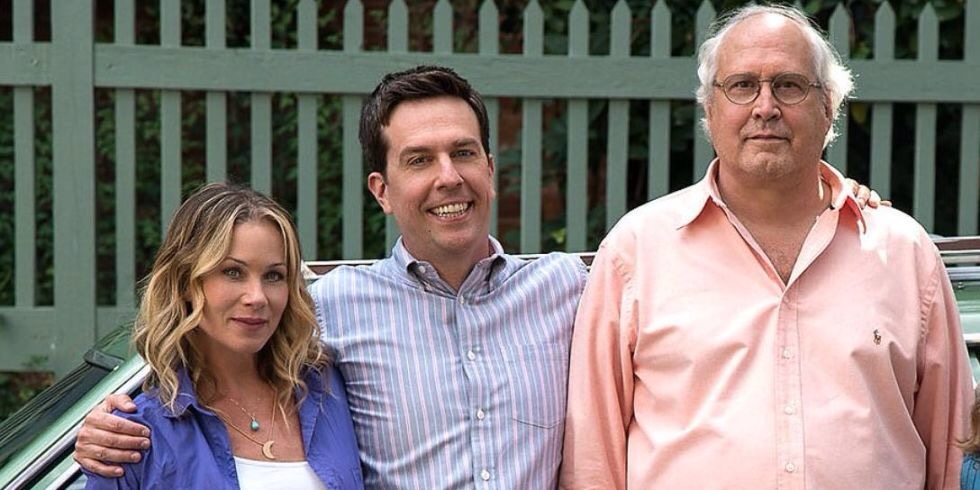
The best moments come when the Griswolds interact with other characters appearing in cameo roles. Most notable are Chris Hemsworth as Stone, the well-endowed brother-in-law, and Charlie Day as Chad, a depressive river rafting guide. Both spawn some great moments that are let down by the punctuating gags between about rim jobs and swimming in poo.
The lowest point is when Chevy Chase appears in a wholly unfunny late scene. Watching him attempt to make the removal of a medium sized guitar from a large cabinet look awkward and clumsy for over ten seconds is simply excruciating.
It’s a valiant attempt to bring the kind of humour that made the originals so successful to a new audience but it actually tarnishes the originals as I’m now questioning whether they were all of this quality. Avoid this film unless your main priorities are familiarity with a rehashed storyline and a lack of anything remotely thought-provoking.
Over the last week Cinema Etc. has been dedicated to a range of articles on The Walking Dead. Hopefully you enjoyed it! In case you missed anything, here are some links to the articles:
The Walking Dead: The Board Game (Z-Man Games)
The Walking Dead: The Game – Season One (Telltale Games, 2012)
The Walking Dead: Road To Survival (Scopely, 2015)
Top Moments of The Walking Dead TV Show
The Music of The Walking Dead
The Walking Dead: Weird and Wonderful Merchandise
Fear The Walking Dead: Series 1, Episode 1 (Scott Dow, 2015)
Enjoy!!

Hidden away on the Masters of Cinema Blu-Ray release of The Insect Woman is the second feature film directed by Shohei Imamura, Nishi-Ginza Station. It isn’t as fondly remembered as the main feature and for good reason, featuring almost none of the hallmarks of a director who would later come to be regarded as one of the greatest in Japanese film history.
The story plays second fiddle to the music, the recurring titular song as sung by Japanese crooner Frank Nagai. You’ll be forgiven for thinking you’re about to watch one of the worst musicals of all time after the first five minutes, though thankfully the support cast only get that one chance to derail both the song and the feature. What isn’t overly evident is that it is for all intents and purposes an extended music video for Nagai’s follow-up to his previous hit “Let’s Meet in Yarakucho”, a result of Imamura’s refusal to give the song a full playthrough at any point of the film.

One of Imamura’s finest hours in film… can be found elsewhere on the same disc.
The supporting story relates in no way to the words of the song, indeed contradicting it in many ways. It tells the story of a man name Oyama (Yanagisawa Shin’ichi), whose suppression at the hands of his wife Riko (Yamaoka Hisano) leads him to bouts of daydreams of his former days in the Japanese army, particularly a dream where he is trapped on an island with a beautiful girl named Sally (Hori Kyoko). When his wife and two children take a short break, he is encouraged by his friend Dr Asada (Nishimura Ko) to go out on the town and have a one night stand whilst he has the chance, under the pretense that he will clear his head, stop daydreaming and concentrate on his life as a family man.
It has its charms at times, but the rushed pace means it is littered with unexpected jumps that are at odds with the subtly developing romance between Oyama and love interest Igarashi Yuri (also played by Hori Kyoko). Imamura’s original screenplay was probably haphazardly chopped to get the running time down. Regardless, his third film of 1958 – Endless Desire – was on the horizon and there wasn’t time to make the film work.
Nishi-Ginza Station is certainly not amongst Imamura’s finest work, but will find a place in the interests of fans of his famed later works.
The Masters of Cinema dual-format release of The Insect Woman and Nishi-Ginza Station is available to purchase now.
 Cinema, etc.