Film review – Toni Erdmann (Maren Ade, 2017)

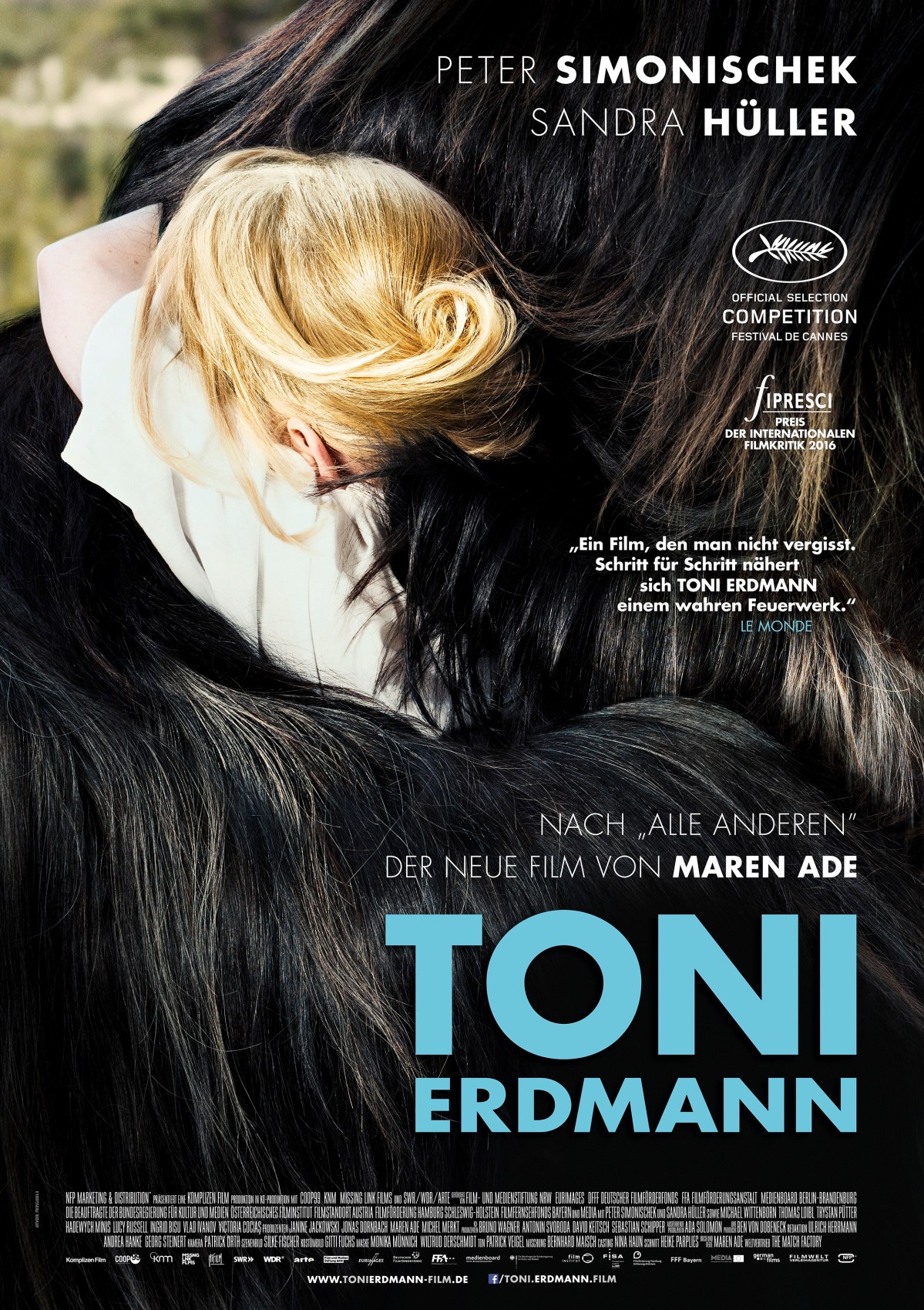
If you’ve seen Toni Erdmann, you may be forgiven for leaving the cinema mightily confused. Not because the film was overly complicated, but perhaps because you’d watched a film drastically wide of what you’d been expecting. Marketed primarily as a German-Austrian slapstick comedy (schpalschtick? I’m coining it now), what audience have instead been challenged to watch is an affecting tragic drama that deals with a man’s disjointed relationship with his career-focussed daughter and tries to cultivate some kind of relationship amidst the complicated web of activity she has built around herself.

Toni Erdmann is the alter ego name of Winfried Conradi (played by Peter Simonischek), the father of Ines Conradi (Sandra Hüller). She is working as a business consultant in Bucharest, but returns to her hometown following the death of the family dog. When Winfried realises she is unduly stressed and taking a fake phone call in the back garden, he decides to follow her back to Bucharest and spy on her to find out more about her life.


One of the main polarising aspects of the film is the relationship between the father and daughter. Depending on how you interpret it, you might see him as a terrible father who is undermining his daughter’s progress in her career. She is trying her hardest to be taken seriously in her role in the midst of some terrible sexism in her workplace, but he is treating her whole life as a joke and she is right to distance herself due to the feeling of resentment over his actions. One cringe-worthy encounter involves an important business meeting with an important contact Henneberg (Michael Wittenborn) at an evening drinks social, whereby she makes a serious suggestion on a business level, but instead is asked by the man to take his wife shopping, whilst Ines’s father – as the ridiculous titular Toni – is invited for more drinks. A frustrating scene that portrays the subtleties of sexism at their absolute worst.

However, if you side with the father and assume that he is a totally devoted father – or at least one regretting not being devoted in the past – then you can read it that he has seen his daughter struggling, depressed and stressed, and wants to help her realise that there is more to life than being stressed at work. When he sees his daughter being pushed around by her workmates and not being treated equally, then he realises he needs to step in and show her what she can’t see – that she’s wasting her time.


After contemplating the film for over a week, I’m still not entirely sure where I sit on this, though I’m leaning towards the latter.

There are moments of real comedy in the film, but they are often laced with tragedy serving to undercut any notion that this is a comedy. There is a memorable scene when she organises a birthday brunch, which is only organised because it offers an opportunity for work colleagues to socialise. However, when she gets stuck in her dress whilst getting ready, she decides to simply take the dress off and answer the door with no clothes on. Initially humorous, the ripples of laughter disintegrated as the audience in my screening realised that we were witnessing a woman having a breakdown.

It’s a truly intelligent film that refuses to provide any definitive interpretations on the situation, instead allowing the viewers to make up their own mind. Thought-provoking and well-executed – exactly what a film should be.

Why La La Land probably won’t clean up at this year’s Academy Awards

The critical enthusiasm for La La Land has been matched, for good reason, by the audience’s outpouring of affection. The music is now firmly stuck in the heads of everyone who has seen it, with many of its devotees wondering what the odds are for it to clean up at the Oscars.

Here I’ll explain why this probably won’t be the case.

What’s the current record?

Three films have won 11 Oscars: Ben Hur, (1959), Titanic (1997) and Lord of the Rings: The Return of the King (2003). Titanic managed these with 14 nominations, whilst the final Lord of the Rings film achieved a clean sweep, winning 11 out of 11 awards. Elsewhere, All About Eve (1950) received 14 nominations, though it only won 6 of these.

For La La Land to get close to this, it’s therefore going to need 11 or more nominations, and win almost all of them.

Which awards does it have a good chance of winning?

La La Land has a great chance at winning in many or all of the categories available to it: Best Picture; Best Director; Leading Actor and Actress; Original Song; Original Score; Best Writing (Original Screenplay) will certainly be places it will be nominated, so assuming the swell of enthusiasm continues it will probably do well in what are considered to be the major categories.

So where will it fall down?

There are 24 categories that the Academy awards prizes in, but that doesn’t mean that a film can win in 24 categories. There are two awards for animated films, two for documentary films, one for a film in a foreign language and one for a live action short film. So that’s six prizes that can’t be won.

There are two prizes for Best Writing: one is for an original screenplay and one is for an adapted screenplay. Since La La Land is an original script, it is excluded from the adapted screenplay category. That’s another one down.

Perhaps the most glaringly-obvious problem it faces is that there are only two characters in the film: Mia and Sebastian. So whilst they will probably get the nominations for leading actress and actor, there isn’t anyone of note in the film that could be classed as a supporting actor or actress. The closest would be John Legend’s portrayal of Keith, the frontman for the jazz band Seb joins halfway through the story, followed by Rosemarie DeWitt as Laura (Sebastian’s sister). It seems unlikely to pick up nods in these categories. Two more down.

Finally, a few categories have already been announced and La La Land doesn’t feature in any of them. The long-lists Best Makeup and Hairstyling and Best Visual Effects excluded La La Land from their lists. Two more down.

So where does that leave it?

It only has access to 13 awards and will need a nomination in each of the categories if it is going to break records. It’s not unrealistic for it to achieve this, but it will require nods in the likes of Best Production Design (awarded for interior design for the sets) and Best Costume Design to get there.

However, with a weak field to compete against, it is quite possible that it will do. this anyway! Here’s hoping!!

Film review – Elstree 1976 (Jon Spira, 2015)

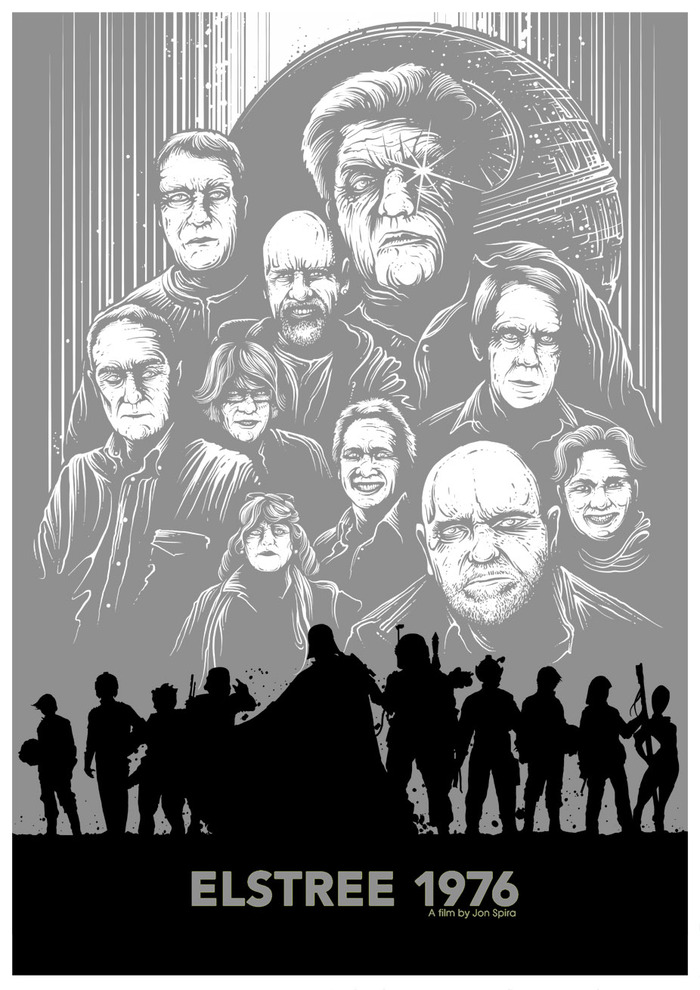
Elstree 1976, the latest documentary from Jon Spira, explores the lives of ten people who were involved in the original Star Wars films as extras, supporting characters or inside costumes and thus were unseen. Catching up with them 38 years later, the film gives an insight into their respective positions in the wider Star Wars fandom universe, their take on one of the most bizarrely dedicated communities and their memories of their time on set.

The featured cast includes a mixture of actors and actresses who range from household names to people only die-hard fans will know. The ten are as follows:

Paul Blake (Greedo)
Jeremy Bulloch (Boba Fett)
Garrick Hagon (Biggs Darklighter)
Anthony Forrest
David Prowse (Darth Vader)
Angus MacInnes (Gold Leader Rebel Pilot)
Pam Rose (Leesub Sirln)
Derek Lyons (Massassi Temple Guard)
Laurie Goode (the Stormtrooper who banged his head)
John Chapman (Red 12 Drifter Rebel Pilot)

For a film where it seems there is a huge difference in the interest in each of the stars, the narrative benefits by giving equal billing to each of them. But then that is the point of the film – it shows the human side of everyone involved and cross-examines the fact that the only reason they are anything more than actors is that they have been part of a great film and the fans have an unfaltering level of affection for everyone involved.

Justice for Greedo

They didn’t realise at the time but their involvement with the film would come to define their lives. It’s something that they have forever been associated with and can’t get away from, whether they like it or not.

The film opens with a humorous montage of each of their action figures, as they talk about how they feel about how they turned out (or didn’t!). There’s also a little controversy with what different interviewees believe is the right level of relevance to permit them to attend the conventions and be classed as an actor in Star Wars.

There are some moments of real emotion, just as there are moments of hilarity. Of course, they offer their own perspective on the film and provide some morsels of tales about the production, but Spira has instead made the decision to give the stories of their subsequent lives the space to breathe. This film gives them the chance to prove that they aren’t just the Stormtrooper who hit his head or the guy whose voice wasn’t quite right for Darth Vader. What makes this film work isn’t the immense details of how the most famous of sci-fi films was made. Instead it concentrates on the human side of each of the ten people we learn about.

It has been a long road to get here for the Kickstarter backers – almost two years in fact – and Jon Spira has been absolutely transparent in what must have lost him many nights of sleep through stress (the whole distribution farce is well documented on the Kickstarter campaign page). For everyone who is now able to watch it, it was well worth the wait.

Elstree 1976 is available now on Blu-ray and DVD, as well as on streaming services.

New La La Land trailer released – Watch below!

I was buzzing for days after seeing La La Land at the London Film Festival last month. It’s a truly spectacular film and one I can’t wait to watch again.

Whilst I’m gutted the UK release date has been pushed back to January, I’m thrilled to see a new trailer has been released.

Watch it here:

It’s going to make you very happy.

Mayhem Film Festival – Preview

I’ll be heading down to the Mayhem Film Festival in Nottingham tonight to catch the first night of action.

First up will be The Duke St. Workshop feat. Laurence R. Harvey. Presented in conjunction with Kinoclubb, the performance will feature an electronic live score accompanying Harvey (star of The Human Centipede 2) as he reads two H. P. lovecraft short stories: ‘From Beyond’ and ‘The Hound’.

Next is the film ‘Raw‘, which received its UK premiere at the BFI London Film Festival last week to rave reviews.

Finally, the UK premiere of Indonesian film ‘Headshot‘ will round off the proceedings. 

Film review – Dancer (Steven Cantor, 2016)

Documentary filmmaker Steven Cantor’s latest cross-examination comes in the form of Dancer, which tells the story of Ukrainian ballet dancer Sergei Polunin, who in 2010 became the youngest man to become the British Royal Ballet’s leading principal.

Sergei Polunin dances to Hozier

The film uses talking heads interviews blended with some exclusive home video footage to creature a portrait of a fragile artist. Polunin is shown as a man who knows little outside his art and is desperate to change the future for upcoming ballet dancers who he fears will make the same mistakes as he did. These mistakes led to him quitting the British Royal Ballet Feeling at the tender age of twenty-two, shocking the ballet world and disappointing his fans.

Most insightful are the interviews with his mother and father. Clearly huge sacrifices were made throughout his life to get him to where he is now. The film leaves it open as to whether either of them regret putting him through it, and it’s not something that ever really needs an answer. He certainly has a different life to the one he would have had if he’d stayed in Khersan, Ukraine.

The focal point of the film comes in the form of the Dave LaChapelle-directed video that went viral earlier this year. I urge you to stop reading and watch the video below on the largest screen you can find.

This video has, at last count, been viewed 16.3m times in the last eight months. That is an astonishing amount, but then it is an astonishing piece of art. It was choreographed by Jade Hale-Christophi, a ballet dancer with Polunin met at the British Royal Ballet and one of his closest friends. The purpose of the film was to announce his retirement and have that as his “final dance”, but the response was so great he decided to change tact, and instead wants to do guest appearances and one-off pieces of art.

This is a crucial thing for him. The reason he has struggled throughout his career is a lack of time to step back, ask himself what he really wants, and make an informed decision about the next career choice.

He also spoke after the screening about where ballet’s David Beckham is. I suspect after that video and this film, he need only look in the mirror to find him.

A fascinating examination of a tortured artist now seemingly on the straight and narrow.

Dancer will receive a DVD release in April via Dogwoof.

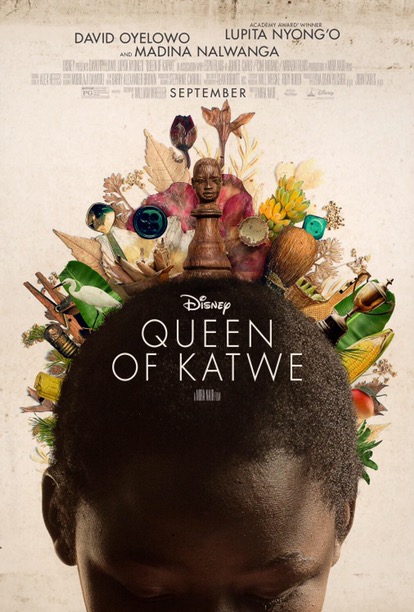
Film review – Queen of Katwe (Mira Nair, 2016)

Walt Disney Studios may have a long history of releasing underdog sports films, but their latest live action is nothing like any of its predecessors. In fact, it’s a breath of fresh air, as the crowd discovered tonight at the UK premiere.

Set and filmed almost entirely in the slums of Katwe in Uganda, the film tells the story of Phiona (newcomer Madina Nalwanga), a child who learns to play chess under the mentoring of missionary Robert (David Oyelowo). Much to the initial dislike of her mother Nakku (Lupita Nyong’o), she excels at the game and quickly starts competing at international competitions, giving her the opportunity to escape from certain poverty.

David Oyelowo and newcomer Madina Nalwanga

At the heart of the creation of the film was Mira Nair, the female director who knows Uganda inside out (she met her husband whilst researching the film Mississippi Masala in 1989). She spoke prior to the screening of the importance of filming the entire film in Uganda and leaving a positive message about the country outside of the anti-colonialism that is a constant recurrence in films about Africa (though A United Kingdom is very good too!). There should be no worries that this is a risky move for Walt Disney Studios.

The triangle of central characters played by Nyong’o, Oyelowo and Nalwanga are what helps the film achieve so much. Whilst Robert acts as a much-needed father figure to Phiona, he in turn proves antagonistic to Nakku, a mother who is keen to protect her second-eldest daughter for fear of her making the same mistakes as her elder sister Night.

Indeed, it is Nyong’o’s turn in the film that, for me, makes it a true triumph. As the protective mother to a daughter she fears is getting into something too unfamiliar, the result is a strong-willed role model for black women (as she is in real life). This is sadly in short supply in the modern cinematic landscape. This is a topic that will doubtless be explored in BFI’s promising Black Star programme throughout October 2016.

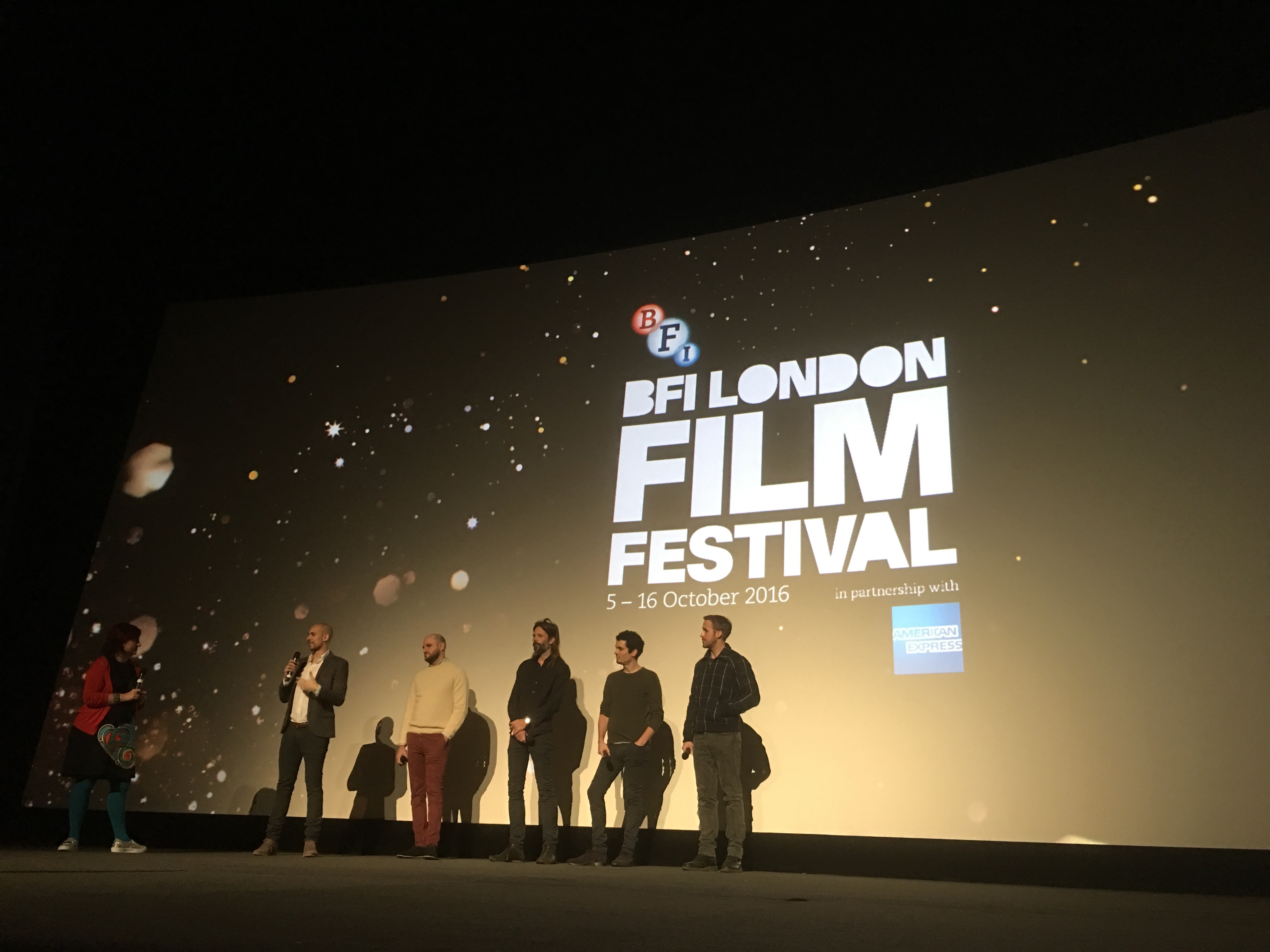
Festival director Clare Stewart, director Mira Nair and stars David Oyelowo and Lupita Nyong’o at the UK premiere

Nair does a great job with the telling of a captivating story throughout the chess matches. This is tricky territory for a filmmaker. If too long was spent explaining it, there’s a risk of boring your audience. Spend no time on it at all and you lose the core of the story. Get the tone wrong and you look completely foolish. Time was spent making sure that the metaphorical importance of the game was reflected in the development of Phiona as a character. It works perfectly.

It was a joy to see East Africa looking so vibrant, brought to life with some beautiful shots and an uplifting story. A total triumph.

Queen of Katwe is in UK cinemas now and can also be pre-ordered for home-viewing.

Film review – Psiconautas, Los Niños Olvidados / Psychonauts, The Forgotten Children (Alberto Vázquez & Pedro Rivero, 2016)

Somewhere deep inside me was a sworded hope that maybe, just maybe, a family was in the screening of Psiconautas at Prince Charles Theatre and had a truly miserable time watching one of the most bizarre 75 minutes of cinema I have ever seen. Harsh, I know, but variety is the spice of life and Trolls 3D sold out weeks ago despite being in every cinema across the land in about two weeks.

Sorry.. what just happened?

The plotline is a difficult one to nail down. Based on a graphic novel by Alberto Vazquez, its origins lie in a 2011 short film titled Birdboy. After a short prologue, we are introduced to our two main protagonists. The aforementioned Birdboy is a fatherless creature who can only function whilst under the influence of drugs. His former girlfriend Dinki – a mouse – is trapped in a life ruled by her religion-mad mother, her father (who isn’t a mouse but wears a mouse mask) and a half-man-half-dog brother called Jonathan who his parents adore. She longs to escape with her two friends, but doing so proves to be not so easy when they live on a distopian hell island and are being hunted down by hilarious sentient alarm clocks.

They meet other characters along the way, from a panicked rubber duck to the titular tribe of forgotten children. There is a sense that Vázquez and Rivero are bursting with ideas and this bodes well for future works.

I’m so confused.

It is a wholly confusing experience that had no intentions of letting the audience expect the expected. There were moments of real hilarity and moments of true horror – a real rollercoaster of bemusement. The climax is nothing short of terrifying.

If you like your animation to be all warm and fuzzy then clearly this isn’t for you. But if you’ve ever wondered what it would be like to get trapped inside a Stanley Donwood nightmare then there could well be something here for you.

Film review – La La Land (Damien Chazelle, 2016)

WARNING: This review is effusively positive. If you’re a misery-guts then please look away now.

Every once in a while you will go into a film knowing almost nothing about what you’re going to see and get absolutely blown away by a surprisingly perfect masterpiece. As you get further into your film-watching life, enjoying these moments becomes increasingly rare, so when a film like ‘La La Land’ comes along, you can’t help but be overcome by giddy excitement.

Damien Chazelle shot to fame in 2014 with his critically acclaimed and rather special jazz-bully drama ‘Whiplash’. ‘La La Land’ shares very few similarities with it, bar an affinity to jazz that also featured prominently in his debut feature ‘Guy and Madeline on a Park Bench’. It does expand on a topic explored in ‘Whiplash’: the ongoing internal conflict of artists pursuing their dream at the expense of every other aspect of their life.

If you enjoyed his first two feature films but thought he couldn’t “do” mainstream, then prepare to be proven absolutely wrong seconds into the start. It opens with an over-the-top musical song and dance number set amidst a traffic jam. It’s an explosive one-shot (though there may have been some clever linking between extended shots) that received a round of applause at the end from an appreciative audience. Rightly so – it was jaw-dropping.

‘La La Land’ is, at heart, a homage to traditional musicals, with a joyful soundtrack matched by a couple of mesmerising performances from the lead performers Ryan Gosling and Emma Stone. Gosling stars as Sebastian, a struggling jazz pianist going from poor gig to poor gig in LA, with dreams of owning his own jazz club to fend off the death of jazz. Stone is Mia, a young actress moonlighting as a barista at the Warner Brothers Studio sets who can’t get a break she deserves in the film industry. After a number of serendipitous meets, Seb and Mia start to fall for each other and, with both a figurative and a literal song and a dance, their romance explodes.

With Seb being a jazz expert/enthusiast/nerd and them both being performers, Chazelle has given himself the platform on which to produce a naturalistic musical that will doubtless make it more acceptable to those who don’t normally class themselves as musical fans. There is also evidence of a significant amount of effort put in by Gosling to perfect the piano shots, which were impressively all performed by him.


It’s a film so visually stunning it’s hard to take your eyes away from it. There is, however, never a risk that it was simply a platform to reference more familiar films of old. In a breathtaking final segment, we take a walk through memory lane with nods to a number of classic musicals, but they are simply nods in what amounts to one of the most perfectly-balanced final sequences I’ve seen in cinema. Gasps were audible around the auditorium.

The soundtrack is destined to stick around for years to come. Gosling/Stone duets “City of Stars” and “A Lovely Night” are both standouts, but it will be “Audition (The Fools Who Dream)” that will be vying for an Oscar early next year. A beautiful number written by Justin Harwitz, Benj Pasek and Justin Paul, it is left to Emma Stone to deliver an emotionally raw live performance.

The only downside for me is that I have to wait for another two months to see it again. A must see.

Film review – 偽りの隣人 / Creepy (Kiyoshi Kurosawa, 2016)

Kiyoshi Kurosawa’s latest release Creepy received its U.K. premiere tonight as part of the London Film Festival. It blends elements of police drama, suspense and mild horror to create an intriguing film that achieves much but ultimately falls down due to a lack of ruthlessness in editing that would have helped the pacing.

Set in approximately 2009, it tells the story of a retired policeman Takakura (Hidetoshi Nishijima) who has changed careers to work as a criminology professor at a local university. Having moved to a new part of town with his wife Yasuko (Yūko Takeuchi) and dog Max, they begin to become suspicious of the titular creepy neighbour Nishino (Teruyuki Kagawa) and his daughter Mio (Ryoko Fujino), whilst Takakura attempts to solve an old case that has come out of the woodwork.

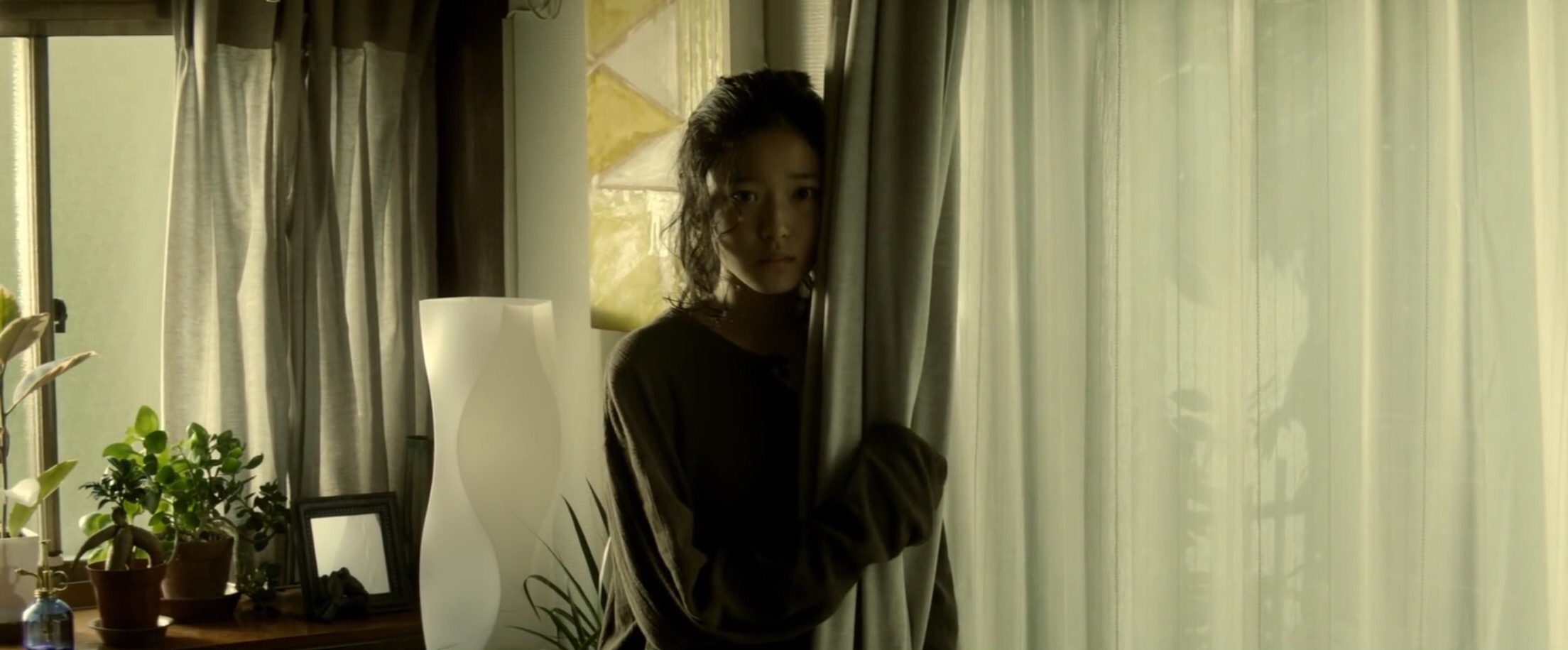
Creepy Nishino

The casting of the genuinely creepy Kagawa is a solid choice. Director Kurosawa is on familiar ground, having worked with him on 2009’s Tokyo Sonata, though this role is very much a departure from the jobless family man we saw previously. When the results are this good there’s no need to change.

Kurosawa, working again with cinematographer Akiko Ashizawa, achieves a lot with natural lighting to create darkness for the lead characters as they delve into their inner-most thoughts. This was an effective technique used previously by the pair in Journey To The Shore and is mined more subtly here to arguably better effect, especially in one particular witness interrogation scene.

However, there are flaws. The ending could genuinely have happened about twenty minutes prior to when it finally occurs, and when the story is finally resolved the relief I felt wasn’t for any of the particular characters but more for the fact it signalled the end was in sight. It’s unfortunate that the ending is so shocking and powerful with some great acting that was undermined by the preceding needless plot extension.

There were a few ideas throughout the film that seemed to fizzle out. Saki (Haruna Kawaguchi) was really prominent for a good portion of the film but was clumsily written out before the resolution of her storyline; her family went missing but she doesn’t seem to care why in the end. A police chief is written into the key part of the story to get Takakura out of a dead end in the plot. There’s a mind control element to the story that isn’t ever fully explained, instead expecting the viewer to just go with it. 

After a long setup, this film is genuinely exhilarating for about an hour. With a shorter ending and a little more clarity, it could have been much better than the final result. For me, it is a missed opportunity.