Unknown's avatar

Posts by hutchwp

Chief writer and editor at Cinema, Etc.

The Problem With Zavvi’s UK Disney Steelbooks

There is a huge problem brewing with Zavvi’s steelbook range in the UK.

When Zavvi initially launched them in 2014, there was much excitement from the steelbook community and Disney fans alike. Marrying two strong groups of collectors together was a financial goldmine for Zavvi and Disney. At £20 a pop and with each item having a limited run of around 4000, the revenue on the entire collection was considerable. £80,000 per release, over fifty releases… That’s potentially over £4m of revenue by the time the series was over.

Out rolled the big hitters. Aladdin, Beauty and the Beast and The Lion King from their 1990s renaissance period. Snow White, Sleeping Beauty and Cinderella from their classic princesses era. New releases for Frozen, Big Hero 6 and Wreck It Ralph sold out quickly as pre-orders.

They’d suckered everyone in and could hope for a continued interest as more were released. Or could they?

Suddenly they were into the realms of the unknown. Sure, Tangled will sell well, but what about the less popular releases? The Sword in the Stone? Brother Bear? What about Oliver & Co or Saludos Amigos?

They started on this path, but clearly something in the numbers gave them cold feet and by the time Treasure Planet was launched in February 2016, they decided no further vault releases would see the light of day. Instead, all that has been issued since then is the new release item Zootopia and a pre-order for Moana, due for release in April 2017.

To make matters worse, Zavvi have now taken to reissuing all the Disney films already available as standard steelbooks, but this time as lenticular steelbooks, which indicates that they aren’t planning any further standard versions. For those collecting the set and with 35 Disney steelbooks in their possession, that’s something of a kick in the teeth.

WHAT’S LEFT TO RELEASE?

The following Disney vault films are yet to see the light of day as steelbooks, though some aren’t even available as Blu-rays yet.

Saludos Amigos
Disney Classic #6
Originally released on August 24, 1942
Not currently available on Blu-ray in the UK

The Three Caballeros
Disney Classic #7
Originally released on December 21, 1944
Not currently available on Blu-ray in the UK

Make Mine Music
Disney Classic #8
Originally released on April 20, 1946
Not currently available on Blu-ray in the UK

Fun and Fancy Free
Disney Classic #9
Originally released on September 27, 1947
Currently available on Blu-ray in the UK

Melody Time
Disney Classic #10
Originally released on May 27, 1948
Not currently available on Blu-ray in the UK

The Adventures of Ichabod and Mr. Toad
Disney Classic #11
Originally released on October 5, 1949
Currently available on Blu-ray in the UK

The Many Adventures of Winnie the Pooh
Disney Classic #22
Originally released on March 11, 1977
Currently available on Blu-ray in the UK

The Black Cauldron
Disney Classic #25
Originally released on July 24, 1985
Currently available on Blu-ray in the UK

The Great Mouse Detective
Disney Classic #26
Originally release on July 2, 1986
Currently available on Blu-ray in the UK

Oliver & Company
Disney Classic #27
Originally released on November 18, 1988
Currently available on Blu-ray in the UK

The Rescuers Down Under
Disney Classic #29
Originally released on November 16, 1990
Currently available on Blu-ray in the UK

Dinosaur
Disney Classic #38
Originally relased on May 19, 2000
Currently available on Blu-ray in the UK

Atlantis: The Lost Empire
Disney Classic #41
June 15, 2001
Currently available on Blu-ray in the UK

Lilo & Stitch
Disney Classic #42
Originally relased on June 21, 2002
Currently available on Blu-ray in the UK

Home on the Range
Disney Classic #45
Originally relased on April 2, 2004
Currently available on Blu-ray in the UK

Chicken Little
Disney Classic #46
Originally relased on November 4, 2005
Currently available on Blu-ray in the UK

Meet the Robinsons
Disney Classic #47
Originally relased on March 30, 2007
Currently available on Blu-ray in the UK

Bolt
Disney Classic #48
Originally relased on November 28, 2008
Currently available on Blu-ray in the UK

Winnie the Pooh
Disney Classic #51
Originally released on July 15, 2011
Not currently available on Blu-ray in the UK, but is available in the US

IS THERE A SOLUTION?

Well, without the numbers to help guide us, it’s difficult to speculate on making a business decision that should be focused on a financial gain. No business runs for long on a loss, so we can’t expect them to issue something that loses money.

However, there should be a compromise. Those invested in the majority of the items so far are more than likely to want to complete their collection, so they’d need to estimate how many people make up that pot.

There are groups of films there that can be treated slightly differently. Classics #6-#11 (Saludos Amigos, The Three Cabaleros, Make Mine Music, Fun and Fancy Free, Melody Time and The Adventures of Ichabod and Mr. Toad) are obviously niche items, but someone interested in one of them would surely want to pick all of them up. One solution on that front is to group them all together as one or two boxsets, which helps people complete the series whilst reducing their risk on people buying just one or two of them and leaving the rest. Indeed, the total running time of the six films is around 6.5 hours, so they could be done over two discs.

Some of them are popular enough for a standalone release. Bolt, The Many Adventures of Winnie the Pooh, Oliver & Co. and The Rescuers would fall into that category.  Limiting the releases to 1,000 copies and making that explicit on the item description would tempt in some sales to collectors – anything extremely limited with a Disney logo on it is bound to ignite interest.

It doesn’t help matters when the faithful shoppers are getting bombarded with pre-order emails for steelbooks of the likes of Street Fighter, Flight of the Navigator and Short Circuit.

Perhaps the best solution is to launch the remainder as a subscription service, with one released every month over a two-year period.  This could be modelled on their ZBOX series, and they could throw in other items to sweeten the deal. It may not be perfect but how else will they ensure people stick around for the release of Dinosaur?

Film review – Ghosts of Mars (John Carpenter, 2001)

John Carpenter’s history as a filmmaker may have many blemishes on it. For every Assault on Precinct 13, there was a Village of the Damned. For every time Kurt Russell escaped from New York, he also escaped from L.A. Yet few of his films have stunk as badly as Ghosts of Mars, which, unlike most of his other films, hasn’t got better with time.

Set on a remote Martian mining town, the plot concerns police woman Melanie Ballard (Natasha Henstridge) transporting dangerous criminal “Desolation” Williams (Ice Cube). However, upon arrival she realises that the planet has become infected, essentially, by zombies. She has to team together with a group of survivors including Jason Statham, Pam Grier and Clea DuVall.


The film was a box office bomb, making back just $14m of its $28m budget (global sales, according to Box Office Mojo). It’s hard to see why. Why it cost so much, that is. Conceptually, the mining town should look gritty, desolate and run down. It actually ends up looking more like a half-baked Crystal Maze set that was abandoned half-way through.
The plot isn’t terrible, and good movies have been carved out of much worse starting points. The soundtrack, provided by John Carpenter, is brilliantly varied.

What lets it down is dated visuals – they’re very 2001 – and an unreliable script. The actors do their best with it, but it simply doesn’t hit the marks.

It must be tough to turn down an offer to work with someone as great as John Carpenter. One can only assume that those involved looked at the script and were reminded of his best work. 

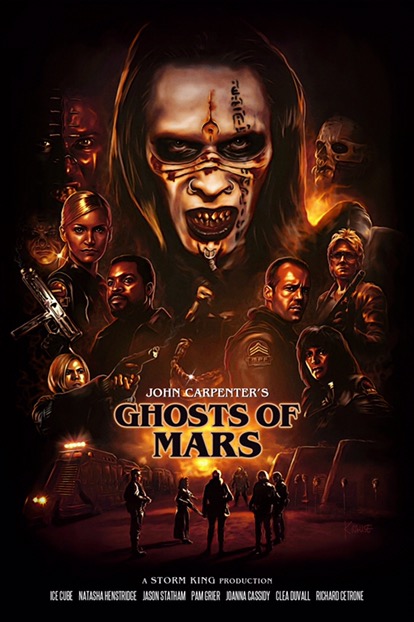
[Note] I hated all the official posters for this film, but unearthed the brilliant poster by Ralf Krause on the website AlternativeMoviePosters.com. Check out the website for more great alternative movie posters and order some to decorate your wall with something wonderful!

Film review – Varieté (Ewald André Dupont, 1925)

Recently remastered and re-released by Eureka on their Masters of Cinema label, Ewald André Dupont’s Varieté is a wonderful film that’s well-deserving of a bit more attention, even 90 years after its original release.

It follows Boss Huller (Emil Jannings), the owner of a touring circus and former trapeze artist. Now retired with his wife (Maly Delschaft) and trapeze partner, their relationship is functional but stagnant. However, when  a mysterious woman called Berta-Marie (Lya De Putti) appears and joins his entourage, he becomes besotted with her and this marks the end of his marriage. Shortly after this a celebrated younger male trapeze artist named Artinelli (Warwick Ward) joins to turn their duo into a trio. Frictions rise between the two men as they begin to vie for the interest of Berta whilst remaining professional on stage.

Brit Ward and love rival German Jannings

Modern cinema fans may know lead actor Jannings, though they may not realise it. He was portrayed in Quentin Tarantino’s Inglourious Basterds (2007) by Hilmer Eichhorn in the tensely played-out film premier scene. During the Second World War, Liebich was an outspoken supporter of the Nazi party and was taking lead roles in many of the biggest Weimar-era films. By the end of the war, with the Nazi party defeated, he was left unable to work in the restructured Germany keen to forget the pervious decade, eventually retiring to a farm in Austria before dying at the start of the 1950s.

Before this, however, he was a much-celebrated film star, both in Germany and America. He was the first actor to receive the Oscar for Best Actor (for roles in two films: The Last Command and The Way of All Flesh), which happens to also be the first ever Oscar statue given out at the first ceremony, putting Jannings in a unique part of film history. Perhaps his greatest performance came in Die Letzte Mann, released a year before Varieté. He would surely have won more Best Actor Oscars if only the Academy Awards had started ten years previously.

The way the film plays out may leave viewers feeling somewhat bemused about how we are supposed to feel for the lead actor. Firstly, he leaves his wife at the drop of a hat for a woman he knows almost nothing about other than that she has arrived on a seemingly cursed ship. Then, when his new lover essentially does the same back to him, he plots a jealousy-fuelled revenge, murdering both her and her lover. It seems too that the judge in charge of hearing his plight forgives him and allows him to leave prison. It doesn’t leave much room for any kind of compassion for the character. Indeed, when it was released in America the entire introduction was cut from the release, leaving a much more moral character for the viewers [1].

You may also need to suspend your belief that Jannings could possibly pull off the stunts involved. Whilst they are beautifully and innovatively shot, I couldn’t help but feel like Jannings – 40 at the time of the shoot – was a tad too portly to follow the trajectories required of a trapeze artist. Inevitably an unconvincing stunt double was used, but it’s only a minor blemish on a series of quite fascinating scenes.

Whilst the restoration is absolutely perfect, a note should be made about the variety of soundtrack options available. The unusual default option is supplied by The Tiger Lillies. I attempted to watch this version but changed it after about ten minutes. It didn’t seem to fit very well at all – much more modern than it should have been and not really matching the tone of what was happening on the screen. Much better is the Johannes Contag version, listed as third on the main menu. There’s also the aforementioned complete American version, though I didn’t venture this far.

This is well worth investing in for fans of German silent cinema, and it’s great to see it being given so much attention so long after its initial release. 

[1] http://www.silentsaregolden.com/debartoloreviews/rdbvariete.html

Film review – T2: Trainspotting (Danny Boyle, 2017)

Trainspotting was one of the quintessential moments of British film in the 1990s, helping to define a generation and giving them a voice on the silver screen. It catapulted director Danny Boyle and his cast to international fame, with lead Ewan McGregor reaping the lion’s share of the benefits as it launched his path to stardom.

I was probably just slightly too young to enjoy the original on its initial release, catching it on VHS in around 1999 at the age of 15. But the effects were still strong amongst people my age – the music soundtracked our lives as much as the likes of Morning Glory and Parklife did. The imagery in the advertising campaign was arresting and inescapable. Finally watching the film I was blown away that something so popular was set in a Britain far more familiar than every other British film that seemed readily available at the time, all of which seemed to star Hugh Grant. 

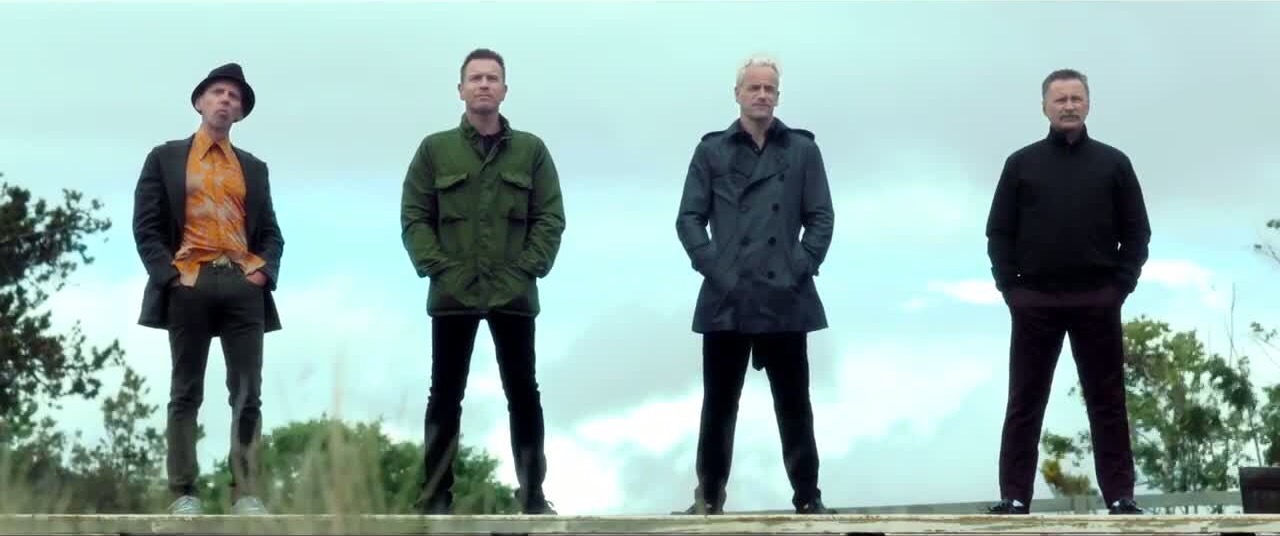
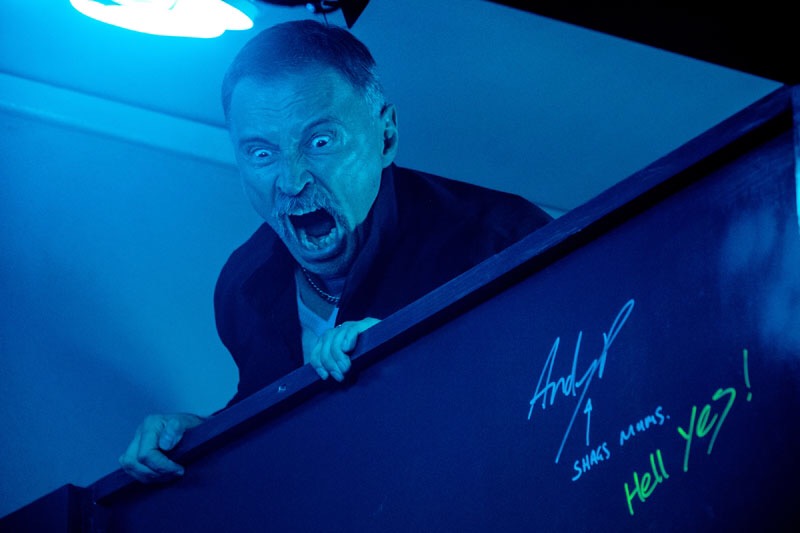
The boys are back in town

When the sequel was announced, there was a certain amount of trepidation from fans of the original. It seemed unlikely that the success of the original could ever be matched. It wouldn’t have the same effect on society. The soundtrack surely wouldn’t be as good. Plus there’s the twenty years of nostalgia to contend with. So how does it stand up?The answer is, thankfully, very well indeed.

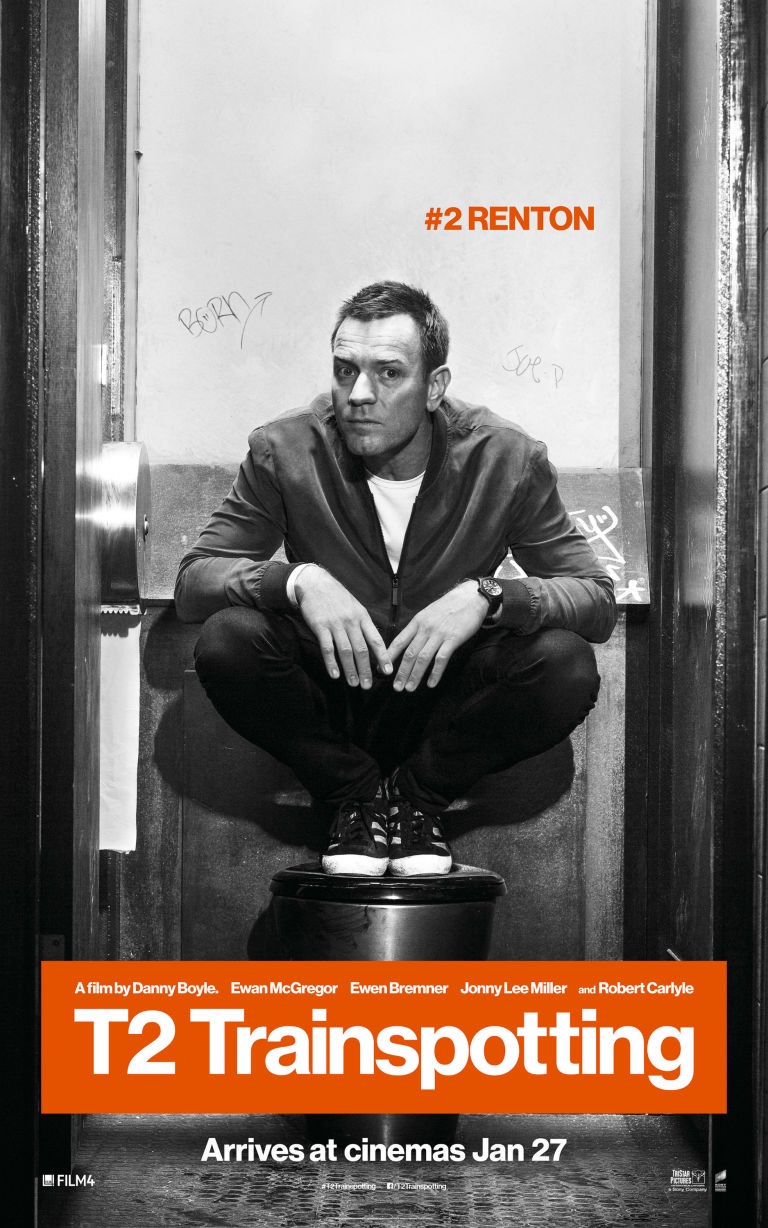
The plot centres around Renton (McGregor) returning to Edinburgh for the first time in twenty years, catching up with his old friends Spud (Ewen Bremner), Rent Boy (Johnny Lee Miller) and Begbie (Robert Carlysle). Time has passed and this has inevitably changed the four men, but it has also drastically changed the world around them too. It also hasn’t been long enough for two of the group to forgive Renton for what happened at the end of the first film.

Reimagining their friendship so far down the line when there hasn’t really been a particular push recently for a sequel to be made proves that this film has been made for all the right reasons. Danny Boyle and his team knew there was a story to be told here and it is told brilliantly.

As in the original, music plays a crucial role. There are reimaginings of three of the biggest hits associated with the original: Lust for Life, Born Slippy and Perfect Day. Elsewhere, more modern artists offer more up-to-date contributions from the likes of Young Fathers and Wolf Alice.

It won’t have the same cultural impact as the original, and few films have. It is, however, extremely relevant for those who lived through the first instalment, having an uncanny ability to reflect what has happened to almost everyone in society in the past two decades.

It is undoubtedly one of the best cinematic sequels we’ll see this decade.

Film review – Jackie (Pablo Larraín, 2016)

One of the most shocking moments of the 20th Century was the assassination of U.S. President John F. Kennedy on 22nd November 1963. Driving along Dealy Plaza in the early afternoon, two shots were fired by a single assassin. The enduring image is that of his wife, First Lady Jackie Kennedy, as she scrambles to protect her husband, head in lap, striving to comprehend what had just happened to her. It was a tragedy.

Portman delivers a stunning performance


Central to Pablo Larraín’s biopic of Jackie Kennedy is a stunningly affecting performance from Natalie Portman. She’s capable of being both isolating and isolated within moments, in one of the most complex performances you could ever wish to take on as an actor. Portman doesn’t need to remind us of her capabilities, which we’ve known about since her debut as a 13-year-old in Luc Besson’s Léon: The Professional. 

The film is delivered in the form of Jackie Kennedy in an open interview to a nameless Time Magazine reporter (Billy Crudup). She reminisces about her television programme “Inside the White House with Mrs John F. Kennedy”, in which she effused about her collection of presidential memorabilia (as well as her abilities as an interior designer) though the story predominantly focuses on the fateful day in Dallas and the immediate aftermath as she reinvents herself as the director of her husband’s funeral, an event she hopes will rival – or at least evoke the memory of – Abraham Lincoln.

There are some solid supporting roles from the likes of Richard E. Grant, Peter Sarsgaard and the late John Hurt. Greta Gerwig also appears, though I can’t say she is in the same category.

One jarring aspect of the film is the unusual score, provided by the usually brilliant Mica Levi. It’s surprisingly sinister and usually doesn’t match the onscreen visuals, tonally or stylistically. This isn’t Levi’s fault. She’s just doing what she does best (see Under the Skin for her best scoring work). It’s jarring and made me long for something a little more conforming. I’m amazed that it has been nominated for an Academy Award for Best Score.

Portman, though, is very much deserving of her nomination. It’s a strong year of competition, but she has every chance of taking home her second statue at the 89th Academy Awards.

A must see.

Film review – Moonlight (Barry Jenkins, 2017)

Barry Jenkins’s cinematic tryptich, which serves as a revealing cross-analysis of homosexuality in the black America community, is a film that will do nothing if not leave a lasting mark on your memory. It’s complex. It’s provocative. It’s beautiful. It’s absolutely brilliant.

Split into three equal sections, the film comprises extended vignettes based around Miami-based Chiron. As a child he is portrayed by Alex Hibber at a time in his life where he is a loner, lacking support from his drug-addict mother (Naomie Harris) and feeling isolated at school. As a college student he is portrayed by Ashton Sanders as he struggles to cope with his mother’s growing addiction but also has his first sexual encounter with a childhood friend. The third section of the film covers a late-20s Chiron (Trevante Rhodes), now much hardened to life and living away from his home city in Atlanta, but returning to visit his mother and that same childhood friend.

Much like Lion earlier this year, Moonlight is a triumph due to several actors portraying its central character at different stages of his life. Each of the performances is well nuanced, but build up a complex picture of Chiron, the pay-off being in the final third as we realise what he has become is every bit influenced by what we’ve seen of him as a child.

Moonlight

Where Moonlight really excels though is its ability to steer away from the stereotypes almost every mainstream film portrays these types of characters as. This is a tale about a homosexual black American which allows neither the colour of his skin nor his sexuality to define him.

Aside from the lead character, there is an exceptional contribution from Mahershala Ali as Juan, a drug-dealer who comes across a young Chiron hiding from some bullies in a property he owns. Rather than what we’d have come to expect, which would probably involve some amount of grooming and exploitation, instead we see him become a father figure for the child, teaching him how to swim and offering him a place to sleep and food to eat. It’s refreshing to see a character exist in this manner and hopefully this is a sign of things to come at cinemas. It’s no surprise that it has earned Ali an Oscar nomination.

It’s a personal film that deserves all the plaudits it has received. With a timely release during Black History Month, a film that challenges the status quo has to be welcomed with open arms by the forward thinkers of the world, even if it seems like backwards thinking is taking over the world.

Short film review – The Ugly Duckling (Jack Cutting and Clyde Geronimo, 1939)

This Walt Disney Productions short animation fell under the Silly Symphony banner when it was released in 1939. It went on to win the Academy Award for Best Animated Short, the eighth in a run of eight Walt Disney films to do so.

It’s a fine little episode that tells the tale of a swanling that somehow ends up in a nest of ducklings, and is immediately shunned and ridiculed for being different to his surrogate brothers and sisters. 

A duck? Nah you must be quackers.

It curtails the original Hans Christian Andersen story by removing the whole extended pain of being without a family for around a year, skipping straight to the point where he is found by a swan family, presumably his own. In doing so, they miss out the point where he turns into an adult swan and the ducks are in awe of his beauty.
In its short sub-nine minute running time, it manages to fit in a surprising amount of substance. This is, for the whole part, a tale about an orphan who is unwanted by his new family. This would surely resonate with anyone in any element of this situation, and there is no holding back when the mother and father have a full-blown argument in front of the innocent swanling. Indeed, there’s a suggestion from the drake that since he looks nothing like the swan then perhaps his duck wife has been sleeping around. Or perhaps I’m reading too much into it.

The animation is, inevitably, a thing of beauty. Two of Disney’s Nine Old Men were on animation duty (Milt Kahl and Eric Larson) and it certainly has the feel of one of their classic films (it was released between Snow White and the Seven Dwarves and Pinocchio). There’s a certain amount of warmth you find in these old animations that has never been replicated.

It’s probably not the best short releases around this time from Walt Disney Studios, but it is deserving of all the praise it has received over the years. Why not revisit it? You’re only 78 years late to the party!

Academy Award for Best Song 2017

Here’s a quick look at the songs nominated for Best Song at the 89th Academy Awards.

My money’s on either of the La La Land songs, but could there be an upset on the cards? Surely Sting is out of the running before he discussions have even started.

What do you think?

La La Land – “City of Stars”

La La Land – “Audition”

Moana – “How Far I’ll Go”

Jim – “The Empty Chair”

Trolls – “Can’t Stop The Feeling”