Unknown's avatar

Posts by hutchwp

Chief writer and editor at Cinema, Etc.

An energetic tourist’s day in New York 

I’ve recently come back from a short break in New York and I can’t help but wish I’d gone much sooner in my life. 32 is far too late to visit this wonderful city!

On one of the days, I managed to pack in a huge amount of activities and walking into one day. To achieve this you will need to be moderately fit – I run half-marathons so my stamina is certainly up to it, whilst my wife regularly does assault course races and boot camps.

The result is approximately 10k of walking, taking in four of the cities most renowned landmarks.

Morning
9/11 Memorial and Museum

07:30 – Starting from our hotel on 77th and Broadway in uptown Manhattan, we set off for the 9/11 Memorial Museum and World Trade Centre via the 2 or 3 subway line. 

08:00 – Beforehand we got breakfast at the nearby Hudson Eats, an upscale eatery in Brookfield Place that will satisfy any palet and any amount of hunger. We allowed an hour for this so arrived at 8am.

09:00 – We pre-booked our ticket for the museum at 9am but this wasn’t totally necessary – it was quite easy to get in.

You just need to know that the museum is adjacent to ground zero of both the north and south trade centre. It isn’t overly obvious where it is but there are loads of helpful staff members to guide you in. 

It’s a truly important and essential piece of New York’s history and can’t be missed.
I’d leave about 3 hours to get around this place. You don’t want to rush it.

Afternoon
Liberty Island and Ellis Island

The afternoon was all about visiting Liberty Island and Ellis Island, including the world-famous Statue of Liberty.

12:00 – We set off from the museum on foot at midday, allowing ourselves 20 minutes to get over there.

There is a ferry operating from Battery Park, which allows you to get to Liberty Island and then venture on to Ellis Island whenever you’re ready.

The official website is at Statue Cruises. You want at least the “reserve” tickets, though buying sooner will guarantee entry to the pedestal (the base of the statue) or to the crown if you buy around three months in advance.

12:30 – The queuing situation there is pretty abysmal. It’s pandemonium and the people working there have no idea about how to be helpful. In contrast to the brilliant help we got at the 9/11 memorial, here we were told incorrectly to queue in two different lines before ignoring both pieces of advice and using our own logic to work out where we needed to go. 

Essentially, if you have pre-bought, go straight to the main queue that says “reserve” in big lettering.

13:00 – Once on the boat, head for the top deck on the right hand side near the front for the best views and photograph opportunities on the approach to the statue. The photo below is from the top left, so we got the best views too early in the journey.

13:30 – For an additional challenge at the statue, try walking or running up the staircase. You’ll probably feel a burn at the top but you’ll save queuing time.

The statue itself is pretty stunning. Take a moment to soak in the grandness of it. There are lots of people everywhere taking photos and this is important, but like all great monuments it’s easy to forget to look at and absorb it.

15:00 – After getting your photos, it’s time to leave for Ellis Island. This is essentially a museum about immigration, which is really informative and educational. However, we didn’t spend too long here – most of it can be learned about in books or online. Sorry guys! It’s nothing personal!!

16:00 – Take the ferry back, being sure to follow the signs for Battery Park, New York rather than Jersey.

Distance = 1287m distance with a 27m climb in the pedestal (+46m in the statue itself if you buy in time)

Evening
Walking the Brooklyn Bridge at sunset

One of the cliche activities in New York is so popular simply because the views you get are so beautiful, though you won’t see those until later in the evening.

16:30 – Setting off from Battery Park, set your target for Park Row at the North end of the Brooklyn Bridge. Once there, find the Brooklyn Bridge Walkway (signposted) and set off on your trip over the bridge. There’s no rush here. Indeed, rushing is nigh on impossible with such large crowds.

17:15 – At the other side of the bridge, waiting for you is probably the best pizzeria in New York, Juliana’s Pizza. It’s located at 19 Old Fulton St, Brooklyn, NY 11201. Trust me, after all that walking you’ll be glad of the sit down. We were able to split a large pizza in two by having completely different toppings, and the total price – with two alcoholic drinks and a sizeable whole apple pie for dessert – was still only $60 including tax and a tip.

19:30 (or later depending on time at restaurant) – Walking back along the Brooklyn Bridge is the time when you’re really rewarded. The whole of Manhattan is now completely lit up and you get in the best uninterrupted views of the main centre of the city. Bask in it and feel your enriched life thanking you for excellent life choices.

Evening walk = 1600m to Park Row, 2414m to Juliana’s Pizza, 2500m back across the bridge to your favoured subway station.

Total walking activities 

21:00 – By the end of the day we were both absolutely tired out and ready for bed. The sense of achievement and knowledge we’d maximised our time in the city whilst getting fitter through walking was wonderfully satisfying.

Total walking distance = 7801m plus exhibition walking plus a 27m or 73m climb inside the Statue of Liberty.

Film review – Logan (James Mangold, 2017)

THIS ARTICLE IS FULL OF SPOILERS

Hugh Jackman is, in the superhero film world, a living legend. There has never been a single actor or actress that has achieved relentless success across so many different films in this genre, making a character his own and developing it into one of the big guns instead of just part of a team. Like the character Wolverine, the actor behind him seems like he’ll play the part forever.

And yet we come to Logan, a wisely-timed and fitting ending to the franchise and Jackman’s input into the character. It’s hard to believe it but this is the tenth time we’ve seen the character – seven X-Men films have now been made, along with three Wolverine-focussed standalone films. It seems impossible to think anyone will fill the role, meaning this could be the last time we see the character for many years, possibly ever.

It could well be the best superhero/mutant-hero film ever made.

Set in the world 2029, the film finds Logan worlds apart from his former self. Hiding out in a disused smelting plant in New Mexico, he is working as a chauffeur whilst hustling for prescription drugs for Professor X (Patrick Stewart), whom he lives with alongside Caliban (a surprisingly sincere Stephen Merchant). He is tracked down by a mysterious woman named Gabriella (Elizabeth Rodriguez) who is trying to get him to take a young mutant girl named Laura (the brilliant Dafne Keen) to specific co-ordinates in South Dakota before Transigen finds her to either kill her or take her back into their shady mutant development programme. The company, which we have previously glimpsed in X-Men: Apocalypse, is headed up by Zander Rice (Richard E. Grant), whilst they are hotly pursued by head of security and leader of the Reavers Donald Pierce (Boyd Holbrook).

Jackman reportedly took a pay cut to ensure this film received an R-Rating in USA. The result is certainly the most brutal cinematic portrayal of Wolverine yet, with no holding back on any of the gruesome details. It is certainly not a kids’ film. Jackman looks battle-worn from the start, the reasoning given that the adamantium is now poisoning his body and losing its regenerative abilities. His best cure is to drink alcohol, which may mask the pain but won’t cover the endless scars across his body.

The perfect muse for Jackman’s final turn as Logan is Patrick Stewart, reprising one last time his Professor X character. Now in the midst of a horrific battle with dementia, he struggles to keep control of his telepathic abilities. What is really interesting here is that it is a study of people at the end of their life who are losing their usefulness to society. Okay, this is shown in the most extreme manners when someone has superpowers, but the poignancy is still there for everyone to see.

To add extra emotional weight to the film, the young girl is revealed to be the kind-of-daughter of Wolverine, in that she shares some of his genetic make-up. In the greater comic book storylines she is X-23, who first appeared in 2003. Whilst not strictly his daughter, this is a clever plot device as it means the two characters are immediately drawn to one another, despite their tendency to mistrust those around them.

It may be masquerading as a film about mutants but this is so much more – a character-driven drama about old age and retirement.

Inevitably, the ending is upsetting, as we see our titular hero sacrifice himself to ensure the safe passage of his daughter. The final scene, especially the final shot, is absolutely perfect.

A fitting end to one of the greatest film characters of our time.

Film review – Manchester By The Sea (Kenneth Lonergan, 2017)

Manchester By The Sea is by no stretch of the imagination a happy film. That it was advertised in some channels as a comedy is beyond me. It’s a bleak look into one man’s struggles with his past during a particularly depressing period of his life, and I’m not sure that there was a particularly happy ending to it either. But it is absolutely deserving of its plaudits, and the results are both effecting and memorable.

WARNING! The next paragraph spoils the first twenty minutes or so of the plot, but only really covers what is in the trailer. If you don’t want to have anything ruined then just stop reading and simply watch a film that deserves your time.

The story, in a nutshell, is about Lee Chandler (Casey Affleck), a single man in a dead-end handyman job with no semblance of positivity for his or anyone else’s life. His brother Joe (Kyle Chandler) dies young due to a heart condition, forcing him to return home to Manchester, Massachusetts to sort out the funeral arrangements and look after his son Patrick (Lucas Hedges). However, he soon finds out that he has been named the sole legal guardian for Patrick, forcing him to take on unwanted responsibilities and confront his past relationship with former wife Randi (Michelle Williams).

Affleck’s performance is well-balanced and measured. It’s a role that doesn’t call for any big movements, and the beauty of it is in the understated reactions to the huge changes going on in his life. He is almost dead to life itself, so his reaction to his brother’s death or his new found responsibilities are equally lacking in emotion. A worse actor would have ruined the film, yet he brings the whole story to life. Kenneth Lonergan has a lot to thank him for.

The music is brilliantly effective. Lesley Barr has worked wonders with her fantastic score, her first in five years since 2011’s The Moth Diaries. There’s a great interview with her over at The Muse, in an article by Bobby Finger, which is well worth reading. It’s a shame it was deemed ineligible available for an Academy Award nomination.

There has been a bubble of negativity towards Casey Affleck that surrounds his personal life. He has been accused of physical abuse against two women working alongside him on the film I’m Still Here – Cinematographer Magdalena Gorka and producer Amanda White. Affleck denied any wrongdoing but settled both claims out of court in 2010. 

Many sections of the press clearly think there’s a lot of truth in the stories. There seems to be a media-led unspoken rule about how much time people in the film industry must live in penance until the world forgives them again. Mel Gibson has seemingly served his time now following his controversies with his ex, Russian pianist Oksana Grigorieva, but it seems we are all permitted to enjoy Hacksaw Ridge, even though The Beaver was a brilliantly-bizarre turn that came at the wrong time of his career and has been largely ignored as a result.

Should we rise above the noise and embrace Casey Affleck? Well, the Academy certainly thinks so, as do the Golden Globes and BAFTA, all three of whom awarded him a Best Actor prize.

In isolation, there is no doubt that Affleck has brought to life a wonderful story and put in one of the best turns of his career. If you can live with and forget about the settled accusations, you’ll be rewarded.

Video game review – Tokyo Mirage Sessions #FE (Atlus / Nintendo, 2016)

I approached Tokyo Mirage Sessions #FE with an air of caution. I’m not someone who can recite hours of dialogue from the eighth season of Pokémon, nor can I name a single member of the group AKB48. But in terms of Japanese entertainment, I am certainly a dabbler. I like Studio Ghibli, read some manga, watch the odd anime series (Attack on Titan is a favourite), play video games that have good reviews.

With this in mind, I can confidently say that on a scale of 1 to 10 of how Japanese this game is, it’s over 9000. 

It’s part of the Fire Emblem series, hence the clumsily-included “#FE” in the title (though it could also stand for “Fortuna Entertainment”), though it apparently blends in elements of Shin Megami Tensei. I can’t comment on either of these, having never played anything from either series.

The jist of the story here is that the characters are all aspiring to become Japanese musicians and idols by being in tune with their Performa (a mystical force that allows people the pursue their dreams by being confident at performing). They can summon Mirages, which are creatures that help them perform or attack enemies. The action takes place in geeky Tokyo locations such as Shibuya and Harajuku. 

So, set in Tokyo. J-RPG. J-Pop. Geek culture. Mystical creatures. Journey of discovery for a group of relatable teenagers.

So far, so Japanese.

The thing that really saves Tokyo Mirage Sessions #FE is that underneath the facade – which will probably sell the game to the intended audience anyway – there is an excellent game to be discovered.

The Fire Emblem battle mechanics are pretty rewarding for those willing to get to grips with them. The battles get progressively difficult as your characters beef up, but they can become easy if you think about what you’re doing and use the right skills to tackle the right enemies. The key is using “sessions”, which involve stringing together powerful combo attacks to exploit your enemies’ weaknesses.

The story focusses on a young boy named Itsuki Aoi who becomes involved with the Fortuna Entertainment company, initially against his will. His classmate Tsubasa lacks his talent but makes up for it with enthusiasm to become an idol. Elsewhere there’s an aspiring actor named Touma, a famous idol named Kiria, successful actress Eleonara, celebrity chef Mamori. Essentially, a vast array of other characters, both real and mystical. We are treated to an overwhelming number of cut sequences that introduce us to them. 

The relationships between them are critical to the ongoing enjoyment, with a phone-based messaging service alerting us to their progressing storylines and the odd side-quest, bulking out the game from a simple JRPG to something a little more relatable. It’s almost like being in an interactive soap at times.

There are some negative points. The NPCs are almost always rendered as a silhouette rather than fully drawn, giving the real world areas a feeling of emptiness. This serves to undermine the effect of the Idolasphere, which is The Upside Down of Tokyo Mirage Sessions – we are forced to go in to this alternate dimension to rescue captured people from the demons and monsters that lurk there.


Some of the puzzles are needlessly convoluted. The worst moment is inside a building early in the game, where a selection of three mannequins can be chosen from to determine the configuration of a giant French maid torso to help you reach the correct floor inside a possessed department stall. It took a long time to complete not through difficulty but simply due to the time the animation took to play out when each configuration was input. It felt like a lazy attempt to increase the length of the game but really just derailed the pace for about 40 minutes.

Other than that, this is a robust game that will have given a great deal of enjoyment to those who picked it up in a time where the Wii U was drying up and no new games were being released. Destined to be a forgotten gem.

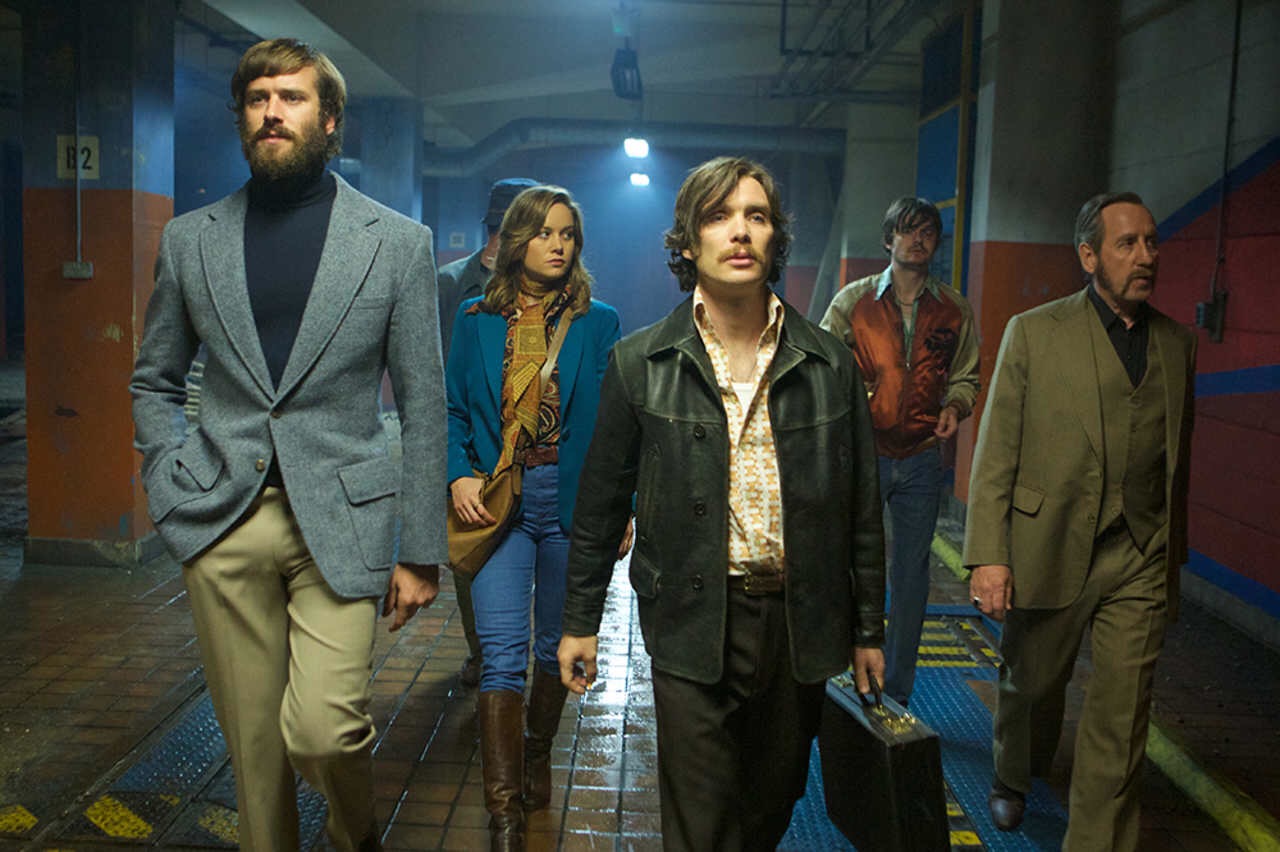
Film review – Free Fire (Ben Wheatley, 2017)

Ben Wheatley returns this month with his latest feature film Free Fire, which blends brutal action and sharp humour to create a roaring success of a film that will keep audiences entertained way beyond the 90 minute running time.

The premise of the film for Wheatley stemmed from Wheatley reading online of various police stand-offs throughout history. He found one that lasted 45 minutes because neither party could hit their targets, despite years of training to do precisely that (sadly I can’t find the article to link to). This tickled a nerve with Wheatley, who thought it would be brilliant to see it on the big screen – especially since most stand-offs in films last no more than a minute.

Set in the 1970s, the story revolves around two gangs meeting in a warehouse to make a trade for some arms. One group includes Chris (Cillian Murphy) and Frank (Michael Smiley), both presumably sourcing their weapons for IRA-related activities (though this is never explicitly mentioned), along with headstrong Justine (Brie Larson), idiotic junkie Stevo (Sam Riley) and even-more-idiotic Bernie (Enzo Cilenti). Providing the weapons are a group including bearded negotiator Ord (Armie Hammer), the sharp-tongued South African Vernon (Sharlto Copley), the intelligent Martin (Babou Ceesay), driver Harry (Jack Reynor) and Gordon (Noah Taylor) alongside a handful of support characters.

Speaking after the film at a preview at Broadway Cinema in Nottingham, Wheatley offered a brilliant insight into some of the production decisions on the film.

Hilariously, to get a feel for the environment and ensure the people were in realistic positions throughout to communicate properly, he had the entire set built in video game Minecraft. This allowed him to walk around the factory and get a feel of where he’d be once production started. A simple but brilliant solution, but also necessary as he stated this is the only 3D modelling tool he knows how to use.

On a similar note, the shoot-outs themselves were partly inspired by Wheatley’s experience of playing video games, a medium he is a fan of enjoying even though he is yet to be involved with the creation of one (sadly his comment about writing an adaptation of 1980s video game Gauntlet was probably tongue-in-cheek).

One issue they could have faced was in the continuity for the bullet shots. Clearly with 1000s of bullets flying around, there was a risk of wounds being out of place, or disappearing and reappearing between shots. The simple solution was to film it in sequence, which also plays into the building of tension at the start and exhaustion for the characters as the story plays out.

Learn from Vern

Of the many great performances here, the highlight is Sharlto Copley as Vern. Initially annoyed about his Savile Row suit getting damaged, his whitty one-liners had the audience in creases. He’s a complete jerk and Copley plays it brilliantly, his irritating mannerisms making the heightened-tension all the more believable. 
The result is a film that consists almost entirely of a shoot-out that feels far more realistic than anything we’ve become accustomed in Hollywood films. People aren’t simply experts in shooting guns and it takes practice and skill to be any good at it. The characters in this film aren’t experts and that’s why the film plays out as it does. It’s grim, gritty, exhausting and hilarious.

Seek it out and watch it.

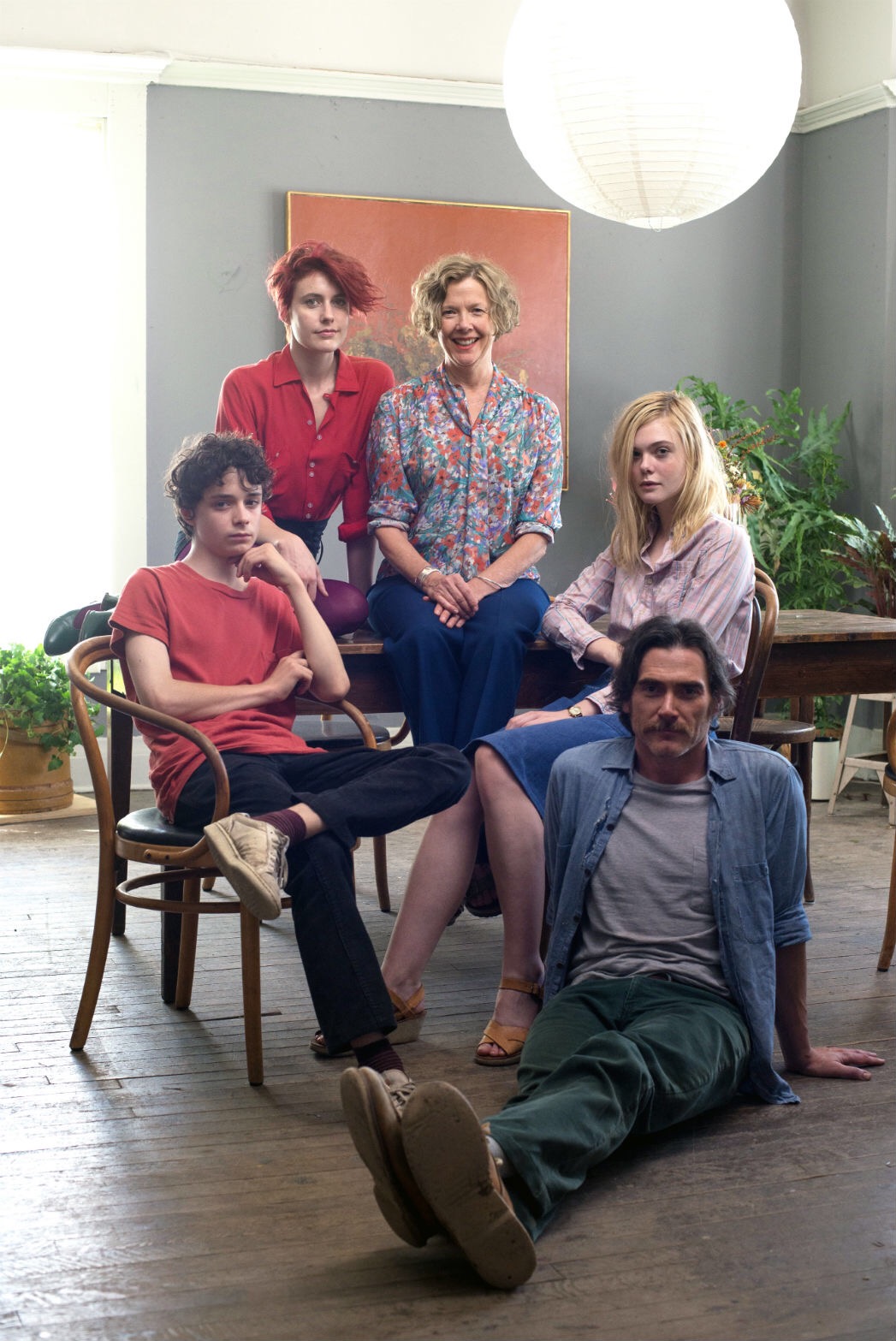
Film review – 20th Century Women (Mike Mills, 2017)

To mark 2017’s International Women’s Day, I dropped into the cinema to catch 20th Century Women, a film with three powerful and independent women at the heart of its plot. A triple Bechdel Test passer, the film indeed avoids the usual cinematic tropes and instead explores how men are often defined by the women around them.

In 1979 in Santa Barbara, California, Jamie (Lucas Jade Zumman) is a 15-year-old boy who is lacking a father figure in his life. His mother Dorothea (Annette Bening) has been long-single, but lives in a luxuriously huge house that she has converted into a sort of commune, in which lives a young female photographer Abbie (Greta Gerwig) and an emotionally-detached carpenter and handyman William (Billy Crudup) who is renovating the house for her. Julie (Elle Fanning) is a girl with whom Jamie is unrequitedly besotted; she wishes for him to remain as a friend only whilst she has a series of never-seen male sexual partners.

Mike Mills has cultivated an intelligent film from his own original script, describing it as a love letter to the women who raised him.

It’s the sort of quirky and intimate story that can only be crafted from ones own experiences, with two fingers up to the notion that boys need fathers and girls need mothers in order to be raised properly. Interestingly, whilst there are innumberable films that explore fathers being thrust into the role of both mother and father figures to both boys and girls, the concept of a group of women creating a support network for growth of a teenage boy feels wholly fresh and quite important.

The standout performance in a solid cast comes from Greta Gerwig, who I have seen in several films previously and never been excessively impressed with. This time, she is absolutely mesmerising as a young woman who is recovering from cervical cancer. We learn that the cancer was probably linked to her mother’s Diethylstilbestrol (DES) drug treatment during her pregnancy. She has been effectively disowned by her guilt-stricken mother, unable to cope with the fact she feels responsible for causing her daughter’s cancer. As a role, this is no light task, and Gerwig is at times totally breathtaking in her performance.

It is strange that the boy whose life the story revolves around eventually turns out to be a supporting character to the three leads. It is a lovingly-created film that is as relatable to mothers as it is to sisters of brothers and as it is to sons. With characters this believable and brilliant performances across the board, this is a film well worth seeing.

Film review – Saludos Amigos (Norman Ferguson, Wilfred Jackson, Jack Kinney, Hamilton Luske, Bill Roberts, 1942)

Saludos Amigos is a comporomise film. It’s a feature-length film, but only just; a mere 42 minutes and you’ll be done on this one. It’s a film that also only exists as a product of a good-will tour of Latin America, with Walt Disney acting as an ambassador for the USA to counter-act the popularity of the Nazi Party in certain countries when it was produced in the middle of World War Two. 

The film consists of four segments, all of which are a mixture between documentary films and short animated sequences. The animators, technicians and filmmakers were sent to countries such as Peru, Argentina, Bolivia and Brazil and observe what they saw, making sketches and jotting down any ideas they had. It is therefore a wonderful work that captures the beauty of the landscapes and cultures of 1940s Latin America, whilst also serving as a brilliant piece of political evidence when viewed some 75 years later.


Of the four segments, the standout is Aqualero  do Brasil, which introduces José Carioca – a well-dressed Brazilian green parrot who speaks fast and smokes a cigar. He befriends Donald Duck and shows him some cultural highlights of Rio de Janeiro, with a great sequence involving the samba.

José may have been a bit of a flash in the pan outside of Brazil but in his homeland he’s still as loved today as he ever has been, happily sitting alongside Donald and Mickey as the face of Disney.
It’s nothing that will wow modern audiences. It’s simply not as entertaining as the five animated features that proceeded it. It is, put simply, a quirk.