“20th Century Woman avoids the usual cinematic tropes and instead explores how men are often defined by the women around them. With characters this believable and brilliant performances across the board, this is a film well worth seeing.”
“There aren’t many moments in cinema where you start to watch the opening scene and an uncontrollable giddy smile engulfs your face, such is the joy of what is unfolding on the screen. It needs to be a brilliant idea, executed to perfection and in a language that speaks to you. Baby Driver, Edgar Wright’s latest cinematic masterpiece, achieves just that. But the moment I knew it was a truly great film was when I realised the credits were rolling and my smile hadn’t left.”
“Park Chan-wook’s latest release is a twisting psychological thriller steeped in eroticism and oozing class that works its audience brilliantly. The only drawback was that I didn’t have time to see it a second time.”
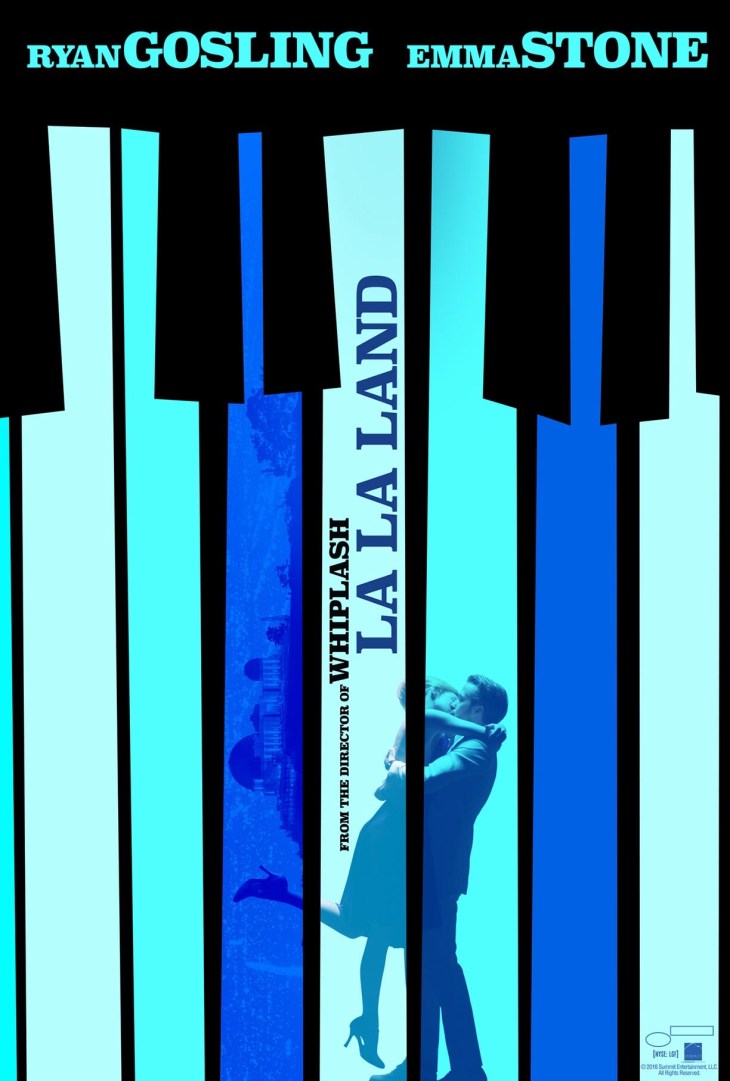
“Every once in a while you will go into a film knowing almost nothing about what you’re going to see and get absolutely blown away by a surprisingly perfect masterpiece. As you get further into your film-watching life, enjoying these moments becomes increasingly rare, so when a film like ‘La La Land’ comes along, you can’t help but be overcome by giddy excitement.”
“Lady Bird is, simply, a joy to watch. From start to finish the balance between humorous dialogue and well-paced plot progression is very fine indeed. The result puts it as a frontrunner for awards season next year.”
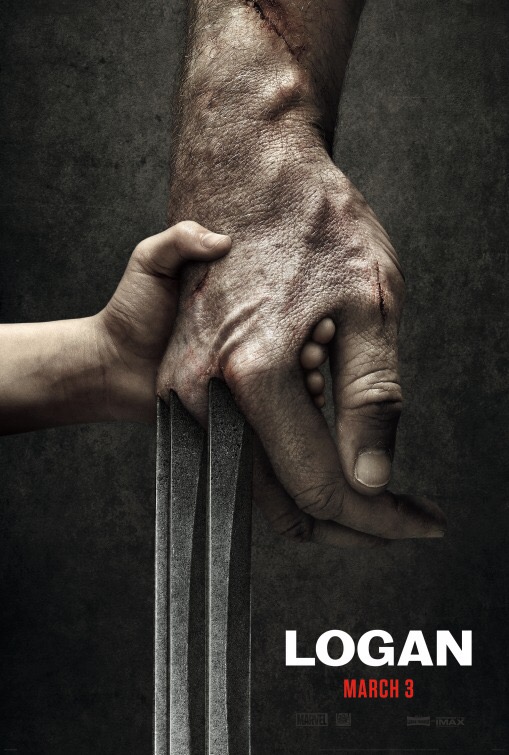
“A wisely-timed and fitting ending to the franchise and Jackman’s input into the character. It’s hard to believe it but this is the tenth time we’ve seen the character – seven X-Men films have now been made, along with three Wolverine-focussed standalone films. It seems impossible to think anyone will fill the role, meaning this could be the last time we see the character for many years, possibly ever. It could well be the best superhero/mutant-hero film ever made.”
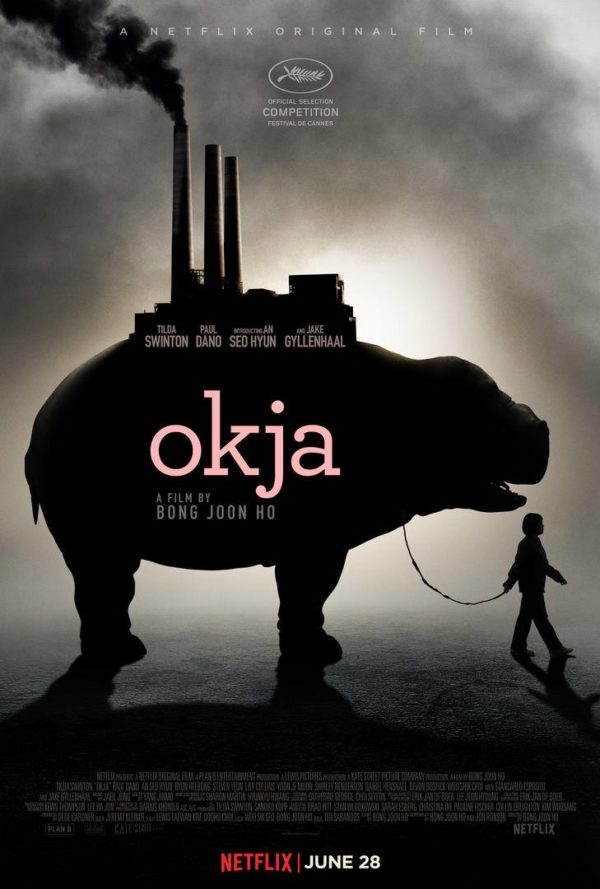
“Given so many people have Netflix and can watch this film at no extra cost, it’s a no-brainer to seek it out and watch it. It might be the start of a new era of high quality original cinema heading first to home streaming platforms. Given the state of the year-to-date box office, it’s a movement everyone should be supporting.”
Gloria Grahame was one of the leading stars of Hollywood’s film noir era. With a film career that spanned the 1940s to the 1970s, she enjoyed commercial and critical success for her varied roles, including the seductive Violet Bick in It’s A Wonderful Life (1946), her Oscar-nominated role as Ginny Tremaine in Crossfire (1947), headstrong neighbour Laurel Gary in In A Lonely Place (1950) and the shallow Rosemary Bartlow in The Bad and The Beautiful (1957), the latter of which earned her an Academy Award win.
In 1974, Gloria had been diagnosed with breast cancer. Following successful treatment, the cancer went into remission.
By 1978, she had relocated to Liverpool to work on a play, co-habiting with a young man named Peter Turner, who was just 26-years-old. It was Turner with whom she formed an unlikely romance and ended up having a relationship with him that lasted until the end of her life.
Grahame was 57 when she died in October 1981.
Film Stars Don’t Die In Liverpool
An adaptation of Peter Turner’s book of the same title, the film covers the final two years of Grahame’s life, spent largely in Liverpool, and less so in Manhattan, as she played out this romantic relationship with Turner. It is at turns baffling and equally heartbreaking that a woman who had once lived next door to Lauren Becall and Humphrey Bogart would end her life in a small council house in Liverpool, far from the glamorous life she so obviously thrived on in her earlier years.
One of the most important aspects of a believable romantic film is the chemistry between those portraying the central characters. Jamie Bell and Annette Bening have it in buckets, never once failing to be brilliantly convincing. Whether it’s the scene in which she spontaneously instigates a spot of disco dancing in her spacious flat, or casually and flintily orders a pint at the local pub as though it’s the most natural thing in the world, it is clear the are completely at ease with one another.
Benning paints a frustrated picture of Grahame. Her angry response at Turner suggesting she is older than she believed she was is jarring and unexpected and reveals a lot about her character. She may have delivered a memorably-celebrated performance as Ado Annie in the blockbuster musical Oklahoma! in 1955, but she felt too old for the part even at the age of 32 (the part typically demands an actress around ten years younger than this’d she was just two years younger than James Whitmore who portrayed her fathering the film). Her continued desire to have relationships with younger men may be viewed as untoward in the current climate, but it was perhaps indicative that she simply saw herself as younger than she was and unable to accept that she was ageing.
But this is a subtle and developing romance. Peter enters the relation naively, discovering more about the woman he loves as time progresses. There’s a memorable scene where he goes to watch a Grahame picture at a retrospective at a local arthouse cinema, which reveals to him just how successful she was. Later on, the heartbreaking scene as she reads Shakespeare on an empty stage with Turner – thus fulfilling a lifelong dream – is one that really packs an emotional punch.
The attention to detail on the scenery and props is exemplary, invoking the 1980s era perfectly. It’s easy to portray a caricature of the 1980s in anything set there, but this feels as miserable and as outdated as you’d expect a port town in 1981 to feel.
The soundtrack goes some way to furthering this overall impression. Tracks from Elvis Costello, A Taste of Honey and Elton John add to the sense of the age. There is also a beautifully wistful new composition from Elvis Costello titled “You Shouldn’t Look At Me That Way”, which is surely a strong contender for an Oscar nomination this year.
Film Stars Don’t Die In Liverpool is a beautiful and heartbreaking film with some strong performances and a final result that makes it one of the best dramas of the year.
CONTAINS SPOILERS – ONLY READ AFTER WATCHING THE LAST JEDI
Well, it’s finally arrived. After an almost-two-year wait, we finally got to see what happens on Ahch-To immediately after the infamous closing sequence of The Force Awakens. The highly-anticipated interaction between Luke and Rey was anything but grandiose – Luke simply tosses the lightsaber over his shoulder and walks away.
This may not have been the first thing we see in the film, but it certainly set the tone. There are some serious plot developments going on here, but they’re always delivered with a smattering of humour. Indeed, The Last Jedi may be one of the best examples of a script being so well-written that the overarching plot’s many loopholes can be forgiven.
In many ways, the tone of the script is essential to ensure the entire spectrum of potential viewers stays on board. Those expecting to see the darkest of dark sides of the force will certainly be pleased – it gets very dark – but there’s a lighthearted feel to this film that means no fan will feel alienated.
The basic plot is split into three threads, essentially focused around the three main new heroes introduced in The Force Awakens: Rey (Daisy Ridley), Finn (John Boyega) and Poe (Oscar Isaac).
Rey is wrestling with the dark and light sides of the force – a development that clearly has ramifications for the future of the galaxy. She spends the early parts of her journey with Luke Skywalker (Mark Hamill), before taking off to see Kylo Ren (Adam Driver). Our heroine is a truly engaging character and Ridley is the perfect actor to take on the role, taking us on a journey to find out more about herself at the same pace as the viewers.
Elsewhere, Finn wakes up from the coma we left him in at the end of The Force Awakens, before a chance happening sees him forming a bond with resistance mechanic Rose Tico (newcomer Kelly Marie Tran), herself mourning the death of her resistance fighter sister.
Poe Dameron is busy on the main resistance fleet ship attempting tactical dogfight missions to attack the First Order, before attempting a rescue/escape plan with Princess Leia (Carrie Fisher) and Admiral Holdo (Laura Dern).
If great films are remembered so for their show-stopping visual moments, then The Last Jedi delivers them in buckets. The dogfights are absolutely real, comprehensible and exhilarating, clearly showing the influence of the film ‘Twelve O’Clock High’, which director Rian Johnson cited as a key reference point. The final fight sequence on the salt land of Crait contrasts the crystalline white of the ground with the kicked-up red chalk as the fighter vehicles slice through them towards the enemy.
A surprising and memorable fight sees Rey and Kylo team up together to wonderful effect. It’s a sequence reminiscent of ‘Three Outlaw Samurai’, with very few cheat editing or confusing cuts. It’s delivered masterfully. There are two specific deaths that really caused some great whooping and fist-pump scenes at the midnight screening: one involving a lightsaber-in-the-head death for a Praetorian Guard, and one involving the brutal death of a major character.
The McGuffin for Finn and his new partner in crime Rose allows them to develop something of a romance. It’s a romance that remains almost entirely unkindled by the end of the film – allowing plenty of scope to further develop or completely nix their relationship before episode IX. The cynic in me believes this will probably depend on how popular Rose is as a character.
It must be said that the whole story thread for this pair of characters is mainly pointless. There is a largely disappointing sequence on the casino planet of Canto Bight that serves the sole purpose of introducing DJ (Benicio Del Toro). It is framed in a world that is wholly reminiscent of Final Fantasy on a plot level – casino-based planets are common in most games in the franchise, with Chocobo races being a clear inspiration for the Fathier creatures being forced to race for entertainment on Canto Bight. It’s also fairly identical on a visual level, suffering from a common issue in present-day cinema where physical sets and props are lovingly built and filmed, only to be touched-up in post with some less-than-realistic CGI, making for a wholly underwhelming result (see Unkar Plutt in Episode VII for a further reference point).. Fortunately there was no need to reproduce an entire human character a la Peter Cushing in Rogue One, but the visuals are so important after the failings of the prequel trilogy and it’s almost unfathomable that this can still go wrong.
As a side note, there is a wonderful tracking shot whilst we’re on Canto Bight that felt like a tribute to 1927 silent film Wings, which can be seen below.
Unfortunately, this Finn-Rose sideplot always feels like an unwelcome distraction from the Rey-Kylo thread. We were left hanging for two years and so most of the build up has been about what happens next to Luke and Rey, who Rey’s parents are (nobody, it turns out), how her training will play out and how she’ll defeat Kylo Ren. It’s frustrating that we keep getting the rug pulled from under our feet with unwelcome distractions from what is emerging as the main plot, and contributes to a sagging middle act. Indeed, should this have been missing from the film entirely, there would have been little impact on the outcome.
Poe’s character gets many of the best lines for laughs, but there are also big visual gags from BB-8 and some friction between Chewbacca and the furry little creatures called porgs. These porgs are destined to be something of a Marmite character for the franchise – I’m still trying hard to warm to them.
All is forgiven by the final act. If anyone was left unconvinced at any point, the film gets firmly back on track with a lovingly-balanced reintroduction of Yoda as a force ghost. It was surprising but absolutely welcome. Frank Oz provides the voice and yes, it is a real puppet operated by real people. This is how it’s done Mr Lucas.
This kick-starts a long stretch towards the end that is entirely satisfying, exhilarating and feels like a genuinely fresh take n the franchise. It sets up the Resistance in a perilous predicament that gives J.J. Abrams a meaty starting point for the final installation of this trilogy.
It makes the failings pale into insignificance and provides a perfect ending to a not-quite perfect film.
The clocks are officially reset and I’m now on countdown again for the next instalment.
I’ve been featured on From Real to Reel, a blog about film run by my good friend Daniel Robinson.
It’s a cracking blog from a young cinephile who writes passionately about films. He’s also a great actor and a promising director.
As it’s December, he’s running a Christmas film limerick advent calendar with one limerick every day up to Christmas Day. I chose the film ‘A Christmas Story’, a film family favourite and one I’ve loved for years.
Michael Haneke’s latest picture is a twisted look into the wealthiest ways of living in the north of France, as seen through the eyes of a dysfunctional family hell-bent on self-destruction. A mixture of humour and satire litters the script to create a solid effort that, despite its best efforts, fails to deliver the same impact as the most dedicated of Haneke fans would hope for.
The film opens with a slow series of voyeuristic shots through the camera phone of 13-year-old Eve Laurent (Fantine Harduin), transmitting through a social media platform that looks similar to Snapchat. We see her murder her pet hamster and then, in the final shot, we see her unconscious mother, whilst an overlay of text chat show young Eve admitting she has poisoned her.
In the next shot we see the CCTV footage of a construction site where a huge disaster occurs, critically injuring one of the employees. It is in the aftermath of these two opening gambits that the rest of the film hangs its developing intertwining plots.
We later find out that this workplace accident was due to negligence at the hands of site supervisor and alcoholic Pierre Laurent (Franz Rogowski), whilst firm owner Anne Laurent (Isabelle Huppert) is left to pick up the pieces and deal with an impending lawsuit. Eve is now living with this family in a large mansion in Calais, along with depressed grandfather Georges (Jean-Louis Trintignant).
The ironically-titled Happy End is a good film, but not a great one. The cast is substantial and the dialogue is sharp, but somehow the plot doesn’t feel like it takes us on a journey with enough of the characters. It’s more of a satirical social commentary piece rather than a meaty piece of fiction, with too many of the characters used as fodder for the main characters.
Trintignant and Huppert reunite here with Haneke after the successes of 2012’s Amour, a film that won the Best Picture Academy Award and the Palme d’Or at the Cannes Film Festival. It is clear why Haneke was so keen to work with them both again. They don’t share much screen time together, but with the former’s desire to end his life and the latter desperate to keep the dysfunctional family together and presentable, there is enough to go on to maintain the interest. With the addition of the young Harduin to the cast, this triangle of strength is enough to carry the film.
It could be argued that Toby Jones’s inclusion is on the cynical side. His role is very minor, though his prominence in the advertising campaign will undoubtedly have helped ticket sales in the UK, a place where his acting credentials need no introduction – least of all in the arthouse cinemas in which Happy End will play. If this is true, I don’t mind. It’s just smart advertising and a good way to carve out a niche in the market away from the impending Star Wars: The Last Jedi Release next week. For those of us who go to see more than the most mainstream of films, options and variety are required.
It feels unlikely that Happy End will repeat the award season successes enjoyed by many of his previous efforts, but it’s not without merit.
The moment lead character Halley, played by Bria Vinaite, has had enough of her landlord Bobby (the ever-brilliant Willem Dafoe) is a touch of genius. Her constant trouble-making, lack of responsibility for her own life and the conseqeut poor behaviour of her daughter has come to a head. Bobby counts to three, demanding she leaves his office. She relents, but as a parting shot removes the sanitary towel from her pants and slaps it on the glass window of the reception, punctuated by a flip of the middle finger in his direction.
It reveals a lot about her character. It’s one of the most disgusting visual moments of the cinematic year and (hopefully) goes far beyond the imagination of most viewers even on their worst of days.
That Bobby also shortly after is again protecting her from trouble beyond this action says a lot for his character too, presumably a reason Dafoe was attracted to the role. He delivers a typically nuanced performance. He’s rough and tough on the exterior, largely through necessity. Inside he is a man who clearly recognises the peril all his residents face – most are one missed payment away from homelessness and without any hope to get out of the predicament.
The film achieves what it aims to do, which is to shine a light on the horrific living conditions for many people living in Florida in the shadow of the self-proclaimed “happiest place on earth”. Disney World’s original work-in-progress name was The Florida Project, though here the name is repurposed to represent the social housing slums of America, all too familiar to so many of the nation’s population.
The film takes the form of a series of vignettes, each showing another layer to the life of Halley and her daughter Moonie (Brooklynn Prince). Prince is as brilliant as she is irritating, her idea of hyjinx ranging from spitting on her neighbour’s car to burning down a disused house.
The plot is laced with humour throughout, and there were certainly some huge laugh-out-loud moments. But for all the laughter, there was an element of sadness and horror to think about how real these situations are.
The result is effective, though the overall sum feels less than the parts. By the end of the film it felt like it was dragging, meandering towards a final set piece that didn’t really feel as triumphant as the filmmakers had hoped. It’s a film that I wanted to like more than I did, but I just couldn’t get behind the characters enough to really allow myself to enjoy the film.
It’s an interesting but disappointing watch that is more thought-provoking than it is entertaining.