Danish director Nicolas Winding Refn has been carving out his own route to the forefront of spectacularly stylised cinema, oozing with what can only be described as Refnisms. His films all inhabit the same universe in a way that all great genre film makers do. So it is with his latest, The Neon Demon, which has all the hallmarks of a hedonistic night in a stae-of-the-art nightclub whilst not giving up on the brutal bloodbaths we’ve come to expect of Refn’s work.
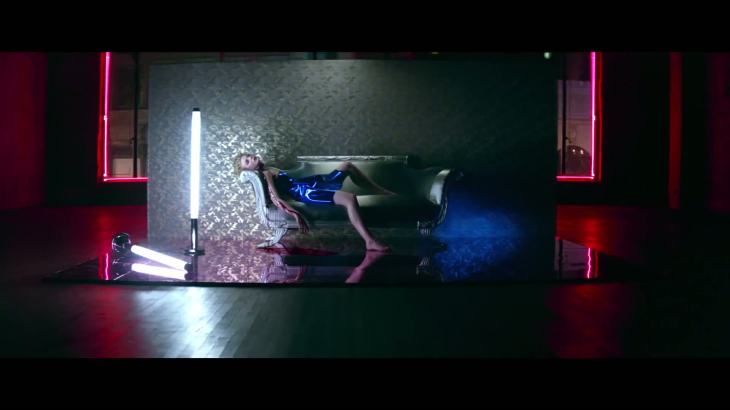
The opening shot is breathtaking – a slow dolly-out on a female model who sits motionless with a sliced throat. That girl is Jesse (an initially unrecognisable Elle Fanning). We learn quite quickly that she is in the middle of her first photo shoot, but this shot lingers long enough to have us right in the palm of the hands of the storytellers. It is simple yet brilliant film making.
Elle Fanning as Jesse
The film takes us on a journey with Jesse, an orphan who has moved to Los Angeles soon after her 16th birthday to pursue a modelling career. Bright eyed and innocent in every way, she has no time to learn who she can and can’t trust. As the focal point of a powerful story she is brilliant in the way she carries the film on her shoulders.
The supporting cast are excellent. Abbey Lee and Gigi Bella Heathcote put in a great turn as the jealous models Sarah and Gigi. Keanu Reeves’s Hank is reminiscent of his abusive husband Donnie in The Gift, full of brutality and intimidation. It is Jena Malone’s portrayal of doting makeup artist Ruby that really comes close to stealing the show, her face betraying everything she says throughout to brilliant effect.
The Cliff Martinez soundtrack feeds into the visuals perfectly. A frequent NWR collaborator, Martinez’s sparse electronic score blends the contemporary setting with the horrific events that are unfolding on screen. This is a work of art for which he won best soundtrack at the Cannes Film Festival. It’s easy to see why.
This is a sensational film with a powerful leading performance from a girl just seventeen at the time of filming. Pairing this with such bold film making and the result was never going to be anything but an overwhelming success.
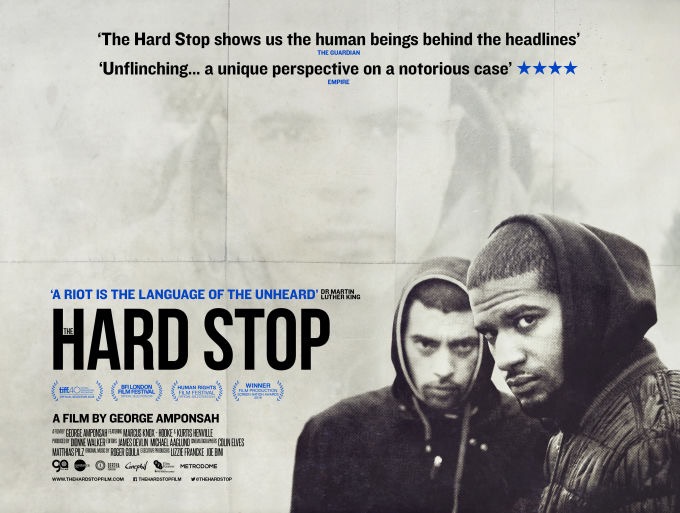
‘The Hard Stop’ documents the 2011 London riots that erupted in the aftermath of the police shooting of Mark Duggan, a 29-year-old black British man. Given the current events in Dallas, Texas, the release of the film couldn’t have been more relevant.
The film concentrates on Marcus Knox-Hooke and Kurtis Henville. Both were close friends of Duggan for many years prior to his death, and both were members of the Tottenham Man Dem, a gang formed out of the Broadwater Farm housing estate in Tottenham. Broadwater Farm was the setting for a brutal riot in 1985 that was believed to be caused by the police raiding a home and causing the heart attack of resident Cynthia Barrett. The main reason it is remembered across the UK is the death of PC Keith Blakelock, the first policeman to die in a riot in the UK since 1833.
The film paints a balanced view of both Marcus and Kurtis. Growing up in the aftermath of the 1985 riots, the two are family-oriented men with their home community at the centre of their make-up. Their upbringing – and that of Mark Duggan – has clearly been one overshadowed by suspicion and resentment for a police force that should be there to protect them, but instead seem to constantly be at odds with their community.
It is an unsettling film for a number of reasons. The media portrayal of the 2011 riots (that quickly spread around the country) seldom touched on the root cause, instead focusing on the looters and chancers that saw it as an opportunity to make some money out of the pandemonium. The anger from the black community in London at the injustice of what happened to Duggan was completely suppressed. I am sorry to say that as a white man, the underlying cause of the riots was not apparent to me and none of the many news outlets I have touch-points with exposed me to the full picture.
The reveal of the eventual findings of the inquest into his death was the most shocking moment of the film. The inquest found that, whilst it was unlikely that Duggan was carrying a gun, the killing was unfathomably still deemed lawful. The emotional response of the community in which Duggan lived was one of absolute devastation and was captured in a moment of brilliant documentary film-making by director Amponsah. This is not a community that wants to fight, but as the opening quote of the film states, “A riot is the language of the unheard.”
‘The Hard Stop’ is one of the most important documentary films to hit the big screens this year. Out of necessity, it is rough around the edges. It has, at the heart of it, some of the greatest social themes facing Britain today. A riveting watch.
Cosplay is a mixture of costume dress-up and role playing, and has become a permanent fixture of the Celebration events and similar weekenders.
The cosplay competition was this year won by an excellent 9ft take on Grungar. I spoke to the creators and it took over 100 days to complete. In many ways, it is better than the costume from the movie, which itself couldn’t stand up and be moved around.
Across the board, it was phenomenal to comprehend how much time had collectively been poured into the competition. Even those that weren’t in the top 3 in their categories were great efforts, especially a near-perfect Kylo Ren.
An Hour With Mark Hamill
An hour with Hamill was never going to be enough and it was sad to see him go. The format was simple – he just had people line up and ask him questions until we ran out of time.
There were some fascinating questions, not just about Star Wars but also his successful voice acting career, and his responses were candid and revealing.
At one point he confirmed the long-standing rumour that the opening scene of Episode VII was his hand floating through space holding a lightsaber. Cool? I think so.
I hope the whole discussion is made available some day soon.
Freebies
Want cool free things? Just walk around. There’s plenty there. My favourite was a Dengar Top Trumps card. I’m evidently easy to please.
I did spend some money too. I’ll be wearing my awesome German-language The Empire Strikes Back (or is that Das Imperium Schlägt Zurück?) t-shirt tomorrow for day two!!
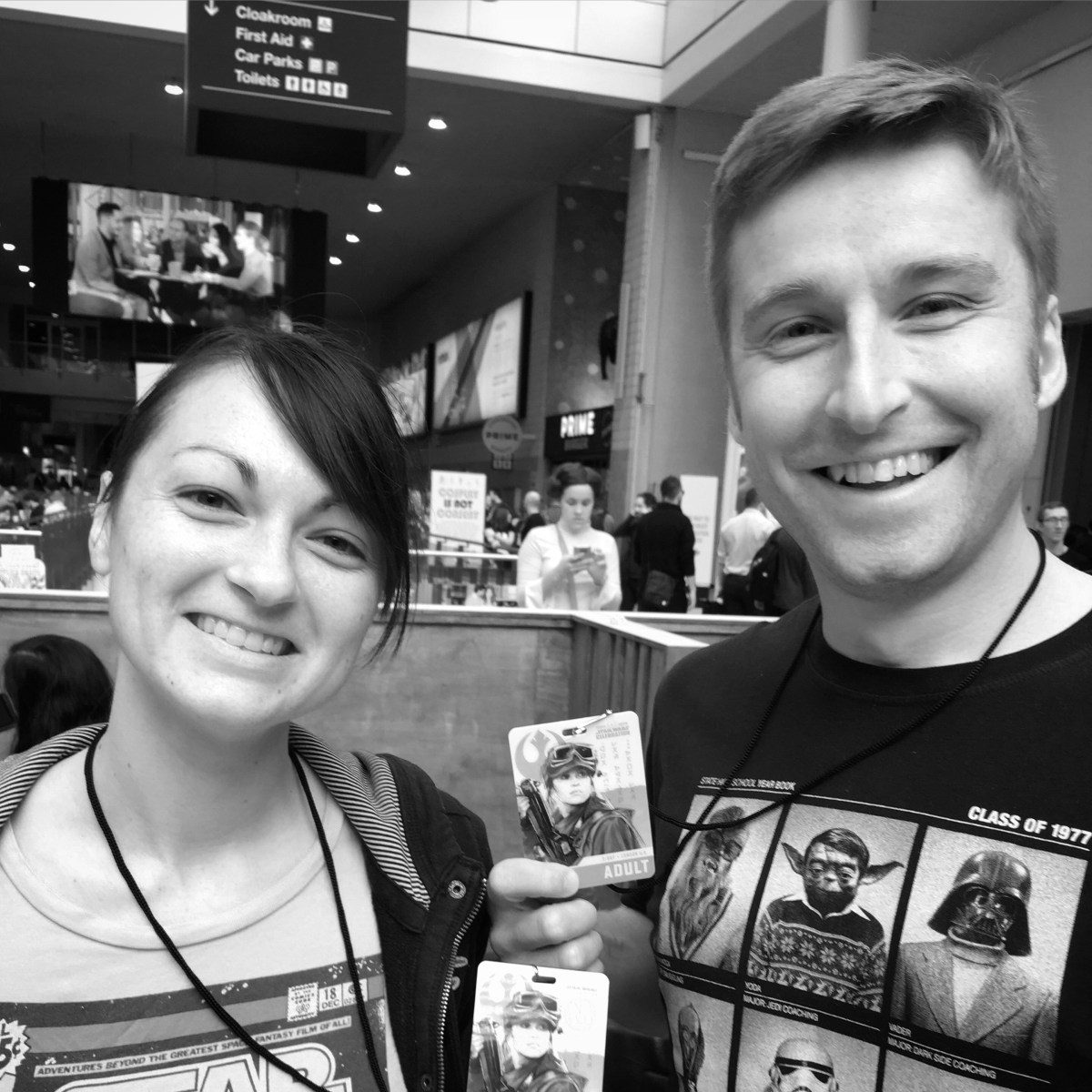
I’ve just arrived at the Star Wars Celebration Europe event in London, a weekend of fun for anyone who loves all things Jedi!
It was a bit of a rush this morning but we’ve managed to get on site, pick up our tickets and get wristbands for two popular events:
– An Hour With Mark Hamill
– Rogue One: A Star Wars Story
With about an hour to go until the pandemonium that is the opening of the hall, we couldn’t be more excited. Our group is setting each other small trivia questions, most of which result in a correct answer (eventually). Apart from any answered by me – I couldn’t even tell a Magnaguard from an Imperial Guard.
I just feel sorry for the guy who came dressed as adult Anakin for the cosplay event. Why?!
Star Fox Zero may seem like it has the potential to be a great game, but it certainly doesn’t deliver. Unfortunately for Nintendo, a disappointing release does nothing but expose the cracks on a project that has been doomed for many months.
As previously discussed in my post “Where is the Nintendo’s Wii U console right now?”, the struggling console is caught somewhere between a failed experiment and a disaster threatening the gaming behemoth’s position and reputation. There are so few games left on the horizon for Wii U owners, owners are left wondering how many more hours we’ll get to spend on it. I suspect that figure has now dropped into double figures, with the next console – provisionally titled NX – slated for a Spring 2017 release.
One thing that Nintendo had left up its sleeve to appease Wii U owners – and the word appease is spot on given they’ve semi-abandoned the previously exclusive Zelda game by announcing it will launch on the current and next-gen console simultaneously – is release an updated version of one of their biggest franchises to date, Star Fox.
This was met with excitement by the many fans of the series. It meant there was a reason to hang onto the console for a few more months and get a great exclusive title that an increasingly smaller but dedicated community would be able to enjoy.
Unfortunately for fans of the series, this isn’t really a revolutionary HD reboot to the franchise, but rather a remake of Star Fox 64 (despite supervising director Shigeru Miyamoto’s protestations to the contrary). Indeed, it is a hugely disappointing remake, plagued with controller issues and a criminally short total game time.
I decided to hold back from posting this for a few months and hope that giving it a chance to grow on me would change my mind. Unfortunately, the dreadful controls are something that simply can’t be ignored. Yes, they are very much integral throughout (who’d have thought?). The crafts are slow, their turning circles are the size of a small moon and the agility required to complete levels is far beyond their abilities. The worst thing is the inability to lock on to enemy crafts, made infuriatingly difficult by the gyro controls that can’t be fully turned off. It’s what happens when you try to shoehorn a controller that doesn’t work onto a game that doesn’t need it.
Additionally, the graphics are stuck in a rut somewhere between faithful reproduction of N64 graphics and a full HD realisation. What we’re left with is some clunky polygons with neatly drawn skins. This is a combination that has never looked good.
The one saving grace is that the familiar story mode is done and dusted in about ten hours of gameplay. Sure, they added in some frivolous reasons to replay the levels but the game is such a huge letdown I can’t bring myself to do it. So whilst it’s frustrating, disappointing and repetitive, at least you won’t have to suffer for very long.
Star Fox Zero was an instant failure and giving it time to grow on me just didn’t help at all.
Funnily enough, I recommend buying a new copy of this and keeping it sealed. So few copies will ship that they will be collectors’ items in years to come.
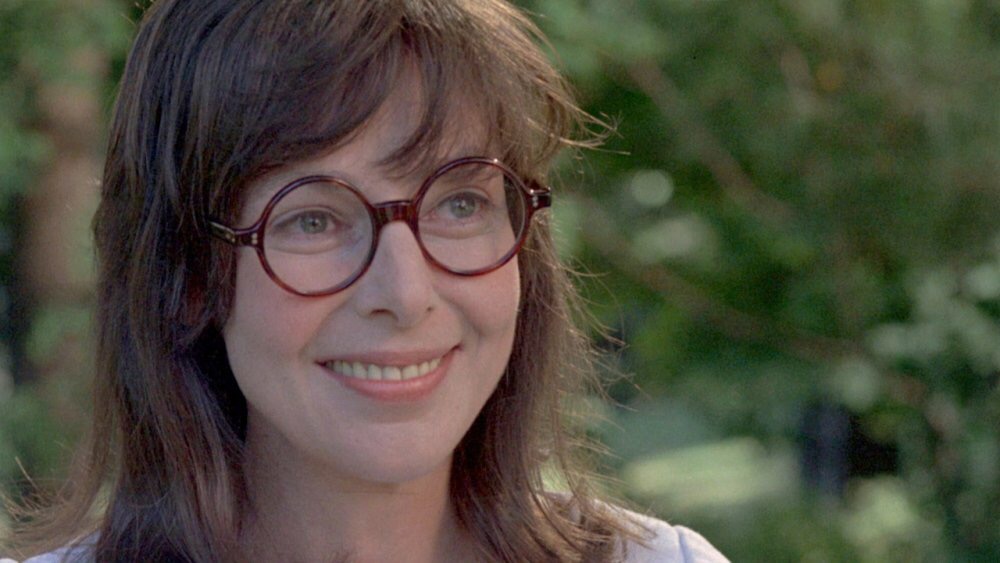
A New Leaf, the 1971 debut feature film from Elaine May, tells the story of Henry Graham (Walter Matthau), a wealthy man who finds himself broke through misfortune and bad money management. Striking a deal with his rich uncle Harry, he borrows $50,000 to help facilitate a temporary extension to his rich lifestyle, with the hope that in the time he has to pay Harry back he can find a rich single woman to marry and regain financial security. He happens upon Henrietta Lowell (Elaine May), a shy and clumsy botanical professor who may well provide the solution to his problems.
The film is definitely a black comedy, even though its light on the latter. Much of the humour here is based on Matthau being in situations of discomfort or unfamiliarity. Initially suicidal after realising he has now money, then more so at having to say farewell to his favourite upper class haunts, his pain is worsened by having to act like he has feelings of affection and compassion for a woman he has little interest in. Driven solely by money, he is shocked at how poorly her finances are managed, sacking her entire house staff team in one memorable scene.
The film plays out like an extended and scripted episode of Curb Your Enthusiasm. It’s hard to think that Larry David hasn’t seen this and been influenced by it in some way, though admittedly the comedy in David’s work is much more realised.
However, as a one-trick pony the joke tends to wear thin as we progress towards the inevitable climax of the film. According to the extensive liner notes – a gift we come to expect with the Masters of Cinema releases – there was a much extended version of A New Leaf (running at a whopping 180 minutes) that never saw the light of day, and probably never will. Whilst it’s always a shame to think a director’s vision hasn’t been fully realised, and the normal response from film enthusiasts is that the director’s cut is the ultimate version of a film, it appears that what we do have access to is probably as good as it gets. Indeed, Matthau preferred the shortened version, which cuts out a murder subplot and provides a happy resolution at the end.
That’s not to say that May’s vision is unworthy of viewing. Certainly, as a writer-director-star she succeeded in creating a solid picture. Her character in the film is by far the most interesting. She is a scientific professor, despite seemingly not needing to work (having inherited her wealth). She is essentially a philanthropist if we look at the way she treats her overpaid and underworked house staff. She is a loving and dedicated wife to her new husband, despite getting nothing in return for her devotion. In many ways, despite her introverted geekiness and inherent clumsy nature, she is a strong female role model. Subtly, the plot of the film is a slight on men in general, which was unusual for the era.
Unfortunately, however, it’s a little known film for a reason. It’s not groundbreaking or unique enough to warrant any kind of extensive praise. It has its fans and at times we are watching vintage Matthau, but the pacing, lack of a cutting script and predictable plotline undermine what could have been a much better end product.
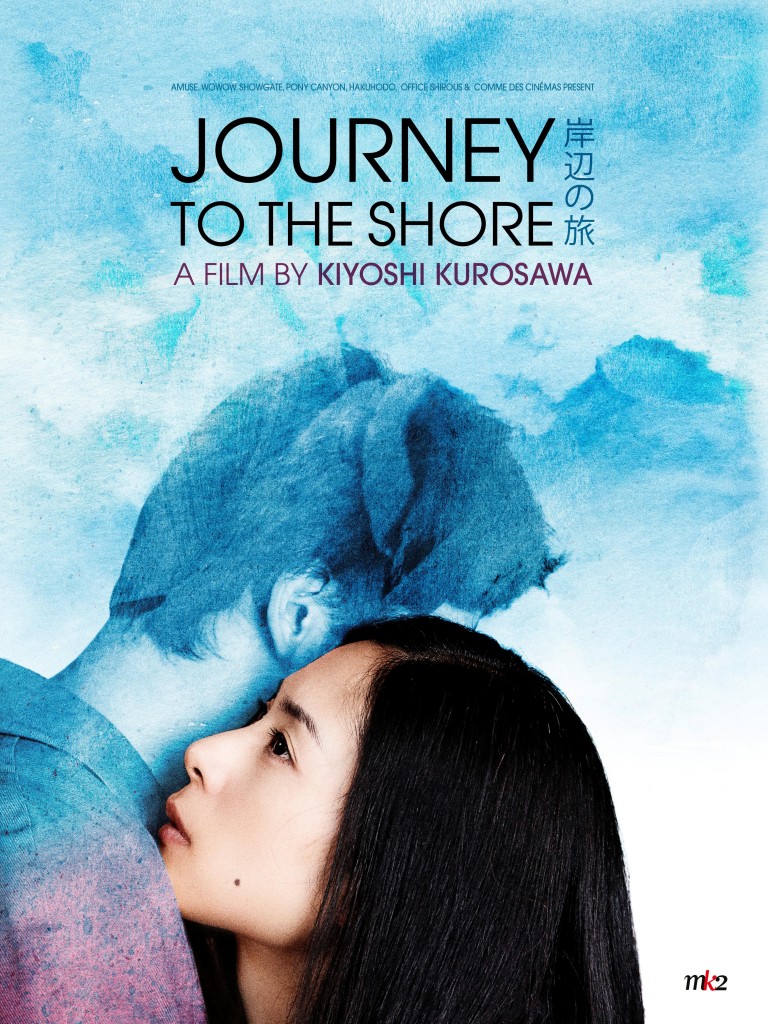
‘Journey to the Shore’ won director Kiyoshi Kurosawa the Un Certain Regard prize at last year’s Cannes Film Festival. It is also the Masters of Cinema label’s latest foray into the new release market; the label is more frequently associated with the restoration of forgotten classic cinematic releases but has enjoyed success with the likes of ‘Listen Up Philip‘ and ‘Life of Riley‘ in recent years.
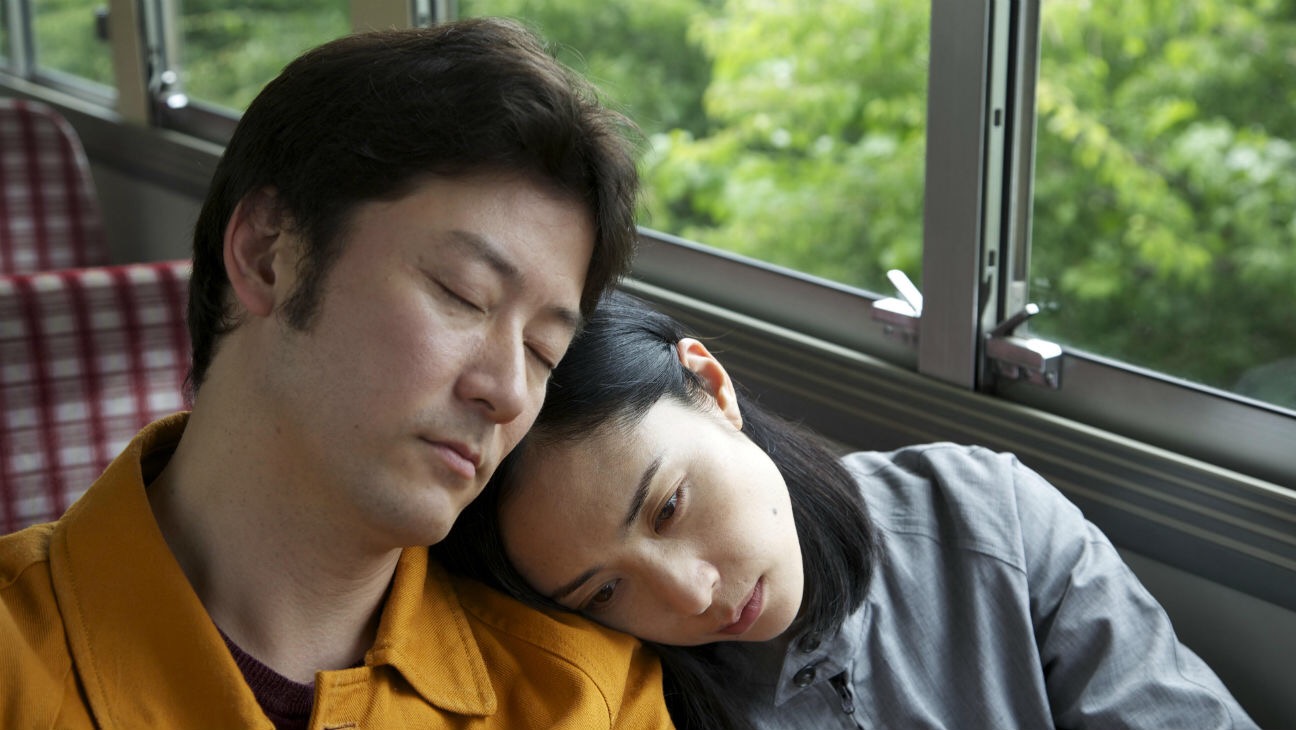
The film tells the story of Mizuki, a young female piano teacher mourning the death of her husband Yusuke, who we learn has drowned at see three years prior to the start of the film. However, when his ghost appears mysteriously at home one day, she is less surprised at his presence and more annoyed as he has forgotten to take his shoes off.
The reunited couple set off on a journey together as he takes her to visit the people who have helped him journey home from his point of death, with Mizuki’s resulting spiritually cathartic journey being the focal point of the story.
It’s a story that is rooted in Japanese culture, with the human grieving process following the death of a loved one a typical starting point for its fair share of Japanese films in recent years. Where this sets itself apart is in the very blatant separation from reality afforded by the seamless interaction between the living and the dead. There doesn’t seem to be any hard and fast rule about who can talk to whom, nor does there seem to be any surprise or shock experienced by the living seeing a close departed friend or family member. Indeed, Yusuke is portrayed as a living, breathing being with he ability to fully interact with his surroundings. It’s a unique spin on the matter (pun intended).
There are some really effective cinematographic techniques employed to reflect the mood of the scenes, most notably in the dimming of the lights when a darker story is being retold. The credit here lies with director Kurosawa and his cinematographer Akiko Ashizawa. It was subtle enough to have an impact before I realised what had happened, as key characters revealed their darkest of memories, and it added considerably to the picture.
Whether it really works as a whole is something I’m still not totally sure about. Certainly it is delivered with conviction, though the overall effect is something entirely morose. There seemed to be a relentlessness to the depression involved that, whilst perhaps reflective of the mood of the characters involved, seemed to offer nothing in the way of a positive escape for anyone watching looking to be guided by the grieving process.
The film achieves its aims and carries everything off to perfection. It’s just not a very pleasant experience to sit through.
The latest film released from the Japanese animation powerhouse Studio Ghibli is also the final feature film they will ever release. At least, that’s the line they’re taking. There doesn’t seem to be any indication that this isn’t true, although secretly most Ghibli fans – myself included – hope there will be something else around the corner.
A glimmer of hope has come in the suggestion that more short films will be produced for the Saturn Theatre, the small cinema that resides inside the Ghibli Museum in Tokyo. Unfortunately for those of us outside Japan, seeing the existing ones is quite the task – you’ll need at least a return plane ticket to Japan and some forward planning to get tickets to the museum itself. Oh, they only screen one film a day and you can only see it once. There isn’t any plan to screen any of them anywhere else in the world, so seeing the sequel to Totoro might not be something to add to your bucket list.
All this sadly leaves us with only one more Studio Ghibli film to enjoy at the cinema, finally seeing the light of day almost two years after its release in Japan. When Marnie Was There is based on the original novel of the same name by British author Joan G. Robinson, with many of the details changed from the original novel. Most notably, the location has been changed from Norfolk in England to Sapporo in Hokkaido, Japan.
The storyline deals with a young girl, Anna, who suffers from anxiety and asthma. A loner at her school and lacking in confidence, she is sent away to live with family friends in Sapporo on the advice of her doctor, who suggests that leaving the city for the clearer air and change of scenery will cure her ailments.
Once there, she struggles to settle until she happens on a mysterious building called The Marsh House, inside which a beautiful young girl name Marnie is living, a girl with whom she strikes up an immediate and very close friendship.
So how does When Marnie Was There fit into the greater Ghibli catalogue? Instantly it will strike you that it’s just as beautifully animated as anything we’ve seen before, with hand-drawn drawings taking us on the typically personal, solitary journey of the main character. Animation has seldom looked this good, and I include Disney’s output in this statement too.
The storyline will be familiar to those fans of previous Ghibli works. A young girl sent away from her comfort zone to new surroundings dealing with a secretive and mysterious occurrence, via an unlikely friendship. It is ground well worn, but that shouldn’t be a reason to dismiss it.
Anna herself is a wonderfully realised creation. The sense of isolation as she sits at school having an asthma-induced panic attack is heartbreaking and as realistic as any live-action portrayal of anxiety I’ve ever seen. This is a critical achievement – get it wrong and we’re dealing with a whiny self-obsessed teenager for two hours.
It is perhaps not as immediate as some of the more celebrated works. It’s a frustrating time to be a Ghibli fan. It’s probably the last film to hit the big screen, but it’s not the best place to start if you’re unfamiliar with the studio. If you can, watch My Neighbour Totoro and Spirited Away straight away, then head to the cinema to catch this before you run out of time.
Setlist:
Funeral for a Friend / Love Lies Bleeding
The Bitch Is Back
Bennie and the Jets
I Guess That’s Why They Call It the Blues
Daniel
Looking Up
A Good Heart
Philadelphia Freedom
Piano Improv
Rocket Man (I Think It’s Going to Be a Long, Long Time)
Tiny Dancer
Levon
Goodbye Yellow Brick Road
Have Mercy on the Criminal
Sorry Seems to Be the Hardest Word
Your Song
Burn Down the Mission
Sad Songs (Say So Much)
Don’t Let the Sun Go Down On Me
All the Girls Love Alice
I’m Still Standing
Your Sister Can’t Twist (But She Can Rock ‘n Roll)
Saturday Night’s Alright for Fighting
Encore:
Candle in the Wind
Crocodile Rock
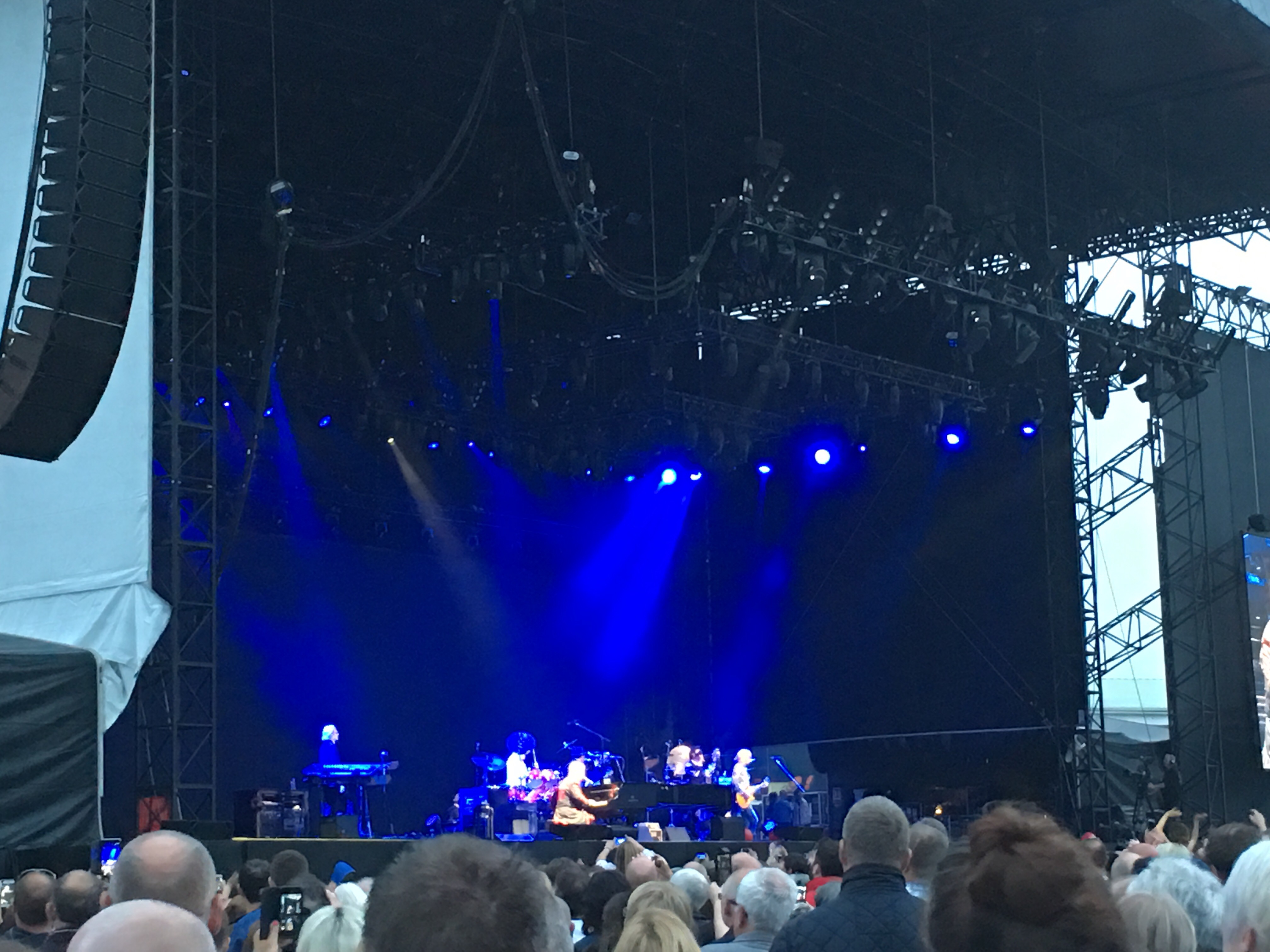
Elton John returned to Leicester for the first time in 40 years to play to a packed crowd of eager middle-aged middle-class concert goers. The day was geared towards his fanbase – all tickets were seated and it the whole thing was wrapped up well before 10pm. The main flaw was a vast underestimation of how popular fish and chips would be with a crowd who arrived before 5pm.
Elton didn’t waste any time getting stuck into his biggest hits, blasting into an epic take on Funeral For A Friend / Love Lies Bleeding, before picking up the pace with The Bitch Is Back.
These concerts can always run the risk of such a well-established artist like Elton John just going through the motions. His touring band has been together for a while and have been playing these songs for decades, but it didn’t show. The important thing was that they all looked thrilled to be there, a sentiment that transferred directly to the audience. It wasn’t until he got into the slow-paced A Good Heart from his latest album Wonderful Crazy Night that the crowd died down and took a breather.
The mood was only soured when Elton launched a tirade towards some over-zealous security guards at the front of the stage, who appeared to be forcing the crowd to stay seated. Elton refused to continue until they sat down themselves, and this confrontation caused a slight break in the fun.
It must be difficult to stay in a bad mood, however, when your songs are being sung word-for-word by 1000s of adoring fans, and as the drinks flowed and the night drew in, the crowd fell in love with the superstar all over again. With songs this good, it’s easy to see why.
I’ve never been a huge fan of Westerns. It’s a slight bugbear of mine and I hate to be so sweepingly dismissive of an entire genre, but until recently they’ve always seemed so formulaic and lacking in unique characters.
That’s not to say I don’t have many fond memories of Westerns. My grandfather was a huge fan of any films with cowboys in. Growing up, I lived away from most of my family and so getting to my grandparents’ house was a long journey that would usually have us arriving in the early afternoon, by which point my grandfather would often be settling in to watch a good Western. At the time, the subtleties of the character development or the most intense of standoffs was undoubtedly lost on my pre-teen self.
With the trusted Master of Cinema label now lovingly releasing a select few Western films (with the typical smorgasbord of bonus material to help put the films into context), I’m giving the genre a second chance, if nothing else to prove my smarmy little 10-year-old self that he was wrong all along.
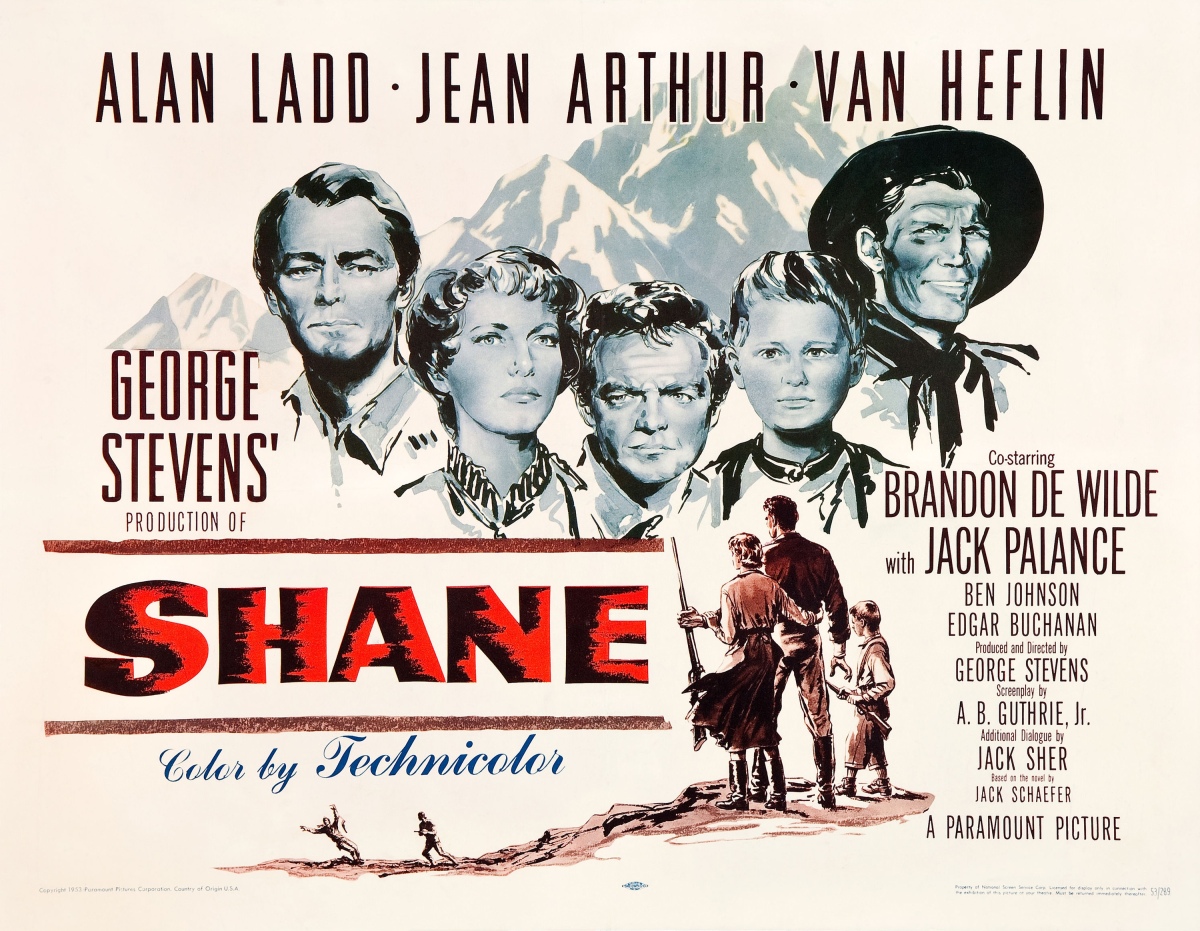
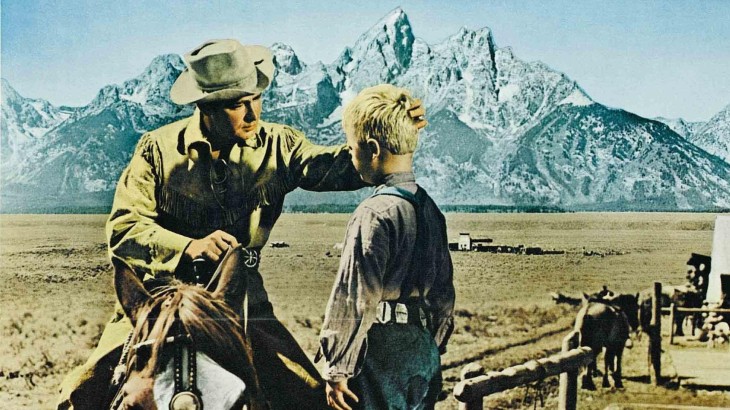
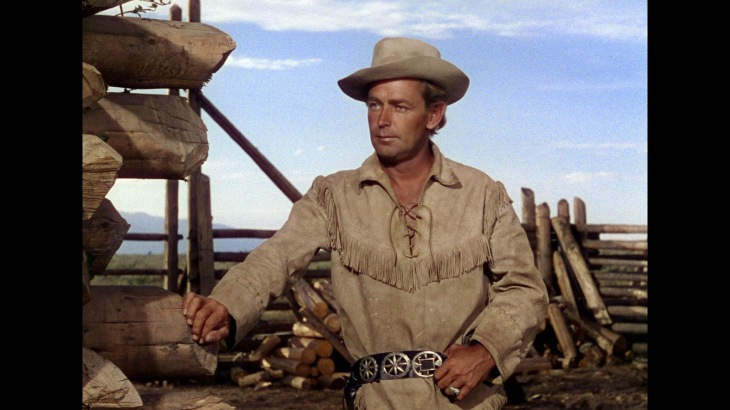
Shane tells the story of the titular hero, played by Alan Ladd. As the opening credits play out, he rides into a small isolated town in Wyoming to meet the Starrett family. He has a mysterious past but quickly wins their favour before the father Joe (Van Heflin) invites him to stay on their property to help out on the ranch.
Over dinner, he learns that the entire town is being terrorised by Rufus Ryker (Emile Meyer) and his gang, who are driving out families one-by-one to gain total control over the land in the area in order to better herd their cattle.
Thus, the story plays out with Shane and Joe forming a stern partnership to rally against the gang and save the town for those families already settled. As the conflict escalates, Shane emerges as the classic lone gunman hero in which the whole town’s hopes lie.
Whilst the story itself is quite familiar, befitting of any good cowboy or samurai film, director George Stevens gets away with the over-idolisation of Shane as the all-American hero by the inclusion of the young Joey Starrett (Brandon deWilde). It is through his eyes that we see everything happen. This has one of two effects. Firstly, it allows Shane to be as formulaic as he needs to be by virtue of the fact that the story can be considered as a retelling of the tale through Joey’s memory of the fact. If that doesn’t sit well as an interpretation, then at the very least the saintly actions of Shane can be seen as a means to leave a positive impression on the child – which he certainly does.
He is clearly a man wrestling with the wrongs of his past, and spends most of the film trying to hide this from the Starrett family. When he finally reveals his gunslinging credentials in front of the Joey, he decides it’s time to move on, presumably to the next place he stumbles upon that needs rescuing.
Whether he makes it to that next town is open to interpretation. Indeed, in the final shootout, he does take what looks like a fairly serious wound to the torso. He plays this down for his final leaving speech for Joey, but as he rides off I couldn’t help but wonder whether he was going to survive. After all, he’s spent the best part of two hours putting a brave face on for every other aspect of his life – he certainly wouldn’t let on to Joey that he was about to die.
The romantic subplot between Shane and Joe’s wife Marian (Jean Arthur) adds an interesting subtext to the situation. Clearly she is pining for him, and her interest is underlined in every scene they share. It feels a little shallow, and does nothing for Marian as a character as she follows every stereotype in cinematic history. Alas, it was typical of the time and her only purpose is to add some sex appeal to Alan Ladd’s handsome hero.
Shane may be a typical Western, but it is a fine and pure example of the genre that is rightly being held up as one of the best of its kind.
[Note 1] The second screenshot in this review is how the film should look on your widescreen television, with black bars down the left and right sides of the picture. This is due to the aspect ratio used (1.37:1). There is a second aspect ratio available on the disc, though as Adam Naymar explains in the booklet note “Don’t Fence Me In” this is a controversial version of the film. I’ll let you read it for yourselves should you make the purchase.
[Note 2] Below is the theatrical trailer for Shane. It is proof that cinema goers in 1953 cared not for spoilers, as the critical climax of the final scene of the film is included. Quite why this was done is a mystery to me as it completely ruins the entire film, but since the film is now 63 years old I don’t feel it is fair to be angry towards me for including it in this article. After all, I’ve given you fair warning…