Film review – A United Kingdom (Amma Asante, 2016)

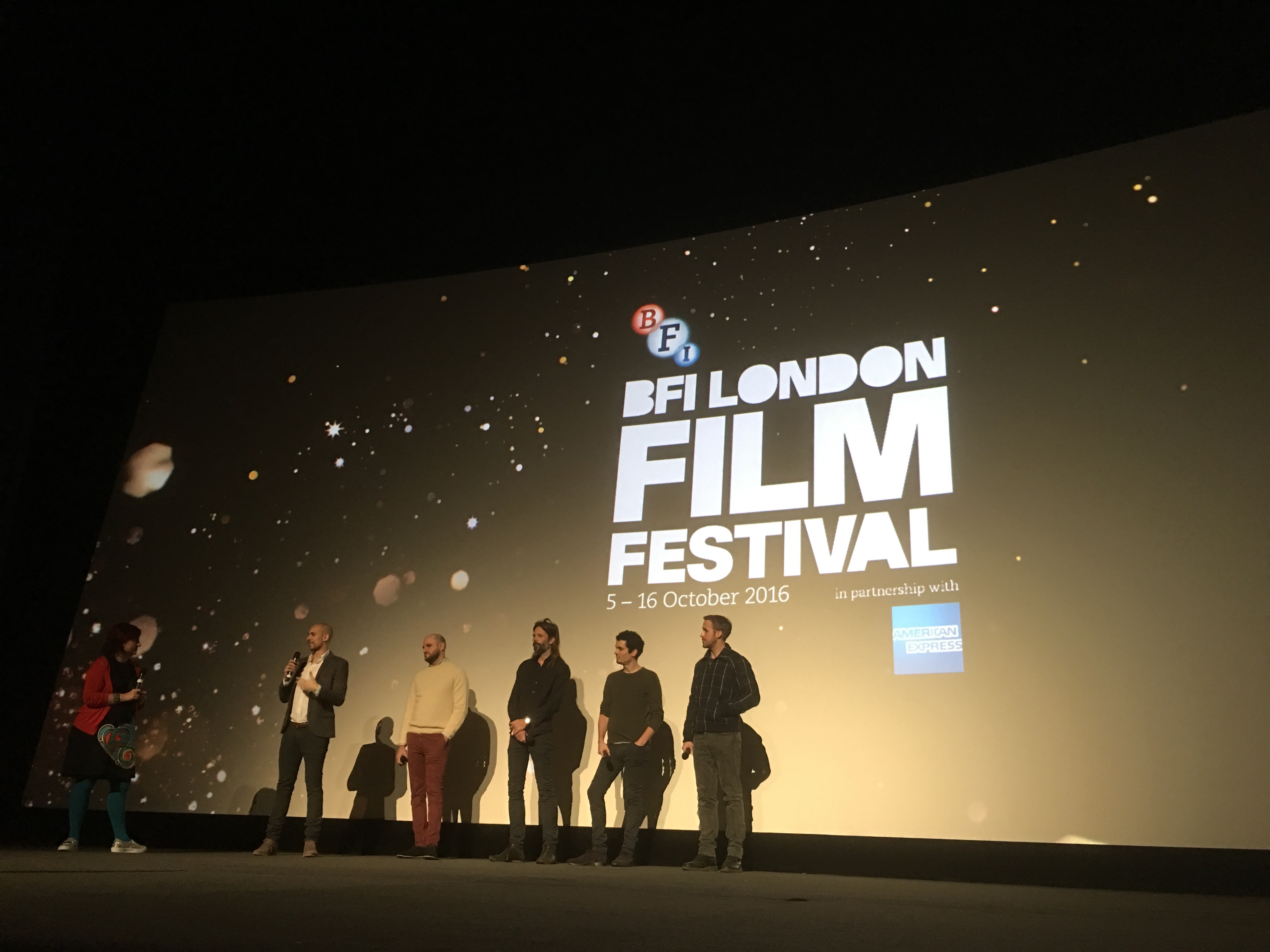
Kicking off the 2016 BFI London Film Festival in style tonight was Amma Asante’s triumphant ‘A United Kingdom’. After the glitz and glamour of the red carpet, the film’s central themes proved to be an apt starting point for a programme that festival director Clare Stewart claims will focus on diversity.

The film tells the true story of Ruth Williams (Rosamund Pike) and Seretse Khama (David Oyelowo). Khama is the King of Bechuanaland (the country now known as Botswana) and in 1948 he marries London girl Williams amid opposition from their families and countries, sparking a political debate that led to the country’s independence movement.

Asante is the first black woman ever to direct an opening night film at the London Film Festival, and she was keen to point out the relevance of her being the person at the helm telling this important story.

“[The Botswanians] were comforted that it was going to be told through the gaze of a woman of colour… There was relief, and of course a curiosity, as to how their country, and they as a people, would be reflected on screen.”

Pike and Oyelowo

The resulting picture is a moving portrayal of a changing time in two countries with a message that is as valid today as it was then. True, there has been much progress in the world since 1948, but looking back at the changes in the past 70 years should give humanity hope that as much progress can be made again in the next 70 years. Indeed, many comments from the stars on the red carpet referenced that there is still much wrong with the world and a film like ‘A United Kingdom’ serves to highlight that we should never give up the fight. This is a fact not lost on Asante, especially given the marginal bandwidth available in the film industry to both people of colour and women – something that should be considered one of the big talking points of this year’s festival.

Oyelowo and Pike work together perfectly, each delivering powerful performances worthy of the story they are telling. The film’s genesis lies with Oyelowo, who started writing the script six years ago after reading the Susan Williams book Colour Bar, and his passion for the story seeps into his emotional delivery.

The film perhaps suffers from appearing saccharine, with the story telling us that their love was so strong it overcame political opposition and brought a continent together. The truth is that the film isn’t too far from being perfectly accurate, with only a couple of timeline changes for the benefit of pacing.

This is a story that is one piece of a much larger puzzle that can be filled in with what can be seen as companion films: Mandela – Long Walk To Freedom (2013) and Hotel Rwanda (2011) are two good recent examples. There is a rich history that is still being written in Africa, from which deeply moving stories continue to be drawn in both film and literature.

It is remarkable that the actors and actresses involved knew little of the source material before receiving the script. It is likely that the same can be said of the many viewers this film will eventually reach – I have to admit that I was also blissfully unaware of the history of Botswana before seeing this film. Khama’s story isn’t one that has been well-documented and that is something that Oyelowo and Asante will be more than happy to rectify.

A truly important story told in such a captivating manner deserves to be seen. A wonderful start to the festival.


Film review – Julieta (Pedro Almodóvar, 2016)

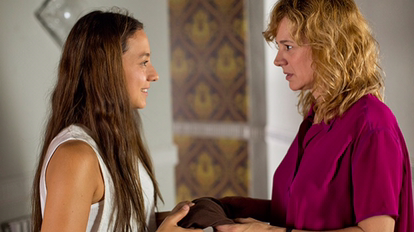
The latest film from Pedro Almodóvar, Julieta, is a stunning interwoven story of mystery and intrigue that the director takes great care in unraveling for our viewing pleasure.

Centred around the titular character, we are introduced to Julieta as she plans to move from central Madrid to Portugal with her boyfriend Lorenzo. However, a chance encounter with a friend of her daughter causes her to completely rethink her decision. Her daughter, Antía, has been missing for several years and moving will mean any chance of reconnecting with her will be lost. She opts to stay behind and rent an apartment in the last known address that her daughter could contact her. She fills her time hand writing her thoughts on the events that led to her daughter’s disappearance, which play out in the form of a long flashback that makes up the bulk of the film.

It is an adaptation of three stories by Alice Munro taken from her 2004 award winning book Runaway, which Almodóvar first hinted at in his brilliant 2011 horror thriller The Skin I Live In via a Spanish-language version of the book being prominently read by one of the central characters.

The music in Julieta plays a critical part in setting the tone, switching it from serious drama to something slightly more sinister. It borders on sounding like a horror film at times, with the implied effect of hinting that whatever story has been revealed thus far still has more secrets within.


The success of the film ultimately lies on the two actresses who portray Julieta at various times through it her life. Fortunately, both Emma Suarez and Adriana Ugarte provide brilliant turns as the older and younger incarnations of Julieta, respectively. They are very different takes, resting either side of a devastating incident in her life. It works perfectly well and the change is handled with a certain elegance that ensures buy in from the audience.

Some ardent Almodóvar fans have been disappointed with his recent output, with some pointing to airplane-disaster-comedy  I’m So Excited as an indication that he’d lost his edge. Any doubts about how seriously he takes his work can be put to bed with Julieta – a beautiful work of art and a must see for anyone with a penchant for high quality cinema.

Julieta is available now on DVD.

Film review – Café Society (Woody Allen, 2016)

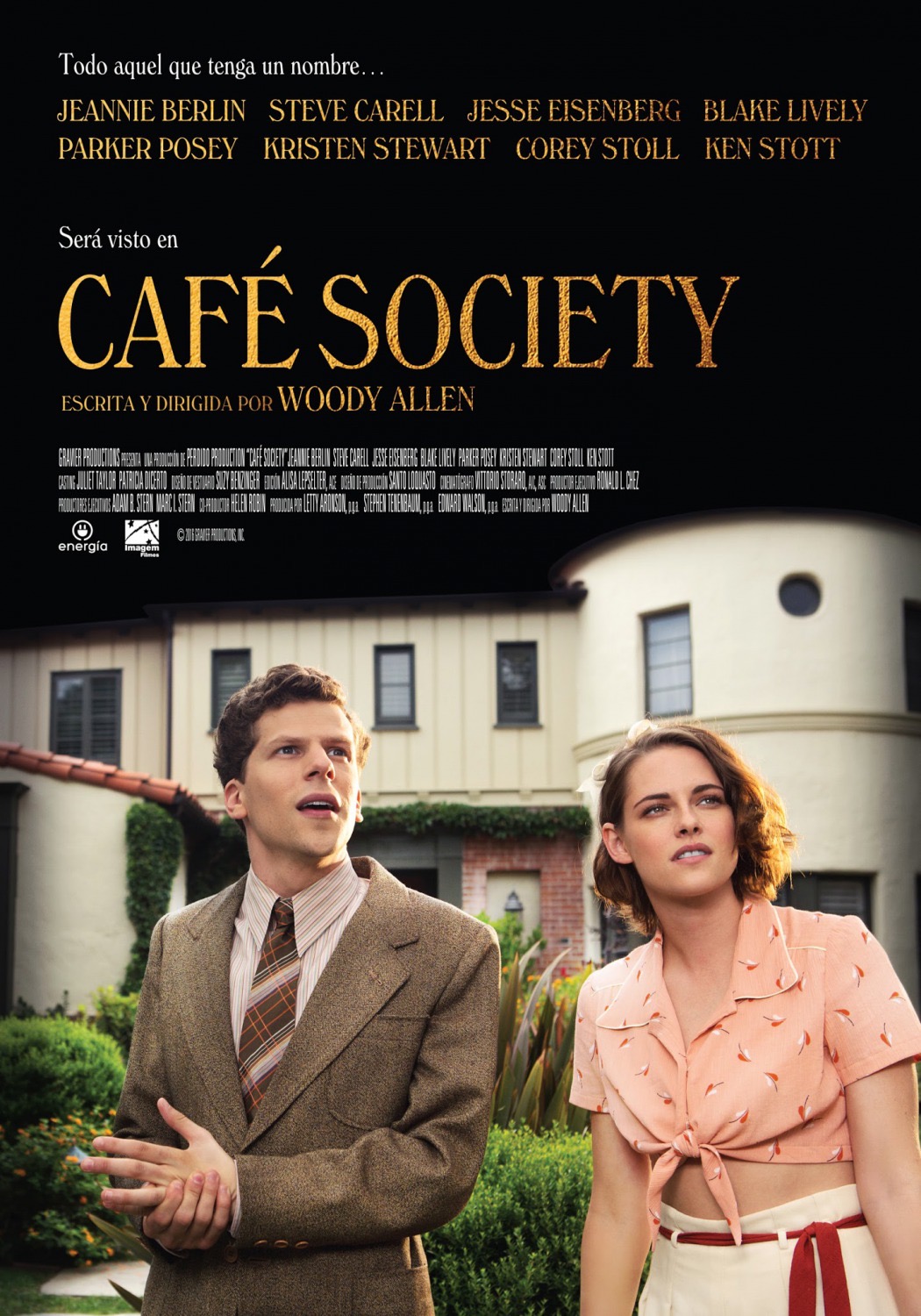
There is a moment in Café Society where the magic of 1950s Hollywood romance is really captured: a chance glance, an excited exchange, the promise of unfolding romance recognised instantly. That this exquisite one-shot involves not Kristen Stewart – the woman we need to believe is Jesse Eisenberg’s raison d’etre – but rather Blake Lively, reveals everything we need to know about why this Woody Allen effort fails to hit the heights of his more recent successes. That is, Kristen Stewart simply isn’t a believable love interest. At least not in this kind of film.

The 1930s-set story centres around Bobby (Eisenberg), a young Jewish man who has moved to Hollywood to pursue new career opportunities under the supervision of his uncle Phil (Steve Carell), a powerful and well-connected film talent agent. He instantly falls in love with Veronica (Stewart), an assistant at Phil’s office,  unaware of the fact that his uncle is on the verge of breaking off his marriage to pursue his affair with Veronica.

The film hangs together on Jesse Eisenberg’s shoulders, as he starts off by doing his best Woody Allen impression and progresses towards his final position that is ever-so-slightly more alpha male than that. It is genuinely an excellent performance, bringing energy to the screen whenever he graces it.

He works best playing off against the plethora of supporting characters who never fail to exude the feel of the time and he’s clearly having fun under the supervision of one of the greatest living film directors. It’s a beautiful homage to the heyday of Hollywood, as Bobby develops into a socialite, bouncing from party to party first in Hollywood and then later on his return to New York.

Whenever Stewart appears on screen, she feels like a woman out of place in the era and unable to match the authentic performances of those around her. This goes against some excellent post-Twilight performances that have given her a route out of potential typecasting (American Ultra is a great example of this), but a classic Hollywood leading starlet she is not.

The film is not a complete failure. A hilariously delivered exchange between Bobby and a first-time prostitute is just one example of the smart comedic dialogue we’ve come to expect in Allen’s recent film. The jazz-centric score heightens the positioning in the era.

It’s just a shame that I was routing for he wrong girl.

Cafe Society is available now on DVD, along with the sumptuous Vince Giordano soundtrack.

Film review – Kollektivet / The Commune (Thomas Vinterberg, 2016)

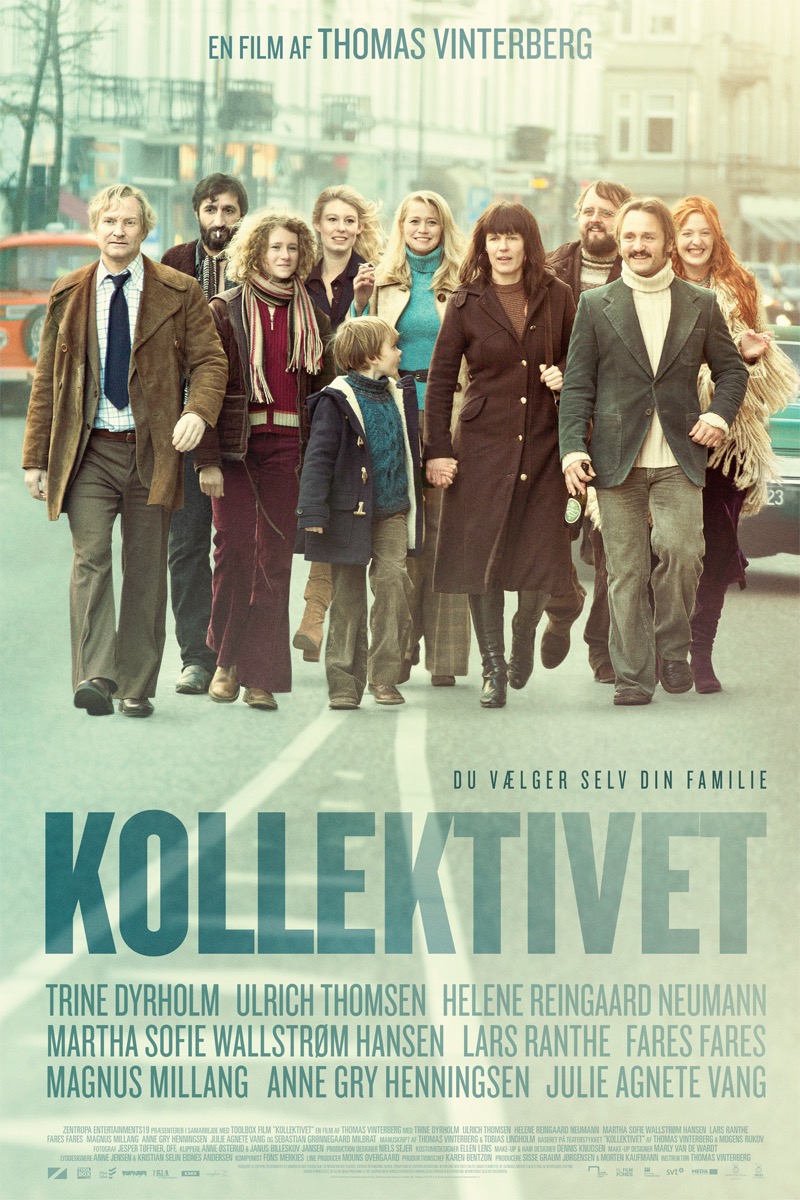
Danish director Thomas Vinterberg returns with his latest film Kollektivet, known as ‘The Commune’ in English-speaking countries. Set in 1970s Copenhagen, it revolves around architecture professor Erik (Ulrich Thomsen) and his wife Anna (Trine Dyrholm), who have inherited Erik’s gigantic childhood family home. The building has prohibitively high living costs and the pair fear it would feel empty, so Anna suggests inviting some friends and acquaintances to share the space (and costs) with them. And so they end up with a total of ten people in the house, turning it into the titular commune.

Inevitably, the unusual way of living takes its toll on all those involved, be it their shy daughter Freja (Martha Hansen) sneaking out to see her new boyfriend, emotionally unstable Allon (Fares Fares), or Ditte (Anne Gry Henningsen) and Steffen (Magnus Millang) who have a son with an increasingly threatening heart condition. Every time these characters hit a low, the other people are there to ensure spirits don’t stay too low for too long.

Where the story avoids feeling slightly convenient, it is instead overly contrived. The setup of the commune concept is abrupt and simply has to be accepted by the viewers to avoid a complete disappointment. It never felt credible to me that Erik would have not only accepted the strangers into his home but also sign the ownership away to them. This could have been resolved by indicating that they were financially sound and using another means to justify their actions, but money is given as the primary purpose of bringing more people in.

Of the ten lead characters, at least five seem to be shallow to the point of superfluity. It felt to me that having ten people in close proximity would have been the perfect platform for friction that never truly surfaced. Perhaps Vinterberg, who based the story on his real-life experiences, was too rooted in sticking to reality to throw in something to spice the plot up. Or perhaps two hours isn’t enough time to successfully explore so many characters.

The real engine of the story is Anna, portrayed brilliantly by Dyrholm. When Erik starts having an affair with one of his students, we are taken on an emotional journey with Anna that serves as the driving force of the final third of the film. Her only support network is through the people in the commune, but being there means she has to live alongside her husband’s new lover. It is an uneasy watch, at times heartbreaking, as Dyrholm is allowed to flex her acting muscles with a powerhouse of a performance. The heartbreaking moment when her daughter takes matters into her own hands is as powerful as anything I’ve seen at the cinema this year.

It is a film fundamentally about family and community spirit and how effective that can be despite an unconventional setup. Vinterberg isn’t afraid of allowing the story to take bold turns, even if it doesn’t setup the happy ending many cinema-goers would hope for.

Matching up a strong storyline with a handful of top-level performances is always a recipe for success. A flawed but thoroughly gratifying film.

Film review – The Neon Demon (Nicolas Winding Refn, 2016)

Danish director Nicolas Winding Refn has been carving out his own route to the forefront of spectacularly stylised cinema, oozing with what can only be described as Refnisms. His films all inhabit the same universe in a way that all great genre film makers do. So it is with his latest, The Neon Demon, which has all the hallmarks of a hedonistic night in a stae-of-the-art nightclub whilst not giving up on the brutal bloodbaths we’ve come to expect of Refn’s work.

The opening shot is breathtaking – a slow dolly-out on a female model who sits motionless with a sliced throat. That girl is Jesse (an initially unrecognisable Elle Fanning). We learn quite quickly that she is in the middle of her first photo shoot, but this shot lingers long enough to have us right in the palm of the hands of the storytellers. It is simple yet brilliant film making.

neondemonscreenshot1

Elle Fanning as Jesse

The film takes us on a journey with Jesse, an orphan who has moved to Los Angeles soon after her 16th birthday to pursue a modelling career. Bright eyed and innocent in every way, she has no time to learn who she can and can’t trust. As the focal point of a powerful story she is brilliant in the way she carries the film on her shoulders.

The supporting cast are excellent. Abbey Lee and Gigi Bella Heathcote put in a great turn as the jealous models Sarah and Gigi. Keanu Reeves’s Hank is reminiscent of his abusive husband Donnie in The Gift, full of brutality and intimidation. It is Jena Malone’s portrayal of doting makeup artist Ruby that really comes close to stealing the show, her face betraying everything she says throughout to brilliant effect.

The Cliff Martinez soundtrack feeds into the visuals perfectly. A frequent NWR collaborator, Martinez’s sparse electronic score blends the contemporary setting with the horrific events that are unfolding on screen. This is a work of art for which he won best soundtrack at the Cannes Film Festival. It’s easy to see why.

This is a sensational film with a powerful leading performance from a girl just seventeen at the time of filming. Pairing this with such bold film making and the result was never going to be anything but an overwhelming success.

Film review – The Hard Stop (George Amponsah, 2016)

‘The Hard Stop’ documents the 2011 London riots that erupted in the aftermath of the police shooting of Mark Duggan, a 29-year-old black British man. Given the current events in Dallas, Texas, the release of the film couldn’t have been more relevant.

The film concentrates on Marcus Knox-Hooke and Kurtis Henville. Both were close friends of Duggan for many years prior to his death, and both were members of the Tottenham Man Dem, a gang formed out of the Broadwater Farm housing estate in Tottenham. Broadwater Farm was the setting for a brutal riot in 1985 that was believed to be caused by the police raiding a home and causing the heart attack of resident Cynthia Barrett. The main reason it is remembered across the UK is the death of PC Keith Blakelock, the first policeman to die in a riot in the UK since 1833.

The film paints a balanced view of both Marcus and Kurtis. Growing up in the aftermath of the 1985 riots, the two are family-oriented men with their home community at the centre of their make-up. Their upbringing – and that of Mark Duggan – has clearly been one overshadowed by suspicion and resentment for a police force that should be there to protect them, but instead seem to constantly be at odds with their community.

the hard stop screenshot

It is an unsettling film for a number of reasons. The media portrayal of the 2011 riots (that quickly spread around the country) seldom touched on the root cause, instead focusing on the looters and chancers that saw it as an opportunity to make some money out of the pandemonium. The anger from the black community in London at the injustice of what happened to Duggan was completely suppressed. I am sorry to say that as a white man, the underlying cause of the riots was not apparent to me and none of the many news outlets I have touch-points with exposed me to the full picture.

The reveal of the eventual findings of the inquest into his death was the most shocking moment of the film. The inquest found that, whilst it was unlikely that Duggan was carrying a gun, the killing was unfathomably still deemed lawful. The emotional response of the community in which Duggan lived was one of absolute devastation and was captured in a moment of brilliant documentary film-making by director Amponsah. This is not a community that wants to fight, but as the opening quote of the film states, “A riot is the language of the unheard.”

‘The Hard Stop’ is one of the most important documentary films to hit the big screens this year. Out of necessity, it is rough around the edges. It has, at the heart of it, some of the greatest social themes facing Britain today. A riveting watch.

Star Wars Celebration Europe 2016 – Day 1

So day one of the Staw Wars Celebration Europe in London is complete and it has been a ridiculously good day. 

Whilst the highlight was the Rogue One trailer reveal and panel discussion, the rest of the day was literally a joy for all those in attendance.

Cosplay Competition

Cosplay is a mixture of costume dress-up and role playing, and has become a permanent fixture of the Celebration events and similar weekenders.

The cosplay competition was this year won by an excellent 9ft take on Grungar. I spoke to the creators and it took over 100 days to complete. In many ways, it is better than the costume from the movie, which itself couldn’t stand up and be moved around.

Across the board, it was phenomenal to comprehend how much time had collectively been poured into the competition. Even those that weren’t in the top 3 in their categories were great efforts, especially a near-perfect Kylo Ren.

An Hour With Mark Hamill 

An hour with Hamill was never going to be enough and it was sad to see him go. The format was simple – he just had people line up and ask him questions until we ran out of time.

There were some fascinating questions, not just about Star Wars but also his successful voice acting career, and his responses were candid and revealing.

At one point he confirmed the long-standing rumour that the opening scene of Episode VII was his hand floating through space holding a lightsaber. Cool? I think so.

I hope the whole discussion is made available some day soon.

Freebies

Want cool free things? Just walk around. There’s plenty there. My favourite was a Dengar Top Trumps card. I’m evidently easy to please.

I did spend some money too. I’ll be wearing my awesome German-language The Empire Strikes Back (or is that Das Imperium Schlägt Zurück?) t-shirt tomorrow for day two!!

Star Wars Celebration Europe 2016

I’ve just arrived at the Star Wars Celebration Europe event in London, a weekend of fun for anyone who loves all things Jedi!

It was a bit of a rush this morning but we’ve managed to get on site, pick up our tickets and get wristbands for two popular events:

– An Hour With Mark Hamill

– Rogue One: A Star Wars Story

With about an hour to go until the pandemonium that is the opening of the hall, we couldn’t be more excited. Our group is setting each other small trivia questions, most of which result in a correct answer (eventually). Apart from any answered by me – I couldn’t even tell a Magnaguard from an Imperial Guard.

I just feel sorry for the guy who came dressed as adult Anakin for the cosplay event. Why?!

See you around here.

Game review – Star Fox Zero (Nintendo, 2016)

Star Fox Zero may seem like it has the potential to be a great game, but it certainly doesn’t deliver. Unfortunately for Nintendo, a disappointing release does nothing but expose the cracks on a project that has been doomed for many months.

As previously discussed in my post “Where is the Nintendo’s Wii U console right now?”, the struggling console is caught somewhere between a failed experiment and a disaster threatening the gaming behemoth’s position and reputation. There are so few games left on the horizon for Wii U owners, owners are left wondering how many more hours we’ll get to spend on it. I suspect that figure has now dropped into double figures, with the next console – provisionally titled NX – slated for a Spring 2017 release.

One thing that Nintendo had left up its sleeve to appease Wii U owners – and the word appease is spot on given they’ve semi-abandoned the previously exclusive Zelda game by announcing it will launch on the current and next-gen console simultaneously – is release an updated version of one of their biggest franchises to date, Star Fox.


This was met with excitement by the many fans of the series. It meant there was a reason to hang onto the console for a few more months and get a great exclusive title that an increasingly smaller but dedicated community would be able to enjoy.

Unfortunately for fans of the series, this isn’t really a revolutionary HD reboot to the franchise, but rather a remake of Star Fox 64 (despite supervising director Shigeru Miyamoto’s protestations to the contrary). Indeed, it is a hugely disappointing remake, plagued with controller issues and a criminally short total game time.

I decided to hold back from posting this for a few months and hope that giving it a chance to grow on me would change my mind. Unfortunately, the dreadful controls are something that simply can’t be ignored. Yes, they are very much integral throughout (who’d have thought?). The crafts are slow, their turning circles are the size of a small moon and the agility required to complete levels is far beyond their abilities. The worst thing is the inability to lock on to enemy crafts, made infuriatingly difficult by the gyro controls that can’t be fully turned off. It’s what happens when you try to shoehorn a controller that doesn’t work onto a game that doesn’t need it.

Additionally, the graphics are stuck in a rut somewhere between faithful reproduction of N64 graphics and a full HD realisation. What we’re left with is some clunky polygons with neatly drawn skins. This is a combination that has never looked good.

The one saving grace is that the familiar story mode is done and dusted in about ten hours of gameplay. Sure, they added in some frivolous reasons to replay the levels but the game is such a huge letdown I can’t bring myself to do it. So whilst it’s frustrating, disappointing and repetitive, at least you won’t have to suffer for very long.

Star Fox Zero was an instant failure and giving it time to grow on me just didn’t help at all. 

Funnily enough, I recommend buying a new copy of this and keeping it sealed. So few copies will ship that they will be collectors’ items in years to come.

Film review – A New Leaf (Elaine May, 1971)

A New Leaf, the 1971 debut feature film from Elaine May, tells the story of Henry Graham (Walter Matthau), a wealthy man who finds himself broke through misfortune and bad money management. Striking a deal with his rich uncle Harry, he borrows $50,000 to help facilitate a temporary extension to his rich lifestyle, with the hope that in the time he has to pay Harry back he can find a rich single woman to marry and regain financial security. He happens upon Henrietta Lowell (Elaine May), a shy and clumsy botanical professor who may well provide the solution to his problems.

The film is definitely a black comedy, even though its light on the latter. Much of the humour here is based on Matthau being in situations of discomfort or unfamiliarity. Initially suicidal after realising he has now money, then more so at having to say farewell to his favourite upper class haunts, his pain is worsened by having to act like he has feelings of affection and compassion for a woman he has little interest in. Driven solely by money, he is shocked at how poorly her finances are managed, sacking her entire house staff team in one memorable scene.

The film plays out like an extended and scripted episode of Curb Your Enthusiasm. It’s hard to think that Larry David hasn’t seen this and been influenced by it in some way, though admittedly the comedy in David’s work is much more realised.

However, as a one-trick pony the joke tends to wear thin as we progress towards the inevitable climax of the film. According to the extensive liner notes – a gift we come to expect with the Masters of Cinema releases – there was a much extended version of A New Leaf (running at a whopping 180 minutes) that never saw the light of day, and probably never will. Whilst it’s always a shame to think a director’s vision hasn’t been fully realised, and the normal response from film enthusiasts is that the director’s cut is the ultimate version of a film, it appears that what we do have access to is probably as good as it gets. Indeed, Matthau preferred the shortened version, which cuts out a murder subplot and provides a happy resolution at the end.

That’s not to say that May’s vision is unworthy of viewing. Certainly, as a writer-director-star she succeeded in creating a solid picture. Her character in the film is by far the most interesting. She is a scientific professor, despite seemingly not needing to work (having inherited her wealth). She is essentially a philanthropist if we look at the way she treats her overpaid and underworked house staff. She is a loving and dedicated wife to her new husband, despite getting nothing in return for her devotion. In many ways, despite her introverted geekiness and inherent clumsy nature, she is a strong female role model. Subtly, the plot of the film is a slight on men in general, which was unusual for the era.

Unfortunately, however, it’s a little known film for a reason. It’s not groundbreaking or unique enough to warrant any kind of extensive praise. It has its fans and at times we are watching vintage Matthau, but the pacing, lack of a cutting script and predictable plotline undermine what could have been a much better end product.