Film review – Victoria (Sebastian Schipper, 2015)

The latest film from director Sebastian Schipper is Victoria, a one-shot bank heist film set in modern day Berlin. When I say one-shot, I mean one-shot: no trickery, no cut-aways, no cheating. That’s 138 minutes of film in one continuous take – a bold move that took three attempts to get right. It’s a glorious achievement and a wonder to behold, even though the film is perhaps flawed as a result of its own triumph.

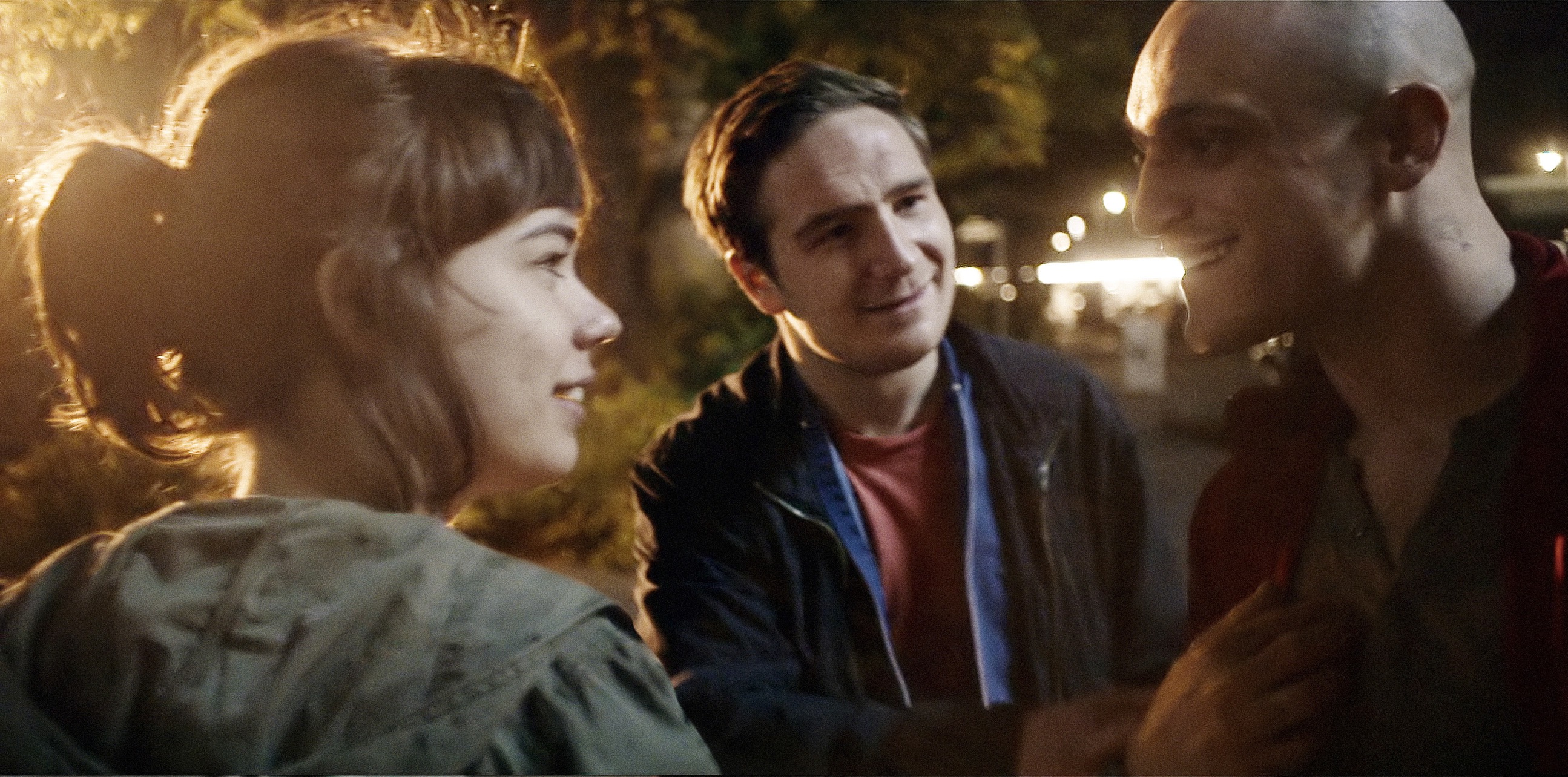
The story centres around the titular Victoria (Laia Costa), a girl we first join in a nightclub in the Kreuzberg district of Berlin. She’s alone but when she leaves the club she has a conversation with four men: Sonne (Frederick Lau), Boxer (Frank Rogowski), Blinker (Burak Yigit) and Fuss (Max Mauff). Getting embroiled in their night and swept away with the chemistry between herself and Sonne, she suddenly finds herself agreeing to take part in an early-morning bank heist that puts all of their lives at risk.

One of the greatest achievements involved with this film is the way that the single shot doesn’t get in the way of a well-told story. This is achieved by having five central actors that are focused and well-briefed. Any slip up at any point and the whole thing would fall down. Helping this was the fact the script was only twelve pages long, which meant the cast could improvise their scenes. 

What is lost, however, is the ability to maintain the pace by cutting sections that on reflection didn’t work. There are two instances where I felt they had faded out the audio and brought in the musical soundtrack from Nils Frahm solely to cover up a mess-up in dialogue. I may have been trying too hard to spot the errors knowing editing wasn’t a possibility, but with more freedom the film could have been chopped down to about 100 minutes to deliver a fast-paced action film.

So what would that achieve? Well, perhaps the film would be more accessible by being a faster tempo with no down time. Would I have seen it in an edited form? It’s doubtful. I’m a huge fan of the skill of acting, and thousands of actors achieve wondrous things night after night in theatres across the planet. It’s such a shame that directors and editors don’t have the balls to let them act for more than five seconds at a time in most Hollywood films.

Watching Victoria may require a bit of effort from the viewer, but seeing a group of actors achieve greatness with minimal scripting is worth it. Throw in the fact you are watching a director trying something technically astounding – and succeeding – and you have a film most worthy of your consumption.

A must see!

Doing DisneySea Tokyo in one day

My wife and I are huge fans of Disney films and of the theme parks. We’ve visited several of the parks around the world, so when we’d booked a trip to Japan we quickly realised that going to one or both of the theme parks would be a unique experience we’d likely never be able to repeat.

After a bit of online research, we found that Disneyland Tokyo was very much a replication of the Magical Kingdom seen frequently around the world, primarily aimed at children with lots of meet-and-greets, slow-moving story rides and not many faster roller-coasters.

DisneySea on the other hand was aimed at older parties, with a fair amount of thrill-seeker rides, some unique rides and events not in other parks and a few more adult-oriented restaurants.

What’s so special about it?

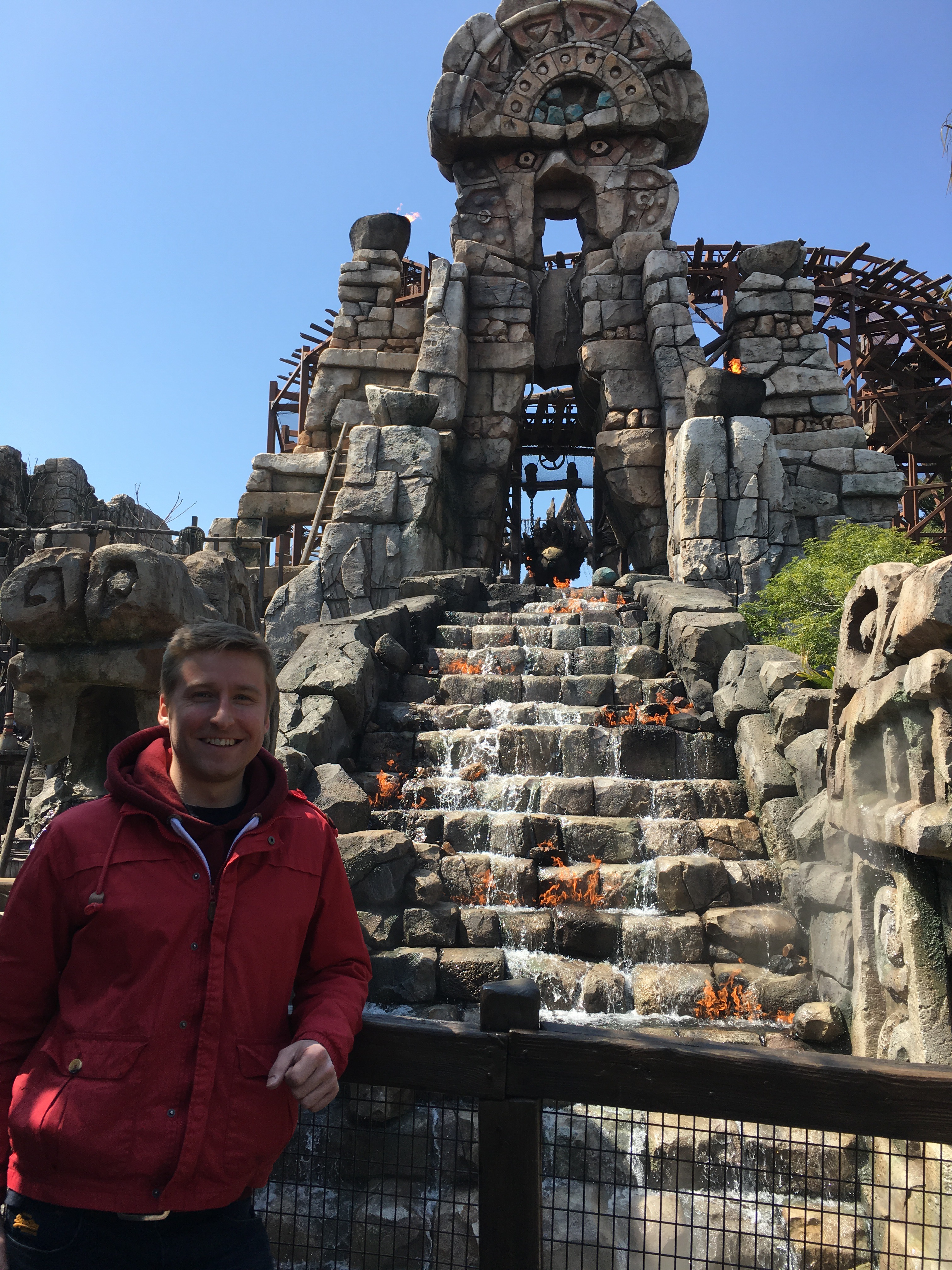
DisneySea features a number of rides and activities that are exclusive to the park. This includes two exceptional fast-moving rides at the top of the park in the Lost River Delta area: Indiana Jones and the Kingdom of the Crystal Skull and Raging Spirits. For us these were the best two rides in the park: the first a fast, jolty, exciting adventure and the second an exceptionally quick roller-coaster.

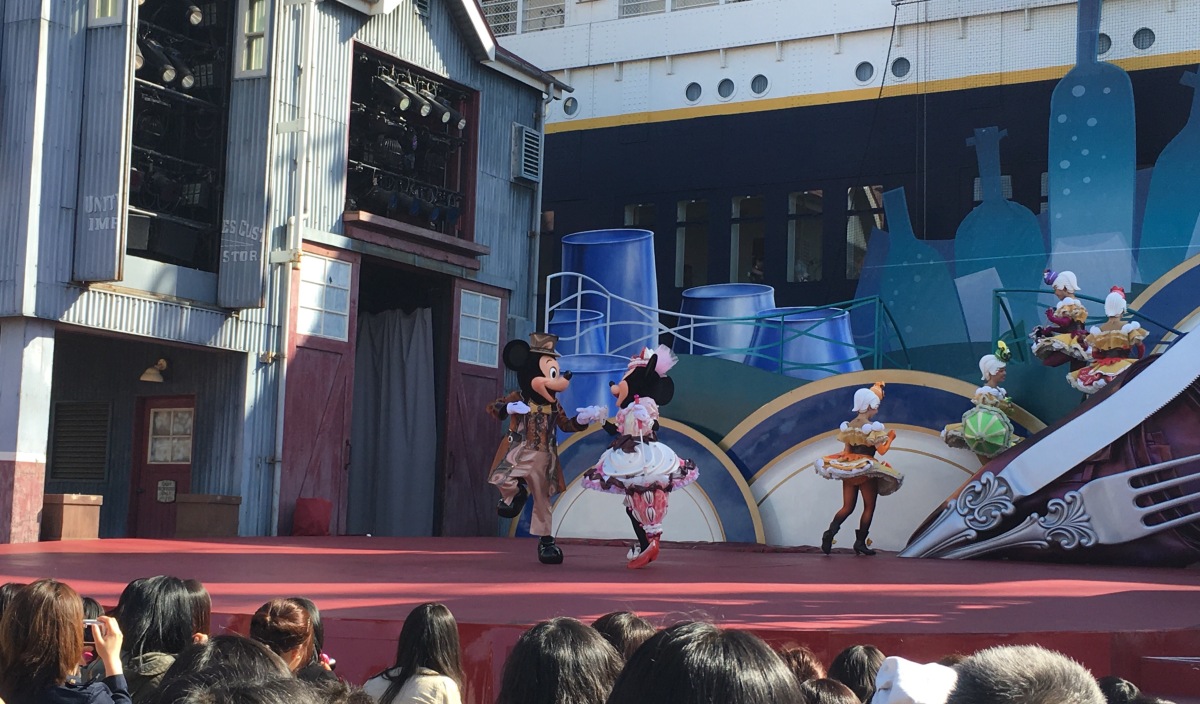
Elsewhere there are two highly popular rides in the centre of the park at Mysterious Island, a handful of great stage shows, a great version of Fantasmic (a video projection, boat performance and fireworks display that features at a number of parks), some familiar favourites and a great choice of restaurants. If you’re in the Tokyo area of Japan and have enjoyed Disney theme parks in the past, this is definitely one you should add to your list.

Can it be done in a day?

All the advice we saw online said it couldn’t be done in one day, that you needed at least two or maybe three days to see everything. After almost but not quite doing everything in one day, we left the park feeling like we hadn’t missed anything we were desperate to do and could have done a ride or two more if we’d really known what we were doing.

Firstly, the layout of the park is a little confusing and everyone else seemed to know where they were going. This meant we were disoriented and, coupled with arriving a little late in the morning, meant we got to our first FastPass at 9:15. You can get a FastPass every two hours, but most of the rides were fully booked by about 13:30, so realistically we only were able to get three FastPass tickets. Actually, in the end we didn’t bother with a third one because we were in a queue and missed out so went for lunch instead.

Secondly, and most importantly, we didn’t realise some of the rides had a single rider feature on them until about midday. If we’d known earlier, we’d have done this much sooner. Without opting for single rider, you can’t realistically do all the big rides.

So how do you do it?

This guide assumes you get your first FastPass at 9am having arrived prior to this time, bought your ticket and spent a few minutes working out where to go.

Step one (09:00): head straight to Mysterious Island and get a FastPass for Journey to the Centre of the Earth. We weren’t overly enamoured by this ride, but it’s so popular you have to do it, especially since it’s a DisneySea-exclusive.

Step two (09:05): Get in the queue for 20,000 Leagues Under The Sea. It’s right next to Journey… and thus makes sense. This should take about 45 minutes. This ride is sinilar to Pirates of the Caribbean in that it’s a slow-moving story-based ride with lots of animatronic characters, with the additional exception that it makes you feel like you’re underwater. Not many thrills here I’m afraid! However, it will be really popular later in the day and you need to do it – don’t just avoid it because we didn’t like it! Again, it’s a DisneySea-exclusive, plus if you understand Japanese you may get more enjoyment out of it.

Step three (09:50): Head up to the top of the park via the “stroooong bridge” and get onto Indiana Jones and the Kingdom of the Crystal Skull using single rider. This was one of two rides you can get on with single rider and doing so will knock about two hours off your queuing time. This is an excellent ride, especially for thrill-seekers, and is another park-exclusive. It’s possibly one of the best rides we’ve ever been on and would be perfect but for Harrison Ford speaking in Japanese.

Step four (10:10): Coming out of Indiana Jones, go left and do exactly the same for Raging Spirits, getting a single rider and jumping straight on to the ride. This will take, in total, about twenty minutes. Another fantastic ride for thrill seekers and well worth doing, especially for the 360 degree loop.

Step five (10:30): By this stage you will have the option to repeat one or both Indiana Jones and Raging Spirits, if you enjoyed them both enough to do so and have the time to. You’ll have time to kill before you get your next FastPass at 11:00, but you NEED to get it at the earliest opportunity. Another option would be to simply take a stroll over to the area for your next FastPass at the Tower of Terror. This is in the American Waterfront area, also home to two great stage shows: A Table Is Waiting on the Dockside Stage (a comedy show that is all visual) and the Big Band Beat at the Broadway Music Theatre (a brilliant and classy tribute to the music theatres of New York City). If you’re lucky you could catch one of them on your way through, or you could just grab a snack or drink somewhere and take in the fantastic scenery and ginormous ship in the New York Harbor – the SS Columbia.

Step six (11:00): Go to get a FastPass for the Tower of Terror. The time will be disappointingly late in the day for you, probably around 7pm, but it’s the only way you’ll enjoy this excellent ride that has a completely different back story to the USA version given it has no tie-in with The Twilight Zone. Don’t worry – they will provide a translation of the back story before you start.

Step Seven (11:10): Now will be about the right time to get in line for Journey to the Centre of the Earth. It’s mainly a dark-ride attraction that tells a story, but does speed up a bit near the end to give you a bit of a thrill.

Step Eight (11:30): If you want to single-rider any of the rides at Lost Island Delta again, now is your chance. It will take another 40 minutes but those two rides are well worth it.

Step Nine (12:10): It’s time to pick up some lunch from a vendor – we recommend the giant turkey legs located in the Mysterious Island – and get in line for the last big ride we’re yet to touch on: StormRider. It’s the only attraction of note in Port Discovery and is set to close in May 2016, so get this in whilst you can. Queuing for this is the only way now that you can get on it, but since there’s nothing else you haven’t done that’s aimed at adults this is the best option. Expect to queue for around 90-120 minutes for it.

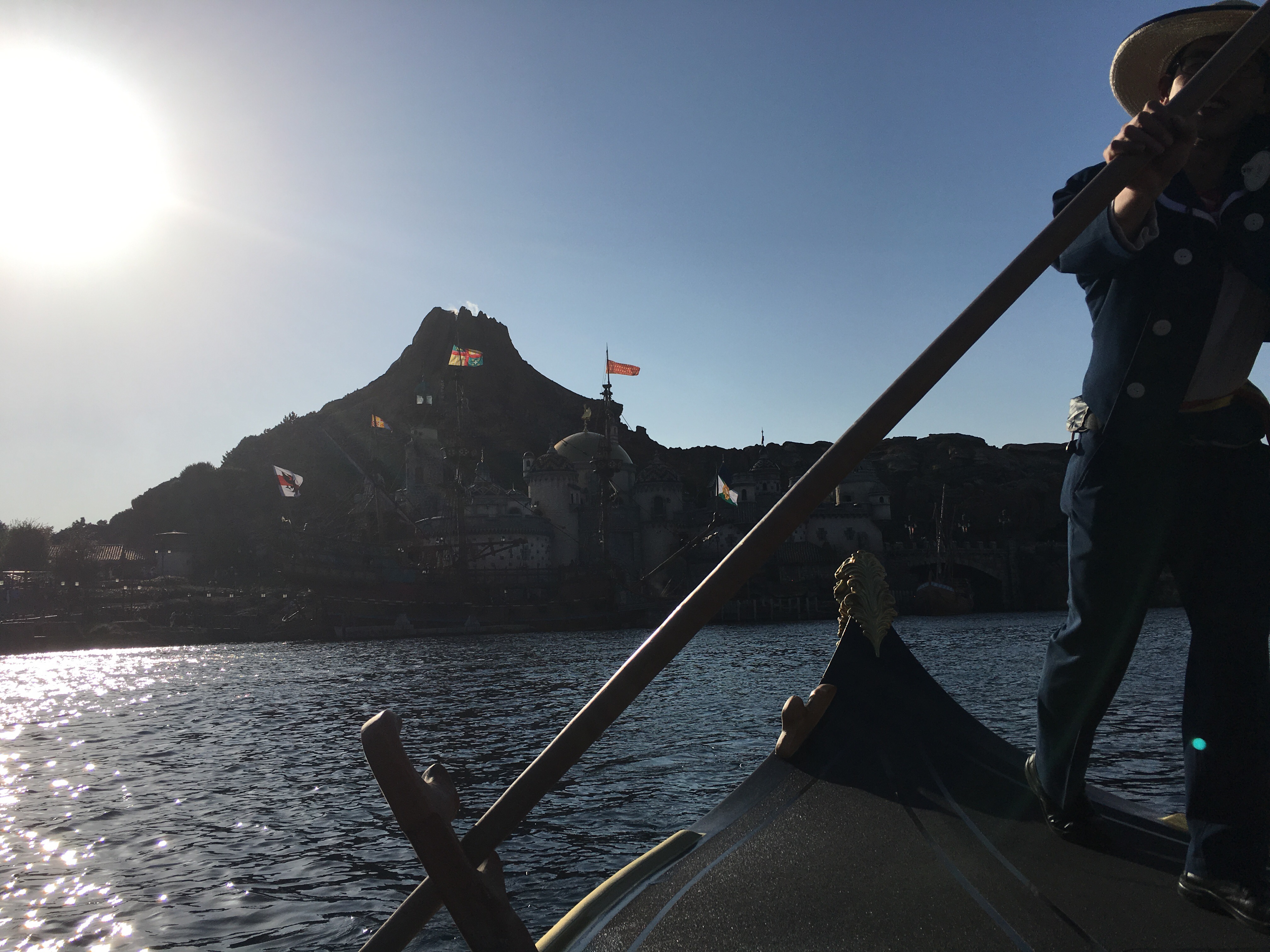
Step Ten (14:30): After such a hectic morning, you now have about five hours to do with as you please before your Fast Pass for The Tower of Terror and Fantasmic. This was the point we chose to get on a gondola and ride around their interpretation of Venice, took a stroll through Mermaid Lagoon (none of the rides appealed) and really absorbed the park.

If any of the other rides take your fancy then now would be the time to go for them. However, there’s plenty to see and you need to take it all in! There’s also chance to do some shopping and pick up some souvenirs.

Step Eleven (17:30): Dinner time brings many options. For parties with fussy eaters not used to Japanese cuisine, a good option is Sailing Day Buffet in the American Waterfront, which offered some Asian options but also steak, steamed veg, loads of salad options, Italian-style pasta and free refill soda. You get to eat for up to two hours.

Step Twelve (19:30): Tower of Terror fast pass will be around now.

Step Thirteen (20:00): Fantasmic. A must-see!

Step fourteen (21:00): Home.

Conclusion

Hopefully this guide will help you get the most out of a single day at DisneySea. Sure, there is plenty to do if you want to spread it over two days, but if you’re short for time then plan ahead and it can be done.

Have a great time and let me know if you found this guide useful!

Star Wars: The Force Awakens – Bonus Features

I received my copy of The Force Awakens in the post earlier today and have busied myself watching a handful of the bonus features.

For fans of the film, or of Star Wars in general, there is plenty on offer to warrant a purchase. All the things imaginable are covered and have details galore far beyond what you’d have heard before.

The deleted scenes are largely disappointing. There’s no Constanble Zuvio and Chewbacca doesn’t rip anyone’s arms out of their sockets. There is a nice little scene with a chase on a snowspeeder, complete with Phantom Menace-level CGI. There’s also a cool clip featuring Kylo Ren searching the Falcon and sensing Han Solo.

Watching them and their limited nature makes me feel like there are some more completed scenes out there that might surface as an Extended Edition at a later date.

The centre point of the disc is by far the one titled ‘Secrets of The Force Awakens: A Cinematic Journey’. It’s a four part, hour-long documentary feature that takes you on the journey from concept to final product. Do yourself a favour and make sure you watch this. Treat it like a proper film.

The first read-through feature is a little disappointing. It’s nice enough but with a title like that you might be forgiven for expecting video footage of the whole script read. It is less than five minutes and is just the cast reminiscing on that special first day.

Elsewhere, there’s a mini feature on BB-8 and another on the creatures from the film, plus ones covering the music and ILM.

Overall a disc worthy of your time if you’re the type of person who wants to learn as much as possible about such a fantastic film.

Theatre Review – ‘Hikosan Gongen Chikai No Sukedachi’ at the Kabukiza Theatre in Tokyo,02/04/2016

The Kabukiza Theatre in Tokyo is the primary theatre in Tokyo to watch traditional kabuki theatre. The theatre is stunning both inside and out, designed in a traditional manner despite the many reconstructions over the years. Seeing a show there is a must for anyone visiting Tokyo wanting to see traditional Japanese theatre done properly.

What is kabuki theatre?

Kabuki is a traditional form of Japanese entertainment. The name literally means sing-dance-skill. It was allegedly first performed in the 17th century and has continued to be popular throughout the intervening period.

Theatrical productions in the kabuki style tend to be in five acts. They are typified by stark make-up and fanciful costumes, with performers striking “mie” (kabuki-style picturesque poses) as they deliver their lines. Audience members will shout out the actors’ Yagō (house name) to show their appreciation.

The stage consists of a typical framed stage as you’d expect in any Western-style play. Uniquely, however, kabuki theatre stages have a hanamichi – a walkway protruding out of the stage on which performers make dramatic entrances and exits from the stage.

How do I get tickets?

Each month a new programme of single act shows is performed, making up approximately four hours of performances in the afternoon and four hours of performances in the evening. Multi-act tickets for either the afternoon or evening performances can be bought in advance either at the box office or online, though those only wanting to see a single act can turn up at pre-determined time slots to buy cheap single-act tickets from the box office. This is the option we chose.

A word of warning on this – they operate a queuing system and only 150 tickets are available for each act, with only the first 90 getting seats. The remaining 60 stand behind the seats. It is also almost impossible to get tickets in this way for consecutive acts as the timeslot for the next set of tickets usually lands in the middle of the prior performance. Basically, if you want to see the whole show you need to buy in advance, though for newcomers one act is usually enough.

For 1000 JPY you can also rent an English subtitle box. This is essential for your enjoyment of the show and can’t be recommended enough.

Where is it?

The Kabukiza Theatre is located in the Ginza area of Tokyo. The best subway stop to reach it is at Higashi-Ginza station on the Toei Asakusa Line. The main box-office is located in the subway station along with a small market and several coffee shops and restaurants. Single-act tickets must be purchased upstairs at the dedicated box office outside the theatre.

Review – ‘Hikosan Gongen Chikai No Sukedachi’

‘Hikosan Gongen Chikai No Sukedachi’ is a single-act play that is showing at the Kabukiza Theatre throughout April. It makes up half of the evening performance, with a second unrelated story following.

The storyline centres around Keyamura Rokusuke (Kataoka Nizaemon), a farmer and master swordsman living at the base of Mt. Hiko, who we are introduced to shortly after the death of his mother. A proclamation has been made that any man who can defeat Rokusuke in a sword fight will be put into immediate employment by the ruler of Kokura. One night, when Rokusuke is praying for his mother, Mijin Danjo (Nakamura Karoku) a masterless samurai passes by with his old mother. Danjo asks Rokusuke to let him win the sword match under the premise that it will show him to be a good son to his mother, who is close to death. Rokusuke is touched by this suggestion and immediately promises to throw the fight. However, once the fight is thrown, Rokusuke discovers that Danjo isn’t as trustworthy and honorable as he first thought.

At one hour and thirty-five minutes, the play was a perfect length for someone new to kabuki theatre. As an English speaker who couldn’t really pick up most of what was being said in Japanese, the subtitles worked perfectly well. 

It is a uniquely Japanese experience that doesn’t, in truth, compare to anything I’ve seen anywhere else. However, that doesn’t mean it’s difficult to access and within a few minutes I was completely engrossed in what was going on on stage.

Kataoka Nizaemon XV is a popular kabuki actor and his nuances were well received by the audience. He was recently awarded with the title of National Living Treasure in Japan. This is really a one-man-show and he carries it perfectly, utilising moments of real sorrow for a man missing his mother and juxtoposing them with tremendous comedy as he deals with the various women residing at his home as well as an adopted son.

If you enjoy surprises it is advised that you don’t read the synopsis before you go in as it very much reveals everything you will see performed, including the conclusion of the final act. Indeed, this is a play that ends on a cliffhanger without playing out the story to a defined conclusion, leaving the audience to take the story on in their own heads to wonder and assume what happens to the featured characters further down the line. This may come as a surprise to those expecting a satisfyingly concise ending, but this is a performance that sticks to the original script rather than tinkering to please modern audiences.

As an art form, kabuki is more accessible than most would expect and the opportunity to see it in Japan should be seized, especially with great seats available at such reasonable prices. It’s something I hope to enjoy again in the future and hope you do too.


Film review – バクマン。/ Bakuman (Hitoshi Ohne, 2015)

バクマン。/ Bakuman is a 2015 Japanese film based on a serialised manga of the same name. It depicts the exploits of two Japanese junior high school students, budding artist Mashiro (Takeru Satô) and aspiring writer Takagi (Ryûnosuke Kamiki), as they form a partnership to become mangakas for Japan’s most popular weekly Manga magazine Shonen Jump.

The film, like the manga on which it is based, is laced with introspection. The subject matter is such that the original manga was about two boys wanting to write for Shonen Jump, though it was serialised in that very magazine. The risk therefore is that it could have romanticised working there, but that couldn’t be further from the truth. Conversely, I was wondering how they ever got it signed off by Shonen Jump since working there seems to pose serious risks to ones health.

The overarching storyline is a romantic-comedy, because artist Mashiro is driven by the hope his success will be met with that of Azuki (Nana Komatsu), an aspiring voiceover actress with whom he has a pact should they both be successful. Whilst this is slightly by the numbers, the real magic comes from the attention given to the artistry and skill involved with making manga. I’d go as far as saying this is a perfect place to start if this is a career you want to go down as it gives you a warts-and-all depiction of how these artists live their lives.

  
There are some brilliant sequences involving the main characters as they battle against a rival artist in a nightmare world of manga artwork and paintbrushes that do for Japanese art what Scott Pilgrim did for videogame culture in 2010.

There might not be a lot in this for people who aren’t fans of manga or anime, but anyone who has ever picked up a copy of Shonen Jump would really find a lot on offer in this homage to the struggling manga artists at the magazine.

2016 March Grand Sumo Tournament, Osaka

If you’re thinking of visiting Japan any time soon and you’re lucky enough to land your trip at a time when the sumo tournament is on, you need to make sure you go. To absorb yourself in Japanese culture completely, you should consider all aspects and in a country where sport is so important you might as well opt for a uniquely Japanese sport rather than football or baseball.

  
How does the day work?

We went on the 13th day of the tournament, which is the business end of things. Basically, the format of these tournaments is that they last fifteen days and each sumo wrestler competes against a different opponent each day. They don’t have time to compete against everyone but they don’t repeat any match ups. 

As each wrestler is ranked according to his status and record, the fights are split into sub-sections throughout the day. In a nutshell, you can get into the arena from 08:30 but the best wrestlers won’t fight until about 15:00. Since we were travelling over from Tokyo in the morning, we went to the arena at about 13:00 and didn’t feel like we missed anything, seeing the tail-end of the Makushita Division fights (3rd division), all of the Juryo Division fights (2nd division) and all of the top level Makuuchi fights.

Do I need to know anything about sumo?

The sport of sumo is very easy to figure out, and it’s made easier by the fact that the fights come thick and fast so you can pick it up on the day. 

In simplistic terms, the aim is to get your opponent out of the ring or on the floor. Only the soles of the wrestler can touch to floor at any time. 

You will be able to follow the events unfolding before your eyes with a piece of paper with all the match-ups written out and the form of the wrestlers included so you can see the favourites. The wrestlers from the east are always on the left and the wrestlers from the west are always on the right (though the east/west placement is arbitrarily handed out to the wrestlers regardless of hometown).

Sumo isn’t just about the fighting. There are a lot of rituals that each wrestler must go through and they are followed before each and every fight. The build up to each fight lasts several minutes and the fights rarely go over ten seconds.

Who are the big stars?

In over 300 years of the sport, only 69 fighters have been awarded the Yokozuna title, though this has only been recognised as the highest rank for around 100 years. They achieve this by winning two grand tournaments in a row (there are only six per year). There are currently three Yokozuna fighters: Hakuhō Shō, Harumafuji Kōhei and Kakuryū Rikisaburō. All three are from Mongolia. When these fight, you know about it as the whole stadium erupts with delight. 

This is never more evident than with Hakuhō, the most successful sumo wrestler in the history of the sport. We were lucky enough to see him fight against Kakuryū, another Yokozuna, and come out victorious.

  
When are the tournaments?

There are six tournaments throughout the year: three in Tokyo (January, May, September), one in Osaka (March), one in Aichi (July) and one in Fukuoka (November).

Food (Osaka-specific)

There isn’t much choice of food once you’re inside the arena. Other than ice cream sold by vendors walking around the ground, you’re pretty much limited to a bento box if you’re looking for something substantial. These cost around ¥2100 (£15), but they include a whole host of cold Japanese snacks you can eat with the chopsticks provided. 

Here’s an example of what you’d expect to find.


If that doesn’t take your fancy, then you can wait for the tournament to finish and head of the arena in any direction and find heaps of restaurants with every type of food to take your fancy. I’m not even going to attempt to list them as there are too many to choose from.

How do I buy tickets?

This is the tricky part. Sumo tickets sell out almost instantly, especially for the latter days of the tournament.

It’s impossible to buy tickets from the official website if you don’t live in Japan. There are, fortunately, some 3rd party dealers who will help you get tickets. 

The one I used was www.buysumotickets.com, and the tickets were paid for with a small commission fee and were in hand within a few days. Really helpful service and sorted me out with alternative tickets when the ones I wanted weren’t available. 

Highly recommended!!

Conclusion

If you get chance to go to Japan and happen to be there when one of these tournaments is on, then it’s a must-do experience. Now is a great time to experience sumo, with three Yokozuna all competing at the same time. I went for one day and I’m now converted, wondering how I’ll see the next tournament from the UK!

Osaka Nightlife for a Solo Englishman

Grace was ill tonight and unable to leave the hostel, which meant that I had a free night to explore Osaka and experience the nightlife for perhaps the only time in my life. I should add, to argue against your immediate thoughts, that I did offer to stay in and look after Grace. She insisted that I should go out and explore or, to paraphrase, I’d resent her forever. Well, they were harsh words and forever is a long time, but the night was young and I increasingly wasn’t.

Fancying a stroll, I walked from Hostel 64 along the Amidaike-suji highway, took a left onto the American-themed Orange Street and walked towards the built up Soemon-cho area. Walking around until something took my fancy (criteria: prices were neither overly cheap nor overly expensive, queues weren’t tailing down the street, they had an English menu), I wound up in a place called Napoli’s Pizza and Caffé.

Napoli’s is an unusual place. It’s very popular with locals, though a couple of Westerners were here too. It’s primarily Italian-themed, though the bar itself is like any you’d find in the UK, with all the Japanese staff speaking at least a little English. Its prime beer is Carlsberg and their logo is proudly displayed all over the decor. It has a variety of spirits and beers on sale, none of which seemed unfamiliar to me. Most of the meat on the pizzas it serves is fish and that aligns it to the local Osakans (I’m sure that’s what they call themselves). The music played was Japanese-language soul music, but they helpfully counteracted that with several screens playing a subtitled Harry Potter film. It was the one where all the wizard schools from around the world battled for the tri-wizard cup and everyone realised Emma Watson was going to be really attractive but wasn’t yet because she was under-aged and to think that would have been wrong.

When I stepped back outside, I realised how easy it is to get completely lost in this area of Osaka. Bright lights everywhere, every intersection leads to another 100-200m of night spots. The nightlife potential here is second to very few cities in the world. Restaurants, bars, nightclubs, seedy underground spots. The world, or at least one of the best places to be on a Saturday night in the world, was my oyster. There was only one place to go: Murphy’s Irish Pub.

  
Yes, by this point in our trip (about a week in) I was now missing some home comforts. Knowing what I’d get here was a good move. It was absolutely heaving with a mixture of Japanese, Americans, Australians and a handful of Irish people. There was a live band on stage called Ichigo Ichie. They played a mixture of Japanese, English and American music, including but not limited to Radiohead, Chad Kroeger, Oasis and Pearl Jam. The Japanese songs, of which I was familiar with none, were by far the most popular. It was perfect for the mood in the pub, with people happy to chat to those beside them regardless of whether they knew them or not. I met a couple from Hawaii and had a nice chat about American soccer goalkeepers and t-shirts.


I then retraced my steps back to a place I’d seen on my way into the centre called Kamikaze, a craft beer pub. It has been operating for three years from its location on the Naniwa-suji highway. It’s a fantastic place with the menu offering such drinks as Highland Peat Scottish Ale, Izutsu Grape Field Beer and Real Blood Lager, the latter of which I went for. At 1620¥ (just under £10) it felt a little pricey for what I got, but a bar blasting out The Libertines whilst Meet Joe Black occupied the big screen was by-no-means a loss.

And so back to Hostel 64 to check on Grace. It turns out her headache came and went and she probably could have enjoyed the night as much as I did. Osaka is a wonderful city with a lot to offer. As a lonely traveller walking around on my own through the Osakan night I felt 100% safe and the opportunities it offered to me were endless.

Short film review – やどさがし / Looking For A Home (Hayao Miyazaki, 2006)

Looking For A Home is a short film that was written, produced and directed by Hayao Miyazaki for Studio Ghibli. It is shown exclusively at the Studio Ghibli Museum in Mitaka, Tokyo, Japan [1].

The film follows a girl as she sets out from her home on a trip away from her busy city dwelling to the calmer countryside, through forests and into a tiny cottage she discovers along the way. At each point she thanks the aspects of nature she experiences (a fish, the trees, etc.) with an apple. Everything is represented by a unique human-voiced sound which are also written out on the screen to humorous effect.

This is a perfect short film to experience at the Studio Ghibli Museum for non-Japanese speakers, because the whole thing is very visual and the audio can be enjoyed without any understanding of Japanese. It is a sweet film aimed at children but, as with most of the output from Studio Ghibli, it is equally enjoyable for adults too.

[1] The Ghibli Museum has a small cinema called The Saturn Theatre. In this, they show one of nine short films for visitors on each day. Each visitor gets one ticket to the short film selected for that day so there is no chance of seeing more than one per visit. It is complete pot luck what you’ll see on your visit.

Film review – 刺客聶隱娘 / The Assassin (Hou Hsiao-hsien, 2016)

Set in 8th century China during the Tang Dynasty, the film revolves around assassin Nie Yinniang (Shu Qi) who has been ordered to murder a variety of government officials by her master Jiaxin (Fang-Yi Sheu). After taking mercy on those she has been ordered to kill, she is given a much greater task to take down Ti’an Jian (Chang Chen), her cousin to whom she was once betrothed and now a military governor in the Weibo district.

The story is, apparently, an essential tale in wuxia folklore, unique in that it featured a female heroine. It is clear why this is such an enduring tale in Chinese history, especially given its importance as an early example of women’s literature. In this sense it is perfect for a motion picture adaptation.


It would be a great success but for the director losing touch with the flow of the movie. In a recent Variety interview, director Hou Hsiao-hsien said “It’s not easy for people to grasp the film fully the first time around, but you can’t wait for the audience. I can’t help but make films the way I do.” I can’t subscribe to this kind of thinking. In my opinion, it is not outside a director’s job to challenge his or her audience, but this shouldn’t be at the deliberate expense of telling a succinct story.

At times, the film feels like an extended advertisement for the tourist board of the Hubei Province in which it was filmed. There are some truly beautiful shots in there that instantly transported me to thoughts of traditional Chinese paintings. It is a triumph of cinematography at its absolute best, courtesy of Mark Lee Ping Bin.

The way the camera lingers on some of the actors and actresses long after they’ve finished what they are saying is also striking and feels deliberately daring. For this reason it should be seen as a success, at least in terms of artistic beauty. 

However, the overarching feeling that the film itself didn’t really have much substance can’t be excused. It’s tricky. The source material is well-loved and recognisable and could hardly have been altered drastically, but it really needed it to achieve greatness. Most notably, the lead character Nie Yinniang, the eponymous assassin, doesn’t actually kill anyone. True, this is the whole point of the film and is central to the plot, but there’s something wholly unsatisfying about having a continuous string of disappointing battles where people get their clothes sliced a little or a couple of hairs trimmed, especially when each shot looks so stunning.

It’s almost a wonderful experience, but falls just short.

Film review – Dad’s Army (Oliver Parker, 2016)

Dad’s Army is one of the best-regarded sitcoms to ever come out of Britain. A film would always have two almost certain outcomes: making a lot of money and not living up to the public’s fond memories of the original series. In this sense Oliver Parker’s 2016 effort doesn’t disappoint.

This film adaptation stars Toby Jones as Captain Mainwaring, the leader of a Home Guard [1] platoon the fictional Walmington-on-Sea in England during World War II. His platoon consists of Sergeant Wilson (Bill Nighy), Lance Corporal Jones (Tom Courtenay), Private Godferey (Michael Gambon), Private Pike (Blake Harrison), Private Walker (Daniel Mays) and Private Frazer (Bill Paterson). They are being visited by glamorous journalist Rose Winters (Catherine Zeta Jones), there to report on the Home Guard.

The authenticity of this film is, to the untrained eye, fantastic. The colour washes and costumes give it the feel that you genuinely are watching a Home Guard operation in 1944. There is a clear attention to detail that has gone into this and the film is much better for it.

The plot, generally, is enjoyable. It is pitched at the right level between the series and what is expected of a big-budget film. It puts the Home Guard into a potentially larger plot that is at the centre of the war efforts.

Where this film majorly falls down is the humour, or lack thereof. The writing was on the wall with the trailer, which felt a little flat. Unfortunately, most of the best material was featured in one or more of the trailers, and between these moments the humour was lightly sprinkled in a way that may bring a smile to the audience members’ faces but never succeeds in delivering a belly laugh. In this sense it has been a huge failure in comparison to the original series.

The actors do a wonderful job impersonating the original cast members, to scarily uncanny levels. This is perhaps the only time when all these stars will grace the screen together and it is a real letdown that the material they’ve been served is so underwhelming.

A massive disappointment.

[1] During World War II, those unable to serve on the front line provided a second line of defence on British home soil. Platoons were generally made up of those too old or too young to serve in battles, individuals with injuries or illnesses that prevented them from being on the front line and those with professional occupation that were exempt from joining the front line war effort. It was a significant operation, consisting of around 1.5m volunteers.