The Skull (Freddie Francis, 1965)

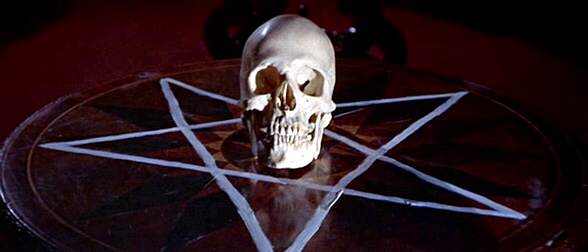
Freddie Francis’s 1965 Amicus Productions film The Skull was recently restored and released by Eureka Entertainment in the UK. It’s perhaps not the most gripping of horror films ever made, but with the classic pairing of Christopher Lee and Peter Cushing in the leads roles it offers a lot to fans of Amicus and Hammer.

The film follows Christopher Maitland (Cushing), an antiques dealer with a penchant for the obscure and curious, particularly pertaining to the occult. He acquires the valuable skull of Marquis de Sade, a man we learn about in the opening prelude set over 100 years previous. The skull has been stolen from Sir Matthew Philips (Lee), a fellow antiques dealer. Valuable though the skull is, Philips has no interest in reclaiming it, for reasons that are initially unapparent.

  
When watched alongside modern horror films, The Skull may be hard to appreciate. This is to do with pacing. Watching a horror film celebrating its 50th anniversary needs to be watched with a mindfulness of the context. The cheap shots and by-the-numbers techniques used today are nowhere to be seen. The horror in a film like this is drawn from the suspense built up by every element of the film working together and a quality acting performance of the lead character. You simply can’t view any film like this out of the context of the landscape of cinema at the time of original release.

Lee is atypically subdued in his performance as Sir Matthew Philips. It is a supporting role but it’s really worth checking out to see him portraying someone likeable for a change.

The plaudits should go to Cushing though. He carries it towards a tremendous climax in a film that actually has almost no dialogue for the final act. He may have more popular roles – or indeed more mainstream roles – but this is an off-the-radar performance that warrants at least one viewing to underline his acting credentials.

Enhancing Cushing’s performance is some excellent camerawork and framing from director Francis and cinematographer John Wilcox. It’s all about intelligence in angles and getting close enough to feel the sheer panic on Maitland’s face as the cursed skull becomes increasingly threatening. They do such a great job that the skull becomes a character itself, especially when we’re seeing the world through its empty eye sockets.

A thoroughly enjoyable horror film for anyone looking for an unusual and obscure Cushing-Lee release.

The Skull is available to purchase on Eureka Blu-ray now.

Note: The poster I used for the featured image of this article was by the excellent Andy Potts. His website is full of fantastic posters he’s done for various reasons. Check it out.

Film review – Hasta La Vista / Come As You Are (Geoffrey Enthoven, 2011) 

As road movies go, Come As You Are follows a well-worked formula quite closely. It goes something like this: a group of young friends decide to go on a road trip together to overcome a fear or hang-up. In the process of doing so they also learn a lot more about themselves and thus the purpose of the trip changes despite the goal remaining the same. 

That opening paragraph drastically does this film a disservice, because the unique plot elements are more than enough to allow this film to feel fresh and deliver an effective message. The three Flemish friends in this case all suffer from a form of physical handicap: Lars (Gilles de Schryver) is wheelchair-bound due to a debilitating and aggressive brain tumour; Philip (Mariano Vanhoof) suffers from paraplegia and has vastly restricted physical movement, thus needing constant care; Jozef (Tom Audenaert) is almost fully blind and can only see vague outlines of objects. The story starts with Philip, who has recently discovered that there is a brothel set up in the south of Spain especially for men with physical disabilities, so they decide they need to trick their parents into letting them go on a holiday to the vineyards of Europe, with the brothel as their real destination. 

The basic hilarity of this situation would be easy to play for cheap laughs, but director Geoffrey Enthoven and writer Pierre De Clercq thankfully find a more pertinent voice in the bittersweet frustration of their situation. Whilst the holiday should be a huge release to finally get away from their parents and see the outer world at their own pace, the day-to-day reality of their disabilities is far too restrictive. 

One of the more interesting story arcs is actually for the backup minibus driver Claude

Sisters (Jason Moore, 2015)

Sometimes cinematic events so huge occur that they transcend cinema and infiltrate the wider global conversation. To not see a film, occasionally, is to almost deliberately stand out from the crowd and, in some cases, refuse to be a sheep. Because everyone else is in love with a film but perhaps didn’t get it at first, the desire to take a stand gets in the way of allowing yourself to be interested.

If you’re in that boat and have taken a stance against Star Wars: The Force Awakens, then perhaps Sisters is the film for you. It is in so many ways the antithesis of an epic and excellent space opera. Yes, it isn’t very good. Yes, it vastly underused its two lead stars. But someone had to take the hit and be THAT film that was released the same week as the film that looks set to be the most successful in box office terms since Avatar.

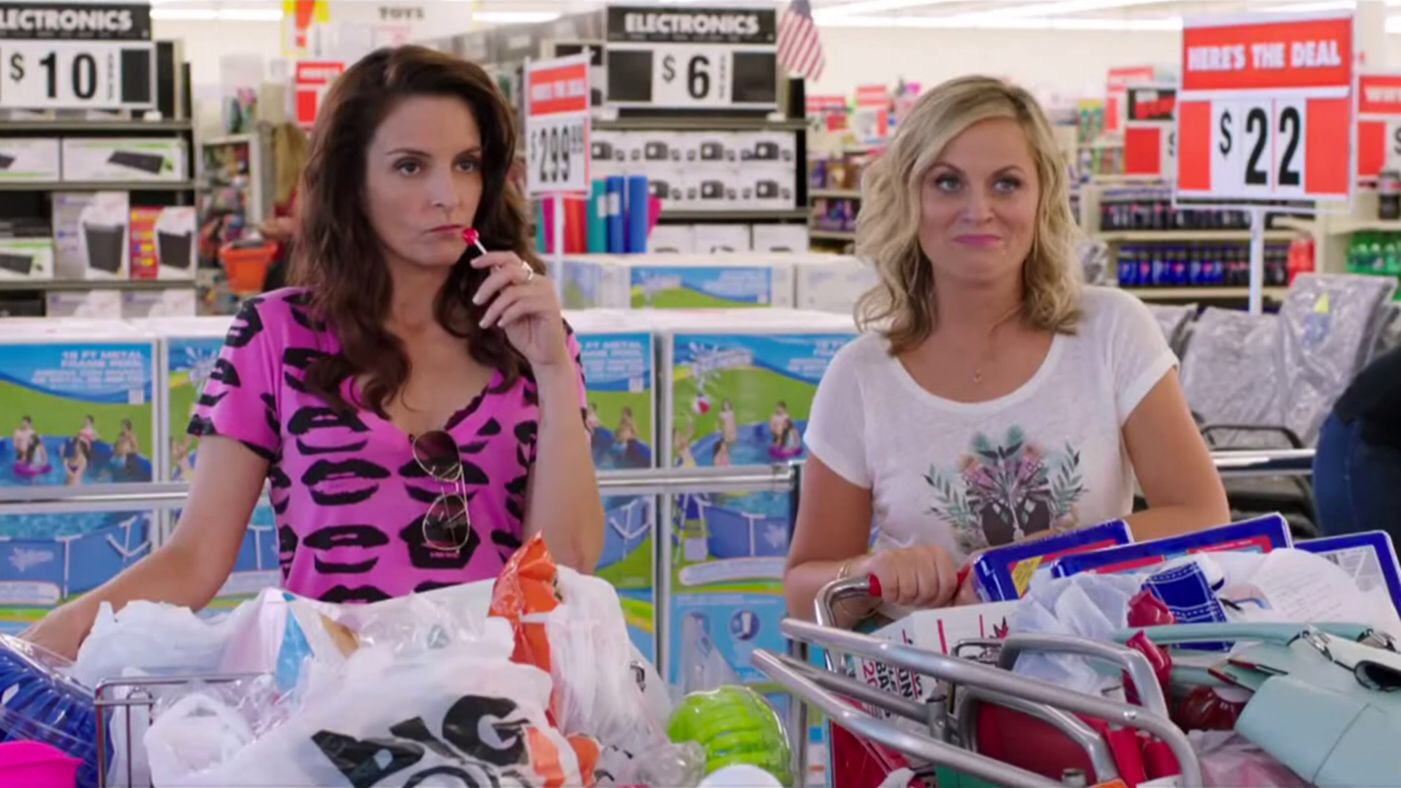
The story is as banal as the majority of the jokes. Sisters Maura (Amy Poehler) and Kate (Tina Fey) find out that their parents are selling their childhood home and have to go home to clear out their rooms. They do just that, but in the process decide to throw a huge house party. Things get out of hand and they wreck the house, though in doing so learn some valuable lessons.

It isn’t without merit. Some jokes are downright hilarious. However, these appear to be the ones that were ad libbed by the two leads. There are a few examples of this is when they are trying on dresses ahead of the party. Additionally, the scenes with Maya Rudolph are all highlights and almost give a feeling of a rewarding experience. Most of the remainder, however, falls disappointingly flat.

A truly entertaining time was had by all. Just not in this screen.

After about half-an-hour I found myself in such deflated amazement that I started to enjoy it out of disbelief that it was such a waste of their talent. This twisted enjoyment sustained until the final section when it started to feel protracted – the party kept going slightly too long and the joke was wearing thin.

The final segment, which awkwardly ties it to Christmas and thus tried to justify it as a festive film doesn’t really convince with conviction. This was clearly an afterthought to a film that was obviously intended for a summer market but that the studios didn’t dare release into clear air when excuses would have been harder to come by than the Star Wars card.

Sisters is on general release worldwide now.

Star Wars Episode VII: The Force Awakens (J. J. Abrams, 2015)

Warning – this review contains spoilers.

Well, here it is. The new Star Wars film. The first film in the series for a decade. The first good film in the series for three decades. Well, that’s what we’ve all been hoping for anyway. But once the lights go down at the cinema and everyone settles in, there’s nothing the hype train can do about it except sit back with everyone else and hope it lives up to the hype. So does it deliver? For me, the answer to that is a resounding “Yes”.

From the opening crawl, it sets its stalls out on a far more approachable basis than the prequels. It’s quite basic really. Luke Skywalker (Mark Hamill) is missing. There are two groups doing everything they can to locate him: the evil First Order, borne out of the remnants of the fallen Empire; and the Resistance, a military operation led by General Leia Organa (Carrie Fisher) and backed by the Republic.

As the action opens on the planet Jakku, we see starfighter pilot Poe Dameron (Oscar Isaac) on a mission at the behest of Leia, meeting with old ally Lor San Tekka (Max von Sydow). Tekka gives him information about Luke’s whereabouts moments before the First Order arrive and start wiping out everything in sight. It is a brutal opening sequence.

Shortly after storing the information in a small droid called BB-8, Poe himself is captured and taken in for heavy-handed interrogation by the sinister First Order leader Kylo Ren (Adam Driver). BB-8, now stranded on Jakku, is befriended by scavenger Rey (Daisy Ridley) and they are subsequently joined by defector stormtrooper Finn (John Boyega) and set off on a fate-driven mission to get the plans into the right hands.

forceawakensscreen01

Vast and expansive contribute to a wholly immersive experience.

Whilst The Force Awakens is not a perfect film, in comparison to the prequel trilogy it is a breath of fresh air to the extent that any shortcomings can be overlooked. The things that J. J. Abrams has got right here are enough to ensure its popularity will be maintained for years to come.

The most immediate element of success is one that directly combats one of the biggest criticisms of the prequels: the real-world setting. One of the great shots of the opening third of the film is the first time we see Rey. Having scavenged the inside of a derelict ship, she steps out into the open desert planes of Jakku, then slides down a large sand dune on a creatively-fashioned slide mat towards her Landspeeder. This shot achieves several things. Firstly, it underlines her solitude by showing her to be a small spot in such a vast open space. Secondly, there is an implied playful innocence in the way she slides down such a huge dune. Thirdly, it plants the action very much in a palpable and believable setting. This scene is also the first time the action is truly slowed down after the action of the opening sequence, forcing the viewer to take stock of what we’ve already seen and be immediately awed by the spectacular landscapes.

It is a long time before there is any obvious CGI in the film, particularly the characters inhabiting the screen. In direct response to the negative feedback for Episodes II and III, and the remastered editions of all six films where everything was perceivable ruined by over-zealous use of computer imagery, this is kept to the bare minimum for as long as possible. Indeed, when it is used, it feels like a juxtaposition against all the other good work seen throughout. In particular, the character Maz Kanata (Lupita Nyong’o) is as a real let down. Here we have an Oscar-winning actress in a small but critical role and they’ve needlessly realised her with computers when her diminutive size and colour seemingly have no relevance to what her character is doing. My guess is that they were going for a new Yoda-type character and got lost along the way. Similarly, there was a definite feeling of disappointment when Supreme Emperor Snoke first appeared – it felt like something we’d seen previously in the Marvel Cinematic Universe and lacked the sort of dread we were being showered with by Kylo Ren.

forceawakensscreen02

The Force is strong in this one.

Which brings us nicely on to the next point. If any of the performances needs to be singled out for excellence, it has to be Adam Driver as Kylo Ren. Sinister and powerful from the start, Ren’s emotionally unstable and rage-filled actions are a real highlight, revealing a side to Driver’s acting ability little-seen before. There is almost nothing to like about him, which is perfect for such a pivotal villain. When he showed his emotional frailties towards the end of the film, before making an about turn and doing that thing, it really packed a punch (no matter how much we thought it might happen). It puts the likes of General Grievous to shame.

Another star performer is Daisy Ridley, in her first cinematic role of note. It can’t be easy to step into a universe this large with almost no experience and deliver a performance to the standard she has achieved. She flexes the emotional depths of a character scared by her new surroundings and scarred by guilt for leaving behind her former life to pursue the adventure she has in front of her. At times cocky and mixing in humour, she is something of a blend of Han and Leia and is well placed to combat the future of her character in the next installment.

Completing the trilogy of excellent performances is John Boyega, proving that this film is one for the new guard rather than those from the original trilogy. His portrayal of Finn is quite a departure from his performance as gang leader Moses in 2011’s Attack The Block, bringing in a lot more comedic aspects to the film following an intense opening sequence that gives his predicament gravitas.

In the final battles we get to see both Finn and Rey fighting Kylo individually in a much rawer manner than the polished choreography of the previous six films. It’s a refreshing take and appropriate to the story, but every time a hit is landed on Kylo there was a huge feeling of achievement – an indication of the successful portrayals of all three characters.

Where the film gains in pacing successes it loses its way in lacking clarity and a few presumptuous jumps in character development and inter-character relationships. One example of this is when Poe and Finn reunite towards the end of the film. They had previously successfully escaped from the Starkiller Base, which would undoubtedly have brought them together to some extent. However, when they are reunited later in the film they act like the oldest of friends with a lifetime of shared history. It was one thing that had to be taken at face value.

However, it’s difficult to compare this character development to that of the previous films. Surely once we have seen the next two installments of the main storyline their relationships will grow further and therefore this won’t seem so over-friendly. If the compromise is that we got to see a tightly-packed and intensely entertaining action film, then it’s an agreeable trade-off.

The biggest criticism the film should expect will come from the biggest fans of the original. The way this film deals with the Force is bound to upset a few people. It took Luke a whole film to develop his Jedi powers in The Empire Strikes Back. Anakin took an entire trilogy. Both were at the side of two great Jedi masters. In this film we’re being asked to accept that Rey was able to gain this knowledge and understanding… how, exactly? Just by touching Luke’s lightsaber? It’s bound to be seen as disrespectful to the franchise but to develop properly the film needs to find its own space to breathe. This route was far more convenient to create a fast-paced finale.

These are minor criticisms of a film that will inevitably be over-analysed forever more. They shouldn’t detract from the overwhelming feeling of joy I had when I left the cinema. The film finishes on a cliffhanger,with a hugely rewarding two hours tying itself together to a reasonable position before dangling a thread of things to come for our main hero Rey.

J. J. Abrams has managed to pull off a minor miracle. In just over two hours he has erased most of the memories of the prequel trilogy, reminded us of the best of the original trilogy and set up a new storyline that has the whole world anticipating where the next steps will take us. The prospects for the future of the franchise all of a sudden look extremely rosy.

The Force Awakens is showing at cinemas worldwide for the foreseeable future. 3D IMAX is well worth the additional price to experience the full effects of the Force.

Carol (Todd Haynes, 2015)

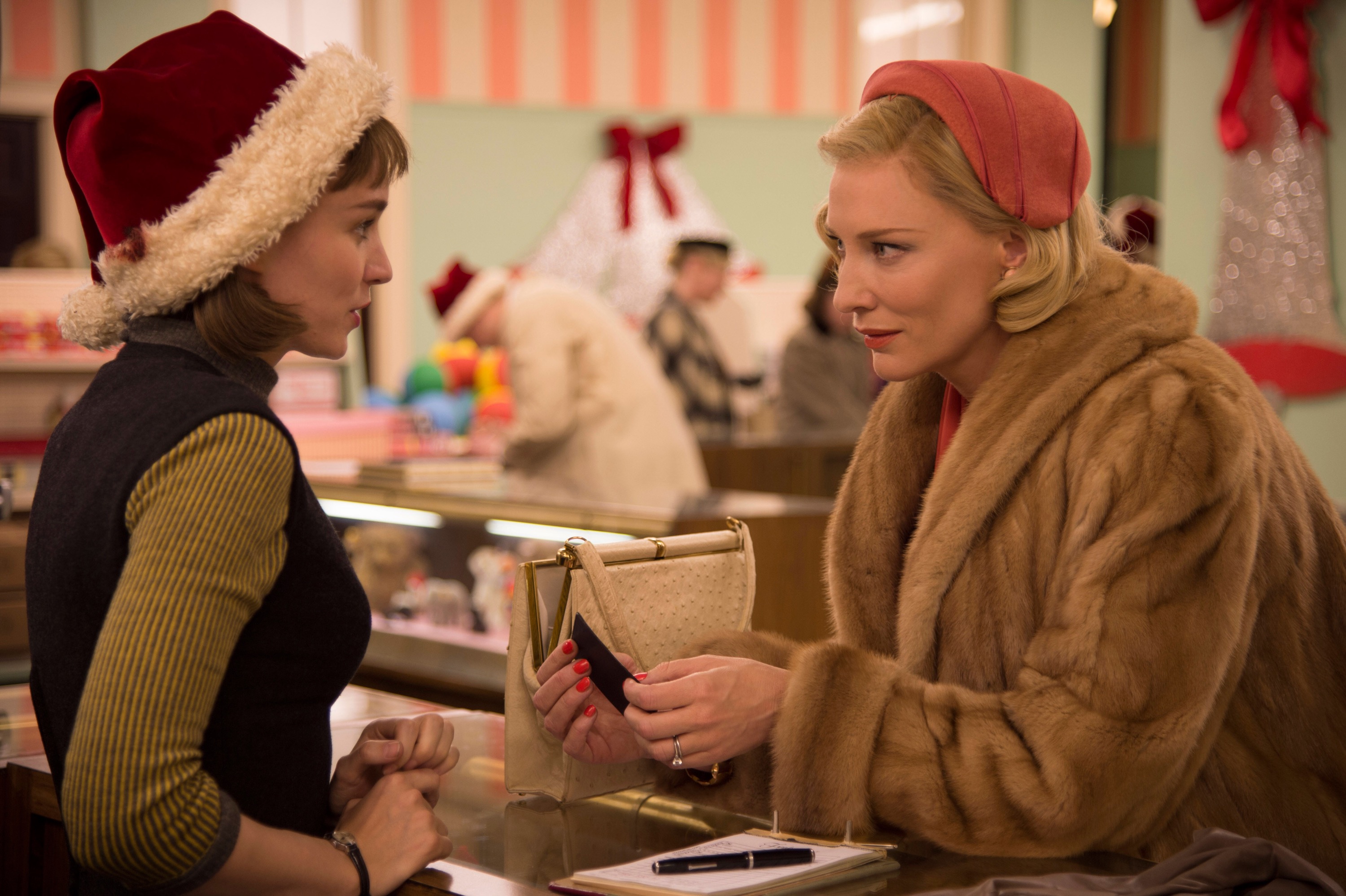
The latest Todd Haynes film, his first big screen effort since 2007’s Bob Dylan biopic (of sorts) I’m Not There, has been exceptionally well received by the press and public. An adaptation of the 1952 novel The Price of Salt by Patricia Highsmith, the film tells the story of the relationship between Therese (Rooney Mara), a young aspiring photographer working in a department store, and Carol, an older woman with a penchant for younger girls. It explores their developing relationship as Carol’s marriage to Harge (Kyle Chandler) deteriorates, and the reaction to their behaviour by those close to them in 1950s Manhattan.

 Not your typical Christmas film. 
The world has gone crazy for this film. It has already picked up a Palme d’Or nomination (losing out to Jacques Audiard’s Dheepan) as well as two wins at the Cannes Film Festival. It also won prizes at a host of other award ceremonies, and will compete with five nominations at the Golden Globes. One can only presume the Academy Awards and BAFTAs will follow suit.

As such, it’s a difficult film to openly ardently dislike. The source material has been, apparently, a very relevant book to the LGBT community for many years, especially in the USA. I am a straight male British man. The fact I didn’t enjoy it gives rise to an enormous fear that I’m too straight-laced to understand a masterful piece of cinematic artistry. It’s the sort of thing I should like. I just didn’t.

For me, the exploration of the controversy of a same-sex relationship in 1950s America wasn’t enough to save the slow pacing and inherently dull storyline. An easy argument is to think along the lines of replacing either of the lead characters with a man, then ask ourselves “Is this still an interesting plot?”

The more unusual channel on this stance would be to have an older woman befriend a younger man, which would bring more dynamics with social disagreement than the oft-covered “older man with younger girl” scenario.

To think like this, however, is to miss the point. There’s no reason why having a female-to-female relationship can’t be explored at face value whilst also looking at the contrasting views of those around them. The fact is that the two female lead characters’ relationships with those around them wasn’t explored enough to warrant any real threat of anguish and being cast out of society. Conversely, there was no apparent chemistry between the two actresses. My suspicion, having not read the book, is that this was all explored in great detail by Patricia Highsmith and there wasn’t enough scope to cover it all in one standalone film.

I’d describe both acting performances as adequate without being exceptional. The desperation of the situation is only truly realised when Kyle Chandler appears as the scene-stealing husband who evidently fears the rejection by his wife as much as he fears the embarrassment and damage to his social standing. It was only in his scenes towards the backend of the picture that there was any great feeling of scandal.

When Carol is announced as an Oscar front runner next month, I will refuse to eat my words. As someone who doesn’t like this film, I will be in the minority.

Carol is on general release at cinemas in the UK now.

Film review – Grave of the Fireflies / 火垂るの墓 (Isao Takahata, 1988)

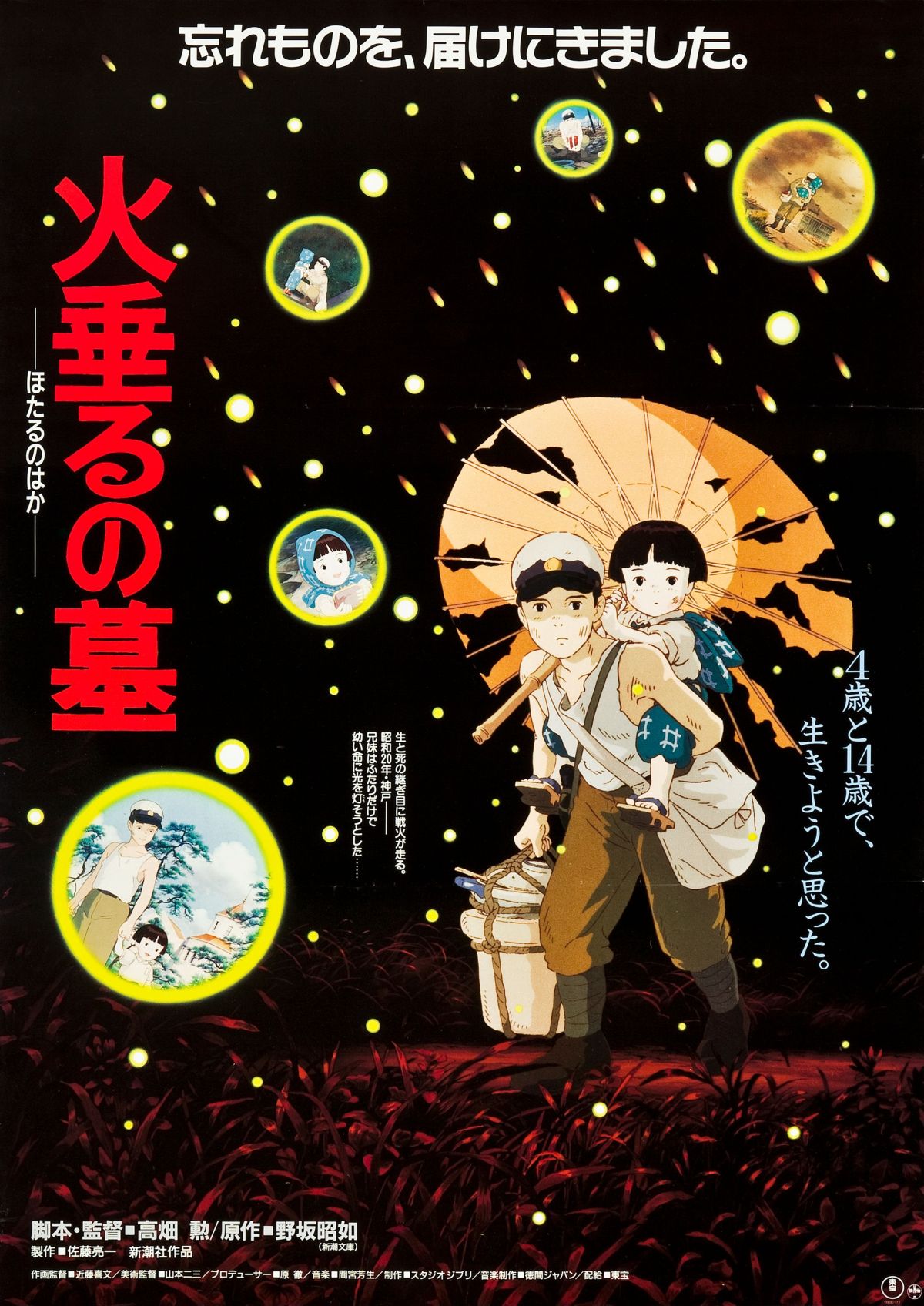
To be fair to Isao Takahata, writer and director of Grave of the Fireflies, he doesn’t pretend he’ll be delivering a happy-go-lucky lighthearted anime to the audience. The title hardly screams cute, the poster smacks of grimness. Then there’s the opening scene, in which the voiceover declares that he dies.

The film tells the story of two children – Seita (Tsutomo Tatsumi) and Setsuko (Ayano Shiraisha) – who are struggling to stay alive in the final few months of World War II. Their mother has died in an American air raid and their father is a captain in the Imperial Japanese Navy, meaning they have to stay with their unsympathetic aunt. However, with the continued threat of airstrikes and a growing unease with their situation, the pair decide to fend for themselves.

When discussing this film with anyone who has been lucky enough to see it, you will invariably get the same response. “Grave of the Fireflies?” Then comes the deep intake of breath. Then comes the deeper exhaled sigh. “Grim. Great film, but really depressing.”

graveofthefirefliesscreenshot.png

The film does not glamorise war in any way. It spends the entire running time delving into the relationship between the two siblings, the bond the war is creating and their resilience despite the tragedy surrounding them. The film gives an overwhelming sense of the individual impact of the war on the innocent people it affects. It doesn’t explicitly give a negative anti-war message, and it doesn’t attempt to portray the enemy (in this case the American Air Force) in a bad light. All these things are simply deduced by the fact that Setsuko and Seita’s story is so unbelievably sad.

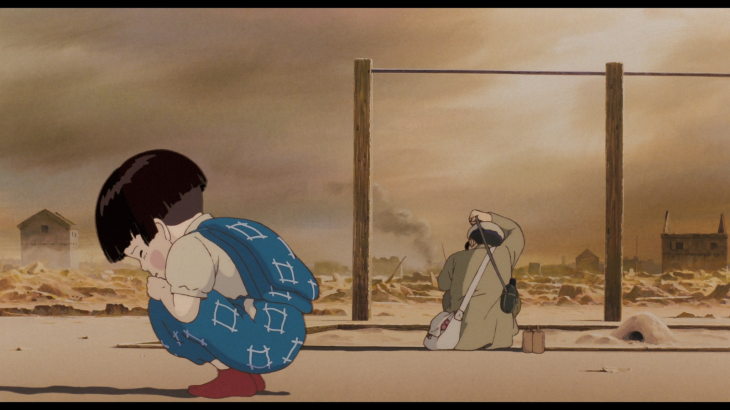
The animation is absolutely stunning. It’s almost three decades since its release and its hard to think of a more realistic portrayal of Japan in animation. As the screenshot above shows, it is all greys and browns, though in this case Setsuko sits in the foreground in a blue ball attempting to protect herself of the reality of her mother’s fate. As Seita deals with it in his own way in the background, the effect is one of the most powerful images in the film. What else would two children do when their whole lives are turned upside down in such a catastrophic manner?

Since the release of this excellent film, Takahata has directed just four  more animated feature films, all of which were released with Studio Ghibli: Only Yesterday, Pom Poko, My Neighbours The Yamadas and The Tale of Princess Kaguya. Whilst all of these are excellent films, none quite have the same impact as Grave of the Fireflies, a film that has stuck with me since the first time I saw it over a decade ago.

Film review – The Good Dinosaur (Peter Sohn, 2015)

Pixar’s latest effort The Good Dinosaur is a by-the-numbers buddy comedy set in an alternative history where the asteroid that would have wiped them out has missed Earth completely, meaning dinosaurs and Neanderthal humans live side-by-side. It concerns a timid dinosaur called Arlo (Raymond Ochoa) who is split up from his family has to befriend a dog-like human called Spot to survive and return home.

The Good Dinosaur was destined for problems before it was released. Originally scheduled for a Christmas 2013 release, it has been put back several times, each time causing confusion and issues for the other Disney films on track for their respective releases. According to Denise Ream, one of the film’s producers, the primary reason for the rescheduling was “the story was not working, period, full stop, it just was not where it needed to be.” The director Bob Peterson, who previously found success with Up, was removed and replaced with Peter Sohn, allegedly because he was too involved with the film.

The upshot of it all is that it has found itself living in the shadow of the excellent Inside Out, which has barely left the cinemas, and is competing for shelf space in the various toy stores across the land with Star Wars: The Force Awakens, which is set for release less than a month after The Good Dinosaur. It was also released in the middle of a school term, drastically reducing the opportunity to go and see it for anyone with children in school. So does that make the target audience parents who aren’t working and have children old enough to go to the cinema but under the age of 4? I guess so… [1]

The film itself feels like an unfinished product. It is the first time I’ve watched a Pixar film and genuinely felt like they’d given up on it. It feels like a last-gasp chance to recoup on a project that will, at best, break even.

The character design is uninspired. None of the dinosaurs offer any of the individuality or appeal audiences have come to expect from a Pixar or Disney film. The beautiful environment goes some way to make up for this, but only Spot himself felt like a fully realised character.

If the reports are to be believed, then the problems with the film lied in the final third. This is, then, presumably where the cavalry came in to take over and save the day. Sadly for Peterson, this is exactly where the film picked up a bit and paid off on some of its promise.

Two scenes stuck out as being particular highlights. The first was a beautiful montage scene where Arlo and Spot ran through an open plane full of birds was vintage Pixar. The second was an emotional scene in which Spot is effectively adopted by another Neanderthal family at the encouragement of Arlo.

Perhaps both of these were Peterson’s work. Will we ever know?

As a 31-year-old man, I know I’m not the target audience for this film. I do have an appreciation for all good animation though and this falls a long way short. The best critics are the children. Four days after its release, the cinema was about 10% full. The children present seemed restless and disinterested. A few parties left. Maybe they went home to watch something more enjoyable. Or, you know, fun.

The Good Dinosaur is currently on release at UK cinemas.

[1] In my local cinemas only one screening was achievable for workers and people at school, which was a 6:30 screening at a Cineworld. I don’t know how many people were at earlier screenings.

Sanjay’s Super Team (Sanjay Patel, 2015)

If you were keen enough to get to the cinema early enough before The Good Dinosaur, one of the worst Pixar feature films thus far, you’ll have been treated to Sanjay’s Super Team, one of the worst Pixar short films thus far.

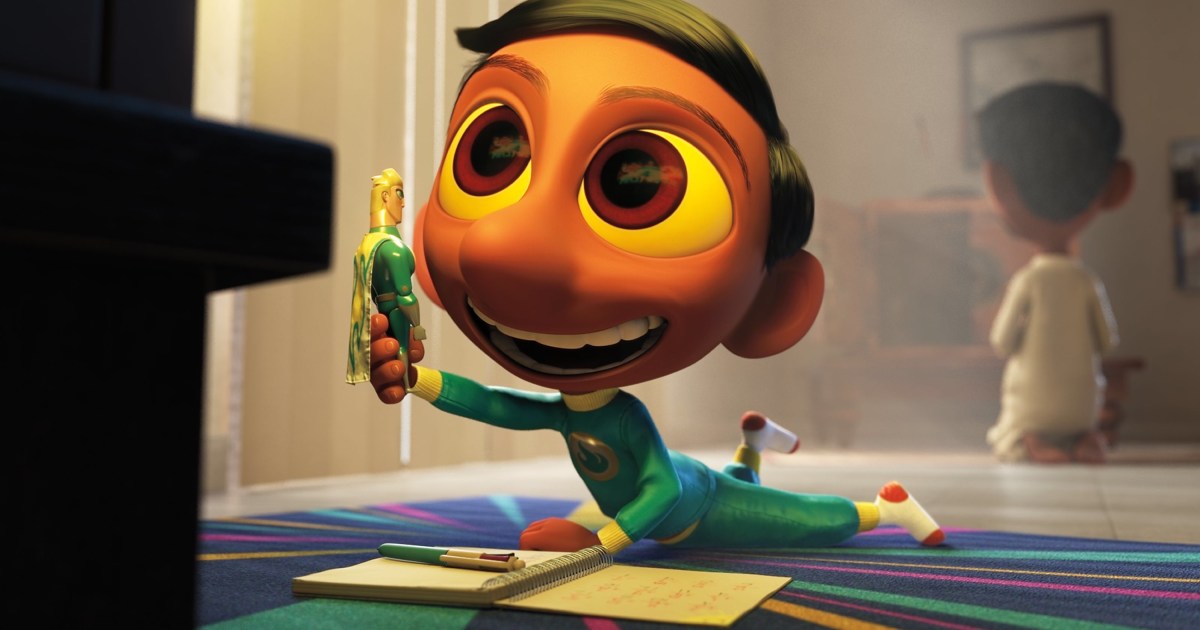
Sanjay realises just how bad The Good Dinosaur is.

The story, based on the true memories of director Sanjay Patel, revolves around him as a young child and the conflict between him wanting to enjoy a superhero TV show and his father wanting him to join him in prayer. Frustrated when his father turns the TV off and forces him to pray, Sanjay uses his time of reflection to daydream into a strange world where his Hindu gods are more like superheroes.

The cel-shading technique used in the daydream sequences is a bit of a let down and feels like a quick solution, despite the best efforts to make it look as colourful as possible. I couldn’t help but imagine how good it would have looked with more attention to detail.

This is a film about a child having doubts over his beliefs and a clash of cultures. Whilst many won’t understand the precise religious and cultural aspects at play, most will appreciate the story from the position of a child not wishing to have to follow in the footsteps of the parents. In principal I don’t agree with using religion as a basis of children’s entertainment, but it works well in this case to create a story for the older audience members.

Unfortunately, the overall result is a bit bland. There was no dialogue, the brilliantly coloured dream sequence lacked any real wow factors and it didn’t move fast enough to make use of the lengthy running time for a short film. The children in the audience voted with their restlessness and disinterest. 

In this sense, it was the perfect warm up for the main feature.

Riley’s First Date? (Josh Cooley, 2015)

If you loved the Pixar animated feature film Inside Out then chances are you’ll… like “Riley’s First Date?”, the short included as a bonus feature on the various Blu-ray versions of the release.

It centres around a mysterious boy showing up at Riley’s household to take Riley out, with most of the jokes coming from the parents’ reactions to interacting with him. If you’ve seen Inside Out itself, it is essentially an extension of the final sequences of the film, popping in and out of the characters’ heads in rapid succession for quick laughs.

It lacks any of the emotional pull that made the film a huge success over the summer, but it does succeed in getting a few jokes that make it worth a watch. It can’t go down as a reason to purchase the Blu-ray – you don’t need any more reasons than the fact it’s the best Pixar films released for years.

Bridge of Spies (Steven Spielberg, 2015)

After a relatively long break, Steven Spielberg is back behind the director’s chair, and it was worth the wait.

Reading the description of Bridge of Spies, his first film since the hugely successful biopic Lincoln, it has all the hallmarks of some of his greatest achievements in cinema. It’s based on a true story. It’s a story about individual battles within a larger situation. It stars Tom Hanks. It would have been a surprise if this wasn’t a huge success.

Set between 1957 and 1960 during the height of the Cold War, the film focuses on James B. Donovan (Hanks), a lawyer tasked with negotiating the release of Francis Gary Powers (Austin Stowell), a pilot whose U-2 spy plane has been shot down over the Soviet Union. The negotiation concerns trading Powers for Rudolf Abel (Mark Rylance), a Soviet KGB spy held captive in the USA who Donovan has previously defended in court. However, tensions rise when Donovan shows his determination to include an additional US citizen – student Frederic Pryor (Will Rogers) – in a move that seemingly only he is keen to see through.

bridgeofspiesscreenshot

The film at times threatens to be sabotaged by a slow pace, though Spielberg keeps it going just enough to avoid it becoming a snooze-fest. The plot is one full of intricacies that reward the attentive viewer, so I’m not sure the modern audiences will get it in the same way they did with Schindler’s List, for example. [1]

This is an ode to traditional storytelling and any movements it makes to remind us of Spielberg’s supreme talents are trumped by its underlining of Tom Hanks as one of the greatest living actors. This is not a story about espionage, politics or the Cold War. It is a film about one man’s unwavering desire to stick to his principles. Hanks portrays Donovan as a totally unassuming man whose aggression is only touched on when he feels the principles for which he stands are threatened. As with most of his best roles, it has a way of pulling you in and asking you what you would do in his shoes.

If it is considered for any awards in the next few months, it will be for Hanks as an actor in a leading role. For all the clever cinematography and attentive set design, they are merely the stage on which Hanks is allowed to fly.

Bridge of Spies is release in cinemas worldwide on 27th November 2015.

[1] I’m well aware that this sounds condescending. It is fueled directly by the woman in front of me who three times during the film decided to have a quick check of her phone next to her pocket. Whilst it was only a minor distraction for me (it wasn’t so bad to warrant me tapping her on the shoulder), she missed two critical plot points and the description of what the characters did next in the final credits. Definitely a justification for the theory that the audience’s participation level is as important as the care put into a film.