Film review – Die Abenteuer des Prinzen Achmed / The Adventures of Prince Achmed (Lotte Reiniger, 1926)

The uniquely-animated ‘Die Abenteuer des Prinzen Achmed’, Lotte Reiniger’s 1926 film, is a hugely important film. Work started on it in 1923, and it is the earliest-surviving animated feature film – it clocks in at 65 minutes.

The animation technique used involved cutting out cardboard silhouettes of the characters and manipulating them frame by frame. Some 93,000 frames were created for the film.

Reiniger’s attention to detail was matched by that of the restoration team at the Deutsches Filmmuseum, who in 1999 returned it to its former glory and allowed new generations to enjoy it.

Today’s screening, which was at the Tilda Swindon-curated Pilton Palais at Glastonbury Festival, was accompanied by a unique re-score by the Guildhall Electronic Music Studio.

It’s easy to create a modern score for a classic piece that simply doesn’t fit – Air’s ‘The Journey to the Moon’ is certainly guilty of that – but the mix of classical piano and basic sound effects works perfectly. Mike Oliver oversaw the project and acted as a mentor to those involved. The piano accompaniment from Barbara De Biasi is reminiscent of the Joe Hisaishi scores for Ghibli Studio. As a fan of Hisaishi’s work this was very much welcome. This was augmented by Eric Fabrizi with paper-based sound effects and live narration from Mike Oliver and his daughter Molly.

It all came together wonderfully and felt respectful of the original work whilst breathing a new life into it for a new, younger audience.

It was well attended by an early-afternoon festival crowd. Anyone appearing early for the Frozen sing-a-long would have been entirely confused. For everyone else, the film was a triumph. Congratulations to all involved.

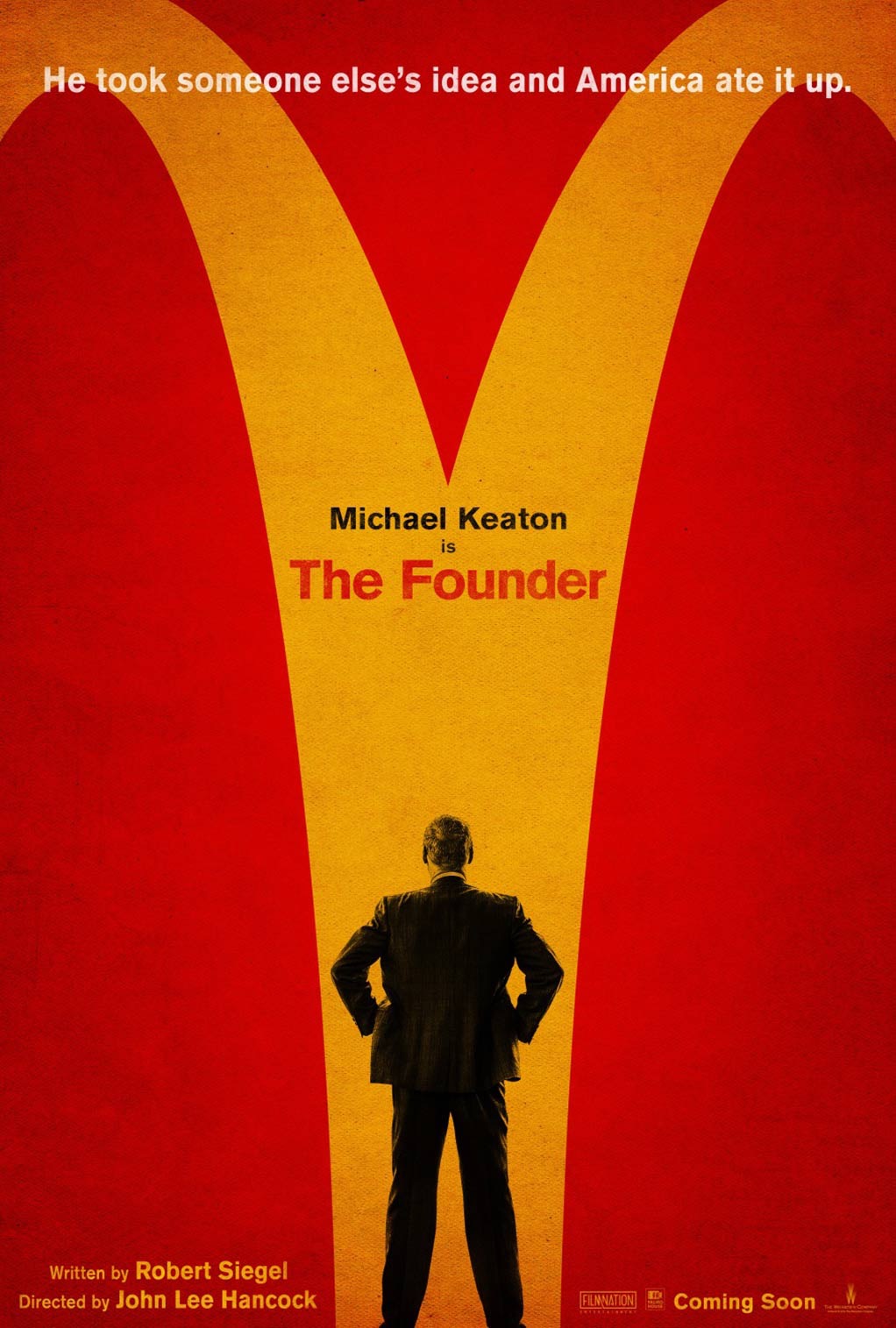
Film review – The Founder (John Lee Hancock, 2017)

John Lee Hancock is busily carving out a name for himself as the creator of sanitised versions of the most successful business men in the history of humanity, treading perhaps where no director would dare through a labyrinth of red tape.

In 2013 it was Saving Mr Banks, Hancock’s portrayal of an important segment of Walt Disney’s life as he helped convince P.L. Travers to release the rights to Mary Poppins and shaped the now-classic motion picture. This time around he’s tackling the origins of one of the biggest global brands of the modern world: McDonald’s.

McDonald’s hasn’t had a successful time thus far being portrayed on screen. Outside the overbearing product placement that everybody hates (even though they often pay for significant portions of films), if you ask anyone whether or not they’ve seen a film about McDonald’s, they will more than likely start talking about one of two films: McLibel or Super Size Me. Both are excellent as films and even better in showing the company in an extremely negative light.

Or you may remember this film…


The Founder isn’t quite as negative towards the iconic brand as the recent memorable efforts, going a long way to provide a balanced view of the origins of the story. It may be sanitised but it is at least reasonably based on facts (to our best knowledge).

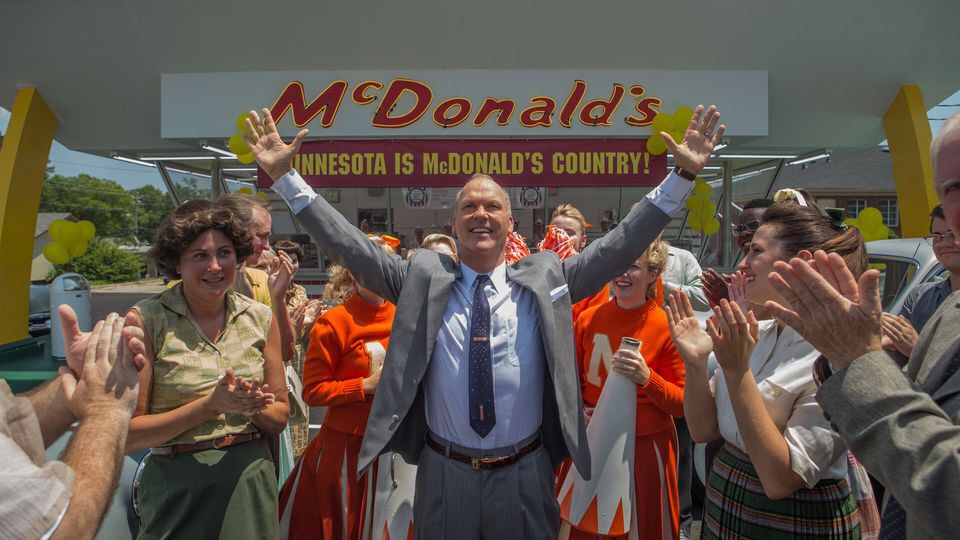
Michael Keaton plays Ray Croc, a driven but unsuccessful salesman who happens upon the first McDonald’s restaurant whilst trying to sell milkshake making machines. This restaurant is owned by Richard and Maurice McDonald (Nick Offerman and John Carroll Lynch) and they soon go into partnership to franchise the company and start growing it across the rest of USA.

The biopic serves two purposes for the company. Firstly, it portrays the McDonald brothers’ story as being as wholesome and family-friendly as any of the McDonald’s adverts that are create today. This was a family company that didn’t want to be taken over by the global powers, resisting all the way and almost unbelievably against making any profit. Looking at it cynically, it serves as an advert that champions the company’s family values.

Secondly, it portrays the man who turned it into a global power as self-driven, full of business acumen but at his most basic a self-centred, cold and heartless money grabber. We aren’t supposed to like him, though I can’t help but think that the characterisation will be a template for those wishing to succeed in business. I hope not – it would be a poorly-chosen idol.

The overall result is that we don’t feel encouraged to like our central character and it feels like the side of a story that aligns with the global branding message rather than one we can truly enjoy. 

The problem is that Keaton is far too charismatic to not be liked and the Lynch/Offerman duo are sabotaging the success of the company at every turn. This makes the emotional journey slightly skewed as we try to take sides and don’t really know where to land.

Some will champion its subtlety but I don’t see it like that. I see it as a great actor shining through an advertising campaign disguised as a film.

Given the state of the political landscape right now, I don’t think it’s the film the world needs.

Film review – Lion (Garth Davis, 2017)

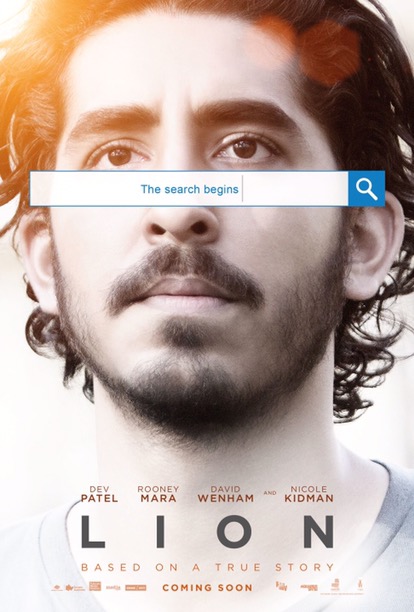
Garth Davis’s debut feature, Lion, tells the true story of Saroo Brierley (Sunny Pawar), a boy who is separated from his brother at a train station in central India at the age of five. Boarding a train he believes his brother is aboard, Saroo falls asleep and the train sets off. He travels for two days across unfamiliar territory, eventually arriving in Kolkata on the far Eastern side of India, 1600km from his home. Unable to read or write, and with everyone speaking the unfamiliar Bengali language, he finds it impossible to reconnect with his home and is sent to an orphanage. He is eventually adopted by an Australian couple (David Wenham and Nicole Kidman). Twenty years later, a grown-up Saroo (Dev Patel) starts a relationship with Lucy (Rooney Mara), before a chance encounter reignites his interest in his origins and he starts to try to reconnect with his real family.

Sunny Pawar is phenomenal as the young Saroo

Dev Patel is as brilliant as ever in the lead role as a grown-up Saroo, building on his celebrated performances in Slumdog Millionaire and The Best Exotic Marigold Hotel (and its sequel). It’s a role that needs to provide a reflection of the innocent and likeable younger Saroo we have watched for the first half of the film, whilst also covering the emotional turmoil of a man who has lost his past and lived a completely different life due to a small but very significant fork in his road.

But it is Sunny Pawar as the young Saroo that steals the show. He has a charisma that shines through even when he’s completely still, effortlessly shifting from anger to sadness to fear and to contemplation as the plot develops. Without this young star, the film may have fallen flat. [1]

There is a clear distinction between the feel of the film between India and Australia. The filmmakers achieved this difference by having an almost entirely different production team for the two countries, with natives of each being involved with every aspect of the process. It’s well worth staying around to see the end credits so you can witness the difference – they run the two side by side, giving each equal billing.

This is one of the most heart-warming stories of the year, if not the decade. It may be a bit of a predictable ending (suspend your inquisitive mind and stop yourself from contemplating whether or not the story would even be a story if it had an unhappy ending), but the beauty is in the performances and the characters’ journeys – be they figurative or literal. Do yourself a favour and make sure you catch this one.

[1] There’s a fantastic article on the casting process of Sunny Pawar on Vulture.com. Check it out here: http://www.vulture.com/2016/12/sunny-pawar-lion-casting.html


Film review – Arrival (Denis Villeneuve, 2016)

For many cinema-goers, Arrival may have been one of the worst films of the year. For all its big-budget sci-fi overtones and its positioning alongside other space-based 2016 blockbusters such as Independence Day: Resurgence, Passengers and Rogue One, if you sought out Arrival expecting more of the same you may have been disappointed. Indeed, you will have been tricked into that much-elusive cinematic experience: thinking.

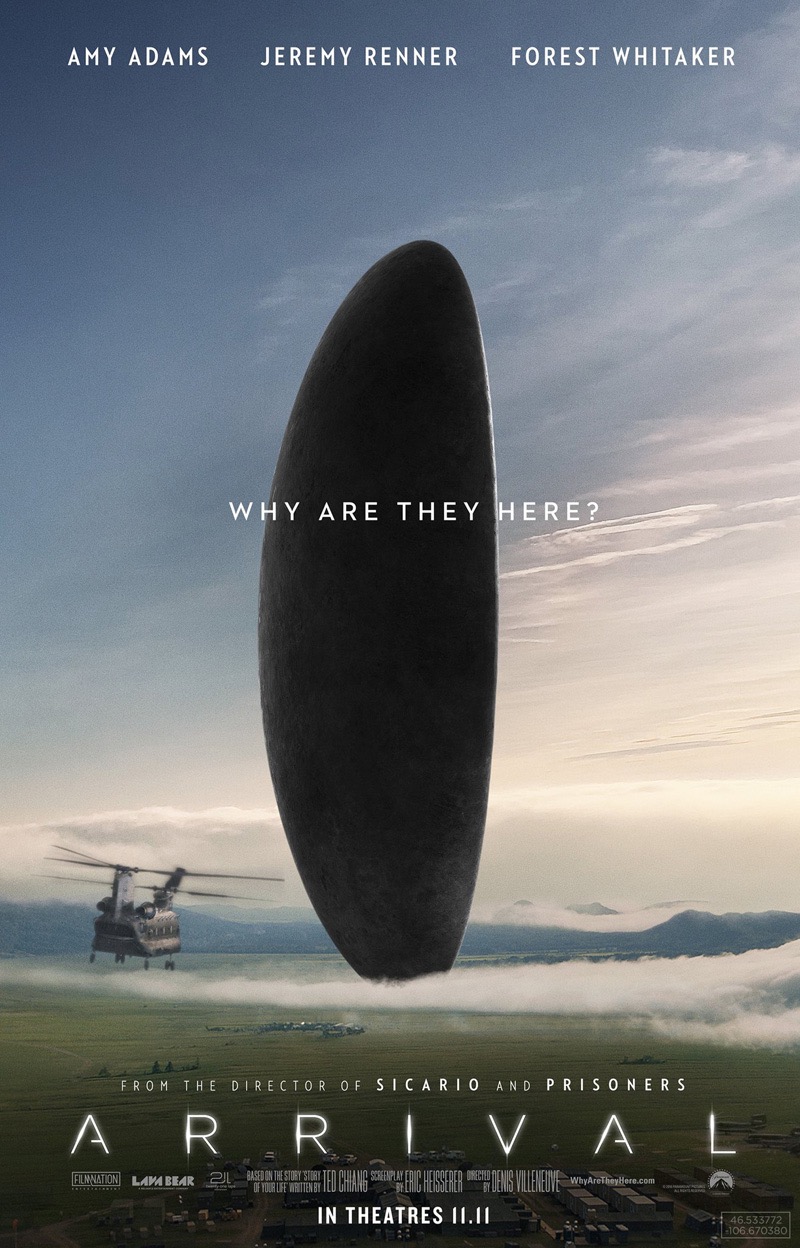
Set in modern-day USA, it stars Amy Adams as renowned linguist Louise Banks, brought in by the government to help humanity communicate with extra-terrestrial life forms that have mysteriously landed throughout Earth. She teams up with physicist Ian Donnelly (Jeremy Renner) to begin to decipher their language and understand why they have chosen now to begin communication.

Amy Adams as linguist Louise

It is anything but a full-blown rollercoaster of action, instead concentrating its efforts on an elegant storyline with some seriously unsubtle political messaging. Or should that be serious and unsubtle?

What screenwriter Eric Heisserer has set out to do – and succeeded – is position the viewers in the shoes of alien lifeforms understanding Earth for the first time. In that sense, we are asked to consider the absurdity of the fact that so many countries have ongoing conflicts, unable to get along with one-another.

It may be set in the USA but you would be mistaken in thinking this was a lazy choice in making the Americans the saviours. The decision was more likely financial. Sure, the hero could have been from Pakistan or Chile, but this would have seriously hindered sales in the USA and all other countries where English is either a first or second language.

Amy Adams, as always, puts in a brilliant turn as the determined linguist Louise. She’s a likeable and versatile actress, perhaps at the top of her game right now, and it is a crime that not one of her five Academy Award nominations has thus far earned her a win. Perhaps this year, with a potential double-nomination for this and Nocturnal Animals, we’ll see her rightly rewarded.

Arrival is one of the best films of the year. Gripping, intelligent, thought-provoking and stylish. A must see.

Film review – Elstree 1976 (Jon Spira, 2015)

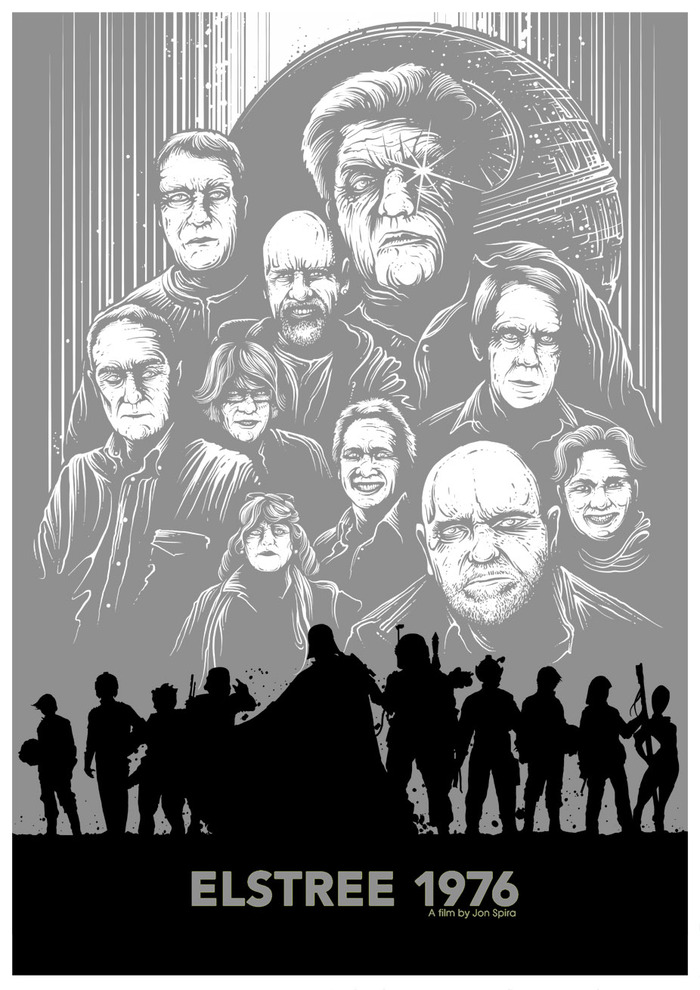
Elstree 1976, the latest documentary from Jon Spira, explores the lives of ten people who were involved in the original Star Wars films as extras, supporting characters or inside costumes and thus were unseen. Catching up with them 38 years later, the film gives an insight into their respective positions in the wider Star Wars fandom universe, their take on one of the most bizarrely dedicated communities and their memories of their time on set.

The featured cast includes a mixture of actors and actresses who range from household names to people only die-hard fans will know. The ten are as follows:

Paul Blake (Greedo)
Jeremy Bulloch (Boba Fett)
Garrick Hagon (Biggs Darklighter)
Anthony Forrest
David Prowse (Darth Vader)
Angus MacInnes (Gold Leader Rebel Pilot)
Pam Rose (Leesub Sirln)
Derek Lyons (Massassi Temple Guard)
Laurie Goode (the Stormtrooper who banged his head)
John Chapman (Red 12 Drifter Rebel Pilot)

For a film where it seems there is a huge difference in the interest in each of the stars, the narrative benefits by giving equal billing to each of them. But then that is the point of the film – it shows the human side of everyone involved and cross-examines the fact that the only reason they are anything more than actors is that they have been part of a great film and the fans have an unfaltering level of affection for everyone involved.

Justice for Greedo

They didn’t realise at the time but their involvement with the film would come to define their lives. It’s something that they have forever been associated with and can’t get away from, whether they like it or not.

The film opens with a humorous montage of each of their action figures, as they talk about how they feel about how they turned out (or didn’t!). There’s also a little controversy with what different interviewees believe is the right level of relevance to permit them to attend the conventions and be classed as an actor in Star Wars.

There are some moments of real emotion, just as there are moments of hilarity. Of course, they offer their own perspective on the film and provide some morsels of tales about the production, but Spira has instead made the decision to give the stories of their subsequent lives the space to breathe. This film gives them the chance to prove that they aren’t just the Stormtrooper who hit his head or the guy whose voice wasn’t quite right for Darth Vader. What makes this film work isn’t the immense details of how the most famous of sci-fi films was made. Instead it concentrates on the human side of each of the ten people we learn about.

It has been a long road to get here for the Kickstarter backers – almost two years in fact – and Jon Spira has been absolutely transparent in what must have lost him many nights of sleep through stress (the whole distribution farce is well documented on the Kickstarter campaign page). For everyone who is now able to watch it, it was well worth the wait.

Elstree 1976 is available now on Blu-ray and DVD, as well as on streaming services.