Short film review – The Ugly Duckling (Jack Cutting and Clyde Geronimo, 1939)

This Walt Disney Productions short animation fell under the Silly Symphony banner when it was released in 1939. It went on to win the Academy Award for Best Animated Short, the eighth in a run of eight Walt Disney films to do so.

It’s a fine little episode that tells the tale of a swanling that somehow ends up in a nest of ducklings, and is immediately shunned and ridiculed for being different to his surrogate brothers and sisters. 

A duck? Nah you must be quackers.

It curtails the original Hans Christian Andersen story by removing the whole extended pain of being without a family for around a year, skipping straight to the point where he is found by a swan family, presumably his own. In doing so, they miss out the point where he turns into an adult swan and the ducks are in awe of his beauty.
In its short sub-nine minute running time, it manages to fit in a surprising amount of substance. This is, for the whole part, a tale about an orphan who is unwanted by his new family. This would surely resonate with anyone in any element of this situation, and there is no holding back when the mother and father have a full-blown argument in front of the innocent swanling. Indeed, there’s a suggestion from the drake that since he looks nothing like the swan then perhaps his duck wife has been sleeping around. Or perhaps I’m reading too much into it.

The animation is, inevitably, a thing of beauty. Two of Disney’s Nine Old Men were on animation duty (Milt Kahl and Eric Larson) and it certainly has the feel of one of their classic films (it was released between Snow White and the Seven Dwarves and Pinocchio). There’s a certain amount of warmth you find in these old animations that has never been replicated.

It’s probably not the best short releases around this time from Walt Disney Studios, but it is deserving of all the praise it has received over the years. Why not revisit it? You’re only 78 years late to the party!

Short film review -Steamboat Willie (Walt Disney, 1928)

If you’ve seen a Disney Animation Studios film recently, then you’ll have noticed a short clip of the beloved Mickey Mouse captaining a boat, whilstling a little tune and looking like the happiest little mouse you’ve ever seen. It’s quintessential Mickey, summing up everything about what we know and love about him, in what were the first moments the world ever shared with him.

The year was 1928 and Walt Disney was reeling from a fall out with his business partners that had left him without his prize asset – the increasingly-popular Oswald the Lucky Rabbit.

Walt Disney was determined that his comeback would be the first cartoon to synchronise pictures and sound, and this determination was rewarded with unprecedented popularity. The rest, for want of a better phrase, is history.

The film itself is a sweet little vignette that sees Mickey get musical on a group of farmyard animals, and is mostly harmless, slapstick fun. Aside from the opening scene, this isn’t really a Mickey we’re used to in the 21st Century, though it is a much more savoury offering than what was just around the corner with the follow up films (the most shocking of which is the smoking and drinking version of Mickey portrayed in The Gallopin’ Gaucho, released later in 1928.

It’s hard to believe that from this point onwards it was built into one of the greatest icons of the 20th Century, but seeing is essential viewing for anyone who sees themself as a fan of Disney.

Film review – Sing (Garth Jennings, 2017)

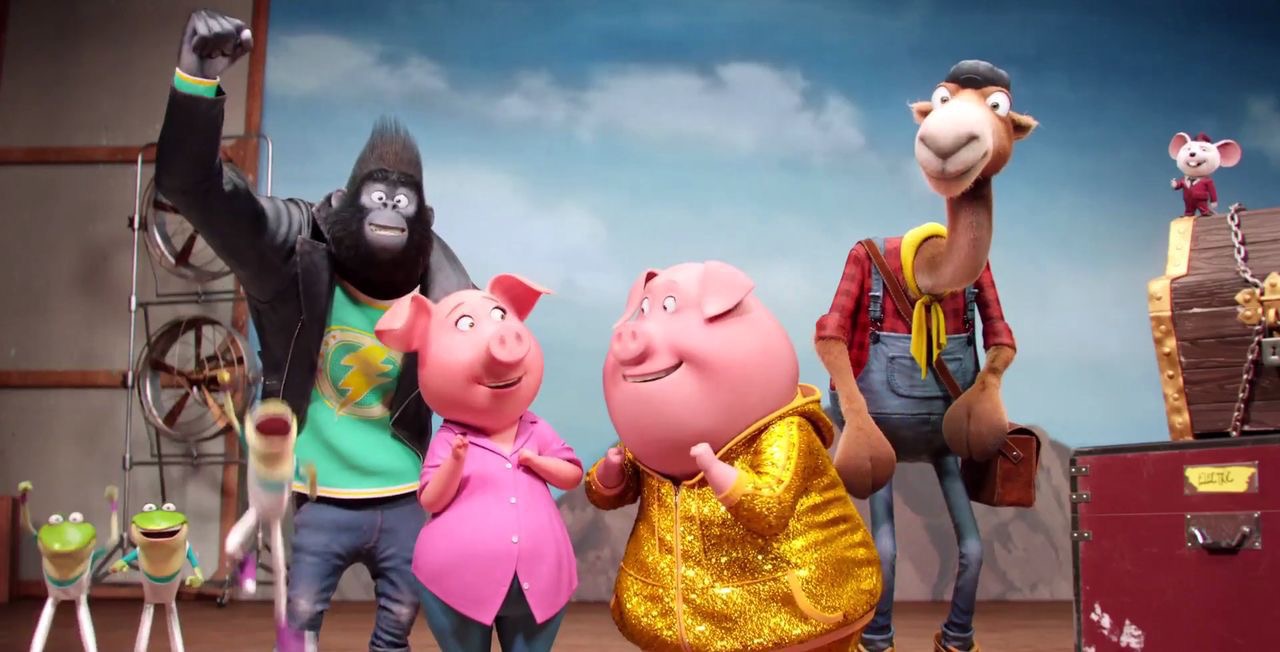
Good, harmless fun is how I’d describe the latest release from Illumination Entertainment. We don’t learn much about ourselves and we don’t get any kind of social commentary. The characters don’t stand out in terms of being inspirational, nor do they have the look of characters that will become favourites in years to come. But that doesn’t mean it’s a bad film and it doesn’t mean that the children it is aimed at won’t have a great couple of hours at the cinema if they see it.

The story follows Buster Moon (Matthew McConaughey), a koala who owns a theatre that is running out of money. As a last ditch effort, he plots to hold a singing competition, but his assistant accidentally advertises a $100,000 prize fund instead of $1,000. This sparks the interest of a range of hopefuls that make up our lead cast: shady mouse Mike (Seth MacFarlane) who specialises in Sinatra-style crooning; shy elephant Meena (Tori Kelly) who suffers from stage-fright and nerves; porcupine Ash (Scarlett Johansson), a goth-teen who is hampered by the fact she is performing in the shadow of her self-centred boyfriend and needs to shine herself; cockney gorilla Johnny (Taron Egerton), stuck in a family of mobster gorillas but wanting to follow his own dreams; and pig Rosita (Reese Witherspoon), a housewife who is so busy looking after 25 children and a hardworking husband that she has no time to pursue her dream of singing on stage. There’s also a group of cute, small Japanese dogs who evoke the worst of J-Pop culture to hilarious effect.


The universe these characters live in is a world of animals that looks like Zootropolis’s lazy and less charismatic younger brother. It’s a shame because if this had been released three years ago, the plethora of ideas would have brought the opening scenes to life, but in the wake of Disney’s triumphant film that is now almost a year old, it just doesn’t quite feel like it’s hitting the mark. It begs the question of which was storyboarded first and was there anyone involved in both projects that might have leaked information one way or the other.

One of the biggest flaws is the casting of McConaughey in the lead role. The character calls for a certain tone of charisma that simply isn’t delivered. This is surprising, because he has developed into a fantastic actor over the last decade, but it does highlight that voice-over acting isn’t something you can simply turn up and expect to be good at.


There are some hilarious moments in the film, which is what we’re looking for. One highlight comes from mouse Mike, who at one point sings Sinatra’s My Way – brilliantly – whilst a helicopter circles above, causing him to lift off the ground and then circle over the audience in a supremely stylish landing. It’s great setpiece, even if the build up is a tad protracted.

But that is what the film is about – big set pieces that will be fondly remembered, even if the overarching plot doesn’t deliver any great payoffs. A solid and enjoyable effort that is quickly slipping from my memory.

Short film review – Donald in Mathmagic Land (Hamilton Luske, Wolfgang Reitherman, Les Clark, Joshua Meador)

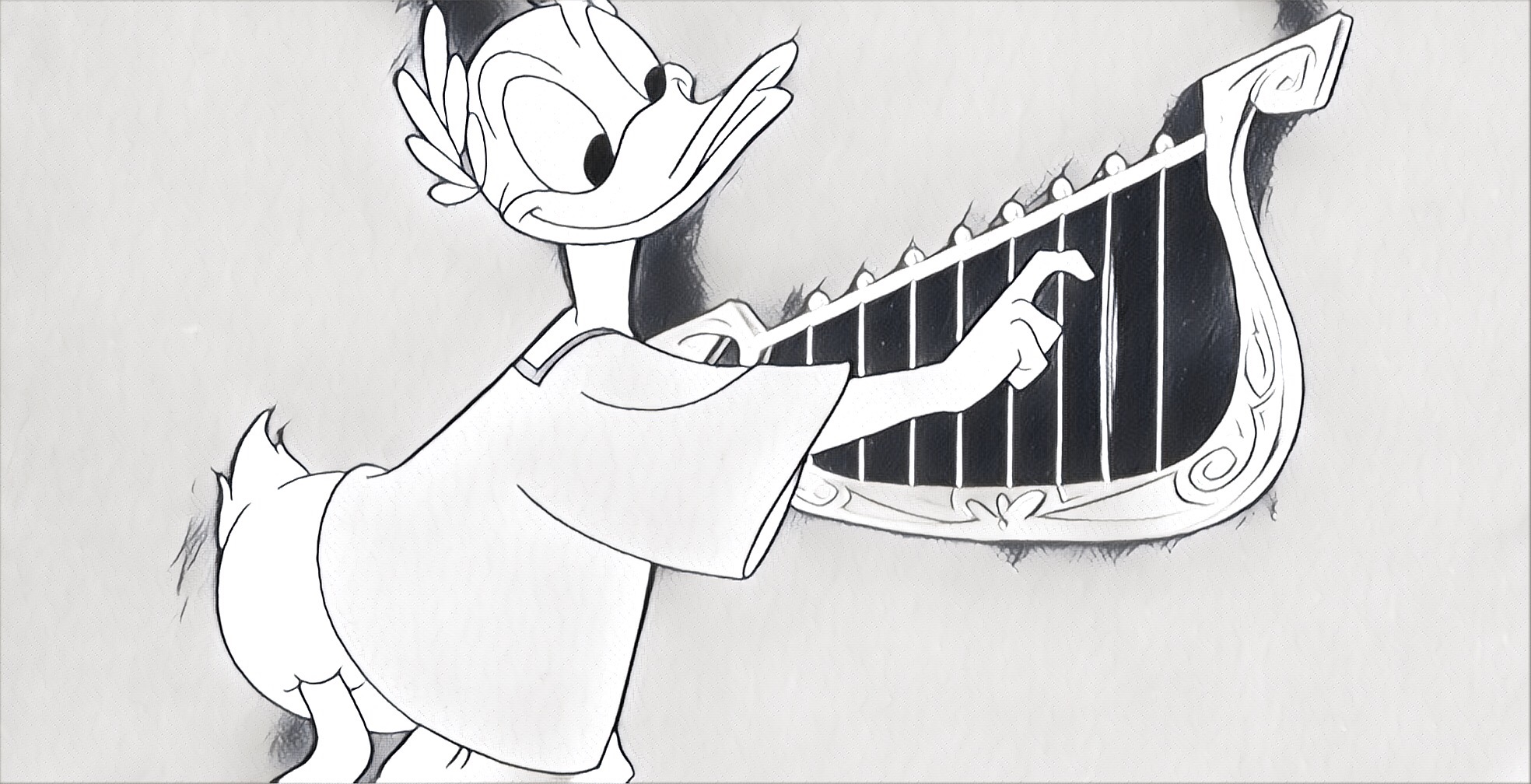
As educational short films go, Disney’s animation about their ever-stressed duck taking a trip through a land filled with mathematical tales, quips and facts is pretty darn entertaining.

Released in 1959 alongside a poorly-remembered live action film called Darby O’Gill and the Little People, the film went on to receive a nomination in the Best Documentary – Short Subject category at the Academy Awards. [1] [2]

It charts Donald’s journey through Mathmagic Land, as guided by the voice of a spirit (Paul Frees). He learns about the origins of maths, starting with Pythagoras in Greece, then the pentogram and the golden section, the appearances of the golden section in nature, architecture and art, the application of maths in music and its relevance to games (especially chess, which features a nice reference to Alice Through The Looking Glass).

That the film covers a relatively thorough history of one of the most important and fundamental basic principals of life and remains interesting is somewhat of a miracle, so much so that the film went on to be used as an educational tool in schools across America. It’s easy to see why. Its relevance endures and it would still be useful in the modern education system.

Admittedly, the style is now somewhat dated but it has a classic feel of 1950s era Disney about it. This is hardly surprising. Two of Disney’s “Nine Old Men” worked as directors on the film. [3]

It is a great shame that so many of these old Disney shorts are hard to locate in a good quality transfer and few are held in high regard, largely due to the lack of knowledge of their existence. Anyone who enjoys watching the early Disney animation films is doing themselves a disservice if they are yet to discover the shorts being released around the same time. These are the same animators, story writers and directors, throwing together ideas and experimenting with animation, perhaps to try something out for a future release, or maybe just finishing ideas that were started with a plan for a full release before ending up as a short instead.

There are so many to choose from, many of which were released in the UK on the Disney Fables series of DVDs. Owning all six of them is a great start – you will have in your possession six hours of short animated films, covering 25 animated films, several of which were Academy Awards nominees and winners. It’s about time that Disney worked out a way to get these out there again so yet another generation can enjoy them.

[1] I can’t imagine people were overly-fond of the film at the cinema.Having paid to see a film that’s 93 minutes long, imagine the dismay when you sat down and realised it had a 26-minute short film about maths tagged at the beginning of it.

[2] Quite why this wasn’t nominated as an animated short is beyond me. I incorrectly assumed that the category didn’t exist at the time but this proved to be an incorrect assumption, having been around for over 25 years in 1959.

[3] Wolfgang Reitherman and Les Clark were two of Disney’s “Nine Old Men”, a group of nine original animators that worked at the Disney company. Many of them went on to direct feature films themselves and every Walt Disney Animation film featured at least one of the nine until 1985’s The Black Cauldron.

Film Review – Vaiana (Ron Clements and John Musker, 2016)

Walt Disney Animation Studios have released their 56th animated film, the musical Moana. I’m going to whisper this quietly, but it might actually be better than Frozen.

The story follows 16-year-old girl Vaiana as she defies her passage to become the leader of the tribe on the fictional island Motunui. Her father Chief Tui, leader of her island tribe, and her mother Sina are fearful of the water and want her to remain on the island, but her outgoing grandma Tala encourages her to leave and hunt down the demigod Maui to solve a mysterious curse that she believes has led to a poor harvest.

Vaiana and Maui


The basics of the story are, on the face of it, quite by-the-numbers. There’s a teenage protagonist, which makes it relatable for the younger viewers. She goes on a quest that has a practical purpose but also helps her develop as a person. She teams up with an unlikely buddy to help her in her journey. We’ve seen it many times before but the familiarity doesn’t hamper its success.

Where the story excels is threefold. Firstly, it has a brilliantly sharp and humorous script, which the actors are clearly having a lot of fun with. Secondly, the animation of both the characters and the surroundings is absolutely stunning. Finally, the music, which was written by Hamilton’s Lin-Manuel Miranda, Mark Mancina and Opetaia Foa’i, is outrageously good, and goes much further than simply one great flagship song (in this case “How Far I’ll Go”, sung by the lead and effectively Vaiana’s answer to “Let It Go”).

Indeed, it is unfortunate that the film has been unleashed in the same year as La La Land, which is destined to sweep up at most of the award ceremonies, at least in the Best Song categories. Miranda may have to have another attempt in a less competitive year.

There are a couple of nice smaller roles that are grasped by those involved. Alan Tudyk may be more famed for his turn as K-2SO in Rogue One this year, but he’s equally hilarious as Hei Hei the Rooster here, constantly stealing scenes with sound effects that match the ridiculousness of the island’s most endearingly stupid bird. Elsewhere, there’s a hilarious scene featuring Tamatoa, a giant kleptomaniacal crab who has a penchant for all things shiny.

Vaiana is a must see this holiday season and should be top of your list if you need to entertain any younger relatives over the coming weeks.

Check out the reviews of other Disney animated features and shorts here:

Zootropolis
Kronk’s New Groove
The Emperor’s New Groove
Destino
Melody Time
Big Hero 6
Frozen

Note: This article was originally published for the English-language version of the film and has since been adapted. You can find the original version here.

Film review – Lion (Garth Davis, 2017)

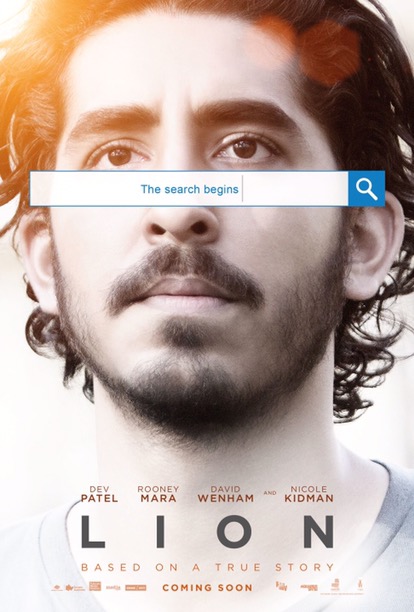
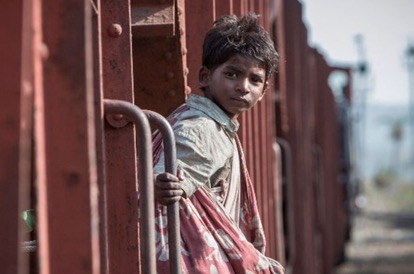
Garth Davis’s debut feature, Lion, tells the true story of Saroo Brierley (Sunny Pawar), a boy who is separated from his brother at a train station in central India at the age of five. Boarding a train he believes his brother is aboard, Saroo falls asleep and the train sets off. He travels for two days across unfamiliar territory, eventually arriving in Kolkata on the far Eastern side of India, 1600km from his home. Unable to read or write, and with everyone speaking the unfamiliar Bengali language, he finds it impossible to reconnect with his home and is sent to an orphanage. He is eventually adopted by an Australian couple (David Wenham and Nicole Kidman). Twenty years later, a grown-up Saroo (Dev Patel) starts a relationship with Lucy (Rooney Mara), before a chance encounter reignites his interest in his origins and he starts to try to reconnect with his real family.

Sunny Pawar is phenomenal as the young Saroo

Dev Patel is as brilliant as ever in the lead role as a grown-up Saroo, building on his celebrated performances in Slumdog Millionaire and The Best Exotic Marigold Hotel (and its sequel). It’s a role that needs to provide a reflection of the innocent and likeable younger Saroo we have watched for the first half of the film, whilst also covering the emotional turmoil of a man who has lost his past and lived a completely different life due to a small but very significant fork in his road.

But it is Sunny Pawar as the young Saroo that steals the show. He has a charisma that shines through even when he’s completely still, effortlessly shifting from anger to sadness to fear and to contemplation as the plot develops. Without this young star, the film may have fallen flat. [1]

There is a clear distinction between the feel of the film between India and Australia. The filmmakers achieved this difference by having an almost entirely different production team for the two countries, with natives of each being involved with every aspect of the process. It’s well worth staying around to see the end credits so you can witness the difference – they run the two side by side, giving each equal billing.

This is one of the most heart-warming stories of the year, if not the decade. It may be a bit of a predictable ending (suspend your inquisitive mind and stop yourself from contemplating whether or not the story would even be a story if it had an unhappy ending), but the beauty is in the performances and the characters’ journeys – be they figurative or literal. Do yourself a favour and make sure you catch this one.

[1] There’s a fantastic article on the casting process of Sunny Pawar on Vulture.com. Check it out here: http://www.vulture.com/2016/12/sunny-pawar-lion-casting.html


Film review – Silence (Martin Scorsese, 2017)

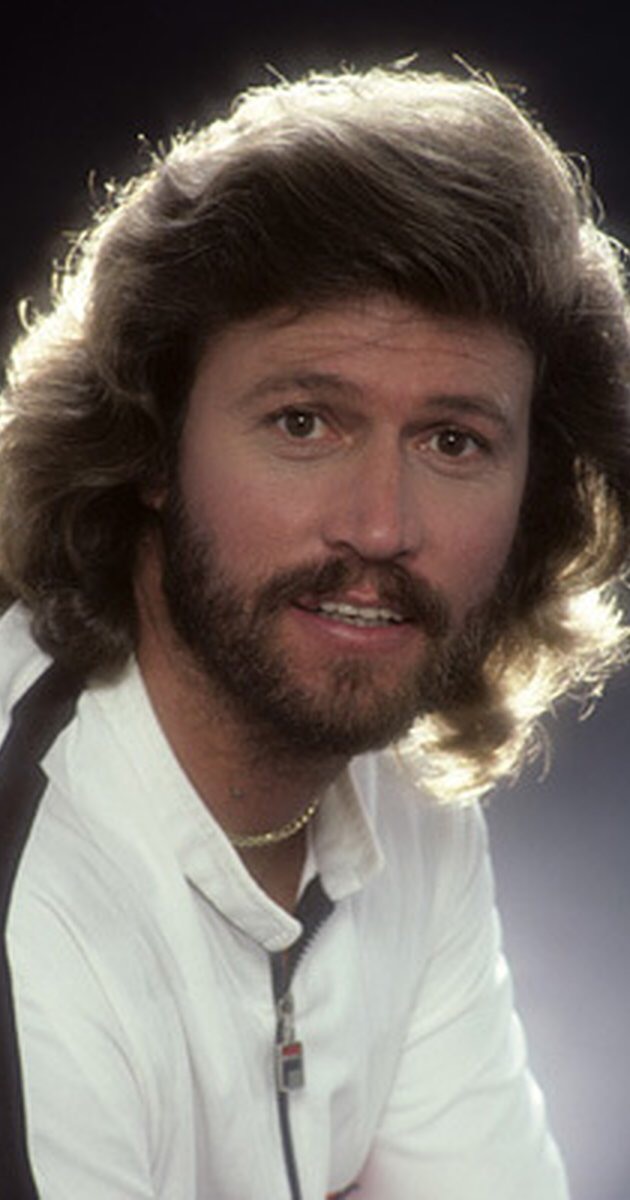
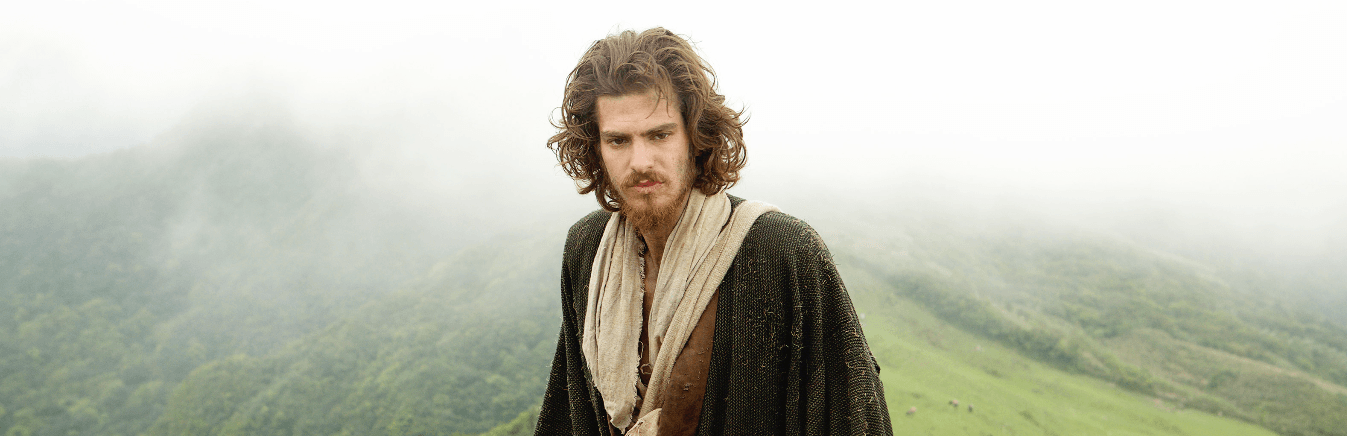
For much of Silence, Martin Scorsese’s Japan-set epic about Christian missionaries in the 1600s, I was desperately trying to enjoy myself. Eventually I did, but that was only when I realised how much Andrew Garfield looked like a young Barry Gibb and I started to re-imagine the plot as a bizarre Bee Gees origin story.

Andrew Garfield stars as Barry Gibb

The film maps the journey of two young Portuguese Jesuit Christian missionaries: Father Sebastian Rodrigues (Garfield) and Father Francisco Garupe (Adam Driver). In 1640 they travel to Japan in the hope of finding Father Ferreira (Liam Neeson), their teacher and mentor that they have learned has apostatised and converted to the Japanese way of life and assumed a Japanese identity.

The first thing that will disappoint you when you watch the film is the ridiculous decision to have the actors speaking in English throughout. It makes no sense. Why get English-speaking actors in and have them speak with a decreasingly dedicated accent? Why not just get a Brazilian or Portuguese actor to take the role? What we end up with is a couple of  vaguely Spanish voices, that slowly drift in and out of authenticity.

It eventually comes to a head with a hilarious low point when Garfield shares a scene with translator Tadanobu Asano, who is of course speaking in English but with a Japanese accent. If you’ve got two characters deciding to speak in Portuguese but doing so in English before carrying on in English, then you’ve got a problem. It’s simply crazy. I’d much rather the filmmakers have some faith in their viewers and play to the story’s authenticity rather than this lacklustre compromise. At least Liam Neeson had the guts to “pull a Connery” and stick to his own accent.

The other letdown is the overall pacing, which felt like it was deliberately slow. I put this down to Scorsese’s closeness to the project (he originally acquired the rights to Endo Shusaku’s book in 1989 during the making of Goodfellas). At 161 minutes long, there must have been some scope to reduce the total running time. Arguably this is an expansive story that needs time to breathe and the slow pace as Rodrigues gets drawn away from his faith is perfect for the story. It’s just not all that enjoyable.

It is a film of juxtapositions. The beautiful cinematography captures the landscapes of rural Japan in a way that transports you straight backwards 400 years, but there are some suspicious CGI moments that felt out of place. The wonderful costumes aren’t matched by some of the hair and make-up efforts. The quality acting is lost amongst the tangled web of accent approximations.

It feels epic, but the reality is nothing but a disappointment.

Film review – Le Fille Inconnue / The Unknown Girl (Jean-Pierre Dardenne and Luc Dardenne, 2016)

It may have an interesting premise, but a dislikeable lead and a plot that lacks the sort of understated excitement that has won the Dardenne Brothers two Palme d’Or awards make The Unknown Girl a difficult watch.

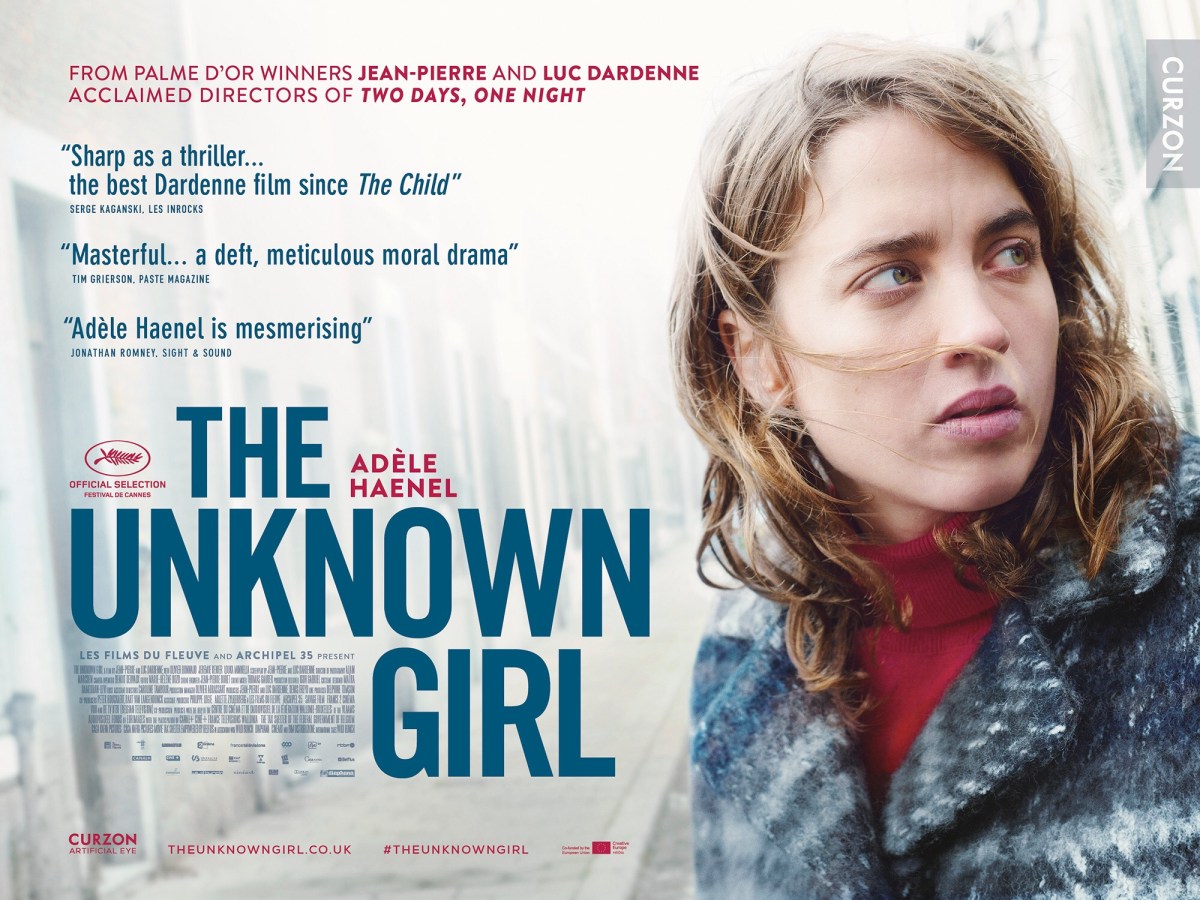
Adèle Haenel stars as Dr Jenny Davin, a promising young doctor excelling at her job as a GP. However, one night she chooses to ignore a call at her practice’s door, assuming it is a late caller with some minor ailment. However, when she later finds out that it was a young girl in desperate need of help who shortly after was seemingly murdered, she becomes obsessed with finding out the truth behind the incident to atone for her mistake.

Adèle Haenel


I desperately wanted to like this film. I like the director duo and have been impressed by their previous output, but there was so little to work with on this one. 

Haenel fails to deliver any depth to a role that is a doozy for someone wanting to prove themselves to the world. Perhaps the fact she has already done this with an extraordinary body of work is one of the reasons she seems to lack passion in her delivery.

As a follow-up to the Oscar-nominated ‘Two Days, One Night‘, this can only be seen as a disappointment for the Dardenne Brothers.

Film review – Passengers (Morten Tyldum, 2016)

It’s fun to slam a bad film, isn’t it? Hand us a terrible film and we’re all there ready with our sticks to beat it down. It’s funny, because the filmmakers have no control over it and we get away with having a good laugh at their expense.

Passengers has been that film for the last couple of weeks.

I’ve had an article shared to me with some photos that prove how creepy Chris Pratt is in it. I had another one sent over about how it had failed at the box office after poor reviews. Generally the early reviews were positive, then the consensus changed and everyone has now decided it’s a poor film, so that’s the stance everyone has taken. Even positive reviews have misleadingly negative titles to ensure they don’t buck the trend (News.com.auhad a favourable review but they titled it “What was Jennifer Lawrence thinking?”).

The three people who sent me the above articles have no intention of watching Passengers. That is entirely their loss.

Passengers is an excellent film.

There’s more to this than the reviews have suggested

Spoilers now follow.

At its heart, it is a romantic drama that explores the relationship ship between James Preston (Chris Pratt) and Aurora Lane (Jennifer Lawrence), who are trapped in space on the Avalon spaceship, en route to the planet Homestead II. To make the 120-year journey, the crew and passengers are in hibernation pods, but Preston’s pod opens early and he is forced to fend for himself, physically and mentally.

Trapped in space alone, he eventually starts to consider waking up fellow passengers. As an electrician and mechanic, he can navigate the user manuals of the hibernation pods and is able to select who he wakes up based on video messages left on their personal profiles onboard the ship’s communication devices. He chooses writer Lane, a woman he has fallen in love with, and makes the unforgivable choice to wake her up, sentencing her to the same fate as him – certain death before anyone else wakes up.

The critics have centred on this decision as a blocker to any enjoyment. That is truly unfair. If they were handed the film to edit, presumably it would finish after forty minutes and we’d have a shot of Pratt’s character dying alone as an old man, trapped and miserable, yet having made the morally correct decision. 

In Mark Kermode’s book Hatchet Job, there’s a brilliant passage on how Casablanca would have turned out if it had been shown to test screenings, with one of the greatest love stories of all time likely being changed to a happier yet implausible conclusion. 

The same applies here.

This is a plot that is deliberately divisive, meant to create discussion. Some will argue that Preston was insane, on the cusp of suicide, and his relationship with Lane sustained him long enough to figure out there was a critical error with the ship, this saving the entire ship (with her help – it was a two-person job). Others will side with Lane’s stance immediately after she realises the truth; also quite justifiable due to the fact their entire relationship is based on a fundamental lie.

Either way, director Morten Tyldum fully explores every possible line of thought enough to allow the viewers to make their minds up, with enough space in the pace of the film for those thought processes to go to fruition during the film.

Pair this complex romance with some beuatiful visuals and some stellar performances from the two leads, and you get a film much better than the critics will have you believe.

You will be robbing yourself if you believe the negativity and don’t see this film for yourself.

Film review – Arrival (Denis Villeneuve, 2016)

For many cinema-goers, Arrival may have been one of the worst films of the year. For all its big-budget sci-fi overtones and its positioning alongside other space-based 2016 blockbusters such as Independence Day: Resurgence, Passengers and Rogue One, if you sought out Arrival expecting more of the same you may have been disappointed. Indeed, you will have been tricked into that much-elusive cinematic experience: thinking.

Set in modern-day USA, it stars Amy Adams as renowned linguist Louise Banks, brought in by the government to help humanity communicate with extra-terrestrial life forms that have mysteriously landed throughout Earth. She teams up with physicist Ian Donnelly (Jeremy Renner) to begin to decipher their language and understand why they have chosen now to begin communication.

Amy Adams as linguist Louise

It is anything but a full-blown rollercoaster of action, instead concentrating its efforts on an elegant storyline with some seriously unsubtle political messaging. Or should that be serious and unsubtle?

What screenwriter Eric Heisserer has set out to do – and succeeded – is position the viewers in the shoes of alien lifeforms understanding Earth for the first time. In that sense, we are asked to consider the absurdity of the fact that so many countries have ongoing conflicts, unable to get along with one-another.

It may be set in the USA but you would be mistaken in thinking this was a lazy choice in making the Americans the saviours. The decision was more likely financial. Sure, the hero could have been from Pakistan or Chile, but this would have seriously hindered sales in the USA and all other countries where English is either a first or second language.

Amy Adams, as always, puts in a brilliant turn as the determined linguist Louise. She’s a likeable and versatile actress, perhaps at the top of her game right now, and it is a crime that not one of her five Academy Award nominations has thus far earned her a win. Perhaps this year, with a potential double-nomination for this and Nocturnal Animals, we’ll see her rightly rewarded.

Arrival is one of the best films of the year. Gripping, intelligent, thought-provoking and stylish. A must see.