Film review – Ghost in the Shell (Rupert Sanders, 2017)

When the live-action remake of Ghost in the Shell was announced, the online rhetoric centred around the fact that the remake was in itself completely unnecessary, whilst also questioning why lead Japanese character Major Kusanagi was being portrayed by Scarlett Johansson. The studios’ responses at the time were that they wanted a bankable star and that was the main reason she was cast, but that word was out there. Whitewashing. Once it’s there, it’s hard to shake.

A similar issue befell the 2011 film Under The Skin, also starring Scarlett Johansson. True, there was no need accusations of racism, but Johansson was cast for similar reasons. It later emerged in an interview with Gemma Arterton that the British actress had been first choice by the director Jonathan Glazer. However, Johansson was eventually cast in order to secure the funding to complete the film to the director’s vision.

In both cases, it is a sad reflection on the current state of cinema and its attitudes towards so-called non-bankable stars. Clearly the studios involved were nervous about a film being able to sell based on a high quality script, good direction and a solid marketing campaign. Instead they brought in Johansson, and presumably part of their reasoning was that they didn’t have faith in the audience to see past the lead character. Perhaps this is correct.

However, in neither case was the film damaged as a result of the casting. Both plots lend themselves to having an otherworldly-essence to the lead female. 

Crucially, Johansson isn’t just a bankable star. She’s a truly phenomenal actress at the top of her game.

In Under The Skin, the fact that Scarlett Johansson was driving around the streets of Glasgow and getting real reactions from the general public whilst speaking in an emotionless English accent played into her role. She was, ambiguously, an alien preying on men, so her not being British gave a mysterious element to her performance that justified her casting.

Equally in Ghost in the Shell, the fact she isn’t of Asian origin doesn’t necessarily play against the script. She is a cybernetic being, with the brain of a human inside a robotic body. This is a future where cybernetic modifications are a part of normal life. The brain inside her body is that of a Japanese girl, but her body is Scarlett Johansson. 

I don’t agree with the feeling that her casting is whitewashing of the original story. The studio saw a way to make the plot more appealing to American audiences in a way that didn’t compromise the story – the wider lead cast covers a wide variety of races, primarily either American or Asian. They would have been foolish not to go down that route.

Clearly, the Japanese market doesn’t seem overly bothered by her casting. Nor do the South Korean and Chinese markets. In China, for example, they currently have a total box office taking of $23.39m (as of 09/04/2017), approximately a quarter of the global takings. This is a total which pushed a disappointing US box office performance into a profitable outcome.

Ironically, one of the primary reasons offered by the studio for its domestic failure was that Scarlett Johansson doesn’t have an online presence. 

The humour of this entire situation shouldn’t be lost and I can’t help but feel that the backlash against this is looking for an argument where there isn’t one. At the very worst, the filmmakers can be accused of bringing in a superstar to sell the film and this deviates it from the original vision from 1996. The faithfulness to the original story is so strong though that this change shouldn’t be held against it. Certainly no complaints can be levelled at Johansson, who puts in a stellar performance in her starring role.


The environment the characters inhabit is rich and believable, with a mix of CGI and real shots used to create a new universe. It is visually stunning, a full 3D remodelling of the vision created in 2D by Mamoru Oshii and the original animation team from 1995. 

The city is modelled on Hong Kong, but it feels like it lives in the same universe as Ridley Scott’s Blade Runner, with spawling cityscapes and futuristic advertisement boards threatening to submerge the life within it.

Indeed, the musical cues that Clint Mansell and Lorne Balfe provide are clearly influenced by Vangelis. This I see as an indication of how much of an influence Vangelis has had on futuristic science fiction cinema, rather than a lazy bit of theft from the musical pairing. Mansell is very much carrying the Vangelis baton as evidenced by his excellent scores for the likes of High-Rise, Black Swan and Stoker.

If the action sequences seem a little dated, it is because Sanders has been put in a near-impossible situation by the Wachowskis. There are rumours that the only reason The Matrix was made was because they wanted to make a live-action Ghost in the Shell but couldn’t get the rights. Whilst there are similar themes in both films, it is the action sequences that were so iconic that The Matrix is remembered for. These were lifted straight from Oshii’s masterpiece. So, heaping this remake with too much of them would make casual audiences feel like they were utilising a technique that debuted two decades ago and has been parodied ever since. If anything, Sanders has probably underused it, but it is nonetheless a visual spectacle.

Taking on a film that is seen as a defining point of the genre is always going to be tough. The original really wasn’t a box office success in its original release, making just $2.28m globally. It did eventually become a cult classic. This 2017 remake has already made its money back ($130m and counting), but will doubtless also be considered a box office flop by its detractors. 

This is not a masterpiece of a film, but it is extremely impressive and engrossing. Arguably, the plot is much clearer than the original too. It’s a shame that it looks unlikely to be given a chance by most a large portion of the potential market.

Note: the version watched was 3D IMAX.
Film review – Paths of Glory (Stanley Kubrick, 1957)

If you’re a casual fan of the history of cinema, you may be forgiven for thinking that Stanley Kubrick has only released eight films. 

The reason for this misunderstanding? I blame the brilliant but consistently re-released boxset of films that features every feature he directed from Lolita onwards, along with a documentary on his career titled “A Life In Pictures”. It’s so prominent and features so many classic films that his early output is often forgotten.

The biggest casualty of this is Spartacus, the 1960 epic that starred Kirk Douglas. It seems obvious, but there’s a whole generation of film fans that are well aware of the film and the director but are surprised that Kubrick was at the helm.

It’s a shame that his early output is so criminally overlooked, but it’s also a problem that Masters of Cinema and Arrow have put a lot of effort into correcting. First came 1953’s Fear and Desire, a film steeped in rumours that Kubrick himself wanted to destroy all known copies of. It is far from his best work, but has an audience. It was bundled with three Kubrick-directed short films: Day of the Fight (1951), Flying Padre (1951) and The Seafarers (1953). These aren’t essential viewing for anyone other than the most ardent Kubrickian, but plot a path to his genius-level filmmaking that was revealed shortly after.

Arrow’s release of 1956’s The Killing is similarly detailed. The Sterling Hayden-starrer was a critical success on its release but commercially didn’t really make it out of the starting blocks, serving second fiddle to a now-hard-to-find film called Bandido! and eventually losing $130,000.

So where does Paths of Glory fit into this? It was Kubrick’s final film before his epic box office smash Spartacus in 1960, which was also critically praised and thus provided him much more leeway when it came to choosing his next project, which was Lolita.

Arguably, the reason he was offered Spartacus was in part due to his success with Paths of Glory. Indeed, the original director (Anthony Mann) was sacked after just one week of filming and it was this that led to Kubrick being hired, not least for the fact that Kirk Douglas was the star of both and his production company – Bryna Productions – was behind Spartacus and vicariously the hiring of a replacement director.

The short reason for Douglas’s affinity to Kubrick is quite simple – the film is absolutely brilliant. Douglas is allowed to explore a complicated character with no compromise to the artistic integrity, despite the fact that the film was banned in several countries for content deemed controversial at the time of release. It is a really powerful display of his acting ability.

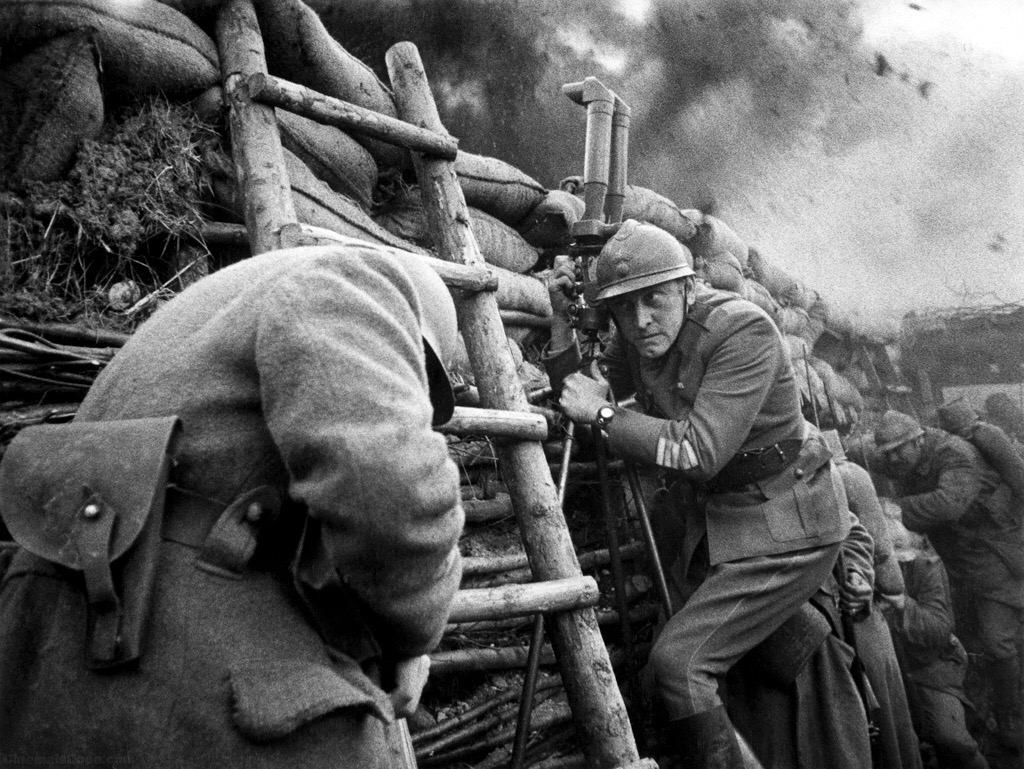
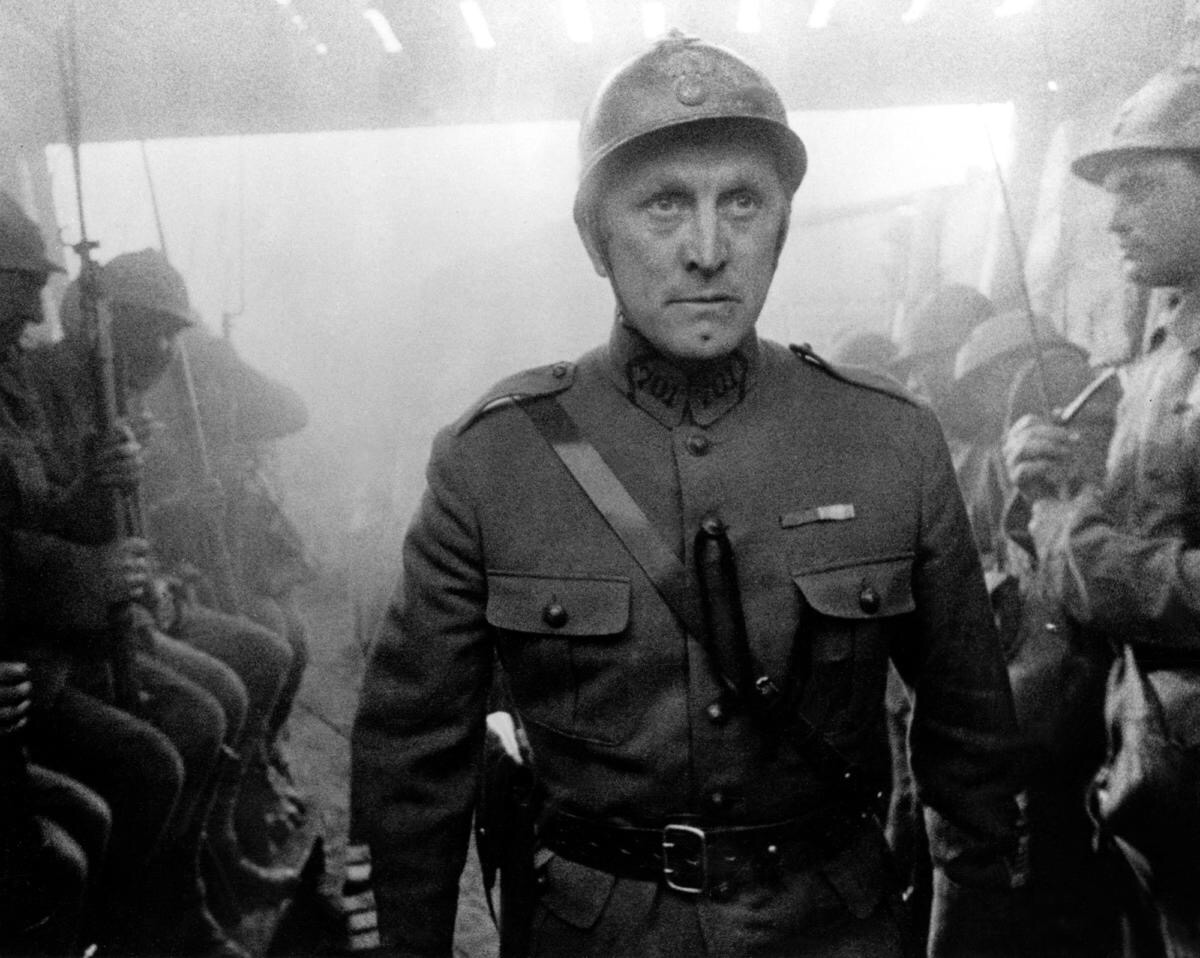
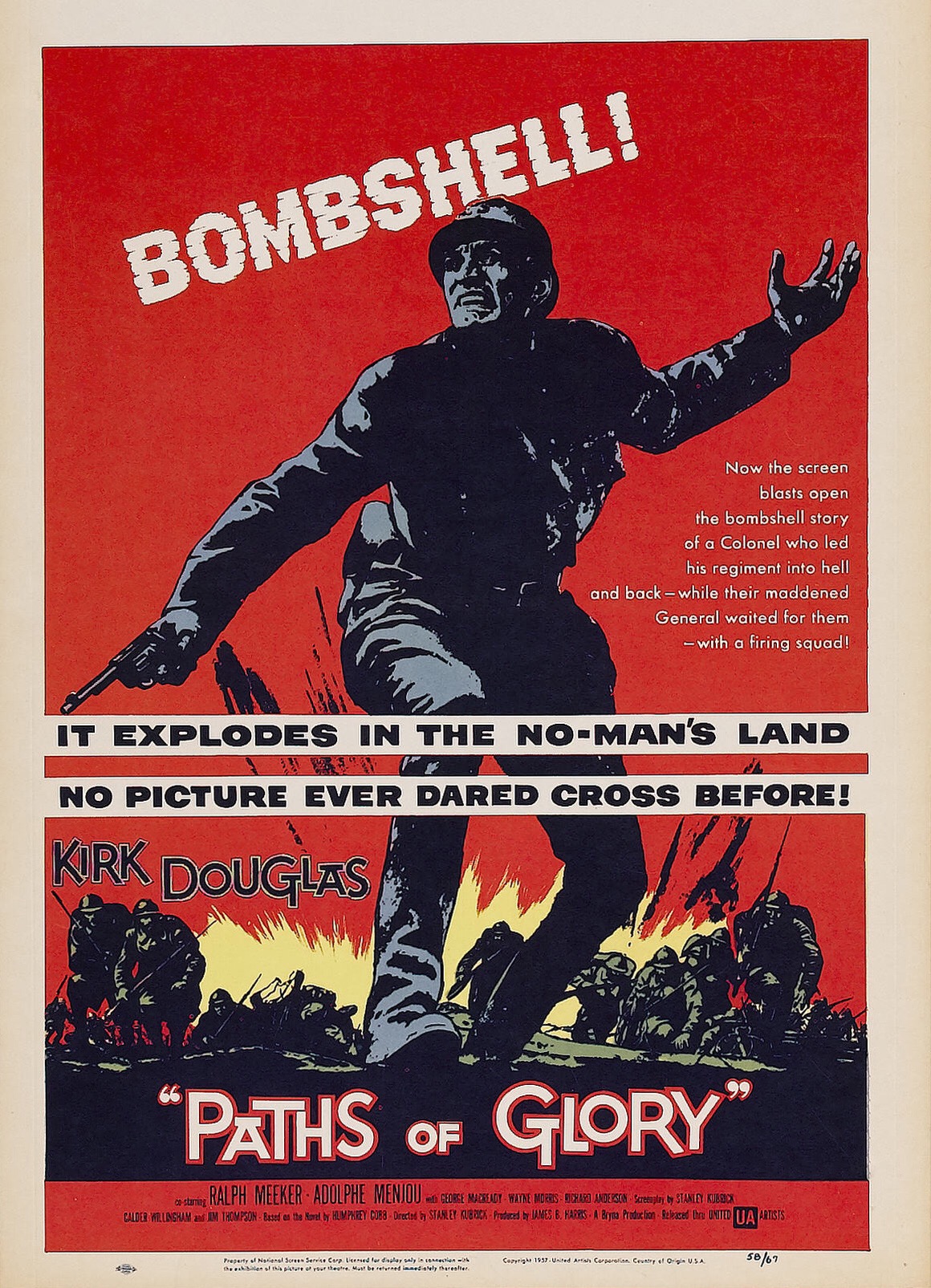
Set entirely in French army bases during World War II, the basic premise of the film is that Colonel Dax (Douglas) is ordered by his superior General Mireau (George Macreary) to attack the “Anthill”, a well-defended German stronghold. Mireau’s reasoning behind his decision is entirely selfish as he has been offered a promotion for a successful attack on the Germans. Douglas attempts the manoeuvre despite knowing it is essentially a suicide mission for his men, but they all quickly realise it is doomed to failure and they retreat. They are subsequently accused of cowardice and three men are selected for trial and face the death penalty, with only their own accounts and Dax’s legal background to save them.

The film was banned by several countries on its original release, deemed as anti-military. Subsequently, cinema-goers in France, Germany, Switzerland and Spain were unable to see it until decades after its release. It is understandable, given the portrayal of the hierarchy and corrupt decision making. The integrity of the film is also maintained with a wholly miserable ending to the film, an early sign that Kubrick wasn’t one to conform to normalities.

Watching it now, it feels way ahead of its time. There is no happy ending. The characters are fully formed and Kubrick is confident enough to let the brilliant Kirk Douglas engulf the entire frame with close-ups and lingering shots.

The action sequences as the troops push over the top into no man’s land are engrossing and brutal, giving a reality to their predicament. Without getting this right, the whole picture would have fallen flat.

This is absolutely a film that needs to be watched and shouldn’t be seen as just a point of interest for die-hard Kubrick aficionados. If you can find a copy and want to see beyond The Chosen Eight, you really need to invest.

Film review – Their Finest (Lone Scherfig, 2016)

You may look at the premise of Their Finest and, coupled with the cast, assume that the film is a lighthearted romp with its aim directly at those to whom World War II is a trip down memory lane rather than a history lesson. It’s an assessment that isn’t wildly wide of the mark, but there’s more substance here than meets the eye.

The story is about a woman rising up against industry stereotypes and an oppressive partner to become a great screenwriter for propaganda war films. That woman is Catrin Cole (Gemma Arteton) and the film-within-a-film depicts two sisters’ efforts in the miraculous evactuation of stranded Allied troops from Dunkirk beach. Central to this film is the drunken Uncle Frank, set to be portrayed by Ambrose Hilliard (Bill Nighy), whilst the film is co-written with Tom Buckley (Sam Claflin). Other minor roles include Jeremy Irons as the Secretary of War and Richard E. Grant as a studio executive.

Claflin and Arteton

Despite a feeling that a romantic subplot was going to undo all the hard work put in by a female lead being expertly guided by a female director, it was a wise choice to make her feelings for co-writer Tom serve a purpose to inspire Catrin’s career rather than making her career integral to her romantic endeavours. In this way, her feelings towards her co-writer is simply a character-building device.

There was a brief moment where I felt they were throwing away a really interesting character in her faux-husband Ellis Cole (Jack Huston). This is a man who has been injured in a previous battle and thus cannot join the war effort, nor can he earn a consistent living to support himself and Catlin. His failings are that he cannot bring himself to accept his partner’s financial support. In 2017 this is likely to stir an element of frustration amongst the feminist cinema-goers, which is a perfectly reasonable response given this remains such a hot topic. However, if one really tries hard to imagine the emotions of a man suffering from inadequacy-related depression in the height of World War II, I can’t help but feel that his side of the story wasn’t explored enough. His eventual lack of faithfulness was the easy route out of a cul-de-sac.

Bill Nighy’s role was satisfyingly gripping. His portrayal of an older actor struggling to be taken seriously following earlier successes is something that must resonate with many in the industry. Nighy is consistently and effortlessly funny in every role he tackles and that must, in an unusual way, be quite restrictive for his role choices. Here he is very much light relief but he plays a pivotal role in the final act when it comes to reasoning with a depressed Catlin. It’s a heartbreaking scene that really stands out as a centrepiece for both character arcs.

For all the accuracies in the costumes, scenery, colour choices, music and tone, the whole film would be nothing without an excellent performance from Arteton. This is a role that is specifically targeted to resonate with women who have had to rise up against criticism from men at home and at work throughout their lives. 

From Gemma Arteton all the way back to novelist Lissa Evans, the women involved with bringing this tale to life have left their mark. Women creating high quality cinema was a surprising success in 1940 and it’s a shame that the industry still feels the same way almost eighty years later. 

Film review – Going in Style (Zach Braff, 2017)

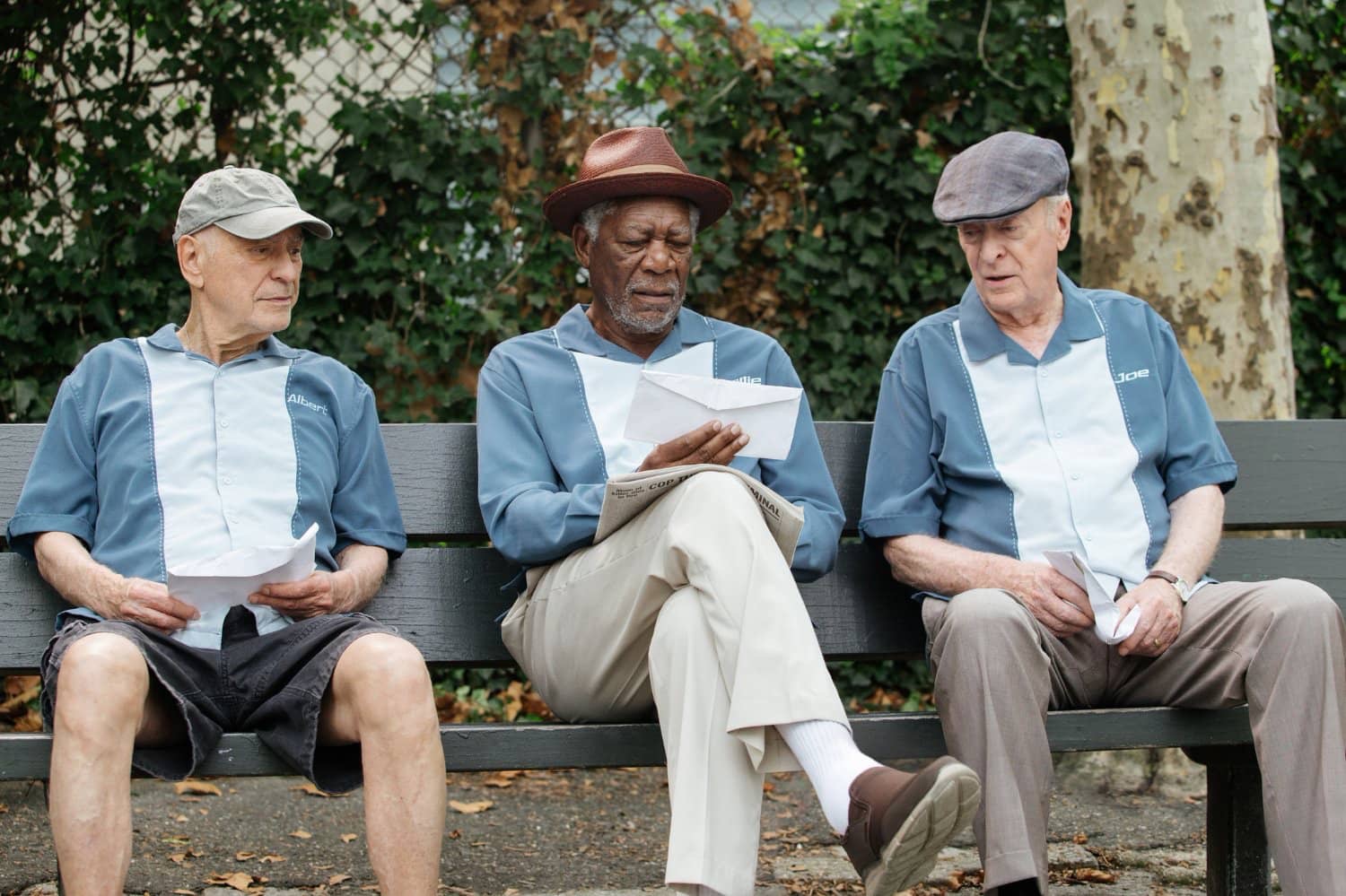
Director Zach Braff’s latest comedy “Going in Style” might feel like a lighthearted caper on the surface, but there are some pretty real issues at its heart. Its three main characters are all men in retirement age who have been left without a pension fund due to a restructuring to their previous company. Willie (Morgan Freeman), Joe (Michael Caine) and Al (Alan Arkin) decide to step out of retirement and risk what lives they have left by plotting a daring bid to knock off the very bank that absconded with their money.

The film starts off a little meek, with a bank heist that feels soft and with some forced humour. Fortunately Caine’s Joe is there to ferry us through a scene that is there out of necessity rather than for great cinema.

It doesn’t really start to make any impression until the three legends are on screen together. These are actors that have shown countless times throughout their respective careers that they can handle a rich gamut of acting styles and there is a sense of playfulness amongst them. Seeing Alan Arkin’s ridiculous run replayed on CCTV had this viewer, and the rest of the screen room, in fits of laughter.

If the film feels sharp, it is partly due to an intelligent screenplay from Theodore Melfi. He has shone a light on members of the older generation previously in his debut screenplay for St. Vincent, in which Bill Murray is forced to come out of a figurative retirement from life (he is spiralling in alcoholism and gambling addiction) to refocus on looking after a young neighbour. This was achieved with a deft touch that allowed the humour to eminate from an otherwise dark script, which itself was adapted from the screenplay of a film of the same name directed by Martin Breft in 1979.

This is not the film that any of the stars will be remembered for, but that doesn’t mean it’s a bad film.

The plot left me feeling angry about the way older people are treated by society. So, whilst the jokes and humour are forthcoming, there is always a sense that the film has a lot more bubbling under. It’s credit to Zach Braff that he got the balance just right.

Film review – My Feral Heart (Jane Gull, 2016)

Last night 36 cinemas in the U.K. played host to screenings of My Feral Heart as part of World Down Syndrome Day. The many 100s in attendance were treated to a moving portrayal of coping with loss and the difficulties of abrupt changes in circumstances that people with Down syndrome are sometimes forced to cope with.

Star Steven Brandon plays Luke, a young man with Down syndrome who is coming to terms with the death of his mother. Moved to a nearby care home, he must forge new relationships with the carer at the home Eve (Shana Swash) and a man working nearby on community service called Pete (Will Rastal). After leaving the home to explore the surrounding areas he is comes across a girl in need of help, a task that brings Luke new purpose.

The performance by the lead actor Brandon is extremely moving. This is a complex role that he clearly gave a lot of emotion to. He is a heartbroken son living alongside people he doesn’t feel any connection towards and also feeling robbed of his independence. 

There’s a clear comradery between the three lead characters and it’s in these scenes you feel the charm of the humour. It feels natural when Pete laughs at Luke for thinking babies “come from China”, before a big infectious smile appears on Luke’s face. Without this chemistry the film could have fallen down, but praise must also go to director Jane Gull for cultivating and capturing this on film.

The performances are complimented by a wonderfully-orchestrated soundtrack by Barrington Pheloung, who has been crafting high quality film and television scores for almost thirty years.

The ultimate ideal is that people will view this film and change their underlying feelings about Down syndrome, either through the effect of the story or due to the brilliant performance from Brandon. The rhetoric surrounding World Down Syndrome Day is that those living with the condition don’t have special needs, but human needs. They don’t have to be treated completely differently to anyone else. Though the message is precisely this in My Feral Heart, the film itself serves as evidence enough of a great acting achievement by a bright young actor with Down syndrome.

It is heartwarming and completely moving, and it’s something that really deserves to be seen.

Film review – Logan (James Mangold, 2017)

THIS ARTICLE IS FULL OF SPOILERS

Hugh Jackman is, in the superhero film world, a living legend. There has never been a single actor or actress that has achieved relentless success across so many different films in this genre, making a character his own and developing it into one of the big guns instead of just part of a team. Like the character Wolverine, the actor behind him seems like he’ll play the part forever.

And yet we come to Logan, a wisely-timed and fitting ending to the franchise and Jackman’s input into the character. It’s hard to believe it but this is the tenth time we’ve seen the character – seven X-Men films have now been made, along with three Wolverine-focussed standalone films. It seems impossible to think anyone will fill the role, meaning this could be the last time we see the character for many years, possibly ever.

It could well be the best superhero/mutant-hero film ever made.

Set in the world 2029, the film finds Logan worlds apart from his former self. Hiding out in a disused smelting plant in New Mexico, he is working as a chauffeur whilst hustling for prescription drugs for Professor X (Patrick Stewart), whom he lives with alongside Caliban (a surprisingly sincere Stephen Merchant). He is tracked down by a mysterious woman named Gabriella (Elizabeth Rodriguez) who is trying to get him to take a young mutant girl named Laura (the brilliant Dafne Keen) to specific co-ordinates in South Dakota before Transigen finds her to either kill her or take her back into their shady mutant development programme. The company, which we have previously glimpsed in X-Men: Apocalypse, is headed up by Zander Rice (Richard E. Grant), whilst they are hotly pursued by head of security and leader of the Reavers Donald Pierce (Boyd Holbrook).

Jackman reportedly took a pay cut to ensure this film received an R-Rating in USA. The result is certainly the most brutal cinematic portrayal of Wolverine yet, with no holding back on any of the gruesome details. It is certainly not a kids’ film. Jackman looks battle-worn from the start, the reasoning given that the adamantium is now poisoning his body and losing its regenerative abilities. His best cure is to drink alcohol, which may mask the pain but won’t cover the endless scars across his body.

The perfect muse for Jackman’s final turn as Logan is Patrick Stewart, reprising one last time his Professor X character. Now in the midst of a horrific battle with dementia, he struggles to keep control of his telepathic abilities. What is really interesting here is that it is a study of people at the end of their life who are losing their usefulness to society. Okay, this is shown in the most extreme manners when someone has superpowers, but the poignancy is still there for everyone to see.

To add extra emotional weight to the film, the young girl is revealed to be the kind-of-daughter of Wolverine, in that she shares some of his genetic make-up. In the greater comic book storylines she is X-23, who first appeared in 2003. Whilst not strictly his daughter, this is a clever plot device as it means the two characters are immediately drawn to one another, despite their tendency to mistrust those around them.

It may be masquerading as a film about mutants but this is so much more – a character-driven drama about old age and retirement.

Inevitably, the ending is upsetting, as we see our titular hero sacrifice himself to ensure the safe passage of his daughter. The final scene, especially the final shot, is absolutely perfect.

A fitting end to one of the greatest film characters of our time.

Film review – Manchester By The Sea (Kenneth Lonergan, 2017)

Manchester By The Sea is by no stretch of the imagination a happy film. That it was advertised in some channels as a comedy is beyond me. It’s a bleak look into one man’s struggles with his past during a particularly depressing period of his life, and I’m not sure that there was a particularly happy ending to it either. But it is absolutely deserving of its plaudits, and the results are both effecting and memorable.

WARNING! The next paragraph spoils the first twenty minutes or so of the plot, but only really covers what is in the trailer. If you don’t want to have anything ruined then just stop reading and simply watch a film that deserves your time.

The story, in a nutshell, is about Lee Chandler (Casey Affleck), a single man in a dead-end handyman job with no semblance of positivity for his or anyone else’s life. His brother Joe (Kyle Chandler) dies young due to a heart condition, forcing him to return home to Manchester, Massachusetts to sort out the funeral arrangements and look after his son Patrick (Lucas Hedges). However, he soon finds out that he has been named the sole legal guardian for Patrick, forcing him to take on unwanted responsibilities and confront his past relationship with former wife Randi (Michelle Williams).

Affleck’s performance is well-balanced and measured. It’s a role that doesn’t call for any big movements, and the beauty of it is in the understated reactions to the huge changes going on in his life. He is almost dead to life itself, so his reaction to his brother’s death or his new found responsibilities are equally lacking in emotion. A worse actor would have ruined the film, yet he brings the whole story to life. Kenneth Lonergan has a lot to thank him for.

The music is brilliantly effective. Lesley Barr has worked wonders with her fantastic score, her first in five years since 2011’s The Moth Diaries. There’s a great interview with her over at The Muse, in an article by Bobby Finger, which is well worth reading. It’s a shame it was deemed ineligible available for an Academy Award nomination.

There has been a bubble of negativity towards Casey Affleck that surrounds his personal life. He has been accused of physical abuse against two women working alongside him on the film I’m Still Here – Cinematographer Magdalena Gorka and producer Amanda White. Affleck denied any wrongdoing but settled both claims out of court in 2010. 

Many sections of the press clearly think there’s a lot of truth in the stories. There seems to be a media-led unspoken rule about how much time people in the film industry must live in penance until the world forgives them again. Mel Gibson has seemingly served his time now following his controversies with his ex, Russian pianist Oksana Grigorieva, but it seems we are all permitted to enjoy Hacksaw Ridge, even though The Beaver was a brilliantly-bizarre turn that came at the wrong time of his career and has been largely ignored as a result.

Should we rise above the noise and embrace Casey Affleck? Well, the Academy certainly thinks so, as do the Golden Globes and BAFTA, all three of whom awarded him a Best Actor prize.

In isolation, there is no doubt that Affleck has brought to life a wonderful story and put in one of the best turns of his career. If you can live with and forget about the settled accusations, you’ll be rewarded.

Film review – Free Fire (Ben Wheatley, 2017)

Ben Wheatley returns this month with his latest feature film Free Fire, which blends brutal action and sharp humour to create a roaring success of a film that will keep audiences entertained way beyond the 90 minute running time.

The premise of the film for Wheatley stemmed from Wheatley reading online of various police stand-offs throughout history. He found one that lasted 45 minutes because neither party could hit their targets, despite years of training to do precisely that (sadly I can’t find the article to link to). This tickled a nerve with Wheatley, who thought it would be brilliant to see it on the big screen – especially since most stand-offs in films last no more than a minute.

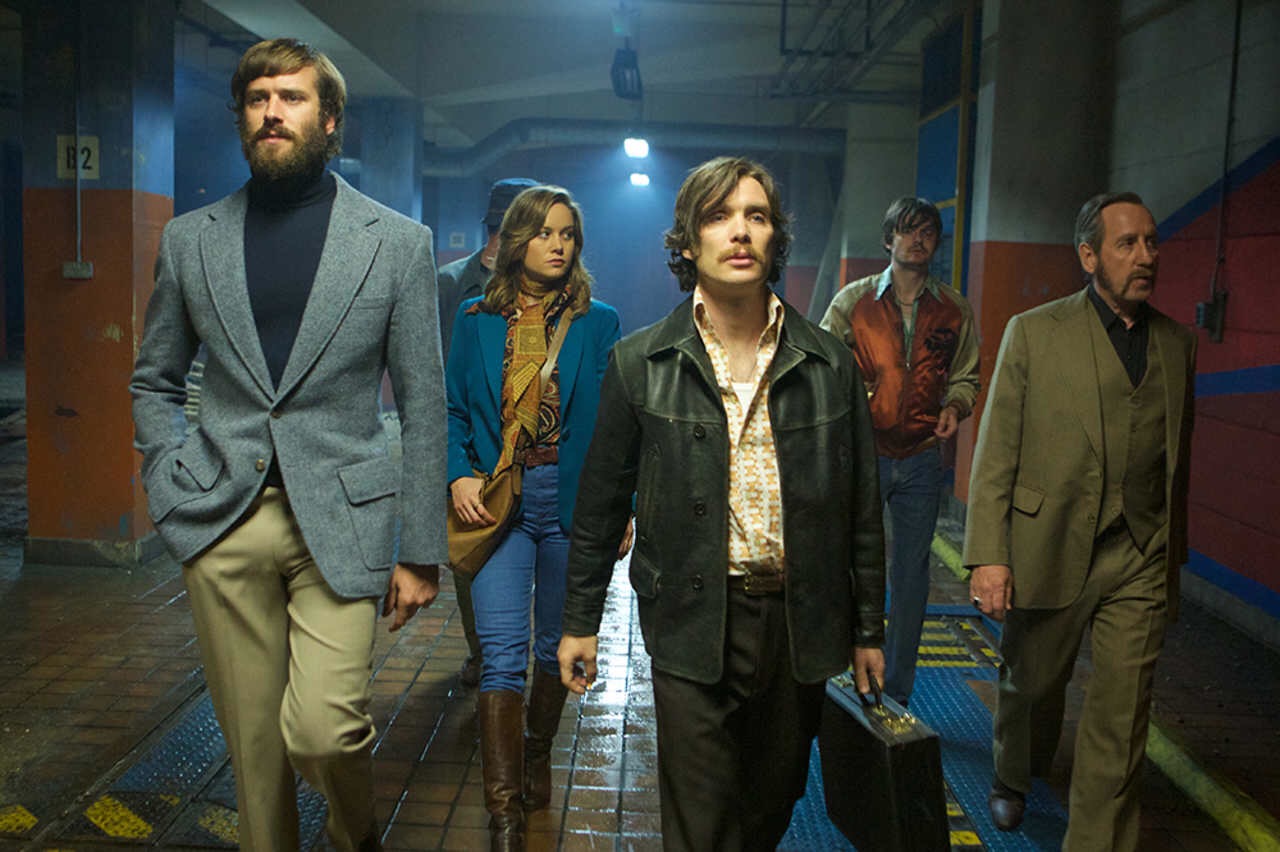
Set in the 1970s, the story revolves around two gangs meeting in a warehouse to make a trade for some arms. One group includes Chris (Cillian Murphy) and Frank (Michael Smiley), both presumably sourcing their weapons for IRA-related activities (though this is never explicitly mentioned), along with headstrong Justine (Brie Larson), idiotic junkie Stevo (Sam Riley) and even-more-idiotic Bernie (Enzo Cilenti). Providing the weapons are a group including bearded negotiator Ord (Armie Hammer), the sharp-tongued South African Vernon (Sharlto Copley), the intelligent Martin (Babou Ceesay), driver Harry (Jack Reynor) and Gordon (Noah Taylor) alongside a handful of support characters.

Speaking after the film at a preview at Broadway Cinema in Nottingham, Wheatley offered a brilliant insight into some of the production decisions on the film.

Hilariously, to get a feel for the environment and ensure the people were in realistic positions throughout to communicate properly, he had the entire set built in video game Minecraft. This allowed him to walk around the factory and get a feel of where he’d be once production started. A simple but brilliant solution, but also necessary as he stated this is the only 3D modelling tool he knows how to use.

On a similar note, the shoot-outs themselves were partly inspired by Wheatley’s experience of playing video games, a medium he is a fan of enjoying even though he is yet to be involved with the creation of one (sadly his comment about writing an adaptation of 1980s video game Gauntlet was probably tongue-in-cheek).

One issue they could have faced was in the continuity for the bullet shots. Clearly with 1000s of bullets flying around, there was a risk of wounds being out of place, or disappearing and reappearing between shots. The simple solution was to film it in sequence, which also plays into the building of tension at the start and exhaustion for the characters as the story plays out.

Learn from Vern

Of the many great performances here, the highlight is Sharlto Copley as Vern. Initially annoyed about his Savile Row suit getting damaged, his whitty one-liners had the audience in creases. He’s a complete jerk and Copley plays it brilliantly, his irritating mannerisms making the heightened-tension all the more believable. 
The result is a film that consists almost entirely of a shoot-out that feels far more realistic than anything we’ve become accustomed in Hollywood films. People aren’t simply experts in shooting guns and it takes practice and skill to be any good at it. The characters in this film aren’t experts and that’s why the film plays out as it does. It’s grim, gritty, exhausting and hilarious.

Seek it out and watch it.

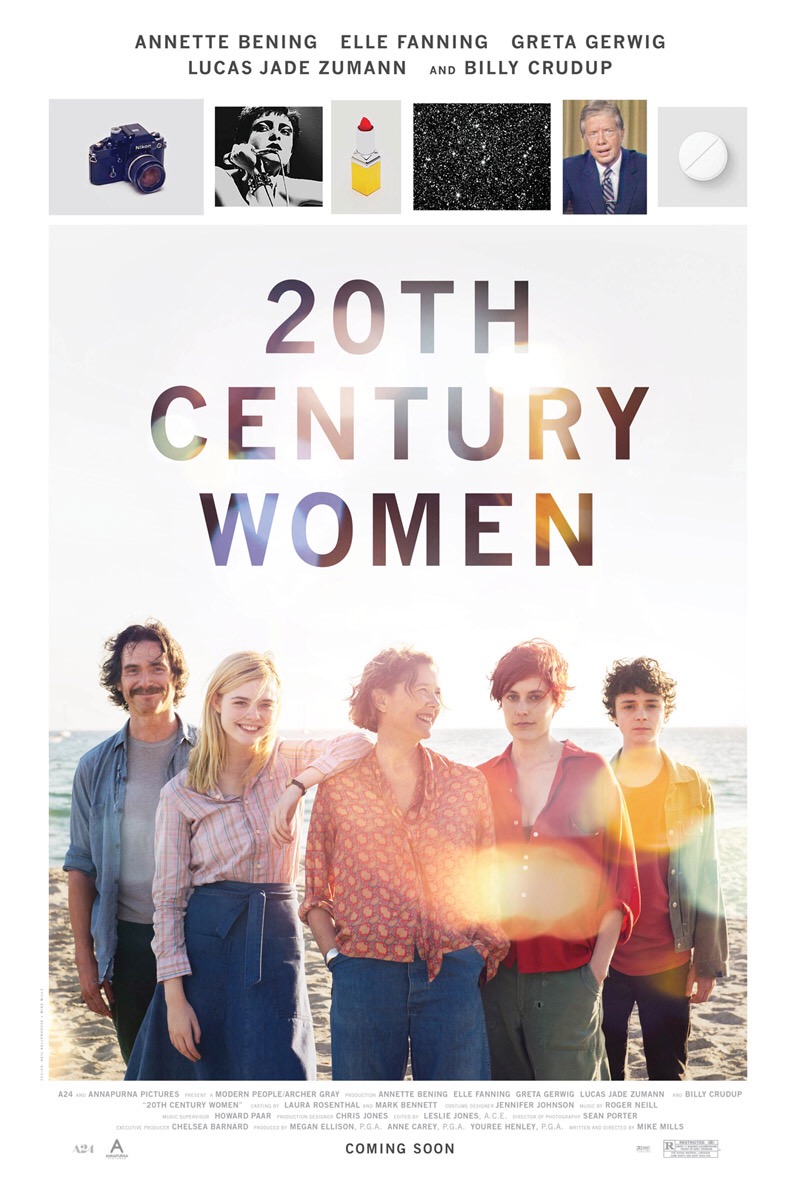
Film review – 20th Century Women (Mike Mills, 2017)

To mark 2017’s International Women’s Day, I dropped into the cinema to catch 20th Century Women, a film with three powerful and independent women at the heart of its plot. A triple Bechdel Test passer, the film indeed avoids the usual cinematic tropes and instead explores how men are often defined by the women around them.

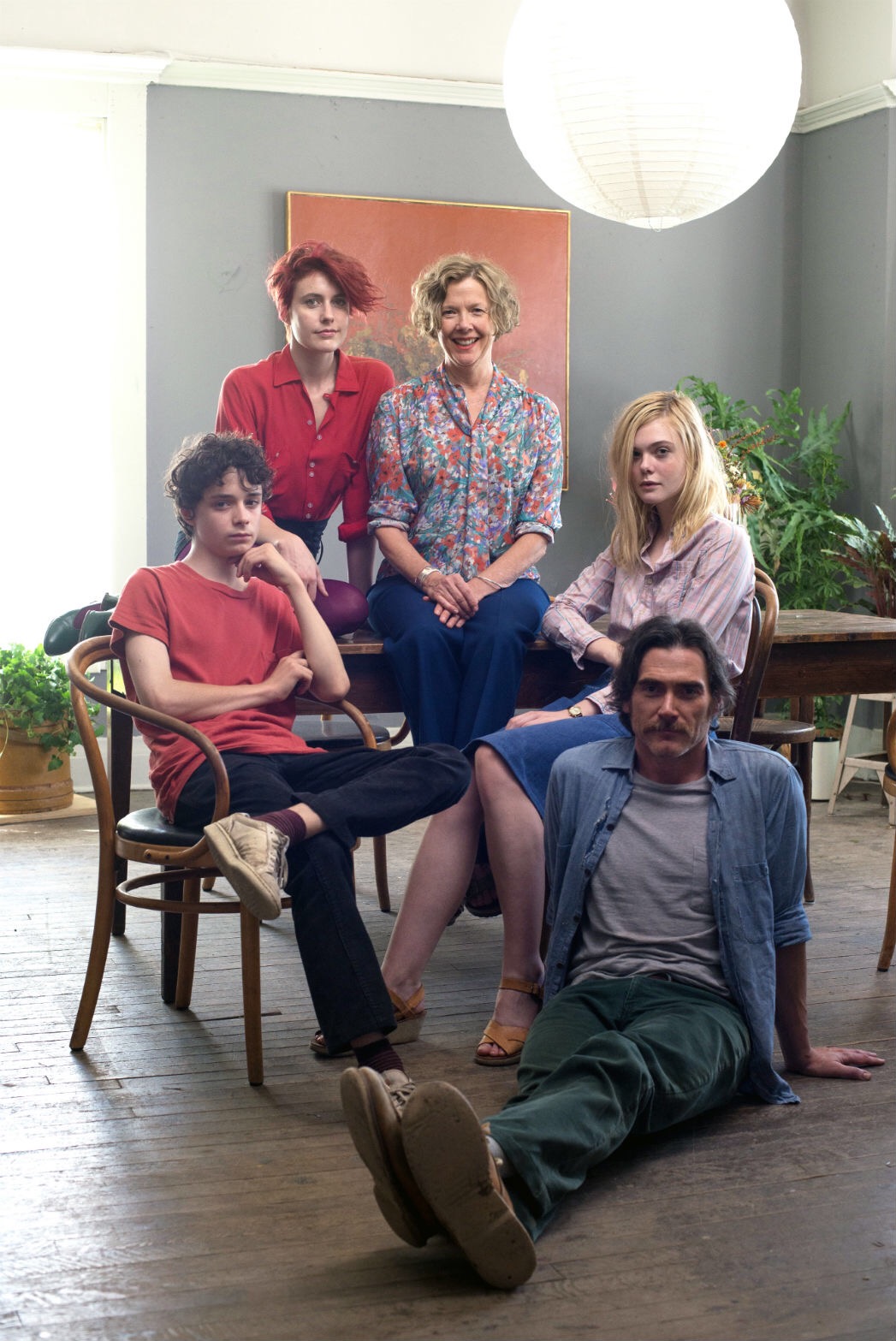
In 1979 in Santa Barbara, California, Jamie (Lucas Jade Zumman) is a 15-year-old boy who is lacking a father figure in his life. His mother Dorothea (Annette Bening) has been long-single, but lives in a luxuriously huge house that she has converted into a sort of commune, in which lives a young female photographer Abbie (Greta Gerwig) and an emotionally-detached carpenter and handyman William (Billy Crudup) who is renovating the house for her. Julie (Elle Fanning) is a girl with whom Jamie is unrequitedly besotted; she wishes for him to remain as a friend only whilst she has a series of never-seen male sexual partners.

Mike Mills has cultivated an intelligent film from his own original script, describing it as a love letter to the women who raised him.

It’s the sort of quirky and intimate story that can only be crafted from ones own experiences, with two fingers up to the notion that boys need fathers and girls need mothers in order to be raised properly. Interestingly, whilst there are innumberable films that explore fathers being thrust into the role of both mother and father figures to both boys and girls, the concept of a group of women creating a support network for growth of a teenage boy feels wholly fresh and quite important.

The standout performance in a solid cast comes from Greta Gerwig, who I have seen in several films previously and never been excessively impressed with. This time, she is absolutely mesmerising as a young woman who is recovering from cervical cancer. We learn that the cancer was probably linked to her mother’s Diethylstilbestrol (DES) drug treatment during her pregnancy. She has been effectively disowned by her guilt-stricken mother, unable to cope with the fact she feels responsible for causing her daughter’s cancer. As a role, this is no light task, and Gerwig is at times totally breathtaking in her performance.

It is strange that the boy whose life the story revolves around eventually turns out to be a supporting character to the three leads. It is a lovingly-created film that is as relatable to mothers as it is to sisters of brothers and as it is to sons. With characters this believable and brilliant performances across the board, this is a film well worth seeing.

Film review – Saludos Amigos (Norman Ferguson, Wilfred Jackson, Jack Kinney, Hamilton Luske, Bill Roberts, 1942)

Saludos Amigos is a comporomise film. It’s a feature-length film, but only just; a mere 42 minutes and you’ll be done on this one. It’s a film that also only exists as a product of a good-will tour of Latin America, with Walt Disney acting as an ambassador for the USA to counter-act the popularity of the Nazi Party in certain countries when it was produced in the middle of World War Two. 

The film consists of four segments, all of which are a mixture between documentary films and short animated sequences. The animators, technicians and filmmakers were sent to countries such as Peru, Argentina, Bolivia and Brazil and observe what they saw, making sketches and jotting down any ideas they had. It is therefore a wonderful work that captures the beauty of the landscapes and cultures of 1940s Latin America, whilst also serving as a brilliant piece of political evidence when viewed some 75 years later.


Of the four segments, the standout is Aqualero  do Brasil, which introduces José Carioca – a well-dressed Brazilian green parrot who speaks fast and smokes a cigar. He befriends Donald Duck and shows him some cultural highlights of Rio de Janeiro, with a great sequence involving the samba.

José may have been a bit of a flash in the pan outside of Brazil but in his homeland he’s still as loved today as he ever has been, happily sitting alongside Donald and Mickey as the face of Disney.
It’s nothing that will wow modern audiences. It’s simply not as entertaining as the five animated features that proceeded it. It is, put simply, a quirk.