Film review – Three Billboards Outside Ebbing, Missouri (Martin McDonagh, 2018)

A film about a family in mourning following the murder of one of the children really shouldn’t have as many laughs in it as Three Billboards. That’s not to say it’s a hilarious comedy romp, but Martin McDonagh’s smart script contains so much humour that its fictional setting is brought to a more realistic place.

Frances McDormand is Mildred, a mother determined to seek justice following the rape and murder of her daughter Angela (Kathryn Newton). Seven months have passed and the local police have still failed to unearth the killer, which means her mourning has changed to anger. The focal point of her frustration is the leader of the local police, Chief Willoughby (Woody Harrelson), a sympathetic but headstrong man suffering from pancreatic cancer.

She decides to take out the rent of three disused but prominent billboards on the outside of town. The rent is to last for one year and contains a targeted message towards the police force: “RAPED WHILE DYING”, “AND STILL NO ARRESTS?”, “HOW COME, CHIEF WILLOUGHBY?”

Her son Robbie (Lucas Hedges) wants to return to normality, whilst racist policeman Dixon (Sam Rockwell) takes every opportunity to prove right the townspeople’s suspicions that he’s incompetent.

As a whole the film is extremely powerful, not least because of Frances McDormand’s tour de force in the leading role. It’s a dream of a role for an actress like McDormand, who is given free reign to be as offensive and hostile as she likes. It’s easy to get immersively lost in her delivery. She does comedy extremely well so when she needs to turn it on the black comedy is as uplifting as the shocking reality is devastating. For those used to her playing softer roles, be prepared for a pleasantly shocking surprise.

There are a number of outstandingly powerful scenes in Martin McDonagh’s Oscar-worthy drama that stuck with me weeks after I viewed it. The one-shot of Rockwell that follows him from the police station, across the road, up to the billboard rental film’s offices and back again is a bold statement in filmmaking and is executed perfectly. A confrontational scene between Willougby and Mildred turns to intimacy in an instance when he coughs up some blood. The scene when Mildred finds the billboards on fire is devastating.

These are punctuated with moments of pure comedy gold. Right after Mildred drills a hole in a dentist’s thumb after he speaks out of line to her, she returns to her job with a face full of anaesthetic. Few scenes in cinema this year have been as funny has her flatly denying she was at the dentists despite being unable to speak.

Three Billboards has come under some backlash following its initial rave reviews and unanimous praise. As the dust has settled, a second wave of opinion has spread that aims criticism at the film for being overly sympathetic to the character Dixon. Some have noted that Dixon gets redemption by the end of the film, despite his character. In an article on Entertainment Weekly, McDonagh addressed the criticism. “I don’t think his character is redeemed at all – he starts off as a racist jerk,” he reasoned. “He’s the same pretty much at the end, but, by the end, he’s seen that he has to change. There is room for it, and he has, to a degree, seen the error of his ways, but in no way is he supposed to become some sort of redeemed hero of the piece.”

The current climate of filmmaking seems at times to work as a response to the social collective conscious that is so quickly opined online. If a film isn’t intended as such, then it is judged that way nonetheless. There has been a shift in the landscape for the better in recent times, with lead roles going more frequently to women, people of colour and  homosexuals. We are not at the end game for this – whilst one of the Power Rangers in 2017 was portrayed as a lesbian, a move to make Tessa Thompson’s Ragnarok character Valkyrie bisexual was quashed when the critical reveal scene was cut from the movie.

That said, not every film can tackle every angle of criticism every time. In the case of Three Billboards, we have a film centred around a woman seeking justice for the rape and murder of her daughter. She’s standing up for her rights and opinions and forcing a male-dominated police force to try harder. It features McDormand as the lead with every other character serving as a supporting device to her own progression.

In this instance, the focus is on the sexual assault of young women by men and the subsequent covering up by authorities, often with men at the top. It is about men hoping that a woman standing up for her beliefs will just go away quietly and forget about something that’s easier to sweep away than it is to pursue a solution to. It is a deliberately provocative film. That Sam Rockwell’s Dixon is a racist, in this instance, is relevant only to his character (a supporting character), but it is not centrally relevant to the plot itself. Dixon is an imbecile and being a racist bigot serves to support and enforce this in him.

As McDonagh concluded in his statement to EW, “It’s supposed to be a deliberately messy and difficult film. Because it’s a messy and difficult world.” Social commentary aside, he’s created his first real masterpiece and it’s a wonder to see it unfold for the first time. It is every bit deserving of the praise and accolades it has received and should not miss out on a fair run at the Oscars as a result of the backlash.


Film review – Phantom Thread (Paul Thomas Anderson, 2018)

Following the completion of filming for Phantom Thread, Daniel Day-Lewis announced that he would be retiring from acting and that his role as 1950s London high-society dressmaker Reynolds Woodcock would be his final role. This can be considered both a figurative and literal bowing out in style. Oozing elegance and beauty in every aspect, it is an absolute triumph of a film.

The story centres around Woodcock, head of the House of Woodcock, a well-regarded craftsman who is seeing his popularity diminish by the beckoning of new fashion from around the world. He baulks at the word “chic”. He is a meticulous and silent worker, unforgiving of those who have the audacity to interrupt his genius in flow. His obsessive nature flows over to his personality, and those close to him are dictated to by his need for control. His closest ally is his sister Cyril (the brilliant Lesley Manville), who manages his business affairs and the staff and running of the house. Their world is flipped upside-down when a chance encounter leads Reynolds to fall into infatuation with a young waitress named Alma (Vicky Krieps), who quickly moves into the house and thus begins her strange relationship with Reynolds.

In 2018, a cinematic year defined by an uprising of oppressed and attacked women finally being given a platform to voice their views on oppressive and controlling men in the film industry, it seems almost perverse that I enjoyed Day-Lewis’s performance so much. I felt at times like he was on the cusp of bursting into tears of laughter, such was the audacity of his character’s actions. In one of the best lines of the film, as shown below, he delivers the cutting “The tea is going out, but the interruption is staying right here with me.” Brilliant.

Jonny Greenwood, one of Paul Thomas Anderson’s most frequent and reliable collaborators, provides the score. It is mesmerising, fitting beautifully with the visuals. In a recent interview with Adam Buxton, Greenwood stated that he wrote it in order for it to be performed along with the film. “I wanted to do it with six or seven players and make it all playable and send out the scores to cinemas and say ‘get some local players to play it live’ and it be a really regular thing. I love the idea of the film arriving and then the book of music arriving and these are the two things you put together and make it quite easy, but Paul kept on asking for bigger and bigger string section sounds to build the romance.” Indeed, this decision was probably the correct one, with the enduring stay-ability of the film benefiting over what could have been simply a nice touch at release. I challenge anyone to find a more perfectly romantic piece of film music this year than ‘House of Woodcock’. [1]

A film that is centred around a celebrated dressmaker almost inevitably has a wonderful display of costumes on show. Mark Bridges is another frequent Anderson collaborator, having worked with him on The Master, Inherent Vice and There Will Be Blood. The costumes here are absolutely stunning, perfectly capturing the essence of 1950s London high society. It is a costumier’s dream of a film, with the intricate efforts of making such beautiful dresses captured in great detail.

The film culminates in a most unlikely ending that absolutely works with the film, underlining the nature of Alma and Reynolds’s relationship to one-another and their desire to stay together. Their dinner table stand-off with a mushroom omelette may not have the intensity of the “I drink your milkshake!” scene in There Will Be Blood, but it swaps intense for tense as the scene plays out. It’s just one of those scenes in cinema that hangs perfectly together. Script, acting, cinematography, lighting, score – everything is just right. A masterclass in filmmaking.

Whilst Day-Lewis may be unlikely to receive an Academy Award for this film, it certainly ranks up there with his most celebrated performances. He is one of this generation’s greatest actors and it is a real loss to the industry that he is walking away. However, it’s a noble decision to leave a profession whilst you’re at the top of your game. He could probably deliver a further three or four top performances, but his decision is clearly based on a balance between his enjoyment of his life as an artist and his enjoyment of his life outside of the industry. If Phantom Thread does prove to ultimately be his final role, then he is definitely leaving us on a high.

[1] Note: Jonny performed an exclusive version of this song on the Adam Buxton podcast (EP.63B, 9th February 2018) alongside a 30-minute interview backstage at the Royal Festival Hall prior to a live performance of the score on 30th January 2018. It’s well worth a listen and can be found here.

90th Academy Awards nominees – Documentary Short

The Academy Awards have announced the nominees for the short list of the documentary short category at the 90th Academy Awards. They are listed below in alphabetical order.

Alone
Edith+Eddie
Heaven Is a Traffic Jam on the 405
Heroin(e)
Kayayo – The Living Shopping Baskets
Knife Skills
116 Cameras
Ram Dass, Going Home
Ten Meter Tower
Traffic Stop

This list will be reduced to five on 23rd January 2018.

Those in the UK with access to Netflix can watch Heroin(e) now.

90th Academy Awards nominees – Documentary Feature

Fifteen films remain in the race to win the Documentary Feature prize at the Academy Awards. The remaining five features will be announced on Tuesday 23rd January 2018.

Abacus: Small Enough to Jail
Chasing Coral
City of Ghosts
Ex Libris – The New York Public Library
Faces Places
Human Flow
Icarus
An Inconvenient Sequel: Truth to Power
Jane
LA 92
Last Men in Aleppo
Long Strange Trip
One of Us
Strong Island
Unrest

Those in the UK with access to Netflix can watch Icarus now.

90th Academy Awards nominees – Visual Effects

The nominees for the Visual Effects category for the 90th Academy Awards® are, in alphabetical order:

Alien: Covenant
Blade Runner 2049
Dunkirk
Guardians of the Galaxy Vol. 2
Kong: Skull Island
Okja
The Shape of Water
Star Wars: The Last Jedi
Valerian and the City of a Thousand Planets
War for the Planet of the Apes

The list will be further narrowed down to five, after which the final nominees will be announced on Tuesday 23rd January 2018.

More information can be found here.

90th Academy Awards nominees – Best Foreign Language Film

The nominations have been announced for the Best Foreign Language Film at next year’s Academy Awards.

Of the 92 films that were nominated to represent the respective countries, nine films have been chosen. The list is as follows:

Chile – “A Fantastic Woman” (Sebastián Lelio)
Germany – “In the Fade” (Fatih Akin)
Hungary – “On Body and Soul” (Ildikó Enyedi)
Israel – “Foxtrot” (Samuel Maoz)
Lebanon – “The Insult” (Ziad Doueiri)
Russia – “Loveless” (Andrey Zvyagintsev)
Senegal – “Félicité” (Alain Gomis)
South Africa – “The Wound” (John Trengove)
Sweden – “The Square” (Ruben Ostlund)

The big shock is the exclusion of the brilliant Thelma.

The full nominees will be announced on 23rd January 2018.

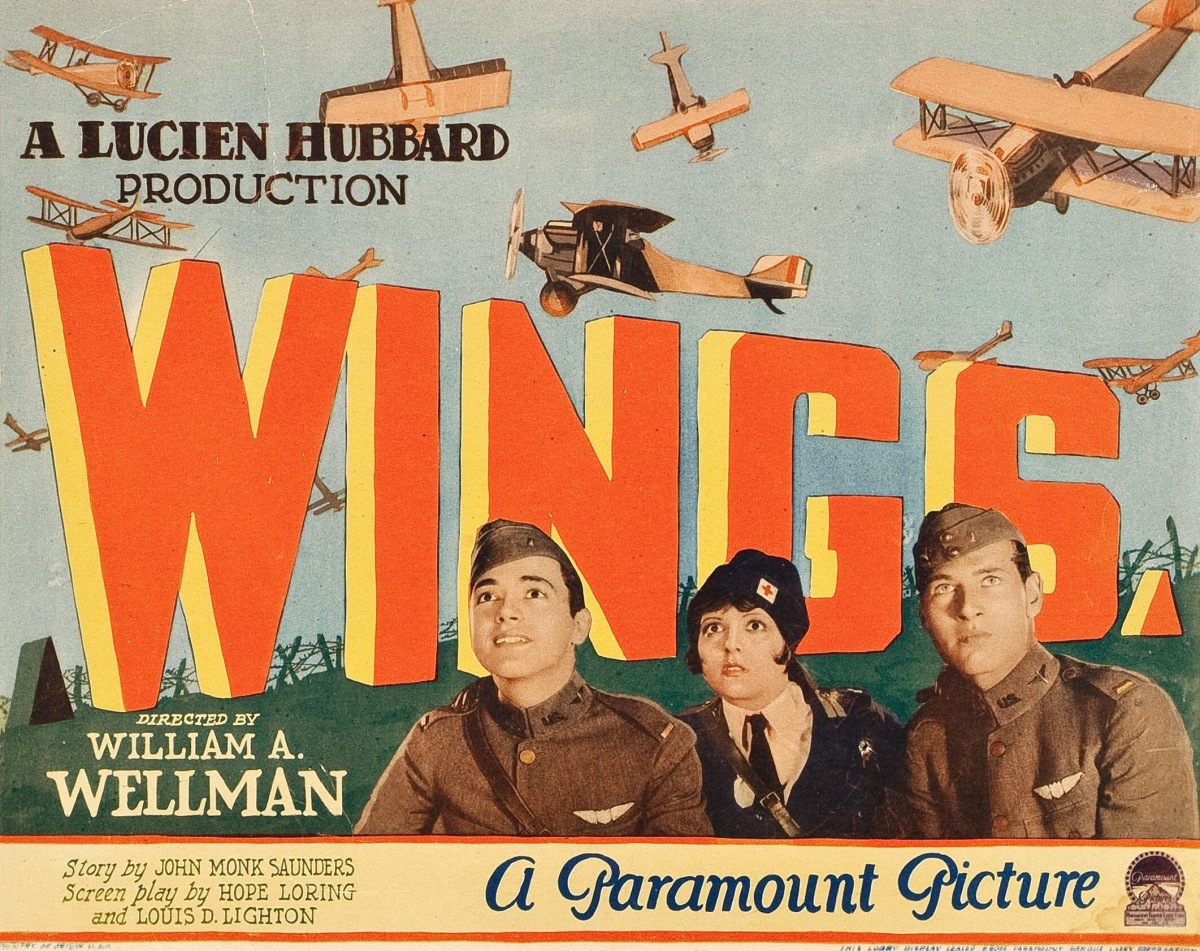
Film review – Wings (William A. Wellman, 1927)

For all its technological achievements and successes as a great tale, William A. Wellman’s 1927 cinematic epic is remembered for one thing – it’s the first film to win the Best Picture Academy Award.

The ceremony was far removed from what we know today. The winners were announced three months before the ceremony and it was a much smaller affair than the modern interpretation, with the awarding of prizes taking around fifteen minutes to complete. Wings actually won a prize called “Outstanding Picture”, later renamed to Best Film, making it famous at the expense of F. W. Murnau’s Sunrise. The latter won the similarly-named “Unique and Artistic Picture” on the same night, though on the night it is unlikely this was treated as a runner-up prize.

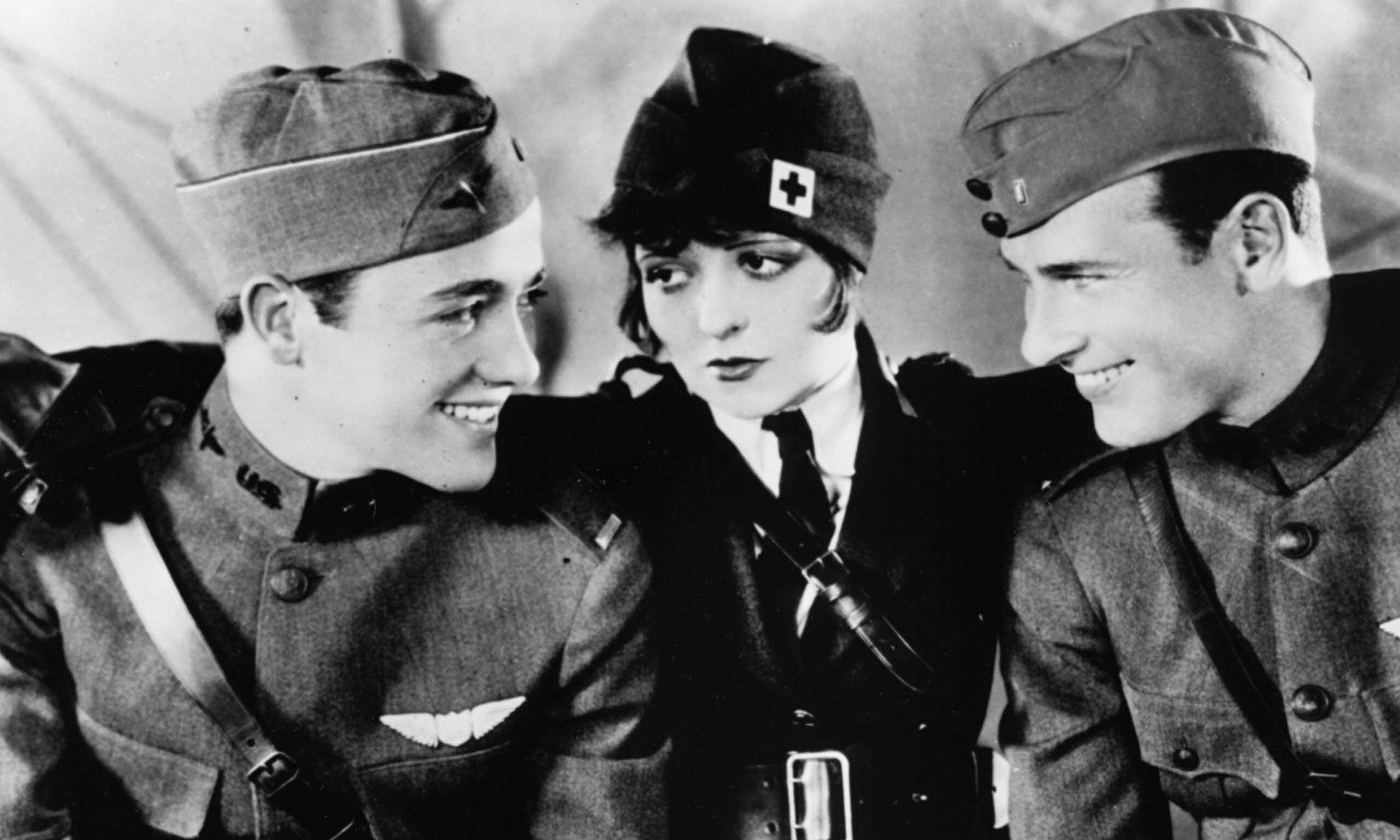
Wings concerns two love rivals – Jack Powell (Charles “Buddy” Rogers) and David Armstrong (Richard Arlen) – who are fighting for the attention and affection of Sylvia Lewis (Jobyna Ralston). Jack’s persistence is so committed that he fails to notice his tomboyish next-door neighbour Mary Preston (Clara Bow), despite her continuous effort to get him to notice her. They enlist in the Air Service as trainee fighter pilots. It covers their time in World War I as they complete training, launch into their first battles and become close friends.

It is perhaps a simple plot by today’s standards, but it’s often not the premise that makes a film great but the delivery. This is close to perfection.

Films like this may have been wonders when they were released, but few stand the test of time and allow enjoyment and excitement for the viewers today. Indeed, we are now 90 years further on in cinematic technological advancements and there isn’t a single person involved with the film that is alive today.

The world of cinema should be eternally grateful that Paramount decided to invest £900,000 in restoring this picture. The results are worth considering so you know exactly what you’re seeing and hearing.

On the positive, the picture is absolutely crystal clear. Many segments of the film were unseen for years by the general public, and whenever Wings did surface it was in a severely compromised form. A duplicate negative was found in Paramount’s archives, though this too suffered from significant damage baked into the print. However, digitising the original negatives and painstakingly restoring the film has done wonders for the visual experience. Credit must be given to Executive Director of Restoration Tom Burton and the team at Technicolor Creative Services for such a wonderful result, utilising tinting techniques of the era for added authenticity.

This has been matched up with a new recording of J. S. Zamecnik’s original score by Dominik Häuser and Michael Aarvold. The score was for a 14 reel version of the film that was edited down to 13 reels for the theatrical and roadshow release. Therefore there was a portion of freedom given to the scoring pair, but it is clear the right decisions have been made at each step, as evidenced by the moving results contained on the restored masterpiece. 

Controversially, the sound features sound effects that match to the visual image. Will McKinley has written a fantastic article about the positives and negatives of this, arguing both sides of the toss in a far more eloquent way than I could manage. It’s well worth a read. For me, these additional sounds are 100% in the score and I can see the restoration team’s predicament. If they omitted them it would sound more “authentic”, but only in as much as it’s what a modern audience expects from a 1920s sound film. This score was steeped in innovation and, like the technological risks taken in shooting the visuals, was way ahead of its time. I’m happy the music sticks to the original score, and if you don’t like it you can try an alternative option on the disc (provided by Gaylord Carter), or even mute the whole thing!

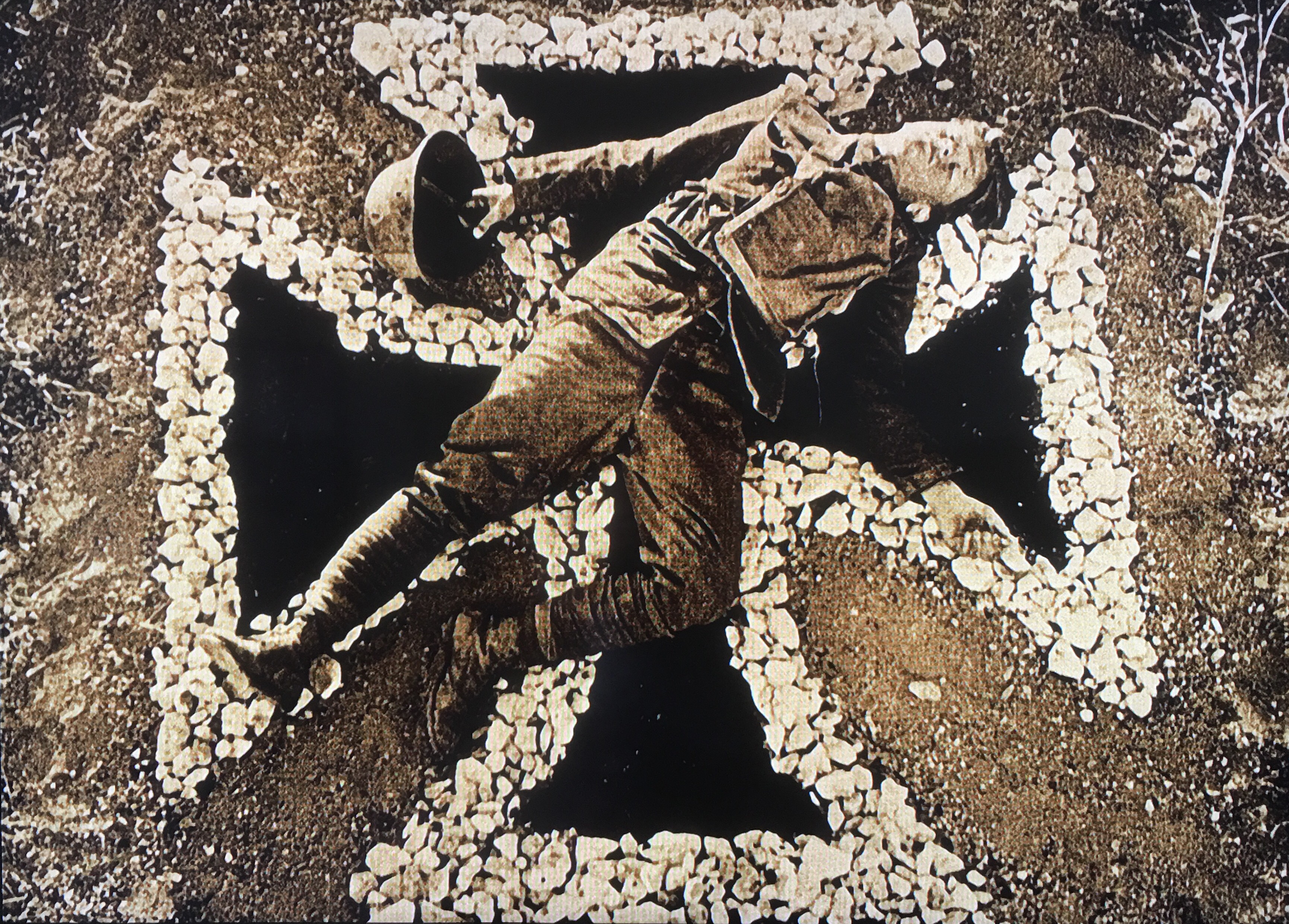
Utilising the trainee pilot angle, director Wellman was able to draw on his experience as a First World War pilot to create some absolutely astonishing sequences. They were all filmed on brilliantly blue but cloudy days, which gives the planes some scale and improves the dynamic nature of the dogfights. 

There is also a cinematic first in the film, with the first onscreen man-to-man kiss. It comes in one of the most heartbreaking scenes I’ve ever seen in a film. David has become stranded behind enemy lines and steals a plane to return home. Jack, already believing his friend has died, is on a suicide mission to take down as many enemy pilots as possible to help the war efforts, in careless abandonment of his own safety. Miraculously he survives his plan, shooting down innumerable enemy aircrafts. On returning, he spots one last pilot heading towards the Allied base. He goes in for the kill, without knowing that it is in fact his best friend David. When he lands and seeks the enemy to seal his victory, he realises what he has done. As David dies in Jack’s arms, the complex emotions get the better of them and there on screen is the first same-sex kiss, albeit perhaps accidental. It simply couldn’t have been cut or reshot – it’s integral to the plot and seals their respective positions in their friends’ lives.

The Masters of Cinema team are the perfect choice to take control of such a historic release. There are three bonus features on the Blu-ray disc: one covering the restoration, one that puts the flight aspects of the film into context and one that covers the legacy of the film. The accompanying booklet is full of additional information and essays on the film and director. It just fits the gravitas deserved of the film.

That we can now sit in our front rooms and see a film of this importance in such high quality is a wonderful feeling. The history of cinema is too important to simply let go. It’s fantastic that an entire new generation have the opportunity to see where cinema started and Wings certainly represents a significant piece of the puzzle.

Film review – Manchester By The Sea (Kenneth Lonergan, 2017)

Manchester By The Sea is by no stretch of the imagination a happy film. That it was advertised in some channels as a comedy is beyond me. It’s a bleak look into one man’s struggles with his past during a particularly depressing period of his life, and I’m not sure that there was a particularly happy ending to it either. But it is absolutely deserving of its plaudits, and the results are both effecting and memorable.

WARNING! The next paragraph spoils the first twenty minutes or so of the plot, but only really covers what is in the trailer. If you don’t want to have anything ruined then just stop reading and simply watch a film that deserves your time.

The story, in a nutshell, is about Lee Chandler (Casey Affleck), a single man in a dead-end handyman job with no semblance of positivity for his or anyone else’s life. His brother Joe (Kyle Chandler) dies young due to a heart condition, forcing him to return home to Manchester, Massachusetts to sort out the funeral arrangements and look after his son Patrick (Lucas Hedges). However, he soon finds out that he has been named the sole legal guardian for Patrick, forcing him to take on unwanted responsibilities and confront his past relationship with former wife Randi (Michelle Williams).

Affleck’s performance is well-balanced and measured. It’s a role that doesn’t call for any big movements, and the beauty of it is in the understated reactions to the huge changes going on in his life. He is almost dead to life itself, so his reaction to his brother’s death or his new found responsibilities are equally lacking in emotion. A worse actor would have ruined the film, yet he brings the whole story to life. Kenneth Lonergan has a lot to thank him for.

The music is brilliantly effective. Lesley Barr has worked wonders with her fantastic score, her first in five years since 2011’s The Moth Diaries. There’s a great interview with her over at The Muse, in an article by Bobby Finger, which is well worth reading. It’s a shame it was deemed ineligible available for an Academy Award nomination.

There has been a bubble of negativity towards Casey Affleck that surrounds his personal life. He has been accused of physical abuse against two women working alongside him on the film I’m Still Here – Cinematographer Magdalena Gorka and producer Amanda White. Affleck denied any wrongdoing but settled both claims out of court in 2010. 

Many sections of the press clearly think there’s a lot of truth in the stories. There seems to be a media-led unspoken rule about how much time people in the film industry must live in penance until the world forgives them again. Mel Gibson has seemingly served his time now following his controversies with his ex, Russian pianist Oksana Grigorieva, but it seems we are all permitted to enjoy Hacksaw Ridge, even though The Beaver was a brilliantly-bizarre turn that came at the wrong time of his career and has been largely ignored as a result.

Should we rise above the noise and embrace Casey Affleck? Well, the Academy certainly thinks so, as do the Golden Globes and BAFTA, all three of whom awarded him a Best Actor prize.

In isolation, there is no doubt that Affleck has brought to life a wonderful story and put in one of the best turns of his career. If you can live with and forget about the settled accusations, you’ll be rewarded.

Film review – Varieté (Ewald André Dupont, 1925)

Recently remastered and re-released by Eureka on their Masters of Cinema label, Ewald André Dupont’s Varieté is a wonderful film that’s well-deserving of a bit more attention, even 90 years after its original release.

It follows Boss Huller (Emil Jannings), the owner of a touring circus and former trapeze artist. Now retired with his wife (Maly Delschaft) and trapeze partner, their relationship is functional but stagnant. However, when  a mysterious woman called Berta-Marie (Lya De Putti) appears and joins his entourage, he becomes besotted with her and this marks the end of his marriage. Shortly after this a celebrated younger male trapeze artist named Artinelli (Warwick Ward) joins to turn their duo into a trio. Frictions rise between the two men as they begin to vie for the interest of Berta whilst remaining professional on stage.

Brit Ward and love rival German Jannings

Modern cinema fans may know lead actor Jannings, though they may not realise it. He was portrayed in Quentin Tarantino’s Inglourious Basterds (2007) by Hilmer Eichhorn in the tensely played-out film premier scene. During the Second World War, Liebich was an outspoken supporter of the Nazi party and was taking lead roles in many of the biggest Weimar-era films. By the end of the war, with the Nazi party defeated, he was left unable to work in the restructured Germany keen to forget the pervious decade, eventually retiring to a farm in Austria before dying at the start of the 1950s.

Before this, however, he was a much-celebrated film star, both in Germany and America. He was the first actor to receive the Oscar for Best Actor (for roles in two films: The Last Command and The Way of All Flesh), which happens to also be the first ever Oscar statue given out at the first ceremony, putting Jannings in a unique part of film history. Perhaps his greatest performance came in Die Letzte Mann, released a year before Varieté. He would surely have won more Best Actor Oscars if only the Academy Awards had started ten years previously.

The way the film plays out may leave viewers feeling somewhat bemused about how we are supposed to feel for the lead actor. Firstly, he leaves his wife at the drop of a hat for a woman he knows almost nothing about other than that she has arrived on a seemingly cursed ship. Then, when his new lover essentially does the same back to him, he plots a jealousy-fuelled revenge, murdering both her and her lover. It seems too that the judge in charge of hearing his plight forgives him and allows him to leave prison. It doesn’t leave much room for any kind of compassion for the character. Indeed, when it was released in America the entire introduction was cut from the release, leaving a much more moral character for the viewers [1].

You may also need to suspend your belief that Jannings could possibly pull off the stunts involved. Whilst they are beautifully and innovatively shot, I couldn’t help but feel like Jannings – 40 at the time of the shoot – was a tad too portly to follow the trajectories required of a trapeze artist. Inevitably an unconvincing stunt double was used, but it’s only a minor blemish on a series of quite fascinating scenes.

Whilst the restoration is absolutely perfect, a note should be made about the variety of soundtrack options available. The unusual default option is supplied by The Tiger Lillies. I attempted to watch this version but changed it after about ten minutes. It didn’t seem to fit very well at all – much more modern than it should have been and not really matching the tone of what was happening on the screen. Much better is the Johannes Contag version, listed as third on the main menu. There’s also the aforementioned complete American version, though I didn’t venture this far.

This is well worth investing in for fans of German silent cinema, and it’s great to see it being given so much attention so long after its initial release. 

[1] http://www.silentsaregolden.com/debartoloreviews/rdbvariete.html

Film review – Moonlight (Barry Jenkins, 2017)

Barry Jenkins’s cinematic tryptich, which serves as a revealing cross-analysis of homosexuality in the black America community, is a film that will do nothing if not leave a lasting mark on your memory. It’s complex. It’s provocative. It’s beautiful. It’s absolutely brilliant.

Split into three equal sections, the film comprises extended vignettes based around Miami-based Chiron. As a child he is portrayed by Alex Hibber at a time in his life where he is a loner, lacking support from his drug-addict mother (Naomie Harris) and feeling isolated at school. As a college student he is portrayed by Ashton Sanders as he struggles to cope with his mother’s growing addiction but also has his first sexual encounter with a childhood friend. The third section of the film covers a late-20s Chiron (Trevante Rhodes), now much hardened to life and living away from his home city in Atlanta, but returning to visit his mother and that same childhood friend.

Much like Lion earlier this year, Moonlight is a triumph due to several actors portraying its central character at different stages of his life. Each of the performances is well nuanced, but build up a complex picture of Chiron, the pay-off being in the final third as we realise what he has become is every bit influenced by what we’ve seen of him as a child.

Moonlight

Where Moonlight really excels though is its ability to steer away from the stereotypes almost every mainstream film portrays these types of characters as. This is a tale about a homosexual black American which allows neither the colour of his skin nor his sexuality to define him.

Aside from the lead character, there is an exceptional contribution from Mahershala Ali as Juan, a drug-dealer who comes across a young Chiron hiding from some bullies in a property he owns. Rather than what we’d have come to expect, which would probably involve some amount of grooming and exploitation, instead we see him become a father figure for the child, teaching him how to swim and offering him a place to sleep and food to eat. It’s refreshing to see a character exist in this manner and hopefully this is a sign of things to come at cinemas. It’s no surprise that it has earned Ali an Oscar nomination.

It’s a personal film that deserves all the plaudits it has received. With a timely release during Black History Month, a film that challenges the status quo has to be welcomed with open arms by the forward thinkers of the world, even if it seems like backwards thinking is taking over the world.