Cannes Film Festival 2016 – Winners in Full

Ken Loach has become the eigth filmmaker in history to win the Palme d’Or on more than one occasion, for his film ‘I, Daniel Blake’.

Here’s a list of winners in full.

Palme d’Or
Ken Loach’s ‘I, Daniel Blake’

Grand Prix
Xavier Dolan’s ‘It’s Only the End of the World’

Jury Prize
Andrea Arnold’s ‘American Honey’

Camera d’Or
Houda Benyamina’s ‘Divines’

Best director (tied)
Olivier Assayas for ‘Personal Shopper’
Cristian Mungiu for ‘Graduation’

Best screenplay
Asghar Farhadi for ‘The Salesman’

Best actress
Jaclyn Jose for ‘Ma ‘Rosa’

Best actor
Shahab Hosseini for ‘The Salesman’

Short film
‘Timecode’, Juanjo Jimenez

Honorary Palme d’Or
Jean-Pierre Léaud

Film review – Green Room (Jeremy Saulnier, 2016)

From a fairly clunky and drawn-out start, Green Room quickly becomes a truly shocking horror film, made all the more horrific by a believable plot line and some relatable characters.

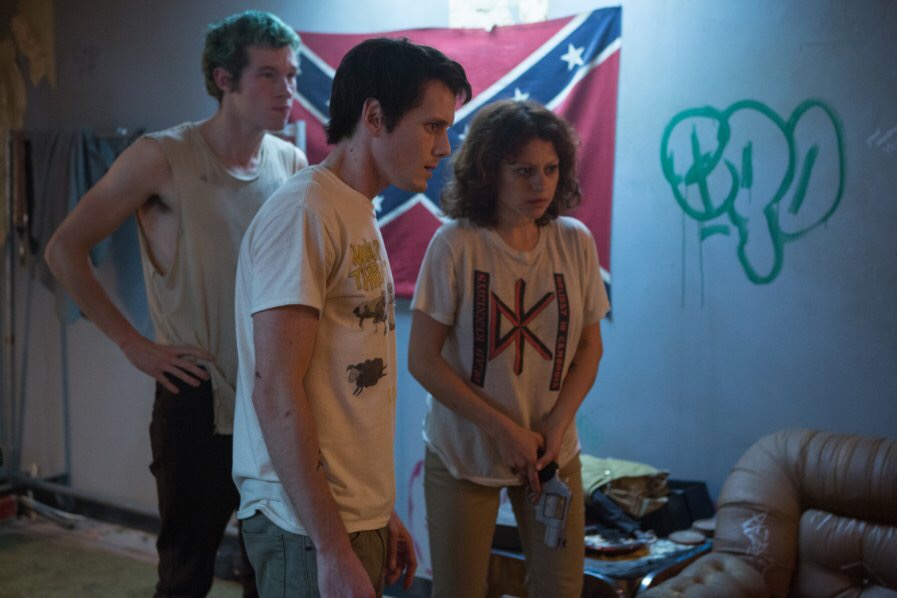
It delivers a lot in just over 90 minutes. Punk band The Ain’t Rights (including Anton Yelchin as Pat, Alia Shawkat as Sam, Joe Cole as Reece and Callum Turner as Tiger) are living food-to-mouth and on the edge of calling it quits due to lack of funds. A particularly bad gig in Seaside, Oregon leads to the promoter setting them up with a more lucrative performance in an out-of-town area of Portland. What they don’t know is that the gig is for a group of Nazi extremists, and when one of the band members witnesses the aftermath of a murder, things take a turn for the worse and a standoff ensues between the four band members (and another bystander Amber, portrayed by Imogen Poots) and the owners of the club, led by Darcy Banker (Patrick Stewart).


“Now, whatever you saw or did is no longer my concern. But let’s be clear, it won’t end well.” So says Patrick Stewart in an uncharacteristically sinister turn as Darcy. Despite a spine-tingling turn, it’s a character that never really shows his worth as a truly horrific antagonist, instead allowing some fairly useless goons to try and largely fail at his handy work. He’s got 100s of neo-Nazis under his thumb – but why? It would have been much more satisfying to get a taste of his evil mind.

Far more relatable are the four band members, who we join in this rollercoaster of misery and trauma. There are a couple of gruesome moments when the film starts to get really bloody, and it is in these moments that the film shows its excellence. Having successfully placed the viewers in the shoes of the band members, the film unravels into a slasher horror and there are some truly shocking moments to shake up the audience. What unfolds feels like a very personal experience despite being something that (hopefully) hasn’t happened to many people.

Imogen Poots is a fantastic actress, though her appearance some time into the film seemed like an after thought. Joining at a point where the band members were already well established is a factor they just about get away with, though I never really felt the same compassion as I did for the band themselves.

If you like your horrors slashy, then this will reward you. If horror to you is a CGI ghost in a mirror, then you may well be sadly disappointed.

Film review – Zootropolis (Byron Howard and Rich Moore, 2016)

Zootropolis is the latest in the Disney Animated Studios classics range that certainly holds its own alongside its older brothers and sisters, with a well realised universe and some extremely likeable characters. It may not have the staying power of the greatest films of the studio, but serves as a fun way to entertain children for a couple of hours in the earl summer.

The film stars Ginnifer Goodwin as Judy Hopps, a tiny rabbit that has aspirations to go to Zootropolis to become a police officer. Driven on by a childhood incident, she finally reaches her goal via a fairly snappy montage sequence. Dsappointingly assigned parking duty by her new boss Chief Bogo (Idris Elba, providing a voice that doesn’t really match the character), she sets out to prove she is more than a small fish in a big pond. Striking up an unlikely love-hate friendship with sly fox Nick Wilde (Jason Bateman in an impressive role), she uncovers a clue to solving one of the city’s biggest mysteries: the location of a missing otter and a growing number of other missing predator mammals in the city.

Goodwin’s portrayal of Judy Hopps is delightful. Her voice is perfect and brings some distinctive characterisation to life. There’s clearly a lot of chemistry between her and the well-cast Bateman. When they fall out midway through the second act, you feel it, and the target audience will too. She has an unmistakable likability in her voice that’s hard to pin down – perfect for this kind of role.

The film excels in its underlying messages of racism and stereotyping, making it a timely release. Each main character’s driving force is as a result of some kind of prejudice they’ve had to fight against. Make no mistake – there is little effort to hide it, to the point of it feeling a little ham-fisted. Anyone who wants their cinematic experiences compartmentalised by separating pure entertainment from thought-provoking commentary may need to double-check the age rating on this film. 

Where it falls down is its lack of foresight in terms of future generation’s appreciation of it. The greatest animated films have been enjoyed for almost a century by parents and children alike. They always have a timeless quality to them, much like fairy-tales, allowing a Snow White or Cinderella to be picked up now and not feel of-its-time. For Zootropolis, one has to wonder how the children of 2040 will feel about the overused phone apps that are featured, or indeed the Breaking Bad and Frozen references that are thrown in for cheap laughs.

For now, however, Disney will sit back and count this as a huge success. It is now the highest-grossing film of 2016 and the 28th of all time (as of 16th May 2016).

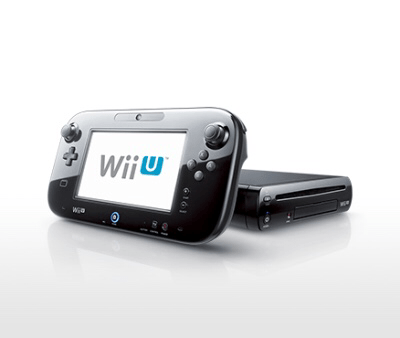
Where is Nintendo’s Wii U console right now?

Last week, Nintendo excitedly announced plans of their next console. Temporarily named Nintendo NX, the console is due to hit the shelves in March 2017.

The news is a bittersweet result for owners of the Wii U, a group to which I am a member. On the one hand, Nintendo’s innovative consoles are always something that reinvigorates the gaming industry, in a time where Sony and Microsoft are happy to simply enhance the power of their machines and add different numbers to the console names and their biggest franchise. Not that there’s anything wrong with that – clearly the popularity of the PS4 shows they are doing something right, with some 40 millions units sold so far.

The Wii U, on the other hand, is generally considered to have been a failure. With only 12.8 millions units sold, it is clear it has performed far below expectations. Whilst this is more than the Xbox One, unfortunately the sales have all but stopped, sharply declining in Q4 of 2015-16.

It isn’t like Nintendo gave up on it years ago, despite it clearly being a losing battle. There have been some of the genuinely impressive Nintendo games released, including the unexpectedly user-friendly Mario Maker, arguably the best Mario Kart game of all time, arguably the best game on the console in Super Smash Bros., the most enjoyable multiplayer platformer I’ve ever played in Super Mario 3D World. 

How do you solve a problem like Zelda?

Unfortunately, there are some massive holes in the release cycle too. The biggest failure is the lack of 3rd party support. Other than Bayonetta 2, a console exclusive, there hasn’t been much to shout home about. Rayman Legends, originally announced as an exclusive, was delayed and then released as a multi-console game. 
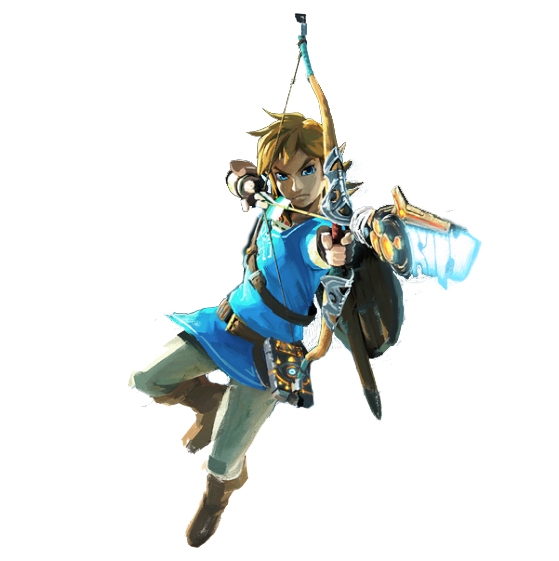
This wasn’t the biggest let down of the promises made before release. One of the reasons it was able to stir up a lot of interest prior to its release was a tech demo of a new HD Legend of Zelda game, which first appeared at E3 in 2011. The console was release with no Zelda launch title, but two months later a release date was unveiled, positioning the game for a 2015 release. 

The year came and went with no game, leaving Wii U owners hanging on for more information. More recently, it was announced that the game would release simultaneously on both the Wii U and NX. Essentially, if a Wii U owner wants the best Zelda experience going, they will have to invest in the next console.

So where does that leave Wii U?

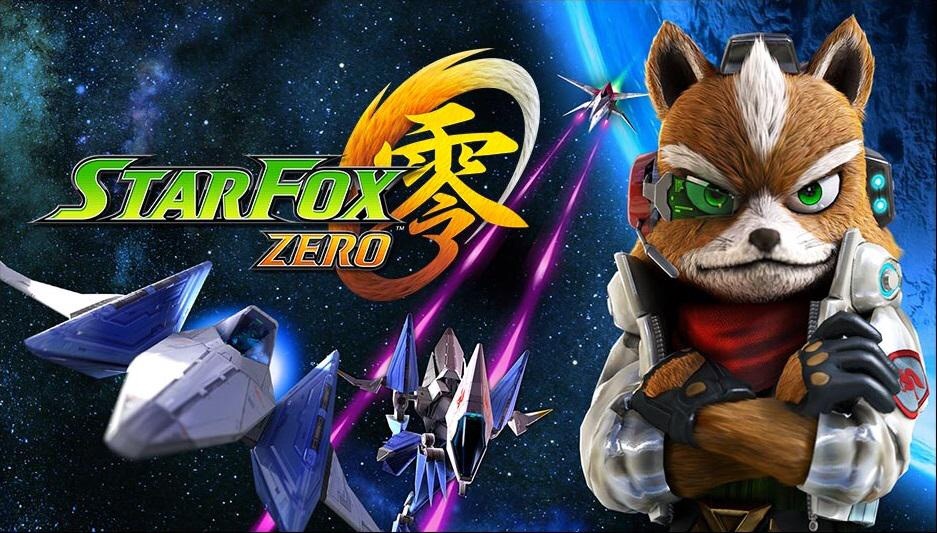
Unfortunately for Wii U owners, the situation is looking largely precarious. The console has had some brilliant games, but more recently the releases have slowed down and don’t really feel like new releases at all. Only surprise hit Xenoblade Chronicles X has shown itself to be a success with fans and critics as a new release. All the other big releases have either been terribly received (Amiibo Crossing and Mini Mario and Friends: amiibo Challenge) or simple re-hashes of older games (two Zelda HD remasters and a Star Fox remaster that was packaged as a brand new game). 


These are simple sticky plasters for a console that is beginning to show cracks, but looking ahead the future looks even more bleak. The multi-platform Lego Star Wars: The Force Awakens might ignite some interest for owners with only a Wii U at their disposal. The Mario and Sonic at the Olympics series has never really been popular. 

Tokyo Mirage Sessions #FE was popular in Japan when it was released last year, and the Western release is likely an experiment from Nintendo to test the water with Asia-specific releases. If it’s popular then the floodgates might open to allow more games that are currently Asia-exclusives to see releases in the Western markets.

It is likely that another Mario Party will be announced at E3, as they appear to be very easy to create and utilise the still-popular amiibo toys. Given the lethargy about the last release, it will be a simple cost analysis to see if they’ll make a profit on it. If so, it will be green-lit.


The one glimmer of hope comes in the form of Paper Mario: Colour Splash, set for a 2016 release. The exact details of this release are yet to be announced, but this one standalone release has an air of “I’ve started so I’ll finish” about it.

Why should Nintendo bother?

Unfortunately for Wii U owners, that’s not an easy question to answer. Realistically, the console cannot be revived and the small ownership isn’t worth targeting with a massive new game that might as well be delayed and released as a launch title for the NX. 

The only purpose of announcing a new and exciting game on the Wii U at this stage would be to thank the fans for their patience and keep them happy ahead of the release in a year’s time.

Whether this will happen remains to be seen.

Radiohead release videos for “Burn The Witch” and “Daydreaming”

Radiohead have this week unleashed two brand new music videos for the lead singles from their new album, which will be released on Sunday night at 8pm GMT.

The first single arrived on Tuesday afternoon and was immediately available to download. Titled “Burn The Witch”, it carries with it an urgent orchestral riff that crescendos into an electronic beast of a tune. Whilst this was hailed as a new direction by their manager Brian Message, the classical music influence is hardly surprising – guitarist Johnny Greenwood has been moonlighting as composer-in-residence for the BBC Concert Orchestra for some years and has also tried his hand at several film soundtracks, collaborating on the last three Paul Thomas Anderson films (There Will Be Blood, The Master and Inherent Vice).

You can watch the video below. It’s a bizarre cross between 190s stop-motion children’s cartoon Trumpton and 1973 horror film The Wicker Man, and it’s utterly brilliant.

The second video, released earlier today, is for a track called “Daydreaming”. This is a piano-driven track full of ambience and subtlety that would be at home on Kid A. The video has a cinematic quality to it, following singer Thom Yorke through various residencies and buildings before seeing him climb a snow-covered hill, into a hollow and falling asleep next to a fire as the tune collapses around itself.

You can watch “Daydreaming” here:

What do these songs say about the album? Well, they don’t sound like a drastic departure away from the sorts of sounds we’ve heard Radiohead produce before. Certainly they haven’t stood still, but both Kid A and Amnesiac are brought to mind with the material heard thus far, with heavy influences from Greenwood’s mature concert orchestra brain.

If they wanted to whet our appetite, they’ve certainly succeeded.

Film review – Zinnia Flower (Tom Shu-Yu Lin, 2015)

I’m going to kick-off before I say anything else and let you know that if you’re looking for a film that will make you feel immediately happy, then Tom Shu-Yu Lin’s latest isn’t for you. If, however, you’re willing to invest the smallest amount of emotional sympathy with the characters then you’ll find yourself on a deeply effective journey as two characters deal with the mourning process of losing their loved-ones.

The film opens with a devastating multi-car crash. Yu Wei (Stone) loses his heavily-pregnant wife and their unborn child but escapes with just a broken arm. Shin Min (Karena Lam) also loses her fiancé in the same incident. They begin their traditional Buddhist mourning period of 100 days. Shin Min goes on the honeymoon to Okinawa she will never be able to have with her fiancé and Yu Wei turns to alcohol and anger to forget his sorrow.


The film is boldly intimate in its portrayal of grief, and its success is secured by two excellent performances from the lead actors, whose lives are intertwined but yet are dealing with almost identical situations in entirely different ways.

It is painful to watch at times, though I was unaware on first viewing that director Lin was drawing on personal experiences as inspiration for the story – he lost his wife in a car accident in 2012. Had I known this I would have viewed it through entirely different eyes.

Indeed, the film itself is representative of Lin’s journey through grief. Just as the two leads take their journey through the internal resolution of their losses, it appears as though Lin has used this to rationalise the pain he went through. I summise that each character represents a different part of his journey, neither of which is portrayed as a correct or incorrect way to deal with the death of a loved one. Simply, how can you possibly say what’s a right or wrong way to cope in such devastating circumstances? Lin intelligently doesn’t make that decision for us either; the film he is made is provocative enough to not need to spoon-feed its viewers on such a complex issue.

There is also a starkness in the portrayal of the juxtaposition between the pair attending their Buddhist mourning ceremonies and their mindset behind closed doors. In my opinion, this was done to underline the façade that those in the throes of grief assume in public, perhaps indicating that this defined method of grief is wholly outdated. I certainly didn’t feel like they were at the end of their grieving process by the end of the film. Perhaps Lin is in the same place?

This is essential viewing for anyone coping with grief and loss. A beautiful but heartbreaking picture that deserves wider coverage.

Film review – The Peanuts Movie (Steve Martino, 2015)

Before I start, I must confess that I’m a closet Peanuts fan. The comic strip wasn’t something I grew up with and outside the odd Snoopy t-shirt or pencil case, I wasn’t particularly affectionate towards the series.

Sometime during my university years, I discovered the brilliance of the comic strips first, then the films and TV specials. I don’t think it was something I was particularly vocal about, but I was secretly picking up compendiums of the originals strips and box sets of the films that I still watch to this day.

There is something wholly endearing about the characters that has somehow stood the test of time. I’m sure studies could be conducted on why it remains so popular despite most definitely being most definitely of the era it was created in.

I wasn’t overly thrilled when I saw the trailer for this franchise reboot, with the brilliant colours and perfectly rendered faces seemingly betraying the source material. However, I was willing to give it a chance and see what direction the estate was happy for it to go in in 2015, some fifteen years after the death of its creator Charles M. Schulz.

Thankfully, for the most part, the film is a success. The use of modern graphics doesn’t really detract from the fact that it genuinely sits well next to any other instalment. Indeed, the storyline could well be a rehash of an older film, with Charlie Brown spending the entire film trying to win the affections of the Little Red-Haired Girl whilst Snoopy lives in his imaginary world as a fighter pilot in World War II. This is a smart move – taking these familiar characters out of their comfort zone and attempting something unusual can be saved for another time.

When efforts are made to openly appeal to the younger demographics, the film does lose its way somewhat. When Meghan Trainor’s ‘Better When I’m Dancing’ kicked in and the kids started dancing away, the sudden urge to turn off came over me. Heck, even Snoopy! The Musical didn’t stoop this low.

Peanuts aficionados will also berate the fact that Charlie Brown talks to the Little Red-Haired Girl. Then they will be positively irate when she responds and we hear her speak for the first time ever. Or was it just me?

There have been better interpretations of Peanuts in moving pictures and there have been worse, but this should place the characters in the minds of at least a few children for the next few years and, in that sense, the film has achieved what it likely set out to. Just don’t watch it expecting it to wow you.

Film review – Victoria (Sebastian Schipper, 2015)

The latest film from director Sebastian Schipper is Victoria, a one-shot bank heist film set in modern day Berlin. When I say one-shot, I mean one-shot: no trickery, no cut-aways, no cheating. That’s 138 minutes of film in one continuous take – a bold move that took three attempts to get right. It’s a glorious achievement and a wonder to behold, even though the film is perhaps flawed as a result of its own triumph.

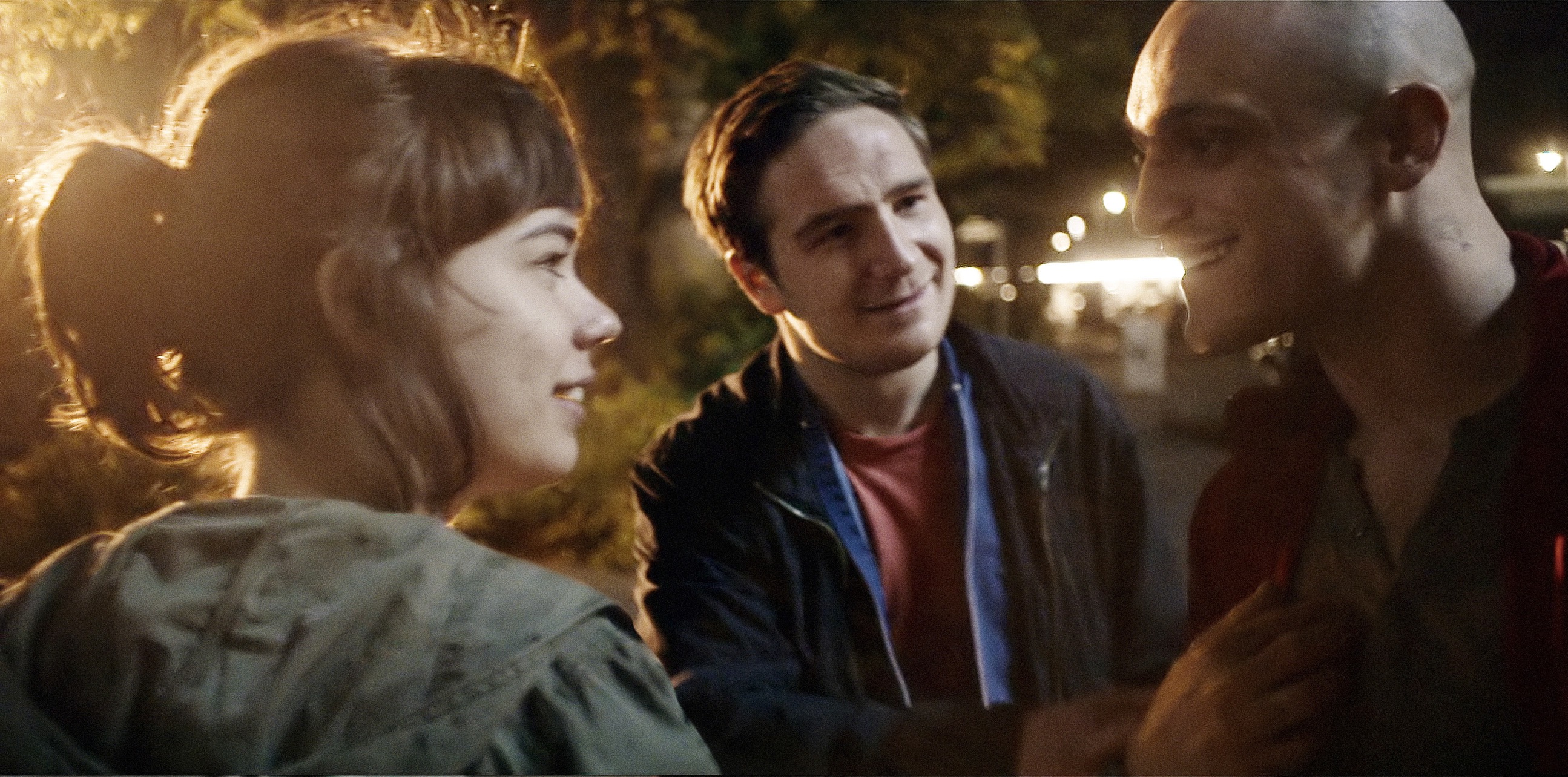
The story centres around the titular Victoria (Laia Costa), a girl we first join in a nightclub in the Kreuzberg district of Berlin. She’s alone but when she leaves the club she has a conversation with four men: Sonne (Frederick Lau), Boxer (Frank Rogowski), Blinker (Burak Yigit) and Fuss (Max Mauff). Getting embroiled in their night and swept away with the chemistry between herself and Sonne, she suddenly finds herself agreeing to take part in an early-morning bank heist that puts all of their lives at risk.

One of the greatest achievements involved with this film is the way that the single shot doesn’t get in the way of a well-told story. This is achieved by having five central actors that are focused and well-briefed. Any slip up at any point and the whole thing would fall down. Helping this was the fact the script was only twelve pages long, which meant the cast could improvise their scenes. 

What is lost, however, is the ability to maintain the pace by cutting sections that on reflection didn’t work. There are two instances where I felt they had faded out the audio and brought in the musical soundtrack from Nils Frahm solely to cover up a mess-up in dialogue. I may have been trying too hard to spot the errors knowing editing wasn’t a possibility, but with more freedom the film could have been chopped down to about 100 minutes to deliver a fast-paced action film.

So what would that achieve? Well, perhaps the film would be more accessible by being a faster tempo with no down time. Would I have seen it in an edited form? It’s doubtful. I’m a huge fan of the skill of acting, and thousands of actors achieve wondrous things night after night in theatres across the planet. It’s such a shame that directors and editors don’t have the balls to let them act for more than five seconds at a time in most Hollywood films.

Watching Victoria may require a bit of effort from the viewer, but seeing a group of actors achieve greatness with minimal scripting is worth it. Throw in the fact you are watching a director trying something technically astounding – and succeeding – and you have a film most worthy of your consumption.

A must see!