Film review – Tiger Orange (Wade Gasque, 2014)

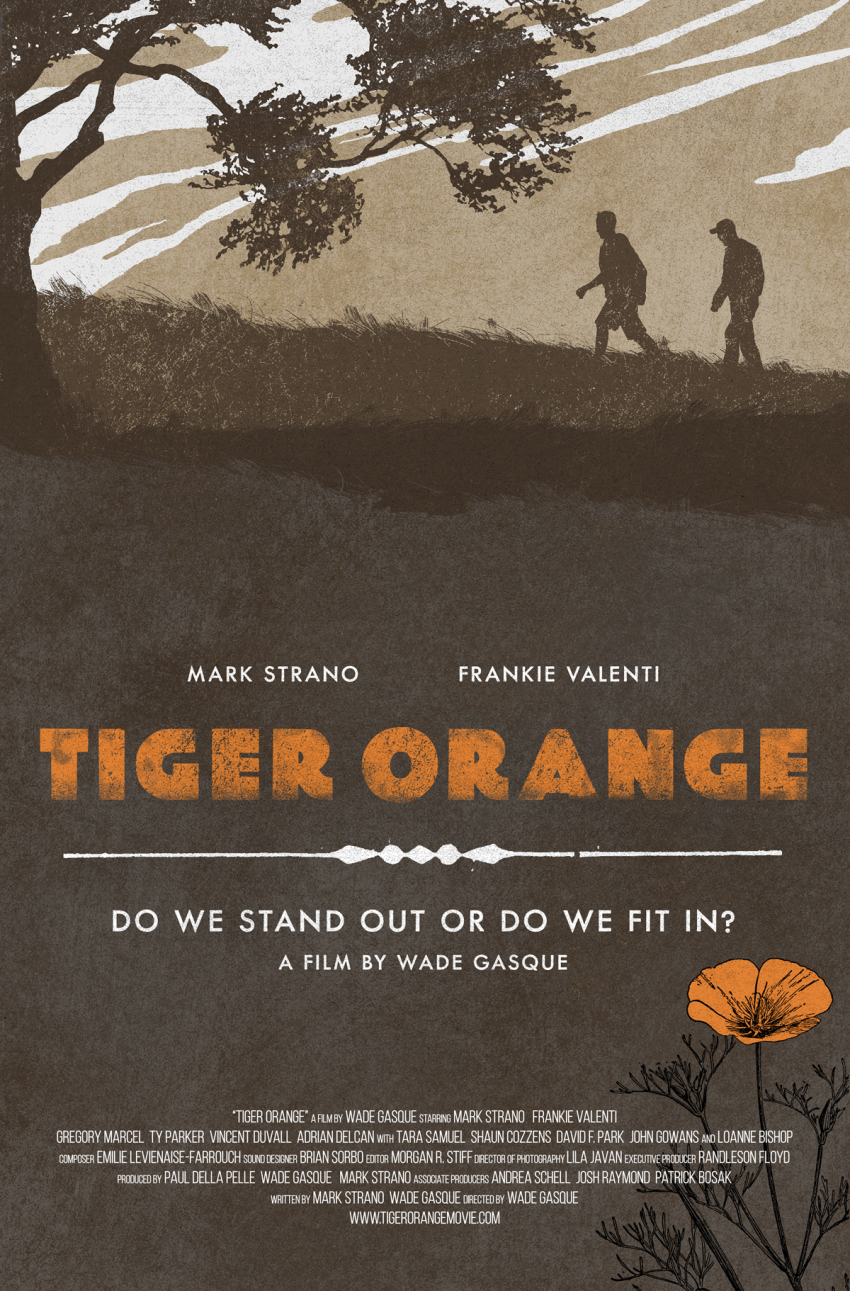
I saw Tiger Orange earlier this week when it was screened as part of the BFI Flare Festival, a two-week festival at the BFI Southbank in London that screens films with LGBT topics at their heart. It’s an effective piece of cinema that makes the most of its limited setting and low budget.

The premise is quite straightforward: openly gay Todd (Frankie Valenti) returns to his small Californian hometown following the death of his homophobic father (Vincent Duvall) and is reunited with his older brother Chet (Mark Strano). Seeking to hide his sexuality whilst running the family hardware store, Chet struggles to accept how open Todd is about something he has spent his life trying to hide from the local community.

Strano (centre) and Valenti (right) bring their characters to life with some really effective performances.

This storyline is a good platform for the exploration of the characters, who are well-developed in a relatively short period of screen time (76 minutes). I think the fact it is such a small community and they are living in an isolated cabin house – and sleeping in their childhood bunk-beds – means that their fast development is also quite believable. Indeed, it’s debatable whether the childhood flashbacks are absolutely necessary, serving only to underline how homophobic their father was. Other than this, it’s a tight story and there’s absolutely no wastage in present-day screen time.

I was impressed by the acting performances too, with both leads actors clearly at ease in their characters, probably drawing on some levels from their own experiences. Strano does well to hold his own in a more understated role, when lesser actors would have allowed Valenti to steal the show with a more immediate and attention-craving character. I was surprised to read that Valenti used to be a pornographic film actor, such was his performance in this film. I’m not convinced the sort of depth of character was necessary in his previous line of work.

Gasque has made the most of what was likely a relatively low budget and created something special. I doubt this will reach a wide audience globally, but those that do seek it out will be rewarded.

Tiger Orange is not currently scheduled for a wide UK release. It was recently picked up for global distribution with Wolfe Releasing.

The Long Way Down (Pascal Chaumeil, 2014)

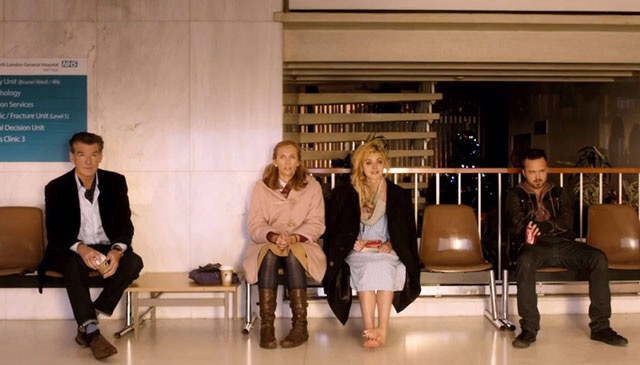
The latest Nick Hornby book to be given the big-screen treatment, The Long Way Down is on the face of it quite a distasteful basis of a comedy drama. The premise is that four people – played by Aaron Paul, Imogen Poots, Toni Collette and Pierce Brosnan – go to the top of a tower on New Year’s Eve with the same intention: the commit suicide. Talking each other out of it, their shared experience brings them closer together and they form an unconventional but essential bond.

It isn’t one of Hornby’s best films. Perhaps it’s the disbelief I found in the unlikely friendship they build with one-another. Perhaps it’s the light-hearted touch with which director Chaumeil has dealt with the source material. Perhaps it’s the fact that all the main characters are annoying in their own special way. Perhaps it’s just that I don’t want to see a comedy about suicide.


That’s not to say that all potentially distasteful comedies have nothing to offer. 50/50 was probably the best comedy I saw in 2011. I guess it just has to be dealt with in the right way.

There are some effective moments. The scene in which Rosamund Pike cameos is a precursor of her sinister turn in Gone Girl. Poots gives an assured performance throughout, giving life to a potentially film-ruining character. There is a heart-wrenching moment near the end with Collette and her son, which adds a lot of depth to her character, albeit late in the day.

I liked the way the film resolved itself. I just didn’t really enjoy the journey that took me there.

The Long Way Down is available on Blu-Ray, DVD and Netflix now.

City Girl (F. W. Murnau, 1930)

One of the greatest shames of the history of film is the sheer amount of films directed by F. W. Murnau that have been lost. Dying at the young age of 42 following a car accident a week before the premiere of his final film, Tabu, he left a legacy of just 21 directed films, of which twelve survive. These include: Nosferatu (1922), Faust, (1926), Sunrise (1927), City Girl (1930) and Tabu (1931) – all classics. Without a doubt the most sought after lost film is 4 Devils (1928), one of only four American films he made before his untimely death. So as a result we are left with just three films from this latter period of his life. Sunrise is the most popular, having won the first Best Film Oscar (sort of [1]). The other two are readily available, and it is City Girl that I’d like to discuss today.

City Girl is a silent film released after the advent of talking pictures. The plotline covers a young farmer named Lem (Charles Farrell), who is sent by his father to sell the wheat crop in the city. After panic-selling the wheat as the prices dropped in value, he goes to a coffee shop and falls madly in love with waitress Kate (Mary Duncan). Soon after they get married and they set back to the farm to introduce her to his family. However, his father is bitterly disappointed with the cripplingly low price his son has sold his wheat for and in his anger struggles to accept Kate into the family.

Both leading actors have been captured beautifully in this shot.

Both leading stars have been captured beautifully in this shot.

What I found really unique about this film is the surprisingly modern portrayal of Kate by Duncan. She is certainly not a typical silent leading lady, and in fact throughout the film she is usually the most headstrong character. It works well as the mother of Lem is extremely passive and non-confrontational, further underlining Kate’s strength of character. Perhaps we could attribute this to the fact Katy is from the city and Murnau wished to portray city dwellers as a different beast to those from the country, but I prefer to assume it is because he wanted to show the world one of the first truly strong female lead characters. Indeed, Murnau even has a nod to a previous leading lady of his in the opening scene, with a woman looking suspiciously like Janet Gaynor’s wife from Sunrise trying to flirt with Lem on the train, only for him to give her the cold shoulder. It could be coincidence, but more likely it was a knowing nod to the audience to let them know it won’t be a repeat of his previous work – Lem looks so disinterested in her and this is underlined for the audience.

The whole film works really well, building to a ferocious storm-set climax. It must have been something to do with the pacing, but I was on the edge of my seat by the end hoping things worked out. It was a pleasure to see such a great piece of cinema for the first time and I’m only sad I won’t be able to see it again.

I’m glad I saw this. It’s the first Murnau film I’ve seen that isn’t common to the wider audiences. Whilst Sunrise and Nosferatu are must-sees, if you liked them then you probably should see what else his catalogue has to offer. It won’t take long to see everything that’s available, but City Girl is a great place to start. The next Murnau film I’d love to see Masters of Cinema release is Der Letzte Mann, a 1924 German silent picture that is currently unavailable in the UK. Come on, you know it’s right.

City Girl is available on Masters of Cinema dual-format Blu-ray and DVD now.

[1] The first Academy Award for Best Film is disputed because there were two awards given out on the night that were never again awarded. One for Outstanding Picture went to Wings and the other for Unique and Artistic Production went to Sunrise: A Song of Two Lovers.

[2] Mary Duncan was, incidentally, the last known person to own a copy of the film 4 Devils, which she subsequently lost… but we’ll forgive her for that as she is so good in this film.

Das Cabinet des Dr. Caligari (Robert Wiene, 1920)

I finally got around to watching Dr Caligari, having had it near the top of my “to watch” list for around six months. It was a Friday 13th weekend so it was a perfectly timed purchase. Watching it was a fantastic experience and the quality of the film belies its 95-year-old lifespan.

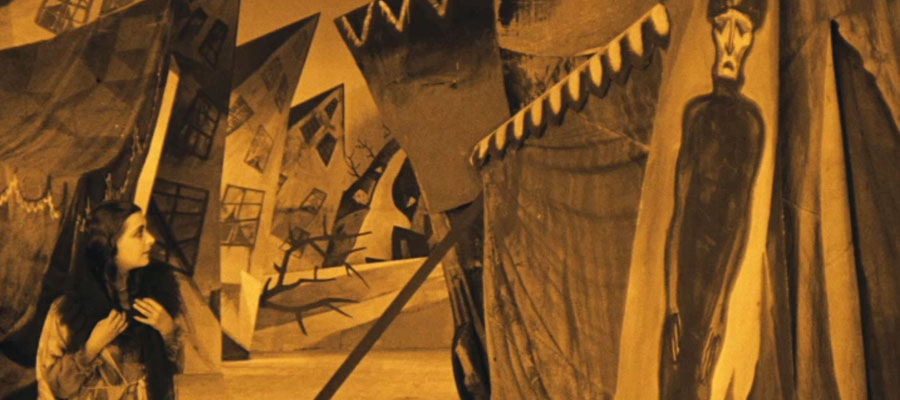
Our story opens with a man’s recounting of a tale about the appearance of a mysterious somnambulist show that is exhibiting at a local fair in Holstenwall, a small town near Hamburg in Germany. The show is compered by the strange Dr Caligari (Werner Krauss) with the centrepiece provided by a devastatingly eerie Cesare (a pre-Casablanca Conrad Veidt). When a number of murders are committed, including one predicted by Cesare, the two exhibitors are instantly installed as the prime suspects and panic spreads across the town. [1]

With a narrative as twisted as the set on which it plays out and a plot that throws the viewer off the scent with every turn, the film is way ahead of its time across the board. Indeed, I think the biggest blocker for me guessing what was happening was the fact I underestimated quite how advanced a film released in 1920 could be. It’s probably worth bearing that in mind before watching it.

Actually, this is a fantastic starting point for those wanting to learn more about silent films and German expressionist cinema. This was the birth of the latter, as well as both horror films and twist endings. For this reason, it is wholly a ground-breaking film that needs to be seen to fully understand the landscape of cinema at the time. That’s to disregard the political context too, which the film has been closely linked with being a metaphor for – as a German film released in the aftermath of The Great War this is somewhat inevitable, especially since the two writers Carl Mayer and Hans Janozwicz were both soldiers in this war.

I wouldn’t class myself particularly as a die-hard fan of the silent era, though I have seen a handful of the more prominent pictures (mainly Masters of Cinema releases and Charlie Chaplin’s more famous works). I am slowly getting more and more into it thanks to unrivalled access to the entire history of film via both physical media and digital streaming services. It has never been easier to dip your toes in and see what you enjoy out of a wide variety of films and television series. Couple that with the endless streams of discussion pages, essays and blogs on film and you can really think about it as a very advanced education in cinema.

Dr Caligari is a prime example. The Wikipedia page alone is like a short essay on the development, production, release history and reception of the film, complete with links should you wish to find out more information from the original sources.

The set design is as twisted as the plot itself.

It’s good to take a step back and appreciate exactly how far we have come. I remember my family’s first Windows-based computer [2] – a PC running Windows 95, which was then state of the art. As the internet wasn’t readily available we had two computer-based options to do research: Encarta Encyclopaedia and Microsoft Cinemania. The latter was a bit of a godsend for someone who was interested in cinema, with over 20000 films detailed with stills, sound clips and some even having short video clips. It was rudimentary but quite spectacular. As I was 11 at the time my main priority was watching a short but thrilling clip from Nightmare on Elm Street, so I can’t really remember whether Dr Calgari was covered, though I suspect it was.

Now, though, we can search “Dr Caligari” and retrieve 563,000 results on Google (other search engines are available but they generally aren’t as good). Two of the top results give the ability to stream it for free, with two versions available on YouTube. I just think it’s fascinating we are able to do this now, and even more amazing that we now just take it for granted. Progression, eh?

Well, it doesn’t stop there. The basic picture quality is incomparable to what was readily available some twenty years ago. Back then you had three choices if you wanted to see an older film again: wait for it to be re-released at the cinema, wait for it to come onto television, or buy a VHS copy of it for around £15. This latter one allowed you to access the film much sooner, but the picture quality was just atrocious and really unwatchable by today’s standards. Nowadays, you can pick up a Blu-ray copy of most films for less than £10, often closer £5, and the picture quality is like a dream for cinephiles.

Apologies. I digress. The film itself is pretty mind-blowing. I don’t really know where to start with it, and there has been a great deal written about this film elsewhere by people with much better vocabulary. The bottom line is that I was thoroughly impressed. The twisted design, the tense music (I listened in 5.1), the staccato body movement that gives the acting a really sinister edge, the subversive plot. They all combine to present us with a journey that was way ahead of its time. As the reality behind what I was seeing became clear I was left absolutely gobsmacked by the ending. It’s just a must watch for anyone keen to get to grips with the history of cinema.

Das Cabinet Des Dr Caligari is available now on Masters of Cinema dual-format Blu-ray and DVD.

[1] It’s funny that I’m attempting to not give away any of the plot when describing the film. It seems 95 years isn’t enough time to wait before spoilers are okay. Think about that the next time you want to talk to someone about the next episode of that show you both like but they haven’t seen.

[2] Our first home computer of any kind was the extremely popular Commodore Amiga, which was originally released in 1985. I’m not sure exactly which model we had as it has long since disappeared, though I suspect it was a 500. I don’t recall it ever being used for word processing and it certainly wasn’t connected to the internet, such was life in central Lancashire in the mid-1980s.
Masters of Cinema Cast

The MOC Cast is a constant on my podcast downloads list, and I’m always keen to download the latest installment. As a fan of the series (as you can guess by how many I have reviewed) but without too many friends that are interested in the same kind of cinema, it’s really useful to hear others delving into the details of certain releases.

The latest episode is an interview with Craig Keller, producer of the Masters of Cinema, and is such an insightful discussion between three huge film fans with a common interests. If you’re at all interested in what goes on behind the scenes of the releases, I heartily recommend downloading it. It covers a wide range of topics, including the history of the label, the role Keller has in the releases and the difficulties in gaining the rights to release certain films. Frankly it’s a joy to hear three people with such a huge passion for cinema simply having a chat.

The Babadook (Jennifer Kent, 2014)

As it’s the second of two consecutive Friday 13ths in early 2015 (there’s another one at the end of the year too, right after Halloween too – we’re being spoilt!) – I thought I’d watch and review a new(ish) horror film. The Babadook was only released in 2014, but it has become an instant hit amongst fans of the genre.

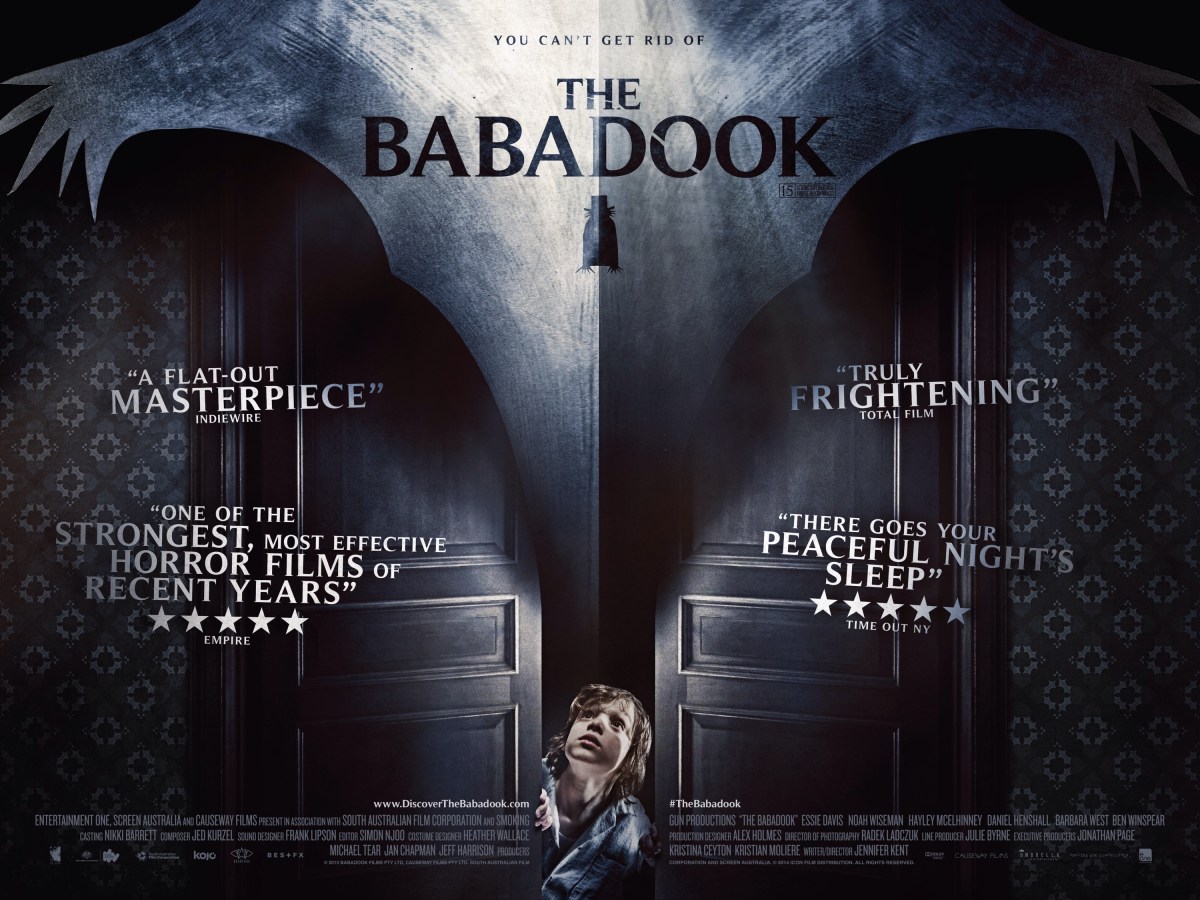
Set in Australia, the slowly unravelling story brings us into the life of a single mother Amelia (Essie Davis) and her ill-behaved son Samuel (Noah Wiseman). With Samuel struggling to sleep at night and every other option exhausted, Amelia allows him to pick a book of his choice for her to read to him before bed time. However, when he picks out a mysterious and disturbing pop-up book called The Babadook, their lives quickly spiral out of their own control and into the grasp of the eponymous character from the book.

Stylistically the film has it spot on. To keep in with the tone of the film and depressing nature of the situation, there’s rarely any clothes worn that aren’t somewhere between black and grey. The general environment is drained of colour, with the low saturation levels adding to the dreariness.

The physical book looks horrific in itself, and the slow reveal of the uniquely designed Babadook adds to the tension. I was thankful that it didn’t resort to what many horrors go for these days – a quick reveal of a poorly CGId evil character that instantly destroys any inkling of suspense or terror. Kent clearly has her finger on the pulse and is well versed in what makes horror fans tick.

A woman realises she and her son ren't in the correct screening for Frozen Sing-a-long.

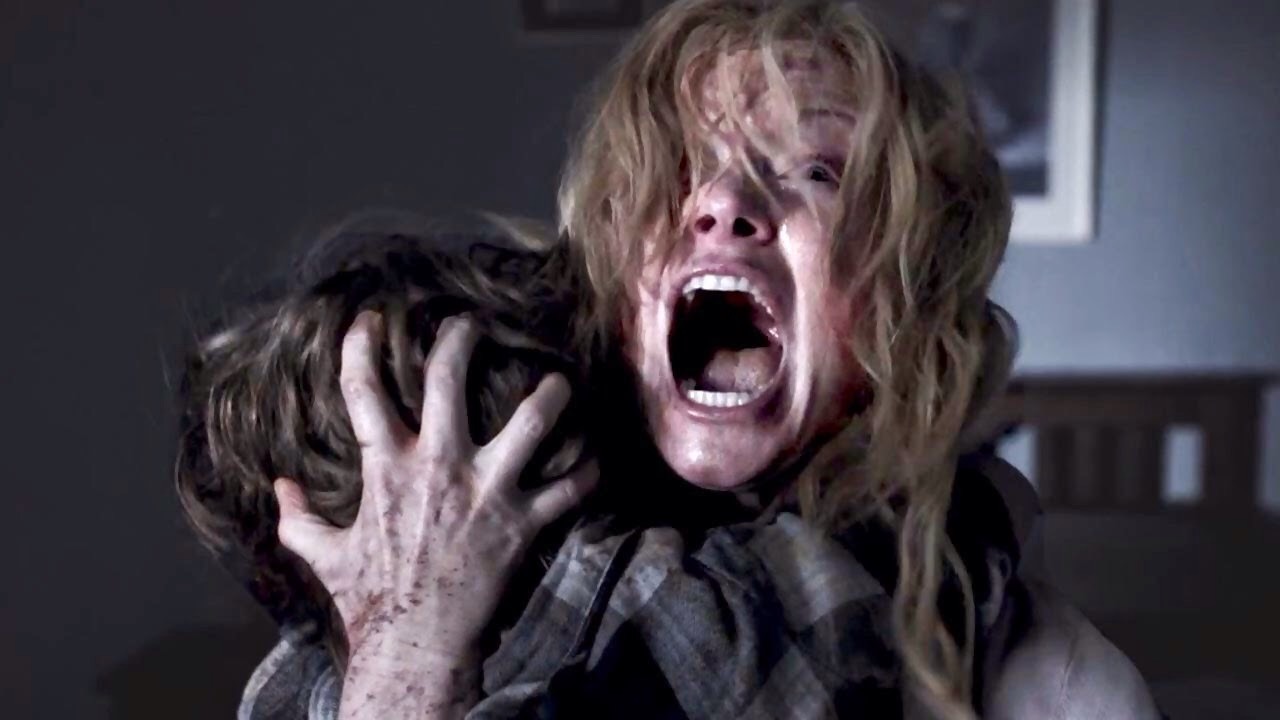
A woman realises she and her son aren’t in the correct screening for Frozen Sing-a-long.


The story is also surprisingly deep for a supernatural horror film. In its short running time of just over 90 minutes, we are nonetheless completely absorbed in the reality of the situation. This is only achievable through some well thought-out characterisation and some convincing performances from the two lead characters. Unfortunately, the same cannot be said of the support cast – clearly a choice was made to keep the pace up and the running time short by minimising any kind of depth to the friends and relatives of the lead woman. In particular, a seemingly key character is introduced in the form of her work colleague Robbie (Daniel Henshall), but he is abruptly forgotten about after about 35 minutes. I’m not saying it’s necessarily a bad thing, but I acknowledged it immediately and I was left thinking about which option was better.

Of course, horror films live and die by how much they can make you jump out of your skin. There is no problem with that here and my gut instinct is that it will thrill even the most hardened horror fan. I suggest you bring a pillow if you’re easily spooked.

If you’re in your supermarket tonight and need to get a last-minute horror film, then The Babadook is the one I have to recommend. It’s readily available for £10.99 in at least two of the big UK supermarkets and I’m sure you won’t be disappointed.

Wake in Fright (Ted Kotcheff, 1971)

Wake in Fright, Ted Kotcheff’s disturbing 1971 drama, is the story of a lost weekend of toxic self-discovery for John (Gary Bond), a young middle-class English teacher in the middle of the Australian outback. Though he plans a trip to Sydney over the Christmas break to see his beautiful girlfriend, a series of bad decisions leads him into a catastrophic mess of a weekend of gambling, hunting and alcoholism with some new acquaintances of dubious moral conscience. We go on the awful journey with him, as he gets chewed up and barely spat out the other side, all in the isolated nothingness of Bundanyabba.

IMG_0584-0

And I thought I was watching a Harvey Dent origin story.

Gary Bond’s excellent performance is paired with an equally excellent one from Donald Pleasence, an alcoholic doctor who exists without working, taking his purpose from a relentless alcoholism. His enthusiasm for misbehaving is the catalyst that leads our main character further down a slippery path, just when we hope he’ll pull himself out of it. It’s a show stealer, and to compliment this his Australian accent is flawless.
The colour wash throughout the day scenes are scorching hot yellows, reds and oranges. It’s a clever technique to make you feel the heat. You can see the sweat dripping from the sun-baked characters, and can almost smell the day-old stench of alcohol on their hungover breath. Frankly, by the end of the film I wanted a shower.

The main talking point is a ten-minute scene that depicts an awful kangaroo hunt that the main party of four go on. The Masters of Cinema release dedicates a lot of time to it in the booklet and on-disc features, and will do it more justice than I can manage. All I’ll say is that it’s truly horrific, especially knowing it was basically just the filming of a real kangaroo hunt. Sickening stuff.

I strongly recommend this one. Just don’t watch it if you’re a fan of kangaroos.

Wake in Fright is available now on Masters of Cinema Blu-Ray and DVD.

世界 / The World (Jia Zhangke, 2004)

Time for another Masters of Cinema review, this time for Jia Zhangke’s 2004 Chinese film 世界 / The World. Originally screened in competition at the Venice Film Festival, it soon found its way onto the Eureka label on DVD and subsequently again on a Blu-ray/DVD dual-format release.


The story covers a short period of time of two workers at Beijing World Park: Tao (Zhao Tao) and Taisheng (Chen Taisheng) Tao’s boyfriend and a security guard at the park, whose relationship becomes increasingly strained throughout the period of the gloomy film. The theme park (a real park in Beijing) recreates famous cities and landmarks from around the world but in reduced scales, mainly for tourists. The story delves into the emotional and financial instability of the two lead characters and their colleagues, and how these two factors go closely hand-in-hand in modern China.


At 135 minutes long and with an extremely slow pace, The World is a tough film to sit through and maintain focus. The dialogue isn’t very focused, with the effect of making the characters feel wholly depressed. Unfortunately, whilst it’s fine to do this, when you’ve not really getting very far along the characters’ journeys your mind does start wonder. I had to take a couple of breaks to get through it, and that’s doesn’t really indicate a story that has me gripped.


There were some clever techniques utilised. Lead character Tao continually lost herself in her inner thoughts, removing herself from her own depression into a world represented by brightly coloured animation. This is something I saw more recently in Giovanni’s Island, probably to much better effect, but it doesn’t detract from the solid concept.


By the end of the film, I didn’t really feel emotionally involved in any of the characters and was quite relieved when it was all over. It’s not a film I will be revisiting any time soon.


世界 / The Worldis available on Masters of Cinema Blu-ray and DVD dual-format release now.

Lifeboat (Alfred Hitchcock, 1944)

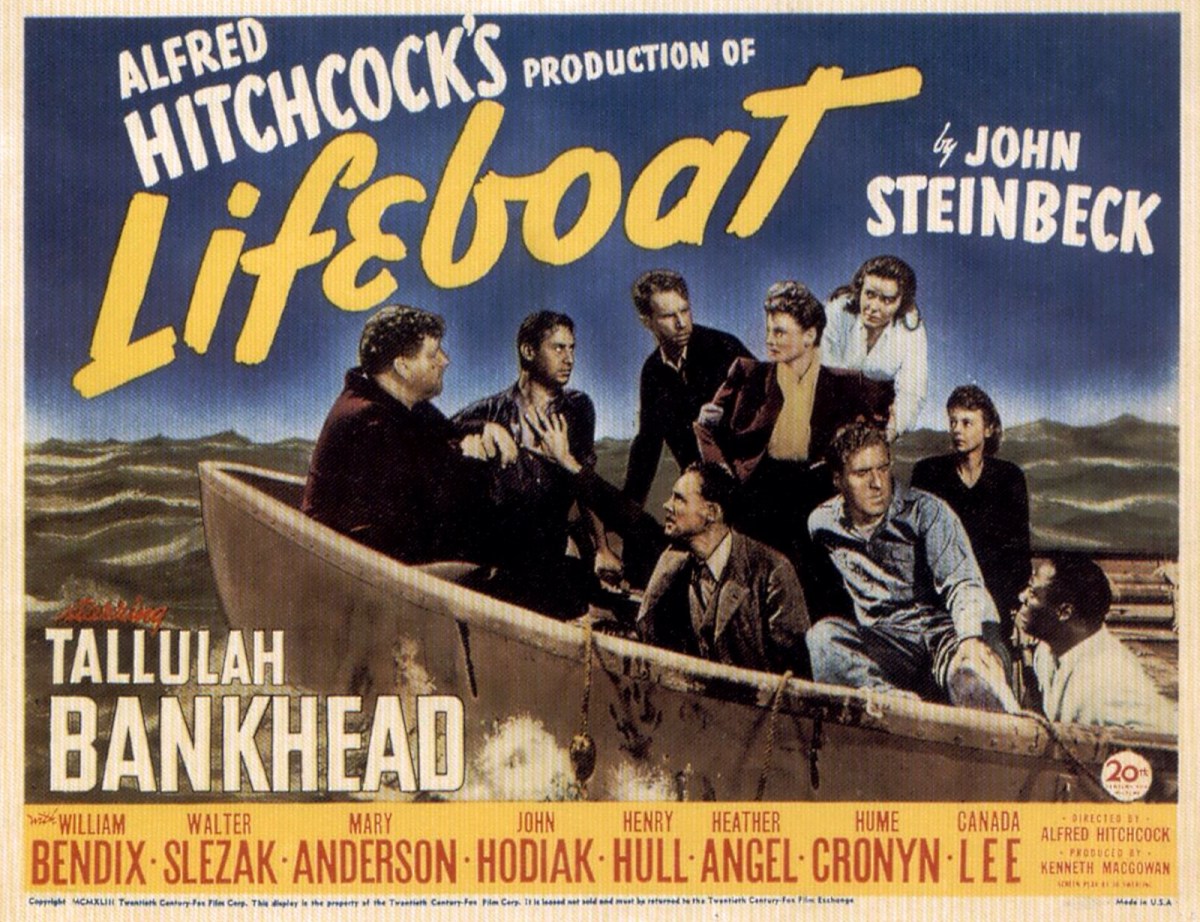
Lifeboat, the first of Hitchcock’s limited-setting pictures, follows the story of British and US civilians, merchant marines and service members in the aftermath of a battle that sees the sinking of their boat and a German U-Boat. When a German man Willi (Walter Slezak) is also rescued, the tension on the boat increases and coping with the harsh environment and the claustrophobic arrangement takes its toll. Pretty soon suspicion and accusations take the place of compassion and reasoning, with a plot that keeps the audience guessing way beyond the final scene.

Released towards the end of World War II, the film was shrouded in controversy due to the seemingly fair portrayal of a German man who turns out to be a Nazi soldier. This was enough to make the studio give it only a limited release – a surprise given that Rebecca, Saboteur and Shadow of a Doubt had all been box office successes in the immediately preceding years. Furthermore, John Steinbeck (who wrote the original novel) distanced himself from the adaptation, unhappy with the way Hitchcock had dealt with his work.


It is perhaps only years later that we can appreciate this film for what it is – a good film heavily influenced by the times and heaped with elements of propaganda. In that sense it’s as much a film as it is a historical document. In a way, all cinema is the same.

Lifeboat isn’t amazing, certainly not one of Hitchcock’s finest. I had hoped that the lack of popularity was because of the controversy surrounding its release, but in truth it’s probably because it just doesn’t pack as many punches as the likes of Vertigo and Psycho. It’s worth watching out of interest and worth buying the Masters of Cinema release for the detailed bonus features and two additional little-seen Hitchcock shorts Bon Voyage and Aventure Malgache, though these are more for the avid fans, even more so than the main feature. It’s worth watching, but not as a Hitchcock starting point.

Lifeboat is available on Masters of Cinema and SteelBook Blu-ray now.

BFI Flare Film Festival

I’ll be heading down to the BFI Flare LGBT Film Festival later this month. I’ve tried to pick a couple of films that look really interesting and no set wide release date in the UK, as follows:

– Tiger Orange
– Dear White People

Both look fantastic and I’m looking forward to soaking up the atmosphere at the hub of British Film on London’s Southbank. See you there!!