TV review – Teenage Mutant Ninja Turtles – Season One (Vincent Davis, 1987)

The year was 1989. Turtle Power had taken over the planet and, more importantly, my school. The turtles were everywhere. Everyone had to have a favourite of the four hero turtles (I’m from the UK so our heroes were called “Heroes” not “Ninjas”). It was not optional. Mine was always Raphael, though I had to occasionally be Michaelangelo despite not really being a party dude. Probably because I was five years old.

The appeal of the Turtles was far and wide. Initially it was just the action figures. Then it was colouring books, cereal and lunch boxes. Then it was colour-changing t-shirts, sticker books, video games and pizzas. Underpinning the whole mess of parent bankruptcy was the television show.

Cowabungaaaaahhhh!

If you were a British child at the time, you were probably introduced to the Turtles by Andi Peters from the inside of a broom cupboard. It’s more normal than it sounds. Whilst the cartoons were generally of a very high standard for the height of their popularity, often riffing in unexpected ways on old horror films, nothing ever quite touched the first season – a five-episode masterpiece that functioned as well as an episodic release as it does in hindsight as a one-off special.

The story itself is reasonably close in plot to the original Eastman-Laird comics on which it is based, only slightly softer in tone. The Turtles are chanced upon by news reporter April O’Neill, who the four heroes save from a gang attack. They take her back to their sewer-based hideout to recover and upon her waking they tell her their backstory along with that of their ninja master Splinter.

From their we follow them as they defend New York City from the evil Shredder, acting at the behest of the literal brains of the operation Krang, along with their two bumbling goons Bebop and Rocksteady and a clan of Footsoldiers and Mousers.

The standard of animation was perhaps so good it was unsustainable for a weekly animation. The show was essentially a means to peddle the merchandise and action figures, so the quicker they churned episodes out the more outfits we could see the Turtles in and the more friends and foes they could encounter. Each ended up with their own action figure – never more apparent than the Ace Duck TV hero who literally appeared on screen for less than ten seconds but was exceptionally popular as a toy.

The first season was also much darker in tone than the future seasons, at least until the popularity was faltering and they tried to take it in a new direction. Writer David Wise always preferred this earlier darker tone but the lighter and more comedic direction played into the hands of the popularity of the show. After all, the parents were the ones buying the toys.

This van runs on Turtle Power yey! Oh no wait it runs on petrol.

This five-episode story arc remained untouchable for my younger self, desperate but unable to see the sort of serious animation coming out of Japan at the time. It was an interest sparked by my brother’s subscription to Manga Mania, though we didn’t get to enjoy the Akira feature film until it aired on BBC Two on 8th January 1994.

I can’t recommend this original series enough. Almost three decades later the story and animation hold up and it brings back a heap of memories of a misspent childhood. Seek it out.

Star Wars Articles

If you’re in need of even more of a Star Wars fix this week, you could check out some of these past articles here on Cinema, Etc., all related to Star Wars in some way.

Film Reviews
THX 1138 (George Lucas, 1971)
The Star Wars Holiday Special (Steve Binder, 1978)
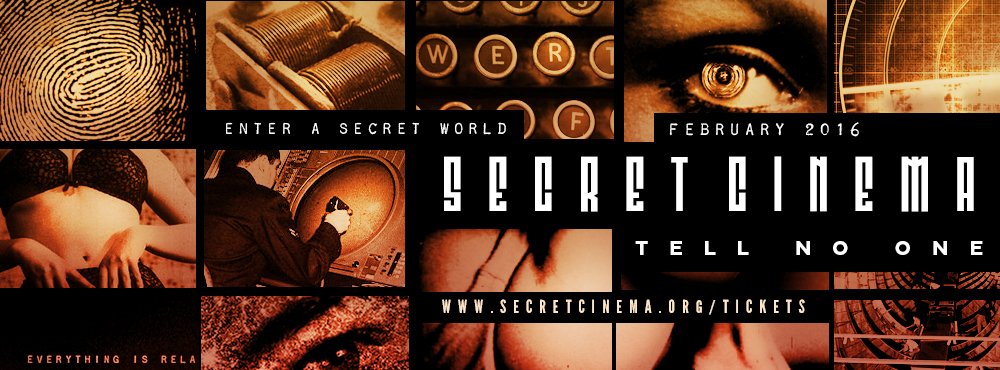
Secret Cinema Presents: The Empire Strikes Back (Irvin Kirschner, 1980)
Caravan of Courage: An Ewok Adventure (John Korty, 1984)
Star Wars: Episodes I-III (George Lucas, 1999-2005) – Guest reviewer!
Elstree 1976 (Jon Spira, 2015)
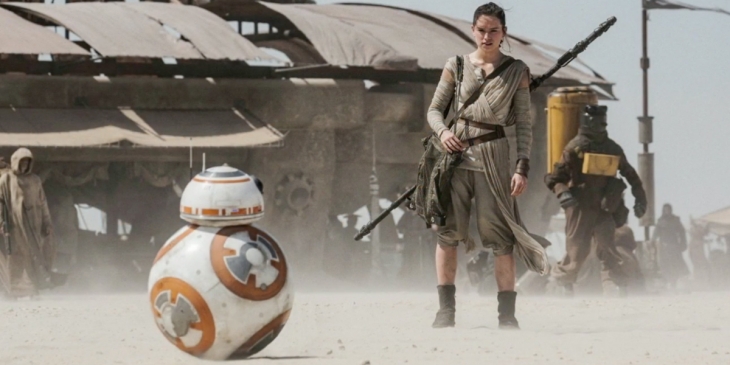
Star Wars Episode VII: The Force Awakens

Video Games
Star Wars (Lucasarts, 1991)

The Force Awakens
The Force Awakens – Do Your Homework
The Force Awakens – It’s Going to be Good, Right?

Film review – Grave of the Fireflies / 火垂るの墓 (Isao Takahata, 1988)

To be fair to Isao Takahata, writer and director of Grave of the Fireflies, he doesn’t pretend he’ll be delivering a happy-go-lucky lighthearted anime to the audience. The title hardly screams cute, the poster smacks of grimness. Then there’s the opening scene, in which the voiceover declares that he dies.

The film tells the story of two children – Seita (Tsutomo Tatsumi) and Setsuko (Ayano Shiraisha) – who are struggling to stay alive in the final few months of World War II. Their mother has died in an American air raid and their father is a captain in the Imperial Japanese Navy, meaning they have to stay with their unsympathetic aunt. However, with the continued threat of airstrikes and a growing unease with their situation, the pair decide to fend for themselves.

When discussing this film with anyone who has been lucky enough to see it, you will invariably get the same response. “Grave of the Fireflies?” Then comes the deep intake of breath. Then comes the deeper exhaled sigh. “Grim. Great film, but really depressing.”

graveofthefirefliesscreenshot.png

The film does not glamorise war in any way. It spends the entire running time delving into the relationship between the two siblings, the bond the war is creating and their resilience despite the tragedy surrounding them. The film gives an overwhelming sense of the individual impact of the war on the innocent people it affects. It doesn’t explicitly give a negative anti-war message, and it doesn’t attempt to portray the enemy (in this case the American Air Force) in a bad light. All these things are simply deduced by the fact that Setsuko and Seita’s story is so unbelievably sad.

The animation is absolutely stunning. It’s almost three decades since its release and its hard to think of a more realistic portrayal of Japan in animation. As the screenshot above shows, it is all greys and browns, though in this case Setsuko sits in the foreground in a blue ball attempting to protect herself of the reality of her mother’s fate. As Seita deals with it in his own way in the background, the effect is one of the most powerful images in the film. What else would two children do when their whole lives are turned upside down in such a catastrophic manner?

Since the release of this excellent film, Takahata has directed just four  more animated feature films, all of which were released with Studio Ghibli: Only Yesterday, Pom Poko, My Neighbours The Yamadas and The Tale of Princess Kaguya. Whilst all of these are excellent films, none quite have the same impact as Grave of the Fireflies, a film that has stuck with me since the first time I saw it over a decade ago.

Film review – The Good Dinosaur (Peter Sohn, 2015)

Pixar’s latest effort The Good Dinosaur is a by-the-numbers buddy comedy set in an alternative history where the asteroid that would have wiped them out has missed Earth completely, meaning dinosaurs and Neanderthal humans live side-by-side. It concerns a timid dinosaur called Arlo (Raymond Ochoa) who is split up from his family has to befriend a dog-like human called Spot to survive and return home.

The Good Dinosaur was destined for problems before it was released. Originally scheduled for a Christmas 2013 release, it has been put back several times, each time causing confusion and issues for the other Disney films on track for their respective releases. According to Denise Ream, one of the film’s producers, the primary reason for the rescheduling was “the story was not working, period, full stop, it just was not where it needed to be.” The director Bob Peterson, who previously found success with Up, was removed and replaced with Peter Sohn, allegedly because he was too involved with the film.

The upshot of it all is that it has found itself living in the shadow of the excellent Inside Out, which has barely left the cinemas, and is competing for shelf space in the various toy stores across the land with Star Wars: The Force Awakens, which is set for release less than a month after The Good Dinosaur. It was also released in the middle of a school term, drastically reducing the opportunity to go and see it for anyone with children in school. So does that make the target audience parents who aren’t working and have children old enough to go to the cinema but under the age of 4? I guess so… [1]

The film itself feels like an unfinished product. It is the first time I’ve watched a Pixar film and genuinely felt like they’d given up on it. It feels like a last-gasp chance to recoup on a project that will, at best, break even.

The character design is uninspired. None of the dinosaurs offer any of the individuality or appeal audiences have come to expect from a Pixar or Disney film. The beautiful environment goes some way to make up for this, but only Spot himself felt like a fully realised character.

If the reports are to be believed, then the problems with the film lied in the final third. This is, then, presumably where the cavalry came in to take over and save the day. Sadly for Peterson, this is exactly where the film picked up a bit and paid off on some of its promise.

Two scenes stuck out as being particular highlights. The first was a beautiful montage scene where Arlo and Spot ran through an open plane full of birds was vintage Pixar. The second was an emotional scene in which Spot is effectively adopted by another Neanderthal family at the encouragement of Arlo.

Perhaps both of these were Peterson’s work. Will we ever know?

As a 31-year-old man, I know I’m not the target audience for this film. I do have an appreciation for all good animation though and this falls a long way short. The best critics are the children. Four days after its release, the cinema was about 10% full. The children present seemed restless and disinterested. A few parties left. Maybe they went home to watch something more enjoyable. Or, you know, fun.

The Good Dinosaur is currently on release at UK cinemas.

[1] In my local cinemas only one screening was achievable for workers and people at school, which was a 6:30 screening at a Cineworld. I don’t know how many people were at earlier screenings.

Sanjay’s Super Team (Sanjay Patel, 2015)

If you were keen enough to get to the cinema early enough before The Good Dinosaur, one of the worst Pixar feature films thus far, you’ll have been treated to Sanjay’s Super Team, one of the worst Pixar short films thus far.

Sanjay realises just how bad The Good Dinosaur is.

The story, based on the true memories of director Sanjay Patel, revolves around him as a young child and the conflict between him wanting to enjoy a superhero TV show and his father wanting him to join him in prayer. Frustrated when his father turns the TV off and forces him to pray, Sanjay uses his time of reflection to daydream into a strange world where his Hindu gods are more like superheroes.

The cel-shading technique used in the daydream sequences is a bit of a let down and feels like a quick solution, despite the best efforts to make it look as colourful as possible. I couldn’t help but imagine how good it would have looked with more attention to detail.

This is a film about a child having doubts over his beliefs and a clash of cultures. Whilst many won’t understand the precise religious and cultural aspects at play, most will appreciate the story from the position of a child not wishing to have to follow in the footsteps of the parents. In principal I don’t agree with using religion as a basis of children’s entertainment, but it works well in this case to create a story for the older audience members.

Unfortunately, the overall result is a bit bland. There was no dialogue, the brilliantly coloured dream sequence lacked any real wow factors and it didn’t move fast enough to make use of the lengthy running time for a short film. The children in the audience voted with their restlessness and disinterest. 

In this sense, it was the perfect warm up for the main feature.

Riley’s First Date? (Josh Cooley, 2015)

If you loved the Pixar animated feature film Inside Out then chances are you’ll… like “Riley’s First Date?”, the short included as a bonus feature on the various Blu-ray versions of the release.

It centres around a mysterious boy showing up at Riley’s household to take Riley out, with most of the jokes coming from the parents’ reactions to interacting with him. If you’ve seen Inside Out itself, it is essentially an extension of the final sequences of the film, popping in and out of the characters’ heads in rapid succession for quick laughs.

It lacks any of the emotional pull that made the film a huge success over the summer, but it does succeed in getting a few jokes that make it worth a watch. It can’t go down as a reason to purchase the Blu-ray – you don’t need any more reasons than the fact it’s the best Pixar films released for years.

Bridge of Spies (Steven Spielberg, 2015)

After a relatively long break, Steven Spielberg is back behind the director’s chair, and it was worth the wait.

Reading the description of Bridge of Spies, his first film since the hugely successful biopic Lincoln, it has all the hallmarks of some of his greatest achievements in cinema. It’s based on a true story. It’s a story about individual battles within a larger situation. It stars Tom Hanks. It would have been a surprise if this wasn’t a huge success.

Set between 1957 and 1960 during the height of the Cold War, the film focuses on James B. Donovan (Hanks), a lawyer tasked with negotiating the release of Francis Gary Powers (Austin Stowell), a pilot whose U-2 spy plane has been shot down over the Soviet Union. The negotiation concerns trading Powers for Rudolf Abel (Mark Rylance), a Soviet KGB spy held captive in the USA who Donovan has previously defended in court. However, tensions rise when Donovan shows his determination to include an additional US citizen – student Frederic Pryor (Will Rogers) – in a move that seemingly only he is keen to see through.

bridgeofspiesscreenshot

The film at times threatens to be sabotaged by a slow pace, though Spielberg keeps it going just enough to avoid it becoming a snooze-fest. The plot is one full of intricacies that reward the attentive viewer, so I’m not sure the modern audiences will get it in the same way they did with Schindler’s List, for example. [1]

This is an ode to traditional storytelling and any movements it makes to remind us of Spielberg’s supreme talents are trumped by its underlining of Tom Hanks as one of the greatest living actors. This is not a story about espionage, politics or the Cold War. It is a film about one man’s unwavering desire to stick to his principles. Hanks portrays Donovan as a totally unassuming man whose aggression is only touched on when he feels the principles for which he stands are threatened. As with most of his best roles, it has a way of pulling you in and asking you what you would do in his shoes.

If it is considered for any awards in the next few months, it will be for Hanks as an actor in a leading role. For all the clever cinematography and attentive set design, they are merely the stage on which Hanks is allowed to fly.

Bridge of Spies is release in cinemas worldwide on 27th November 2015.

[1] I’m well aware that this sounds condescending. It is fueled directly by the woman in front of me who three times during the film decided to have a quick check of her phone next to her pocket. Whilst it was only a minor distraction for me (it wasn’t so bad to warrant me tapping her on the shoulder), she missed two critical plot points and the description of what the characters did next in the final credits. Definitely a justification for the theory that the audience’s participation level is as important as the care put into a film.

Nightmare City (Umberto Lenzi, 1980)

Nightmare City falls under the category of “so bad it’s good”. Umberto Lenzi manages to pull off some ridiculous scenes but gets away with it through consistency and dedication.

First off, if you’re new to Italian horror, you need to know that it can be quite off-putting watching a film in Italian with English subtitles, especially when it’s obviously been dubbed from English into Italian. If you’re quick you can read the sentence then lip-read the actors and realise they’re actually saying what is written. It can take getting used to but once you’re past that you’ll quickly realise that the acting is about as bad as you initially thought it was.

The plot doesn’t stray far from the norm for a zombie horror film. A group of humans have been subject to nuclear contamination, leaving them with superhuman strength. They are running riot in an unnamed city and television news reporter Dean (played by Hugo Stiglitz) is trying to survive as the city falls apart. As each person is killed, of course, the victim joins their cause, meaning their strength is ever-growing.

This film contains a number of hilarious shots and it worked exceptionally well in a packed and jovial cinema. A frequent feature is the appearance of young women’s breasts. You never quite know when the next pair is going to appear. The frequency of it was a source of great amusement. I’m not sure if this was common at the time but it definitely seemed out of place.


She certainly had an eye for detail.

 
Equally, barring the main characters, everyone was completely stupid. Getting attacked by zombies? Let’s just run from left to right panicking, then run from right to left doing the same thing until we get attacked. Brilliant.

Our hero, Dean, wasn’t very supportable and lacked the charisma required to get away with the things he was doing. He regularly screws over fellow survivors, at one point he punches his girlfriend in the face, he leaves a group of people trapped in an elevator. It made it hard to get behind him, even when it seemed he was the only one set to survive and we were forced to follow his story alone.

SPOILER ALERT!! The ending was the kind that all ten-year-olds go for when they run out of time and ideas in a story-writing class. Yes that’s right, it was all just a dream. It was disappointing and was rightly met with groans across the crowd. Nobody’s story was tied up. They just must have ran out of money.

It’s a bit of lighthearted old-fashioned gory horror that will no doubt entertain you, but probably won’t change your life. The ending is so disappointing it unravels any of the successes it has managed to pull off.

Nightmare City is available on Arrow Video Blu-ray now.

Film review – THX 1138 (George Lucas, 1971) – Asian Dub Foundation Re-score

A long time ago, precisely ten years before Star Wars hit the big screen in 1977, George Lucas was a young and experimental college student at film school at The University of Southern California. Packed with rich ideas and concepts of science fiction and Orwellian futures, he set about making the short film that would first bring him to the attention of Stephen Spielberg – Electronic Labyrinth: THX 1138 4EB. This short won prizes and accolades, including first prize at the National Student Film Festival in 1968.
Soon after Lucas left college, production began on a feature length adaptation of the story, using the short film as a basis of the climax to the film and providing a backstory and richer background to the concept.
The film stars Robert Duvall as THX 1138, a worker at a factory that manufactures android police officers. His roommate LUH 3417 (Maggie McOmie, in her only major film role) is a CCTV operative. After she switches their mind-controlling pills, they disobey strict rules and have sexual intercourse, which is a punishable crime. Imprisoned with SEN 5241 (Donald Pleasance), LUH’s co-worker, and fuelled by the fear of being trapped for the rest of his life, THX launches an attempt to escape from this underground dystopian prison.

At times overwhelming

At times overwhelming

I have to confess that this live scoring event was the first time I’d seen THX 1138. This is a film that is itself much less immediate than the Lucasfilms pictures we are now more familiar of, and one that requires a level of concentration to follow the plot. Unfortunately, Asian Dub Foundation’s live scoring was somewhat relentless and unforgiving. On several occasions it simply drowned out the limited dialogue, making understanding the film almost impossible. Not only that, but the music didn’t really match up with what was happening on the screen. It felt like an Asian Dub Foundation gig for which they’d decided to use the film as a backdrop for their performance.

Sadly for the film and the musicians, a large portion of the crowd decided they weren’t on board with either element and left before the end. Perhaps it was a victim of clashing with the opening night of the latest Bond film Spectre, and maybe some of the attendees decided to catch a late showing instead of seeing how THX’s escape plan player out.

Where it did work, it was very impressive. The car chase in the final act of the film was excellent and the music added a lot to the scene. This is one of the most exhilarating car chases I’ve ever seen and is a worthy pay-off the often times slow paced story development in the preceding hour of film.

I’ll be seeking out the original version of the film to see if I enjoy it more without the distracting score.

THX 1138 is available on Blu Ray and DVD now. Of course, this is a George Lucas release so it is impossible to see the original film in its originally planned state. It has been tampered with. Since most probably never saw it in its original form, however, there shouldn’t be many issues here.

What About 2045?

Whilst everyone compares what has happened in 2015 to what was predicted in Back to the Future Part II, I thought it would be more fun to make a few predictions about what 2045 will be like. Here goes…

Franchise Films

Whilst Jaws 19 still hasn’t been released, the prediction that 30 years on from 1985 franchised films will be the most popular was a very accurate suggestion. By 2045, I don’t think much will have changed on this front. The most likely franchises to still be churning out big films are Pirates of the Caribbean, Transformers, Marvel or DC superhero films or, most pertinently, James Bond. Sadly the person playing Bond at that point may not even be born yet.

Back to the Past

Another film prediction: a film production company lacking in imagination releases the film “Back to the Past”. Set initially in 2045, the film sees the grandson of Marty McFly, Marty McFly Jnr. Jnr. travel back to 2015. Using footage from Back to the Future Part II, he set off a chain of events that make the plot so convoluted and impenetrable that the film is an instant flop. Plans to travel to 1925 in Part V are instantly shelved.

Technology

Flying cars are still a thing of sci-fi cinema and have failed to hit the market, although luxury hoverboards briefly hit the market before being banned due to health and safety and a lack of control over the speed and direction of the devices.

Coldplay

Coldplay release their 17th album “The Chosen Sword”, again announced as their final album. They headline Glastonbury for a record 8th time, bringing out Tim Rice Oxley for a duet of “Somewhere Only We Know” to a bemused crowd.

Blogging

I schedule in a blog post for 2045 to see how I did and forget about it, only to see the post not go viral, much like all my other posts here.