Academy Awards 2016 – Full List of Winners

Best picture
Winner: Spotlight
The Big Short
Bridge of Spies
Brooklyn
Mad Max: Fury Road
The Martian
The Revenant
Room

Best actress
Winner: Brie Larson in Room
Cate Blanchett in Carol
Jennifer Lawrence in Joy
Charlotte Rampling in 45 Years
Saoirse Ronan in Brooklyn

Best supporting actress
Winner: Alicia Vikander in The Danish Girl
Jennifer Jason Leigh in The Hateful Eight
Rooney Mara in Carol
Rachel McAdams in Spotlight
Kate Winslet in Steve Jobs

Best actor
Winner: Leonardo DiCaprio in The Revenant
Bryan Cranston in Trumbo
Matt Damon in The Martian
Michael Fassbender in Steve Jobs
Eddie Redmayne in The Danish Girl

Best supporting actor
Winner: Mark Rylance in Bridge of Spies
Christian Bale in The Big Short
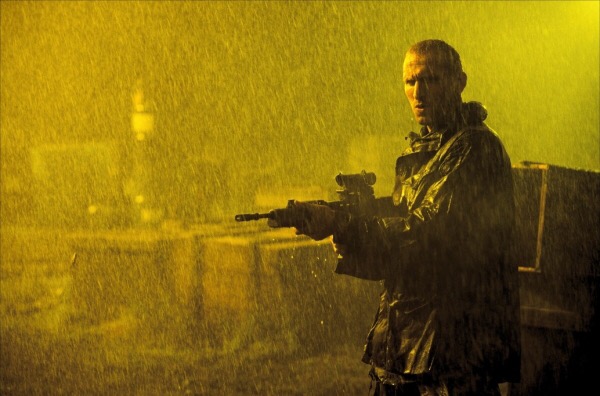
Tom Hardy in The Revenant
Mark Ruffalo in Spotlight
Sylvester Stallone in Creed

Best Director
Winner: The Revenant – Alejandro G. Iñárritu
The Big Short – Adam McKay
Mad Max: Fury Road – George Miller
Room – Lenny Abrahamson
Spotlight – Tom McCarthy

Adapted screenplay
Winner: The Big Short – Charles Randolph and Adam McKay
Brooklyn – Nick Hornby
Carol – Phyllis Nagy
The Martian – Drew Goddard
Room – Emma Donoghue

Original screenplay
Winner: Spotlight – Josh Singer & Tom McCarthy
Bridge of Spies – Matt Charman,Ethan Coen and Joel Coen
Ex Machina – Alex Garland
Inside Out – Pete Docter, Meg LeFauve, Josh Cooley; Original story by Pete Docter, Ronnie del Carmen
Straight Outta Compton – Jonathan Herman and Andrea Berloff; Story by S. Leigh Savidge, Alan Wenkus and Andrea Berloff

Cinematography
Winner: The Revenant – Emmanuel Lubezki
Carol – Ed Lachman
The Hateful Eight – Robert Richardson
Mad Max: Fury Road – John Seale
Sicario – Roger Deakins

Best Costume Design
Winner: Mad Max: Fury Road – Jenny Beavan
Carol – Sandy Powell
Cinderella – Sandy Powell
The Danish Girl – Paco Delgado
The Revenant – Jacqueline West

Best Animated Feature
Winner: Inside Out – Pete Docter and Jonas Rivera
Anomalisa – Charlie Kaufman, Duke Johnson and Rosa Tran
Boy and the World – Alê Abreu
Shaun the Sheep Movie – Mark Burton and Richard Starzak
When Marnie Was There – Hiromasa Yonebayashi and Yoshiaki Nishimura

Best Documentary Feature
Winner: Amy – Asif Kapadia and James Gay-Rees
Cartel Land – Matthew Heineman and Tom Yellin
The Look of Silence – Joshua Oppenheimer and Signe Byrge Sørensen
What Happened, Miss Simone? – Liz Garbus, Amy Hobby and Justin Wilkes
Winter on Fire: Ukraine’s Fight for Freedom – Evgeny Afineevsky and Den Tolmor

Best Documentary Short
Winner: A Girl in the River: The Price of Forgiveness – Sharmeen Obaid-Chinoy
Body Team 12 – David Darg and Bryn Mooser
Chau, beyond the Lines – Courtney Marsh and Jerry Franck
Claude Lanzmann: Spectres of the Shoah – Adam Benzine
Last Day of Freedom – Dee Hibbert-Jones and Nomi Talisman

Editing
Winner: Mad Max: Fury Road – Margaret Sixel
The Big Short – Hank Corwin
The Revenant – Stephen Mirrione
Spotlight – Tom McArdle
Star Wars: The Force Awakens – Maryann Brandon and Mary Jo Markey

Foreign language film
Winner: Son of Saul (Hungary)
Embrace of the Serpent (Colombia)
Mustang (France)
Theeb (Jordan)
A War (Denmark)

Production design
Winner: Mad Max: Fury Road – Production Design: Colin Gibson; Set Decoration: Lisa Thompson
Bridge of Spies – Production Design: Adam Stockhausen; Set Decoration: Rena DeAngelo and Bernhard Henrich
The Danish Girl – Production Design: Eve Stewart; Set Decoration: Michael Standish
The Martian – Production Design: Arthur Max; Set Decoration: Celia Bobak
The Revenant – Production Design: Jack Fisk; Set Decoration: Hamish Purdy

Make-up/hairstyling
Winner: Mad Max: Fury Road – Lesley Vanderwalt, Elka Wardega and Damian Martin
The 100-Year-Old Man Who Climbed out the Window and Disappeared – Love Larson and Eva von Bahr
The Revenant – Siân Grigg, Duncan Jarman and Robert Pandini

Best Original Score
Winner: The Hateful Eight – Ennio Morricone
Bridge of Spies – Thomas Newman
Carol – Carter Burwell
Sicario – Jóhann Jóhannsson
Star Wars: The Force Awakens – John Williams

Best Original song
Winner: Writing’s On The Wall from Spectre (Music and Lyric by Jimmy Napes and Sam Smith)
Earned It from Fifty Shades of Grey (Music and Lyric by Abel Tesfaye, Ahmad Balshe, Jason Daheala Quenneville and Stephan Moccio)
Manta Ray from Racing Extinction (Music by J. Ralph and Lyric by Antony Hegarty)
Simple Song #3 from Youth (Music and Lyric by David Lang)
Til It Happens To You from The Hunting Ground (Music and Lyric by Diane Warren and Lady Gaga)

Sound editing
Winner: Mad Max: Fury Road – Mark Mangini and David White
The Martian – Oliver Tarney
The Revenant – Martin Hernandez and Lon Bender
Sicario – Alan Robert Murray
Star Wars: The Force Awakens – Matthew Wood and David Acord

Sound mixing
Winner: Mad Max: Fury Road – Chris Jenkins, Gregg Rudloff and Ben Osmo
Bridge of Spies – Andy Nelson, Gary Rydstrom and Drew Kunin
The Martian – Paul Massey, Mark Taylor and Mac Ruth
The Revenant – Jon Taylor, Frank A. Montaño, Randy Thom and Chris Duesterdiek
Star Wars: The Force Awakens – Andy Nelson, Christopher Scarabosio and Stuart Wilson

Visual effects
Winner: Ex Machina – Andrew Whitehurst, Paul Norris, Mark Ardington and Sara Bennett
Mad Max: Fury Road A- ndrew Jackson, Tom Wood, Dan Oliver and Andy Williams
The Martian – Richard Stammers, Anders Langlands, Chris Lawrence and Steven Warner
The Revenant – Rich McBride, Matthew Shumway, Jason Smith and Cameron Waldbauer
Star Wars: The Force Awakens – Roger Guyett, Patrick Tubach, Neal Scanlan and Chris Corbould

Animated short film
Winner: Bear Story – Gabriel Osorio and Pato Escala
Prologue – Richard Williams and Imogen Sutton
Sanjay’s Super Team – Sanjay Patel and Nicole Grindle
We Can’t Live without Cosmos – Konstantin Bronzit
World of Tomorrow – Don Hertzfeldt

Live action short film
Winner: Stutterer – Benjamin Cleary and Serena Armitage
Ave Maria – Basil Khalil and Eric Dupont
Day One – Henry Hughes
Everything Will Be Okay (Alles Wird Gut) – Patrick Vollrath
Shok – Jamie Donoughue

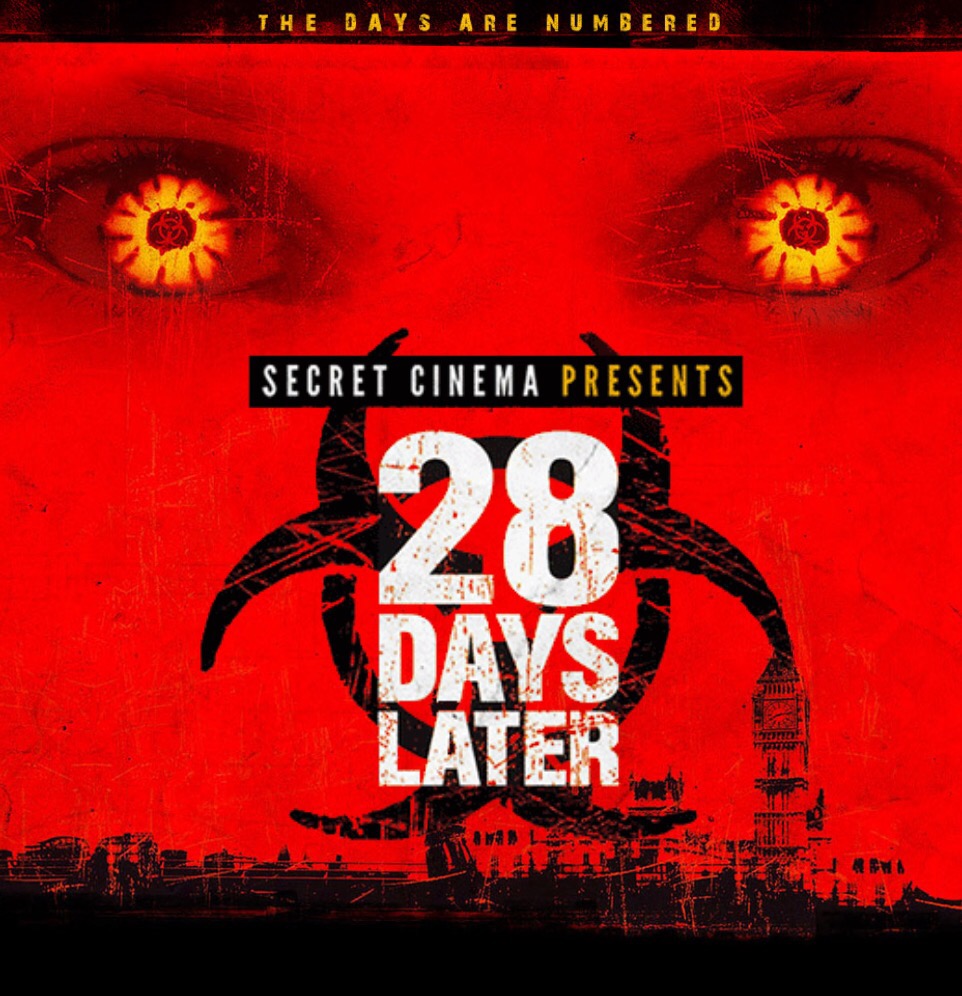
Secret Cinema February 2016 Preview – Update

Well, tomorrow’s the day that the Secret Cinema 2016 Tell No One event kicks-off. If you’re taking part this year you’ll no doubt be fully engrossed in the messages we’ve all been receiving as part of the D. O. C. S. organisation. 

The picture has become much clearer since I first wrote about the event in December. There have been a heap of clues left across social media about what film it will be. Based on my character description – Montgomery McCord of the Data Operations Department – and the costume I’ve been recommended to wear, I’m fairly confident of the film it will be.

However, playing along with the game doesn’t involve telling everyone what the answer is. I will be reviewing my time there, but that review will go live on 13th March 2016 so I don’t ruin it for anyone.

I may provide a spoiler-free guidance sheet after I attend, but the important thing is to get involved, take part, make a half-decent attempt at your costume and have a great time.

Enjoy it!

Film review – Play It Again, Sam (Herbert Ross, 1972)

‘Play It Again, Sam’ is unusual in that was written by and stars Woody Allen, but was actually directed by Herbert Ross. This is unmistakably a Woody Allen film, however, and an excellent one at that.

It stars Allen as the down-on-his-luck hypochondriac Allan Felix, a man who has recently been divorced by his wife. A writer of film commentary who is addicted to the film Casablanca, he has a fictional Humphrey Bogart as his guardian angel, offering him timely advice on love when required.

His friend Dick (Tony Roberts) and his wife Linda (Diane Keaton) are trying to encourage him to meet women so he can move on in his life. After several disastrous dates, Allan unexpectedly develops feelings for Linda, the one woman he is able to feel himself with.

playitagainsamscreen

“I had to go to Washington once when I was married, and even though I was the one leaving, I got sick; and when I returned, my wife threw up.”

This is a brilliant comedy that arrived very close to the start of Woody Allen’s film career. It contains some of his best self-defeatist one-liners, which would be equally at home in one of his stand-up routines.

It is a tight script that perhaps plays too predictably to a plot that writes itself from Linda and Allan’s first conversation. Predictability doesn’t necessarily mean a bad film though when the humour is this good. The over-coherence is probably due to the fact it originated as a Broadway play, though the film is heightened by a well-rehearsed cast, each of whom reprise their roles from the stage play that finished its run four years earlier.

The reason Allen wasn’t interested in directing this, according to an interview with Cinema Magazine around the time of release, was that he “didn’t want to spend a year doing a project I had done on Broadway… I would only be interested in working on original projects for the screen… [this will] hopefully entice a broader audience for me than I get with my own films.”

Whilst his intentions at the time may have been laced with cynicism, he ended up with one of his most celebrated pictures of a long and illustrious career.

Play It Again, Sam, is available now on Netflix, and can also be purchased on DVD. No Blu-ray has been released in the UK.

IMAX Film Festival – 27th February 2016

If you live in the UK and love blockbuster films on the big screen then you’re in luck. Cineworld have just announced they will be hosting the IMAX Film Festival on Saturday 27th February in all of their IMAX cinemas.

All tickets are £3!

The four films chosen for the day are:

  • Gravity 
  • The Martian
  • Jurassic World
  • Mad Max: Fury Road

The cinemas taking part are:

  • Ashton-under-Lyne
  • Birmingham – Broad Street
  • Birmingham NEC
  • Broughton
  • Castleford
  • Cheltenham
  • Chichester
  • Crawley
  • Edinburgh
  • Glasgow – GSC
  • Ipswich
  • London – Enfield
  • Nottingham
  • Sheffield
  • Stevenage
  • Telford

Check out the full story here and book tickets!

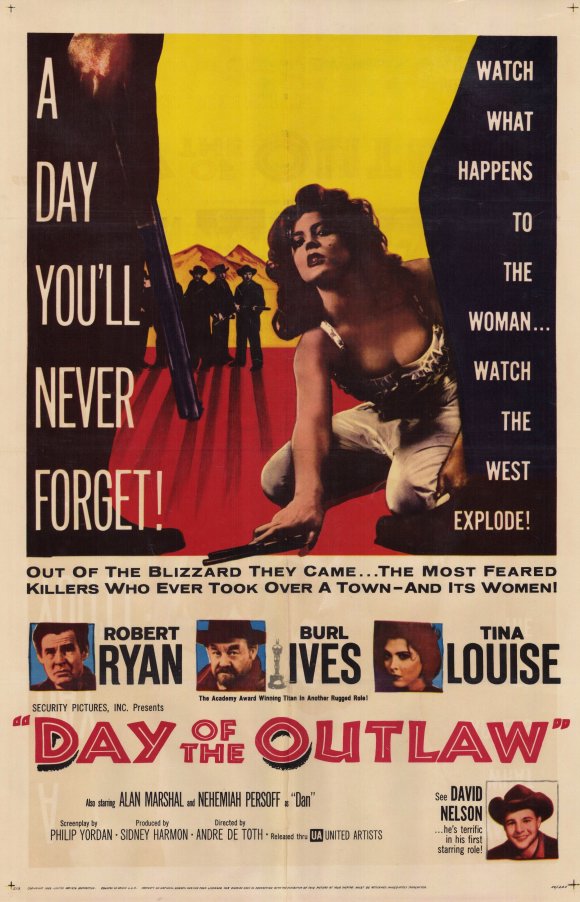
Film review – Day of the Outlaw (Andre De Toth, 1959)

Andre de Toth’s unusually complex Western ‘Day of the Outlaw’ has found its way onto the Master of Cinema label this month as a dual-format release. A forgotten and under-appreciated film, shining the spotlight on it will hopefully mean it finds a much-deserved wider audience.

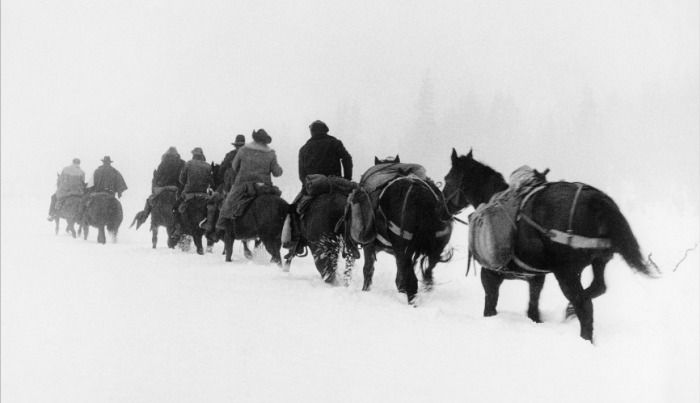
The film is set in an isolated town called Bitter in Wyoming. The story opens with a couple of men on horses riding towards the camera in a frosty snow storm. It is a clever opening scene by De Toth, setting up the rugged main character Blaise Starrett (Robert Ryan) with the ominous line, “I’m through with being reasonable.” We know he’s got a bone to pick with someone, with the assumption that we’re going to find out who and why pretty quickly. That we do.

What is essentially a boundry dispute about the location of a barbed wire fence reveals a hidden layer of complication when we learn that Blaise is having an affair with Helen Crane (Tina Louise), wife to Hal (Alan Marshal) of said boundry dispute. She seems absolutely loyal to her husband despite evidently being in love with Blaise.

As tensions continue to rise, the two men end up in a standoff that will likely lead to one or both being killed. This is poleaxed by the arrival of an out-of-town gang headed up by Jack Bruhn (Burl Ives), who pose a much greater threat to the men, their wives, their land and their livelihood.

dayoftheoutlawscreen

At 92 minutes long and a reported budget of just $400,000 (a little over $3m in 2016), De Toth has to work with what he has and work fast. It’s a great achievement that this was done so well, especially in what appears to be torrid weather conditions. Characters are fully realised despite often not being afforded enough screen time to develop them. A good example of this is young gang member Gene (David Nelson), who goes through an internal psychological journey in what amounts to about 10 minutes of screen time.

The film was cited by Quentin Tarantino as a reference point in the run up to The Hateful Eight and it’s easy to see the resemblance [1]. The opening sequence was a direct homage to Day of the Outlaw, with a long shot allowing the lead character(s) to naturally approach through a snow storm to join the viewer at the front of the screen. The secluded setting in increasingly worse weather, high tensions, conflicting characters having to live side-by-side whilst the story unfolds. Nothing is stolen, but it is clearly a film Tarantino rates.

Ryan’s Blaise makes a fantastic focal point around which the film plays out. He is a man who stands by his own morals. His affair with Helen is justified by him essentially saying he has no respect for her husband and thinks she deserves better. He undertakes an openly noble act of self-sacrifice for the good of the townspeople he thinks little of, though refuses to take any credit for it. He is the film’s only hero and he plays it coolly throughout. It isn’t Ryan’s most celebrated role but one worthy of a second look if you’re a fan.

Day of the Outlaw may be a flawed film but there’s enough on offer for fans of the anti-Western subgenre that seems to have found its way back to popular interest following the likes of Django Unchained, The Hateful Eight and The Revenant. If you liked any of these films then this is worth checking out.

[1] In an interview with Entertainment Weekly, Tarantino stated, “I can definitely say that as bleak as our movie is, we are definitely the funniest snow Western ever made. This is funnier than The Great Silence, it’s funnier than Day of the Outlaw.” Quite what he means by this isn’t exactly clear. There isn’t much humour in Day of the Outlaw.

Film review – みな殺しの拳銃 / Massacre Gun (Yasharu Hasebe, 1967)

A stylish yakuza film originally released in 1967, みな殺しの拳銃 / Massacre Gun has received a lovingly-created remastering by Arrow Video that’s well worth picking up for fans of the genre.

The plot concerns three brothers. Ryûichi (Joe Shishido) is the eldest; he’s level-headed but he’s also a member of the Akazawa yakuza gang, turning on his employees when he is forced to murder his lover. Eiji (Tatsuya Fuji) is the middle brother – hot-headed but loyal to his siblings. The youngest, Saburo (Jiro Okazaki), is an aspiring boxer who over-exerts himself at a training session to prove his worth, infuriating the yakuza bosses who now have an injured star fighter. When the yakuza seek retaliation on him and ruin his career, this is the catalyst for their feud to quickly get out of control. Tensions rise as the stand-off escalates to full-blown gang warfare and a brutal final shootout.

The film oozes style. The sultry jazz soundtrack provided by Naozumi Yamamoto is almost a character in itself, providing an edge to the sharply-dressed brothers and the gritty world they inhabit. The monochromatic tones serve the film in a way that full-colour just wouldn’t have achieved.

massacre gun still

There’s a unique edge to everything that happens in the film, which is clearly an attempt by Yasharu Hasebe to mirror typical American film noirs. The world these characters isn’t a world that a typical viewer is familiar with outside of cinema, though the dedication to the genre is so absolute that it becomes absorbing. True, there are better film noirs out there, though few give themselves so absolutely to the concept of film noir itself.

However, there is something extraordinarily off-putting about the appearance of lead actor Joe Shishido. His cheeks seem puffed-up and almost chipmunk-like. Apparently, and I only found this out after seeing the film, this was by choice. He had his cheekbones enhanced to give himself a more masculine appearance. This really isn’t the case. In this particular film he looks like the most unlikely of lead actors, especially alongside his two brothers. It is an unnatural appearance, though it has the unintentional affect of providing Shishido with a heightened sense of being the underdog, which plays into the plot wonderfully.

This is a mere minor annoyance in an otherwise perfectly good film. It lacks the notoriety of the more popular Shishido yakuza film noir released in the same year – Branded To Kill – but both seems to inhabit the same world and will reward fans of the genre willing to seek it out.

Massacre Gun is out now on Arrow Video dual format Blu-ray and DVD, limited to 3000 copies.

Haiku film review #001 – The Revenant

In preparation for my upcoming trip to Japan, I will be putting out haiku film reviews every Friday.

For those unaware, a haiku is a form of Japanese poetry with a 17-syllable structure set up as 5-7-5.

The first one is a film I reviewed properly just yesterday, The Revenant.

Leo’s in fine form.
Almost gets killed by a bear,
Should win an Oscar.