Riley’s emotions
And imaginary friend
Made you cry a bit.
Category / Cinema

Why AMC allowing mobile phone usage is short-sighted
The news of the AMC chain of multiplex cinemas in USA announcing plans to allow cinema-goers to text during films is probably the worst film-related news I’ve heard in a long time. AMC chief executive Adam Aron has shown himself to be completely out-of-touch with the paying cinema-goers to a level that is beyond my comprehension.
There are still many great reasons to go to the cinema. Watching the latest films on the best available format is an experience that continues to be unrivalled in the home cinema market. No matter how much you spend on your setup at home, you can’t replicate sitting down and watching at a huge 4K huge screening with Dolby surround sound in a perfectly dark cinema. Being transported into a different world with no distractions for a couple of hours is the whole point of going to the cinema.
Whilst it is an almost perfect experience for me, there are a number of things that have crept in in recent times that have marred my experience as a cinema-goer. The primary things I get infuriated about going to the cinema are as follows:
· People talking
· People eating overly-pungent or crunchy food
· People using their mobile phones
· The cinema management and employees doing nothing to prevent any of the above
I think most or all of the above issues are annoyances shared with all other cinephiles around the world. They are also wholly avoidable by having strict policies at the cinema.
The generalisation from Aron that he wants to allow texting to encourage millennials is a short-sighted statement that indicates he hasn’t actually been to the cinema recently. A 50-year-old man who has just left his office is just as likely to text as a 16-year-old out with their friends.
One generalisation I will make is that the kinds of people who text during films are the kinds of people who will also be happy to talk through films. Neither group really care about the film they’re supposed to be watching, they’re just going through the motions. Let’s face it, if you’re on your phone, you aren’t watching a film.
If Aron is happy to drive away a large amount of AMC’s market share with this tactic then that’s fine, as long as other cinemas don’t follow suit. Unfortunately, for cinema purists seeing this kind of attitude just encourages us to stay away.
The only solution is to have a blanket ban on texting and phone use during films. If anyone uses their phone, they should be ejected with no second chances. Doing this and guaranteeing the purity of a trip to the cinema will protect the current revenue in cinemas. If tickets are being charged at £8 or more for a standard ticket then a trip to the cinema is a luxury night out and this should be reflected on the experience.
Guaranteeing a good and hassle free experience will encourage the current customers to go back again after the slow decline due to this very issue.
Allowing mobile phone usage will just be another nail in the coffin for cinemas.
Visit to Fruit Candy Café in Akihabara, Tokyo
When people visit Japan, it is often the case that they do so to find “the real Japan”. This is a great phrase that means something different to everyone who visits. For some this means going to as many Buddhist shrines and temples as possible (regardless of their religious persuasions), for others it means eating only Japanese food and only with chopsticks. For a select few, the weird and wonderful side of Japan is the place to be. You know – the places where you’ll be able to start your anecdotes with the words “You’ll never guess what they have in Japan…”.
This is how we found ourselves in the Akihabara district of Tokyo. Akihabara is the perfect location if you’re partial to manga, anime, maid cafés, robots and the like. A typical otaku hangout.
Fruit Candy Café is an igaru café in Akihabara. Igaru cafés are places you go to and pay to enjoy your drinks with the added novelty of being able to play with extremely well-groomed and adorable rabbits as you do so.
It costs 1300¥ per person for thirty minutes of all-you-can-drink coffee and tea and as much play as you can manage with the huge selection of rabbits available to choose from. A set of rules is provided that includes no shoes in the café, no photos of the staff and no cuddling the rabbits (a weird one but really it just meant no aggressive man-handling of the rabbits). We managed to spend time with four different rabbits of different breeds, some more friendly than others, but all extremely cute.

One tip: if you are going to go, make sure you spend 200¥ more to get the rabbit feed. Some of our rabbits weren’t interested until we could offer them some nibbles.
Another tip: it’s actually really difficult to find. Luckily a wonderful guide has been provided here. It was actually a lifesaver for us as we had been wandering around for about 30 minutes before jumping on the local wi-fi and stumbling across that website. We couldn’t have done it without you!
It was a bizarre experience, but that’s what you expect when you come to this part of Tokyo. A unique, bizarre, very Japanese experience.
Theatre Review – ‘Hikosan Gongen Chikai No Sukedachi’ at the Kabukiza Theatre in Tokyo,02/04/2016
The Kabukiza Theatre in Tokyo is the primary theatre in Tokyo to watch traditional kabuki theatre. The theatre is stunning both inside and out, designed in a traditional manner despite the many reconstructions over the years. Seeing a show there is a must for anyone visiting Tokyo wanting to see traditional Japanese theatre done properly.
What is kabuki theatre?
Kabuki is a traditional form of Japanese entertainment. The name literally means sing-dance-skill. It was allegedly first performed in the 17th century and has continued to be popular throughout the intervening period.
Theatrical productions in the kabuki style tend to be in five acts. They are typified by stark make-up and fanciful costumes, with performers striking “mie” (kabuki-style picturesque poses) as they deliver their lines. Audience members will shout out the actors’ Yagō (house name) to show their appreciation.
The stage consists of a typical framed stage as you’d expect in any Western-style play. Uniquely, however, kabuki theatre stages have a hanamichi – a walkway protruding out of the stage on which performers make dramatic entrances and exits from the stage.
How do I get tickets?
Each month a new programme of single act shows is performed, making up approximately four hours of performances in the afternoon and four hours of performances in the evening. Multi-act tickets for either the afternoon or evening performances can be bought in advance either at the box office or online, though those only wanting to see a single act can turn up at pre-determined time slots to buy cheap single-act tickets from the box office. This is the option we chose.
A word of warning on this – they operate a queuing system and only 150 tickets are available for each act, with only the first 90 getting seats. The remaining 60 stand behind the seats. It is also almost impossible to get tickets in this way for consecutive acts as the timeslot for the next set of tickets usually lands in the middle of the prior performance. Basically, if you want to see the whole show you need to buy in advance, though for newcomers one act is usually enough.
For 1000 JPY you can also rent an English subtitle box. This is essential for your enjoyment of the show and can’t be recommended enough.
Where is it?
The Kabukiza Theatre is located in the Ginza area of Tokyo. The best subway stop to reach it is at Higashi-Ginza station on the Toei Asakusa Line. The main box-office is located in the subway station along with a small market and several coffee shops and restaurants. Single-act tickets must be purchased upstairs at the dedicated box office outside the theatre.
Review – ‘Hikosan Gongen Chikai No Sukedachi’
‘Hikosan Gongen Chikai No Sukedachi’ is a single-act play that is showing at the Kabukiza Theatre throughout April. It makes up half of the evening performance, with a second unrelated story following.
The storyline centres around Keyamura Rokusuke (Kataoka Nizaemon), a farmer and master swordsman living at the base of Mt. Hiko, who we are introduced to shortly after the death of his mother. A proclamation has been made that any man who can defeat Rokusuke in a sword fight will be put into immediate employment by the ruler of Kokura. One night, when Rokusuke is praying for his mother, Mijin Danjo (Nakamura Karoku) a masterless samurai passes by with his old mother. Danjo asks Rokusuke to let him win the sword match under the premise that it will show him to be a good son to his mother, who is close to death. Rokusuke is touched by this suggestion and immediately promises to throw the fight. However, once the fight is thrown, Rokusuke discovers that Danjo isn’t as trustworthy and honorable as he first thought.
At one hour and thirty-five minutes, the play was a perfect length for someone new to kabuki theatre. As an English speaker who couldn’t really pick up most of what was being said in Japanese, the subtitles worked perfectly well.
It is a uniquely Japanese experience that doesn’t, in truth, compare to anything I’ve seen anywhere else. However, that doesn’t mean it’s difficult to access and within a few minutes I was completely engrossed in what was going on on stage.
Kataoka Nizaemon XV is a popular kabuki actor and his nuances were well received by the audience. He was recently awarded with the title of National Living Treasure in Japan. This is really a one-man-show and he carries it perfectly, utilising moments of real sorrow for a man missing his mother and juxtoposing them with tremendous comedy as he deals with the various women residing at his home as well as an adopted son.
If you enjoy surprises it is advised that you don’t read the synopsis before you go in as it very much reveals everything you will see performed, including the conclusion of the final act. Indeed, this is a play that ends on a cliffhanger without playing out the story to a defined conclusion, leaving the audience to take the story on in their own heads to wonder and assume what happens to the featured characters further down the line. This may come as a surprise to those expecting a satisfyingly concise ending, but this is a performance that sticks to the original script rather than tinkering to please modern audiences.
As an art form, kabuki is more accessible than most would expect and the opportunity to see it in Japan should be seized, especially with great seats available at such reasonable prices. It’s something I hope to enjoy again in the future and hope you do too.
Haiku film review #019 – Godzilla
So I’ve just got back from an amazing trip to Japan. We were lucky enough to be there during cherry blossom season. So, on a slightly overcast afternoon at Ueno Park in Tokyo I enjoyed the festivities and spent some time under the sakura writing haiku poems about Japanese films.
The first one was about Godzilla:
This giant monster
Is a thinly-veiled reference
To nuclear bombs
Haiku film review #017 – Star Wars: Return of the Jedi
A trilogy ends.
It’s the last good Star Wars film
For thirty-three years.

Film review – Grimsby (Louis Letterier, 2016)
If you live outside the UK, it’s unlikely you have ever heard of Grimsby before. A middle-sized coastal town in East Lincolnshire, Grimsby was once famed for its fishing industry, though it is now in post-industrial decline. There are plenty of towns just like Grimsby dotted around the UK, though none of them have a huge blockbuster movie named after them.
This tale involves two brothers.Sebastian (Mark Strong) is a top class secret agent who we get introduced to during an exilerating first-person opening scene. All action, no messing – a man set up as a lone wolf. In contrast, his older brother Nobby (Sacha Baren-Cohen) is living in a run-down area of Grimsby with his girlfriend Dawn (Rebel Wilson) and countless children whose names include Skeletor and Django Unchained. Fostered and split up at birth, it is true that they have lived entirely different lives. An incident at a charity event led by the suspicious Rhonda George (Penelope Cruz) brings them back together but also leads to a manhunt for Sebastian. The brothers must team up and go on the run to prove his innocence and save the world.

Critical response for this film has been mixed to negative, and I’d braced myself for the worst after an unrewarding time watching The Dictator. However, this was a unexpectedly rewarding experience.
The storyline is fairly generic but well executed, serving as a solid platform for some massively hilarious scenes involving the two leads. Strong makes for a surprisingly effective comedic straight man, when it would have been much easier to play the part for laughs.
Cohen yet again proves to have chameleonic abilities to perform as a character far removed from his real-life persona. Whilst the more disgusting scenes may be the most memorable (three spoiler-free words: poison, elephants, fireworks), the film does have some satirical messages it does well to sneak in. True, the climactic battle speech he delivers is a little too obvious, but elsewhere there’s a lot going on that shows it has more than just a tea-bagging gag to offer.
It is definitely going to feel dated due to the overuse of jokes relevant only to 2016, possibly only to the UK, but for now it’s worth a punt.
An unexpectedly good film with lots of laughs.
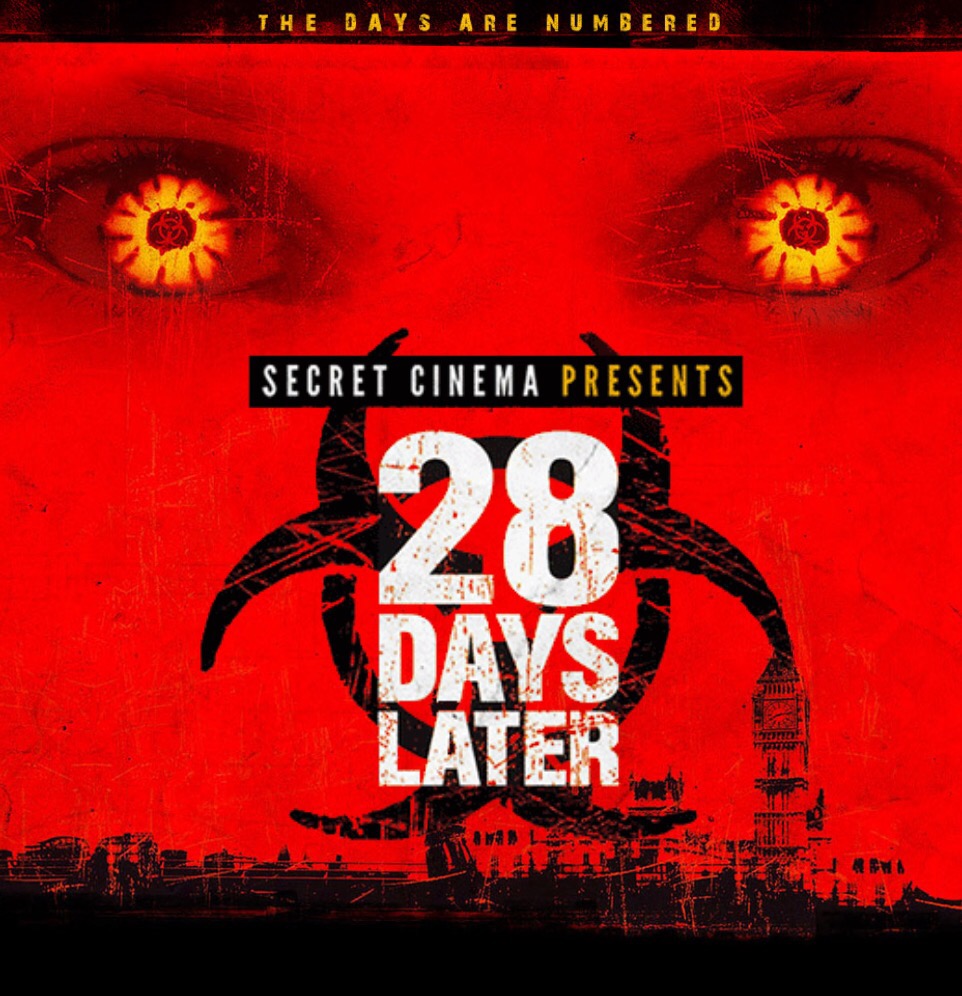
Secret Cinema: 28 Days Later Preview
It’s back and it’s hungry for flesh!!
Secret Cinema have announced their next big event. It’s a good one! Read on for more details.
What is Secret Cinema?
Secret Cinema is a company that specialises in totally immersive cinema experiences. You spend an evening totally absorbed in surroundings typical of the film on which the night is based.
There are two types of event Secret Cinema organises. Both are highly similar but with subtle differences.
Secret Cinema: Tell No One (not this event)
The first is the kind they made their names doing – completely secret smaller events for films many would consider to be cult classics. Nobody knows the film until they show up, and from then on anything can happen.
When they tackled The Shawshank Redemption, for example, people were snarled at by an angry police officer who informed them they were all convicts. He then walked them, single-file, through a busy shopping centre to their transport to a local high-security prison. It’s all good-spirited and great fun for those with an interest in surprises and adventure. The recent Tell No One event falls into this category (and is still going on so the name of the film won’t be revealed).
Secret Cinema Presents (this event)
The second type tend to be larger in scale and the film is announced well in advance. This is the category last year’s Empire Strikes Back event falls into, along with the previous year’s Back to the Future. Both were excellently received and left people wanting more large-scale events.
The latter type is better for those unfamiliar with more obscure films who want to know that they’ll enjoy the night before they attend and pay for the tickets.
Either way, whatever they do the nights are always highly immersive experiences and well worth the money. They have carved out a massive area of the market that most people didn’t even think existed.
What’s the next event?
This next event in their calendar is Danny Boyle’s zombie survival horror 28 Days Later. It is a Secret Cinema Presents night, so the film is common knowledge. No surprises this time around!
What’s the film like?
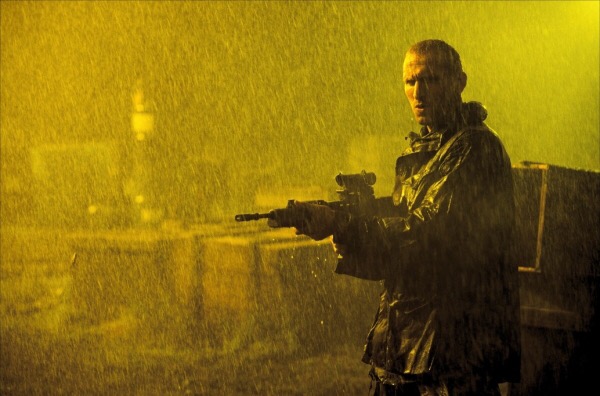
28 Days Later revolutionised the popularity of zombie films as a genre. It was a shift in terms of the technology used. Boyle used Canon XL1 digital video cameras to allow the manoeuvrability to shoot the desolate London scenes, but they had a knock-on effect that gave the film a sort of CCTV-type feeling to it, like it was recovered footage. It starts with the lead character Jim (Cillian Murphy in his breakthrough role) waking up from a coma in a hospital with no knowledge of how he got there.
We learn what’s happening as he does, finding fellow survivors along the way and hoping to reach some kind of freedom. It captured the imagination of cinema-goers during its original release, instantly becoming a hit in both the UK and USA.

What can we expect?
It would be easy to jump to the conclusion that it is really just any excuse to do a zombie-themed event. Anyone who has experience of Secret Cinema will know that this is very unlikely.
The event will, inevitably, involve hoards of zombies. One way that the film kept us gripped is the constant use of impending terror. It was the first film to use running zombies, so expect these to be present at the event too. Better take your running shoes!
I imagine it will incorporate the military as a key element. In the film they weren’t necessarily to be trusted, and there’s a fantastic scene in a fortified mansion that could utilise the open-air quite well if that’s the path they choose to go down.
Whether or not we’ll be killing zombies or just avoiding them remains to be seen. If we are doing that, it will need to be reasonably safe or there could be some serious injuries. No head-shots people!
Clothing is always a key part of the events and advice on outfits will be sent out in advance. It’s possible that it will be one of the easiest Secret Cinema events to dress for. The film is set in the present day (or ten years ago at least) and presumably we won’t be asked to dress up as zombies. I’d imagine it will be a case of wearing anything for once rather than trying to get hold of any specific costumes. No desperate searches for tan and black scarves required this time! Perhaps a medical outfit will be required for some people.
It will be a great experience to witness a modern cult classic on a massive screen with an enthusiastic audience.
How do I buy tickets?
Tickets are on sale for the event right now and are selling fast. Head to the official webpage for more details.
Haiku film review #005 – Deadpool
Offensive Marvel.
Charming chatterbox Reynolds.
Surprisingly fun.
Academy Awards 2016 – Full List of Winners
Best picture
Winner: Spotlight
The Big Short
Bridge of Spies
Brooklyn
Mad Max: Fury Road
The Martian
The Revenant
Room
Best actress
Winner: Brie Larson in Room
Cate Blanchett in Carol
Jennifer Lawrence in Joy
Charlotte Rampling in 45 Years
Saoirse Ronan in Brooklyn
Best supporting actress
Winner: Alicia Vikander in The Danish Girl
Jennifer Jason Leigh in The Hateful Eight
Rooney Mara in Carol
Rachel McAdams in Spotlight
Kate Winslet in Steve Jobs
Best actor
Winner: Leonardo DiCaprio in The Revenant
Bryan Cranston in Trumbo
Matt Damon in The Martian
Michael Fassbender in Steve Jobs
Eddie Redmayne in The Danish Girl
Best supporting actor
Winner: Mark Rylance in Bridge of Spies
Christian Bale in The Big Short
Tom Hardy in The Revenant
Mark Ruffalo in Spotlight
Sylvester Stallone in Creed
Best Director
Winner: The Revenant – Alejandro G. Iñárritu
The Big Short – Adam McKay
Mad Max: Fury Road – George Miller
Room – Lenny Abrahamson
Spotlight – Tom McCarthy
Adapted screenplay
Winner: The Big Short – Charles Randolph and Adam McKay
Brooklyn – Nick Hornby
Carol – Phyllis Nagy
The Martian – Drew Goddard
Room – Emma Donoghue
Original screenplay
Winner: Spotlight – Josh Singer & Tom McCarthy
Bridge of Spies – Matt Charman,Ethan Coen and Joel Coen
Ex Machina – Alex Garland
Inside Out – Pete Docter, Meg LeFauve, Josh Cooley; Original story by Pete Docter, Ronnie del Carmen
Straight Outta Compton – Jonathan Herman and Andrea Berloff; Story by S. Leigh Savidge, Alan Wenkus and Andrea Berloff
Cinematography
Winner: The Revenant – Emmanuel Lubezki
Carol – Ed Lachman
The Hateful Eight – Robert Richardson
Mad Max: Fury Road – John Seale
Sicario – Roger Deakins
Best Costume Design
Winner: Mad Max: Fury Road – Jenny Beavan
Carol – Sandy Powell
Cinderella – Sandy Powell
The Danish Girl – Paco Delgado
The Revenant – Jacqueline West
Best Animated Feature
Winner: Inside Out – Pete Docter and Jonas Rivera
Anomalisa – Charlie Kaufman, Duke Johnson and Rosa Tran
Boy and the World – Alê Abreu
Shaun the Sheep Movie – Mark Burton and Richard Starzak
When Marnie Was There – Hiromasa Yonebayashi and Yoshiaki Nishimura
Best Documentary Feature
Winner: Amy – Asif Kapadia and James Gay-Rees
Cartel Land – Matthew Heineman and Tom Yellin
The Look of Silence – Joshua Oppenheimer and Signe Byrge Sørensen
What Happened, Miss Simone? – Liz Garbus, Amy Hobby and Justin Wilkes
Winter on Fire: Ukraine’s Fight for Freedom – Evgeny Afineevsky and Den Tolmor
Best Documentary Short
Winner: A Girl in the River: The Price of Forgiveness – Sharmeen Obaid-Chinoy
Body Team 12 – David Darg and Bryn Mooser
Chau, beyond the Lines – Courtney Marsh and Jerry Franck
Claude Lanzmann: Spectres of the Shoah – Adam Benzine
Last Day of Freedom – Dee Hibbert-Jones and Nomi Talisman
Editing
Winner: Mad Max: Fury Road – Margaret Sixel
The Big Short – Hank Corwin
The Revenant – Stephen Mirrione
Spotlight – Tom McArdle
Star Wars: The Force Awakens – Maryann Brandon and Mary Jo Markey
Foreign language film
Winner: Son of Saul (Hungary)
Embrace of the Serpent (Colombia)
Mustang (France)
Theeb (Jordan)
A War (Denmark)
Production design
Winner: Mad Max: Fury Road – Production Design: Colin Gibson; Set Decoration: Lisa Thompson
Bridge of Spies – Production Design: Adam Stockhausen; Set Decoration: Rena DeAngelo and Bernhard Henrich
The Danish Girl – Production Design: Eve Stewart; Set Decoration: Michael Standish
The Martian – Production Design: Arthur Max; Set Decoration: Celia Bobak
The Revenant – Production Design: Jack Fisk; Set Decoration: Hamish Purdy
Make-up/hairstyling
Winner: Mad Max: Fury Road – Lesley Vanderwalt, Elka Wardega and Damian Martin
The 100-Year-Old Man Who Climbed out the Window and Disappeared – Love Larson and Eva von Bahr
The Revenant – Siân Grigg, Duncan Jarman and Robert Pandini
Best Original Score
Winner: The Hateful Eight – Ennio Morricone
Bridge of Spies – Thomas Newman
Carol – Carter Burwell
Sicario – Jóhann Jóhannsson
Star Wars: The Force Awakens – John Williams
Best Original song
Winner: Writing’s On The Wall from Spectre (Music and Lyric by Jimmy Napes and Sam Smith)
Earned It from Fifty Shades of Grey (Music and Lyric by Abel Tesfaye, Ahmad Balshe, Jason Daheala Quenneville and Stephan Moccio)
Manta Ray from Racing Extinction (Music by J. Ralph and Lyric by Antony Hegarty)
Simple Song #3 from Youth (Music and Lyric by David Lang)
Til It Happens To You from The Hunting Ground (Music and Lyric by Diane Warren and Lady Gaga)
Sound editing
Winner: Mad Max: Fury Road – Mark Mangini and David White
The Martian – Oliver Tarney
The Revenant – Martin Hernandez and Lon Bender
Sicario – Alan Robert Murray
Star Wars: The Force Awakens – Matthew Wood and David Acord
Sound mixing
Winner: Mad Max: Fury Road – Chris Jenkins, Gregg Rudloff and Ben Osmo
Bridge of Spies – Andy Nelson, Gary Rydstrom and Drew Kunin
The Martian – Paul Massey, Mark Taylor and Mac Ruth
The Revenant – Jon Taylor, Frank A. Montaño, Randy Thom and Chris Duesterdiek
Star Wars: The Force Awakens – Andy Nelson, Christopher Scarabosio and Stuart Wilson
Visual effects
Winner: Ex Machina – Andrew Whitehurst, Paul Norris, Mark Ardington and Sara Bennett
Mad Max: Fury Road A- ndrew Jackson, Tom Wood, Dan Oliver and Andy Williams
The Martian – Richard Stammers, Anders Langlands, Chris Lawrence and Steven Warner
The Revenant – Rich McBride, Matthew Shumway, Jason Smith and Cameron Waldbauer
Star Wars: The Force Awakens – Roger Guyett, Patrick Tubach, Neal Scanlan and Chris Corbould
Animated short film
Winner: Bear Story – Gabriel Osorio and Pato Escala
Prologue – Richard Williams and Imogen Sutton
Sanjay’s Super Team – Sanjay Patel and Nicole Grindle
We Can’t Live without Cosmos – Konstantin Bronzit
World of Tomorrow – Don Hertzfeldt
Live action short film
Winner: Stutterer – Benjamin Cleary and Serena Armitage
Ave Maria – Basil Khalil and Eric Dupont
Day One – Henry Hughes
Everything Will Be Okay (Alles Wird Gut) – Patrick Vollrath
Shok – Jamie Donoughue
 Cinema, etc.