Film review – Silence (Martin Scorsese, 2017)

For much of Silence, Martin Scorsese’s Japan-set epic about Christian missionaries in the 1600s, I was desperately trying to enjoy myself. Eventually I did, but that was only when I realised how much Andrew Garfield looked like a young Barry Gibb and I started to re-imagine the plot as a bizarre Bee Gees origin story.
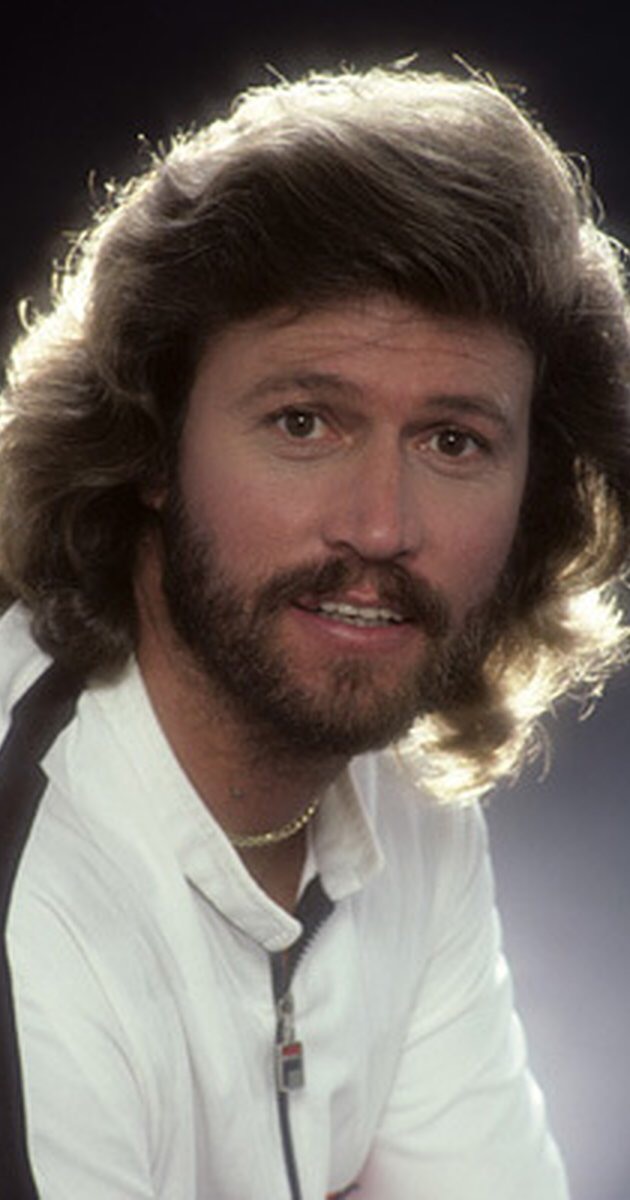
Andrew Garfield stars as Barry Gibb

The film maps the journey of two young Portuguese Jesuit Christian missionaries: Father Sebastian Rodrigues (Garfield) and Father Francisco Garupe (Adam Driver). In 1640 they travel to Japan in the hope of finding Father Ferreira (Liam Neeson), their teacher and mentor that they have learned has apostatised and converted to the Japanese way of life and assumed a Japanese identity.

The first thing that will disappoint you when you watch the film is the ridiculous decision to have the actors speaking in English throughout. It makes no sense. Why get English-speaking actors in and have them speak with a decreasingly dedicated accent? Why not just get a Brazilian or Portuguese actor to take the role? What we end up with is a couple of  vaguely Spanish voices, that slowly drift in and out of authenticity.

It eventually comes to a head with a hilarious low point when Garfield shares a scene with translator Tadanobu Asano, who is of course speaking in English but with a Japanese accent. If you’ve got two characters deciding to speak in Portuguese but doing so in English before carrying on in English, then you’ve got a problem. It’s simply crazy. I’d much rather the filmmakers have some faith in their viewers and play to the story’s authenticity rather than this lacklustre compromise. At least Liam Neeson had the guts to “pull a Connery” and stick to his own accent.

The other letdown is the overall pacing, which felt like it was deliberately slow. I put this down to Scorsese’s closeness to the project (he originally acquired the rights to Endo Shusaku’s book in 1989 during the making of Goodfellas). At 161 minutes long, there must have been some scope to reduce the total running time. Arguably this is an expansive story that needs time to breathe and the slow pace as Rodrigues gets drawn away from his faith is perfect for the story. It’s just not all that enjoyable.

It is a film of juxtapositions. The beautiful cinematography captures the landscapes of rural Japan in a way that transports you straight backwards 400 years, but there are some suspicious CGI moments that felt out of place. The wonderful costumes aren’t matched by some of the hair and make-up efforts. The quality acting is lost amongst the tangled web of accent approximations.

It feels epic, but the reality is nothing but a disappointment.
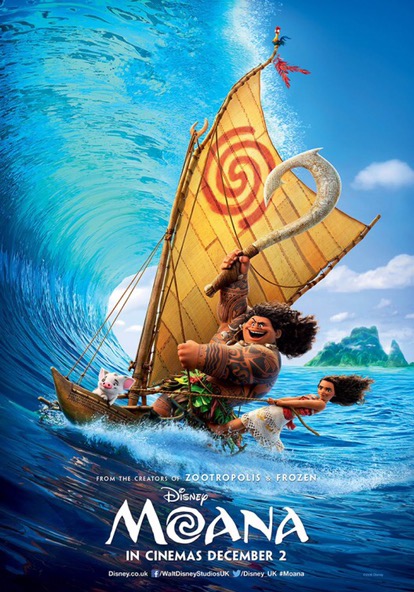
Disney’s Moana as a Video Storybook

I was looking at the videos uploaded onto the Disney YouTube channel and I was surprised at how much content was on there for their latest film Moana. So, I decided to see how much of the story could be pieced together and found there was essentially quite a bit of the first half of the film freely available.

Needless to say, this is full of spoilers. The purpose is to help provide some joy to those of us who’ve seen the film but can’t wait until the home video release later this year to enjoy the various elements. It is truly a wonderful film and you can read my original review here, along with a fact sheet here.

After you’ve read it, make sure to pre-order your copy for home viewing in all its glory here!

Prologue

In a prologue, we learn about the mystical pounamu stone, which is the heart of goddess Te Fiti. Demigod Maui steals the stone to give as a gift to humanity, but as he escapes with the stone he is attacked by Te Kā, a lava demon, in the process losing the pounamu heartstone along with a fishhook that grants him magical powers.

Act 1

1000 years later, our story begins with a small Polynesian island called Motunui. Here we find Moana Waialiki, a small child who is the daughter of Chief Tui and therefore set to become leader of the island tribe. As a baby, she appears to have a mystical connection with the sea.

A montage of Moana growing up occurs throughout the song “Where You Are” (video includes audio only). Her affinity to the sea is reinforced throughout the song, along with the importance of the natural crops and resources the island provides.

The islanders are growing in concern for their crops and fish, which are unexpectedly dying. Unbeknown to them, the cause of this is the missing pounamu heartstone. 

Moana wishes to leave the island to find more fish, but her father wants her to stay on the island. She makes a first attempt at leaving the island via the song “How Far I’ll Go”, along with her trusty pet Pua the pig.

Moana has a chat with Gramma Tala to help decide what to do.

We are further introduced to the ways of Moana’s island via the song “We Know The Way”, which is a celebration of voyaging as the pride the fishermen find in their navigation and fishing skills. This is a musical interpretation of what Moana reads on the inside of a cave in ancient wall paintings.

Gramma Tala reveals that she has had the heartstone and gives it to Moana. She also reveals a hidden cave of boats from the island’s past life as voyagers. 

Sadly, Gramma Tala dies, and with her final breath tells Moana to set sail. She does this, but unbeknownst to her she does this with incompetent chicken Heihei as her only companion. The “How Far I’ll Go” reprise plays.

Act 2

Moana encounters a terrible storm, which throws her from her boat and leaves her unconscious. 

When she wakes, she discovers she is on a deserted island, though one other inhabitant is there: the demigod Maui.

Maui introduces himself, wowing Moana as he sings “You’re Welcome”. This is also a cunning ploy to steal her boat to escape the island, though he leaves her on the island alone and trapped inside a cave.

Moana breaks free from the cave and attempts to swim after Maui. The ocean helps reunite the pair.

They resolve their differences and Moana convinces Maui that to be a true hero he must return the pounamu heartstone to its rightful place to restore harmony to the sea, agreeing also to help him retrieve his magical fishhook on the way.

Shortly after, they encounter the coconut pirates Kakamora, who wish to steal the heartstone.

They then visit the giant crab Taratoa, who has a cave of jewels and gold that he uses to attract fish to his cave to eat them. He is in possession of Maui’s fishhook.

Maui and Moana work together to steal back the fishhook and they set sail again.

Act 3

Shortly after, Maui teaches Moana about “wayfinding” as he realises that she has never sailed before.

They set sail to return the heart to Te Fiti, but when they arrive they are attacked by the fire demon Te Kā, who damages Maui’s fishhook in the process and also repels them in their boat far out to the ocean. Maui leaves for fear of yet more damage to his hook, which will result in him losing his magical powers.

Moana returns to Te Kā alone, and as she does this Maui returns, having had a change of heart. This time Moana asks the ocean to help clear a path between her and Te Kā, and she sings “I Am Moana” to remind the goddess of who she really is, thus allowing her to restore her heart. With Te Fiti restored, she thanks Moana with a new boat and a replacement fishhook for Maui.

Moana says farewell to Maui and returns to her island, which begins to thrive under the new conditions.

Deleted Scenes

Disney have since published some additional scenes, destined for the Blu-ray (due out in March 2017).

Film review – Passengers (Morten Tyldum, 2016)

It’s fun to slam a bad film, isn’t it? Hand us a terrible film and we’re all there ready with our sticks to beat it down. It’s funny, because the filmmakers have no control over it and we get away with having a good laugh at their expense.

Passengers has been that film for the last couple of weeks.

I’ve had an article shared to me with some photos that prove how creepy Chris Pratt is in it. I had another one sent over about how it had failed at the box office after poor reviews. Generally the early reviews were positive, then the consensus changed and everyone has now decided it’s a poor film, so that’s the stance everyone has taken. Even positive reviews have misleadingly negative titles to ensure they don’t buck the trend (News.com.auhad a favourable review but they titled it “What was Jennifer Lawrence thinking?”).

The three people who sent me the above articles have no intention of watching Passengers. That is entirely their loss.

Passengers is an excellent film.

There’s more to this than the reviews have suggested

Spoilers now follow.

At its heart, it is a romantic drama that explores the relationship ship between James Preston (Chris Pratt) and Aurora Lane (Jennifer Lawrence), who are trapped in space on the Avalon spaceship, en route to the planet Homestead II. To make the 120-year journey, the crew and passengers are in hibernation pods, but Preston’s pod opens early and he is forced to fend for himself, physically and mentally.

Trapped in space alone, he eventually starts to consider waking up fellow passengers. As an electrician and mechanic, he can navigate the user manuals of the hibernation pods and is able to select who he wakes up based on video messages left on their personal profiles onboard the ship’s communication devices. He chooses writer Lane, a woman he has fallen in love with, and makes the unforgivable choice to wake her up, sentencing her to the same fate as him – certain death before anyone else wakes up.

The critics have centred on this decision as a blocker to any enjoyment. That is truly unfair. If they were handed the film to edit, presumably it would finish after forty minutes and we’d have a shot of Pratt’s character dying alone as an old man, trapped and miserable, yet having made the morally correct decision. 

In Mark Kermode’s book Hatchet Job, there’s a brilliant passage on how Casablanca would have turned out if it had been shown to test screenings, with one of the greatest love stories of all time likely being changed to a happier yet implausible conclusion. 

The same applies here.

This is a plot that is deliberately divisive, meant to create discussion. Some will argue that Preston was insane, on the cusp of suicide, and his relationship with Lane sustained him long enough to figure out there was a critical error with the ship, this saving the entire ship (with her help – it was a two-person job). Others will side with Lane’s stance immediately after she realises the truth; also quite justifiable due to the fact their entire relationship is based on a fundamental lie.

Either way, director Morten Tyldum fully explores every possible line of thought enough to allow the viewers to make their minds up, with enough space in the pace of the film for those thought processes to go to fruition during the film.

Pair this complex romance with some beuatiful visuals and some stellar performances from the two leads, and you get a film much better than the critics will have you believe.

You will be robbing yourself if you believe the negativity and don’t see this film for yourself.

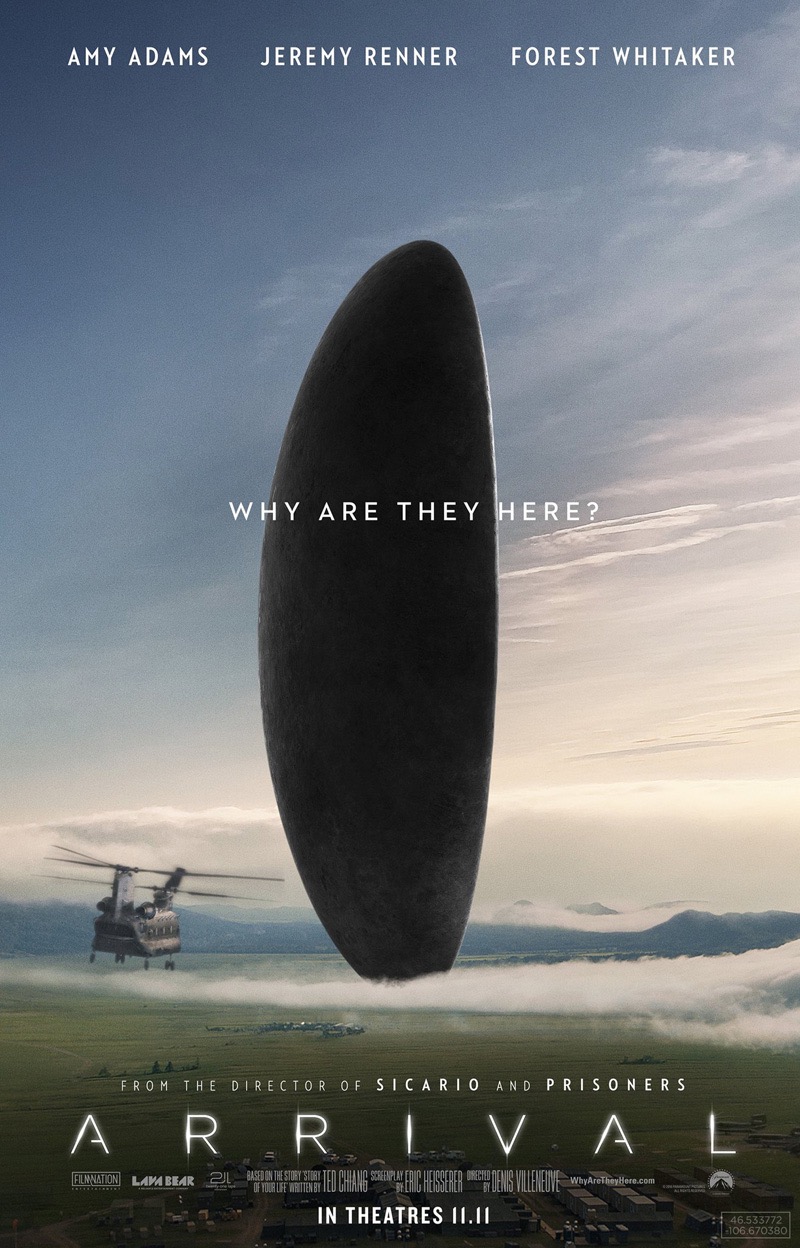
Film review – Arrival (Denis Villeneuve, 2016)

For many cinema-goers, Arrival may have been one of the worst films of the year. For all its big-budget sci-fi overtones and its positioning alongside other space-based 2016 blockbusters such as Independence Day: Resurgence, Passengers and Rogue One, if you sought out Arrival expecting more of the same you may have been disappointed. Indeed, you will have been tricked into that much-elusive cinematic experience: thinking.

Set in modern-day USA, it stars Amy Adams as renowned linguist Louise Banks, brought in by the government to help humanity communicate with extra-terrestrial life forms that have mysteriously landed throughout Earth. She teams up with physicist Ian Donnelly (Jeremy Renner) to begin to decipher their language and understand why they have chosen now to begin communication.

Amy Adams as linguist Louise

It is anything but a full-blown rollercoaster of action, instead concentrating its efforts on an elegant storyline with some seriously unsubtle political messaging. Or should that be serious and unsubtle?

What screenwriter Eric Heisserer has set out to do – and succeeded – is position the viewers in the shoes of alien lifeforms understanding Earth for the first time. In that sense, we are asked to consider the absurdity of the fact that so many countries have ongoing conflicts, unable to get along with one-another.

It may be set in the USA but you would be mistaken in thinking this was a lazy choice in making the Americans the saviours. The decision was more likely financial. Sure, the hero could have been from Pakistan or Chile, but this would have seriously hindered sales in the USA and all other countries where English is either a first or second language.

Amy Adams, as always, puts in a brilliant turn as the determined linguist Louise. She’s a likeable and versatile actress, perhaps at the top of her game right now, and it is a crime that not one of her five Academy Award nominations has thus far earned her a win. Perhaps this year, with a potential double-nomination for this and Nocturnal Animals, we’ll see her rightly rewarded.

Arrival is one of the best films of the year. Gripping, intelligent, thought-provoking and stylish. A must see.

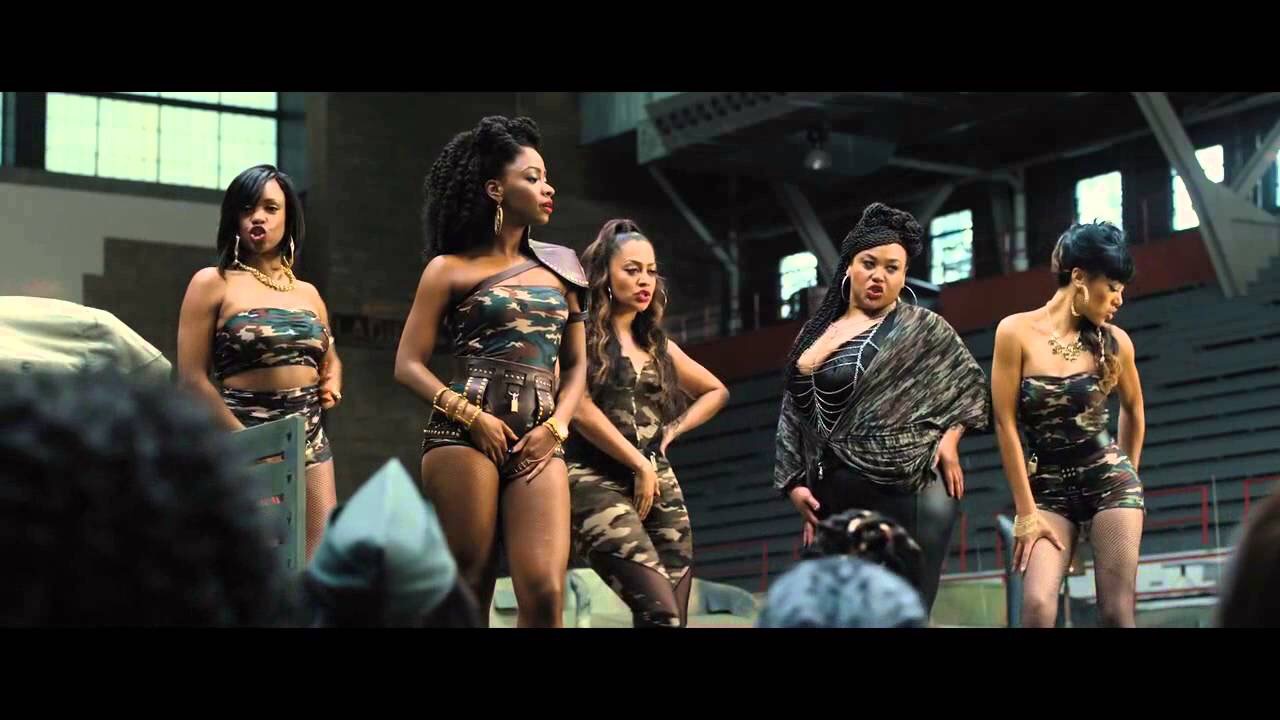
Film review – Chi-Raq (Spike Lee, 2016)

Spike Lee’s latest satirical drama is based on Aristophanes’ Classical Greek comedy Lysistrata, in which women withhold sex from their husbands as a punishment for fighting in the Peloponnesian War. Anyone hoping for a faithful adaptation is probably unaware of Lee’s output, which consistently challenge the audience to think about black lives, making its release as timely as ever given the BFI’s Black Star season is currently in full swing.

To label the film as a satirical drama only tells the half of it, which strong elements of comedy and crime. However, it is the hip-hop musical storytelling method that could hamper this film’s accessibility to the wider audience. When the words aren’t being sung or rapped, they are spoken in rhyme or at the very least rhythmical.

If anyone chooses not to see Chi-raq because they don’t like hip-hop is going to miss out on an extremely powerful work of art. There is a heap of controversies surrounding the film, from the statistics that are listed through the opening to the name of the film itself, but the relevance to the current population of Chicago is clear. The phrase Chi-raq is a name given by members of the drill-rap community to a city that, due to the prevalence of gun and gang crime, has led to the death of more people than both the war in Iraq and the war in Afghanistan.


The most outspoken criticism of the film is from this very community, who are displeased with the use of the phrase in the name against a film that highly stylises what is happening in Chicago. Lee has responded to the backlash, stating “We need to focus on what’s important. The whole shit about the film’s title was a needless distraction… People didn’t have the understanding that satire does not belittle serious subject matter.”

It’s a fair point. The most important thing is that the film itself is brilliantly written and acted, with a standout turn from lead actress Teyonah Parris as Lysistrata, the woman leading the revolt against their horny and battle-ready partners.

If you like your musicals challenging, wrapped in the genre of hip-hop, and with a strong ensemble cast, then Chi-raq is a must.

Chi-raq is in cinemas now and is also available on VOD.

Film review – Sully: The Miracle on the Hudson (Clint Eastwood, 2016)

“No one told us. No one said you are going to lose both engines at a lower altitude than any jet in history.”

A defiantly memorable line from a triumphant film, delivered with all the finesse of one of the greatest living actors being directed by another. It is a coming together to be cherished, especially with results this good.

Clint Eastwood’s latest film has all the vigour of his heyday performances, despite the fact he has now reached the grand age of 86. Whilst many would have been thinking about retirement decades earlier – nobody would have blamed him for waving goodbye after what would have been a fitting farewell in 2009’s Gran Torino – he continues to surprise film lovers with yet more tremendous creative flourishes. In a year that has been tarnished by far too many deaths of icons of film, music, television and beyond, Sully is a much-welcomed gift from one of the greats.

Hanks and Eckhart are in fine form

Tom Hanks is in fine form as the titular Chelsey “Sully” Sullenberger, a former US Air Force pilot turned passenger plane captain who literally bet 155 lives on his own instinct when a flock of Canada geese destroyed both engines of US Airline Flight 1549 as it departed from LaGuardia Airport. Sully’s instinct led him to successfully land the plane in the Hudson River. Heralded by the media, along with his copilot First Officer Jeffrey Skiles (Aaron Eckhart), as a hero, the National Transport Safety Bord (NTSB) weren’t as happy, opening up an investigation into what happened with a pre-determined plan to pin the damage to the aircraft on Sully due to pilot error, which would end his career. Their argument pivoted on the feasibility that the aircraft could have been landed at any of the nearby runways, the best option of which was nearby Teterboro Airport.

The film’s story plays out in a non-linear fashion, flitting between the aftermath of the landing and build up to the court hearing, Sully’s recollection of the incident (and bouts of post-traumatic stress) and some flashbacks to his pilot training in his youth.

There is little in the way of artistic licensing from Eastwood, largely sticking to a realistic and human story. Indeed, where it really makes an impact is that it never simplifies the technicalities of the aircraft or the arguments of either side for the benefit of those who aren’t paying attention. This is an intellectual film that respects its audience. The only worrying thing is that it felt so fresh – a matter that is simply indicative of the state of Hollywood in the present day.

This film may not make great waves at the box office as it battles out against Fantastic Beasts, Doctor Strange and Rogue One, but in years to come it will stand up alongside any of the films that Eastwood and Hanks have been involved with and will be seen as a work of art.

Film review – La La Land (Damien Chazelle, 2016)

WARNING: This review is effusively positive. If you’re a misery-guts then please look away now.

Every once in a while you will go into a film knowing almost nothing about what you’re going to see and get absolutely blown away by a surprisingly perfect masterpiece. As you get further into your film-watching life, enjoying these moments becomes increasingly rare, so when a film like ‘La La Land’ comes along, you can’t help but be overcome by giddy excitement.

Damien Chazelle shot to fame in 2014 with his critically acclaimed and rather special jazz-bully drama ‘Whiplash’. ‘La La Land’ shares very few similarities with it, bar an affinity to jazz that also featured prominently in his debut feature ‘Guy and Madeline on a Park Bench’. It does expand on a topic explored in ‘Whiplash’: the ongoing internal conflict of artists pursuing their dream at the expense of every other aspect of their life.

If you enjoyed his first two feature films but thought he couldn’t “do” mainstream, then prepare to be proven absolutely wrong seconds into the start. It opens with an over-the-top musical song and dance number set amidst a traffic jam. It’s an explosive one-shot (though there may have been some clever linking between extended shots) that received a round of applause at the end from an appreciative audience. Rightly so – it was jaw-dropping.

‘La La Land’ is, at heart, a homage to traditional musicals, with a joyful soundtrack matched by a couple of mesmerising performances from the lead performers Ryan Gosling and Emma Stone. Gosling stars as Sebastian, a struggling jazz pianist going from poor gig to poor gig in LA, with dreams of owning his own jazz club to fend off the death of jazz. Stone is Mia, a young actress moonlighting as a barista at the Warner Brothers Studio sets who can’t get a break she deserves in the film industry. After a number of serendipitous meets, Seb and Mia start to fall for each other and, with both a figurative and a literal song and a dance, their romance explodes.

With Seb being a jazz expert/enthusiast/nerd and them both being performers, Chazelle has given himself the platform on which to produce a naturalistic musical that will doubtless make it more acceptable to those who don’t normally class themselves as musical fans. There is also evidence of a significant amount of effort put in by Gosling to perfect the piano shots, which were impressively all performed by him.


It’s a film so visually stunning it’s hard to take your eyes away from it. There is, however, never a risk that it was simply a platform to reference more familiar films of old. In a breathtaking final segment, we take a walk through memory lane with nods to a number of classic musicals, but they are simply nods in what amounts to one of the most perfectly-balanced final sequences I’ve seen in cinema. Gasps were audible around the auditorium.

The soundtrack is destined to stick around for years to come. Gosling/Stone duets “City of Stars” and “A Lovely Night” are both standouts, but it will be “Audition (The Fools Who Dream)” that will be vying for an Oscar early next year. A beautiful number written by Justin Harwitz, Benj Pasek and Justin Paul, it is left to Emma Stone to deliver an emotionally raw live performance.

The only downside for me is that I have to wait for another two months to see it again. A must see.

Film review – Weiner (Josh Kriegman and Elyse Steinberg, 2016)

The worst thing about watching the political equivalent of a car crash is that politicians never seem to learn from their predecessors’ mistakes. Wars keep happening, smear campaigns take precedent over actual policies in the run up to elections, mayoral campaigners Tweet pictures of their erect penises to strangers.

Wait, what?!

Okay, that last one is a new one on the political landscape. Anthony Weiner is a great sport though. He lived up to his name whilst figuratively – though thankfully not literally – taking one for the team by playing out the lesson twice, first in 2011 and then again in 2013. That the second one happened during under the prying eyes of documentary filmmaking duo Kriegman and Steinberg, at the time trying to capture the rebuilding of a shattered political empire, makes it all the more fascinating.

The film left me a little split on my opinion of him. On the one hand, he is clearly a driven man who is good at his job, galvanising public opinion and canvassing support for what he truly believes is right for his city.

What I can’t deny though, and I think we can all agree on this, is that the mayor of New York shouldn’t have an alter ego on the dark web called Carlos Danger tweeting pictures of his dick to women behind his wife’s back.

His wife, Huma Abedin, leaves the film with her head left relatively high. She is a woman of unbelievable strength in the face of a continuously catastrophic husband who laughs in the face of public opinion, even though his livelihood depends on being popular with his public. The only question is why she sticks around when he is clearly a huge damage to her political career (she has been an aide to Hilary Clinton throughout the two scandals and leading into the presidential election later this year).

As a documentary, Weiner is about as good as it gets. It isn’t putting the pieces together after an event, instead getting lucky and being able to present a truly spectacular political scandal from the inside of the bubble. The characters are their interactions are as captivating as any fictional story.

It might not be a comfortable watch, but there’s something about Anthony Weiner that’s hard to not get addicted to. He’s an almost great political swamped by his own ability to ruin his own chances of achieving anything other than the total humiliation of himself and everyone associated with him.

Well worth 90 minutes of your time.

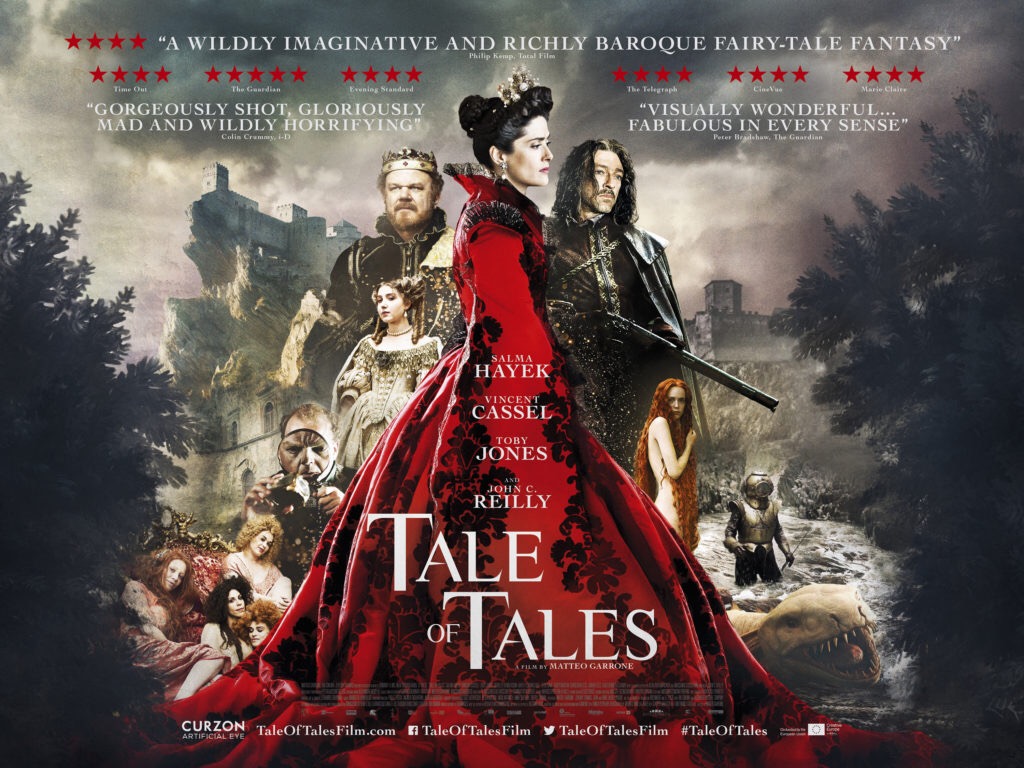
Film review – Il racconto dei racconti / Tale of Tales (Matteo Garrone, 2016)

Tale of Tales is a film that merges three fantasy tales from Italian storyteller Giambattista Basile’s book Pentamerone. The results are mixed.

The first, The Enchanted Doe, stars Salma Hayak as the Queen of Darkwood, who is struggling to have a child with her King, played by John C. Reilly. Taking the advice from a necromancer, the King sets off to capture the heart of a sea monster for his Queen to eat. Doing so brings her the child she desires, but this comes at a cost.

The second tale, The Flea, stars Toby Jones as a king seemingly reluctant to find a husband for his daughter Violet (Bebe Cave). Secretly, he is nurturing a flea in his chambers, growing it to an enormous size, but in doing so neglects his daughter. 

The final tale, The Flayed Old Woman, stars Vincent Cassel as a king with an insatiable lust for all women he lays eyes on. He is attracted by one woman (Hayley Carmichael), however, that he cannot see but can hear. As she sings a beautiful lament from the shadows of the streets of his kingdom, so begins an addiction to seeking her out to fulfil his desires. Fearful of him seeing her true form, she tries to push him away, only for his desire to grow stronger.

The three stories run entirely separately until the final scene, which is sort of a throwaway tidbit that attempts but fails to tie it all together. The overall result is something akin to a highbrow fantasy take on ‘Love, Actually’, whereby several separate storylines weave in and out of one another without significantly benefiting from it. Indeed, the sum may well be less than the parts.

The opening scenes concentrate almost exclusively on Salma Hayak’s unfolding story, to the point where when we first see Vincent Cassel it’s confusing to work out how he fits into the rest of the story. A few moments later it becomes obvious (sort of) that he’s the king of another kingdom, though we have to deduce that ourselves. Perhaps I’m just used to being spoon-fed too much, but I was confused.

The Flea segments are painfully slow, with Toby Jones feeling a little wasted as he tries and fails to inject some life into a largely lifeless story.

Hayley Carmichael rises above the dross to give a starring turn as the old woman Dora, with segments largely full of wit and humour. Vincent Cassell adds a lot to these scenes, lifting them with a knowing amount of irony that just about makes the film bearable.

It is interesting that the director Matteo Garrone has stated that he had worked on ideas for a few other stories from the same source material. In my opinion, these tales would work significantly better broken up and serialised. There is some good work here but it’s hard to get sucked in by one faltering tale, let alone three.

A visually stunning film that fails to ignite the interest, an issue I blame mainly on poor editing and a disappointing adaptation of some highly respected source material.