Film review – Weiner (Josh Kriegman and Elyse Steinberg, 2016)

The worst thing about watching the political equivalent of a car crash is that politicians never seem to learn from their predecessors’ mistakes. Wars keep happening, smear campaigns take precedent over actual policies in the run up to elections, mayoral campaigners Tweet pictures of their erect penises to strangers.

Wait, what?!

Okay, that last one is a new one on the political landscape. Anthony Weiner is a great sport though. He lived up to his name whilst figuratively – though thankfully not literally – taking one for the team by playing out the lesson twice, first in 2011 and then again in 2013. That the second one happened during under the prying eyes of documentary filmmaking duo Kriegman and Steinberg, at the time trying to capture the rebuilding of a shattered political empire, makes it all the more fascinating.

The film left me a little split on my opinion of him. On the one hand, he is clearly a driven man who is good at his job, galvanising public opinion and canvassing support for what he truly believes is right for his city.

What I can’t deny though, and I think we can all agree on this, is that the mayor of New York shouldn’t have an alter ego on the dark web called Carlos Danger tweeting pictures of his dick to women behind his wife’s back.

His wife, Huma Abedin, leaves the film with her head left relatively high. She is a woman of unbelievable strength in the face of a continuously catastrophic husband who laughs in the face of public opinion, even though his livelihood depends on being popular with his public. The only question is why she sticks around when he is clearly a huge damage to her political career (she has been an aide to Hilary Clinton throughout the two scandals and leading into the presidential election later this year).

As a documentary, Weiner is about as good as it gets. It isn’t putting the pieces together after an event, instead getting lucky and being able to present a truly spectacular political scandal from the inside of the bubble. The characters are their interactions are as captivating as any fictional story.

It might not be a comfortable watch, but there’s something about Anthony Weiner that’s hard to not get addicted to. He’s an almost great political swamped by his own ability to ruin his own chances of achieving anything other than the total humiliation of himself and everyone associated with him.

Well worth 90 minutes of your time.
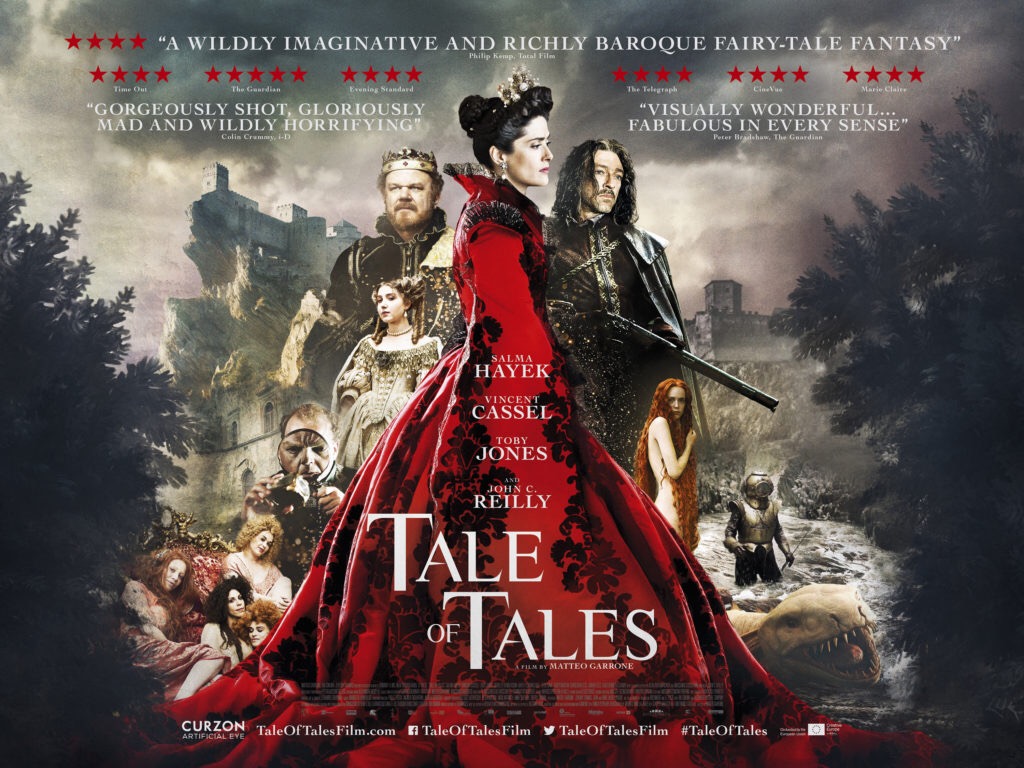
Film review – Il racconto dei racconti / Tale of Tales (Matteo Garrone, 2016)

Tale of Tales is a film that merges three fantasy tales from Italian storyteller Giambattista Basile’s book Pentamerone. The results are mixed.

The first, The Enchanted Doe, stars Salma Hayak as the Queen of Darkwood, who is struggling to have a child with her King, played by John C. Reilly. Taking the advice from a necromancer, the King sets off to capture the heart of a sea monster for his Queen to eat. Doing so brings her the child she desires, but this comes at a cost.

The second tale, The Flea, stars Toby Jones as a king seemingly reluctant to find a husband for his daughter Violet (Bebe Cave). Secretly, he is nurturing a flea in his chambers, growing it to an enormous size, but in doing so neglects his daughter. 

The final tale, The Flayed Old Woman, stars Vincent Cassel as a king with an insatiable lust for all women he lays eyes on. He is attracted by one woman (Hayley Carmichael), however, that he cannot see but can hear. As she sings a beautiful lament from the shadows of the streets of his kingdom, so begins an addiction to seeking her out to fulfil his desires. Fearful of him seeing her true form, she tries to push him away, only for his desire to grow stronger.

The three stories run entirely separately until the final scene, which is sort of a throwaway tidbit that attempts but fails to tie it all together. The overall result is something akin to a highbrow fantasy take on ‘Love, Actually’, whereby several separate storylines weave in and out of one another without significantly benefiting from it. Indeed, the sum may well be less than the parts.

The opening scenes concentrate almost exclusively on Salma Hayak’s unfolding story, to the point where when we first see Vincent Cassel it’s confusing to work out how he fits into the rest of the story. A few moments later it becomes obvious (sort of) that he’s the king of another kingdom, though we have to deduce that ourselves. Perhaps I’m just used to being spoon-fed too much, but I was confused.

The Flea segments are painfully slow, with Toby Jones feeling a little wasted as he tries and fails to inject some life into a largely lifeless story.

Hayley Carmichael rises above the dross to give a starring turn as the old woman Dora, with segments largely full of wit and humour. Vincent Cassell adds a lot to these scenes, lifting them with a knowing amount of irony that just about makes the film bearable.

It is interesting that the director Matteo Garrone has stated that he had worked on ideas for a few other stories from the same source material. In my opinion, these tales would work significantly better broken up and serialised. There is some good work here but it’s hard to get sucked in by one faltering tale, let alone three.

A visually stunning film that fails to ignite the interest, an issue I blame mainly on poor editing and a disappointing adaptation of some highly respected source material.

Film review – The Program (Stephen Frears, 2015)

In the midst of the Lance Armstrong doping scandal, Sunday Times journalist David Walsh published his book Seven Deadly Sins. The sole purpose of the book was to blow the cover on Lance Armstrong and reveal the truth about the complex doping program he was involved with during his supremacy in cycling, specifically the Tour de France. Whilst Armstrong was banned for life from cycling in October 2012, two months prior to the release of the book, vindicating David Walsh and the contents of his book.

The Program re-tells this story, with Chris O’Dowd as David Walsh and Ben Foster as Lance Armstrong.

There are narrow margins in its portrayal of Armstrong. Frears gives a fair portrayal of the man, allowing room within the character to justify his actions. It doesn’t shy away from the fact he spearheaded this complex program of systematic doping, on a level so widespread that USADA (U.S. Anti-doping Agency) referred to it as “the most sophisticated, professionalized and successful doping program that sport has ever seen“. However, to fully represent him, it must also be shown that he used a significant amount of his own time alongside the money earned to aide cancer research. The Program just about lands perfectly in the middle without feeling like it is sitting on the fence, only tipping into an out-and-out negative portrayal when he loses sight of his goal to beat cancer and instead gets addicted to winning at all costs.

When a massive scandal such as this is at the forefront of the public eye, it is easy to forget how successful and inspiring Lance Armstong was for both cyclists and cancer sufferers. It must be remembered that Lance Armstrong started doping, like most cyclists, because he couldn’t win a race without it. In this version of events, he was driven by the fact that doping was already widespread in the sport when he first considered it. It doesn’t strike me that Spears was condoning his actions; he wasn’t the first, nor was he the last. He was simply the most successful.


In hindsight, it was a win-win-win situation for everyone involved. Lance Armstrong won medals and tournaments every season, cancer research programs gained a lot of money and the profile of the sport was raised due to the success story playing out in the public’s eye. The only real losers were the honest cyclists who were unable to compete on the same level.

In time, this film won’t prove to be the definitive biopic on this subject, but with the media pursuit of truth as the approach it offers a unique angle on the situation. One wonders whether its success wasn’t hindered somewhat by the similarly-themed Spotlight, which was busy on the festival circuit at the same time as this. Spotlight may have not been everyone’s favoured choice for the Best Picture Academy Award in January, but it was certainly a more powerful film than The Program.

Film review – Zootropolis (Byron Howard and Rich Moore, 2016)

Zootropolis is the latest in the Disney Animated Studios classics range that certainly holds its own alongside its older brothers and sisters, with a well realised universe and some extremely likeable characters. It may not have the staying power of the greatest films of the studio, but serves as a fun way to entertain children for a couple of hours in the earl summer.

The film stars Ginnifer Goodwin as Judy Hopps, a tiny rabbit that has aspirations to go to Zootropolis to become a police officer. Driven on by a childhood incident, she finally reaches her goal via a fairly snappy montage sequence. Dsappointingly assigned parking duty by her new boss Chief Bogo (Idris Elba, providing a voice that doesn’t really match the character), she sets out to prove she is more than a small fish in a big pond. Striking up an unlikely love-hate friendship with sly fox Nick Wilde (Jason Bateman in an impressive role), she uncovers a clue to solving one of the city’s biggest mysteries: the location of a missing otter and a growing number of other missing predator mammals in the city.

Goodwin’s portrayal of Judy Hopps is delightful. Her voice is perfect and brings some distinctive characterisation to life. There’s clearly a lot of chemistry between her and the well-cast Bateman. When they fall out midway through the second act, you feel it, and the target audience will too. She has an unmistakable likability in her voice that’s hard to pin down – perfect for this kind of role.

The film excels in its underlying messages of racism and stereotyping, making it a timely release. Each main character’s driving force is as a result of some kind of prejudice they’ve had to fight against. Make no mistake – there is little effort to hide it, to the point of it feeling a little ham-fisted. Anyone who wants their cinematic experiences compartmentalised by separating pure entertainment from thought-provoking commentary may need to double-check the age rating on this film. 

Where it falls down is its lack of foresight in terms of future generation’s appreciation of it. The greatest animated films have been enjoyed for almost a century by parents and children alike. They always have a timeless quality to them, much like fairy-tales, allowing a Snow White or Cinderella to be picked up now and not feel of-its-time. For Zootropolis, one has to wonder how the children of 2040 will feel about the overused phone apps that are featured, or indeed the Breaking Bad and Frozen references that are thrown in for cheap laughs.

For now, however, Disney will sit back and count this as a huge success. It is now the highest-grossing film of 2016 and the 28th of all time (as of 16th May 2016).

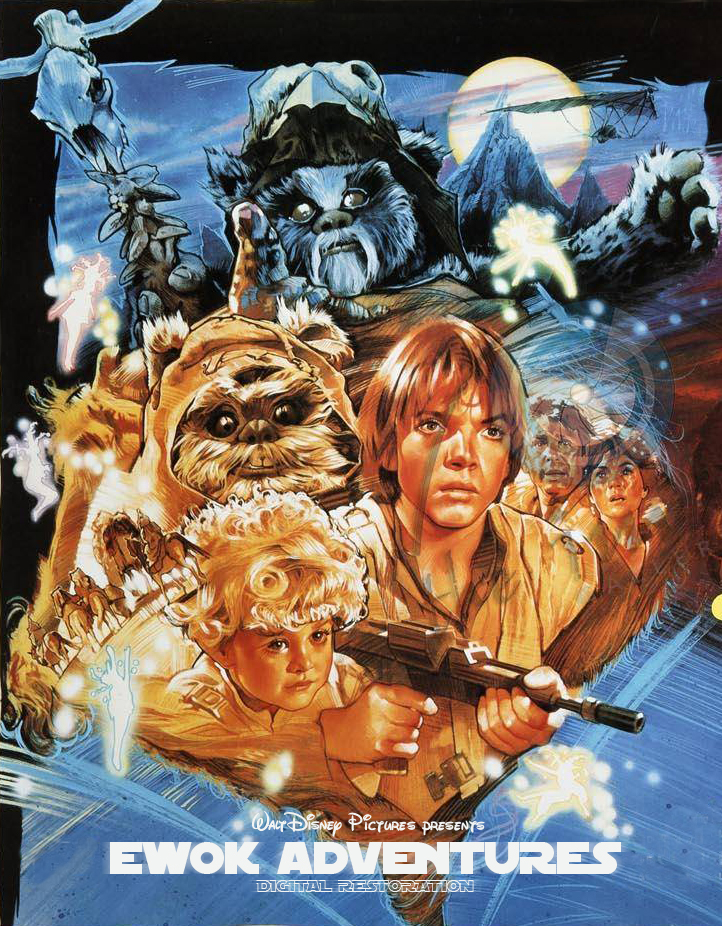
ANNOUNCEMENT – EWOK ADVENTURES COMING TO BLU-RAY

UPDATE (07/11/2016): For no reason at all I’ve had a sudden influx of people finding this page after searching for “Ewok Adventure Blu-ray” or similar. Just in case you hadn’t realised… This was an April Fools joke. There is no scheduled HD re-release of these films. You can buy the films on DVD here. 

There has been an exciting announcement this morning from Walt Disney Pictures. Following the increased interest in Star Wars following the release of Star Wars Episode VII: The Force Awakens, the first sign that the Walt Disney company are going to mine the Star Wars back catalogue has seen the light of day.

Set for release on 1st August 2016, digitally restored versions of both Ewok Adventure films – Caravan of Courage and Battle for Endor – will be released in a specially-commissioned 4K transfer. What’s more – any fans who are lucky enough to have tickets to the Star Wars Celebration on 15-17 July 2016 will be able to pick up a limited edition numbered steelbook of the release. How limited these will be is yet to be announced, though they are set to be one of the hottest items at the event.

It is thought that the unexpected announcement is a way to test the waters for future 4K transfers of other Star Wars releases. Of course, the dream release for most fans is the cinematic releases of the original trilogy, fully restored with no Lucas interference. Perhaps this will see the light of day at a later date, though we won’t hold our breath. This will be an excellent stop-gap release.

There are several bonus features set for inclusion on a third disc of the set, with more yet to be announced. The features listed are:

  • Brand new 4K transfer of both films;
  • Brand new storybook gatefold packaging;
  • 48-page booklet with on-set photographs, cast interviews and press articles;
  • Brand new commentary from directors John Korty (Caravan of Courage only), Jim and Ken Wheat (Battle For Endor), along with actors Eric Walker, Aubree Miller and Warwick Davis (both films);
  • All deleted scenes restored to both films;
  • Making-of Documentary – for the first time ever the making of created by Warwick Davis and Eric Walker during the filming of Caravan of Courage will be released on home video, with an optional introduction from both actors;
  • Three episodes of the Star Wars: Ewoks cartoon series (The Cries of the Trees, The Haunted Village, Rampage of the Phlogs) – SD only
  • Original TV spots – SD only
  • 1984 and 1986 Primetime Emmy Acceptance Speeches – SD only
  • Languages: English audio description, Spanish, French and Portuguese
  • Subtitles: English for the hard of hearing, Spanish, French, Dutch, Portuguese, Finnish, Swedish, Norwegian and Danish

Pre-orders are not yet live for this release.

Film review – Hail, Caesar! (Joel Coen and Ethan Coen, 2016)

Hail, Caesar!, the new film from the Coen Brothers, is a film heavy on nostalgia and authenticity but light on focus to moving along the central plot. It has so many fantastic elements that seeing the final product fall short is a huge disappointment.

The film tells the story of Eddie Mannix (Josh Brolin), head of production at Capitol Pictures whose job involves firefighting the many problems created by the studio’s roster of stars who seem to have an uncanny ability to mix themselves up in controversy. The studio’s next big film will be Hail, Caesar!, a biblical epic in which Baird Whitlock (George Clooney) will star. However, when a prop wine goblet is spiked by an extra on the set, he is kidnapped by a group of communist scriptwriters called The Future and held to ransom for a then significant total of $100,000, putting pressure on Mannix at a time when he is considering a career change to join the aviation industry with the Lockheed Corporation.

  
It felt at times that the Coen Brothers were so hell bent on fitting in a plethora of big-star cameos that they didn’t care that each time they did so they completely derailed the focus of the story. Take, for example, Frances McDormant’s studio film editor CC Calhoun. Her hammed-up effort is a nice comedy turn introduced at a critical point of the film. She could have easily turned into a key character, but never reappeared and thus there didn’t really seem to be much point to her appearance.

A bigger offender comes in the form of a more significant subplot featuring pregnant star Dee-Anna Moran (Scarlett Johansson) and surety agent Joe Silverman (Jonah Hill). It’s a huge eater of time but in the end resolves itself with little input from Mannix at a time when he is deciding that he needs to stay in the film industry, presumably because he is so critical to it.

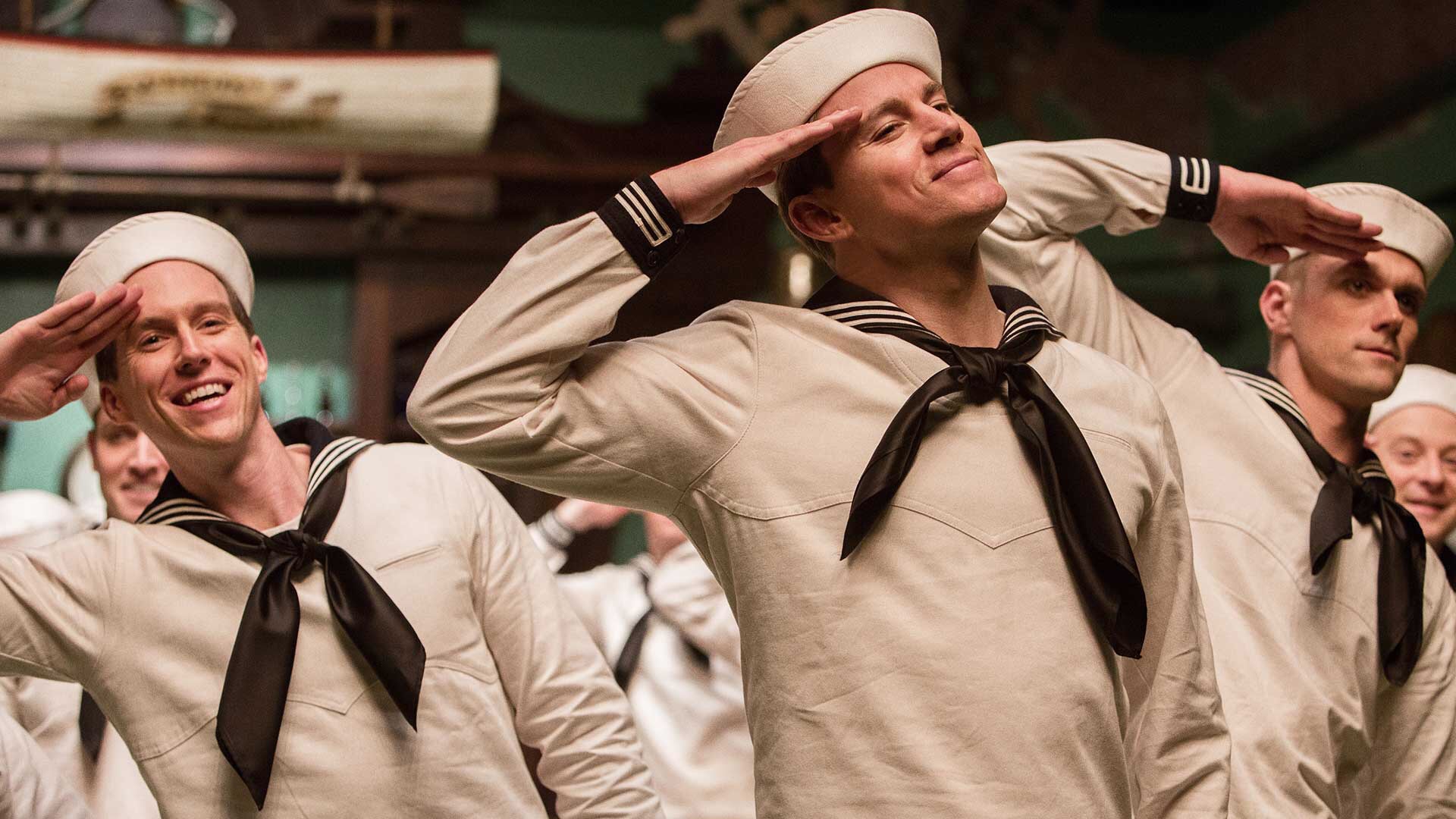
Similarly, Channing Tatum, who features as Burt Gurney, gets a great song and dance scene – a real highlight to the film – but is probably only in three scenes in total. The time spent with Johansson and Hill may have been better served with Tatum. Instead, none of the three characters really feel significant enough to elicit the response they could have achieved had more time been spent with them.

  
One character that does end up getting fully fleshed-out is the Western star Hobie Doyle (Alden Ehrenreich). He is introduced as a big studio star that has got where he is by his ability to perform massive stunts rather than any of his acting qualities. There are some fun scenes with Laurence Laurentz (Ralph Fiennes) as he tried to get the best out of his acting abilities or lack thereof. Near the end of the film there is some subtle symbolism involving him figuratively lassoing Baird Whitlock and taking him back to the studios from the communists, a nod to the cowboy as an upholder of traditional American values. Whether or not they needed to spend so long in the film emphasising his cowboy skills to set this up is another question, but at least this character takes us on a journey and proves to be critical to the resolution of the story.

At the heart of the story is Josh Brolin’s Mannix, a man who is essentially a fixer for the studio. It is an interesting character and, along with Clooney’s bumbling Whitlock, he carries the film. His climactic scene with Whitlock underlines why his decision was made – he sees the communist issues surrounding the film industry as a huge threat to America and something he can have a significant impact on from his position. He takes what he considers to be the harder option but in doing so gives his future life more worth. 

There is an underlying message about the wider issues facing Holllywood at the time this film is set (1951) and how easy it was for people like Whitlock to get involved with communist cells. The discussions on such topics is outside the intended remit of this review, though the recent film Trumbo is a good starting point.

Hail, Caesar! offers a lot to fans of the Coen Brothers, though it feels like a hugely missed opportunity due to failings of an over-complicated plot that could have been significantly trimmed to focus the story on the most relevant characters. Fun in parts but overall a disappointment.

Film review – The Revenant (Alejandro González Iñárritu, 2016)

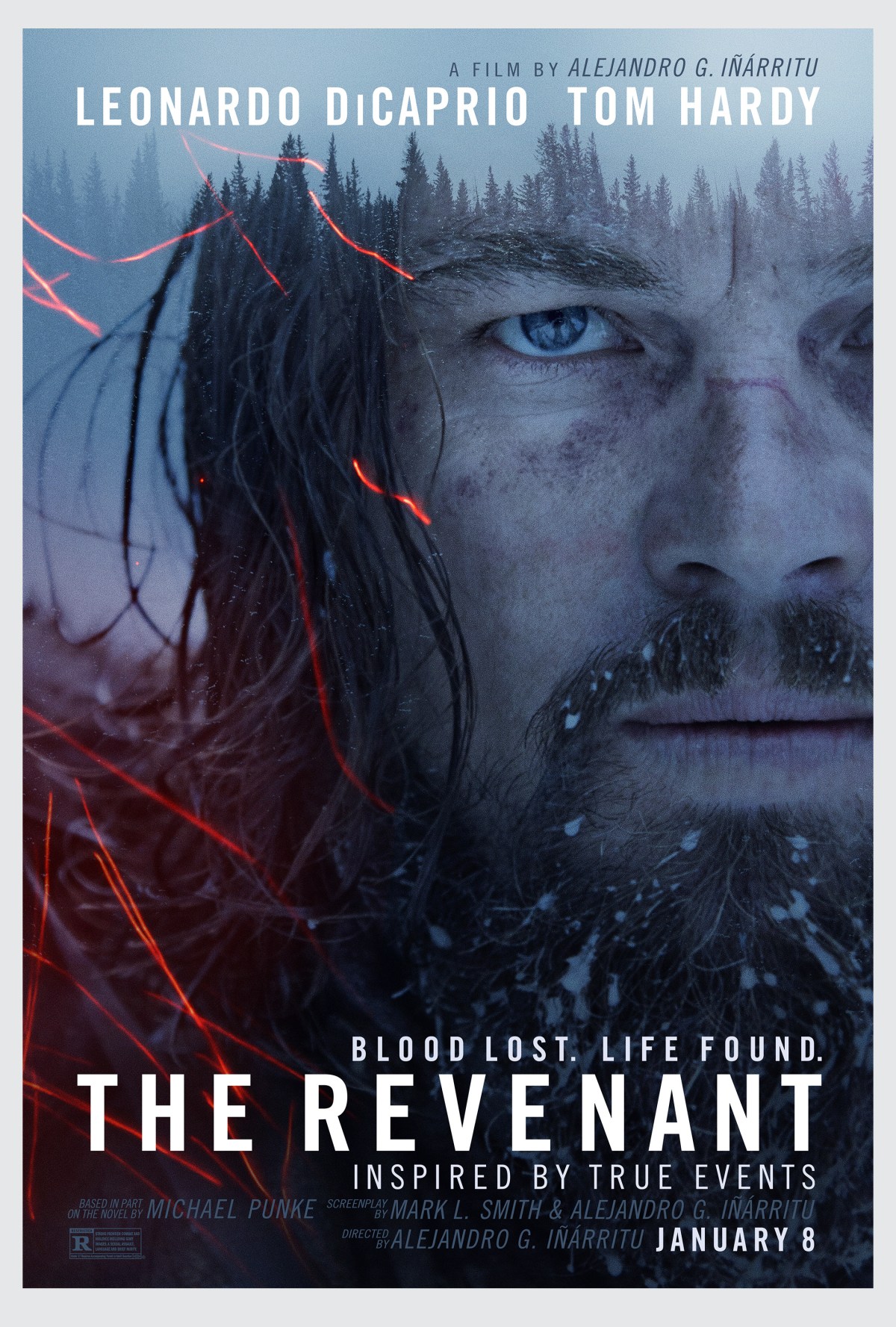
Watching The Revenant was an ordeal. Realistically gritty, putting the viewed in the centre of the action at all times and not afraid to show a bit of gore, that I felt so uncomfortable was inevitably a deliberate choice and will be one of the reasons it inevitably wins big at the awards ceremonies this year.

The story is set in 1823 in Louisiana Purchase, which the modern world now knows as North and South Dakota. It opens with a good old-fashioned Western movie standoff: the hunters are in the woods stockpiling pelts when they are ambushed by a group of Arikara Native Americans. The scene is one of the grittiest and most brutal opening battle sequences since Saving Private Ryan. People from both sides are blown up, arrows pierce any and every body part and nothing is watered down or censored.

The hunters are led by Captain Andrew Henry (Domhnall Gleeson), whilst the team includes hostile John Fitzgerald (Tom Hardy) and the experienced Hugh Glass (Leonardo DiCaprio). Hostility is felt between Fitzgerald and Glass; the former has been partially scalped by Native Americans and the latter has a son, Hawk, from his relationship with a native.

revenant screenshot

Come on guys. He’s done enough for the award this year.

The most famous scene from the film, in which Glass is brutally attacked by a female bear as he tried to hunt her cubs, is almost betrayed by a lack of convincing CGI. Fortunately if you believe in it enough, DiCaprio saves the day with a wholly convincing portrayal of a man desperately fighting for his life. It’s really difficult to watch but strangely mesmerizing, every grimace making you want to turn away and look closer in equal parts.

Tom Hardy is completely unlikeable as John Fitzgerald, just as he should be. There is literally nothing good about his character and it’s another huge achievement in Hardy’s young career.

As the final shot plays out, DiCaprio looks straight down the barrel of the lens and into our eyes. In the film, Glass is showing a whole range of spoilery emotions. In the real world, it felt like DiCaprio was saying to us “I’ve been attacked by a bear, had valleys dug into my back, been left for dead, thrown off a cliff, almost drowned, shot at, climbed inside a dead horse, eaten raw meat, learned the native Arikara language and almost frozen to death… so can I have an Oscar this year please?” I don’t think anyone who sees this could deny him of it. Not this time around.

The Revenant is on general release now.


Film review – Joy (David O’Russell, 2016)

Of all the stories of all the people that have ever existed on this planet, perhaps one of the last you’d think to turn into a film would be that of Joy Mangano, inventor and telesales presenter. It’s not that she’s unremarkable or boring, but she is far from a controversial character. What she does encompass, however, is both a traditional tale of the American dream and a figurehead for strong-minded women that have ever felt oppressed in work or at home.

If you’re wondering what Joy Mangano looks like in real life, there’s a popular video below of her selling her first major breakthrough invention: The Miracle Mop. From then on she became a self-made millionaire, invented many more successful products and created a business empire.

It has to be said that whilst she may be a household name across the USA, the rest of the world remains unaware of her background. Or at least they did. That was until the film Joy came along. Starring Jennifer Lawrence in the title role alongside the likes of Robert De Niro, Isabella Rossellini and Bradley Cooper, the film reveals the journey she went on to get to where she is today – from divorced mother-of-two working for Eastern Airlines right up to her first business successes.

The first forty-ish minutes of the film try really hard to give us a potted history of the causes of Joy’s personality traits, actions and outlook. It usually works on a scene-by-scene basis but the pacing causes issues and seems to lack direction until Joy herself finds a focus in her life.

joyscreenshot

From this point on the film has hit its stride and she breaks free from the oppression and the doubters. There are moments of humour (which surely explains the Comedy Golden Globe nomination, no?), edge-of-the-seat excitement (her first sell on QVC springs to mind) and fist-pumping success (I recall here a scene near the end set in a California hotel room). This is all driven by a remarkable performance by Jennifer Lawrence, reminding the world again that she isn’t just the girl from The Hunger Games but rather a girl with acting talent far beyond her years.

So whilst this film has its merits, the scatter-gunned first act and lack of consistency mean it won’t go down as one of the great films of the year, though Lawrence’s performance is worth the ticket money.

Joy is on general release globally now.


Steve Jobs (Danny Boyle, 2015)

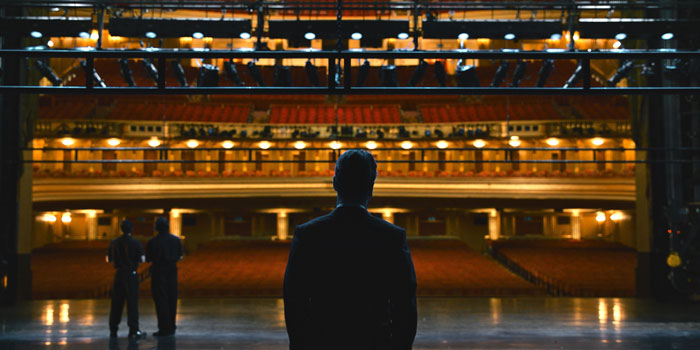
The 2015 BFI London Film Festival came to a close this evening with the European Premiere of Danny Boyle’s Steve Jobs. With all the stars out on the red carpet, it had all the hallmarks of a blockbuster finale on the scale of any of the Apple product launches we’ve become so accustomed to.

The biopic plays out in three distinct acts, all during iconic Jobs-headed product launches: the 1984 launch of the first Macintosh home computer; the 1988 launch of the NeXT Computer for NeXT Inc. (the company Jobs set up after being forced out of Apple); and ending with the 1998 launch of the first iMac computer.

Jobs worth

Jobs worth

Whilst it may risk being a big advert for Apple, the poor picture painted of the figurehead of the company throughout ensures that is never the case. The Steve Jobs we get to know over the course of the three acts, which play out in real time in the lead up to each of the presentations Jobs is giving, is narcissistic and self-centred, only relenting from the power trip when he finally achieves the success he has been driving for. It shows softer sides of his personality and attempts to justify his unique traits but the focus on his tempestuous relationship with his ex-girlfriend Chrisann Brennan and their child Lisa ensures his best side is never seen.

It is actually a difficult watch throughout. It is basically two hours of arguments, eventually becoming tiring. It does successfully portray the frantic and intense atmosphere of a huge-scale product launch in a very real manner. It fails, however, to convince that this is a good platform for great cinema.

Michael Fassbender plays the Steve Jobs we see here to perfection, capturing the nuances required of someone who is heartless to the extent of being cruel. Kate Winslet’s turn as Joanna Hoffman is steadier than her accent, and Seth Roger puts in an adequate performance as Steve Wozniak. The standout performance is quite minor but nontheless critical: Michael Stuhbarg is exceptional as the bullied inventor Andy Hertzfield.

The biggest success is the genius move to film the picture on era-appropriate equipment. The three scenes were each filmed using totally different techniques: 1984 was captured on beautiful 16mm film, 1988 on 35mm film and 1998 on digital film. The evolution of technology is reflected in the format change and portrays each era in a manner that would have been impossible with digital post-production.

Whilst it isn’t a let down, it will be difficult to find a sustainable market for this film. It’s not a straight biopic, it isn’t hugely in favour of Apple, nor is it against it. It’s a struggle to watch and is unlikely to have people raving about its successes as they leave the cinema. 

It could be Danny Boyle’s Newton moment.

Steve Jobs is released in cinemas in the UK in November.

Further Viewing

If you enjoyed the film so much you’re interested in some further viewing, then check out the below videos. In the film you see the 40 minutes building up to the release of three products, but never get to see the keynotes themselves.

1984 – Original Macintosh home computer

The original keynote:

The Superbowl “1984” advert:

1988 – NeXT

The 1988 keynote speech isn’t available on YouTube, but this ABC news segment is a close fit:

1998 – iMac

The full video in all its glory: