Unknown's avatar

Posts by hutchwp

Chief writer and editor at Cinema, Etc.

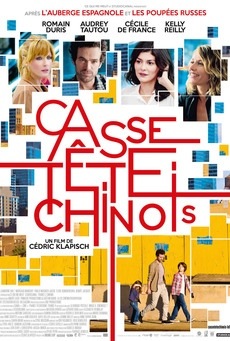
Casse-tête Chinois [Chinese Puzzle] (Cedric Klapisch, 2014)

I have to confess that I saw Casse-tête Chinois (Chinese Puzzle) at the 2013 London Film Festival and knew nothing about it. It was picked on a whim when I had a gap to fill in my schedule and I wasn’t able to put any research into it beforehand. During the post-film Q&A with director Klapisch, I learned that it is in fact the third installment of what is known as the Spanish Apartment trilogy, following L’Auberge Espagnole (2002) and Les Poupées russes (2005).

It stars Romain Duris as Xavier, a novelist whose ex-wife and children have moved to New York. The story concentrates on the complicated web of relationships that surround him as he tries to find an apartment, a job and some kind of life. Included in this web are his ex-wife Wendy (Kelly Reilly, now with her new husband), his ex-girlfriend Martine (Audrey Tautou) and her children, his best friend Isabelle (Cecile de France) and her partner Ju (Sandrine Holt) who are trying to have children of their own (with Xavier’s help), and many more bit players, all full of character. It’s a great ensemble cast and it’s clear they had a fantastic time filming together.

20140117-171746.jpg

The film is a joy to watch, with laugh-out-loud moments littered throughout. It’s unusual and quirky. It did not matter one bit that I didn’t know any of the background; the characters are well defined and it works very well as a standalone film. The hilarious business meeting where Martine has to speak Chinese, the sham marriage Spanish Xavier goes through with a Chinese girl to become American, and the crescendo where they all come together in one edge-of-the-seat hilarious finale – the balance is spot on. There are some more serious moments too, not least Isabelle’s affair with her au pair, but these tend to (eventually) be dealt with in a light-hearted manner.

It’s probably not going to make massive waves outside France, which is a shame because there are some lovely romantic comedies being made in that country at the moment and they deserve a little more attention. It may well also be the last installment in the series, with the director alluding to the fact it was difficult to convince some of them – especially Tautou – to come back for the third chapter.

I’d recommend it if you fancy a humorous and whimsical journey through someone else’s very complicated problems and need an emotional lift. It certainly won’t disappoint you.

Casse-tête chinois is released later in 2014 in the UK.

Watch the trailer here.

20140117-171738.jpg

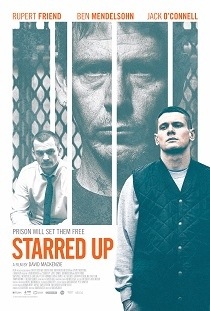
Starred Up (David Mackenzie, 2014)

Screened in competition for Best British Film at the BFI London Film Festival 2013, Starred Up was a film I knew very little about but had high expectations for, and it didn’t disappoint.

We are introduced to the lead character Eric Love, portrayed by Jack O’Connell (Skins, This is England), who has been “starred up” from a young offenders’ institution to a jail for adults for excessive violence. As the story develops, we go on a personal journey with him as he struggles to deal with the fact he is no longer the king pin in his new home.

Helping him on his journey is prison therapist Oliver, played brilliantly by Rupert Friend (Homeland). He builds up a close relationship with both him and several fellow inmates also going through the therapy sessions. It is in these sessions that we begin to learn a different side to our protagonist, one that he hides from everyone else he comes into contact with in the prison.

20140117-172108.jpg

The twist in the tale lies in the fact Eric’s father is also incarcerated in the same jail, and this is where his struggle lies. He is finally able to spend time with his father, but cannot cope with the fact that in spite of all the larger inmates and all the guards, the one person who has control over him is the one that he blames for being in prison in the first place. It is this dynamic that really allows O’Connell to flex his acting muscles, and show he can play much more than the jack-the-lad tough guy. As an actor, he has a serious amount of talent on offer and at such a young age must feel like the world is his to take on.

Much of the praise for the successes the film enjoys must go to screenwriter Jonathan Asser. Asser won the LFF Best British Newcomer award for this film, and it’s easy to understand why. It’s an authentic and intelligent script that draws on his own personal experiences and it ensures that what could have been a run-of-the-mill prison drama becomes much more than that – a study of an individual’s struggle against authority and personal responsibility.

Starred Up is released in UK cinemas on 21st March 2014.

See a clip of the film here or the trailer here.<br />
20140117-172100.jpg

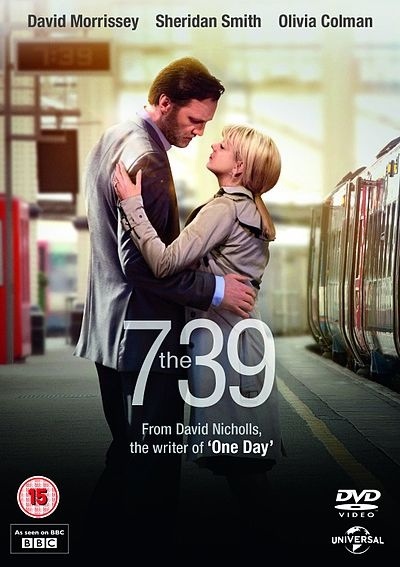
The 7:39 (John Alexander, 2014)

Sometimes you watch a show on TV with no prior knowledge of the content, with no preconception of what is coming. Usually when you do this, you’re left disappointed and quickly switch over or find yourself checking your phone at decreasing intervals. Sometimes, if you’re lucky, you’ll find a gem, a diamond in the rough. So it was with the gripping BBC two-part romantic drama The 7:39.

Starring David Morrissey (The Walking Dead) and Sheradin Smith (Legally Blonde), with supporting roles from Sean Maguire (Eastenders) and Olivia Colman (Tyrannosaur), the story tells the chance development of an affair between Carl (Morrissey) and Sally (Smith), who catch the same eponymous commuter train. Both unknowingly in a rut in their life at home and at work, they quickly find an unlikely spark between each other and grow closer through the increasingly precious time they spend together en route to work.

Carl has a lot more to lose. He is married with two teenage children and has an exceptionally supportive wife (Colman), but yet he is the driving course behind the forbidden relationship. Sally is engaged to her overprotective fiancé Ryan – brilliantly portrayed by Maguire – who is hellbent on arranging the perfect wedding and seemingly attempting to smother every aspect of Sally’s life, though only out of love and devotion.

It is a sign of excellent writing by David Nicholls (One Day, Starter For 10), matched by perfect performances by the highly talented cast, that we quickly find ourselves rooting for Carl and Sally. Seeing them play out this despicable action, knowing they’re on a collision course to devastate everything they know and love, I was surprised that when the chance arose I was on the edge of my seat willing them on to go for it. It is a deed we hope we would never be subjected to by a loved on – or even worse commit ourselves – yet the reasoning is portrayed fully without ever needing to be spelled out. Of course, the subject matter has divided audiences, but that is the sign of a powerful work of art.

It is wonderful that there is such high quality drama being produced in the UK and that there is an outlet for the all-British cast to excel on prime-time television. It could easily have had a successful cinematic release and wouldn’t have looked out of place on the big screen. Hopefully it is the first of many more of its ilk.

The 7:39 is available to watch for free on iPlayer and Sky On Demand until 14th January 2014 and is released on DVD on 10th February 2014.

20140111-212411.jpg

Best Albums 2013

In case you wondered, here are my top albums of 2013:

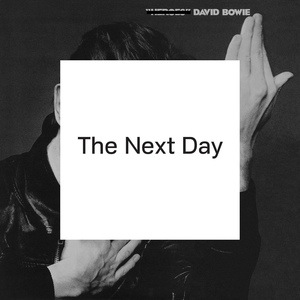
1. David Bowie – The Next Day
20140122-160353.jpg

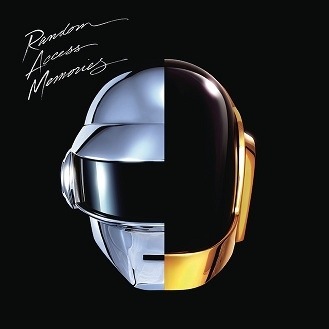
2. Daft Punk – Random Access Memories
20140126-211050.jpg

3. Ed Harcourt – Back Into The Woods
20140126-211058.jpg

4. Foals – Holy Fire
20140122-160410.jpg

5. Inside Llewyn Davis OST
20140126-211440.jpg

6. The Flaming Lips – Peace Sword
20140122-160402.jpg

7. Haim – Days Are Gone
20140122-160428.jpg

8. Local Natives – Hummingbird
20140122-160344.jpg

9. Manic Street Preachers – Rewind The Film
20140126-211709.jpg

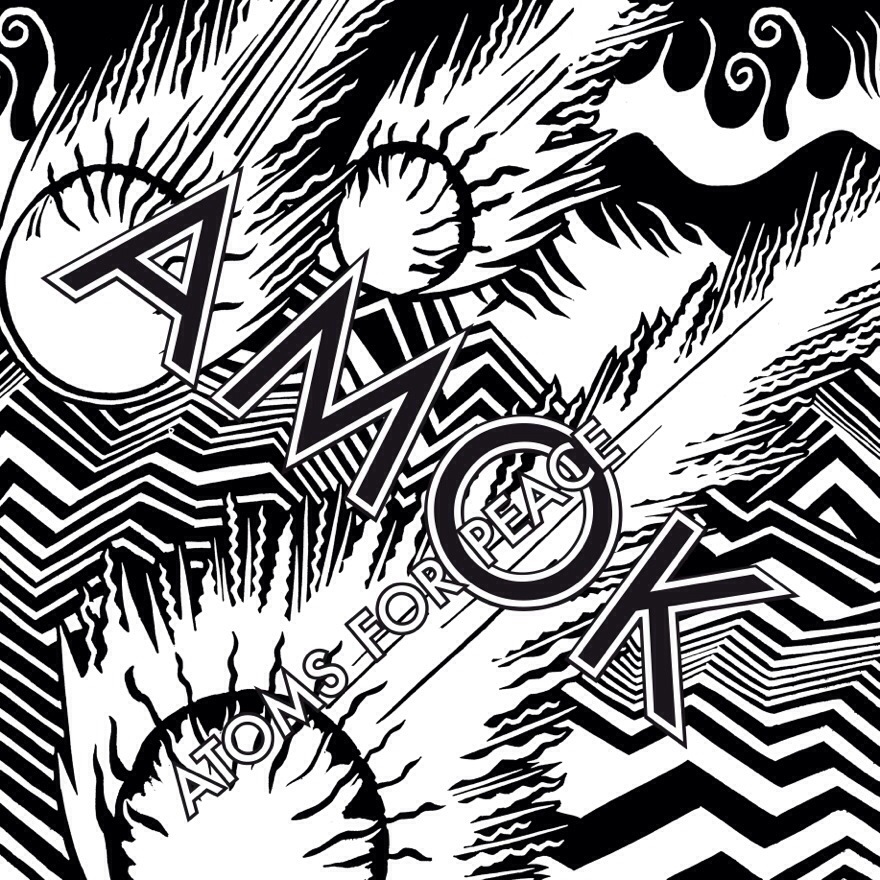
10. Atoms For Peace – AMOK
20140126-211953.jpg

11. Arctic Monkeys – AM
20140122-160421.jpg

12. Primal Scream – More Light
20140126-211726.jpg

Best Games 2013

Aside from being a massive fan of all kinds of cinema, I’m also an occasional keen gamer. I usually pick up games a while after they have been released so they are cheap, and that was true this year with games such as Catherine, FFXIII-2 and Rayman Legends taking up a lot of my time despite being over a year old. I even played Dragon’s Lair!!

I have managed to play a small amount of games that were actually released this year, so I thought I’d write a few words about some of my favourites.

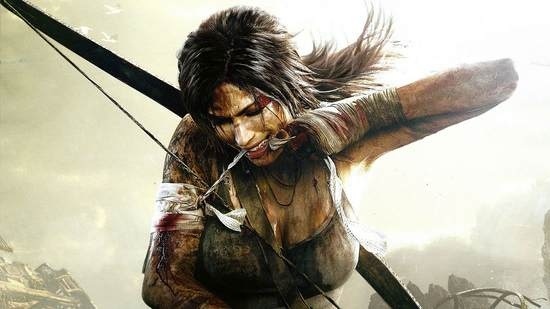
Tomb Raider (XBOX 360 / PS3)

As a twelve year old boy, the release of Tomb Raider II on the PlayStation came at a key moment of my life. The game was one of the biggest sellers, had rave reviews and was a fantastic showcase for the new console I’d just received for Christmas. No longer was I controlling a minuscule blocky man-character, but a fully-formed female equivalent of Indiana Jones.

The curvaceous way she was designed, of course, was fully aimed at me, and I can’t say this didn’t raise its appeal to me. Living in Britain in the mid-90s, even at a young age, I was aware of lad culture. The likes of Loaded and FHM were everywhere, and it wasn’t long before Lara Croft was featured in these magazines and being considered as a sex symbol. At the time there was definitely a split opinion on whether Lara Croft was an empowerment to women or she was objectifying them. The unrealistic figure by which she was designed juxtaposed with her physical power and mental strength. Perhaps this debate helped raise the franchise’s relevance in the wider gaming market and helped it shift enough copies to become one of the biggest sellers of the 90s.

It was refreshing, then, when I started on my copy of this franchise reboot. Gone are the unrealistically top-heavy curves seen fifteen years ago, replaced with a much more relatable – and frankly way more practical – figure.

The storyline picks up with a young Lara going on one of her first archaeological journeys. The action is set on an ancient island near Japan, with her team shipwrecked and seemingly incapacitated. A gang is also on the island, trying to resurrect an ancient Japanese ritual using Lara’s friend Alex as the new Sun Queen. The script is extremely well written and the voice acting is surprisingly good for a video game.

It plays as part-action, part-RPG, with players required to level up their weapons as the game progresses. There are a variety of tools with which to kill your enemies and hunt animals, and the bow is especially fun to use.

It is perhaps a slight victim of the time in which it is released, with an overwhelming amount of collectibles to be had and some pretty frustrating achievements (the one I missed – Chatterbox – still narks me now).

The other flaw is the tendency to flick to Quick Time Events in key moments. I personally hate this style of gameplay. Unfortunately Square Enix love it, and tried to use it to ruin last year’s otherwise excellent Final Fantasy XIII-2. Sometimes it’s quite difficult to work out when you’re supposed to be watching and when you’re supposed to be inanely pressing a button when it appears on the screen.

Overall though the game is a fantastic reminder of what I loved about the original games. The action keeps on coming, the characters are fully realised and the storyline keeps you gripped as much as plenty of big blockbuster films released this year. The gap between movies and gaming as a means of storytelling is getting smaller every year, and it is great when a game like Tomb Raider comes along to remind us how much more engaging a video game can be.

Minion Rush (iOS)

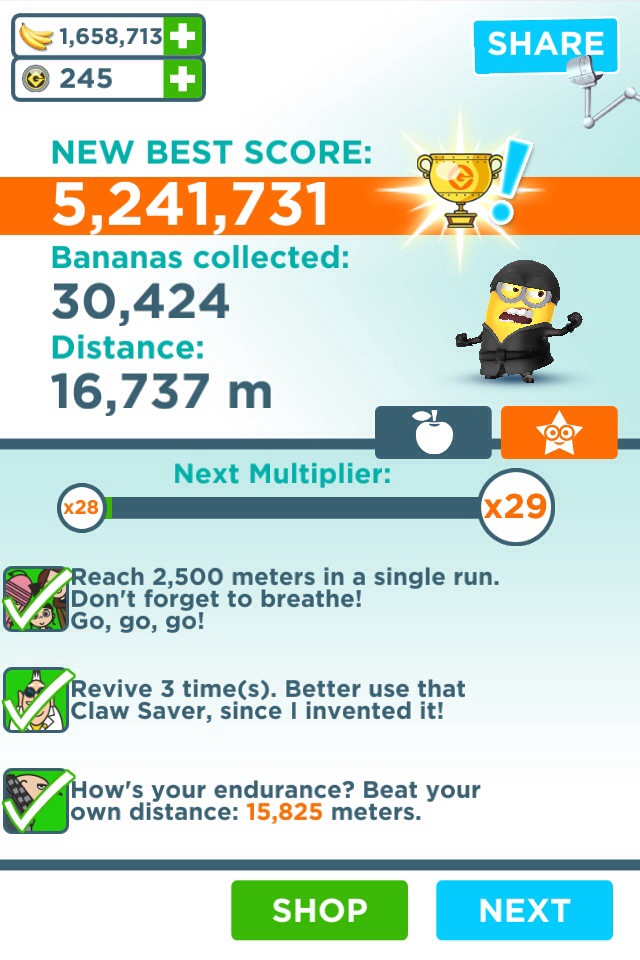
What can I say? It’s like Temple Run but a minion times better. I’m still playing it daily six months later. Not something I’m proud of, but it’s damn addictive.

FIFA 14 (XBOX One / PS4 / XBOX 360 / PS3)

Okay, I’m aware the selection of a FIFA game in a best of the year list is a far cry from controversial, but the game is excellent.

I pick up new FIFA games once every two or three year. As such, I always appreciate the improvements that have been made and allow myself time to start to miss the game.

It’s extremely vast, with heaps of game modes to select. You can play an exhibition match, which would be the mode of choice when you’re at a mate’s house and want a quick game. You can do the usual suspects of creating a custom league or cup, or playing through the 2013-14 season with you favourite team in one of the many licensed leagues they have acquired. You can take control of a single player and play through a career, either as a real life player or a created player. You can take it online and play against friends competitively or with unknowns (who inevitably select the ridiculously good Real Madrid).

There’s Ultimate Team, where you build a squad of players by opening digital packs of cards and selecting your best team from what you find inside. There’s a robust skill games section that is still challenging me now. There’s also a mode where you can relive key moments from recent matches, and either recreate what has happened or “put right what once went wrong” (oh boy). You can take control of a single player online in 5v5 and try to complete challenges along the way. Finally, there’s also the promise of a World Cup 2014 expansion pack, which will breathe further life into its playability.

What I’m trying to say is that whilst it’s only a slight improvement on last year’s installment, you have to stand back and admire the value-for-money package that is now on offer. I could never bring myself to buy it every year (or indeed twice in one year as early adopters of the next-gen consoles have done), but coming back to the franchise after a break really makes you appreciate what is on offer here.

New Super Luigi U (Wii U)

New Super Luigi U was actually an add-on pack for New Super Mario Bros U, released in 2012. It’s essentially a rehash of the game and most of the levels are very similar in design and layout, with a few tweaks to increase the difficulty.

It is a much more difficult game than it’s immediate predecessor, perhaps because that was perceived as far too easy for most gamers.

One of the key differences is the reduces time allowance. This time you only get 100 seconds to get through the level and pick up all the star coins. Many times the pace is frantic and you have to repeat levels to pick up one or more star coins. I was in panic mode every time until I had the genius idea of turning the music off.

It’s not a groundbreaking game but it was a welcome challenge to fill the space between the first instalment and the excellent and in every way far superior Super Mario 3D World (see below).

Super Mario 3D World (Wii U)

From the moment you start playing the first level, you know where the heart of the game lies: fun. It’s pulls out all the stops to give the player variety and it’s filled with imaginative ideas to breathe life into a familiar franchise. The cat suit is a stroke of genius, and new power-ups keep appearing as the game progresses.

The game is best played in multiplayer mode, which quickly comes sneakily competitive due to a winner being announced after each level based on points.

By the third world, you realise that the ideas haven’t been loaded top-heavy. They keep on arriving thick and fast, sometimes incorporating ideas from previous franchises – the Mario Kart-inspired Mount Must Dash is hilarious.

There are Captain Toad mini levels that test not your reaction skills but rather flex your logic, reasoning and spatial awareness.

The collection of the green stars really ups the replayability, functioning like the star coins of the New Super Mario series but significantly more challenging.

The end of world bosses are a great example of how to add variety to a game’s gameplay, shying away from the now well-overused jumping on the head three times style of most Mario games (it’s now over 30 years old!!).

Once you’ve finished the obligatory eight worlds, expect plenty more with the somewhat expected post-game play in the form of a bonus world. After that, you’ll be treated to another two! It will keep you going for months.

The style of the game, the immense detail on everything from the characters to the background of the world maps, the exquisite and highly varied music. All of the components add up to a highly immersive and extremely enjoyable gaming experience, a real return to form for the franchise. Whether it is enough to save the now seriously flagging Wii U remains to be seen, but if there’s ever a man to save a console it will be that tiny plumber.


20131224-211834.jpg

20131224-211850.jpg

20131224-211937.jpg

20131224-211951.jpg

20131224-212005.jpg

Mandella: Long Walk To Freedom (Justin Chadwick, 2013)

Mandela: Long Walk To Freedom is a biopic of the life of Nelson Mandella, a rich and vibrant story that has been crying out for a big screen adaptation for years. It’s pulled off in great style by director Chadwick. The story becomes even more poignant with the recent news of his passing, but makes the timing of the release of the film perfect.

The first thing you’ll notice when the film starts is that Idris Elba, famous for his roles in Luther, Prometheus and more recently Pacific Rim, looks absolutely nothing like Nelson Mandella. Many people assumed there would only ever be one man for the job: Morgan Freeman. Yet, the ambitions of this film were to cover Mandella’s whole life, and the meat of the story required a younger man to take the role. That Elba doesn’t look like him doesn’t really matter; his mannerisms and ability to convey the emotion of this rich story are of far greater importance.

The story moves at a terrific pace – it has to so it can cover everything. At times I wondered whether they could have spent longer on certain sections, and maybe a two part film would have been more suitable (this worked to great effect in Steven Soderbergh’s Ché). It didn’t detract from my enjoyment too much, but I feel like there’s more to tell – especially on his time as the president, which is a massive part of his life that was barely touched on.

Some of the prosthetics used to make Elba age were also a bit lacklustre. The first scene we see him as an old man is seriously undermined by the fact it looks a bit cheap. I wonder whether they thought they could get away with Elba’s appearance as a younger Mandela because we were less familiar with him, but panicked with his latter years under the knowledge that Madella’s face and appearance are so familiar.

Overall, this is a film that deserves to be seen and the box office will no doubt swell because of the timing of the release. It’s also a film heaped with responsibility that treats his legacy with due respect. Some reviewers have said that, because of this, it plays it safe. I disagree whole-heartedly. How else could this story have been told? It’s a fantastic work of art that is certainly worth seeing.

Mandella: The Long Road To Freedom is released at cinemas in the UK on 6th January 2014.

20131223-223121.jpg

20131223-223407.jpg

Frozen 3D (Chris Buck, 2013)

Walt Disney Studios. Hans Christian Anderson. Chris Buck. Idina Menzel, Kristen Bell and a voice cast full of talent and experience. It’s almost a kids’ Christmas blockbuster by numbers. Yet something isn’t quite right.

The character design for the two lead females – Anna (Bell) and her older ice-cursed sister Elsa (Menzel) – is superb. They’re fantastically realised and will be great additions to the Disney princess catalogue I’m sure. Outside of these though, the men are beyond generic. Indeed, Kristoff – the man of the mountain who helps Anna in her quest to find Elsa – could just be an extension of Flint from Tangled, complete with wisecracking animal sidekick Sven. The award for worst design goes to Olaf the snowman. This is a shame because he is responsible for some of the film’s biggest laughs, the best of which is the song “In Summer” – a song about how much he longs to experience the joys of the hot season. It’s undermined because he looks like a cheaply produced character from the early days of digital 3D animation.

The music is also, largely, a let down; bland and forgettable. I remember liking the opening song and the Olaf song (as mentioned earlier), but it’s a far cry from when I first watched Aladdin or The Lion King and was singing the songs for days. Only one song has a chance of going down as a classic and that’s “Let It Go”, sung by Menzel. It was the only serious song of any quality, but whether that’s enough to stand the test of time remains to be seen.

Despite this, one thing that distracted me was Menzel’s voice. She is in possession of one of the best singing voices to grace musical theatre in the last twenty years but the character she is playing, by my best guess, is about 21 years of age. Menzel is 42 and it must be said that when she is belting out the songs, she sounds like she’s 42. Not that any of the kids in the theatre would have noticed. I must reiterate that her voice is outstanding and she nails the songs, but there are plenty of great young female singers out there that could have done a tremendous job. It baffles me why they made this choice.

If there’s one thing the film should be applauded for, it’s pulling off the difficult task of finding space to develop not one but two extremely strong female lead characters. It would have been very easy to let one of them fall into the background but they do get the balance right. This is important move for the Disney merchandising departments, with a predominantly boy-centric year coming up in 2014 (Both Big Hero 6 and Star Wars VII will dominate the big screens next year).

Overall, the film ticks all the boxes and the younger generation will be thoroughly entertained throughout. In comparison to the non-Disney animated features that have been released in 2013 it wipes the floor, but this isn’t any old studio. It’s Disney, and we’ve come to expect much much more.

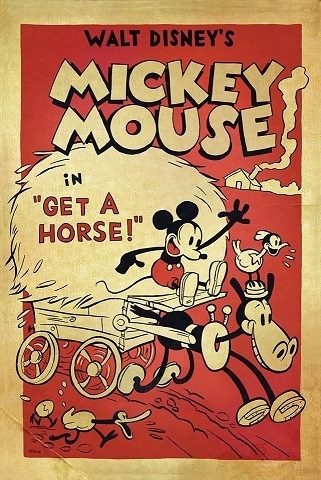
If you want to find some real Disney magic, then you’ll get that before the main feature itself. Get A Horse! Is a fantastic short film, featuring Mickey, Minnie and Peg Leg Pete. It’s a mixture of black and white and colour, 2D and 3D, and it mixes them to good effect. It’s seriously entertaining, fast-paced stuff and only served to underline so much that was missing from Frozen.

Frozen is released in cinemas in the UK on 6th December 2013.

20131130-224518.jpg

20131130-224529.jpg

Susuz Yaz [Dry Summer] (Metin Erksan, 1964)

Susuz Yaz is the first film to be released in the UK as part of the World Cinema Project, as founded and chaired by Martin Scorsese. Released in 1964 and directed by Metin Erksan, the film was immediately banned by Turkish authorities and was thus not enjoyed by the wider audience it deserved, despite winning the Golden Bear at the 14th Berlin Film Festival and the Biennale Award at the 29th Venice Film Festival. It has been a long time coming, but it is finally seeing a high definition official home video release.

The film charts the story of two brothers – Osman and Hasan Kocabas – who own a tobacco farm on which a water spring that serves a community is sourced. It is a drought summer, so Osman decides to dam the supply and keep the water for himself. Hasan opposes the idea, seeing the potential for arguments, starvation and unhappiness in the community. It’s the classic tale of conflict from within family, the choice of doing what’s right by the community or what’s right by your family.

There’s only one catch. Osman is a complete asshole.

Osman is a guy that is screwing over his neighbours solely for his own benefit. A guy that peeks through a crack in the wall to see his brother having sex with his wife. A guy that kills a man that tries to dismantle a dam that shouldn’t have been there in the first place, then forces his brother to take the blame. There are so many despicable acts as the story progresses and I don’t want to ruin them for you if you’re looking at watching this film. Just trust me that the character is up there with Nurse Ratched the great assholes of cinema list.

He’s part of a triangle of lead characters that drive the film forwards at a fantastic pace. The beautiful Hülya Koçyiğit is great as the oppressed housewife Bahar, whilst Erol Taş gives a great turn as the brother determined to do right by the community. Yet it is Ulvi Dogan as Osman that keeps us enthralled and captivated right to the end. He’s truly disgusting and pulls out every stop to make your skin crawl. At no point does Erksan attempt to court sympathy for him, which is refreshing to see nowadays.

The film comes in a box-set of three forgotten works of art along with an extensive booklet with short essays on the respective films. It’s a fantastic package that is similar in design to the recent Late Mizoguchi boxset, also from Masters of Cinema. The three films (this one plus Ahmed El Maanouni’s Trances and Ermek Shinarbaev’s Revenge) all have introductions from Martin Scorsese himself. Having not got to the other two discs yet, I can only comment on the Dry Summer disc. The five-minute introduction doesn’t really critically analyse the film and also offers no insight into it, though it is nice to see Mr Scorsese chat about something he’s clearly passionate about. Perhaps I’m just information hungry these days but I was certainly underwhelmed by the lack of bonus features. I guess the sheer fact that we get to see the film in any form is bonus enough and I can’t complain too much!

Delving into the Phil Coldiron essay into the booklet, we find out a small amount of info about the film and the context in which it is set, and it offers a perspective on why the film was so risque at the time that is found itself being banned. Certainly by today’s standards, the things I suspect it was banned for – the point of view upskirt shots of the desperately unhappy Bahar, the passionate sex scenes, etc – all seem very tame indeed. The more horrific scenes come in the form of animal cruelty and, later on, the fight scene between the brothers that is so convincingly acted out that it leaves the viewer feeling almost sympathetically exhausted for them.

All in all, if you have even a passing interest in the history of world cinema and want to support the great cause of film restoration then you should consider buying this release. I was nervous that it might stray from the high standards that have been set by the Masters of Cinema series but that just isn’t the case. It’s not a film I’ll be rushing back to watch again (I have two more from the same box first!), but I won’t be forgetting the great asshole Osman any time soon.

Martin Scorsese Presents World Cinema Project Volume One is released on Blu-ray and DVD dual format on 25th November 2013.

Susuz Yaz film poster from the 14th Berlin Film Festival

Susuz Yaz film poster from the 14th Berlin Film Festival

Saving Mr Banks (John Lee Hancock, 2013)

I was inevitably sceptical about watching this. It’s a film that was created, in part, by Walt Disney Studios and stars family-favourite actor Tom Hanks as family-favourite animator, voice-actor and business magnate Walt Disney. If there’s ever any story that’s going to sugar-coat the facts, it is this.

Fortunately for Saving Mr Banks, Walt Disney is not the main character. That honour goes to Emma Thompson’s portrayal of Mary Poppins author P. L. Travers. Even more fortunately, her portrayal is up there with the finest of her career.

The story centres around Disney’s ongoing pursuit of producing a film adaptation of Poppins, something that Travers had resisted for years due to her apparent hatred of everything the company has ever been associated with.

In particular, we pick up the main thread story as she embarks on a short two-week trip to the studio headquarters to meet with a small creative team consisting of music legends the Sherman brothers (brilliantly portrayed by Jason Schwarzman and B. J. Novak) and Don DaGradi (Bradley Whitford). Her main intent is seemingly to sabotage every ounce of creativity in the hopes that the film is never made, lest the essence of her perfectly sculpted tale be destroyed.

This is intertwined with flashbacks to her time growing up in 1907 Queensland. These are the real standout portions of the film, and they shy away from the watered-down story we are unravelling in 1961 Los Angeles. Colin Farrell‘s turn as Traver’s alcoholic father is exceptional and this story is key to understanding how she acts in later life. I wished we had been treated to longer in Australia, but this tale was never going to be a three hour epic.

Back in LA, the story moves along at a reasonable pace, adding enough humour to the mix to ensure we don’t forget how magical the film making process is when Walt is driving it. This often works, but I shook my head in disbelief at the scene in which Travers finally changes her mind and starts to support the film. I won’t spoil it, but I’d love to know whether or not this really happened. I suspect not. It is somewhat ironic that a story centring on someone’s dislike of the Disney filmmaking process should be treated in exactly that manner.

Hanks didn’t have a lot to work with and that’s to be understood. That said, he still gives a stellar performance and he can’t be faulted. He will be considered for the awards season regardless, but not for this film – Captain Phillips is a much meatier role for him to be proud of, and one that will doubtless be featured heavily when the awards nominees are announced in January.

The praise in this film, rather, should be heaped upon Thompson for successfully portraying what must have been an immensely difficult character to master. That she makes us warm so much to a person that was evidently so emotionally cold is something worth admiring, even if everything around her is so sugar-coated.

Saving Mr Banks is released in cinemas in the UK on 29th November 2013.

20131117-131220.jpg

Computer Chess (Andrew Bujalski, 2013)

The appearance of the Masters of Cinema logo at the start of this film came as a pleasant – and stirring – surprise. My interest for the series was kindled when I bought a copy of Fritz Lang’s M on Blu-ray a few years ago and noticed the #9 on the spine, which was an ingenious way of making someone like me find out more. If this is number nine, then where are the previous eight?! Are they all Lang masterpieces? Maybe it branches out into other early-20th Century German filmmakers…

Actually, the series has no rules, just great films with careful consideration to the packaging, booklets, title screens, bonus features and, crucially, ensuring the transfer of the film itself is of the highest quality. More recently, Masters of Cinema have branched out into the distribution of new films, the latest of which is Andrew Bujalski’s mumblecore triumph Computer Chess.

Admittedly, seeing a mumblecore film I had purposefully avoided reading anything about prior to watching it could have been disastrous, especially considering it was the fourth in a series of seven films I was watching at the London Film Festival over a four-day-period. It didn’t matter a bit.

The film kicks off with a press conference to introduce the key competitors in a computer chess tournament in 1983, all of whom think they have the most advanced computer programme. Running the show is the host of the tournament Henderson (played by Gerald Peary in his acting debut) who lays down the gauntlet of a grand final human-against-computer chess match to whomever wins the tournament. Traversing the chasm to the unfamiliar world we are eavesdropping on is filmmaker John (played by another debutant Jim Lewis), who finds the whole thing both side-splitting and bizarre in equal measure. It is shot so authentically using carefully sourced low-grade home video technology from the period, that I’m sure that the uninformed amongst the audience (myself included) thought they were in fact watching a potentially very boring documentary. It is in this scene that we are also introduced to Michael Papageorge, played by Myles Paige (Funny Ha Ha), the standout performer in the early parts of the film who is clearly happy to ruffle some feathers and show he means business.

As the film progresses, we are indulged with many nods to the early 1980s – be it the naturally delivered chauvinistic comments made by the host or the now absurd general feeling amongst everyone there that the future had finally arrived in the form of their prized personal computers that could almost outsmart a human if programmed correctly. Meanwhile, Paige busies himself falling into a David Lynch-esque subplot and in turn passes the focus to Patrick Reister, whose character Peter Bishop is so excruciatingly introvert you wonder how anyone would dare make him the centre-point of a film for such a long period. Yet Reister is brilliant in teasing out the audience’s emotions as someone we just wish would come out of his shell more and live life outside of the world the players have carved out for themselves. He does this almost entirely through body language and facial expression as his shy character is afforded only infrequent passages of nervously delivered dialogue. It is a first class performance.

Not all of the film works quite as well. The tournament is sharing the hotel space for the weekend with a meditation escape weekend and to be honest it feels like these passages just get in the way. Equally, the scenes in the latter part of the film that appear in colour really stand out as far too polished and detract from the indulgent escapism of the rest of the film.

I left the film feeling like the story hadn’t really been tied together properly. As an authentic ode to the joys of early-‘80s home video recording, though, it was the only way it could have ended.

Computer Chess is released in cinemas in the UK on 22nd November 2013.

20131115-150403.jpg