Unknown's avatar

Posts by hutchwp

Chief writer and editor at Cinema, Etc.

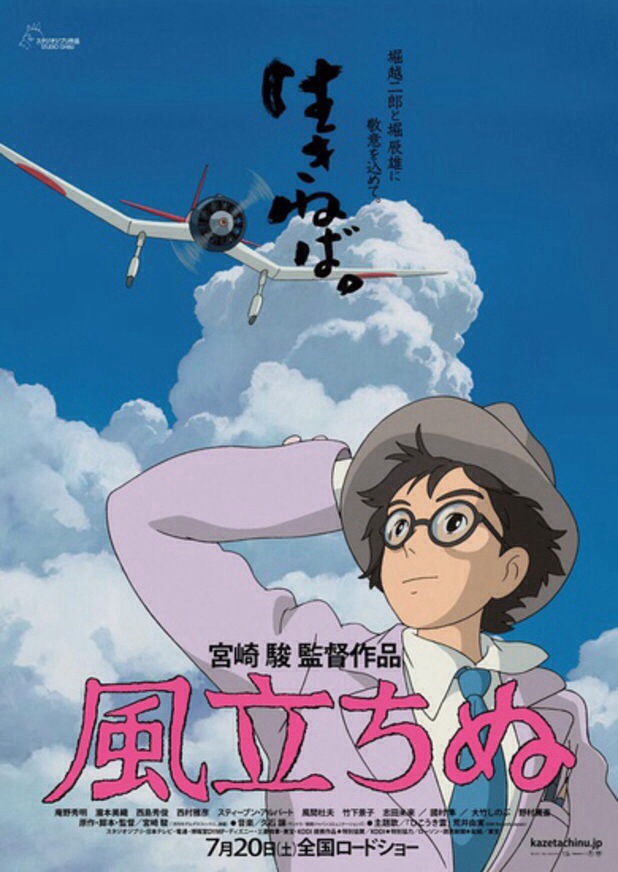
The Wind Rises / 風立ちぬ (Hayao Miyazaki, 2013)

“I am talking about doing something with animation that can’t be done with manga magazines, children’s literature, or even live-action films.”

It’s that last line that really bothers me. That was Hayao Miyazaki talking, in 1978, about what animation means to him. It wasn’t a hard quote to locate. I only started reading his autobiography (of sorts), Starting Point, five minutes ago. It was right there in the third paragraph of the first page.

I don’t think there’s any denying that, when looking back at the career of one of the greatest and most imaginative directors of all time (and I’m not limiting that to animation either), he has created a body of work that surpassed that which would have been capable in any other medium. If you look at Nausicaä, Princess Mononoke, even his work on Sherlock Hound The Detective, it’s difficult to see how any other medium mentioned above could have portrayed his story any better than in 2D animation.

So when I was sat there at the cinema watching The Wind Rises, even before I read that opening quote, I couldn’t help but wish for the magic to ooze back into play. I was with a fellow anime fan and another friend who was unaware of any of his output, and we all agreed that the film could have been better served as a live-action film. There wasn’t really any call for the animation. Yes, it looked visually stunning as usual, but it didn’t add anything to the story.

It’s sad that Miyazaki has chosen to finish his body of work with this film. Don’t get me wrong, it is definitely not a terrible film and it won’t tarnish his reputation. The story is solid, the characters well-realised, the backdrops deep in detail. It’s just a bit of an anticlimax after a series of such amazing films.

One for the completists and die-hard fans, but if you’re new to Miyazaki, you’d be better to start with Howl’s Moving Castle or Spirited Away.

The Wind Rises is out in cinemas in the UK now. Reviewed was the Japanese version with English subtitles.

South Park: The Stick Of Truth (Obsidian, 2014)

After a good number of games based on the South Park franchise – some good and some pretty terrible – finally the quintessential tie-in has arrived. The reason? We finally feel like we’re living in the middle of an episode.

The plot line revolves around alien anal probing, the aborted foetus of a Kardashian, an ooze that turns people into zombie nazis, Cartman being an asshole and underpants gnomes. Fairly standard stuff for an RPG really. You play as the new kid in town -invariably referred to as Douchebag throughout – and join Cartman, Kenny and Butters in their quest to find and protect the Stick of Truth.

The plot-lines are full of comedy gold, which is bound to keep South Park fans happy whilst entertaining newcomers. The mechanics of battle, as RPGs go, is fairly basic. You have a choice of weapons to fit into two slots, plus a few summons and magic choices too. The enemies aren’t complex enough to worry you too much and you can usually put reducers on tougher enemies pre-battle to ensure you win. It wouldn’t trouble the complexities of, say, the Final Fantasy series.

I have to say I found certain parts really frustrating. I stupidly checked out the achievement list before I started, and this alone ruined my fun in my first play through. I had in my mind there were a number of missable tasks to complete for 100%, including collection of the Chinpokomon and making friends with all of South Park (for the hilariously-titled “More Popular Than John Lennon” achievement), which were tied together. Unfortunately, the checkpoint system used when saving means that you’re often taken back a couple of screens when you reload and I missed one collectible even though I knew I’d already collected it, but unbeknown to me it didn’t register when I reloaded. All this means I have to do a complete second play-through to finish the game. Why oh why do games do this? The worst case was Tomb Raider’s Chatterbox achievement. I’ll have to make a conscious decision to not think about achievements in future, but I guess it’s my OCD kicking in.

Another frustration will only be relevant to those playing in Europe. PEGI saw it fit to censor a handful of segments due to them being in bad taste. How you can decide that anally probing a cast member on an alien spaceship is off-limits, whilst happily allowing a battle against a Kardashian’s reanimated aborted foetus is beyond me. Sort it out!

The game has some amazing side quests, involving all your South Park favourites. Jimbo and Ned, Mr Hankey, Al Gore and Manbearpig, Crab People, Mr Slave and Randy all feature in the bonus material that will keep you entertained beyond the main plot of the game.

Small annoyances aside, I really recommend this to anyone with an interest in comical video games or indeed South Park itself. That this game almost never saw the light of day is a travesty and it’s wonderful we get to enjoy it now. It’s probably not very challenging to experienced gamers, but there’s plenty to enjoy if you want to commit some time to it. At the newly reduced price it’s a complete steal.

Kuroneko (藪の中の黒猫, Yabu no Naka no Kuroneko, 1968, Kaneto Shindo).

I’ve made no attempt previously to hide my love for the Masters of Cinema series, which have been responsible for some of the most glorious transfers of classic cinema I’ve ever seen in home media. You’re not just getting a bit of quick entertainment, but an object to cherish and, in many ways, a work of art in itself.

No corner is cut. Ever. The picture and audio quality is immaculate, facilitating a near-cinema experience should your set up allow. There is almost always a chunky booklet to accompany the disc, and the bonus features on the disc always try to go beyond just a couple of short interviews and a trailer. Even the menu looks rich and well-thought-out.

Kuroneko is no different.

It’s a supernatural horror film, much in the same vain as previous Shindo film Onibaba. It tells the story of the spirits of a mother and her daughter-in-law who had been the victims of a horrific attack at the hands of a group of samurai. They seek revenge having apparently made a pact with the devil, though the ramifications of this only become apparent later on in the film.

The rich chiaroscuro achieved by Shindo and cinematographer Kiyomi Kuroda are beautifully displayed here. Much of the film is spent in the depths of a forest as dark as the story being told. The atmosphere and tension is palpable; it really is edge of your seat stuff at times. There are several disturbing and violent scenes in there, but the harsh reality is not left to the viewer’s imagination.

Kuroneko was a film I sought out after seeing Onibaba, which was also released through the Masters of Cinema label. Similar in style and themes, both pack a lot of punches and are worth checking out. Shindo really was a master of cinema and here in the UK we’re lucky to have such a caring label willing to give the attention his films deserve, even if it is just a handful.

Godzilla (Ishirō Honda 本多 猪四郎,1954)

Spectacular special effects, a metaphor for nuclear weapons, the start of a still-popular franchise. There are many things that have been repeatedly said about the 1954 original of the Godzilla story by Ishirō Honda. But how does it stand up to viewing sixty years down the line?

I imagine a lot of people will seek the film out ahead of the release of the Gareth Edwards modernisation next month, a task made all-the-more easier by the fact it is out of copyright and there are plenty of copies available for free around the net.

For those not used to watching foreign or classic cinema, it might come as a shock. There are a few things you need to buy into if you’re going to enjoy it.

The use of miniatures at the time probably took most cinema-goer’s breath away, but nowadays you can spot them a mile away. What we are seeing looks very little like the complete destruction of Tokyo, but more like the complete destruction of a very little Tokyo. They’ve not even got the speed of the slowed-down film correct.

It’s also difficult to watch the film without seeing Godzilla as a man in a rubber suit. Haruo Nakajima is clearly putting a lot of effort into his portrayal but it’s hardly convincing by today’s standards. Remember, this is over two decades after King Kong had terrorised the big screen and there must have been some advances in technology in the intervening years.

I have seen this film before, probably around seven years ago. The flimsy conclusion to the film really had slipped my mind. Having annihilated several towns and cities in his reign of terror, we are quickly asked to buy into the concept that putting Dr. Serizawa’s Oxygen Destroyer under water will do the trick. Wait… Hasn’t he spent most of the film breathing fire on people above water? I know he’s sleeping underwater, so I guess he’s amphibious? We already know he can survive for hours above water so why does he die immediately? And why are there no dead floating fish at the surface? If the oxygen has been completely removed then why do the humans live on? I know, I know… He’s a giant fire-breathing dinosaur… Everything else is water under the bridge.

Overall I see this film as entertaining but flawed, historically significant but unbelievable. I enjoyed my time watching it, but I wouldn’t recommend it to someone looking to get into classic Japanese cinema.

And at least it wasn’t directed by Roland Emmerich.

Oscars 2014 – What missed out

20140302-181314.jpg

With the Oscars taking place later tonight, I look at the films that have been overlooked by the Academy.

Monsters University
20140302-181458.jpg
Okay, it wasn’t the best picture Pixar has come up with over the years. It wasn’t even the best Monsters film they’ve produced. That said, they did find space for The Croods in the nomination pool, which was fine but could you really say it was better than MU? If Pixar had released The Croods, there would have been mass derision. Miyazaki’s The Wind Rises is a hot tip to take the prize this year, but I can’t comment until it gets a UK release.

Rush
20140302-181717.jpg
I feel like this film has suffered because it wasn’t released in the typical awards season. It didn’t play by the book. It came out back in September 2013 and performed well at the box office without an Academy recommendation. Bruhl and Hemsley were both outstanding, not just as eerily accurate take-offs but as flawless acting performances in their own right. The recreation of the classic races was spot on from Howard and the story was as exhilarating as the action. In my eyes, it could have easily come in as the 10th film on the best film list. To not even get an appreciative nod for best makeup (Bruhl’s scarring was critical and spot on) or visual effects (though admittedly this was a strong category this year) is surprising.

Inside Llewyn Davis
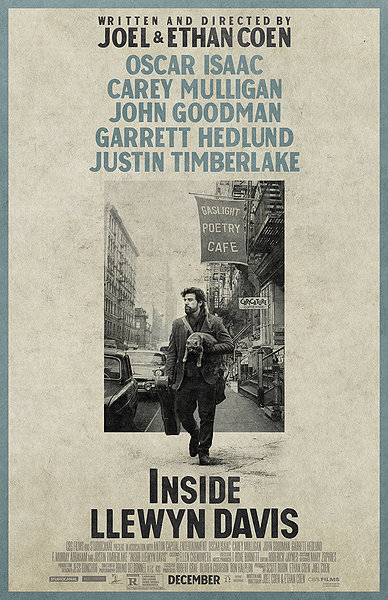
It’s the Coen brothers latest release and they usually get nominated, right? Not this year. Whilst it’s a strong year for nominations in the Best Picture category, it should have received a nod for best song. In fact, whole soundtrack could have been considered. It received one for best sound mixing, which is a bit of a throwaway category overall. At least it was appreciated on some level.

The Hunger Games: Catching Fire
20140302-181550.jpg
Okay, I don’t agree that this film should have been nominated for best film or best acting or anything else. However, the song “Atlas” by Coldplay is easily one of the best original songs in what was admittedly a poor year for soundtracks. It’s a shame they had a song on the list that was later disqualified, especially one as awful as “Alone, Yet Not Alone” by Bruce Broughton and Dennis Spiegel. There was also space for the bland “Ordinary Love” by U2. Neither of these should have made it and they would have made room for “Atlas” and, well, anything from Inside Llewyn Davis or Her.

Saving Mr Banks
20140302-181628.jpg
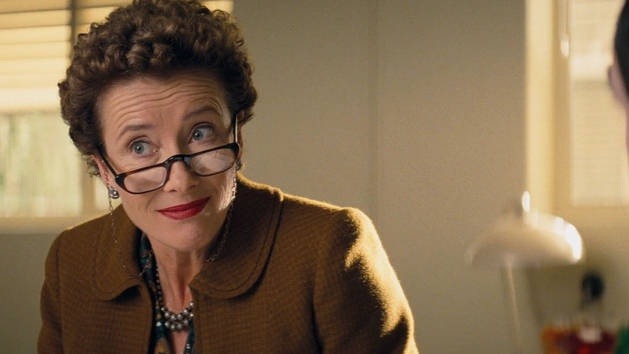
One of the biggest and most talked about shocks was the lack of a nomination for Emma Thompson in Saving Mr Banks. It’s frustrating to see Meryl Streep nominated for the 18th time for a role that she will never win the top prize for when Thompson could have been a front runner for.

Nymph()maniac
20140302-181509.jpg
I would have loved it if the Academy could have found it in themselves to nominate Uma Thurman’s fantastic supporting performance in Lars Von Trier’s latest film. It blew me away and really stood out in what was otherwise a pretty bland film. That said, it may not have qualified this year so we may have to wait another year before we see if this – and indeed Christian Slater’s excellent performance – was overlooked.

Elsewhere
Tom Hanks missed out twice for Saving Mr Banks and Captain Phillips, the latter being the biggest shock as it is probably his best performance for over a decade. Whoever thought the cinematography in 12 Years A Slave wasn’t worth noting must have been on drugs. Nothing for Robert Redford’s performance in All Is Lost was also a big surprise, though I’m not convinced Redford lost any sleep over it. The Butler was a massive omission but maybe a little too much like a typical Oscar nominee.

The Book Thief (Brian Percival, 2014)

I’m a massive fan of foreign films. If a small film from an unknown director or studio outside of the US or UK has reached cinemas in the UK then it’s a pretty good indicator that it’s a film has something special about it. I managed to get hold of some preview tickets for this film and felt pretty excited at the start when the subtitles started and I thought “Thankfully, they’ve got it right”.

Then Emily Watson and Geoffrey Rush started talking and that’s where it all fell apart.

Why oh why would you pull in two hugely successful English actors and have them put on hammy German accents whilst speaking English, when Germany is full of excellent actors who would surely have been desperate for a big role in such a widely released film. I’m sure Christopher Waltz, Diane Kruger and Daniel Bruhl aren’t the only ones available. I have never ever understood why studios refrain from subtitles in this situation. Most people watching aren’t so stupid they can’t follow it. Heck, we English-speakers might even learn a language or two in the process. Please please please stop ruining films with this approach. If you want to see how to get it right then just watch the first ten minutes of Inglourious Basterds.

That said, the story is told well and there’s a fantastic performance from both the leads: 13-year-old Sophie Nelisse starring as book-obsessed Liesel, and her friend Rudy played by Nico Liersch (hurray a German!). I enjoyed it once I got past the annoying language distraction. It’s visually pretty if a little dull and soft. The John Williams score is beautifully emotive (as you’d expect from one of the greatest film composers of all time).

I’m sad that it didn’t quite hit the mark for me and I wonder whether I would have enjoyed it more if they had gone with a more realistic approach to the dialogue.

The Book Thief is released in UK cinemas on 26th February 2014.

Inside Llewyn Davis (Joel Coen and Ethan Coen, 2014)

Before I start I must confess I’m a huge Coen brothers fan. So much so that I recently went on a day-long course at Broadway Cinema (which was excellent by the way). I look forward to every Coen brothers release and when it’s coupled with a Palme d’Or win then you know you’re in for an entertaining two hours.

The looping storyline concerns the struggling titular character, a performing artist in New York’s Greenwich village, as he tries to make ends meet and regain the popularity he once had with his former singing partner Mike Timlin (who has since committed suicide). It is packed full of astonishing musical performances, not least from Oscar Isaac (previously famed for the King to Russell Crowe’s Robin Hood, though set to become quite well known when he stars in the upcoming Star Wars Episode VII). Joining him are Justin Timberlake and Carey Mulligan as the main stars of the film, though they are definitely in supporting roles. There are also cameos from heaps of great actors, my favourite being the highly comical contribution from John Goodman.

Llewyn Davis Singing

The soundtrack is clearly the driving force behind the storyline. One of the greatest achievements the Coens manage is to allow our attention to be fully dedicated to the music. It’s never a case of starting a song and cutting away to a montage or separate conversation whilst the song goes through the motions of a second verse or middle 8. It is clear they are truly passionate about the music that drives the story and in almost every case the song is uninterrupted from start to finish. It could well be the greatest Coen Brothers soundtrack yet, and if you’ve heard the O Brother Where Art Thou? OST then you know what a compliment that is.

If you’re looking for something to lift your mood, steer clear. Indeed, if you are a struggling artist yourself, you might also want to give it a wide berth unless you are just interested solely in excellent musicianship. With someone this talented struggling to make ends meet and not showing any sign of getting anywhere with his music, you might leave convinced to never pick the guitar up again. If you can put all that aside and simply appreciate the (perhaps surprisingly) excellent musicianship captured so perfectly here then you’re bound to be a happy viewer.

This film is not going to go down as one of the great Coen Brothers films. It just doesn’t have the indescribable magic of, say, The Big Lebowski or Fargo. It is by no means a terrible film, but I just don’t think it has the widespread appeal of some of their other releases. It’s well worth checking out, though I recommend you give it your full attention.

Inside Llewyn Davis is out now in UK cinemas.

12 Years a Slave (Steve McQueen, 2014)

12 Years A Slave is a unique film in many ways. Most of the cast are complete unknowns. The budget was very low ($20m USD). There isn’t a massive push to advertise it anywhere, with very few trailers being seen at the cinema and on TV (I do the former quite regularly and I think I’ve seen one). Despite this, it has seemingly grown popular through word of mouth. This is something that’s very difficult to achieve when most of its momentum has come before the release date.

The pattern is similar to that of Shawshank Redemption, though at the time that film really didn’t start well at the box office. It became a sleeper hit and enjoyed success many months after the initial release, thanks to continued praise from critics and several awards nominations and wins.

Indeed, Shawshank’s Dufresne isn’t wholly unlike Northup, the main character in 12 Years. Both are imprisoned against their will for entirely the wrong reasons and are determined to see that justice is realised somehow. It is the kind of story that keeps you captivated and as time goes on you become more and more engrossed in the fact that these people should get the happy ending they deserve.

Steve McQueen is a very clever director. With his background in the visual arts (he won the Turner Prize in 1999), he adds an artistic flair to every shot he takes. Much like his debut Hunger, almost every shot could be framed and put on the wall to enjoy in its own right. The cinematography is just that good. Equally, he doesn’t shy away from allowing the camera to linger on our characters as they encounter struggles. One shot in particular sticks in your mind, when Soloman is partially hung in his first plantation and having to stand on the tips of his toes to draw the smallest of breaths. A less confident director would have cut away several times to show other subplots developing, sporadically cutting back to show he is still in pain. McQueen’s choice to stay with him is an example of how bold he is prepared to be and it is one of the most striking parts of the film.

I got confused by some of the sound editing. Several times there was an active choice to allow clashes between the score and the natural sounds of the scene, and most of the time it didn’t really work. The choice was obviously made to let the clash signify discomfort, and was occasionally exacerbated by bleeding audio into the following shots or scene, and in one particular scene, where Eliza was uncontrollably crying, it was overly confusing and distracted me from what I was supposed to be watching.

That aside, it is rightly being considered to sweep the board at this year’s Oscars. I don’t think it will, because there are too many very strong contenders with no outright frontrunner. If it gets none, there will of course be uproar. However, the same could also be said of Gravity, Dallas Buyers’ Club, Captain Phillips, American Hustle, The Wolf of Wallstreet. The list goes on. It is a tough year to pick a winner in each and every category. The deliberation forced on the Academy panel is a sign of what a fantastic year it has been to be a fan of cinema.

12 Years a Slave in out in UK cinemas now.

Only Lovers Left Alive (Jim Jarmusch, 2014)

Once in a while a film comes along and disappoints you so much you forget what ever made it appeal to you in the first place. The last time this happened to me was when I saw INLAND EMPIRE back in 2006. I was desperate to see it and couldn’t find anyone to go with me so walked on my own for over an hour to the nearest cinema showing it and watched the whole three hour spectacle unravel on my own. Actually was it six hours? It felt like it. And so it was with the latest Jarmusch film. I’m just sorry I forced the experience on my equally underwhelmed fiancé.

The film sets its pace deliberately slowly. Opening with a spiralling bird’s eye camera shot of our two main characters – played by Tom Hiddlestone (Thor, War Horse) and Tilda Swinton (The Beach, We Need To Talk About Kevin) – it matches the evocation of the interspersed antique record player. It’s intelligent camera work. We’re definitely spinning at the lower end of the 33 rpm spectrum, but it sets the scene pretty well with the slow and dirty rock music that accompanies it.

The story goes something like this. Our central characters (named Adam and Eve) are both vampires, they need blood to stay alive and source it from a sort of underground illegal blood trading market. Oh and Adam is also a reclusive rock star. And Eve has the power to touch things and say how old they are (I think this was sourced from the Superuseless Superpower blog, but I can’t be sure).

John Hurt (The Elephant Man, Alien) plays a very old vampire who it turns out is actually most of the greatest writers in the history of humanity. Chekov from Star Trek is Adam’s roady. Felix from Casino Royale makes an appearance. Later in the film, Eve’s younger sister arrives on the scene but it’s ambiguous as to exactly how old she is. I mean, there were long periods of the film where there was no dialogue and as I was drifting in and out of consciousness, and I got to wondering how old she really was. If Adam and Eve are about 600 years old and look like they’re about 40, she looks like she’s about 20 so must be about 300, but yet she acts like she’s about 14. So, do vampires mature at an extremely slow rate too? I don’t get it.

Anyway it rambles along for about two hours before getting to the point where something happens and they go abroad and have to look for new sources of blood. As my fiancé pointed out, it’s the sort of thing that would usually take about 20 minutes to develop in most films. It’s deliberately paced excruciatingly slowly and sometimes it works, but mainly it falls short.

It’s admirable that Jarmusch is bold enough to stick to his guns and allow conversation to take centre stage as he did so well with Coffee and Cigarettes, but this isn’t a film about having a conversation whilst smoking and drinking coffee. It’s a story about a rock star vampire, his wife who has a super power, a man who is secretly almost every important writer ever, Chekov from Star Trek and a seedy underground market for blood. Isn’t this a recipe for a really quite exciting film?

No. Apparently it isn’t.

Only Lovers Left Alive is out in UK cinemas on 21st February 2014.

American Hustle (David O’Russell, 2014)

Director David O’Russell has had a sudden upsurge in fortune. With his last film – Silver Linings Playbook – he finally realised the promise hinted at with his earlier attempts at cinematic quirky humour. It was both critically lauded and a commercial triumph. It was a must-see film. If you hadn’t seen it you wanted to, and once you’d seen it once you probably wanted to see it again. O’Russell’s stock had never been higher.

It was important, then, that he chose his next film wisely. I’d say American Hustle was exactly that – a wise choice. It’s a film set in 1970s New Jersey, and this allowed a lot of fun to be had with costuming and recreating an authentic world in which the characters can play. To bring the characters to life, he enlisted three key actors from last year’s triumph: Robert De Niro, Jennifer Lawrence and Bradley Cooper. Added to this he also brought Amy Adams, Jeremy Renner and Christian Bale. That is a formidable lead cast if ever you saw one.

The music is spot on. Mixing a superb score from Danny Elfman with some choice cuts from the era (think Elton John, America, Chicago), it all blends together to further enhance the authentic experience.

Yet, after 138 minutes of buying in to the story, I left the cinema feeling a little short changed. There’s enough humour to keep us smiling, some great playoffs between Adams and Lawrence who are at each other’s throats throughout, and the mild twists and turns in the plot are entertaining if not thrilling. I admired the solid performances from the all-star cast, none of whom underperformed but at the same time didn’t shine. The film had the feeling of playing it safe, and I thought there could have been more to it. The final payoff was predictable and in turn disappointing.

The main problem for me was that none of the characters were likeable. Adams and Bale are both untrustworthy con artists, Cooper is an FBI career man who wants a quick rise to the top, Lawrence is a degenerate waster who’s slow on the uptake, De Niro is a mafia overlord. Renner’s Mayor Polito is the only one I felt sympathy for, getting mixed up with the wrong people for the right reasons, but he’s not really a central character. I didn’t have anyone I felt the urge to back and for me that’s a flaw in the scriptwriting. I understand that the aim of the film may have been to portray the fact that nobody in this circle is likeable, but it just wasn’t carried off successfully. With so much time to develop the characters and such an amazing array of talent on offer, it could have been so much more.

American Hustle is out now in UK cinemas.