Unknown's avatar

Posts by hutchwp

Chief writer and editor at Cinema, Etc.

Das Cabinet des Dr. Caligari (Robert Wiene, 1920)

I finally got around to watching Dr Caligari, having had it near the top of my “to watch” list for around six months. It was a Friday 13th weekend so it was a perfectly timed purchase. Watching it was a fantastic experience and the quality of the film belies its 95-year-old lifespan.

Our story opens with a man’s recounting of a tale about the appearance of a mysterious somnambulist show that is exhibiting at a local fair in Holstenwall, a small town near Hamburg in Germany. The show is compered by the strange Dr Caligari (Werner Krauss) with the centrepiece provided by a devastatingly eerie Cesare (a pre-Casablanca Conrad Veidt). When a number of murders are committed, including one predicted by Cesare, the two exhibitors are instantly installed as the prime suspects and panic spreads across the town. [1]

With a narrative as twisted as the set on which it plays out and a plot that throws the viewer off the scent with every turn, the film is way ahead of its time across the board. Indeed, I think the biggest blocker for me guessing what was happening was the fact I underestimated quite how advanced a film released in 1920 could be. It’s probably worth bearing that in mind before watching it.

Actually, this is a fantastic starting point for those wanting to learn more about silent films and German expressionist cinema. This was the birth of the latter, as well as both horror films and twist endings. For this reason, it is wholly a ground-breaking film that needs to be seen to fully understand the landscape of cinema at the time. That’s to disregard the political context too, which the film has been closely linked with being a metaphor for – as a German film released in the aftermath of The Great War this is somewhat inevitable, especially since the two writers Carl Mayer and Hans Janozwicz were both soldiers in this war.

I wouldn’t class myself particularly as a die-hard fan of the silent era, though I have seen a handful of the more prominent pictures (mainly Masters of Cinema releases and Charlie Chaplin’s more famous works). I am slowly getting more and more into it thanks to unrivalled access to the entire history of film via both physical media and digital streaming services. It has never been easier to dip your toes in and see what you enjoy out of a wide variety of films and television series. Couple that with the endless streams of discussion pages, essays and blogs on film and you can really think about it as a very advanced education in cinema.

Dr Caligari is a prime example. The Wikipedia page alone is like a short essay on the development, production, release history and reception of the film, complete with links should you wish to find out more information from the original sources.

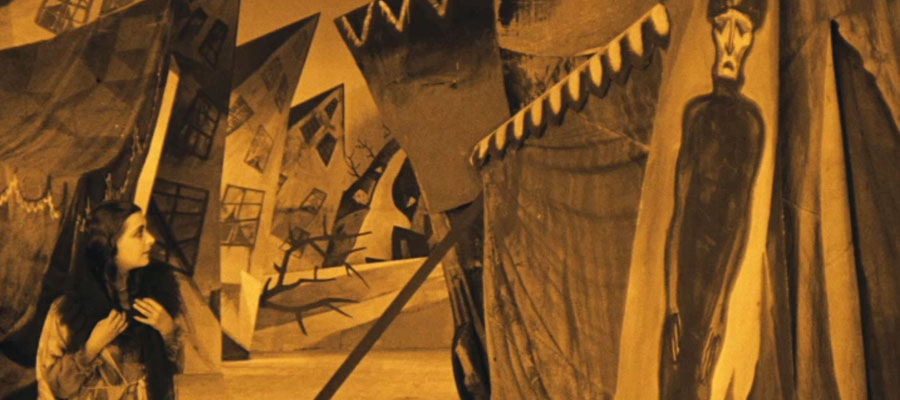
The set design is as twisted as the plot itself.

It’s good to take a step back and appreciate exactly how far we have come. I remember my family’s first Windows-based computer [2] – a PC running Windows 95, which was then state of the art. As the internet wasn’t readily available we had two computer-based options to do research: Encarta Encyclopaedia and Microsoft Cinemania. The latter was a bit of a godsend for someone who was interested in cinema, with over 20000 films detailed with stills, sound clips and some even having short video clips. It was rudimentary but quite spectacular. As I was 11 at the time my main priority was watching a short but thrilling clip from Nightmare on Elm Street, so I can’t really remember whether Dr Calgari was covered, though I suspect it was.

Now, though, we can search “Dr Caligari” and retrieve 563,000 results on Google (other search engines are available but they generally aren’t as good). Two of the top results give the ability to stream it for free, with two versions available on YouTube. I just think it’s fascinating we are able to do this now, and even more amazing that we now just take it for granted. Progression, eh?

Well, it doesn’t stop there. The basic picture quality is incomparable to what was readily available some twenty years ago. Back then you had three choices if you wanted to see an older film again: wait for it to be re-released at the cinema, wait for it to come onto television, or buy a VHS copy of it for around £15. This latter one allowed you to access the film much sooner, but the picture quality was just atrocious and really unwatchable by today’s standards. Nowadays, you can pick up a Blu-ray copy of most films for less than £10, often closer £5, and the picture quality is like a dream for cinephiles.

Apologies. I digress. The film itself is pretty mind-blowing. I don’t really know where to start with it, and there has been a great deal written about this film elsewhere by people with much better vocabulary. The bottom line is that I was thoroughly impressed. The twisted design, the tense music (I listened in 5.1), the staccato body movement that gives the acting a really sinister edge, the subversive plot. They all combine to present us with a journey that was way ahead of its time. As the reality behind what I was seeing became clear I was left absolutely gobsmacked by the ending. It’s just a must watch for anyone keen to get to grips with the history of cinema.

Das Cabinet Des Dr Caligari is available now on Masters of Cinema dual-format Blu-ray and DVD.

[1] It’s funny that I’m attempting to not give away any of the plot when describing the film. It seems 95 years isn’t enough time to wait before spoilers are okay. Think about that the next time you want to talk to someone about the next episode of that show you both like but they haven’t seen.

[2] Our first home computer of any kind was the extremely popular Commodore Amiga, which was originally released in 1985. I’m not sure exactly which model we had as it has long since disappeared, though I suspect it was a 500. I don’t recall it ever being used for word processing and it certainly wasn’t connected to the internet, such was life in central Lancashire in the mid-1980s.

Masters of Cinema Cast

The MOC Cast is a constant on my podcast downloads list, and I’m always keen to download the latest installment. As a fan of the series (as you can guess by how many I have reviewed) but without too many friends that are interested in the same kind of cinema, it’s really useful to hear others delving into the details of certain releases.

The latest episode is an interview with Craig Keller, producer of the Masters of Cinema, and is such an insightful discussion between three huge film fans with a common interests. If you’re at all interested in what goes on behind the scenes of the releases, I heartily recommend downloading it. It covers a wide range of topics, including the history of the label, the role Keller has in the releases and the difficulties in gaining the rights to release certain films. Frankly it’s a joy to hear three people with such a huge passion for cinema simply having a chat.

The Babadook (Jennifer Kent, 2014)

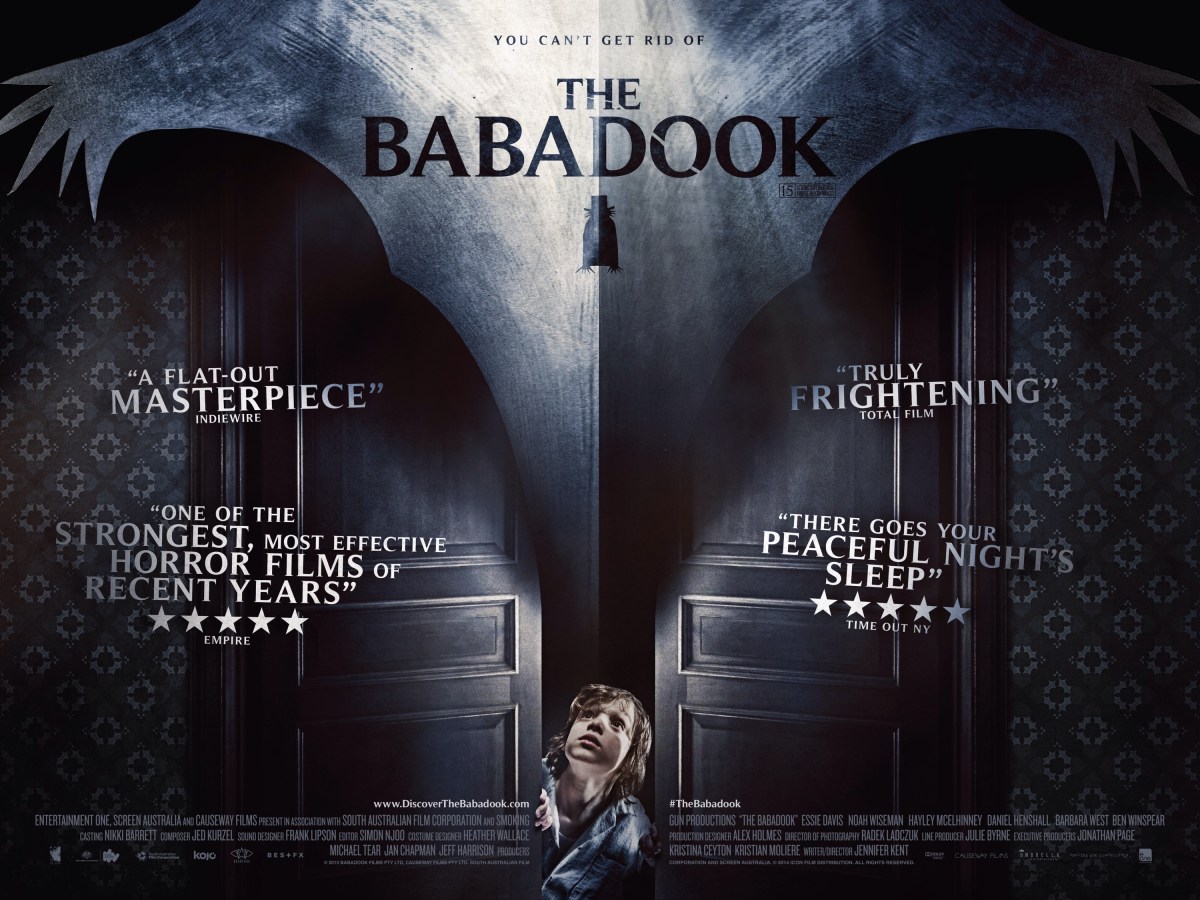
As it’s the second of two consecutive Friday 13ths in early 2015 (there’s another one at the end of the year too, right after Halloween too – we’re being spoilt!) – I thought I’d watch and review a new(ish) horror film. The Babadook was only released in 2014, but it has become an instant hit amongst fans of the genre.

Set in Australia, the slowly unravelling story brings us into the life of a single mother Amelia (Essie Davis) and her ill-behaved son Samuel (Noah Wiseman). With Samuel struggling to sleep at night and every other option exhausted, Amelia allows him to pick a book of his choice for her to read to him before bed time. However, when he picks out a mysterious and disturbing pop-up book called The Babadook, their lives quickly spiral out of their own control and into the grasp of the eponymous character from the book.

Stylistically the film has it spot on. To keep in with the tone of the film and depressing nature of the situation, there’s rarely any clothes worn that aren’t somewhere between black and grey. The general environment is drained of colour, with the low saturation levels adding to the dreariness.

The physical book looks horrific in itself, and the slow reveal of the uniquely designed Babadook adds to the tension. I was thankful that it didn’t resort to what many horrors go for these days – a quick reveal of a poorly CGId evil character that instantly destroys any inkling of suspense or terror. Kent clearly has her finger on the pulse and is well versed in what makes horror fans tick.

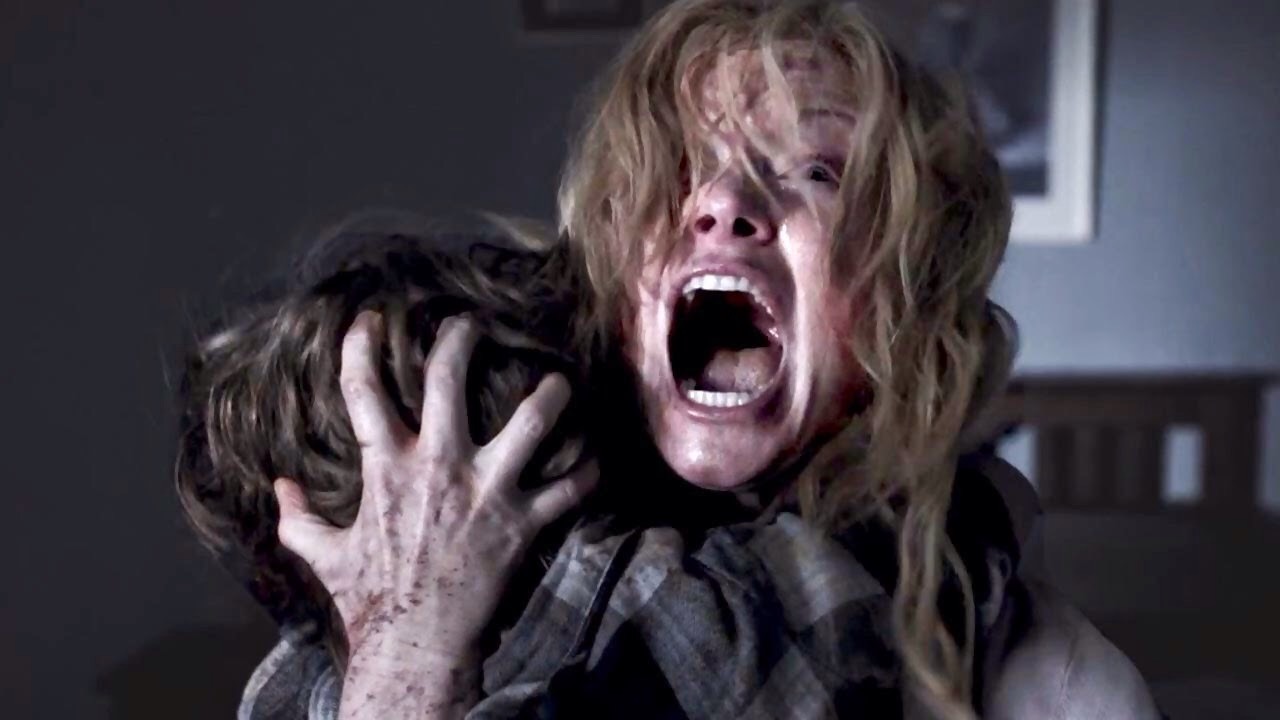
A woman realises she and her son ren't in the correct screening for Frozen Sing-a-long.

A woman realises she and her son aren’t in the correct screening for Frozen Sing-a-long.


The story is also surprisingly deep for a supernatural horror film. In its short running time of just over 90 minutes, we are nonetheless completely absorbed in the reality of the situation. This is only achievable through some well thought-out characterisation and some convincing performances from the two lead characters. Unfortunately, the same cannot be said of the support cast – clearly a choice was made to keep the pace up and the running time short by minimising any kind of depth to the friends and relatives of the lead woman. In particular, a seemingly key character is introduced in the form of her work colleague Robbie (Daniel Henshall), but he is abruptly forgotten about after about 35 minutes. I’m not saying it’s necessarily a bad thing, but I acknowledged it immediately and I was left thinking about which option was better.

Of course, horror films live and die by how much they can make you jump out of your skin. There is no problem with that here and my gut instinct is that it will thrill even the most hardened horror fan. I suggest you bring a pillow if you’re easily spooked.

If you’re in your supermarket tonight and need to get a last-minute horror film, then The Babadook is the one I have to recommend. It’s readily available for £10.99 in at least two of the big UK supermarkets and I’m sure you won’t be disappointed.

Wake in Fright (Ted Kotcheff, 1971)

Wake in Fright, Ted Kotcheff’s disturbing 1971 drama, is the story of a lost weekend of toxic self-discovery for John (Gary Bond), a young middle-class English teacher in the middle of the Australian outback. Though he plans a trip to Sydney over the Christmas break to see his beautiful girlfriend, a series of bad decisions leads him into a catastrophic mess of a weekend of gambling, hunting and alcoholism with some new acquaintances of dubious moral conscience. We go on the awful journey with him, as he gets chewed up and barely spat out the other side, all in the isolated nothingness of Bundanyabba.

IMG_0584-0

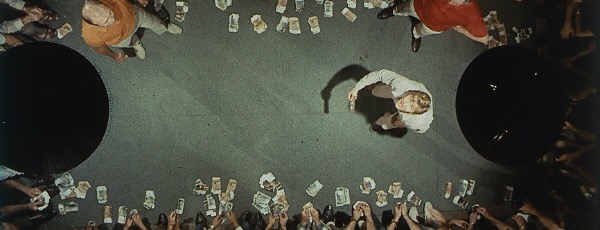
And I thought I was watching a Harvey Dent origin story.

Gary Bond’s excellent performance is paired with an equally excellent one from Donald Pleasence, an alcoholic doctor who exists without working, taking his purpose from a relentless alcoholism. His enthusiasm for misbehaving is the catalyst that leads our main character further down a slippery path, just when we hope he’ll pull himself out of it. It’s a show stealer, and to compliment this his Australian accent is flawless.
The colour wash throughout the day scenes are scorching hot yellows, reds and oranges. It’s a clever technique to make you feel the heat. You can see the sweat dripping from the sun-baked characters, and can almost smell the day-old stench of alcohol on their hungover breath. Frankly, by the end of the film I wanted a shower.

The main talking point is a ten-minute scene that depicts an awful kangaroo hunt that the main party of four go on. The Masters of Cinema release dedicates a lot of time to it in the booklet and on-disc features, and will do it more justice than I can manage. All I’ll say is that it’s truly horrific, especially knowing it was basically just the filming of a real kangaroo hunt. Sickening stuff.

I strongly recommend this one. Just don’t watch it if you’re a fan of kangaroos.

Wake in Fright is available now on Masters of Cinema Blu-Ray and DVD.

世界 / The World (Jia Zhangke, 2004)

Time for another Masters of Cinema review, this time for Jia Zhangke’s 2004 Chinese film 世界 / The World. Originally screened in competition at the Venice Film Festival, it soon found its way onto the Eureka label on DVD and subsequently again on a Blu-ray/DVD dual-format release.


The story covers a short period of time of two workers at Beijing World Park: Tao (Zhao Tao) and Taisheng (Chen Taisheng) Tao’s boyfriend and a security guard at the park, whose relationship becomes increasingly strained throughout the period of the gloomy film. The theme park (a real park in Beijing) recreates famous cities and landmarks from around the world but in reduced scales, mainly for tourists. The story delves into the emotional and financial instability of the two lead characters and their colleagues, and how these two factors go closely hand-in-hand in modern China.


At 135 minutes long and with an extremely slow pace, The World is a tough film to sit through and maintain focus. The dialogue isn’t very focused, with the effect of making the characters feel wholly depressed. Unfortunately, whilst it’s fine to do this, when you’ve not really getting very far along the characters’ journeys your mind does start wonder. I had to take a couple of breaks to get through it, and that’s doesn’t really indicate a story that has me gripped.


There were some clever techniques utilised. Lead character Tao continually lost herself in her inner thoughts, removing herself from her own depression into a world represented by brightly coloured animation. This is something I saw more recently in Giovanni’s Island, probably to much better effect, but it doesn’t detract from the solid concept.


By the end of the film, I didn’t really feel emotionally involved in any of the characters and was quite relieved when it was all over. It’s not a film I will be revisiting any time soon.


世界 / The Worldis available on Masters of Cinema Blu-ray and DVD dual-format release now.

Lifeboat (Alfred Hitchcock, 1944)

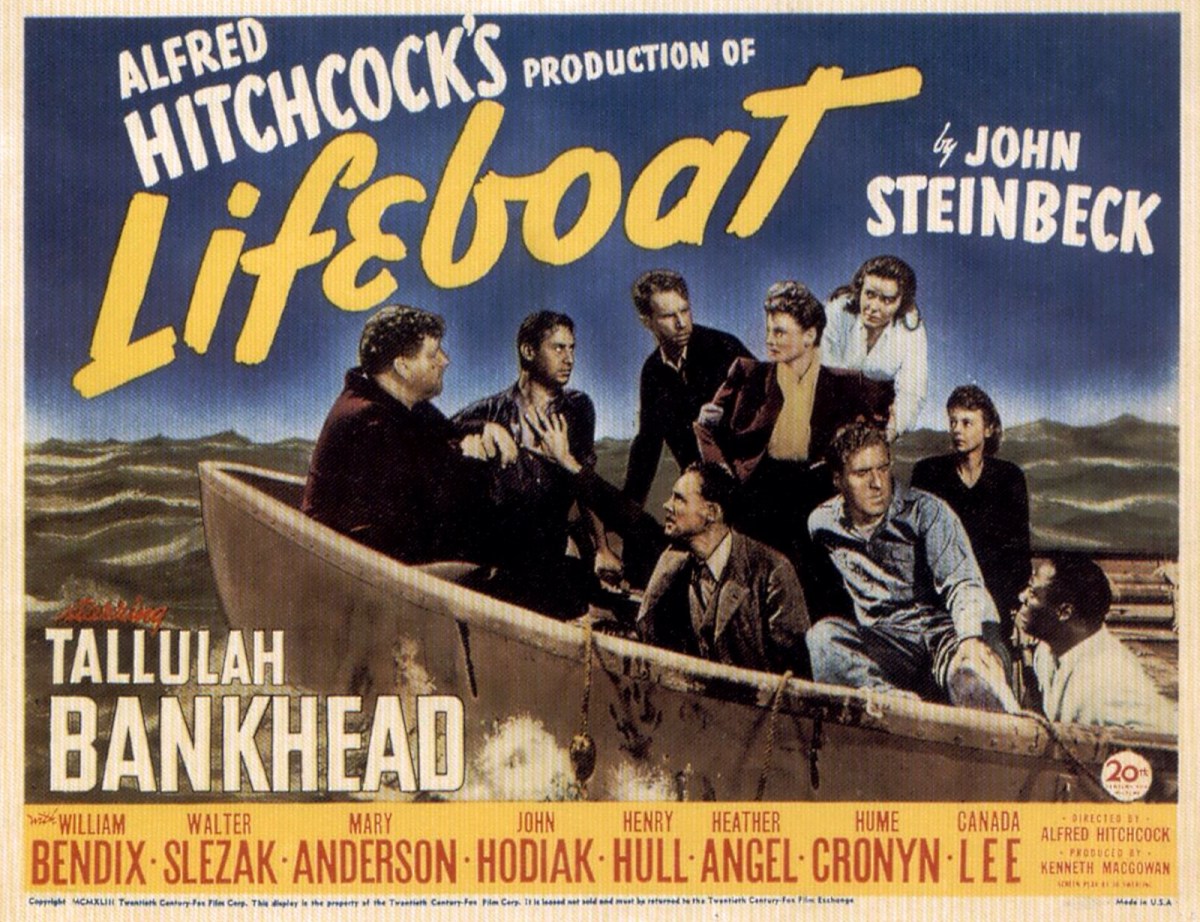
Lifeboat, the first of Hitchcock’s limited-setting pictures, follows the story of British and US civilians, merchant marines and service members in the aftermath of a battle that sees the sinking of their boat and a German U-Boat. When a German man Willi (Walter Slezak) is also rescued, the tension on the boat increases and coping with the harsh environment and the claustrophobic arrangement takes its toll. Pretty soon suspicion and accusations take the place of compassion and reasoning, with a plot that keeps the audience guessing way beyond the final scene.

Released towards the end of World War II, the film was shrouded in controversy due to the seemingly fair portrayal of a German man who turns out to be a Nazi soldier. This was enough to make the studio give it only a limited release – a surprise given that Rebecca, Saboteur and Shadow of a Doubt had all been box office successes in the immediately preceding years. Furthermore, John Steinbeck (who wrote the original novel) distanced himself from the adaptation, unhappy with the way Hitchcock had dealt with his work.


It is perhaps only years later that we can appreciate this film for what it is – a good film heavily influenced by the times and heaped with elements of propaganda. In that sense it’s as much a film as it is a historical document. In a way, all cinema is the same.

Lifeboat isn’t amazing, certainly not one of Hitchcock’s finest. I had hoped that the lack of popularity was because of the controversy surrounding its release, but in truth it’s probably because it just doesn’t pack as many punches as the likes of Vertigo and Psycho. It’s worth watching out of interest and worth buying the Masters of Cinema release for the detailed bonus features and two additional little-seen Hitchcock shorts Bon Voyage and Aventure Malgache, though these are more for the avid fans, even more so than the main feature. It’s worth watching, but not as a Hitchcock starting point.

Lifeboat is available on Masters of Cinema and SteelBook Blu-ray now.

BFI Flare Film Festival

I’ll be heading down to the BFI Flare LGBT Film Festival later this month. I’ve tried to pick a couple of films that look really interesting and no set wide release date in the UK, as follows:

– Tiger Orange
– Dear White People

Both look fantastic and I’m looking forward to soaking up the atmosphere at the hub of British Film on London’s Southbank. See you there!!

X+Y (Morgan Matthews, 2014)

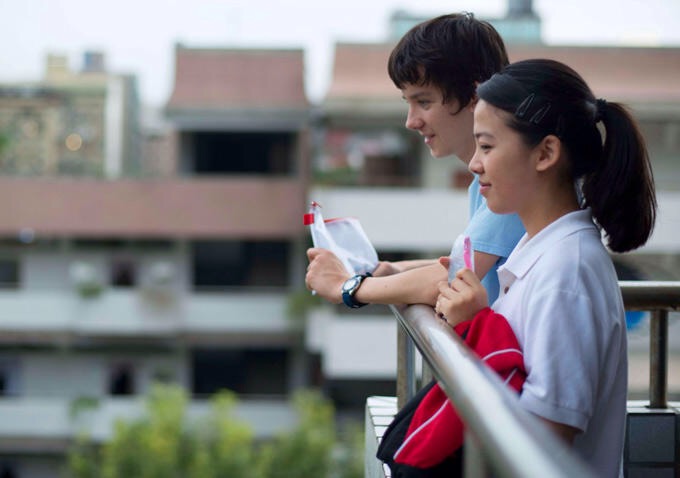
X+Y is a British film from BBC Films that follows the story of Nathan (Asa Butterfield), a teenage mathematics prodigy who is more comfortable dealing with numbers than he is with people. When he is selected to represent Great Britain on the International Mathematical Olympiad, he is forced to travel to Taiwan. As pressure to perform in the tournament grows and he finds an unlikely source of romance in Zhang Mai (Jo Yang), he soon finds that being out of his comfort zone is the starting point for a challenging journey of self-realisation.

One thing I was worried about as I sat there in the cinema waiting for it to start, was how they were going to portray autism. Inevitably we’re going to compare lead character Nathan to Dustin Hoffman in Rain Man or Russell Crowe in A Beautiful Mind, probably the two most iconic on-screen portrayals of people on the autistic spectrum. Unfortunately for sufferers of autism, this drastically sells the condition short to people who aren’t overly aware of it. Autism is a condition that affects those close to someone on the spectrum as much as the person themselves, and to assume that they will simply be a bit awkward around people and good at maths is doing it a misjustice. Many sufferers find comfort in the strict rules set out in maths – it’s an emotionless interest. However, others find the same solace in a regimented interpretation of music, with its repetitive patterns and melodies and set mathematics behind complimentary frequencies of notes. Others become obsessive over lists and facts, whatever the topic might be. Others just don’t. There are mild forms of autism and severe forms, which is why diagnosis can be tricky as early signs can’t be placed on the spectrum by someone unfamiliar with the condition. 

So it’s unfortunate that autism has been portrayed on screen by means of a maths genius yet again, even though the director has previous work on autism (2008’s Beautiful Young Minds), which covers it in a more factual manner. However, X+Y is by no means just a light-hearted walk in the park and I enjoyed the fact a lot of time was spent with Nathan’s mother Julie (Sally Hawkins) as she came to terms with the loss of a close relative with no emotional support from her son. This was an important portion of the film that gave the right emphasis to the right areas and should be applauded.


I felt Butterfield’s portrayal of a child suffering from autism was very accurate, and I felt the frustration seeping through his inability to understand others. He has become a very accomplished actor throughout the three or four major films he has been part of so far, and as long as he keeps his feet on the ground for a couple more years he will continue to be successful for a long time.

Another great performance was from Jake Davies as Luke, whose character was a much more acute sufferer of autism. One scene involving a dead prawn stuck out for me and I’m sure we’ll be seeing more from him in the future.

The comradery of the maths students didn’t ring true for me. From first hand experience (I partook in mathematics competitions as a child, to some success), these competitions are far from a sociable affair, with most children very much “in the zone” and either unable or unwilling to communicate with their peers. It was a case of get in, do maths, win. Anything else was just unneccesary. So when there’s laughing and joking and, most notably, a cringeworthy rap session (including an awful rhymical recitation of Pi), I just thought back to the suits and classical music I had to endure and wondered how much it really could have changed.

I felt let down by the end. I’m not going to go into details as the film is yet to be released, but it just didn’t ring true to me and seemed to undo a lot of hard work they’d put in earlier in the film in a manner that suggests to me they got lost with the message they wanted to send out. I’ll let you make your own mind up on that one.

Overall it’s a very accomplished film and has many enjoyable points, but I didn’t feel it quite fulfilled its potential.

X+Y is released at UK cinemas on 13th March 2015.

Captain Toad: Treasure Tracker / Susume! Kinopio-taichō 進め! キノピオ隊長 (Nintendo, 2014)

Release date: 21st December 2014
Publisher: Nintendo
Platform: Nintendo Wii U
Players: 1

I’m not much of a gamer any more. I probably play about two or three games a year. Last year it was Mario Kart 8, Bayonetta 2 and South Park: The Stick of Truth. I also bought Earthbound and never got ’round to playing it. This year is looking about as quiet on the gaming front – I’m interested in a couple of the new Wii U releases and I’ve still got The Walking Dead games to play, but nothing set in stone. I moved in with my fiancé in May last year, we got married in June and then both moved jobs within two months. Between DIY and redecorating, and working to pay for everything in the house, we don’t have the time or money to invest in games. When we do, we try to get co-operative titles we can enjoy together. 

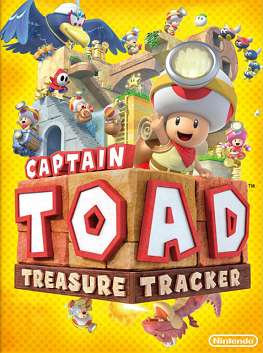
So when Captain Toad: Treasure Tracker was announced, we immediately decided it wasn’t for us. Captain Toad’s levels were our least favourite part of Super Mario 3D World game, and these were clearly just more of the same, set in the same universe and using the same visuals and engine to power it. It was only when I realised I had a significant amount of points on a supermarket card that I decided to take the plunge, and I have to say that we were pleasantly surprised.

Each of the 70 levels takes the 3D jumpless platforming and puts a unique twist on the action, be it moving blocks with a press on the controller screen, getting through a pitch-black haunted house or traversing platforms that disappear on a timer. Completing each level requires a decent amount of brain power that is achievable by all but not so easy to make it feel condescending.

Special mention has to go to composer Mahito Yokota, whose score is just brilliant. He’s a regular fixture now with Nintendo, and it’s easy to hear why. You could easily listen to it in isolation from the game and thoroughly enjoy it. To be fair, almost all of the songs are recycled from its parent game Super Mario 3D World, but if you’ve heard that then you know how special it is.

There is one huge disappointment though, and that is the total playing time. You get several different tasks in each level: collecting the star concludes the level, collecting three diamonds helps unlock further levels, completing a unique one-off challenge (such as taker no damage, find a hidden gold mushroom, kill all enemies or collect a certain amount of coins) gives you 100% completion. Even so, some of the levels are extremely short and are done in a matter of minutes. I felt like I had to put the controller down after five completed levels just to drag it out a little. 

Does it work as a co-op game? Well, obviously only one person is controlling at any given time. However, a little like Braid and Limbo, the puzzle elements led to a lot of excited shouting and guided discussions as we worked out the solutions together. Perfect for a couple of engineers.

The reduced price point will help with sales (without the points I used it would have been £28, but it can be found for £25), so the length of the game isn’t such a terrible thing. If you enjoyed the Captain Toad sections of Super Mario 3D World, or you’re in desperate need for a Mario fix ahead of Mario Party 10 next month (or Yoshi’s Woolly World or The Legend of Zelda later in the year) then you’ve got a perfect stop-gap solution in this game.

Captain Toad: Treasure Tracker is out now on the Nintendo Wii U.

Will you be my Amiibro?

Something weird is happening in the world of video games. That thing is called Amiibo.

If you’ve missed these, they can be summarised quite quickly thus: Skylanders for Nintendo. But what do they really mean? Well, frankly, a huge hole in people’s wallets. Amiibos are simply small physical 2″ tall models of in-game characters that can either sit on your shelf looking cool or interact with certain titles on the console and save the development progress of your character, opening up RPG elements to games and also special features and DLC in other games.

Eighteen months ago, Nintendo was in serious trouble. Whilst their handheld console the DS (and the 3DS and 2DS and the XL versions and everything else) was still going strong, their latest home console – the Wii U – was sinking fast. On the shelves for a year, the console was still lacking a really strong title they could legitimately use as a selling point. Probably their best game was either New Super Mario Bros U, which is an 8/10 at best and only on a par with its predecessor on the Wii, or Nintendoland, a 12-mini-game compilation whose main purpose was to show off the functionality of the console’s new controller.

So they came up with a mini-masterplan:

– December 2013: release Super Mario 3D World, the best all-round multiplayer platformer ever released.
– May 2014: release Mario Kart 8, the best ever iteration of their über-successful racing franchise, along with an extremely tempting free game offer where people got a code for registering their game online, which could be used to download any of ten titles already released on the console.
– October 2014: release Super Smash Bros simultaneously on the Wii U and 3DS platforms, along with the first wave of Amiibos, just in time for Christmas and designed to milk dry the pennies of anyone willing to start collecting them.

It was a fantastic plan and this triple-whammy of excellent must-have games has pulled the Wii U back on track and places it as the only current-gen console with several games worth investing the time and money in. There’s only one thing that sells video games consoles and that’s video games, no matter how much the “entertainment system” side of things is sold to us.

Not content with three games flying off the shelves and a first set of twelve characters (including Mario, Pikachu, Donkey Kong, Link, Fox McCloud, Kirby and other huge franchise favourites) Nintendo decided to release more and more waves of Amiibos, seeing the desire of the completionist in both the children with rich parents and the 20- and 30-something gamer with more money than sense. What happened next was probably way beyond their expectations.

What we are seeing now is that whilst the first wave was in plentiful supply, the subsequent waves have been less available. A mixture of poor predictions of popularity from Nintendo, a frenzy of excitement about new waves and, strangely, an issue with a port strike in North America has led to a serious under-supply of many of the more recent models. Bearing in mind the RRP for the models is £10.99, a quick look at Amazon has returned the following:

– Rosalina £49.99
– Captain Falcon £29.95
– Shulk £84.99
– Meta Knight £57.97
– King Dedede £57.97
– Little Mac £44.99

The fun doesn’t stop there. Plenty more are simply out of stock and unavailable, including those up for pre-order in Wave 4 at the end of March. Ridiculously, one man has bought $10000-worth of Amiibos out of spite because he doesn’t like certain characters. People are going on wild-goose hunts when a rumour surfaces online that a particular Toys “R” Us has got a stock of Toon Link (I made this one up but it probably happened). It has all got quite out of hand.

The terrible thing is that having read stories online about them, I don’t think it’s kids that are after them. The people buying Amiibos are fully-grown adults, usually men, trying to complete a set. Think about it… even if you’ve managed to get them all at face value, you’re still going to need to spend over £400 before you’ve thought about a game. I’ve got friends who bought Super Smash Bros. and picked up a couple of Amiibos to try them and have decided it isn’t for them… because they don’t really do much. They’re just nice to haves. I thought we were in a recession!?

The worst story I heard was about a man going in to buy all of a particular store’s stock on release, then walking out past a child and refusing to part with any of them, even as the child begged him for just one of the toys. So not only are you buying up toys (they’re not models really, they’re toys), you’re also now breaking the hearts of children. Way to go.

I don’t own Super Smash Bros., so I don’t see much point in investing in any. If I had one of the games that they are useful for, I might consider buying one or two, but only if they’re cheap. By the sounds of things, Nintendo won’t miss my business!