Film review – Inside Out (Pete Docter, 2015)

The latest film from Pixar Animation Studios is one I approached with considerable anticipation. There has been a reluctant feeling amongst close followers of Pixar’s output that they are now running low on original ideas as we are seeing a shift towards sequels rather than original storylines. Of the first ten Pixar motion pictures, only Toy Story 2 was a sequel. Of the following four films, only the poorly received (but excellent) Brave was an original concept. Monsters University was an enjoyable film but not a patch on the original; Cars 2 was on a par with the first installment but that just means neither are good. Only the two Toy Story sequels were both a critical and commercial success and the first of these started life as a direct-to-video sequel.

So when the next few films were announced and they included Toy Story 4 and Finding Dory a lot of questions focused on how many original ideas were left in the tank. It’s cruel to be concerned in many ways, but after such a frantic amount of original ideas pumped so much life into the animation industry it was sad to think it might be slowing down.

However, seeing they were releasing two new franchises was a cause for hope. The Good Dinosaur will be seen in cinemas later this year, but first up is the film set to be a summer blockbuster – Inside Out.

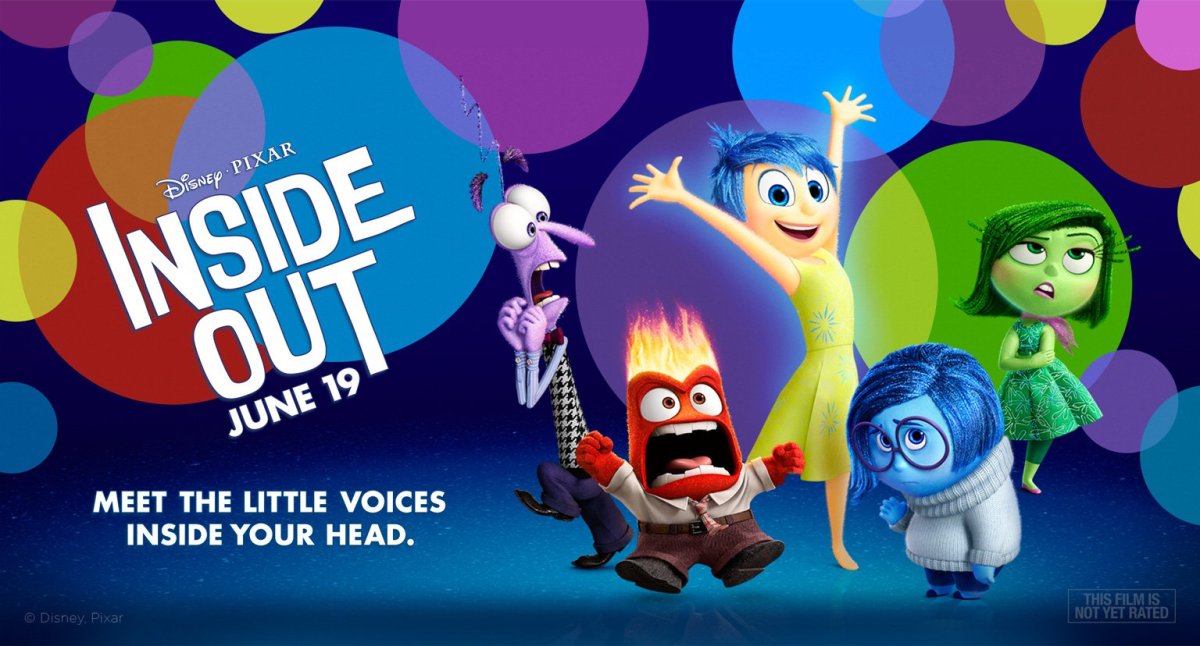
L-R: Joy, Fear, Anger, Disgust and Sadness

L-R: Joy, Fear, Anger, Disgust and Sadness

The story is an unusual but simple one, much like all the best Pixar films. It is set inside the brain of a young girl named Riley Anderson (Kaitlyn Dias) as she is forced to move house with her parents from icy Minnesota to the slightly milder San Francisco, leaving behind her friends, beautiful house and successful ice hockey team. Her five emotions are represented by five distinctly hilarious characters: Joy (Amy Poehler), Anger (Lewis Black), Disgust (Mindy Kaling), Fear (Bill Hader) and Sadness (Phyllis Smith). Each one controls her emotional response based on how they interpret what she is experiencing, and these are converted into memories in the form of tiny glass orbs, rich in one or more type of emotion, which are stored in her mind for her to recall later.

This concept is highly original and is a brilliant platform for some hilarious cutaway scenes where we see what Riley is seeing and the reaction shots of what to do with our five emotional manifestations. The most memorable case of this was a very typical family meal, into which a lot of careful consideration was evidently given to get the perfect balance between heartfelt and humour.

I won’t ruin any specifics of the plot but I would recommend taking a tissue if you are liable to cry. They reach first-eight-minutes-of-Up levels of emotions.

The real-life characters are highly realistic and the world in which they live is very believable. However, the one place the film lets itself down is with the character design of the five emotions. Whilst they are cutely colourful and well animated, the actual design doesn’t seem up to the standard expected from Pixar and I wonder how it got this far down the line without someone saying it needs to be improved. A couple of other characters – Richard Kind’s Bing Bong and a particularly scary clown – inhabit a wholly different world and have more in common stylistically with Aardman Animation. I can’t help think they were designed with merchandising in mind.

This is truly up there with the best Pixar films, no easy achievement given they have been responsible for so many of the best animated films over the last twenty years. It’s the perfect emotional rollercoaster to ride on whilst celebrating reaching the start of their third decade in the motion picture business.

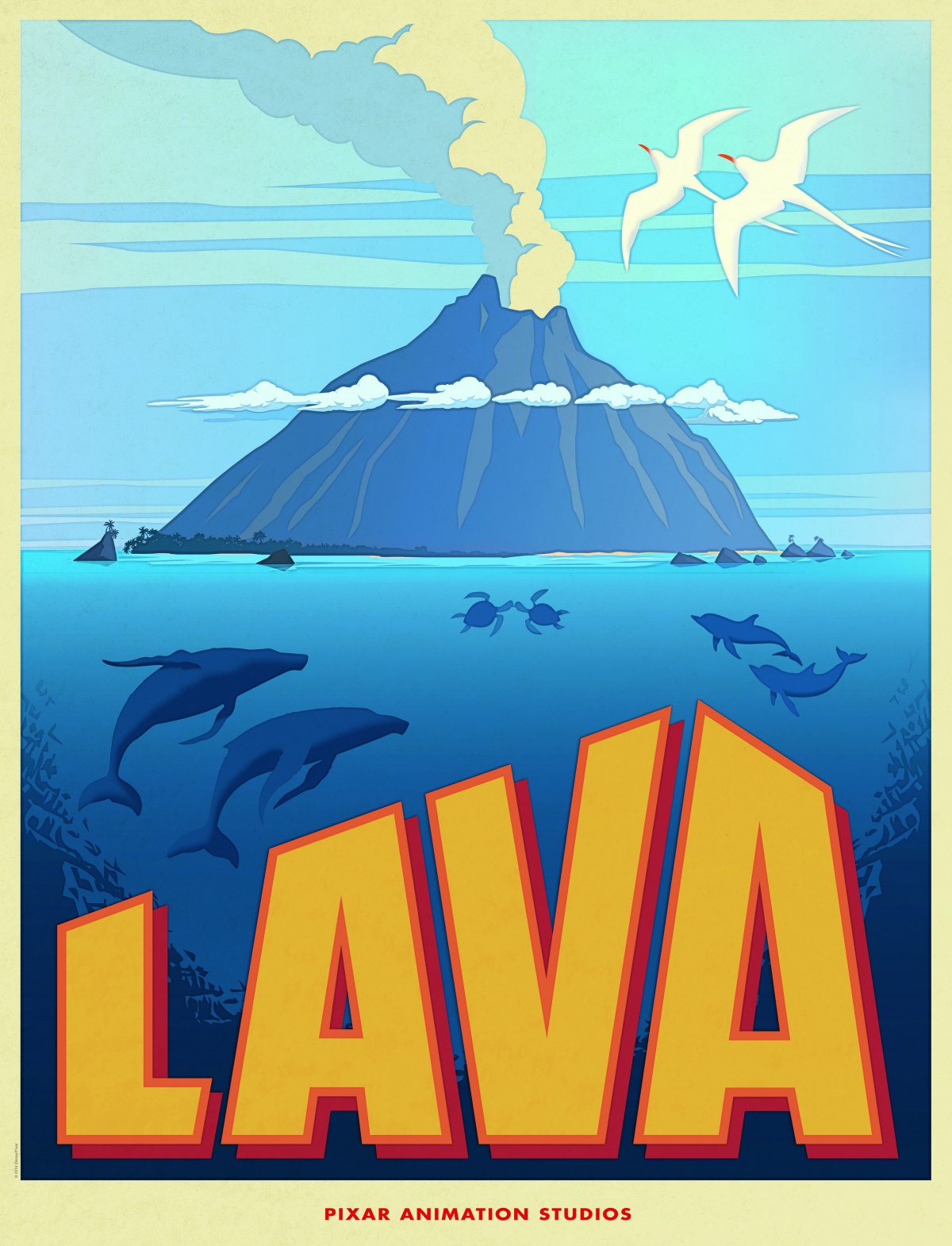
Inside-Out was previewed at Glastonbury Festival on Sunday 28th June and is set for release in late July in the UK. It is preceded by the short film Lava.

Glastonbury Day Four: No Kanye, washed hair, Gaz Coombes, Gregory Porter, Jane Weaver, Suede and Paloma Faith

Today was the big day. Kanye West arrived at Glastonbury with his own brand of Yeezus-y goodness, set to wow the crowds and berate anyone who tried to stop him. Probably. I didn’t go to his crappy set because I was too busy being blown away by a breathtaking performance from Suede on the John Peel Stage. Brett Anderson had the audience in the palm of his hand and the whole band were on top tight form from start to finish. I’d waited for 20 years to actually see them live and it was well worth the wait. Being floored by a stunning rendition of “Beautiful Ones” will doubtless be one of the lasting memories of this festival for me and the many 1000s inside the rammed tent.

Earlier in the day, Swim Deep were completely lost on me as the first band of the day; Jane Weaver literally and figuratively blew me away on West Holts [1]; and both Giant Sand and Gaz Coombes proved to be solid choices at The Park Stage mid-afternoon.


Gregory Porter looked set to be a great way to see in the evening but we left a little underwhelmed. I actually blame it on his style being well suited to relaxation, meaning we ended up almost falling asleep. His record has been on constant play in my house at times this year and it translated well into a live show. I suspect it was a case of bad timing on my part, mixed with the fact we were absolutely shattered.

Fortunately Paloma Faith and Pharrell Williams picked the pace up with a couple of hit-packed sets that got the Pyramid crowd ready to start the Saturday party. Im a huge fan of Paloma and she was on top form tonight, playing tracks from all of her albums along with a memorable Jimi Hendrix cover. Her outfits are always talking points and this was no different. 

Paloma was very apologetic throughout, implying she made a misinterpreted comment in the media at some point. I’m not privy to this info as I’ve been stuck in a field for almost a week now, but who cares when she sounds this good? Inevitably whatever she said has seen her words twisted to sell newspapers and clicks.

I was shocked how many tracks of Pharrell’s I knew. Obviously he’s been around for a long time now and has produced many hits off different artists, but he’s an excellent artist and we were left wondering why he wasn’t headlining. When you’re partly or fully responsible for three of the biggest-selling singles in the last two years (“Blurred Lines”, “Get Lucky”, “Happy”, all of which broke the million mark on sales) you deserve to top the bill, especially when the act above you has had nothing of note out for a while. He’s one of the best frontmen I’ve ever seen, and it comes entirely from his cocksure confidence. My only criticism for Pharrell was that a couple of songs sounded like they were heavily reliant on a backing track, though perhaps my ears deceived me. 

I caught the end of La Roux’s set and she sounded spot on. She’s still underrated in my eyes and is slowly building up a solid catalogue for her live performances, which far outclass the recorded versions. If you like her style then make sure you see her this tour before she disappears on another hiatus.

I’m sure Kanye will be the most talked about act tomorrow outside the festival, just like Florence probably was this morning. Let them. With any luck the chat will have ran out by the time the festival finishes and I re-enter the real world. Anyone who was at the Suede performance will testify just how special that set was, even though it won’t grab headlines.

Oh and I managed to wash my hair. So that was nice.

[1] Sorry Jane. When your set started the bass was ridiculously loud. We loved it but we only lasted about ten seconds near the stage before retreating to a safer distance. We couldn’t take it but still loved it from afar – it wasn’t a reflection on you!

Glastonbury Day Two: Wilko Johnson, Beans on Toast, Elle and the Pocket Belles, Silent Disco

The second day at Glastonbury is when the fun starts to get interesting. A few familiar acts start to pop up and by and by and nobody has a 50 minute pilgrimage with a 40kg weight strapped to their back to kick off the day.

  
Our first act of the day was Wilko Johnson on the William’s Green Stage. It was a short set (about 30 minutes) followed by a long interview (about 30 minutes) followed by an exclusive screening of the new Julien Temple documentary The Ecstasy of Wilko Johnson, ostensibly about Wilko’s battle with cancer as he was given ten months to live. It covers this period, then goes on to what he describes as “extra time” and then his miraculous recovery following some radical treatment. The film was a fantastic introduction to Wilko’s music (admittedly I’m not overly familiar with it) and a fascinating insight into people battling with terminal illness. Well worth watching when it appears later this year.

Later on we caught a bit of Elle and the Pocket Belles at Avalon Café. Their set was the perfect way to see in the sunny evening as they nailed a series of popular tunes with their own style of blended vocals and punchy brass backing. I think they’re playing elsewhere over the weekend so I’m hoping to bump into them again.

Beans on Toast was next on the Hell Stage in Shangri-La. It was heaving and it was obviously a hot ticket but it didn’t really resonate with me. It’s and act that has become a frequent performer at festivals though and if you like political statements in humorous song form then maybe you’ll be more inspired.

The evening became a bit of a blur after this, though I do recall dancing to Prince’s “Raspberry Beret” in the Park Silent Disco in the early hours of the morning. It would have been rude not to. 

Glastonbury Day One: Driving, Walking, Camping, Blade Runner

Well, I’ve made it through the first day of Glastonbury festival. Wednesday is always a day full of excitement – the long drive down from the East Midlands, the epic walk from the car park to the camp site (it only took 50 minutes this year!), putting up a tent that I haven’t looked at since the last festival I was at, finding my friends and heading out to explore. It feels like work but it’s worth it knowing a weekend of fun is just around the corner.

Something I always forget about when I come to Glastonbury is the sheer vastness of it all. I will always say “It’s way bigger than any other festival”, but it’s still pleasantly shocking when you actually get here. It dwarves every other festival I’ve ever been to, and I’ve been to a huge amount across Europe over the last 15 years. The Park area, for example, is about the same size as V Festival and is home to only the fourth biggest stage of the festival and a handful of other stages and tents.

There’s never a shortage of things to do or places to visit, even on what is essentially an arrival and aclimbatisation day. We spent some time in a small tent listening to a few bands, which was a nice start to the musical fun around the corner.

You can’t fear getting a good meal either – there are hundreds of stalls to try and they’re all reasonably priced. Drinks aren’t over pricey either and you can take your own anywhere you want, unlike most other festivals.

  
I spent a portion of the evening at the cinema tent watching one of my favourite films – Blade Runner: The Final Cut. The perfect way to round off the evening. I actually watched it a few weeks ago and had a review pending, which you can find here.

The vibe is something of a loving community that just wants to have a great time, which is what truly sets it apart from other festivals. It’s awesome to be back here and I can’t wait for the fun to really start tomorrow.

Blade Runner: The Final Cut (Ridley Scott, 1982/2007)

I think I’ve now seen the definitive version of Blade Runner. The Final Cut, which I’ve stupidly had in my possession for almost a decade, is now firmly in the number one spot. For the first time, Scott is firmly in charge and has been able to create the vision he had over 30 years ago. In beautiful HD transfer (4K, 6K or 8K depending on the scene) and 5.1 surround sound, it provides the ultimate viewing experience even before you consider the content of the film is spot on.

There are, if you are unaware, five common versions of the film: Workprint (1982), Original Theatrical Cut (1982), International Cut (1982), Director’s Cut (1992) and Final Cut (2007). However, there are more detailed in an excellent article on Wikipedia. [1]

That there are so many versions clearly implies that the fans of the film are so enthusiastic that they keep coming back for more. Different people have their favourites but I’m on the Final Cut bandwagon.

The film is based in 2019 L.A. and centres around police officer Deckard, played by Harrison Ford, as he comes out of retirement to complete one final task as a “Blade Runner”. His job is to track down and kill four Tyrell Corporation Nexus-6 replicants (bioengineered humanoid robots) who have come to Earth illegally, possibly to extend their lives beyond their standard four year lifespan. As he tracks each down, he begins to question his own moral outlook and the nature of the replicants and his own humanity.

It's amazing what can be achieved when you eschew using digital effects.

It’s amazing what can be achieved when you eschew using digital effects.

Fans of sci-fi keep coming back to this film, and for good reason. Stylistically it was way ahead of its time and still looks stunning. It was a creation that predates CGI and the result is that there isn’t one set that doesn’t look like you could inhabit it. It’s a grim, dark look into a future which, at the time, seemed a long time away. Adjusted for inflation, the film cost just $70m, which is less than, for example, the entirely naff looking Dracula Untold.

A beautiful film with one of the greatest soundtracks of all time is all well and good, but it has to be driven by a gripping storyline. In my opinion, one of the enduring factors in the continued conversation is the many unanswered questions left after the original versions. The Final Cut does clear up at least one of the very critical questions. I imagine that advocates of previous versions would prefer to not have these questions answered but this is just the side of the fence I sit.

If you’ve not seen this film yet and have any inkling towards sci-fi of any kind, or indeed film noir, police dramas or classic cinema, then you need to put this right at the top of your “to watch” list. It simply needs to be seen and now that this definitive version is available there are no excuses.

I picked up this version of the film. It contains all five versions, heaps of bonus material, an artbook and a Syd Mead-designed collectible car model. There are other packages available but this, for me, is the ultimate package.

This 30th Anniversary Collector's Edition package is the ultimate version available in the UK.

This 30th Anniversary Collector’s Edition package is the ultimate version available in the UK.

[1] The three additional versions are San Diego Sneak Preview version, the US Broadcast version and a four-hour version shown to studio execs by Ridley Scott early in the film’s edit.

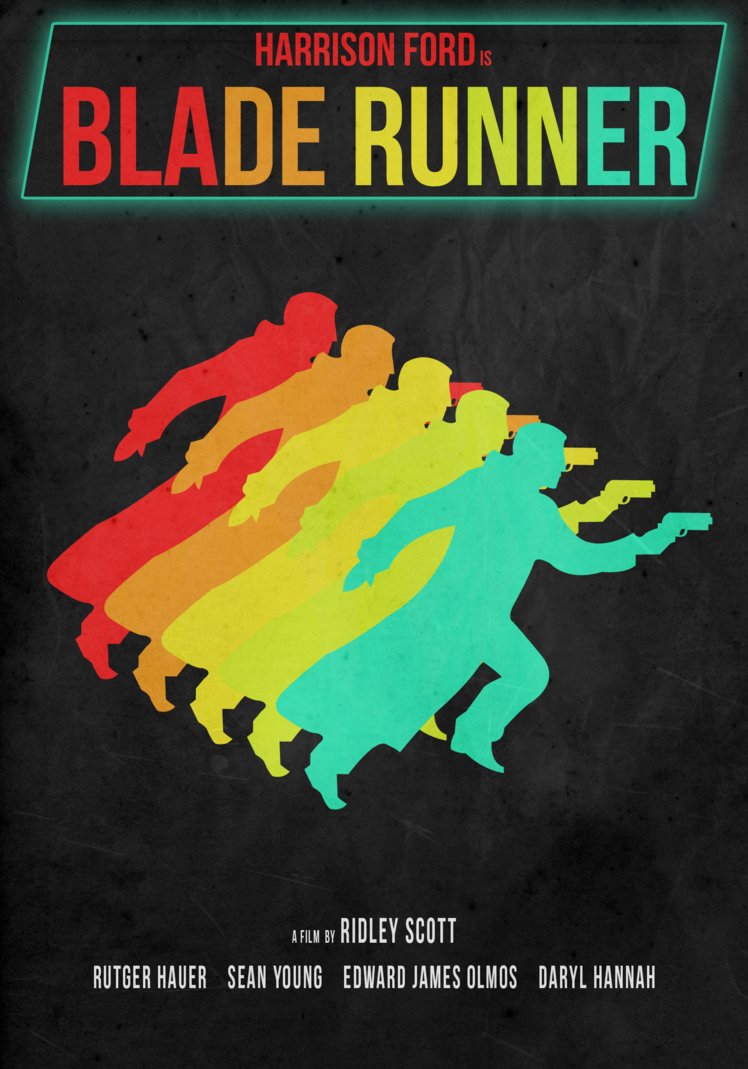
[2] This beautiful poster was designed by Jeremy Romand otherwise known as Caparzofpc.
Side by Side (Christopher Kenneally, 2012)

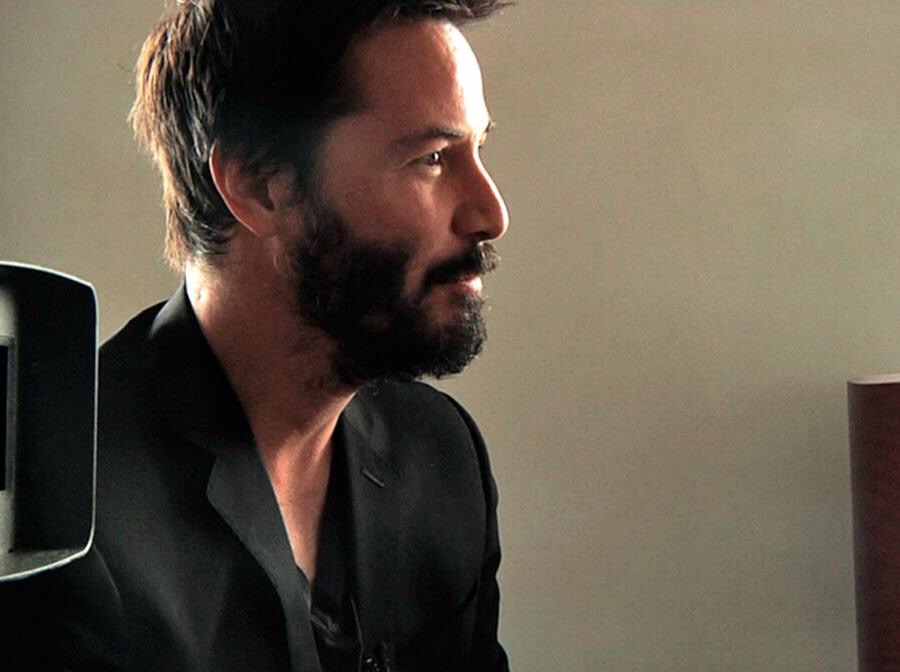
Keanu Reeves acts as the face for this documentary, which explores the argument of which offers a richer viewing experience in cinema: traditional photochemical methods of recording on film or modern digital methods.

The people interviewed to build up what results in a pretty varied and balanced argument is exhaustive and includes directors, cinematographers, colourists, scientists, artists and other people associated with films. George Lucas unsurprisingly falls on the side of digital as he was the first to release a wholly-digital film in the now-cheap-looking Star Wars Episode II: Attack of the Clones. Robert Rodriguez, also a digital advocate who uses his inspired methods to post-produce the graphic-novel-stylised Sin City as a springboard for his contributions, is an interesting contributor. Christopher Nolan comes across as a battle-hardened traditionalist who fights for every film he makes to not be done on digital film recorders. Danny Boyle offers an insightful discussion on the creative techniques used in 28 Days Later. Lara von Trier also discusses the Dogme 95 movement, which is so interesting it deserves its own film. Other interviewees include Phil Meheux, Martin Scorcese, Charles Herzfeld, Joel Schumacher and Alec Shapiro.

The documentary itself is rich in shots of masterpieces in cinema. It offers a great history of film and digital film, and a balanced opinion of which is better.

Keanu Reeves, in his role as the interviewer, is obviously very anti-digital. I couldn’t help wondering whether his passion for one side of the argument perhaps influenced everyone’s thought process on the subject matter when discussing, but it lifts it from a simple soundbite-style documentary by letting us know the creator actually has an opinion and wants to discuss the details with a host of interesting industry experts.

It’s a documentary that explores its subject thoroughly and in my opinion isn’t just for fans of the technical side of films. Each person has clearly been encouraged to be passionate about their anecdotes and the result is a highly entertaining documentary.

Side by Side is available now on DVD and Blu-Ray.

Film review – Aimer, Boire et Chanter / Life of Riley (Alain Resnais, 2014)

I remember sitting in the Olympic Stadium back in 2012, as British sporting darling Jessica Ennis stepped up to take part in another leg of her gold medal winning heptathlon events. It was a fantastic day of British sporting achievement, one which we’ve come to know as Super Saturday. Mo Farah, Jessica Ennis and Greg Rutherford picked up a gold medal each that day, whilst the rest up Britain picked up a slice of happiness. Finally it was good to be British again. We could be proud to be British. We were all preparing to eat some fish and chips, put up the bunting and play some wiff-waff. But then we realised. Something odd was happening. The public announcements. They were unusual. They were being provided in two languages. One was British-English, the best kind of English. But, wait… Is that French? BEFORE OUR LANGUAGE!? Very quickly we had forgotten how great it was to be British and taken up our normal stance of complaining about something. How very dare they? [1]

With this in mind, it’s easy to see why Life of Riley failed to ignite the British public’s interest when it was released back in 2014. The screenplay, provided by Laurent Herbiet, Alex Reval (a pseudonym for Alain Resnais) and playwright Jean-Marie Besset, follows closely the original Alan Ayckbourn play on which it is based. Ayckbourn is a quintessentially British playwright, the voice of the suburban British middle class. When the film opens and we see a car slowly drifting along a country road towards the heart of Yorkshire, we know where we stand. But then we get slapped in the face again. Why is everyone speaking in French? [2]


Of course, the more discerning amongst the cinema-goers – to which this film is primarily aimed – will see beyond this thin veneer and find quite a rewarding film. The cast provide a lot of depth to the plot, and bring it to life through some highly comedic performances, despite it constantly living in danger of slowing down slightly too much. It does fall short on a few occasions, with the pacing at fault for the lulls.

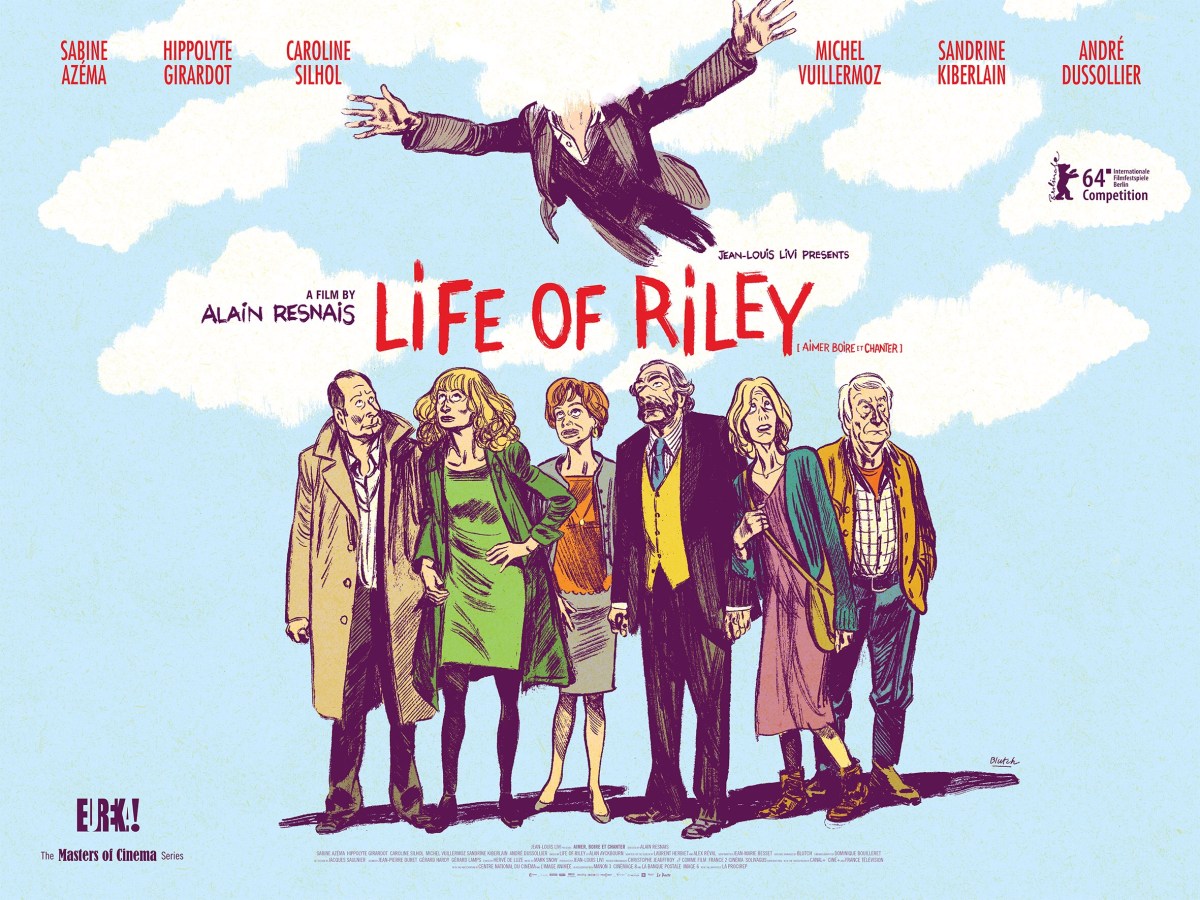
It centres around an off-screen character named George Riley, who we learn early on is dying of cancer. With months to live, the people central to his life decide it would be a good idea to have him join them in their local theatre production of another Ayckbourn play, Relatively Speaking. Those people consist of three couples: diagnosing doctor Colin and his wife Kathryn (Hippolyte Girardot and Sabine Azéma); George’s best friend Jack and his wife Tamara (Michel Vuillermoz and Caroline Silhol); and George’s ex-wife Monica and her new partner Simeon (Sandrine Kiberlain and André Dussollier). Alba Gaïa Kraghede Bellugi briefly appears as Tilly, daughter of Kathryn and Colin, in a moving final scene of the film. Most of the humour derives from the fact that our unseen titular character is evidently somewhat of a charmer and as the play continues forward and his clock is ticking down, they struggle to court his affections in increasingly desperate ways, resulting in a playoff as he decides who he takes on his final holiday to Tenerife, much to the disdain of their respective partners.

The distinctive set design is complimented by Dominique Bouilleret’s cinematography and essentially the setting of Yorkshire could have been dropped altogether. The film has the look and feel entirely of watching a play, but I did wonder whether or not it could have achieved something more given the capabilities of film as a medium over theatre.

The film premiered in competition at the 2013 Berlin Film Festival, in what would prove to be three weeks prior to the death of director Resnais. Thus, Life of Riley proved to be his swansong. I’m not convinced it would have been his first choice of film to tell at the end of his life, but it certainly doesn’t allow his career to finish on a low note. It is somewhat fitting that it would be a final return to Ayckbourn, having already adapted two other plays. It isn’t life-changing, but it is certainly not to be dismissed.

Life of Riley is available on Masters of Cinema dual-format Blu-Ray and DVD now.

[1] Dare they might, and justifiably so. French is the first language of the Olympic movement, based in the French-speaking city of Lausanne.

[2] I find this hilarious, by the way. I would like to apologise to the entire world for every single time an English or American film has decided to cast someone who can’t speak the language of the character they are portraying and asked them to speak in English with an invariably hammy accent. It’s a massive embarrassment. I still have no idea why studios are so reluctant to cast native speakers in big roles. The entire illusion of a film is lost on me when you can’t even have someone speak in the correct language.

Destino (Dominique Monféry, 2003)

I recently saw the news that there will be a special exhibition opening at the Walt Disney Family Museum in San Francisco on 10th July. Running into January 2016, the exhibition will cover the bond between Walt Disney and surrealist painter Salvador Dali, two men whose creative outputs couldn’t seem further from one another, despite the fact they were good friends who remained in close contact throughout their lives.

destino3

You could take every frame of animation and hang it on your wall.

Were you to create a Venn diagram of the creative output of the two artists, the small ellipse in the middle would be represented by the bizarrely brilliant Destino. First conceptualised in 1946, the film was eventually released in 2003 to the general public as an unusual opening short for Calendar Girls.

Destino may have been realised and released 57 years after it was started, but it was worth the wait. It’s a beautiful, dream-like short that has been lovingly created by a team of Parisian artists based on the original storyboards by Dali and studio artists John Hench. I’ve watched it so many times. I won’t explain the storyline – it’s less than 7 minutes long so you don’t have much to lose.

The film can be watched online at YouTube here:

As a resolution snob, the very best way to watch this excellent work of art is to purchase Fantasia 2000 on Blu-ray“>. For some reason the fact it is included on this disc is barely mentioned anywhere other than on the boxart, with Amazon choosing to just describe the somewhat lacklustre film instead. I feel this is an injustice as something as important as this should be brought to the attention of anyone who might be looking. It really ought to show up when you search “Disney Destino” or “Dali Destino”. It’s a no-brainer.

It was nominated for an Academy Award for Best Animated Short in 2004, though both this and the extremely memorable Boundin’ from Pixar were beaten by a short called Harvey Krumpet, which you can watch here.

Listen Up Philip (Alex Ross Perry, 2015)

A fast-paced and uncompromising opening scene introduces us to our lead character Philip Lewis Friedman (Jason Schwartzman), a well-regarded writer on the cusp of releasing the follow-up to a popular and critically praised debut novel. On a rampage to rub his success into people from his previous life, he exposes all his character flaws. He’s rude, frank and cynical and it’s hard from this point to feel any sympathy for him, which on an emotional level makes it hard to connect with him as a central character. Indeed, not many of the characters emote any kind of solicitude at any point in the film, bar perhaps Philip’s long-suffering girlfriend Ashley (Elisabeth Moss). This, however, doesn’t necessarily make for a bad piece of cinema. Quite the contrary.

Schwarzman is at home in a role full of self-importance and low in empathy for those around him.

Schwartzman is at home in a role full of self-importance and low in empathy for those around him.

Philip’s story carries on from here, through the prolonged breakdown of his relationship with Ashley, making a connection with similarly cynical writer Ike Zimmerman (Jonathan Pryce) and his lonesome daughter Melanie (Krysten Ritter) and later on a young and jealous academic Yvette (Josephine de la Baume). It doesn’t refrain from taking gambles on the attention span of the audience, taking several sharp turns in the storyline to cover a lot of ground in a short time frame (109 minutes).

It is communicated in a form that serves as a kind of fake biography, with a narration taking a matter-of-fact tone that gives us a knowing reassurance, almost as if the person behind the voice is channeling his words from a future where it is known that Philip Lewis Friedman is one of the world’s most renowned writers. This is reinforced by the closing credits, where we see a montage of book covers released by the characters from the movie. To be honest, it is the only way the film could tie itself together. Each character is introduced to us from a position of imbalance and for the most part they spiral into a world of depression and failure. It wasn’t until a brilliant final scene that I felt like there was a reason to drag us through the emotional dirt; it perfectly balanced a fine moment of acting from Schwartzman with some clever lighting and cinematography, on top of which laid an overarching statement that justified the cause behind the story itself.

Elisabeth Moss gives an emotional charge to Ashley as she grows in confidence

Elisabeth Moss gives an emotional charge to Ashley as she grows in confidence.

Schwartzman is in fine form throughout, in a role not too dissimilar to others we’ve loved to hate him in (Rushmore, Scott Pilgrim vs. The World). Irritating and overly-confident characters are something of his forte, which is funny if not just because he comes across as anything but irritating in interviews he gives. Moss is also given the opportunity to portray a character of real emotional depth who grows in confidence as the story progresses. It’s a shame that her segment of the film seems like something of a departure from the central thread that was otherwise progressing nicely, though overall it was necessary for the final payoff.

I’ve intelligently reviewed this as this film exits cinemas, though it is seeing a home media release on Masters of Cinema Dual Format Blu-Ray & DVD in late July.

Death Mills (Billy Wilder, 1946)

I talked previously about my interest in the upcoming release of the film Concentration Camps: A Factual Survey (on limited release at the moment across the UK, though no sign of a Blu-ray/DVD release as yet). Whilst this BFI restoration has been receiving plenty of attention, it isn’t the only film of its type that exists. One other such film is Death Mills, directed by Billy Wilder. In truth, the film is actually a truncated version of the longer Factual Surveys, with Wilder selecting only 22 minutes of footage to create a short film.

The films in question had a very particular purpose: to capture the first looks inside the concentration camps that had been in operation during World War II; to ensure that the atrocities inside the camps were filmed for the whole world to see and could never be forgotten, despite the Nazi Party’s best attempts to cover them up. Another important purpose was to ensure they were shown to all Germans to show them exactly what was happening at the camps, to avoid any shadow of doubt for denial.

The contents of the film are visually shocking and not for the faint-hearted. It is a wholly distressing watch. The impact of the images, which speak for themselves, is heightened by an effective score and a doom-laden voiceover. It’s one thing to see the camps being portrayed in a fictionalised film, but something else completely to see the reality first-hand. The images, quite simply, are the darkest I have ever seen committed to film.

At the time this was made, Billy Wilder was one of the hottest directorial talents in the world. He had won the Academy Awards for Best Director and Best Original Screenplay for The Lost Weekend in 1945, a year after the release of critically acclaimed Double Indemnity (which was nominated for seven Academy Awards and still regularly appears on greatest films lists). Despite his Western-sounding name, he had in fact been born Samuel Wilder in Austria-Hungary (in a region now part of Poland) and later escaped in the early 1930s to Paris in light of the rise of the Nazi Party. He eventually made his way to Hollywood in 1933, though his family remained in Poland and were murdered during the Holocaust. It is for this reason that Wilder would have felt so passionately about taking part in the project, making his visit to the camp in Auschwitz all-the-more poignant as at the time he believed this to be the place of death for his mother, grandmother and stepfather (though in fact this was later disproved by Wilder biographer Andreas Hutter). Interestingly, the film doesn’t make a particular point of detailing quite how many Jewish people were killed in the Holocaust, perhaps because the exact figures weren’t quite understood at the time.

This is a deliberately distressing film but one of such importance as a historical document that it deserves to be watched. It is important it is made available now so that those who lost their lives so needlessly are never forgotten.