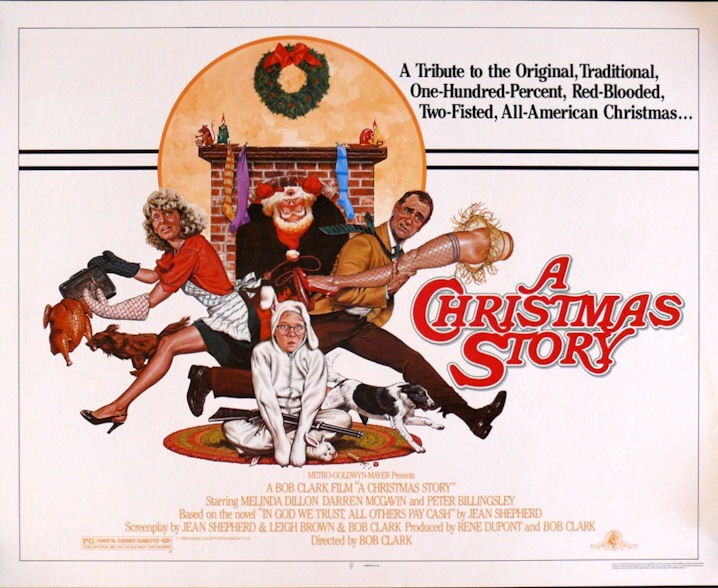
An infrequent but nevertheless joyous family tradition of mine is to catch up with the tales of nine-year-old Ralphie Parker and his family in Bob Clark’s adaptation of Jean Shepherd’s semi-autobiographical stories. It covers his pursuits in the lead up to Christmas to convince his family, teacher and a department store Santa to deliver him a Red Rider Carbine Action 200-shot Range Model Air Rifle for Christmas, despite the fact he will inevitably poke his eye out.
The famous tongue on the lamppost scene
The film was made in 1983, but is set in early 1940s USA. It is heaped in nostalgia for an era that many of us now can’t remember, but somehow feel represents our past. It is a past that is entirely more innocent: be it the kids crowding around the radio for their favourite show, or the punishment for swearing (the classic bar of soap in the mouth), the music and the cars. It sends a strange shot of emotion across me as it reminds me of growing up, despite the fact I was born after the film was released.
The script doesn’t really follow any real character development, instead taking on a mode of storytelling via a series of vignettes that dip into various tales. It works because each mini-tale is absolutely hilarious, and the actors are all clearly having a lot of fun with the material. I defy anyone to not find at least one part of the story they can relate to.
Above all else, it’s simply hilarious.
Please seek it out and spread the word. This film needs to be enjoyed by more people than are aware of it today.
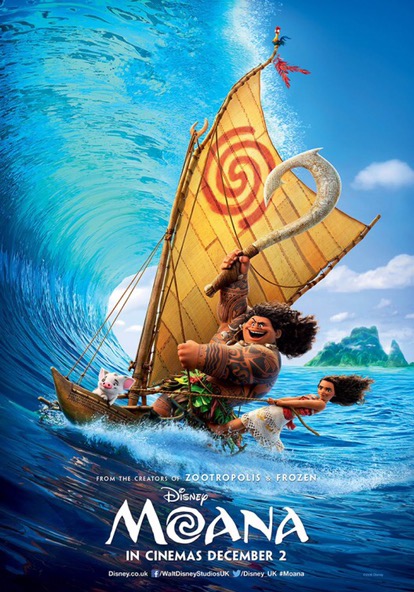
Walt Disney Animation Studios have released their 56th animated film, the musical Moana. I’m going to whisper this quietly, but it might actually be better than Frozen.
The story follows 16-year-old girl Moana (Auli’i Cravalho) as she defies her passage to become the leader of the tribe on the fictional island Motunui. Her father Chief Tui (Temuera Morrison), leader of her island tribe, and her mother Sina (Nicole Scherzinger), are fearful of the water and want her to remain on the island, but her outgoing grandma Tala (Rachel House) encourages her to leave and hunt down the demigod Maui (Dwayne Johnson) to solve a mysterious curse that she believes has led to a poor harvest.
Moana and Maui
The basics of the story are, on the face of it, quite by-the-numbers. There’s a teenage protagonist, which makes it relatable for the younger viewers. She goes on a quest that has a practical purpose but also helps her develop as a person. She teams up with an unlikely buddy to help her in her journey. We’ve seen it many times before but the familiarity doesn’t hamper its success.
Where the story excels is threefold. Firstly, it has a brilliantly sharp and humorous script, which the actors are clearly having a lot of fun with. Secondly, the animation of both the characters and the surroundings is absolutely stunning. Finally, the music, which was written by Hamilton’s Lin-Manuel Miranda, Mark Mancina and Opetaia Foa’i, is outrageously good, and goes much further than simply one great flagship song (in this case “How Far I’ll Go”, sung by the lead and effectively Moana’s answer to “Let It Go”).
Indeed, it is unfortunate that the film has been unleashed in the same year as La La Land, which is destined to sweep up at most of the award ceremonies, at least in the Best Song categories. Miranda may have to have another attempt in a less competitive year.
There are a couple of nice smaller roles that are grasped by those involved. Alan Tudyk may be more famed for his turn as K-2SO in Rogue One this year, but he’s equally hilarious as Hei Hei the Rooster here, constantly stealing scenes with sound effects that match the ridiculousness of the island’s most endearingly stupid bird. Elsewhere, Jermaine Clement shows up as Tamatoa, a giant kleptomaniacal crab who has a penchant for all things shiny.
But the plaudits must go to Auli’i Cravalho, who comes in as a complete unknown and has delivered a lead performance that equals the best Disney has ever achieved. At just sixteen but with a voice as good as anything I’ve ever heard on stage, she has a very bright future indeed.
Moana is a must see this holiday season and should be top of your list if you need to entertain any younger relatives over the coming weeks.
Check out the reviews of other Disney animated features and shorts here:
‘Life, Animated’ explores the life of Owen Suskind, an American man who, at the age of just three, became unable to speak and interact with those around him. This was a complete mystery for his parents who were desperate to rescue their son from the depths of silence. As he grew older his parents realised that he could communicate through his love of Disney animated films such as The Little Mermaid, Aladdin and The Lion King. Finally they were able to understand his reasoning through the films he began to quote verbatim.
This is a balanced cross-examination. To watch Owen when he’s on his own is a fascinating study for those interested in the condition of autism. He has learnt most of the lines from his beloved films, including facial expressions and accents. Yes, he is nothing short of animated when he’s lost in his world.
There is some beautifully animated moments as we are guided through his inner thoughts in the form of his younger self and his band of Disney sidekicks, including Iago, Baloo, Abu, Rabbit, Sebastian the Crab and Rafiki. These short animated sequences were supplied by company Mac Guff (Despicable Me, The Lorax) and are equally evocative and breathtaking.
But the standout moment of the film is when his father, Pulitzer Prize-winner Ron Suskind, recalls a moment when he first reconnected with Owen via an Iago hand puppet. It’s a must-see moment.
The film may take a look at only one man’s struggles with autism, but the focus shifts from him to those around him: his parents, his brother, his girlfriend, the professionals helping him through his condition. In this way, we see how his autism affects those around him. The result is arguably one of the most important films about autism ever made.
Life, Animated is available to download on iTunes and is also at select theatres throughout Britain.
Note: Roger Ross Williams’s last documentary film was the short subject piece ‘Blackface’ for CNN, which explored the unbelievable holiday tradition still at large in the Netherlands called Sinterklaas. It may be rooted in tradition (as the Dutch argue), but it is also rooted in racism and white supremacy and has no place in a modern and progressive society.
The film is fortunately available in full on YouTube as below.
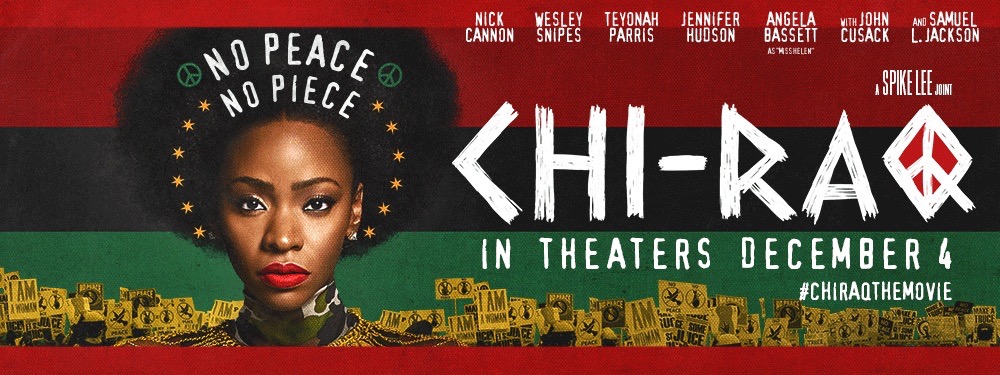
Spike Lee’s latest satirical drama is based on Aristophanes’ Classical Greek comedy Lysistrata, in which women withhold sex from their husbands as a punishment for fighting in the Peloponnesian War. Anyone hoping for a faithful adaptation is probably unaware of Lee’s output, which consistently challenge the audience to think about black lives, making its release as timely as ever given the BFI’s Black Star season is currently in full swing.
To label the film as a satirical drama only tells the half of it, which strong elements of comedy and crime. However, it is the hip-hop musical storytelling method that could hamper this film’s accessibility to the wider audience. When the words aren’t being sung or rapped, they are spoken in rhyme or at the very least rhythmical.
If anyone chooses not to see Chi-raq because they don’t like hip-hop is going to miss out on an extremely powerful work of art. There is a heap of controversies surrounding the film, from the statistics that are listed through the opening to the name of the film itself, but the relevance to the current population of Chicago is clear. The phrase Chi-raq is a name given by members of the drill-rap community to a city that, due to the prevalence of gun and gang crime, has led to the death of more people than both the war in Iraq and the war in Afghanistan.
The most outspoken criticism of the film is from this very community, who are displeased with the use of the phrase in the name against a film that highly stylises what is happening in Chicago. Lee has responded to the backlash, stating “We need to focus on what’s important. The whole shit about the film’s title was a needless distraction… People didn’t have the understanding that satire does not belittle serious subject matter.”
It’s a fair point. The most important thing is that the film itself is brilliantly written and acted, with a standout turn from lead actress Teyonah Parris as Lysistrata, the woman leading the revolt against their horny and battle-ready partners.
If you like your musicals challenging, wrapped in the genre of hip-hop, and with a strong ensemble cast, then Chi-raq is a must.
Chi-raq is in cinemas now and is also available on VOD.
It is very unusual for a Japanese animated film to make it beyond the smaller art house cinemas littered around the country. Most don’t make it that far. Even the most recent Studio Ghibli releases – When Marnie Was There and The Tale of the Princess Kaguya – failed to ignite the chain multiplexes, despite a global popularity that is unrivalled for world cinema.
It is strange then that Your Name has found itself in amongst the blockbusters at Showcase Cinemas in the UK this week, alongside the likes of Strange Beasts and Where to Find Them and Doctor Strange. No doubt many cinema goers will be nonplused that a weird Japanese film is taking up one of the screens, blissfully unaware that neither Cumberbatch nor Redmayne stand a chance of usurping Makoto Shinkai’s romantic fantasy anime to top the annual box office charts this year in Japan. As of 21st November it has taken 189.8m USD, making it Japan’s seventh highest grossing film of all time.
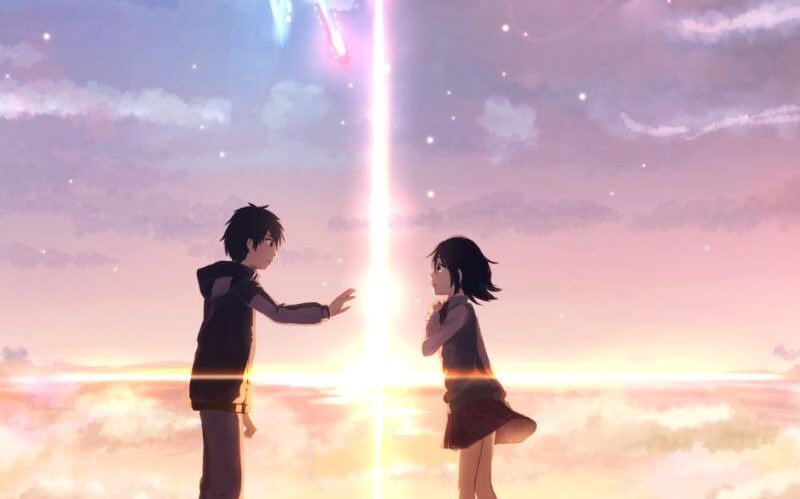
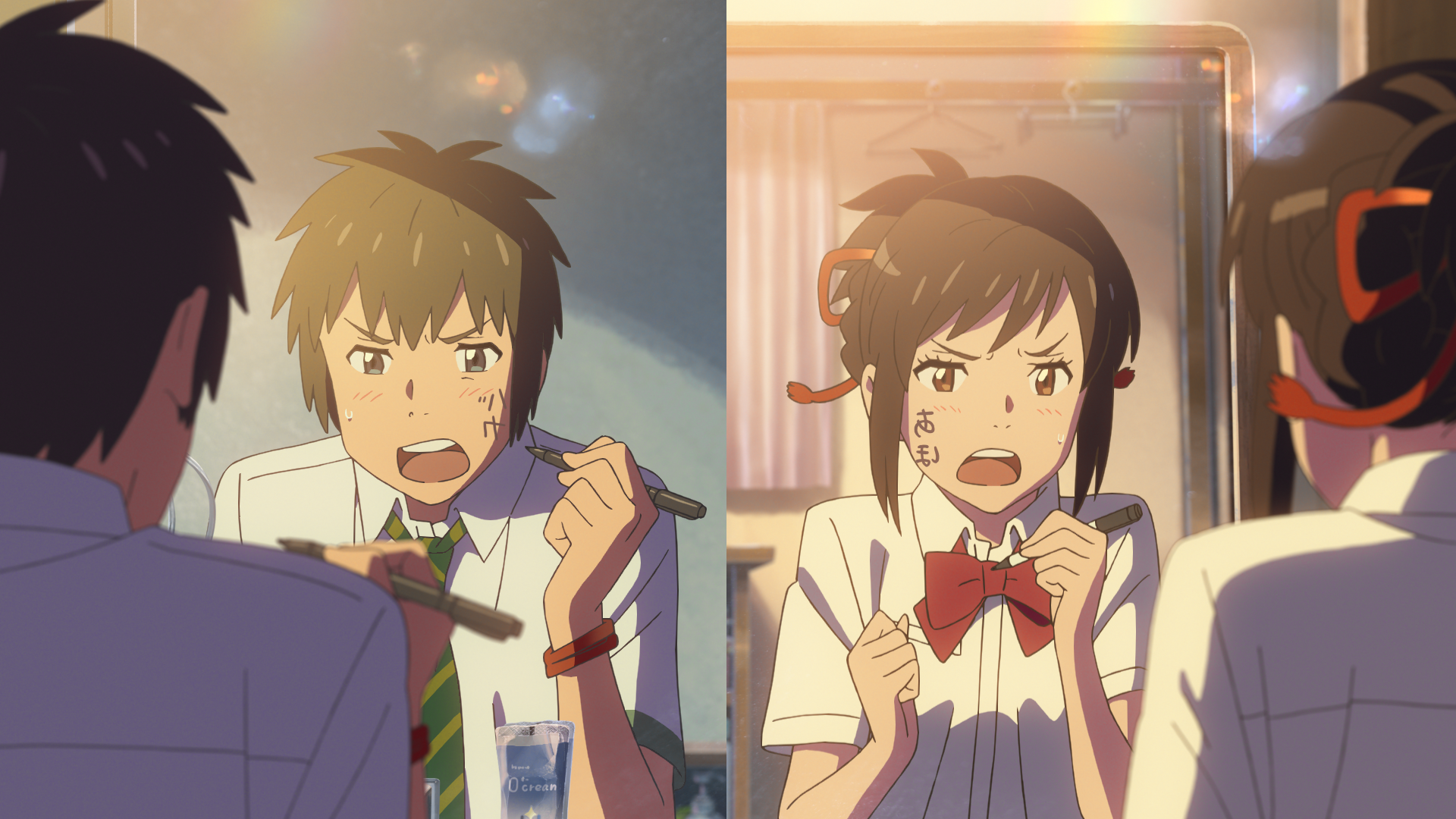
So what’s Your Name about and why is it so popular? It tells the story of Mitsuha, a high school girl living in the isolated countryside of Itomori, who makes a wish to be brought back as a handsome Tokyo high school boy in a future life. The next morning Taki, a high school boy living in Tokyo, wakes up in Mitsuha’s body, whilst she is now living in his body. It’s a classic body-swap setup that has served many good (and bad) films well in the past.
Or as it’s known by the poorly educated, You’re Name
The film may start in the most simple of ways, but as Mikota Shinkai throws a couple of devastating curveballs into the robust script to juxtapose the well-balanced comedic elements, it quickly becomes apparent where the success has come from. It’s a story driven by two characters that develop at a perfect rate to drive the plot forwards, and a serendipitous romance that is easy to get engrossed in.
Visually, the quality of the animation is very reminiscent of the best work of Studio Ghibli, particularly in the Itomori countryside scenes, away from the bright city lights of Tokyo. It’s such a relief to see something like this being released as Ghibli are finished as a motion picture production house, or at least going on a prolonged hiatus. Shinkai is being hailed as the new Hiyao Miyazaki, which seems far fetched on paper but in reality may not be so unrealistic. Unsurprisingly, he sites Miyazaki’s Castle in the Sky as his favourite film. His passion and dedication to follow in Miyazaki’s footsteps is abundantly on show here, from the beautifully-realised backdrops to the organic growth of the lead characters as the story progresses.
Put simply, it’s a beautiful film with a lot of heart and an engrossing story. What more could you ask for?
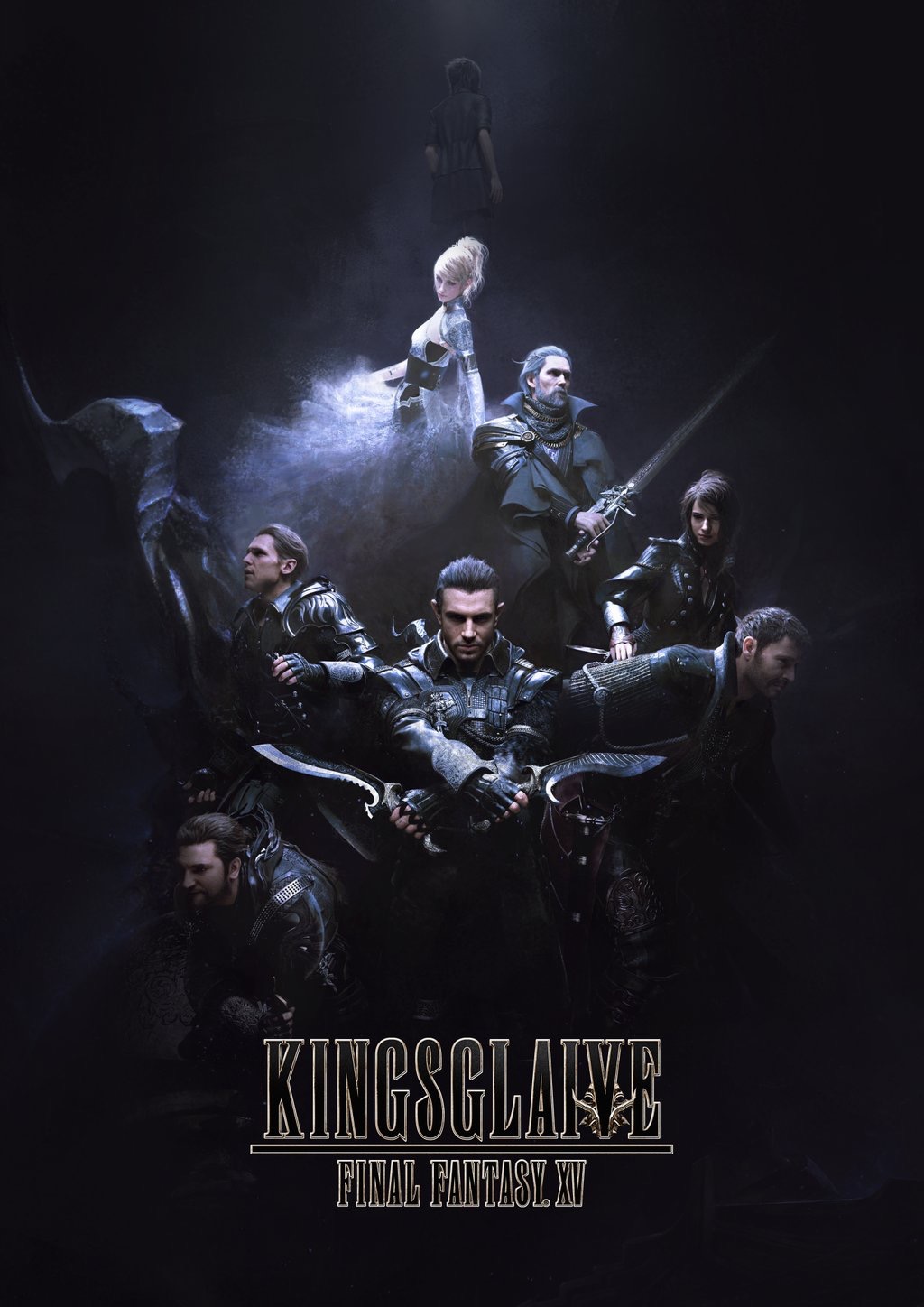
The latest Final Fantasy cinematic release, titled rather awkwardly Kingsglaive: Final Fantasy XV, sits in the Fabula Nova Crystallis universe first explored in 2009’s Final Fantasy XIII. If that opening sentence doesn’t float your boat, I’m afraid things are about to get a lot worse.
The storyline concentrates on characters we’ve previously seen in animated web series Brotherhood, and who will be the main stars of the upcoming Final Fantasy XV games that will hit the shelves in just under a week from now. It is set on Eos, an earth-like planet divided into six regions based on their historical ownership of various crystals. Central to the plot is Nyx Ulric (Aaron Paul), the main protagonist in this film but only a bit-part in the upcoming game. He is a member of the Kingsglaive, an elite guard that channel the mythical powers bestowed on them by the ruler of Regis Lucis Caelum CXIII (Sean Bean), ruler of Lucis. The military-rich Niflheim are at war with Lucis but a treaty is offered that includes as part of the bargain the marriage of Regis’s daughter to Lunafreya Nox Fleuret (Lena Headey) to Noctis Lucis Caelum (Ray Chase), the main protagonist of the upcoming game but scantly featured here.
Huh?
Still with me? It sounds complex on paper but in reality the film’s pace and tendency towards action ensures it isn’t another fantasy bore fest. With a rich cast of individuals that do their best to pepper the script with flavour, it is actually a surprisingly enjoyable experience.
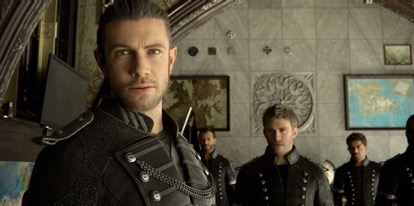
One aspect that is particularly impressive is the match up of the audio to the movement of the mouth, which is usually a huge problem with foreign films being dubbed into English. CGI motion capture is perhaps the only medium where this is possible and it makes for a much less distracting experience.
With all films like this, the market is very niche. A single screening in the East Midlands in a small screen and reduced price still didn’t lead to a sell-out, though this could be blamed on the fact it has been on available on Blu-ray for the last month or so.
If you get chance to see this before playing the upcoming game then it will definitely provide an engrossing way to get used to the background to the plot. If you’re not a fan of the series and don’t plan the 100-hour slog that will inevitably be demanded by the RPG, then it probably won’t give you much enjoyment.
Sour Grapes is a brilliant documentary film that makes it extremely difficult to think anything but support for its main star: Rudy Kurniawan.
Kurniawan is an Indonesian man currently serving a ten-year prison sentence for selling fraudulent wine to the aforementioned win enthusiasts at auction. To be precise, $35.3m of wine over two auctions.
All Kurniawan had was an expert memory for taste and a likeable personality, but this meant he was able to penetrate what was ostensibly an old boys’ club. This is a club that would meet on a regular basis to share wine with values totalling over $100,000 in a single night. It’s easy to not feel too much sympathy for the individuals that were hoodwinked by him.
Stop wining
There’s something ultimately deplorable about anyone that regularly spends so much on wine. Forking out what for many would be a life-changing amount of money on a drink, especially when the ultimate purpose is to prove your own status amongst a small and very exclusive group of peers, is never going to endear you to the masses.
The film builds up a balanced picture of Kurniawan and the people he had been associating with in these wine tasting circles. It follows him as he befriends the self-professed ‘Angry Men’ group in LA over a period of several years, buying up key vintage wines, developing his palette to unrivalled levels and becoming a key player in the wine buying and selling scene. The results are nothing short of fascinating.
The people he has ripped off have mixed memories of their time with Kurniawan, with some hating being duped and others in denial that he could be capable of any wrongdoing. The fact that he had the printing facilities in his house to mass-produce wine labels, several unmarked wine bottles and rudimentary formulae to recreate the most sought-after wine ever produced didn’t seem to budge their opinion on him either. That is testimant to his charm.
The only thing that lets the film down is a lack of a revealing interview with Rudy himself. It instead relies on old home videos and undercover camera work. He’s the centrepiece of the film but I suppose a man in prison is a tricky interview to land.
This a film worthy of a watch if you happen to find it.
British-born Andrea Arnold may have created a cutting piece of social commentary in ‘American Honey’, delivered with a refreshingly natural voice, but with a running time of 163 minutes it does feel like there was scope to say the same thing in about half the time.
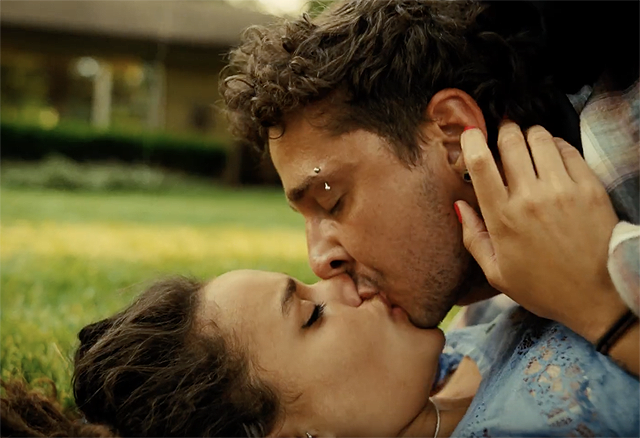
It follows troubled 18-year-old Star (Sasha Lane), a free-spirited girl looking after two young children for ambiguous purposes (they’re not her children and the connection she has to them is never clearly stated). A chance encounter with Jake (Shia LeBeouf) leads to an opportunity with a random group of youngsters selling magazines from town-to-town, led by Krystal (Riley Keough), and she opts to run away from an inevitable life of domestic imprisonment and abuse.
One of the principal achievements by Andrea Arnold is creating a truly realistic world for the cast to inhabit. She was involved in the principal photography and had essentially completed the entire road trip before they started filming, finding locations to realise her vision.
The cast was mainly taken from the streets with no experience, supplemented by more familiar faces. With no history of being in USA at that time of her life (she was busy doing children’s TV show No. 73 with Sandi Toksvig and Neil Buchanan) she has done wonders with a reflection of an oft-ignored part of society.
The cast are also tremendous and natural in front of the camera, usually feeling like they are simply being captured rather than working from a script. Indeed, many scenes were shot without a script so there’s an element of reality about that statement. The result is that each segment feels absolutely real, partially due to the fact that nothing is rushed. Unfortunately the lack of focus belies this, with pacing being the true victim.
Lane and LeBeouf have real chemistry
Arguably, LeBeouf does need to remind everyone that he is a pretty decent actor, especially after that dreadful performance in Nymohomaniac. He does a solid job here, with his real-life fame adding to the gravitas afforded to him by his fellow cast members (which reflects his character’s position in the group’s pecking order). He has always been a good actor, though the rest of the world may never realise it.
The plaudits must go to Sasha Lane, a complete newcomer to acting who was picked up on a beach in Florida whilst on spring break. She’s a complete natural on camera. When she gets angry, you believe her. When she feels lust towards Jake, you believe her. Star is a girl being given the chance to be her own woman for the first time, still having to demean herself due to her vulnerability, still dogged by feelings of maternal responsibility to the children that, in all likelihood, weren’t hers to feel responsible about. A truly thought-provoking performance.
The ambiguous ending, however, cemented the feeling that the story was overlong. To take so long to build up to a suggestion that Star was probably going to leave the group just seemed like a disappointment when it had taken so long to get there.
A great story has been sabotaged here by a lack of ruthlessness in the edit. Perhaps it’s an indication that Arnold had grown too close to the material and couldn’t bear to cut any of it out. That’s not necessarily a bad thing – plenty of directors don’t care enough of their final product – but it was a lot to ask of this audience member.
Panned on its original release and a complete commercial failure [1], Julian Temple’s musical Absolute Beginners is a film that is often cited as the cause of a partial collapse of the British film industry. Looking at it with fresh eyes, the criticisms are undoubtedly harsh, but the film still has too many flaws to warrant anything more than cult status.
The musical charts the on-off romantic relationship between aspiring model Crepe Suzette (Patsy Kensit) and unestablished photographer Colin (Eddie O’Connell) as they try to make their way in 1950s London. Weaving elements of gang warfare, race riots and youth culture in a way that is almost brilliant, but largely incoherent.
It wuzza strange casting choice
The film starts with the familiar sound of David Bowie’s title track, which was a global hit at the time and proved to be one of his most enduring songs. If, like me, you were made aware of it solely because David Bowie has a named role in the film, then prepare to feel shortchanged. Bowie stars as Vendice Partners, a sales and marketing man who first appears about halfway through the film. By all accounts, his prominence in the film was more a marketing choice than an artistic choice, but his scenes breathe life into a stagnant portion of the film as it threatens to grind to a halt.
Temple was famed for his music videos and by the time this film was released he’d been responsible for some of the most celebrated music videos of the 1980s, including efforts for the likes of The Beat, Culture Club, The Sex Pistols, Depeche Mode, The Kinks and Sade. Some of the best moments in Absolute Beginners are the standalone tracks that could be lifted straight out of the film and placed on MTV. The two best examples are Ray Davies’s ‘Quiet Life’ and David Bowie’s ‘That’s Motivation’, the latter of which has Bowie tap dancing around a giant typewriter.
The film’s lack of focus is its downfall. When Colin gets caught up in the Notting Hill race riots in the final third of the film, he takes a wrong turn to avoid danger and ends up in a neo-Nazi war rally. This is a scene that creates some really powerful imagery but the themes had been underplayed in the build up, making its inclusion neither relevant nor integral to the plot. Indeed, the threat of violence is imminent all around the city without ever feeling anything more than a light touch suggestion. Yes, it’s a musical, but I can’t help think that if they’d just cut a couple of needless scenes earlier in the film there could have been a better balance struck between the romantic side and the social commentary. It is hard to believe that the die-hard fans of the book don’t feel the same way.
It was a troubled film to develop and the brilliant 53-minute documentary now included in the Blu-ray release is enough justification to pick up a copy. It’s also a curiosity for fans of any of the stars in this bizarrely-assembled cast. It is, however, not a good piece of cinema.
[1] Absolute Beginners took £1.8m at the box office in the UK and $930k in the USA against a budget of £8.4m.
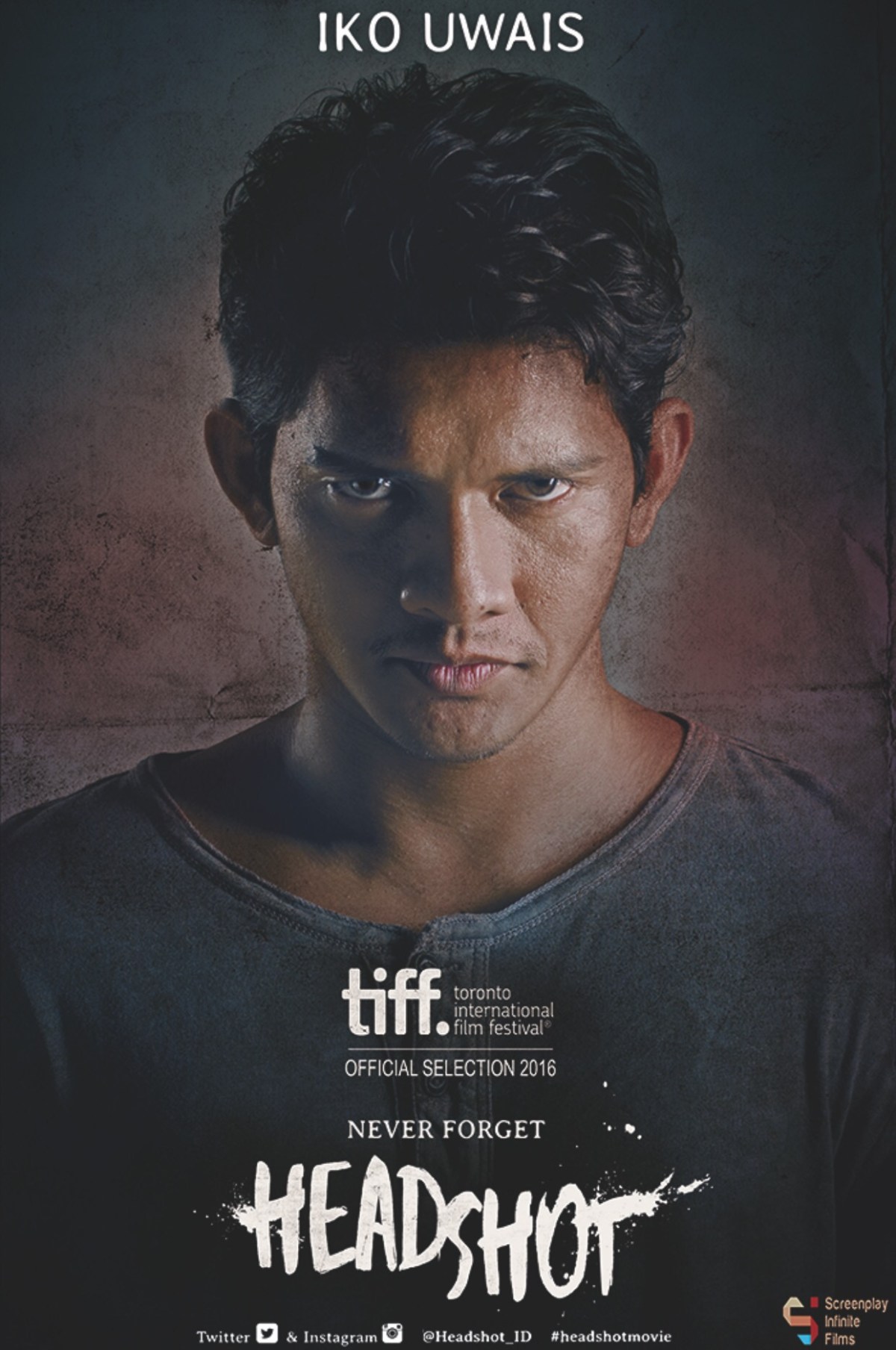
Indonesian action film Headshot received its UK premiere on Thursday night at Mayhem Film Festival. It may have started late but the action came thick and fast, treating the audience to an experience typical of the directing duo.
The Mo Brothers – Kimo Stamboel and Timo Tjahjanto – have carved out a unique blend of action-horror in their previous efforts Macabre (2009) and Killers (2014), both of which have received a lot of attention around the world. This film sees them casting Iko Uwais (The Raid) as a man who wakes up in hospital with memory loss and a past that is rapidly threatening to catch up with him.
It is a perhaps more Transporter than Bourne, with scant attention to the finer details of character development and more time spent with Uwais as he kicks, punches and shoots his way through an army of bad guys to get to the chief druglord Lee (Sunny Pang). It’s fun, albeit unrealistic – a fact underlined by the shooting ability of the henchmen (they really need some firing practice).
Headshot
Arguably this film isn’t really a horror, sitting more in the action thriller camp, but many of the scenes are littered with gruesome breaks and gory splats, from which a lot of the entertainment is derived. There were a few unfortunately humorous moments due to the over-zealous subtitles that often simply described what was happening on the screen, which broke up some of the more serious scenes.
It is a shallow film and one that probably won’t have much crossover appeal for people who don’t intentionally seek out non-mainstream Asian cinema. Those that do find it will be treated to a couple of hours of solid entertainment, though may struggle to remember any highlights shortly after the final credits roll.










 Cinema, etc.