Film review – Absolute Beginners (Julien Temple, 1986)

Panned on its original release and a complete commercial failure [1], Julian Temple’s musical Absolute Beginners is a film that is often cited as the cause of a partial collapse of the British film industry. Looking at it with fresh eyes, the criticisms are undoubtedly harsh, but the film still has too many flaws to warrant anything more than cult status.

The musical charts the on-off romantic relationship between aspiring model Crepe Suzette (Patsy Kensit) and unestablished photographer Colin (Eddie O’Connell) as they try to make their way in 1950s London. Weaving elements of gang warfare, race riots and youth culture in a way that is almost brilliant, but largely incoherent.

It wuzza strange casting choice

The film starts with the familiar sound of David Bowie’s title track, which was a global hit at the time and proved to be one of his most enduring songs. If, like me, you were made aware of it solely because David Bowie has a named role in the film, then prepare to feel shortchanged. Bowie stars as Vendice Partners, a sales and marketing man who first appears about halfway through the film. By all accounts, his prominence in the film was more a marketing choice than an artistic choice, but his scenes breathe life into a stagnant portion of the film as it threatens to grind to a halt.

Temple was famed for his music videos and by the time this film was released he’d been responsible for some of the most celebrated music videos of the 1980s, including efforts for the likes of The Beat, Culture Club, The Sex Pistols, Depeche Mode, The Kinks and Sade. Some of the best moments in Absolute Beginners are the standalone tracks that could be lifted straight out of the film and placed on MTV. The two best examples are Ray Davies’s ‘Quiet Life’ and David Bowie’s ‘That’s Motivation’, the latter of which has Bowie tap dancing around a giant typewriter.

The film’s lack of focus is its downfall. When Colin gets caught up in the Notting Hill race riots in the final third of the film, he takes a wrong turn to avoid danger and ends up in a neo-Nazi war rally. This is a scene that creates some really powerful imagery but the themes had been underplayed in the build up, making its inclusion neither relevant nor integral to the plot. Indeed, the threat of violence is imminent all around the city without ever feeling anything more than a light touch suggestion. Yes, it’s a musical, but I can’t help think that if they’d just cut a couple of needless scenes earlier in the film there could have been a better balance struck between the romantic side and the social commentary. It is hard to believe that the die-hard fans of the book don’t feel the same way.

It was a troubled film to develop and the brilliant 53-minute documentary now included in the Blu-ray release is enough justification to pick up a copy. It’s also a curiosity for fans of any of the stars in this bizarrely-assembled cast. It is, however, not a good piece of cinema.

[1] Absolute Beginners took £1.8m at the box office in the UK and $930k in the USA against a budget of £8.4m.

Film review – Headshot (Kimo Stamboel and Timo Tjahjanto, 2016)

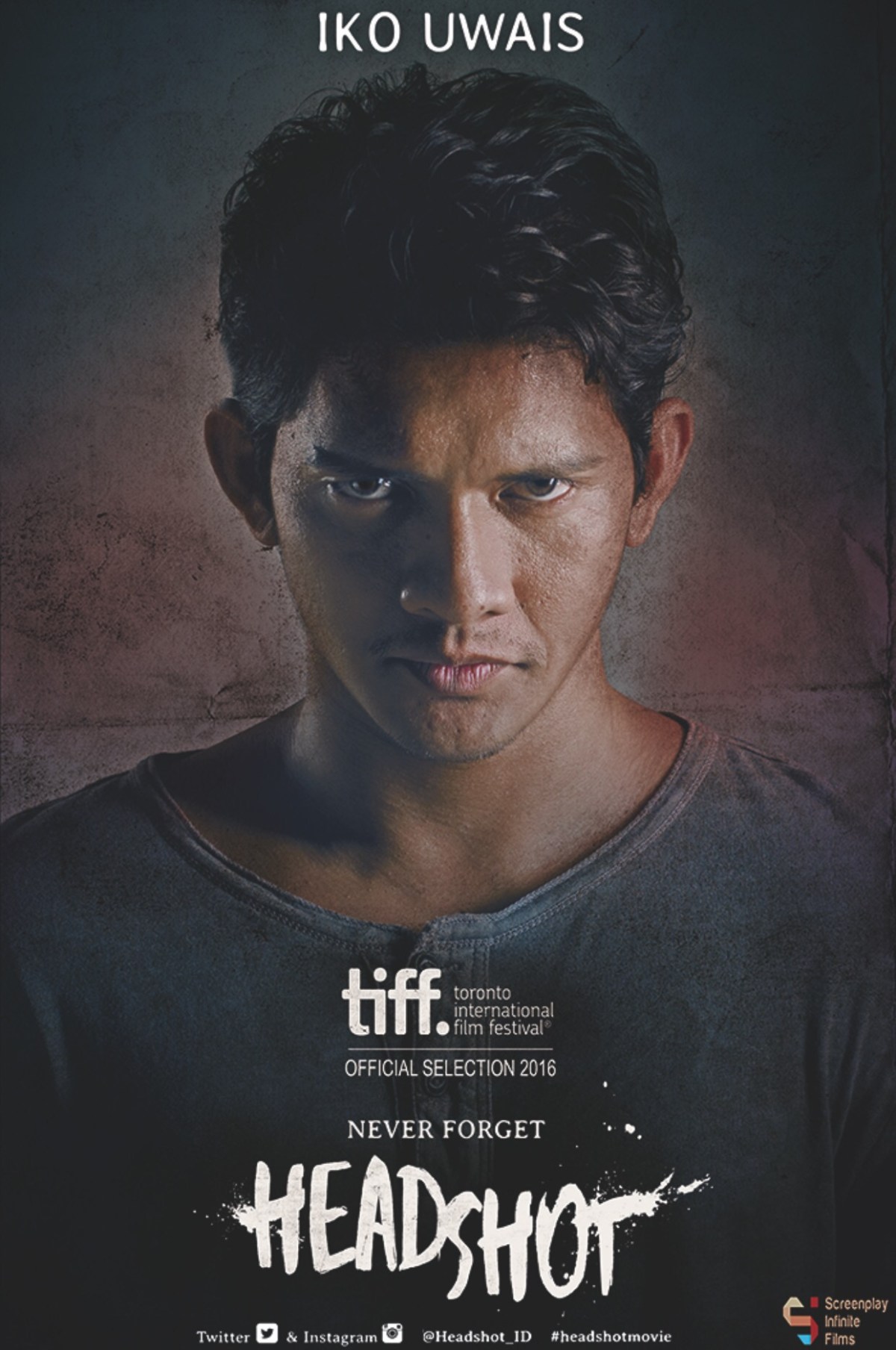
Indonesian action film Headshot received its UK premiere on Thursday night at Mayhem Film Festival. It may have started late but the action came thick and fast, treating the audience to an experience typical of the directing duo.

The Mo Brothers – Kimo Stamboel and Timo Tjahjanto – have carved out a unique blend of action-horror in their previous efforts Macabre (2009) and Killers (2014), both of which have received a lot of attention around the world. This film sees them casting Iko Uwais (The Raid) as a man who wakes up in hospital with memory loss and a past that is rapidly threatening to catch up with him.

It is a perhaps more Transporter than Bourne, with scant attention to the finer details of character development and more time spent with Uwais as he kicks, punches and shoots his way through an army of bad guys to get to the chief druglord Lee (Sunny Pang). It’s fun, albeit unrealistic – a fact underlined by the shooting ability of the henchmen (they really need some firing practice).

Headshot

Arguably this film isn’t really a horror, sitting more in the action thriller camp, but many of the scenes are littered with gruesome breaks and gory splats, from which a lot of the entertainment is derived. There were a few unfortunately humorous moments due to the over-zealous subtitles that often simply described what was happening on the screen, which broke up some of the more serious scenes.

It is a shallow film and one that probably won’t have much crossover appeal for people who don’t intentionally seek out non-mainstream Asian cinema. Those that do find it will be treated to a couple of hours of solid entertainment, though may struggle to remember any highlights shortly after the final credits roll.

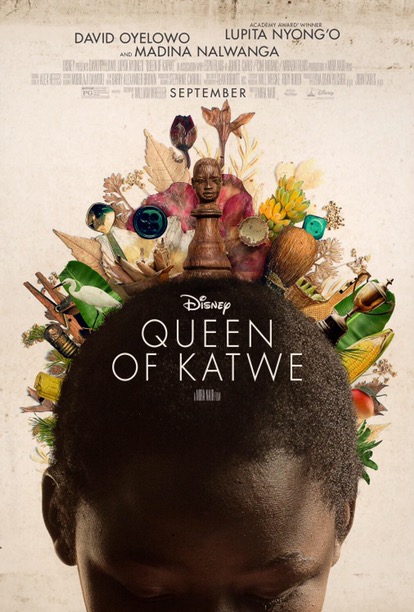
Film review – Queen of Katwe (Mira Nair, 2016)

Walt Disney Studios may have a long history of releasing underdog sports films, but their latest live action is nothing like any of its predecessors. In fact, it’s a breath of fresh air, as the crowd discovered tonight at the UK premiere.

Set and filmed almost entirely in the slums of Katwe in Uganda, the film tells the story of Phiona (newcomer Madina Nalwanga), a child who learns to play chess under the mentoring of missionary Robert (David Oyelowo). Much to the initial dislike of her mother Nakku (Lupita Nyong’o), she excels at the game and quickly starts competing at international competitions, giving her the opportunity to escape from certain poverty.

David Oyelowo and newcomer Madina Nalwanga

At the heart of the creation of the film was Mira Nair, the female director who knows Uganda inside out (she met her husband whilst researching the film Mississippi Masala in 1989). She spoke prior to the screening of the importance of filming the entire film in Uganda and leaving a positive message about the country outside of the anti-colonialism that is a constant recurrence in films about Africa (though A United Kingdom is very good too!). There should be no worries that this is a risky move for Walt Disney Studios.

The triangle of central characters played by Nyong’o, Oyelowo and Nalwanga are what helps the film achieve so much. Whilst Robert acts as a much-needed father figure to Phiona, he in turn proves antagonistic to Nakku, a mother who is keen to protect her second-eldest daughter for fear of her making the same mistakes as her elder sister Night.

Indeed, it is Nyong’o’s turn in the film that, for me, makes it a true triumph. As the protective mother to a daughter she fears is getting into something too unfamiliar, the result is a strong-willed role model for black women (as she is in real life). This is sadly in short supply in the modern cinematic landscape. This is a topic that will doubtless be explored in BFI’s promising Black Star programme throughout October 2016.

Festival director Clare Stewart, director Mira Nair and stars David Oyelowo and Lupita Nyong’o at the UK premiere

Nair does a great job with the telling of a captivating story throughout the chess matches. This is tricky territory for a filmmaker. If too long was spent explaining it, there’s a risk of boring your audience. Spend no time on it at all and you lose the core of the story. Get the tone wrong and you look completely foolish. Time was spent making sure that the metaphorical importance of the game was reflected in the development of Phiona as a character. It works perfectly.

It was a joy to see East Africa looking so vibrant, brought to life with some beautiful shots and an uplifting story. A total triumph.

Queen of Katwe is in UK cinemas now and can also be pre-ordered for home-viewing.

Film review – Hunt for the Wilderpeople (Taika Waititi, 2016)

SPOILER ALERT – There’s a spoiler pretty much immediately in the first paragraph of this review. Sorry, it just turned out that way. Come back when you’ve seen the film and rejoice in its excellence with me. General  and spoile-free review: it’s excellent and well worth watching.

Here we go…

There is a moment, about twenty minutes into Hunt for the Wilderpeople, where the laughs start rolling in and the set up falls into place, proving that very good things come to those who wait. That this happens in the middle of the funeral of one of the lead characters, who is unexpectedly killed-off in the middle of the opening act, proves the point that comedy doesn’t have to be routine to be absolutely hilarious.

Indeed, looking at the two lead actors, there is nothing to suspect they would work on a comedy duo level. Sam Neill has been doing fantastic work for years, delivering memorably serious performances in the likes of The Hunt for Red October, Dead Calm, The Piano and Jurassic Park. His partner in crime in Hunt for the Wilderpeople, Julian Dennison, is pretty much a newcomer to the industry, having starred in 2015’s Paper Planes and not much else (at least not much that has troubled the international market).

It’s strange then that they have formed a bizarre chemistry around which this film’s many successes hang, taking turns to be the straight man when the time is right. It’s a successful combination and one that takes what could have been a simple live-action remake of Pixar’s Up and turns it into an enjoyable romp through the New Zealand countryside.

Dennison is, ultimately, the real find of the film. As the rebellious youth that nobody wants, he is privy to some of the best lines in the film. His delivery is natural and faultless.

Taika Waititi may be in the process of directing the upcoming next instalment of the Thor film series (set for release in late 2017), but he is staying rooted to what he knows best for as long as possible. One can only hope that Marvel allow him to finish his journey with the film rather than lose faith at the eleventh hour as they did with the last quirky comedy director they went with: Edgar Wright.

On this evidence, they would be wise to not make the same mistake twice.

Hunt for the WIlderpeople is available now on DVD.

Film review – Weiner (Josh Kriegman and Elyse Steinberg, 2016)

The worst thing about watching the political equivalent of a car crash is that politicians never seem to learn from their predecessors’ mistakes. Wars keep happening, smear campaigns take precedent over actual policies in the run up to elections, mayoral campaigners Tweet pictures of their erect penises to strangers.

Wait, what?!

Okay, that last one is a new one on the political landscape. Anthony Weiner is a great sport though. He lived up to his name whilst figuratively – though thankfully not literally – taking one for the team by playing out the lesson twice, first in 2011 and then again in 2013. That the second one happened during under the prying eyes of documentary filmmaking duo Kriegman and Steinberg, at the time trying to capture the rebuilding of a shattered political empire, makes it all the more fascinating.

The film left me a little split on my opinion of him. On the one hand, he is clearly a driven man who is good at his job, galvanising public opinion and canvassing support for what he truly believes is right for his city.

What I can’t deny though, and I think we can all agree on this, is that the mayor of New York shouldn’t have an alter ego on the dark web called Carlos Danger tweeting pictures of his dick to women behind his wife’s back.

His wife, Huma Abedin, leaves the film with her head left relatively high. She is a woman of unbelievable strength in the face of a continuously catastrophic husband who laughs in the face of public opinion, even though his livelihood depends on being popular with his public. The only question is why she sticks around when he is clearly a huge damage to her political career (she has been an aide to Hilary Clinton throughout the two scandals and leading into the presidential election later this year).

As a documentary, Weiner is about as good as it gets. It isn’t putting the pieces together after an event, instead getting lucky and being able to present a truly spectacular political scandal from the inside of the bubble. The characters are their interactions are as captivating as any fictional story.

It might not be a comfortable watch, but there’s something about Anthony Weiner that’s hard to not get addicted to. He’s an almost great political swamped by his own ability to ruin his own chances of achieving anything other than the total humiliation of himself and everyone associated with him.

Well worth 90 minutes of your time.

Film review – Captain Fantastic (Matt Ross, 2016)

Captain Fantastic is not the latest in the never-ending chain of Marbel superhero films. Nor is it a profile of former Liverpool captain Steven Gerrard, who is fantastic for about half of Liverpool and few others.

No, despite the title, Captain Fantastic is the directorial debut full-length feature from Matt Ross, better known as Gavin Belson from Silicon Valley. Beyond the superficial veneer of a twee, heartwarming, quirky indie flick, there is something a little more substantial and special at work here.

Viggo Mortensen takes the lead role as Ben Cash, a father raising six children as an only parent after his wife is hospitalised with bipolar disease. Nurturing them off-grid in a sort of wilderness commune, he is forced to bring them back into society when he receives the news that his wife has committed suicide. The journey to New Mexico for the funeral forces him to re-evaluate his choices in bring up his children, exposing them all to a world they have shunned.

Many of the greatest films to grace our screens have us questioning are inner-most philosophies. Whilst this isn’t likely to be considered an all time great, it does push the right buttons in its ability to be thought-provoking. The six children are for the most part absolutely happy, well educated, physically fit individuals that seem to have had no ill-effects from the unique brand of homeschooling afforded by their father Ben. The portrayal from them is so convincing that I was left seething when their families began to interfere and bring them back into “normality”. 

One thing that was very evident was the chemistry between the six children and Mortensen. George MacKay takes centre stage as eldest child Bo on the brink of leaving for college but struggling to find the best way to tell a father to whom he is completely devoted. Samantha Isler and Annalise Basso are great as the inseperable pair Kielyr and Vespyr. Charlie Shotwell,  Nicholas Hamilton and Shree Crooks all have extremely bright futures in the industry, the latter of the three having a charismatic charm that brought an element of hilarity to everything she said.

It is this sense of comradery and unbreakable dedication that is essential to the success of the film and without it we’d be left with nothing. Thankfully it’s here in abundance.

The music from Alex Somers (Sigor Ros producer) plays into the mood perfectly, reflecting the subtle charm of the visuals on screen. It’s non-offensive but beautifully balanced.

A must-see, feel-great film.

Film review – Ghostbusters (Paul Feig, 2016)

Coming off the back of the unprecidented success of Bridesmaids, Feig looked to have carved a path as the director of female-led lighthearted comedies, following as he did with The Heat and Spy (both of which were well-received by both audiences and critics).  The safe move would have been to deliver more of the same until either the audiences or the actresses got bored, cashing the cheques as they exited stage right.

Rebooting the Ghostbusters franchise with women taking the lead roles, therefore, seemed like an unnecessarily bold move. Taking on the beloved franchise of an entire generation of cult film cinephiles has fallen flat many, many times recently. Total Recall. Robocop. the Terminator sequels. Vacation. The Karate Kid. A Nightmare on Elm Street. Conan the Barbarian. Oldboy. Please stop ruining our childhoods!

Fortunately, this time there’s enough talent involved to ensure that Ghostbusters is a success. It isn’t a remake so much as a reboot. There are some knowing nods back to the originals, but this is a film that stands on its own two feet and comes out with its head held high.

Ghostbusters2016

Busting makes ’em feel good!

Kristen Wiig and Melissa McCarthy are both on fine form as the childhood friends turned ghost-hunters Dr. Erin Gilbert and Dr. Abby Yates, but it is Kate McKinnon as scientist and pyrotechnics enthusiast Dr. Jillian Holtzmann that is the real success story here. This should serve as a starting point for her career to truly take off. Another SNL-favourite, Leslie Jones, completes the cast as Patty Tolan, a New York subway clerk who knows her way around the city.

Sadly, it doesn’t sail through without disappointing from time to time. The ham-fisted cameos of the original actors were completely unnecessary and would have meant nothing to newcomers to the story. They just weren’t worked well and I can imagine younger audience members wondering why so much attention was given to the taxi driver as the pace of the film took a minor detour.

The casting of Leslie Jones attracted criticism in the run up to the release of the film from some who suggested that the portrayal of a street-smart African-American amongst three white scientists bordered on racism. This wasn’t something I particularly picked up on during the film – she was well cast in a role that suited her and had good chemistry with her SNL cohorts.

Fortunately, the ones most disappointed with this film will be the ones who had written it off before it had even started. The trailer was one of the most disliked in YouTube history, which serves only to underline how collectively vindictive some sections of the Internet can be. The only shame is that they probably won’t give this film a chance and as a result they will be missing one of the funniest summer blockbusters of the year.

Film review – The Lost Bladesman (Felix Chong / Alan Mak, 2011)

The Lost Bladesman is a historical biopic that portrays the story of Guan Yu (Donnie Yen), a general in the Three Kingdoms period of Chinese history. During this period, the land of China was divided into three main states: Wei (魏), Shu (蜀), and Wu (吳).

The kingdoms are at war, and China is in turmoil. Guan Yu has sworn himself to the warlord Liu Bei, but is taken prisoner by opposing warlord Cao Cao (Jiang Wen). Forced to fight for his enemy, Guan Yu leads the Cao army to victory. He is granted freedom but amongst Cao Cao’s supporters he is seen as too great a threat to remain alive. Six of Cao Cao’s most capable supporters embark to kill Guan Yu.

The film is not a traditional telling of the Cao Cao-Liu Bei-Guan Yu story, as director Felix Chong describes in the bonus features: “We wanted to avoid the pre-established image of Guan Yun Chang. We have lots of stories about how he charged into battles, but this time we see him fight his way out of one entrapment after another… The film also concerns itself with his internal struggles and disillusions.” This is certainly something that Donnie Yen pulls off with ease, with the payoff being the drive in the battle sequences – you really believe this is a man unwilling to give up or give in.

thelostbladesmanscreen.jpg

Donnie Yen in one of the more memorable action sequences.

It is, admittedly, a story you either need to know the historical relevance of before watching, or something you need to concentrate on in great detail for the first half of the film. As an English-speaker with no knowledge of the Chinese language, trying to keep up with the names of the characters was nigh-on impossible.

Fortunately, pretty soon we are treated to some beautifully-choreographed battles as Guan Yu rips his way through hundreds of men sent to kill him, driven by his loyalty to Liu Bei and his secret passion for the woman betrothed to Liu Bei: Qilan (Sun Li).

The pairing of Donnie Yen and Jiang Wen in this film means it is now of great interest to any fans of Star Wars, with both set to appear in the upcoming Rogue One: A Star Wars Story as characters Chirrut Imwe and Baze Malbus, respectively. Certainly Donnie Yen was brought on board for his martial arts capabilities – not only is he regarded as one of the greatest martial arts actors in film, he is also his own choreographer and is an ex Wushu world champion.

Those martial arts talents are shown in abundance in The Lost Bladesman and anyone looking for a masterclass in the variety of styles of martial arts on show here won’t be disappointed.

For anyone unfamiliar with Chinese cinema, this is a great example of the kinds of high-budget productions typical of the region. The large-scale battle sequences are truly epic and stand up to anything coming out of Hollywood at the present time. Cinematographer Chan Chi-ying clearly works well with the director pairing to deliver shots that are both true to the setting and appealing to the modern audiences.

The climax of the film is, however, a complete anti-climax. Unexpectedly, a paragraph of text appears to wrap up one element of the story, before a brief clip of Cao Cao precedes a second paragraph of text. I couldn’t help but think the money had run out and they were forced into this ludicrous ending, robbing us of a final stand-off or battle of some kind.

Pacing issues aside, the Donnie Yen action sequences make this a film well worth picking up and are a fantastic introduction to his capabilities as a martial arts expert.