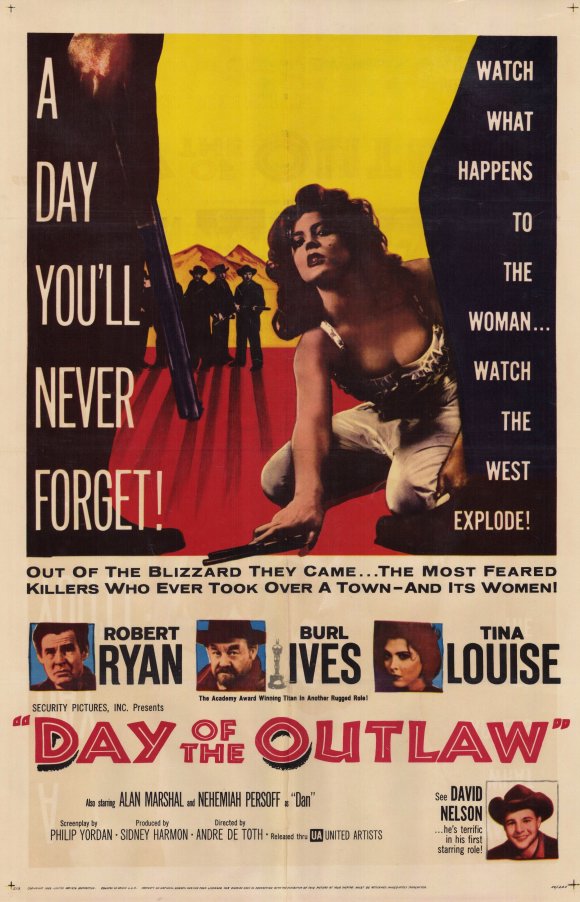
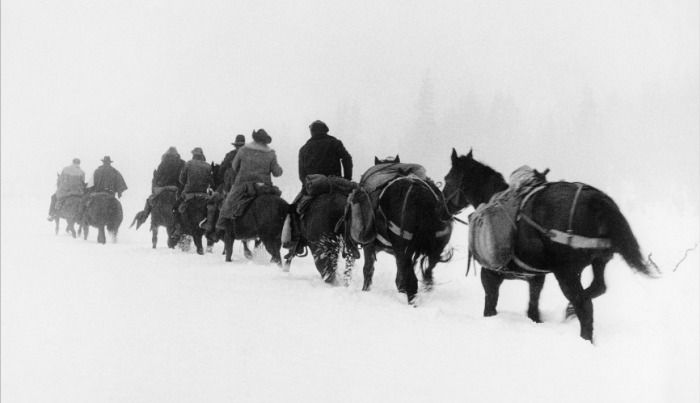
Film review – Deadpool (Tim Miller, 2016)

Deadpool may be many things. Some call it a superhero film. Some will call it an action film. Some will call it a romance. Some will call it a comedy. It may be all of these things, but one thing it doesn’t do is take itself seriously.

Deadpool has opened with the largest first weekend takings of an R-rated movie ever ($132.7m). Both the taking and the rating are well deserved. Where its superhero counterparts have sanitised the violence portrayed, Deadpool plays to it. There are beheadings. There are dead human carcasses splattered at high speed into road signs. There is terrible, offensive and graphic language. The violence is non-stop. There’s even more after the opening scene. Later, we visit a strip club. Indeed, there’s a sex montage that lasts about five minutes and is played for laughs. Nothing is off-limits.

It never loses its sense of humour, and at the centre of this achievement is Ryan Reynolds who proves that he’s the right guy for the job after all. We have seen Reynolds’s take on Deadpool once before, albeit in what is generally regarded to be a butchered take on the comic book character. His first appearance as the chatty bad ass was in 2008’s X-Men Origins: Wolverine, in which he was inexplicably not able to talk once he became Weapon XI / Deadpool. It was seen at the time as a missed opportunity by fanboys of the comics, though in hindsight it is hard to pin the blame on Reynolds. What else could he do with a silent character, especially acting alongside will.i.am?

This time around he is actively encouraged to pastiche other superhero films. Several times the fourth wall is broken to humorous effect, usually to take a poke at the previous Marvel films, the messy timeline involved in the X-Men franchise, Hugh Jackman himself and, most frequently, that underwhelming Origins film.

It’s refreshing to see a superhero film not taking itself very seriously. It was also great to see a director – a first-time director at that – given the ammo to do exactly what he wants with a film and not be told to fit it into a larger universe. We can only wonder if Ant-Man could have been this good if Edgar Wright was allowed to finish it.

Tim Miller has directed one short film prior to Deadpool. It was an animated short film from 2004 called Gopher Broke. You can view it here:

Supporting Cast

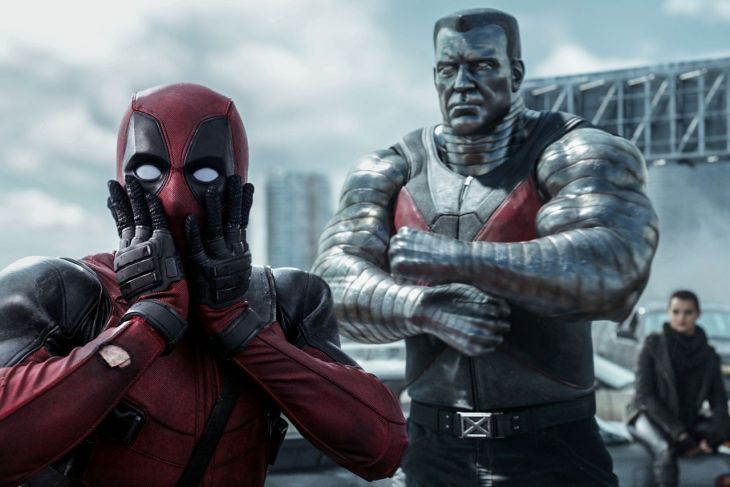
One of my favourite X-Men characters as a child was Collossus (Stefan Kapicic). Here he is given yet another outing on the big screen in a CGI creation that is well realised visually if not in terms of characterisation. He is present as one of Deadpool’s sidekicks solely for comic relief rather than to provide any real threat, and as a result it’s difficult to see him having any room to manoeuvre in future X-Men films.

The other sidekick character making up the lead trio is Negasonic Teenage Warhead (Brianna Hildebrand). An emo-styled young mutant, she at least has some potentially useful strength. However, she is also on the receiving end of some great one-liners from Deadpool and doesn’t offer much to suggest she might ever become a fan favourite.
deadpoolcolossus

These two supporting X-Men were clearly only ever seen as a bit of background built around the requirement for a subplot in the final battle sequence. A joke is made at one point about the studio not being able to afford any more X-Men. There is doubtless some truth in this.

Elsewhere, the supporting cast also includes the annoyingly evil Ed Skrein, who does a good job of making the fairly generic character Ajax quite dislikable. Morena Baccarin is well cast as the romantic interest, though it’s a shame we saw yet another an initially headstrong female character dissolve into a damsel in distress. Hopefully she will be given more prominence if a sequel is made – if they stick to the comic books she will become the mutant Copycat.

Conclusion

It is a very good film, almost a great film. It’s brash, it’s offensive and it’s graphic. It’s almost like a superhero film from an alternate reality, where the primary goal isn’t to sell action figures and lunchboxes. Its failings are more than made up for by how refreshing it was to see a completely different take on the genre.

If nothing else, at least now we can say a film has done justice to the Deadpool franchise.

Deadpool is out now at cinemas globally.

Film review – A Bigger Splash (Luca Guadagnino, 2016)

A Bigger Splash tells the story of Marianne Lane (Tilda Swinton), an ageing rock star taking a resting vacation on the remote Italian island Pantelleria with her boyfriend Paul (Matthias Schoenaerts), a filmmaker. Their vacation is disrupted when Marriane’s larger-than-life ex Harry (Ralph Fiennes) arrives with his daughter Penelope (Dakota Johnson).

Watching A Bigger Splash is a little like watching a car crash in agonisingly slow motion. As the tensions rise and tempers are frayed, you see the action unfolding and there’s nothing you can do about it. Even though you want to look away you just can’t.

abiggersplashscreen.png

An interesting choice attributed to Swinton herself was that Marianne is recovering from an operation on her vocal folds. It means that her abundant acting abilities risk going to waste. This isn’t the case at all. Indeed, that she is able to command her scenes whilst not even speaking highlights her presence in front of a camera. Her frustration at not being able to shut Harry up is evident. This, mixed with Paul’s desire to not be drawn into arguments and Penelope’s apparent disinterest in just about everything, means Harry is able to be the centre of attention at all times, much to the bemusement of the three people whose lives he is engulfing.

It’s a tremendous performance from Fiennes. He is most certainly an annoying person to watch on screen, let along imagine being on holiday with. He’s a tragic man desperate to avoid the realisation that nobody cares anymore. We all know someone like Harry in our lives, but none of us like him. Unfortunately, whilst the performance is fantastic and it plays out beautifully, it doesn’t necessarily make for great cinema. Achieving a cinematic goal doesn’t justify it.

One thing this film shares with La Piscine, the 1969 French film on which this is based, is the gratuitous nudity. It didn’t really feel integral to the plot, and lacked any kind of eroticism that it may have been angling for, feeling instead to be overly sleazy.

The political setting didn’t really give any edge to the film either. Set amid a backdrop of illegal migrants landing on Pantelleria, it just felt like a shallow attempt to date the film without adding much to the plot. This could have been rectified if we’d seen the migrants sooner, but by the time they were first mentioned it felt like an irrelevant afterthought.

The film also feels about twenty minutes too long, with the action seeming to reach a climax only to drag  on far beyond the point it held my attention. As with all car crashes, it’s not very enjoyable to watch. The elements are all there – great acting, beautiful scenery, fantastic plot development – it’s just that the overall effect doesn’t deliver on its component parts.

A Bigger Splash is out at cinemas now.

Secret Cinema February 2016 Preview – Update

Well, tomorrow’s the day that the Secret Cinema 2016 Tell No One event kicks-off. If you’re taking part this year you’ll no doubt be fully engrossed in the messages we’ve all been receiving as part of the D. O. C. S. organisation. 

The picture has become much clearer since I first wrote about the event in December. There have been a heap of clues left across social media about what film it will be. Based on my character description – Montgomery McCord of the Data Operations Department – and the costume I’ve been recommended to wear, I’m fairly confident of the film it will be.

However, playing along with the game doesn’t involve telling everyone what the answer is. I will be reviewing my time there, but that review will go live on 13th March 2016 so I don’t ruin it for anyone.

I may provide a spoiler-free guidance sheet after I attend, but the important thing is to get involved, take part, make a half-decent attempt at your costume and have a great time.

Enjoy it!

Film review – Play It Again, Sam (Herbert Ross, 1972)

‘Play It Again, Sam’ is unusual in that was written by and stars Woody Allen, but was actually directed by Herbert Ross. This is unmistakably a Woody Allen film, however, and an excellent one at that.

It stars Allen as the down-on-his-luck hypochondriac Allan Felix, a man who has recently been divorced by his wife. A writer of film commentary who is addicted to the film Casablanca, he has a fictional Humphrey Bogart as his guardian angel, offering him timely advice on love when required.

His friend Dick (Tony Roberts) and his wife Linda (Diane Keaton) are trying to encourage him to meet women so he can move on in his life. After several disastrous dates, Allan unexpectedly develops feelings for Linda, the one woman he is able to feel himself with.

playitagainsamscreen

“I had to go to Washington once when I was married, and even though I was the one leaving, I got sick; and when I returned, my wife threw up.”

This is a brilliant comedy that arrived very close to the start of Woody Allen’s film career. It contains some of his best self-defeatist one-liners, which would be equally at home in one of his stand-up routines.

It is a tight script that perhaps plays too predictably to a plot that writes itself from Linda and Allan’s first conversation. Predictability doesn’t necessarily mean a bad film though when the humour is this good. The over-coherence is probably due to the fact it originated as a Broadway play, though the film is heightened by a well-rehearsed cast, each of whom reprise their roles from the stage play that finished its run four years earlier.

The reason Allen wasn’t interested in directing this, according to an interview with Cinema Magazine around the time of release, was that he “didn’t want to spend a year doing a project I had done on Broadway… I would only be interested in working on original projects for the screen… [this will] hopefully entice a broader audience for me than I get with my own films.”

Whilst his intentions at the time may have been laced with cynicism, he ended up with one of his most celebrated pictures of a long and illustrious career.

Play It Again, Sam, is available now on Netflix, and can also be purchased on DVD. No Blu-ray has been released in the UK.

BAFTA Winners 2016 in full

Best film
Winner: The Revenant – Steve Golin, Alejandro G. Iñárritu, Arnon Milchan, Mary Parent, Keith Redmon
The Big Short – Dede Gardner, Jeremy Kleiner, Brad Pitt
Bridge of Spies – Kristie Macosko Krieger, Marc Platt, Steven Spielberg
Carol – Elizabeth Karlsen, Christine Vachon, Stephen Woolley
Spotlight – Steve Golin, Blye Pagon Faust, Nicole Rocklin, Michael Sugar

Director
Winner: The Revenant – Alejandro G. Iñárritu
The Big Short – Adam Mckay
Bridge of Spies – Steven Spielberg
Carol – Todd Haynes
The Martian – Ridley Scott

Leading actor
Winner: Leonardo Dicaprio – The Revenant
Bryan Cranston – Trumbo
Eddie Redmayne – The Danish Girl
Matt Damon – The Martian
Michael Fassbender – Steve Jobs

Leading actress
Winner: Brie Larson – Room
Alicia Vikander – The Danish Girl
Cate Blanchett – Carol
Maggie Smith – The Lady in the Van
Saoirse Ronan – Brooklyn

Supporting actor
Winner: Mark Rylance – Bridge of Spies
Benicio Del Toro – Sicario
Christian Bale – The Big Short
Idris Elba – Beasts of No Nation
Mark Ruffalo – Spotlight

Supporting actress
Winner: Kate Winslet – Steve Jobs
Alicia Vikander – Ex Machina
Jennifer Jason Leigh – The Hateful Eight
Julie Walters – Brooklyn
Rooney Mara – Carol

Outstanding British film
Winner: Brooklyn – John Crowley, Finola Dwyer, Amanda Posey, Nick Hornby
45 Years -Andrew Haigh, Tristan Goligher
Amy – Asif Kapadia, James Gay-Rees
The Danish Girl – Tom Hooper, Tim Bevan, Eric Fellner, Anne Harrison, Gail Mutrux, Lucinda Coxon
Ex Machina – Alex Garland, Andrew Macdonald, Allon Reich
The Lobster – Yorgos Lanthimos, Ceci Dempsey, Ed Guiney, Lee Magiday, Efthimis Filippou

Outstanding debut by a British writer, director or producer
Winner: Naji Abu Nowar (Writer/Director) Rupert Lloyd (Producer) – Theeb
Alex Garland (Director) – Ex Machina
Debbie Tucker Green (Writer/Director) – Second Coming
Sean Mcallister (Director/Producer), Elhum Shakerifar (Producer) – A Syrian Love Story
Stephen Fingleton (Writer/Director) – The Survivalist

Film not in the English language
Winner: Wild Tales – Damián Szifron
The Assassin – Hou Hsiao-Hsien
Force Majeure – Ruben Östlund
Theeb – Naji Abu Nowar, Rupert Lloyd
Timbuktu – Abderrahmane Sissako

Documentary
Winner: Amy – Asif Kapadia, James Gay-Rees
Cartel Land – Matthew Heineman, Tom Yellin
He Named Me Malala – Davis Guggenheim, Walter Parkes, Laurie Macdonald
Listen to Me Marlon – Stevan Riley, John Battsek, George Chignell, R.J. Cutler
Sherpa – Jennifer Peedom, Bridget Ikin, John Smithson

Animated film
Winner: Inside Out – Pete Docter
Minions – Pierre Coffin, Kyle Balda
Shaun the Sheep Movie – Mark Burton, Richard Starzak

Original screenplay
Winner: Spotlight – Tom McCarthy, Josh Singer
Bridge of Spies – Matthew Charman, Ethan Coen, Joel Coen
Ex Machina – Alex Garland
The Hateful Eight – Quentin Tarantino
Inside Out – Josh Cooley, Pete Docter, Meg Lefauve

Adapted screenplay
Winner: The Big Short – Adam Mckay, Charles Randolph
Brooklyn – Nick Hornby
Carol – Phyllis Nagy
Room – Emma Donoghue
Steve Jobs – Aaron Sorkin

Original music
Winner: The Hateful Eight – Ennio Morricone
Bridge of Spies – Thomas Newman
The Revenant – Ryuichi Sakamoto, Carsten Nicolai
Sicario – Jóhann Jóhannsson
Star Wars: The Force Awakens – John Williams

Cinematography
Winner: The Revenant – Emmanuel Lubezki
Bridge of Spies – Janusz Kamiński
Carol – Ed Lachman
Mad Max: Fury Road – John Seale
Sicario – Roger Deakins

Editing
Winner: Mad Max: Fury Road – Margaret Sixel
The Big Short – Hank Corwin
Bridge of Spies – Michael Kahn
The Martian – Pietro Scalia
The Revenant – Stephen Mirrione

Production design
Winner: Mad Max: Fury Road – Colin Gibson, Lisa Thompson
Bridge of Spies – Adam Stockhausen, Rena Deangelo
Carol – Judy Becker, Heather Loeffler
The Martian – Arthur Max, Celia Bobak
Star Wars: The Force Awakens – Rick Carter, Darren Gilford, Lee Sandales

Costume design
Winner: Mad Max: Fury Road – Jenny Beavan
Brooklyn – Odile Dicks-Mireaux
Carol – Sandy Powell
Cinderella – Sandy Powell
The Danish Girl – Paco Delgado

Make-up and hair
Winner: Mad Max: Fury Road – Lesley Vanderwalt, Damian Martin
Brooklyn – Morna Ferguson, Lorraine Glynn
Carol – Jerry Decarlo, Patricia Regan
The Danish Girl – Jan Sewell
The Revenant – Sian Grigg, Duncan Jarman, Robert Pandini

Sound
Winner: The Revenant – Lon Bender, Chris Duesterdiek, Martin Hernandez, Frank A. Montaño, Jon Taylor, Randy Thom
Bridge of Spies – Drew Kunin, Richard Hymns, Andy Nelson, Gary Rydstrom
Mad Max: Fury Road – Scott Hecker, Chris Jenkins, Mark Mangini, Ben Osmo, Gregg Rudloff, David White
The Martian – Paul Massey, Mac Ruth, Oliver Tarney, Mark Taylor
Star Wars: The Force Awakens – David Acord, Andy Nelson, Christopher Scarabosio, Matthew Wood, Stuart Wilson

Special visual effects
Winner: Star Wars: The Force Awakens – Chris Corbould, Roger Guyett, Paul Kavanagh, Neal Scanlan
Ant-Man – Jake Morrison, Greg Steele, Dan Sudick, Alex Wuttke
Ex Machina – Mark Ardington, Sara Bennett, Paul Norris, Andrew Whitehurst
Mad Max: Fury Road – Andrew Jackson, Dan Oliver, Tom Wood, Andy Williams
The Martian – Chris Lawrence, Tim Ledbury, Richard Stammers, Steven Warner

British short animation
Winner: Edmond – Nina Gantz, Emilie Jouffroy
Manoman – Simon Cartwright, Kamilla Kristiane Hodol
Prologue – Richard Williams, Imogen Sutton

British short film
Winner: Operator – Caroline Bartleet, Rebecca Morgan
Elephant – Nick Helm, Alex Moody, Esther Smith
Mining Poems Or Odes – Callum Rice, Jack Cocker
Over – Jörn Threlfall, Jeremy Bannister
Samuel-613 – Billy Lumby, Cheyenne Conway

The EE Rising Star Award
Winner: John Boyega
Bel Powley
Brie Larson
Dakota Johnson
Taron Egerton

Outstanding contribution to British cinema
Angels Costumes

BAFTA Fellowship
Sidney Poitier

IMAX Film Festival – 27th February 2016

If you live in the UK and love blockbuster films on the big screen then you’re in luck. Cineworld have just announced they will be hosting the IMAX Film Festival on Saturday 27th February in all of their IMAX cinemas.

All tickets are £3!

The four films chosen for the day are:

  • Gravity 
  • The Martian
  • Jurassic World
  • Mad Max: Fury Road

The cinemas taking part are:

  • Ashton-under-Lyne
  • Birmingham – Broad Street
  • Birmingham NEC
  • Broughton
  • Castleford
  • Cheltenham
  • Chichester
  • Crawley
  • Edinburgh
  • Glasgow – GSC
  • Ipswich
  • London – Enfield
  • Nottingham
  • Sheffield
  • Stevenage
  • Telford

Check out the full story here and book tickets!

Film review – Day of the Outlaw (Andre De Toth, 1959)

Andre de Toth’s unusually complex Western ‘Day of the Outlaw’ has found its way onto the Master of Cinema label this month as a dual-format release. A forgotten and under-appreciated film, shining the spotlight on it will hopefully mean it finds a much-deserved wider audience.

The film is set in an isolated town called Bitter in Wyoming. The story opens with a couple of men on horses riding towards the camera in a frosty snow storm. It is a clever opening scene by De Toth, setting up the rugged main character Blaise Starrett (Robert Ryan) with the ominous line, “I’m through with being reasonable.” We know he’s got a bone to pick with someone, with the assumption that we’re going to find out who and why pretty quickly. That we do.

What is essentially a boundry dispute about the location of a barbed wire fence reveals a hidden layer of complication when we learn that Blaise is having an affair with Helen Crane (Tina Louise), wife to Hal (Alan Marshal) of said boundry dispute. She seems absolutely loyal to her husband despite evidently being in love with Blaise.

As tensions continue to rise, the two men end up in a standoff that will likely lead to one or both being killed. This is poleaxed by the arrival of an out-of-town gang headed up by Jack Bruhn (Burl Ives), who pose a much greater threat to the men, their wives, their land and their livelihood.

dayoftheoutlawscreen

At 92 minutes long and a reported budget of just $400,000 (a little over $3m in 2016), De Toth has to work with what he has and work fast. It’s a great achievement that this was done so well, especially in what appears to be torrid weather conditions. Characters are fully realised despite often not being afforded enough screen time to develop them. A good example of this is young gang member Gene (David Nelson), who goes through an internal psychological journey in what amounts to about 10 minutes of screen time.

The film was cited by Quentin Tarantino as a reference point in the run up to The Hateful Eight and it’s easy to see the resemblance [1]. The opening sequence was a direct homage to Day of the Outlaw, with a long shot allowing the lead character(s) to naturally approach through a snow storm to join the viewer at the front of the screen. The secluded setting in increasingly worse weather, high tensions, conflicting characters having to live side-by-side whilst the story unfolds. Nothing is stolen, but it is clearly a film Tarantino rates.

Ryan’s Blaise makes a fantastic focal point around which the film plays out. He is a man who stands by his own morals. His affair with Helen is justified by him essentially saying he has no respect for her husband and thinks she deserves better. He undertakes an openly noble act of self-sacrifice for the good of the townspeople he thinks little of, though refuses to take any credit for it. He is the film’s only hero and he plays it coolly throughout. It isn’t Ryan’s most celebrated role but one worthy of a second look if you’re a fan.

Day of the Outlaw may be a flawed film but there’s enough on offer for fans of the anti-Western subgenre that seems to have found its way back to popular interest following the likes of Django Unchained, The Hateful Eight and The Revenant. If you liked any of these films then this is worth checking out.

[1] In an interview with Entertainment Weekly, Tarantino stated, “I can definitely say that as bleak as our movie is, we are definitely the funniest snow Western ever made. This is funnier than The Great Silence, it’s funnier than Day of the Outlaw.” Quite what he means by this isn’t exactly clear. There isn’t much humour in Day of the Outlaw.

Film review – みな殺しの拳銃 / Massacre Gun (Yasharu Hasebe, 1967)

A stylish yakuza film originally released in 1967, みな殺しの拳銃 / Massacre Gun has received a lovingly-created remastering by Arrow Video that’s well worth picking up for fans of the genre.

The plot concerns three brothers. Ryûichi (Joe Shishido) is the eldest; he’s level-headed but he’s also a member of the Akazawa yakuza gang, turning on his employees when he is forced to murder his lover. Eiji (Tatsuya Fuji) is the middle brother – hot-headed but loyal to his siblings. The youngest, Saburo (Jiro Okazaki), is an aspiring boxer who over-exerts himself at a training session to prove his worth, infuriating the yakuza bosses who now have an injured star fighter. When the yakuza seek retaliation on him and ruin his career, this is the catalyst for their feud to quickly get out of control. Tensions rise as the stand-off escalates to full-blown gang warfare and a brutal final shootout.

The film oozes style. The sultry jazz soundtrack provided by Naozumi Yamamoto is almost a character in itself, providing an edge to the sharply-dressed brothers and the gritty world they inhabit. The monochromatic tones serve the film in a way that full-colour just wouldn’t have achieved.

massacre gun still

There’s a unique edge to everything that happens in the film, which is clearly an attempt by Yasharu Hasebe to mirror typical American film noirs. The world these characters isn’t a world that a typical viewer is familiar with outside of cinema, though the dedication to the genre is so absolute that it becomes absorbing. True, there are better film noirs out there, though few give themselves so absolutely to the concept of film noir itself.

However, there is something extraordinarily off-putting about the appearance of lead actor Joe Shishido. His cheeks seem puffed-up and almost chipmunk-like. Apparently, and I only found this out after seeing the film, this was by choice. He had his cheekbones enhanced to give himself a more masculine appearance. This really isn’t the case. In this particular film he looks like the most unlikely of lead actors, especially alongside his two brothers. It is an unnatural appearance, though it has the unintentional affect of providing Shishido with a heightened sense of being the underdog, which plays into the plot wonderfully.

This is a mere minor annoyance in an otherwise perfectly good film. It lacks the notoriety of the more popular Shishido yakuza film noir released in the same year – Branded To Kill – but both seems to inhabit the same world and will reward fans of the genre willing to seek it out.

Massacre Gun is out now on Arrow Video dual format Blu-ray and DVD, limited to 3000 copies.