Film review – Logan Lucky (Steven Soderbergh, 2017)

A well-chosen ensemble cast and a smattering of quick-witted humour makes ‘Logan Lucky’ an enjoyable ride as Steven Soderbergh returns to the heist genre that has served up some of the most-popular films of his career.

The film stars Channing Tatum and Adam Driver as the Logans, two brothers who are renowned for their lack of fortune as much as their lack of intelligence. After Jimmy (Tatum) gets laid off from his job at the Charlotte Motor Speedway track, he and brother Clyde (Driver) hatch a plan to perform a heist on the track during a race day. Enlisting Joe Bang (Daniel Craig) and his brothers Sam (Brian Gleeson) and Fish (Jack Quaid), the elaborate plot forms the centre piece for a smart cinematic sandwich that delivers more than it promises in the trailers.

The action on the speedway racing is kept to the minimum, which gives the racing much more appeal outside the southern areas of USA. When it does appear, it injects a bit of adrenaline without detracting from the focus of the story.

But it is the humour that really delivers the best moments for the film. Whether it’s the stupidity of the lesser-known Bang brothers, Craig unexpectedly being a great over-the-top comedian, or the slapstick visual gags involving prosthetic arms, it never fails to amuse.

It’s not all rosy. Seth MacFarlane’s performance as the pig-headed obnoxious businessman Max Chilblain does undo some of the hard work in other parts of the film. Perhaps it was hard to get past the woeful British accent, which may have been slightly off-kilter to create laughs, but it was too off-putting to set aside. I thought at times he might have been Australian. It’s frustrating when you know the man behind the moustache is one of the modern comedy greats.

Soderbergh’s previous heist films were famed for their great soundtracks but fans hoping for another great driving playlist will be sadly disappointed. For a quality soundtrack that accompanies a car-based action film, music fans will have to keep playing Baby Driver for a while longer yet.

Tatum plays the headstrong and world-weary lead excellently, but his comic abilities were almost completely untapped. I didn’t feel this was necessarily a bad thing. Soderbergh had a lot of character actors playing wildly outside their comfort zone in a manner that could have easily fallen flat. Here, it doesn’t. Adam Driver playing comedic straight man to a prosthetic arm? Yes please.
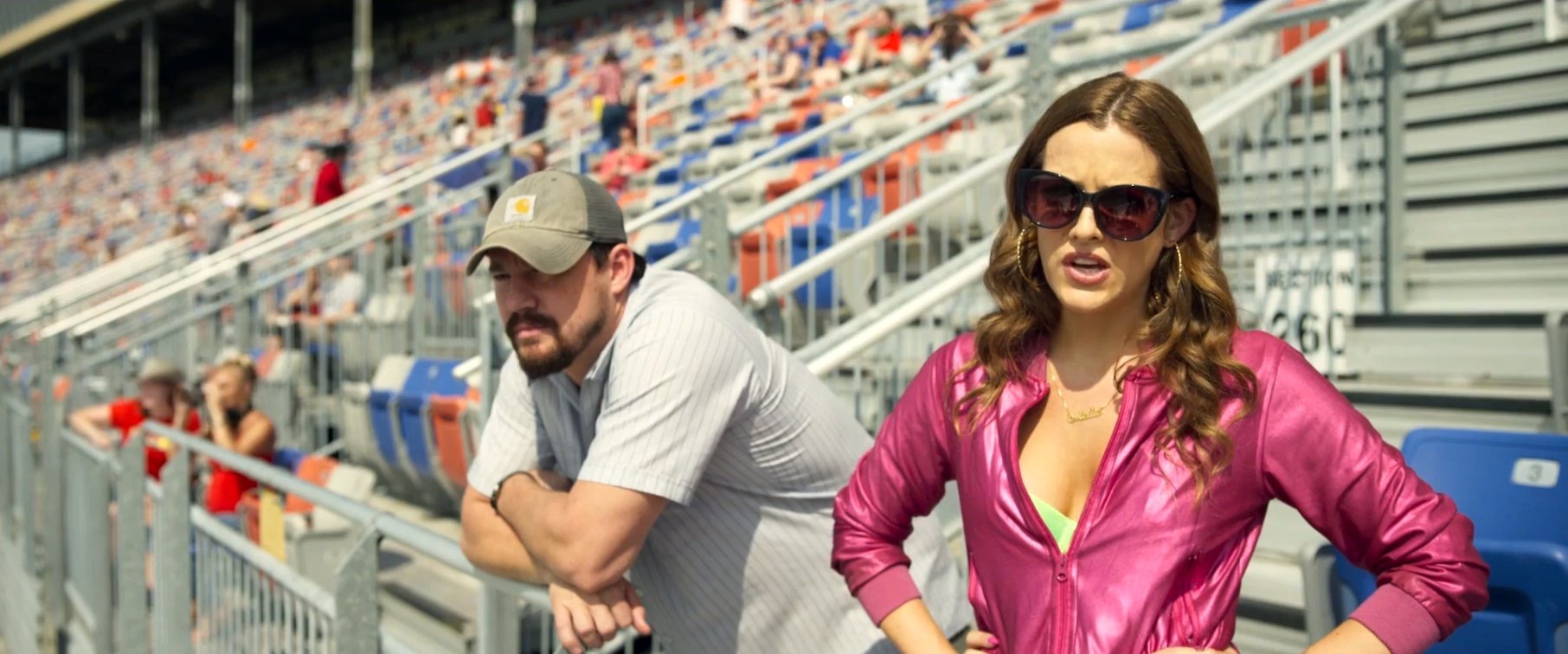
Logan Lucky won’t be as popular as Ocean’s Eleven but it doesn’t have the big money behind it to reach those peaks. Indeed, as of 21st August 2017 it is recorded as having the 25th worst opening weekend for a 3000+ cinema release film of all time.

If it fails to make its money back it will be a disaster that would tell you nothing about the quality of this picture.

Film review: Dunkirk (Christopher Nolan, 2017)

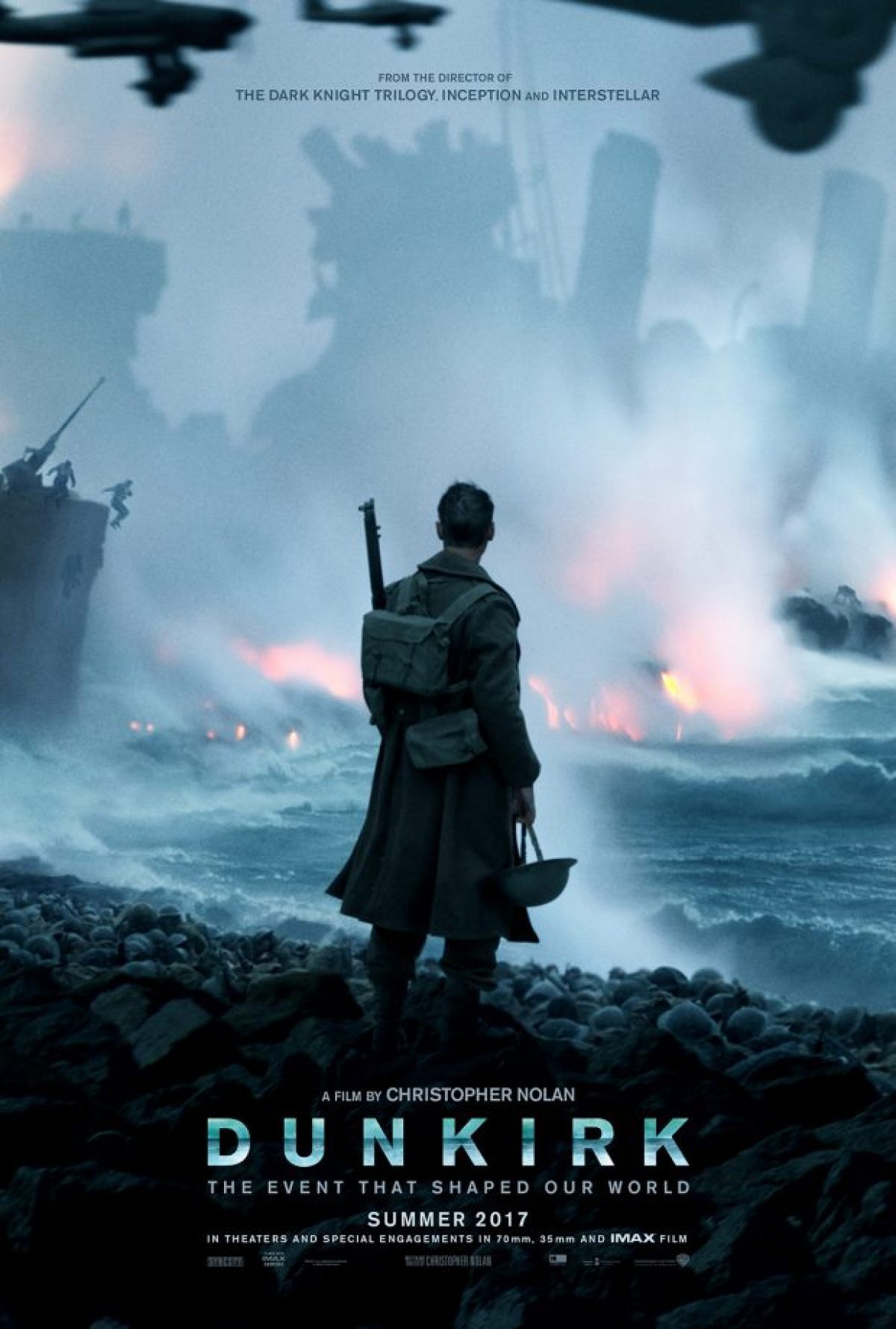
When Christopher Nolan’s latest project was announced to be a big-screen interpretation of the famous evacuation of the Allied troops from Dunkirk beach in May 1940 during World War II, it seemed like an unusual choice. His recent output has concentrated on science fiction and fantasy; between directing the Dark Knight trilogy and his subsequent involvement with the Man of Steel films, he also found time to craft two epic science fiction films in the form of Inception and Interstellar.

A war epic felt like a shift into reality. Whilst nobody could doubt his credentials, such a film would certainly rely more on realistic-looking non-CGI special effects. It’s also true that getting these effects wrong would have ruined the authenticity of his art.

dunkirk

In the run up to the release, the controversies and concerns trickled over the media, though they were far outweighed by the plaudits from those lucky enough to see the film in previews.

One of the biggest concerns was the casting of pop singer Harry Styles in one of the lead roles. I can confidently say that any worries about his ability to act are completely unfounded. He does an excellent job in his debut role.

The entire cast are excellent. The most well-known amongst them – Mark Rylance, Cillian Murphy, Kenneth Branagh and Tom Hardy – need no praise to confirm their ability. It is the newcomers that really shine, amongst them Fionn Whitehead and Tom Glynn-Carney. The latter is a real coup for Nolan, having only acted on stage previously and even then in small quantities. He clearly has a bright future ahead of him.

Visually, the film is stunning. Everything feels real, from the harshness of the conditions to the shock of the relentless attacks, and contributes to the most stressful and involved journey I’ve been on during a film since The Revenant. It is an ordeal from start to finish, with the stress reflecting in a small way exactly what the soldiers were going through at the time.

Nolan has made a bold but effective choice in the non-linear storytelling method utilised. It is told in three intertwining parts that slowly converge into one storyline. In ‘The Mole’, the soldiers stranded on the Dunkirk beach (Styles, Whitehead and Aneurin Barnard) have a gruelling week-long escape story as Branagh’s Commandor Bolton repeatedly tries to execute an escape route for his men. In ‘The Sea’, Rylance’s Mr Dawson takes his son Peter (Glynn-Carney) and his friend George (Barry Keoghan) across the English Channel on a leisure boat to rescue evacuees, picking up an unnamed British soldier (Murphy) along the way, in a story that spans one day. In ‘The Air’, Tom Hardy’s RAF pilot Farrier’s story takes one hour to complete as he and Pilot Officer Collins (Jack Lowden) take out enemy planes in their Spitfires. As these play out, we often see visual reminders from the other storylines that serve to anchor each one alongside the others. The stories feel inextricably linked from the start, but it’s a joy to see them play out so perfectly together.

Hans Zimmer’s score is effective in unsettling the viewer throughout. It was explained recently in a fascinating article on Business Insider. “There’s an audio illusion, if you will, in music called a ‘Shepherd Tone'”, Nolan informed them. “It’s an illusion where there’s a continuing ascension of tone. It’s a corkscrew effect. It’s always going up and up and up but it never goes outside of its range. And I wrote the Dunkirk script according to that principle. I interwove the three timelines in such a way that there’s a continual feeling of intensity. Increasing intensity. So I wanted to build the music on similar mathematical principals. So there’s a fusion of music and sound effects and picture that we’ve never been able to achieve before.”

This effect is never more evident than during the final climactic moments as the score track ‘The Oil’ plays out. It’s simply breathtaking.

Christopher Nolan has made a career out of crafting cinematic experiences that feel part of one person’s vision. Like other contemporary directors like Quentin Tarantino, Wes Anderson or Nicolas Winding Refn, they are experts in their field partly because viewers can watch their films and within seconds recognise their work. They are auteurs. That Nolan seems to be achieving this in such a wide gamut of genres is all the more remarkable.

Dunkirk is a film you have to see right now. It is the film you have to see right now.

Film review – The Beguiled (Sofia Coppola, 2017)

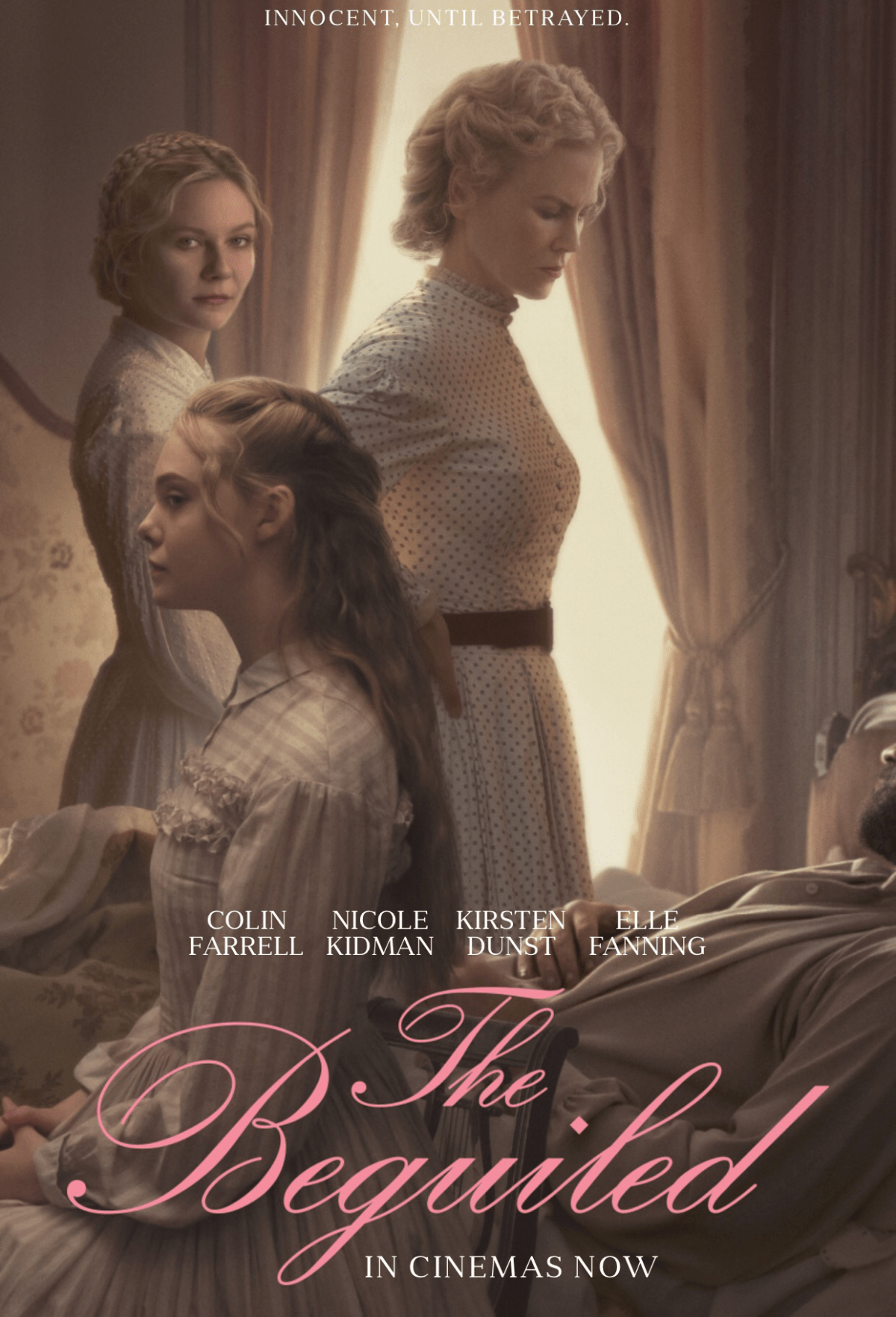
Sofia Coppola’s choice to take on ‘The Beguiled’, adapted from Thomas Cullinan’s 1966 novel ‘A Painted Devil’, could be considered a bold move. The novel served as the source material for Don Siegel’s 1971 film, also titled ‘The Beguiled’, with Clint Eastwood taking the lead role. Its popularity is evidenced by its 93% Rotten Tomatoes rating. A classic story about a soldier starring an all-time great film actor.

A simple remake would be drab, especially by Sofia Coppola. To reposition the whole story from the perspective of the women involved is a brilliant move and a gamble that pays dividends. The result is a swirling story of suspicion, falsities and lust that puts the central trio of Nicole Kidman, Kirsten Dunst and Elle Fanning at the forefront of the repositioned and wholly captivating story, reducing the central soldier figure to something akin to a supporting role.

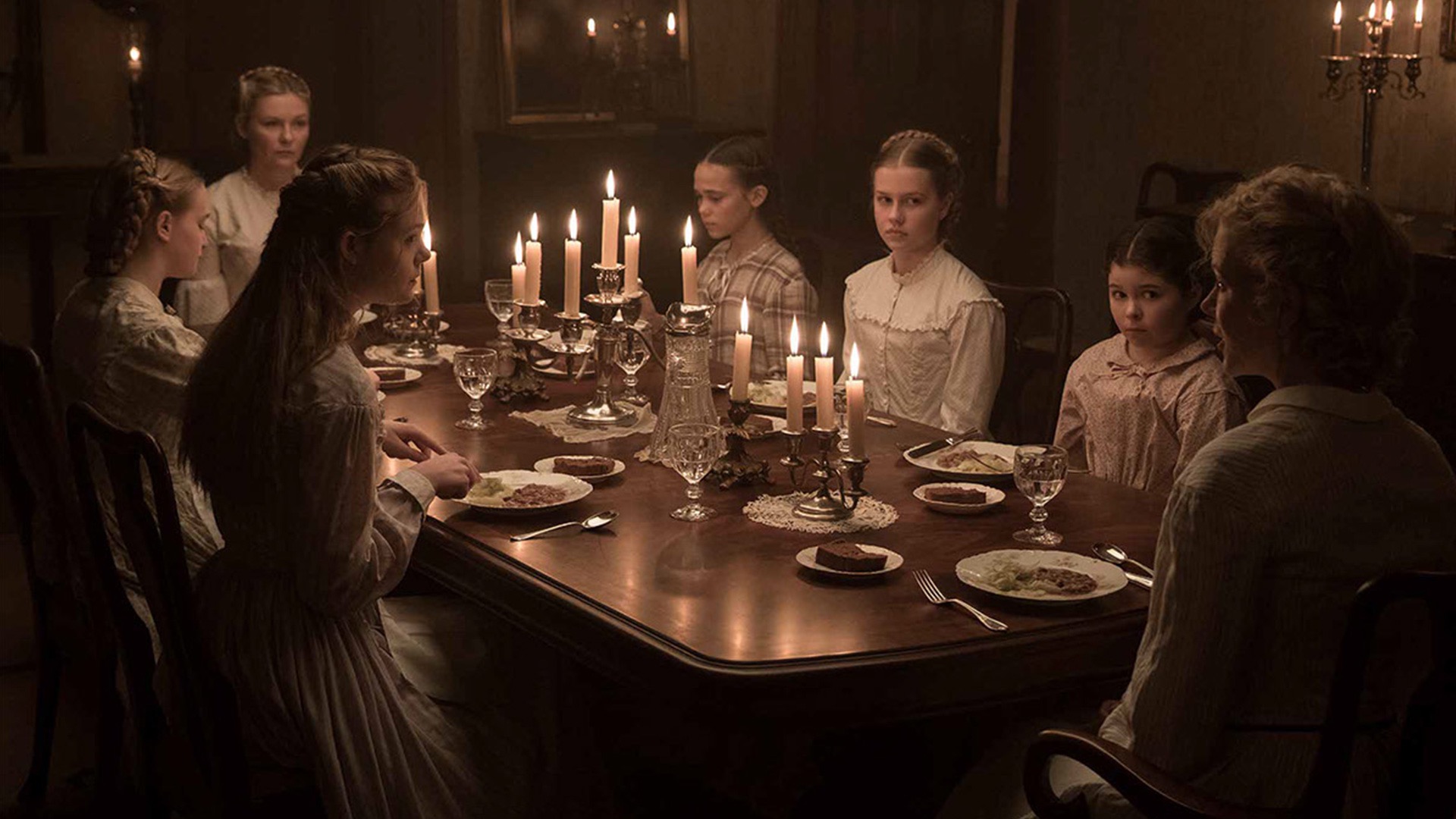
The faded dresses the girls wear suggest a ghostly edge to their lives

The film is set in 1964 Virginia, USA, a prominent part of the Confederates States in the American Civil War. A young girl named Amy (Oona Lawrence) from a local Christian all-girls school is out picking mushrooms and stumbles across an injured solider. The man, Corporal John McBurney (Colin Farrell), is a soldier fighting for the Union Army of the north who finds himself critically injured and behind enemy lines. She decides to help him by taking him back to the school grounds. The head of the school, Miss Martha Farnsworth (Kidman), treats his wounds and nurses him back to recovery, whilst teacher Edwina Morrow (Dunst) and older student Alicia (Fanning) become immediately interested in this mysterious man who has unexpectedly entered their lives. This is the perfect invitation for McBurney, with little to lose, to begin a charm offensive and attempt to stay at the school and avoid returning to the war.

img_2290

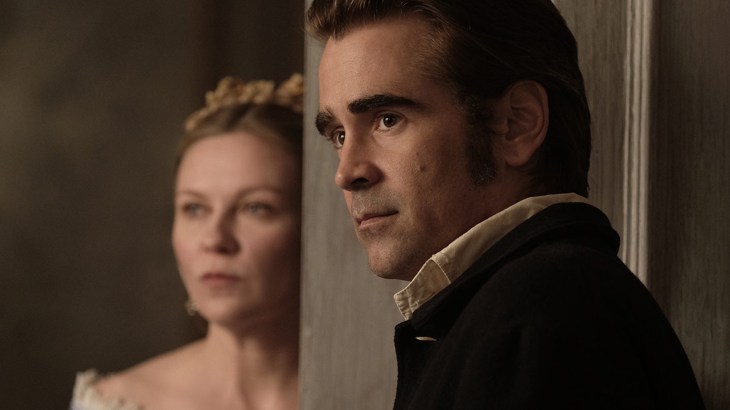
A captivating scene between Farrell and Dunst


McBurney may have been reduced to a supporting role, but Colin Farrell makes the most of his screen time to make sure the frenzy of interest is well justified. As in the novel, the character is a man of Irish heritage and Farrell plays on the stereotypes of a cheeky and charming Irishman to great effect. His character needs to stay in the school for as long as possible and he does his best to ensure everyone there doesn’t want him to leave. For Amy he offers a best friend and father figure, for Alicia he offers lust, for Edwina he offers the chance to escape and for Martha he offers intelligent conversation and companionship. This plotting is ultimately his downfall, and when it is abruptly halted Farrell is equally adept at exploding with anger – the juxtaposition against his charm making his performance all the more shocking.


img_2292

Dunst and Farrell

Coppola has crafted a film that lives in a completely different time to that of her last film, 2013’s The Bling Ring. It was a move she actively sought to make, that film inhabiting an entirely more ugly modern world of theft, celebrity and social media that marked a departure from the norm for the director. It was a very good film, but was less well received than the likes of Lost In Translation and The Virgin Suicides; films that have helped define her as one of the most distinctive and identifiable directors in modern cinema. If The Bling Ring failed to speak the language we were used to, Coppola makes sure her voice is deafening in The Beguiled.

It is Dunst that eventually becomes the standout performer in a strong ensemble cast. She has been through a lot on film with Sofia Coppola, from a 15-year-old lustfully oppressed girl in The Virgin Suicides, to a precocious queen in the form of the titular Marie Antionette. In The Beguiled, Edwina is a character that could feasibly be lost alongside strong showings from Fanning and Kidman in roles of women who more clearly know what they want. Edwina is far more nuanced, at a juncture in her life where she feels lost. She is a woman who feels she is losing time and wasting her best years in a place far removed from a life. When Farell asks her what her one truest wish is, she simply responds that she wants to go as far away as she can from her current life. In the end, it was this character that I felt most sorry for, far more so that McBurney or any of the other girls.

For anyone wondering whether or not Coppola had lost her knack after an extremely strong start, a steady middle and a potential blunder in the form of A Very Murray Christmas, you will be pleased to know that The Beguiled is 100% a return to form. It may not go down in history as a great – as is the case with Lost in Translation – but it’s a fine film indeed.

Note: For further reading on Sofia Coppola’s response to controversies surrounding the omission of a slave girl from the original novel, read this article. I don’t see it as relevant to the discussion on the film so haven’t mentioned it in the main body.

Film review – The Circle (James Ponsoldt, 2017)

“Knowing is good, but knowing everything is better.”

So says Eamon Bailey, Tom Hanks’s character in the new science-fiction thriller The Circle. Well, you should take his advice. Knowing that this film is one you should watch for yourself is better than believing the dismissive reviews, because the fast-tracking to direct-to-streaming does a vast disservice to film that is both thought provoking and well executed.

The film stars Emma Watson as Mae, a young woman who begins a career at the titular company The Circle, working as a help desk assistant. She is helped through the door by an old friend called Annie (Karen Gillan), who has a considerable level of seniority at the company. It is headed up by the Steve Jobs-like Eamon Bailey (Hanks), a believably powerful visionary and motivational speaker at the top of the company. We follow Mae as she journeys into the company, becoming the saccharine champion for its upcoming products and turning herself into a genuine celebrity by becoming “transparent” and having live videos of her life 24/7 on the platform SeeChange.

It’s like she looking in a Black Mirror

When I first saw the trailer for The Circle, I was sat in an AMC cinema in New York. It looked absolutely fantastic at the time and I’d already added it my my mental list of films I needed to see this year. I was, therefore, shocked to find out that it was side-stepping cinemas here in the U.K. and heading straight to Netflix. The production and distribution companies will certainly have their reasons for doing this – namely the critical planning and commercial failure in the U.S.A. – but I can’t help but think that it hasn’t been given a fair chance.

If you’re a fan of the Charlie Brooker series ‘Black Mirror’, you will be forgiven for feeling a sense of familiarity with the film. Not only is the story exactly the kind of thing that would be covered by Brooker’s brilliant series – indeed the recent episode Nosedive is a clear touch point – but the visual realisation feels like it is part of the same universe. As the page fills up with comments, likes, stats and charts, engulfing Mae as she carries on with her normal day-to-day life, I couldn’t help but wonder if there was a common element across the two productions. That said, Dave Eggers’s original novel was released in 2013 so it is quite feasible that it served as inspiration to Brooker, though the visual similarities are inescapable.

Tom Hanks plays Steve Jobs

This is a film that utilises Watson’s undeniable talents as an actress to good effect. Her character goes on a journey and Watson’s performance allows us to join her on it, despite some convenient jumps in her development. Her changing relationship with her family and best friends Annie (Gillan) and Mercer (Ellar Coltrane) are the backbone of the film. There is, of course, an extra poignancy with her parents as both Bill Paxton and Glenne Headly unfortunately passed away after filming was completed.

John Boyega, through no fault of his own, is something of a let down. His character, Ty, is one of the more obvious loose ends in the film. There is almost certainly a cut of this film that exists with more Boyega included. Instead, we are left with a character that looks on with menace in the background as the plot develops around him. His character is a co-founder of The Circle but he has fallen out of love with what his company has become. There’s a lot to work with there. Why not have a meaty argument with Hanks’s Eamon to reinforce his feelings?

This is not the Star Wars and Harry Potter crossover you were looking for

Indeed, there also seems to be a whole segment dropped from the film where Annie spirals into depression following Mae’s developing successes within The Circle, which left me wondering if I’d missed a whole segment out of the film (I hadn’t). Her jump from focused career woman to nervous wreck happens in an instant, apparently in the space of one short seminar. It’s this kind of thing that makes me wonder exactly who was calling the shots on the editing and whether they’d be better suited as a tree surgeon.

The 18-35 market in the U.K. would have been excited by this kind of film and it’s a failing of the marketing research that this wasn’t spotted. Ironically, I’m confident they have looked at analytical data and spotted the popularity of ‘Black Mirror’ on U.K. Netflix, which has led them to releasing it directly on to the platform. It’s just disappointing that this will never be released at cinemas.

To look down the listings at my local cinema and see a summer schedule full of mindless sequels, I can’t help but think the audience’s lack of imagination is being encouraged and nurtured by the larger studios’ inability to take risks.

I’m sad for everyone involved that this film won’t get a wider audience and I’m sad it was critically panned. There is an important message about modern life and the role of social media here. It’s a warning. 

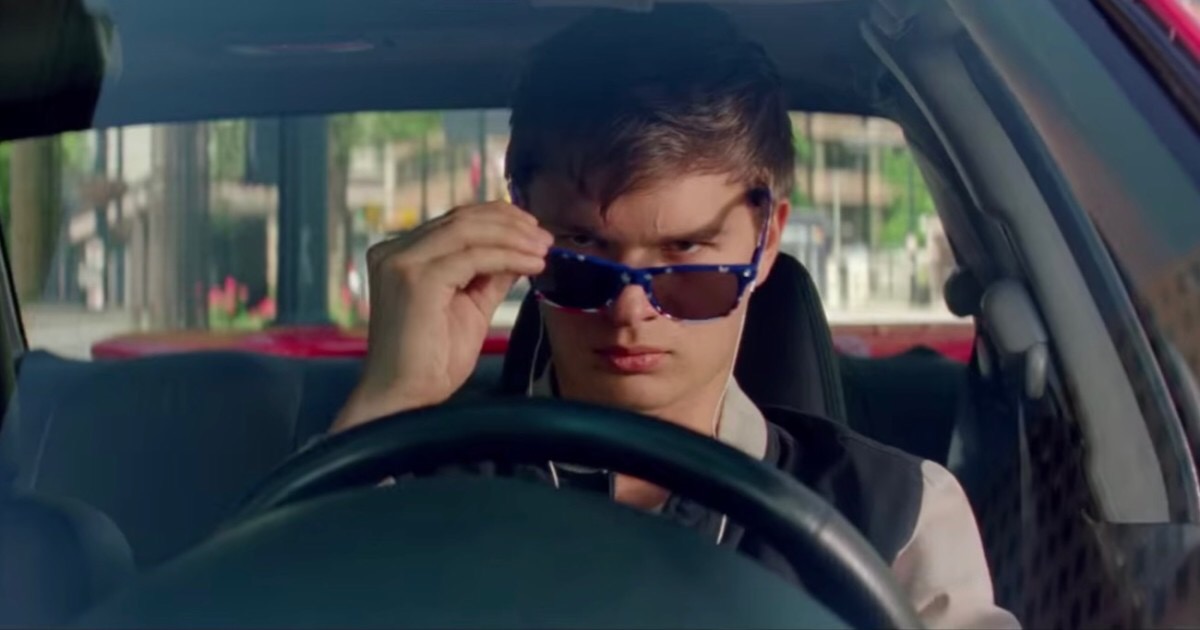
Film review – Baby Driver (Edgar Wright, 2017)

There aren’t many moments in cinema where you start to watch the opening scene and an uncontrollable giddy smile engulfs your face, such is the joy of what is unfolding on the screen. It needs to be a brilliant idea, executed to perfection and in a language that speaks to you.

Baby Driver, Edgar Wright’s latest cinematic masterpiece, achieves just that. But the moment I knew it was a truly great film was when I realised the credits were rolling and my smile hadn’t left.

Oh, Baby!

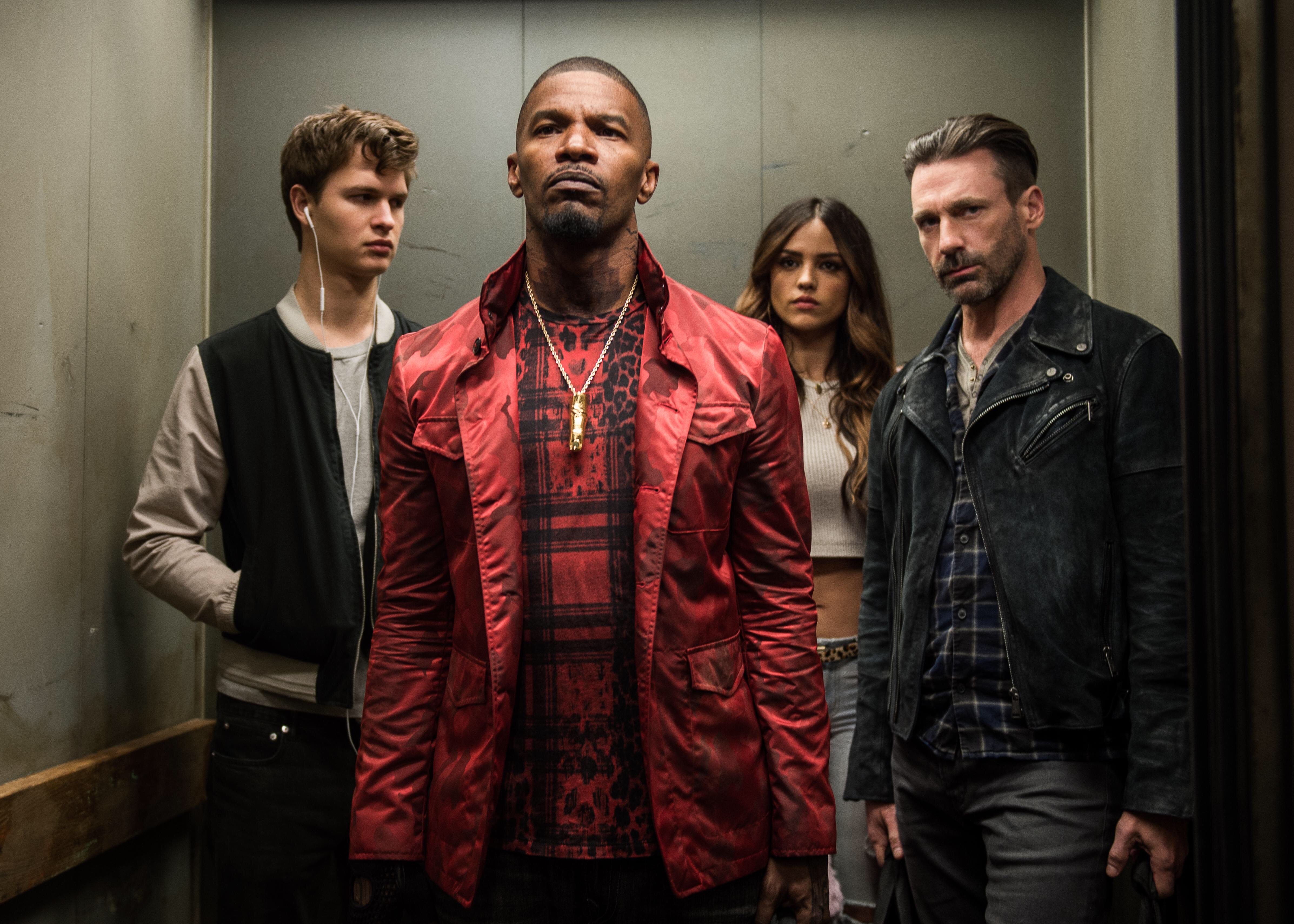
The titular Baby is played by the young Ansel Elgort, who many will recognise as Caleb Prior from the Divergent film series. Baby is a young man who suffers with tinnitus, a whistling hum in the ear, which he got from an initially mysterious childhood incident. He works as a getaway driver for a heist masterminder named Doc (Kevin Spacey), who counts amongst his rotating team of goons a highly-strung Bats (Jamie Foxx), passionate love birds Buddy (John Hamm) and Darling (Eiza González), Griff (Jon Bernthal) and Eddy No-Nose (Flea). Lily James also stars as a waitress named Deborah.

To drown out the noise, Baby has a series of iPods to suit his moods. These are essentially soundtracking his life with a mixture of classic tunes that also serve as the soundtrack to the film, from Beck to Sam and Dave, The Commodores to The Damned.

It is these playlists that also serve as the film’s soundtrack, with sounds and visuals perfectly in sync with one another. For fans of music, and in particular soundtracks, Baby Driver is an absolute dream. The music is the backbone, catalyst and cherry on the icing, all at the same time. It’s a remarkable achievement.

If the opening sequence seems familiar, Wright used the same scenario in 2003 for the music video he directed for the track ‘Blue Song’ by Mint Royale. This hit the music airwaves mere months prior to his directorial breakthrough Shaun of the Dead, but watching it now you can see he probably had the idea for Baby Driver in his head as a starting point.

One of the best examples of how perfectly it works comes during the opening credits, when the first job has been completed and Baby goes to pick up some coffee from a shop near to their hideout. As Bob and Earl’s ‘Harlem Shuffle’ is played through his earbuds and the backdrop becomes subtly flourished with graffiti, shop names and visual signposts, it was clear that something special was unfolding before my eyes. That this was done as a one-shot makes it all the more beautiful.

The film goes far and beyond being just a glorified music video. The car chases are breathtaking from the get-go, and there’s no let up as the story progresses. They’re believable and easy to follow, with no cheap cuts to hide poor editing and hide continuity – something of an epidemic in cinema in the 21st century.

Many of the actors are a little out of their familiarity zones with their characters, but it’s obvious that the likes of John Hamm and Jamie Foxx are taking great pleasure in being allowed to indulge their acting abilities. Kevin Spacey may be on more familiar ground, but it doesn’t make for poor viewing in the slightest.

I think her name is Debra! Or Deborah…

There’s a great use of the song ‘Debra’ by Beck in a scene that cements Baby’s relationship with Lily James’s waitress. They’re both stuck in a rut and in need of a route out, so their inevitable desire to be together is an expected story arc. Only Edgar Wright would, at this point, think it was a good time to drop in a song about a man wanting to have a threesome with two sisters. It’s a hilariously sweet moment that comes just at the right time in the film, softening up the audience before the rollercoaster second half of the story.

The fact that Elgart spends the opening thirty minutes dressed in an outfit that is very reminiscent of Han Solo shouldn’t be overlooked either. Elgart came close to being cast in Disney’s upcoming problematic Han Solo standalone film, before being overlooked in favour of Alden Ehrenreich. It’s clear that the coolness of Harrison Ford’s character is something Wright was trying to remind the audience of. However, Wright recently denied the connection in a Twitter Q&A, saying that the similarity was purely coincidental.

Similar to Han Solo? Wright is denying any links.

I just can’t be effusive of the film enough. It’s something I could watch time and time again and I’m certain I’ll be getting enjoyment out of it for years to come.

Baby Driver could well be the greatest film of Wright’s illustrious career. If you’ve not been taking notice yet, now’s the time.

Film review – Okja (Bong Joon Ho, 2017)

Remakes, sequels, animated children’s film. Say what you want about the film studios, but if they’re judged solely on how to make money from well-marketed films, then they know how to do it. But when you look at the UK box office for 2017 on an artistic level, the top 10 leaves a lot to be desired.

Of the top ten, only La La Land isn’t classed as a remake, sequel or children’s film. You have to stoop as low as numbers 16, 17 and 18 to find Lion, Split and Get Out respectively, to start really finding good original cinematic enjoyment for adults wanting something fresh to think about.

Paul Dano

So whilst Okja, Bong Joon Ho’s latest futuristic sci-fi action film, was booed at Cannes Film Festival when the Netflix logo appeared at the start of the film, it isn’t a surprise that the popularity of the service has really grown exponentially in recent times. In the month of June, both Okja and the excellent The Circle landed on the service, along with women’s wrestling series Glow and the new drama series Gypsy, which stars Oscar nominee Naomi Watts. I’ve finished watching all but Gypsy, and it was often the case that I actively decided to stay at home to watch these instead of going to the cinema.

My decision wasn’t financially motivated. It was because they looked like better options.

‘Superpig’ just doesn’t have the same ring to it

Okja tells the story of a new breed of superpig that has been created by the Mirando Corporation as the flagship programme for new CEO Lucy Mirando (Tilda Swinton), who has inherited the company from her controversial family and is looking to create a better image for their brand. In 2007, 26 superpigs were distributed around the world to various farmers. Now, in 2017, the corporation will crown the best pig as they simultaneously launch products using the meat from the huge slaughterhouses being used to house and kill 1000s of the new species. The ten-year-old daughter of one of the farmers, Mija (Ahn Seo-hyun) has grown close to the titular superpig and attempts to stop the competition from going ahead, teaming up with a band of animal rights activists that include Jay (Paul Dano), K (Steven Yeun) and Red (Lily Collins). Jake Gyllenhall also stars as eccentric television zoologist Johnny Wilcox.

Tilda Swinton as Lucy Mirando

Bong Joon Ho has created something exceptionally special here, getting excellent performances from all of his lead cast. But it is the performance by newcomer Ahn Seo-hyun that really captivated me. The opening sequence of the film may be all bravado and sensory overload, but the film soon settles into a much more naturalistic tone as we learn about the relationship between the young girl Mija and her best friend and childhood companion Okja. Its remarkable that the relationship feels so visceral given that there is nothing but animation for the superpig. There was a foam head made in the likeness of the eventual CGI creature to give her something to interact with. It’s an age-old technique but one that has resulted in an intimate and captivating coupling.

Jake Gyllenhall as Johnny Wilcox

The message contained within the film is at least on some levels for the viewer to consider the origin of the meat they are eating. “Okja is real,” director Bong Joon Ho said in a recent Independent interview. “It’s actually happening. That’s why I rushed making Okja, because the real product is coming.”

I personally felt disgusted by the end of the film and it brought back memories of Robert Kenner’s 2008 documentary ‘Food, Inc.’ Thry weren’t particularly positive memories, but they certainly were effective.

Given so many people have Netflix and can watch this film at no extra cost, it’s a no-brainer to seek it out and watch it. It might be the start of a new era of high quality original cinema heading first to home streaming platforms. Given the state of the year-to-date box office, it’s a movement everyone should be supporting.