The Seven Year Itch (Billy Wilder, 1955)

Billy Wilder’s 1955 romantic comedy The Seven Year Itch has proved to be one of his most popular films. It was his first pairing with Marilyn Monroe and whilst it fails to hit the peaks of 1959’s Some Like It Hot, it still has enough redeeming qualities to warrant its popularity.

The film concerns married man Richard Sherman (Tom Ewell), who is experiencing what psychologists refer to as the seven year itch – after seven years of marriage many experience discomfort brought on by extended monogamous relationships. Richard becomes infatuated with a girl (Monroe) living above his apartment whilst his wife and child visit Maine for the summer to escape the Manhattan heat. As he tangles himself up in his own mind his tendency to daydream takes over, a matter exacerbated by his increasing closeness to his new friend.
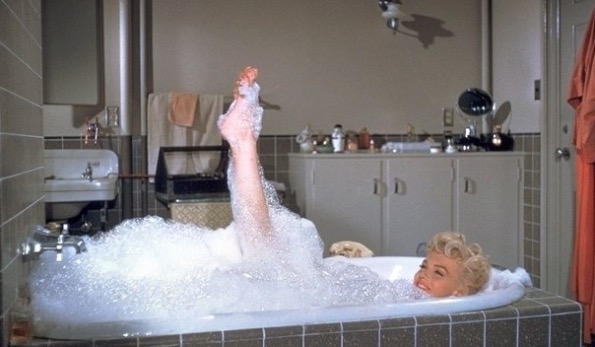
Marilyn Monroe is a breath of fresh air when she first appears.

It is these daydreams that provide most of the laughs. As the film progresses they become more surreal and the window into Richard’s mind becomes a portal to a place full of fear and panic. Ewell’s performance can feel a little forced at times and the actor fails to endear Sherman to the viewers, an essential requirement when we’re watching him attempt to commit adultery. Perhaps his acting was better suited to the Broadway stages where the subtleties of emotion need to be overplayed to ensure the back row sees it. After an estimated 900 performances in the role it would be hard to unlearn that. This would ultimately prove to be his defining role.

The script is the perfect platform for Monroe to unleash the naïve and bubbly persona that served her so well throughout her career. It works on this level and she’s a breath of fresh air when she first appears. 

A discussion about this film can’t go very far without mentioning the famous subway air vent scene, where Monroe’s dress flies up in the breeze created by the train passing by underneath. It is perhaps one of the most iconic shots in any film ever released. It doesn’t quintessentially add or detract from the story itself, so if you’re watching just for that scene you may be a little underwhelmed. Indeed, you may never see what you hope for – the famous full-length photo the world is familiar with was taken at the original shoot, which was unusable due to crowd commotion. The scene later had to be recreated in a studio. At no point does the full-length shot appear.

The film was actually name-checked in Sabrina, Billy Wilder’s previous film released a year earlier. It’s hard to resist comparing the two films. Side-by-side, this doesn’t really come close to the magic audiences had seen when Audrey Hepburn wowed the world by pairing her timeless beauty with a sublime acting performance. Monroe was never an actress of the same calibre as Hepburn and this isn’t helped by a much more shallow script.

The Seven Year Itch is available to buy on Blu-Ray now.

Film review – The Trip (Michael Winterbottom, 2010)

At first, The Trip seems like a terrible proposition. It can be summed up as follows: Steve Coogan and Rob Brydon, playing exaggerated versions of themselves, visit six Michelin-starred restaurants in Northern England to review them for an Observer article, spending most of their time together bickering over who can do better impressions of a number of famous people. Well, about seven famous people.

Somehow, over the course of six episodes in the first series, they make it a success so consistently I was left wondering how such a simple idea could fail to work when the two central characters have so much chemistry together. The whole thing is clearly full of improvisations and no matter how many times we hear Michael Caine, Hugh Grant and Ronnie Corbett, they never fail to disappoint.


Yet at the heart of the show we find that it isn’t just a whimsical improvised comedy that borders on self-indulgence, but rather a dissection of one man’s inner struggle to come to terms with the level and manner of his past successes. Coogan’s desire is to alter his legacy and change the public perception of him as a character comedian to something of more substance by taking on more serious roles. He doesn’t see himself as a comedian but as a character actor. His biggest frustrations come from interchanges with Brydon who discusses their similarities, which is hard to receive from a man who Coogan sees as simply an impressionist.
In many ways, parallels can be drawn with Michael Keaton’s recent performance in Birdman, a role that won Keaton an Oscar. In that film, Keaton pushes himself to the cusp of a breakdown as he ploughs all his remaining money and efforts into a theatrical production that he thinks will completely overhaul the public perception of him. It was ironic that Keaton, in this film, established himself as an actor of serious depth in a role that exaggerated the public’s perception of his own life. Similarly here, Coogan manages to come out of the series with a huge level of credibility for his portrayal of a man striving for more, finishing the six-part series almost completely emotionally broken. It is an excellent performance from Coogan and one I’m sure he’d rather be remembered for than Pauline Calf and Alan Partridge.

On the back of this, Coogan went on to star in the Oscar-nominated Philomena, and duly received critical acclaim for another role of real substance. Perhaps The Trip was the stepping stone onto this, but the fact a follow-up was commissioned in 2014 suggests both Brydon and Coogan know that they hit on something special in the first series.

The Trip is available to watch on Netflix UK and can be purchased on Blu-ray or DVD.

[Note] I can only apologise to the creator of the lovely alternative poster at the top of the page. I can’t give credit as the website from which it was sourced (movieweb) has lost the page. It is lovely though.

Film review – While We’re Young (Noah Baumbach, 2015)

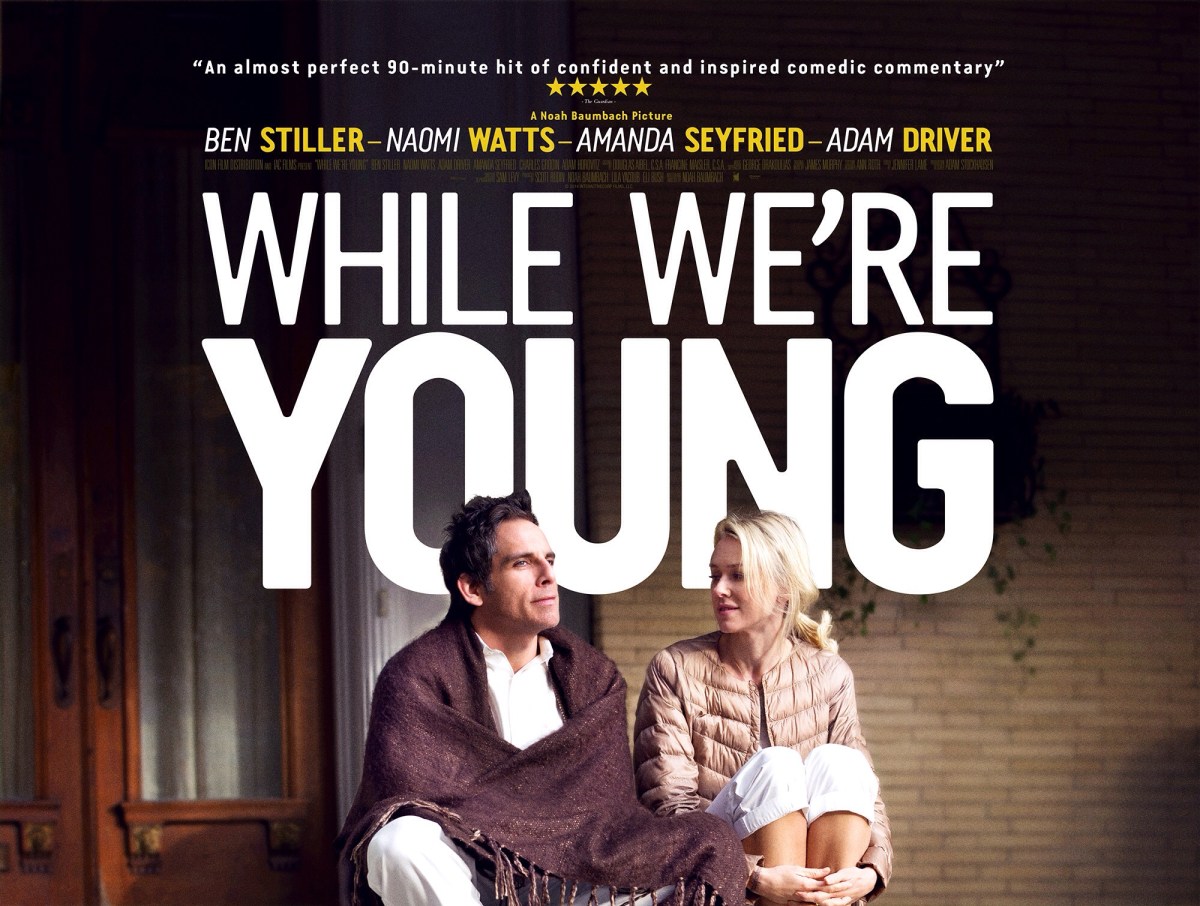
While We’re Young is the latest film from Noah Baumbach, following the recent critical successes of 2010’s Greenberg and 2012’s Frances Ha. The film stars Ben Stiller as established documentary filmmaker Josh, now struggling to find the inspiration and money to finish his current project, and Adam Driver as young aspiring documentary filmmaker Darby, who seemingly hits on endless streams of ideas without much effort. Naomi Watts and Amanda Seyfried also star as Josh’s wife Cornelia and Darby’s wife Jamie, respectively, though the men take centre-stage as the focal point of the slow-reveal story.

This is an excellent film with an intelligent theme. As is often the case with films about filmmaking, the central characters are extremely rich in backstory and well-realised. Ben Stiller himself is an actor, director, producer and writer (his last feature as director being 2013’s admirable The Secret Life of Walter Mitty) and I’m sure he drew on his experiences to add depth to his character. He brilliantly paints the frustrated picture of a man desperate to stay true to the values of filmmaking whilst at the same time reacting in disbelief that nobody else wants to follow that same journey with him. It’s yet another example of Stiller at the top of his game and it’s a shame that the box office receipts for his more serious roles are inevitably dwarfed by those of, for example, the Night at the Museum franchise.

Naomi Watts and Ben Stiller co-star in While We're Young

Naomi Watts and Ben Stiller co-star in While We’re Young.

Both couples give the impression of aspiring to live out of their own time and the emotional plot devices are driven by the fact that the elder couple is far less comfortable trying to fit in with the younger generations than vice-versa. For Darby and Jamie, attempting to remember a morsel of information they’d forgotten is the source of great fun; they are determined to avoid becoming reliant on modern technology when it is to the detriment of thought-provoking discussion. Conversely, Josh and Cornelia are much quicker to jump onto their tablet device to find their answers as they would rather find the solution as quickly as possible. This was initially a clever role-reversal to aide character development, though it becomes a key part of the plot further down the line (and one which I won’t go into here).

One of my favourite aspects of the film is the excellent soundtrack. James Murphy (of LCD Soundsystem fame) provides the original score and has compiled a playlist of original songs, including Paul McCartney and Wings, David Bowie and Haim. The song choices mix the old and new in a way that underlines how little the musical landscape has changed, but it also serves to reflect the dovetailed lives of our four main characters. The songs sit side-by-side with one-another and the particular choices are all artists that would be deemed fashionable by the Topshop generation, either in a serious or ironic way.

It is a critical time in Adam Driver’s career. Regardless of whether the upcoming Star Wars films are successes or flops, it is inevitable that the careers of the main stars will be defined for the foreseeable future by such a massive franchise. Both Driver and his co-star Oscar Isaac have been rapidly adding to a varied list of assured performances in the last year or two, though less has been happening with John Boyega and Daisy Ridley, who are being touted as the main stars. This could potentially be seen as a risky strategy. Driver can be happy that he can add this excellent performance alongside his roles in Lincoln and Inside Llewyn Davis as prime examples of his acting ability. Oscar Isaac is already well-established with plenty of huge roles under his belt. Time will probably prove that this was a wise move for their post-Star Wars careers.

This film is highly recommended and should be sought out if you get the chance. You simply can’t argue with such an intelligent script, especially when it’s delivered in a package like this.

While We’re Young is on general release at cinemas in the UK now.

Dear White People (Justin Simien, 2014)

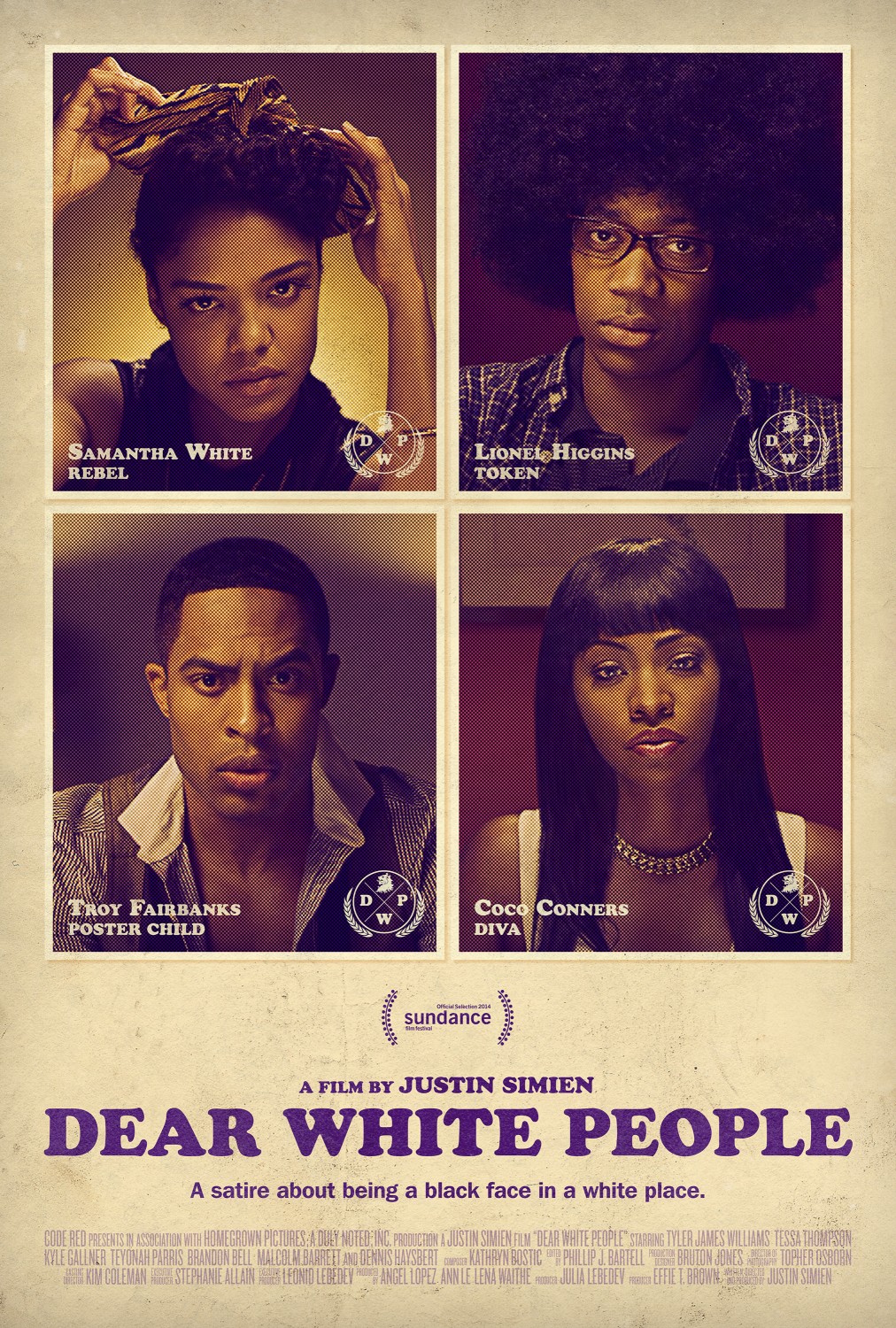
The second of two films I saw at this year’s BFI Flare Festival, Dear White People is an American satirical comedy set on Ivy League Winchester University campus. It centres around several students who attend the predominantly white university, in particular: Sam White (Tessa Thompson), a sharp-tongued mixed-race film production major who runs a popular campus radio show called Dear White People, which challenges the university policies and mind-sets of both the school administration and the students in a humorous but cutting manner; Lionel Higgins (Tyler James Williams), a homosexual black student struggling to fit in and find his voice as an aspiring journalist; Coco Conners (Teyonah Parris), a black student who is secretly trying to land a role on a reality TV show set around campus, whilst simultaneously trying to garner fame through her video blog; Troy Fairbanks (Brandon P Bell), Sam’s ex-boyfriend and current school head of Armstrong/Parker, the all-black house on campus; Kurt (Kyle Gallner), a white student and son of the school’s president, who organises a controversial Hallowe’en party with a blackface theme in response to Sam’s outspoken radio show; and Gabe (Juston Dobies), Sam’s white boyfriend.

Tessa Thompson is a revelation in her performance as Sam White.

Tessa Thompson is a revelation in her performance as Sam White.

I was lucky to see this film. It was the subject of an online petition to raise awareness of the film and increase the pitiful number of screenings it received last year in the UK – just two at the BFI London Film Festival. These Flare screenings were again over-subscribed, which begs the question – why hasn’t it received a wider release? Perhaps it’s the fact it deals with some pretty hard-hitting issues whilst not losing its ability to entertain. Maybe the questions posed were deemed as too sensitive for a large distributor to pick it up. Either way, it’s a massive shame. This is a film that needs to be seen, not just because of its important content but also because it’s a fantastic and hilarious film.

Praise is due for both Tyler James Williams and Tessa Thompson. The former, fresh from his recent role in The Walking Dead as Noah puts in an assured performance as someone who himself isn’t very self-assured for most of the film. However, I’m surprised he is the cover-star of the film as, for me, the central storyline and most interesting character was Sam White. Tess Thompson (recently of Selma) is a revelation in this role, playing the angry student to perfection. It’s a character with some important opinions and without her it would have risked being just a good campus comedy, but without the hard-hitting message. When the cracks in her prickly character reveal her fragility, the results are astounding. As a character, Sam galvanises the same provocative thoughts in the students within the film as it does the viewers of the film, and there aren’t many teen-comedy characters in recent years that I remember asking such important questions of the viewer. Frankly, the performance is a revelation.

IMG_0870

The excellent acting performances reach throughout the large cast.

Elsewhere, I felt the tones and cinematography added a lot to Simien’s well crafted script and impressive performances. Topher Osborn channeled elements of Wes Anderson in the beiges and attention to detail that are clearly evident in these well-composed shots.

If you get a chance to see this film, then I heartily recommend it. As a white heterosexual British man, I inevitably felt discomfort as I sat in the cinema being challenged to think about the questions posed by the film. In many ways that was the ultimate goal and it will be a shame if the wider cinema-going public doesn’t get to see this fantastic story.

Dear White People does not currently have a wide UK release date.

Film review – Tiger Orange (Wade Gasque, 2014)

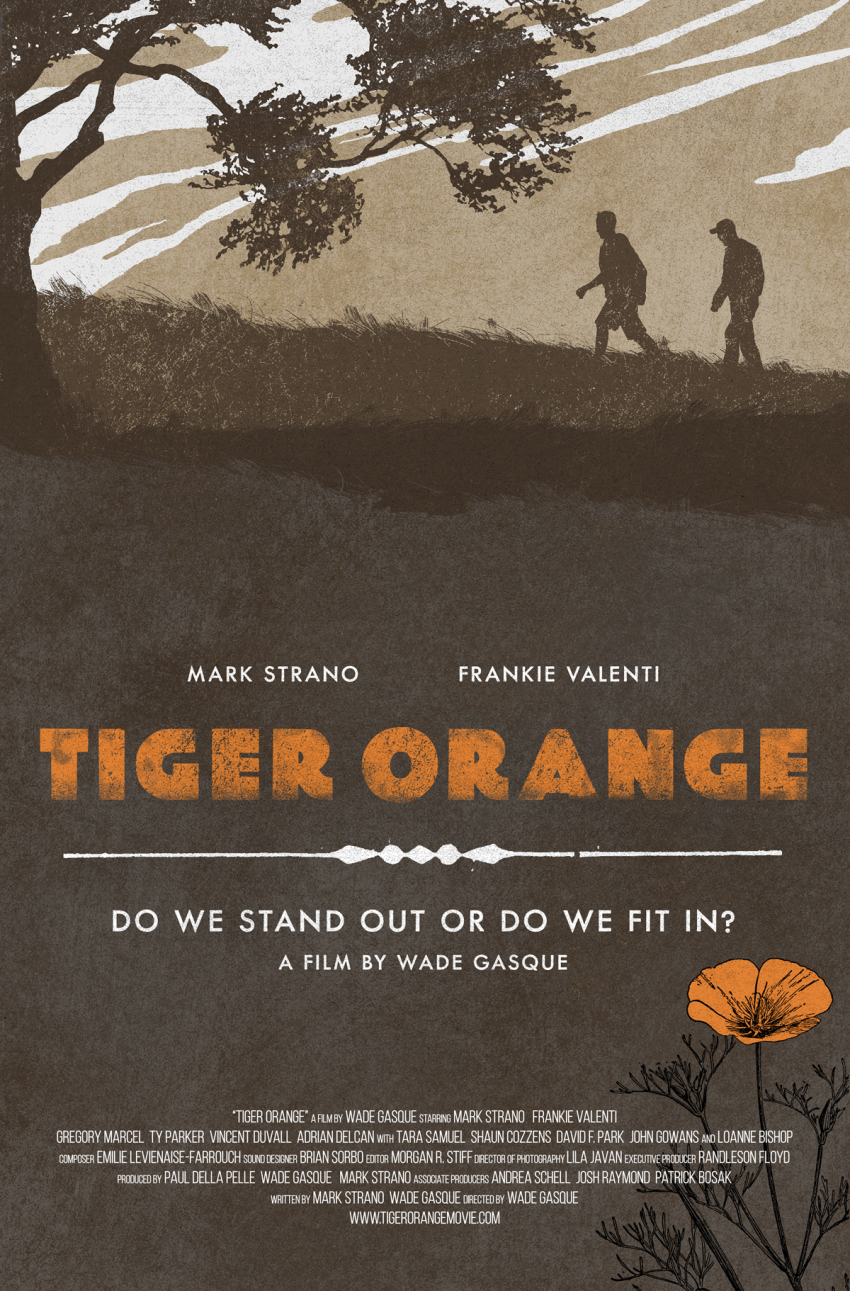
I saw Tiger Orange earlier this week when it was screened as part of the BFI Flare Festival, a two-week festival at the BFI Southbank in London that screens films with LGBT topics at their heart. It’s an effective piece of cinema that makes the most of its limited setting and low budget.

The premise is quite straightforward: openly gay Todd (Frankie Valenti) returns to his small Californian hometown following the death of his homophobic father (Vincent Duvall) and is reunited with his older brother Chet (Mark Strano). Seeking to hide his sexuality whilst running the family hardware store, Chet struggles to accept how open Todd is about something he has spent his life trying to hide from the local community.

Strano (centre) and Valenti (right) bring their characters to life with some really effective performances.

This storyline is a good platform for the exploration of the characters, who are well-developed in a relatively short period of screen time (76 minutes). I think the fact it is such a small community and they are living in an isolated cabin house – and sleeping in their childhood bunk-beds – means that their fast development is also quite believable. Indeed, it’s debatable whether the childhood flashbacks are absolutely necessary, serving only to underline how homophobic their father was. Other than this, it’s a tight story and there’s absolutely no wastage in present-day screen time.

I was impressed by the acting performances too, with both leads actors clearly at ease in their characters, probably drawing on some levels from their own experiences. Strano does well to hold his own in a more understated role, when lesser actors would have allowed Valenti to steal the show with a more immediate and attention-craving character. I was surprised to read that Valenti used to be a pornographic film actor, such was his performance in this film. I’m not convinced the sort of depth of character was necessary in his previous line of work.

Gasque has made the most of what was likely a relatively low budget and created something special. I doubt this will reach a wide audience globally, but those that do seek it out will be rewarded.

Tiger Orange is not currently scheduled for a wide UK release. It was recently picked up for global distribution with Wolfe Releasing.

The Babadook (Jennifer Kent, 2014)

As it’s the second of two consecutive Friday 13ths in early 2015 (there’s another one at the end of the year too, right after Halloween too – we’re being spoilt!) – I thought I’d watch and review a new(ish) horror film. The Babadook was only released in 2014, but it has become an instant hit amongst fans of the genre.

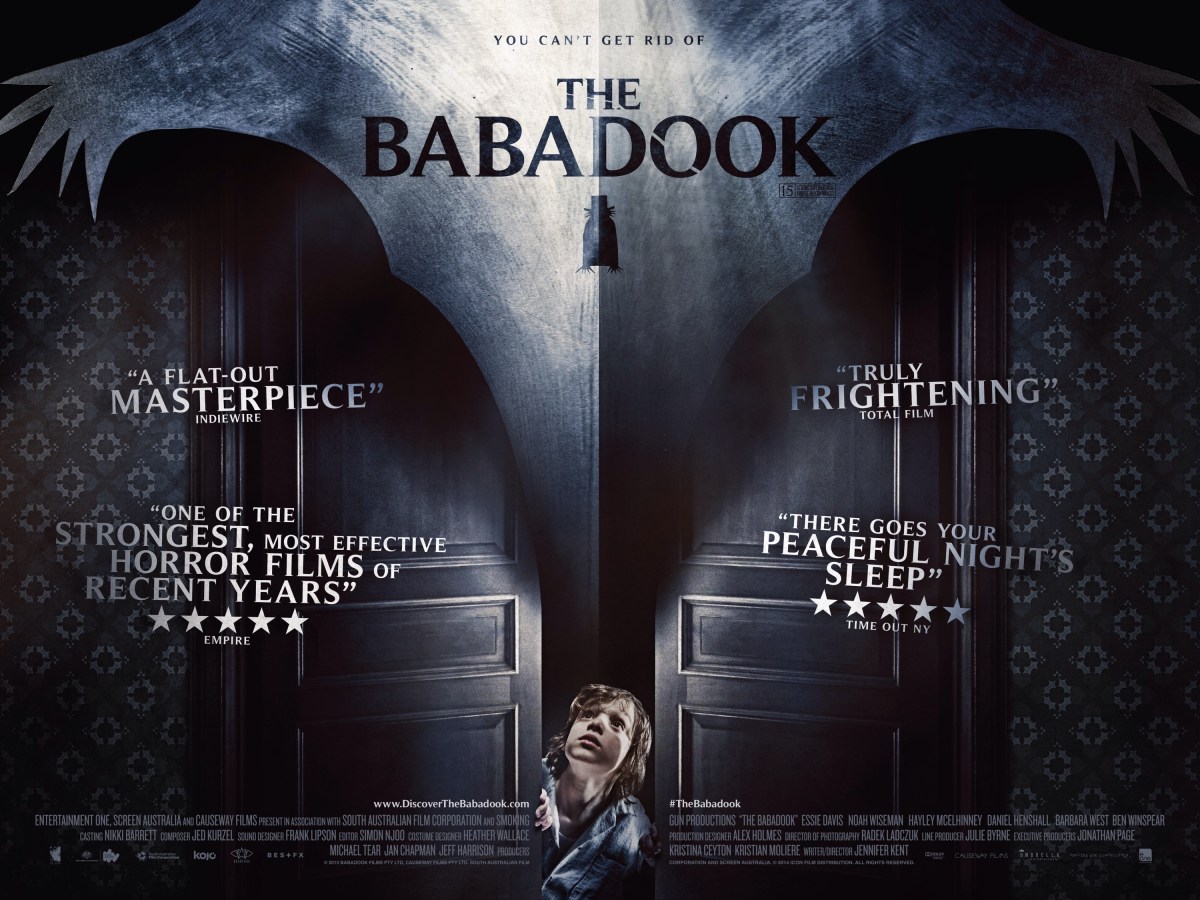
Set in Australia, the slowly unravelling story brings us into the life of a single mother Amelia (Essie Davis) and her ill-behaved son Samuel (Noah Wiseman). With Samuel struggling to sleep at night and every other option exhausted, Amelia allows him to pick a book of his choice for her to read to him before bed time. However, when he picks out a mysterious and disturbing pop-up book called The Babadook, their lives quickly spiral out of their own control and into the grasp of the eponymous character from the book.

Stylistically the film has it spot on. To keep in with the tone of the film and depressing nature of the situation, there’s rarely any clothes worn that aren’t somewhere between black and grey. The general environment is drained of colour, with the low saturation levels adding to the dreariness.

The physical book looks horrific in itself, and the slow reveal of the uniquely designed Babadook adds to the tension. I was thankful that it didn’t resort to what many horrors go for these days – a quick reveal of a poorly CGId evil character that instantly destroys any inkling of suspense or terror. Kent clearly has her finger on the pulse and is well versed in what makes horror fans tick.

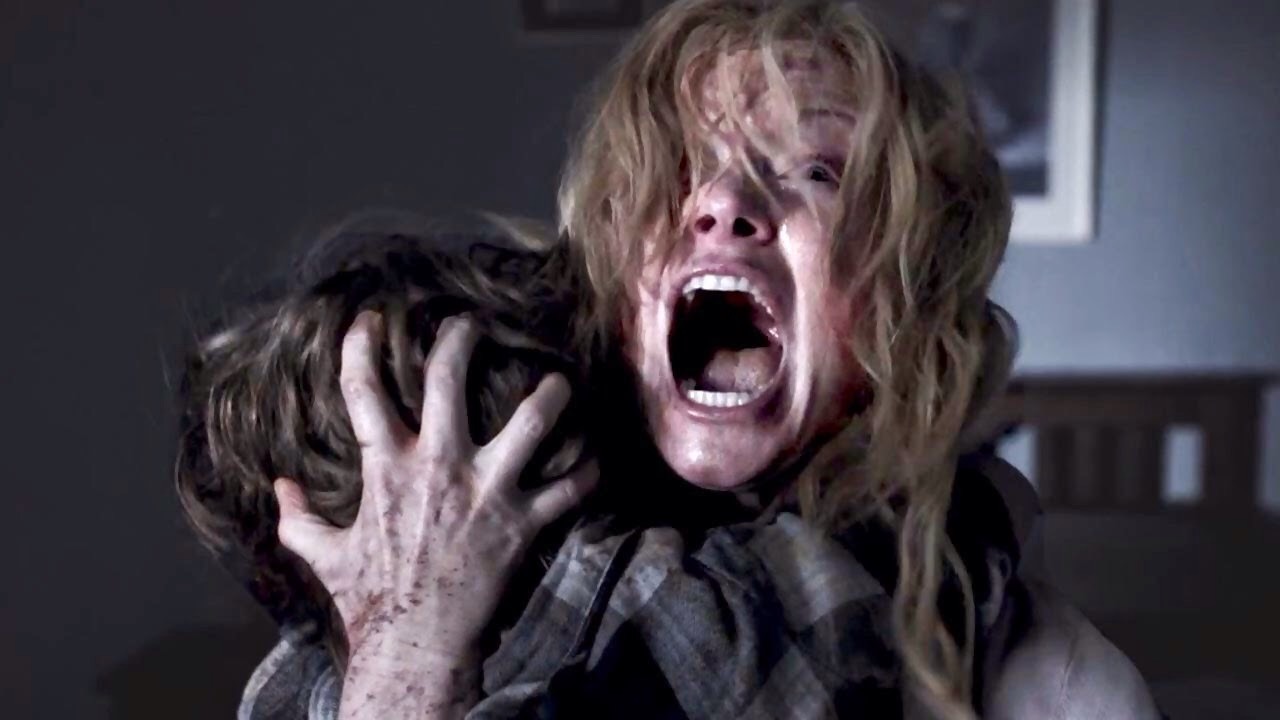
A woman realises she and her son ren't in the correct screening for Frozen Sing-a-long.

A woman realises she and her son aren’t in the correct screening for Frozen Sing-a-long.


The story is also surprisingly deep for a supernatural horror film. In its short running time of just over 90 minutes, we are nonetheless completely absorbed in the reality of the situation. This is only achievable through some well thought-out characterisation and some convincing performances from the two lead characters. Unfortunately, the same cannot be said of the support cast – clearly a choice was made to keep the pace up and the running time short by minimising any kind of depth to the friends and relatives of the lead woman. In particular, a seemingly key character is introduced in the form of her work colleague Robbie (Daniel Henshall), but he is abruptly forgotten about after about 35 minutes. I’m not saying it’s necessarily a bad thing, but I acknowledged it immediately and I was left thinking about which option was better.

Of course, horror films live and die by how much they can make you jump out of your skin. There is no problem with that here and my gut instinct is that it will thrill even the most hardened horror fan. I suggest you bring a pillow if you’re easily spooked.

If you’re in your supermarket tonight and need to get a last-minute horror film, then The Babadook is the one I have to recommend. It’s readily available for £10.99 in at least two of the big UK supermarkets and I’m sure you won’t be disappointed.

Wake in Fright (Ted Kotcheff, 1971)

Wake in Fright, Ted Kotcheff’s disturbing 1971 drama, is the story of a lost weekend of toxic self-discovery for John (Gary Bond), a young middle-class English teacher in the middle of the Australian outback. Though he plans a trip to Sydney over the Christmas break to see his beautiful girlfriend, a series of bad decisions leads him into a catastrophic mess of a weekend of gambling, hunting and alcoholism with some new acquaintances of dubious moral conscience. We go on the awful journey with him, as he gets chewed up and barely spat out the other side, all in the isolated nothingness of Bundanyabba.

IMG_0584-0

And I thought I was watching a Harvey Dent origin story.

Gary Bond’s excellent performance is paired with an equally excellent one from Donald Pleasence, an alcoholic doctor who exists without working, taking his purpose from a relentless alcoholism. His enthusiasm for misbehaving is the catalyst that leads our main character further down a slippery path, just when we hope he’ll pull himself out of it. It’s a show stealer, and to compliment this his Australian accent is flawless.
The colour wash throughout the day scenes are scorching hot yellows, reds and oranges. It’s a clever technique to make you feel the heat. You can see the sweat dripping from the sun-baked characters, and can almost smell the day-old stench of alcohol on their hungover breath. Frankly, by the end of the film I wanted a shower.

The main talking point is a ten-minute scene that depicts an awful kangaroo hunt that the main party of four go on. The Masters of Cinema release dedicates a lot of time to it in the booklet and on-disc features, and will do it more justice than I can manage. All I’ll say is that it’s truly horrific, especially knowing it was basically just the filming of a real kangaroo hunt. Sickening stuff.

I strongly recommend this one. Just don’t watch it if you’re a fan of kangaroos.

Wake in Fright is available now on Masters of Cinema Blu-Ray and DVD.

Esio Trot (Dearbhla Walsh, 2015)

There have been many adaptations of Roald Dahl’s many novels and short stories. Some were great: Matilda, Willy Wonka and the Chocolate Factory and, surprisingly, Gremlins (yes, I know*) were all brilliant. Others were just awful (I may just be thinking about Tim Burton’s Charlie and the Chocolate Factory, which is frankly beyond creepy and really is an abomination to the source). It was quite a surprise to realise that Esio Trot has never been made into any kind of feature film, though based on the cast and the time slot this aired (6:30pm, New Year’s Day, BBC1), I was expecting a soft and faithful take on what was always a whimsical story. This is exactly what I got.

/home/wpcom/public_html/wp-content/blogs.dir/002/60589995/files/2015/01/img_0116.jpg

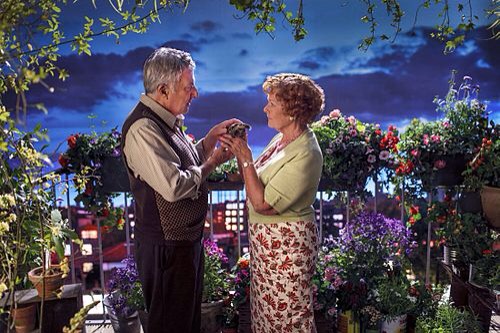
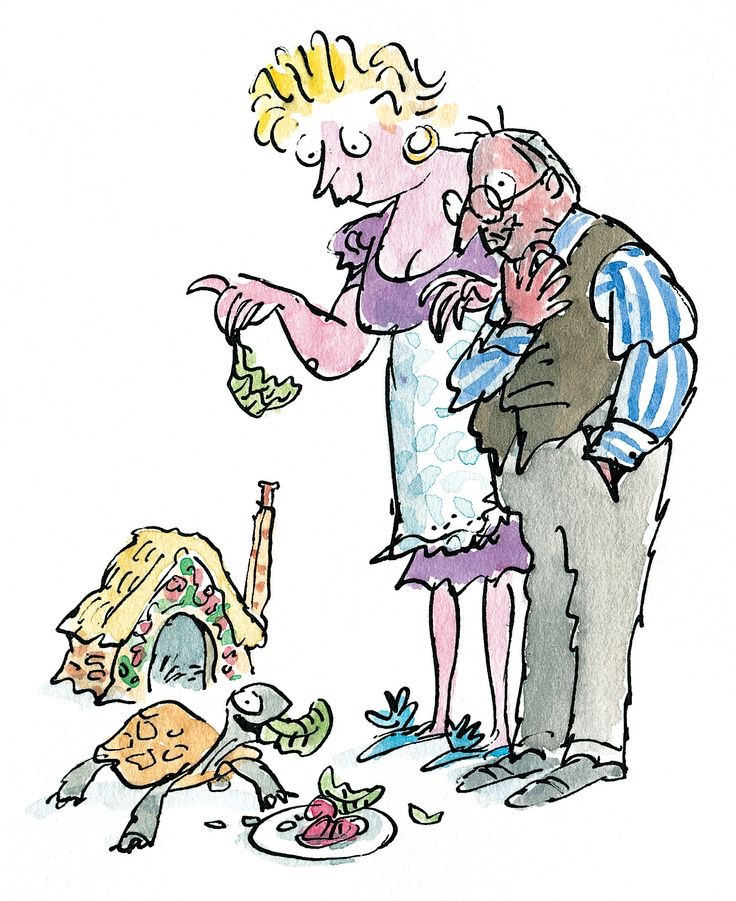
This television adaptation stars Dustin Hoffman as Mr Hoppy, an older man who lives alone in a flat in London with nothing much to keep his interest except his love of traditional jazz and a meticulously maintained flower garden terrace. This is all turned upside down when Mrs Silver (Dame Judi Dench) moves into the flat below and he is immediately overcome with feelings of love and excitement. He hatches an elaborate plan involving the growth of her beloved pet tortoise Alfie knowing it will bring her happiness, in the belief that she will fall in love with him as a result.

The supporting cast, including James Corden as narrator and Richard Cordery as the annoying neighbour Mr Pringle (a new character created especially for this adaptation), worked their parts well, though this really was a tale of two hearts.

It was a faithful take on the classic Dahl book, one of the last of the seventeen children’s novels he wrote. By this I don’t mean just in the details (and there were one or two deviations made by the writers Richard Curtis and Paul Mayhew Archer, mainly because the original book was so short), but also in the tone.

It isn’t an easy book to tackle in comparison to the likes of Matilda and Charlie and the Chocolate Factory. Dahl’s books are always firmly aimed at children, and many of his most enduring successes are stories that prominently feature relatable young characters. In Esio Trot, however, we are presented with two much older individuals, and thus a conundrum for the filmmakers. I am pleased to say they were able to maintain the quintessential Dahlness we have grown to love over the years. It would have been far easier to adapt the story to one aimed at the older generation, those the same age as Hoppy and Silver.

/home/wpcom/public_html/wp-content/blogs.dir/002/60589995/files/2015/01/img_0117.jpg

Looking back, I’m not sure why I loved this story so much as a child. It is essentially a love story between two lonely and wrinkled septuagenarians. Perhaps it was the ridiculous mischief of the plan Hoppy executed. I’m not entirely sure. In many ways, Esio Trot is the biggest vindication of Roald Dahl’s status as one of the greatest children’s authors that ever lived. How else could he have made this one work?

Esio Trot is available for purchase on DVD now.

* The 1984 film Gremlins is loosely based on the characters developed by Dahl for his 1943 book The Gremlins, which were to be the basis of a Walt Disney Studios animated film until plans were shelved. The gremlins in his book derived from the mythical creatures that British Air Forces pilots blamed unknown faults with their aircrafts on.

Gotham Series 01, Episodes 01-10 (Bruno Heller, 2014)

As the series enters a brief hiatus period I thought it would be a good point to stop and take stock of where we got to in the first ten episodes of a much-hyped series that had the potential to do for Batman what Smallville did for Superman some ten years ago, though at times fell short of its own promise.

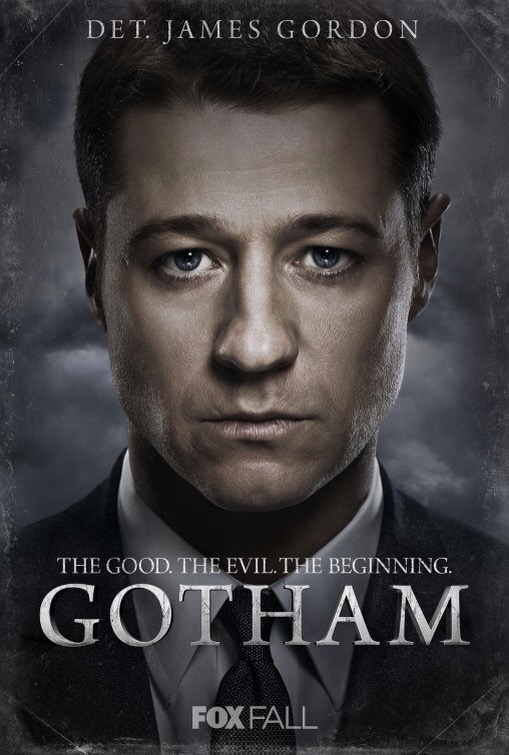
For those that don’t know, the plot centres around Commissioner James Gordon, played by OC actor Ben McKenzie, as he moves to the Gotham Police Force and comes to terms with just how corrupt the city is. It is, essentially, an origin story for Gordon, though the story is also entangled with many more familiar faces. There are a few gangs playing people off against each other, everyone seemingly being puppeteered by the brilliant character Fish Moody (Jade Pinkett Smith), who was created especially for this series. She is a revelation for the show and during the slower points of certain episodes was one of the reasons I kept watching.

/home/wpcom/public_html/wp-content/blogs.dir/002/60589995/files/2014/12/img_9991.jpg

We also come into contact with the increasingly twisted Oswald Cobblepot, who is the Penguin in waiting and has received a lot of focus throughout, establishing the character as a key player in the series so far as he plays the gangs off against each other to gain standing and reputation in a city difficult to survive in. Whilst he initial felt mispitched, the plans for Oswald came to fruition later in the series and it became clear the writing and character development was deeper than was initially clear.

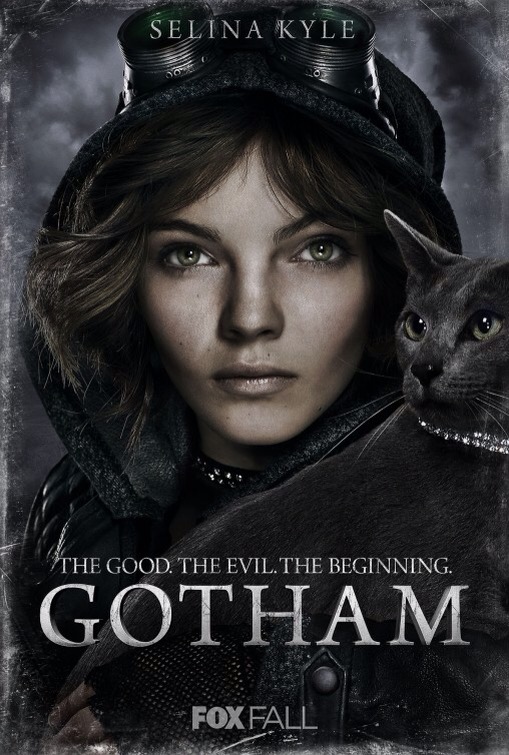
We’re treated to a confident performance from young actress Camren Bicondova as Selina Kyle (Catwoman), whose similarity to Michelle Pfieffer is uncanny. Furthermore, the groundwork has been put in place to introduce Ed Nigma (The Riddler) and later Harvey Dent (Two Face) and (Poison) Ivy Pepper.

/home/wpcom/public_html/wp-content/blogs.dir/002/60589995/files/2014/12/img_9990.jpg

Each show has its own individual plotline and they often play out like an episode of something like CSI, only with a darker tone. Each week we’ve tended to have a one-off criminal that needs to be caught and they are usually tied back in with one of the gangs we already know of. It’s a simple – if repetitive – formula, but hopefully when the characters are further developed we will have longer story arcs concentrating on more prominent characters from the Gotham universe.

Underpinning it all is the development of Bruce Wayne who, as in all good Batman stories, loses his parents to a masked criminal early on. To be honest, the sections of the shows that focus on Wayne felt a little like filler as he is so far away from becoming Batman, and in a 42-minute episode it was annoying to lose 5 minutes to something not central to the plot.

I was glad I stuck with it though, as this turned into a big payoff in the last two episodes. Bruce and Selina formed a friendship (of sorts) whilst she was being sheltered in Wayne Manor and, following an attack on the house by gang members, both made a run for it to avoid gunfire. With Bruce operating as a more central character in his own right, still supported by the ongoing storylines with Oswald and Fish, the whole series felt a lot more balanced. These last two episodes also justified the baffling London gangster take on Alfred from Sean Pertwee, which makes a lot more sense if he’s allowed to punch people in the face occasionally.

With this in mind, the series is perfectly balanced to go into the second half of the first series with a lot of momentum and, whilst a lot of the series has failed to live up to my hopes and expectations, I’m confident it will build on its successes and grow into a worthwhile and original adaptation of the Batman story.

The recent episodes of Gotham are viewable on Channel 5 Player in the UK for another three weeks and I recommend trying one of the episodes as a taster before they go.

Film review – St. Vincent (Ted Melfi, 2014)

Note: This is a review that is full of spoilers. If you are yet to see the film then I suggest you don’t read on.

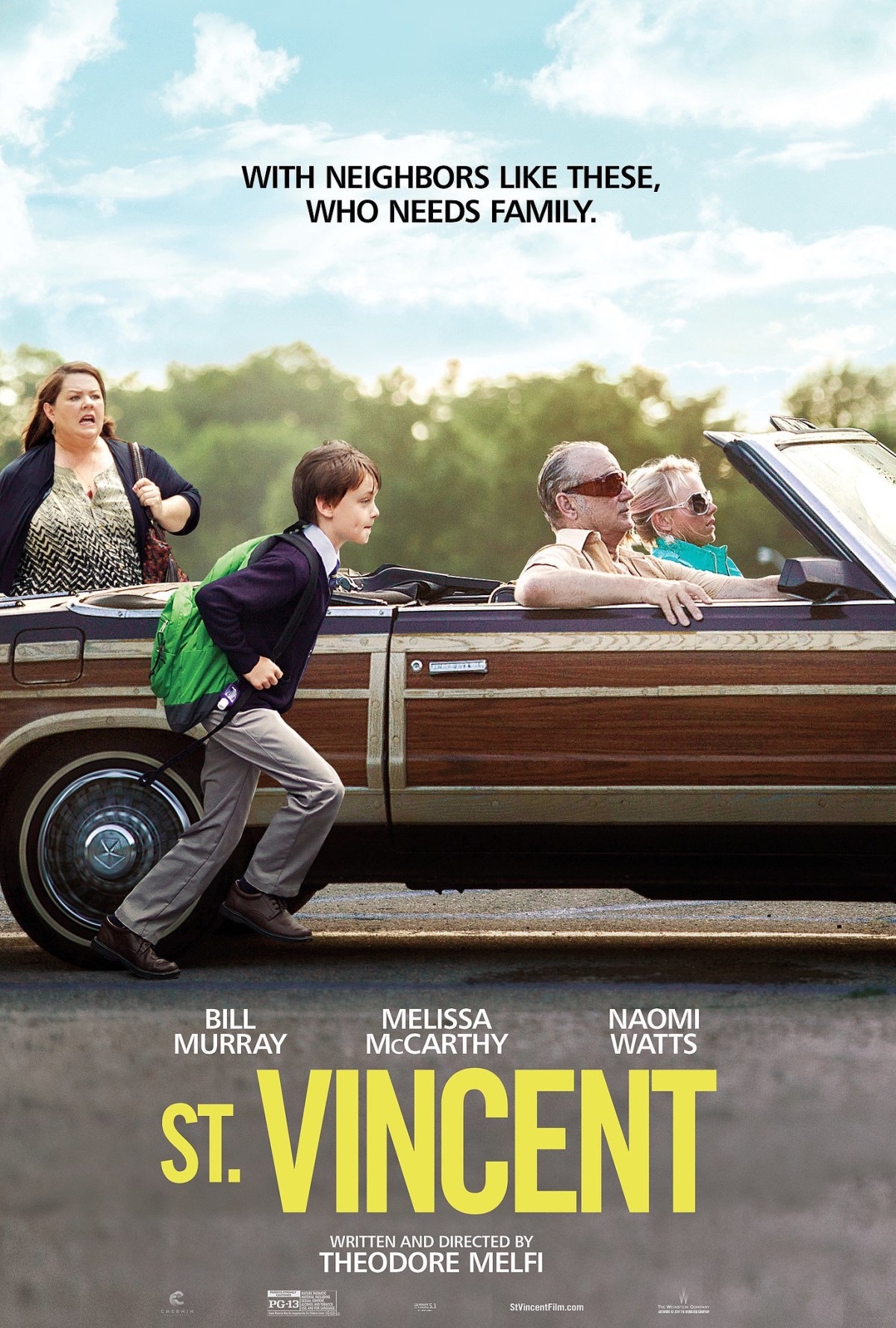
St Vincent is an indie film that charts a small-town tale of a young boy Oliver (Jaeden Lieberher), his mother Maggie (Melissa McCarthy) and their neighbour Vincent (Bill Murray), as they compete with their various individual struggles. Maggie is going through a divorce with her husband and has had to move away and start a new job to support herself and her son. Oliver is being bullied at his new school and is finding his way in a new neighbourhood without a father-figure (or indeed mother-figure) to guide him. Vince is an unlikely companion to Oliver, as he battles addictions to gambling and alcoholism.

Whilst Murray isn’t playing out of his comfort zone as a grumpy old man who is as sarcastic as he is rude, seeing him re-tread old ground is hardly a painful experience. Indeed, it’s exactly what we love him for and why he has been so successful in his career. It’s a little like when a band you love plays your favourite song as the encore – everyone is much older that the first time it came around but we all play along as it’s something we love experiencing.

There are some pretty unforgiveable plot holes in the film that really let it down and make it impossible to enjoy wholeheartedly. Whilst Naomi Watts is dong a fantastic job as the heavily pregnant dancer and “lady of the night”, it seems unfathomable that she’d have kept the baby and her jobs for so long. Whilst her being pregnant served as a humorous point for some good physical comedy, it was at the expense of the realistic façade Melfi had worked so hard to create.

It was confusing trying to rationalize Vince’s actions when they were eventually revealed to be revolving around keeping his wife in such an expensive care home. She has Alzheimer’s, which is a terrible condition, but since he wasn’t working and didn’t have any other responsibilities (children are never mentioned), if he truly loved his wife maybe he could have kept her at home instead of spending all his time with a Russian sex worker.

The most irrational decision was the choice of Maggie to palm off her son to a neighbour she knows only through arguments. It is convenient for both Maggie as a character and also as a key plot point around which to bend the storyline, but it would never happen. She also seems too quick and easy with her money, even though she is evidently struggling to make ends meet. Any of Vince’s personality traits would have set alarm bells ringing for a single mother, yet she chooses to ignore them all and employ him as a babysitter, essentially to serve the plot.

I also find it unlikely that the divorce would have been settled with joint custody of the child, when the evidence was clearly stacked against Maggie. If her husband was creating an equally bad environment for Oliver, then he would surely have gone into a foster home since neither parent was fit to care for their own child.

I forced myself to see past these flaws in order to enjoy the film, but a truly great film wouldn’t have asked so much of its audience.

St Vincent is out now at cinemas in the UK.