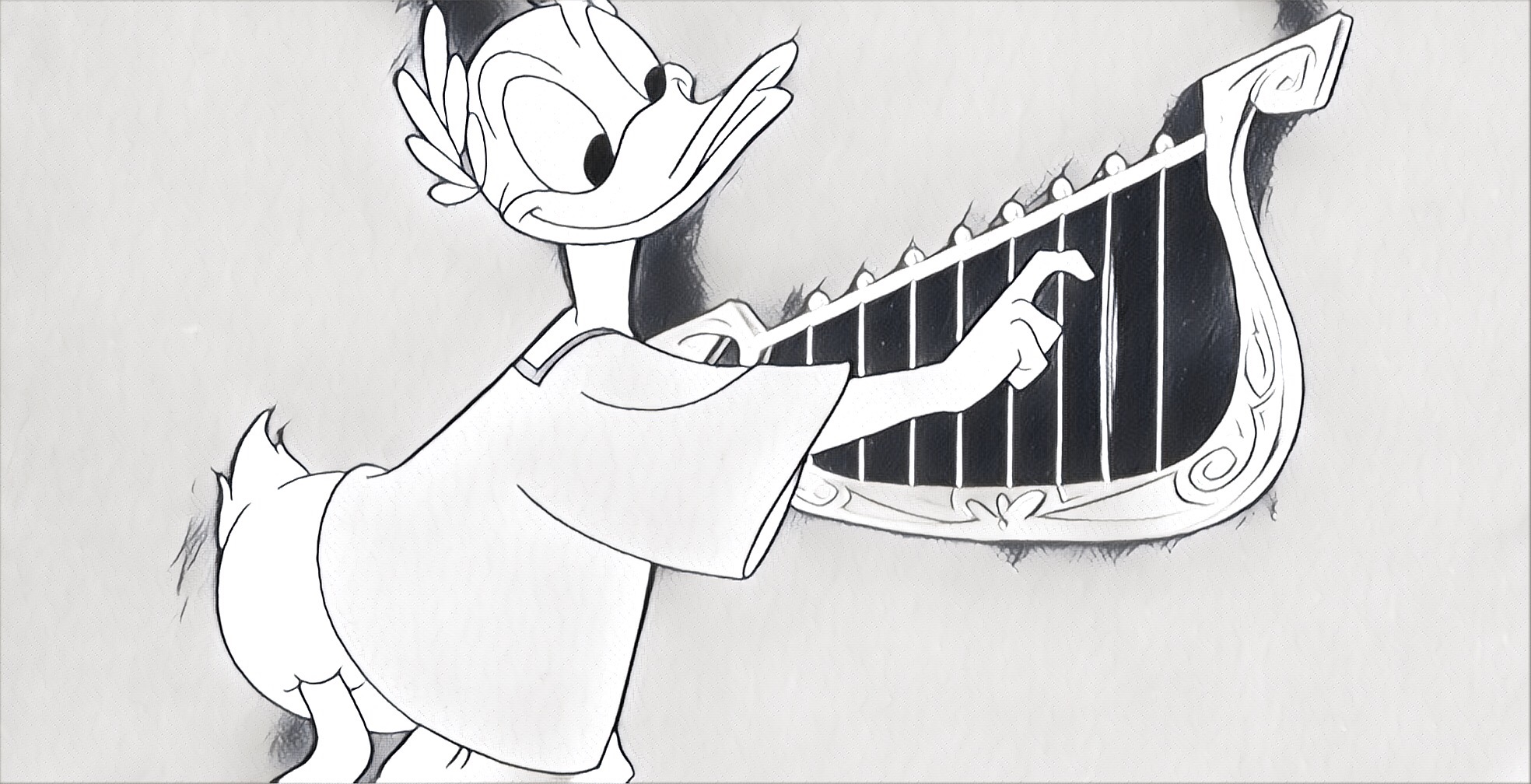
Short film review – Donald in Mathmagic Land (Hamilton Luske, Wolfgang Reitherman, Les Clark, Joshua Meador)

As educational short films go, Disney’s animation about their ever-stressed duck taking a trip through a land filled with mathematical tales, quips and facts is pretty darn entertaining.

Released in 1959 alongside a poorly-remembered live action film called Darby O’Gill and the Little People, the film went on to receive a nomination in the Best Documentary – Short Subject category at the Academy Awards. [1] [2]

It charts Donald’s journey through Mathmagic Land, as guided by the voice of a spirit (Paul Frees). He learns about the origins of maths, starting with Pythagoras in Greece, then the pentogram and the golden section, the appearances of the golden section in nature, architecture and art, the application of maths in music and its relevance to games (especially chess, which features a nice reference to Alice Through The Looking Glass).
That the film covers a relatively thorough history of one of the most important and fundamental basic principals of life and remains interesting is somewhat of a miracle, so much so that the film went on to be used as an educational tool in schools across America. It’s easy to see why. Its relevance endures and it would still be useful in the modern education system.

Admittedly, the style is now somewhat dated but it has a classic feel of 1950s era Disney about it. This is hardly surprising. Two of Disney’s “Nine Old Men” worked as directors on the film. [3]

It is a great shame that so many of these old Disney shorts are hard to locate in a good quality transfer and few are held in high regard, largely due to the lack of knowledge of their existence. Anyone who enjoys watching the early Disney animation films is doing themselves a disservice if they are yet to discover the shorts being released around the same time. These are the same animators, story writers and directors, throwing together ideas and experimenting with animation, perhaps to try something out for a future release, or maybe just finishing ideas that were started with a plan for a full release before ending up as a short instead.

There are so many to choose from, many of which were released in the UK on the Disney Fables series of DVDs. Owning all six of them is a great start – you will have in your possession six hours of short animated films, covering 25 animated films, several of which were Academy Awards nominees and winners. It’s about time that Disney worked out a way to get these out there again so yet another generation can enjoy them.

[1] I can’t imagine people were overly-fond of the film at the cinema.Having paid to see a film that’s 93 minutes long, imagine the dismay when you sat down and realised it had a 26-minute short film about maths tagged at the beginning of it.

[2] Quite why this wasn’t nominated as an animated short is beyond me. I incorrectly assumed that the category didn’t exist at the time but this proved to be an incorrect assumption, having been around for over 25 years in 1959.

[3] Wolfgang Reitherman and Les Clark were two of Disney’s “Nine Old Men”, a group of nine original animators that worked at the Disney company. Many of them went on to direct feature films themselves and every Walt Disney Animation film featured at least one of the nine until 1985’s The Black Cauldron.

Film Review – Vaiana (Ron Clements and John Musker, 2016)

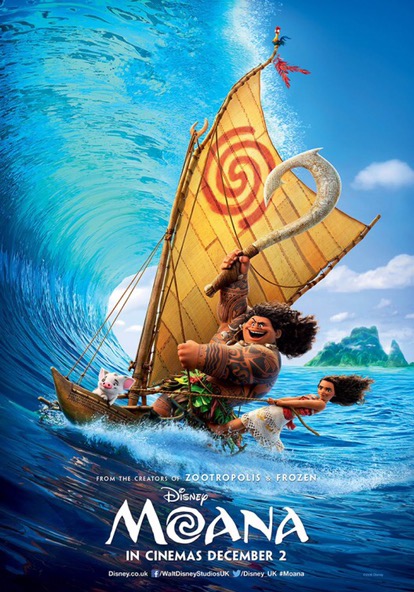
Walt Disney Animation Studios have released their 56th animated film, the musical Moana. I’m going to whisper this quietly, but it might actually be better than Frozen.

The story follows 16-year-old girl Vaiana as she defies her passage to become the leader of the tribe on the fictional island Motunui. Her father Chief Tui, leader of her island tribe, and her mother Sina are fearful of the water and want her to remain on the island, but her outgoing grandma Tala encourages her to leave and hunt down the demigod Maui to solve a mysterious curse that she believes has led to a poor harvest.

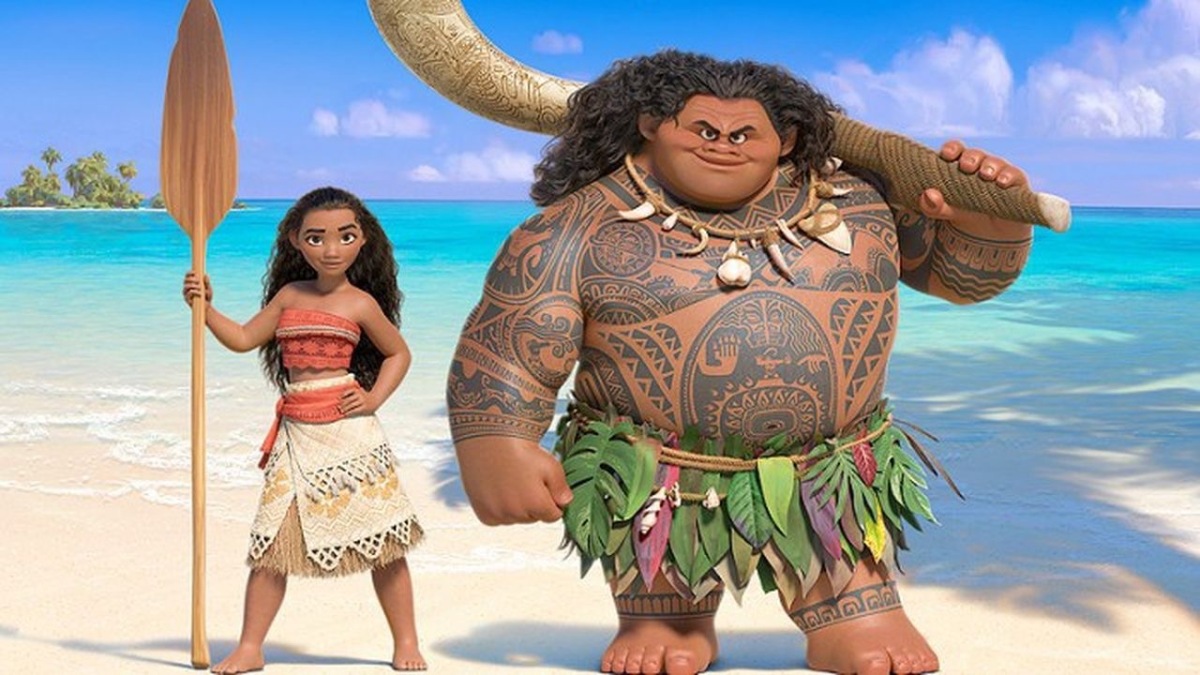
Vaiana and Maui


The basics of the story are, on the face of it, quite by-the-numbers. There’s a teenage protagonist, which makes it relatable for the younger viewers. She goes on a quest that has a practical purpose but also helps her develop as a person. She teams up with an unlikely buddy to help her in her journey. We’ve seen it many times before but the familiarity doesn’t hamper its success.

Where the story excels is threefold. Firstly, it has a brilliantly sharp and humorous script, which the actors are clearly having a lot of fun with. Secondly, the animation of both the characters and the surroundings is absolutely stunning. Finally, the music, which was written by Hamilton’s Lin-Manuel Miranda, Mark Mancina and Opetaia Foa’i, is outrageously good, and goes much further than simply one great flagship song (in this case “How Far I’ll Go”, sung by the lead and effectively Vaiana’s answer to “Let It Go”).

Indeed, it is unfortunate that the film has been unleashed in the same year as La La Land, which is destined to sweep up at most of the award ceremonies, at least in the Best Song categories. Miranda may have to have another attempt in a less competitive year.

There are a couple of nice smaller roles that are grasped by those involved. Alan Tudyk may be more famed for his turn as K-2SO in Rogue One this year, but he’s equally hilarious as Hei Hei the Rooster here, constantly stealing scenes with sound effects that match the ridiculousness of the island’s most endearingly stupid bird. Elsewhere, there’s a hilarious scene featuring Tamatoa, a giant kleptomaniacal crab who has a penchant for all things shiny.

Vaiana is a must see this holiday season and should be top of your list if you need to entertain any younger relatives over the coming weeks.

Check out the reviews of other Disney animated features and shorts here:

Zootropolis
Kronk’s New Groove
The Emperor’s New Groove
Destino
Melody Time
Big Hero 6
Frozen

Note: This article was originally published for the English-language version of the film and has since been adapted. You can find the original version here.

Disney’s Moana as a Video Storybook

I was looking at the videos uploaded onto the Disney YouTube channel and I was surprised at how much content was on there for their latest film Moana. So, I decided to see how much of the story could be pieced together and found there was essentially quite a bit of the first half of the film freely available.

Needless to say, this is full of spoilers. The purpose is to help provide some joy to those of us who’ve seen the film but can’t wait until the home video release later this year to enjoy the various elements. It is truly a wonderful film and you can read my original review here, along with a fact sheet here.

After you’ve read it, make sure to pre-order your copy for home viewing in all its glory here!

Prologue

In a prologue, we learn about the mystical pounamu stone, which is the heart of goddess Te Fiti. Demigod Maui steals the stone to give as a gift to humanity, but as he escapes with the stone he is attacked by Te Kā, a lava demon, in the process losing the pounamu heartstone along with a fishhook that grants him magical powers.

Act 1

1000 years later, our story begins with a small Polynesian island called Motunui. Here we find Moana Waialiki, a small child who is the daughter of Chief Tui and therefore set to become leader of the island tribe. As a baby, she appears to have a mystical connection with the sea.

A montage of Moana growing up occurs throughout the song “Where You Are” (video includes audio only). Her affinity to the sea is reinforced throughout the song, along with the importance of the natural crops and resources the island provides.

The islanders are growing in concern for their crops and fish, which are unexpectedly dying. Unbeknown to them, the cause of this is the missing pounamu heartstone. 

Moana wishes to leave the island to find more fish, but her father wants her to stay on the island. She makes a first attempt at leaving the island via the song “How Far I’ll Go”, along with her trusty pet Pua the pig.

Moana has a chat with Gramma Tala to help decide what to do.

We are further introduced to the ways of Moana’s island via the song “We Know The Way”, which is a celebration of voyaging as the pride the fishermen find in their navigation and fishing skills. This is a musical interpretation of what Moana reads on the inside of a cave in ancient wall paintings.

Gramma Tala reveals that she has had the heartstone and gives it to Moana. She also reveals a hidden cave of boats from the island’s past life as voyagers. 

Sadly, Gramma Tala dies, and with her final breath tells Moana to set sail. She does this, but unbeknownst to her she does this with incompetent chicken Heihei as her only companion. The “How Far I’ll Go” reprise plays.

Act 2

Moana encounters a terrible storm, which throws her from her boat and leaves her unconscious. 

When she wakes, she discovers she is on a deserted island, though one other inhabitant is there: the demigod Maui.

Maui introduces himself, wowing Moana as he sings “You’re Welcome”. This is also a cunning ploy to steal her boat to escape the island, though he leaves her on the island alone and trapped inside a cave.

Moana breaks free from the cave and attempts to swim after Maui. The ocean helps reunite the pair.

They resolve their differences and Moana convinces Maui that to be a true hero he must return the pounamu heartstone to its rightful place to restore harmony to the sea, agreeing also to help him retrieve his magical fishhook on the way.

Shortly after, they encounter the coconut pirates Kakamora, who wish to steal the heartstone.

They then visit the giant crab Taratoa, who has a cave of jewels and gold that he uses to attract fish to his cave to eat them. He is in possession of Maui’s fishhook.

Maui and Moana work together to steal back the fishhook and they set sail again.

Act 3

Shortly after, Maui teaches Moana about “wayfinding” as he realises that she has never sailed before.

They set sail to return the heart to Te Fiti, but when they arrive they are attacked by the fire demon Te Kā, who damages Maui’s fishhook in the process and also repels them in their boat far out to the ocean. Maui leaves for fear of yet more damage to his hook, which will result in him losing his magical powers.

Moana returns to Te Kā alone, and as she does this Maui returns, having had a change of heart. This time Moana asks the ocean to help clear a path between her and Te Kā, and she sings “I Am Moana” to remind the goddess of who she really is, thus allowing her to restore her heart. With Te Fiti restored, she thanks Moana with a new boat and a replacement fishhook for Maui.

Moana says farewell to Maui and returns to her island, which begins to thrive under the new conditions.

Deleted Scenes

Disney have since published some additional scenes, destined for the Blu-ray (due out in March 2017).

Film review – Moana (John Musker and Ron Clements, 2016)

Walt Disney Animation Studios have released their 56th animated film, the musical Moana. I’m going to whisper this quietly, but it might actually be better than Frozen.

The story follows 16-year-old girl Moana (Auli’i Cravalho) as she defies her passage to become the leader of the tribe on the fictional island Motunui. Her father Chief Tui (Temuera Morrison), leader of her island tribe, and her mother Sina (Nicole Scherzinger), are fearful of the water and want her to remain on the island, but her outgoing grandma Tala (Rachel House) encourages her to leave and hunt down the demigod Maui (Dwayne Johnson) to solve a mysterious curse that she believes has led to a poor harvest.

Moana and Maui

The basics of the story are, on the face of it, quite by-the-numbers. There’s a teenage protagonist, which makes it relatable for the younger viewers. She goes on a quest that has a practical purpose but also helps her develop as a person. She teams up with an unlikely buddy to help her in her journey. We’ve seen it many times before but the familiarity doesn’t hamper its success.

Where the story excels is threefold. Firstly, it has a brilliantly sharp and humorous script, which the actors are clearly having a lot of fun with. Secondly, the animation of both the characters and the surroundings is absolutely stunning. Finally, the music, which was written by Hamilton’s Lin-Manuel Miranda, Mark Mancina and Opetaia Foa’i, is outrageously good, and goes much further than simply one great flagship song (in this case “How Far I’ll Go”, sung by the lead and effectively Moana’s answer to “Let It Go”).

Indeed, it is unfortunate that the film has been unleashed in the same year as La La Land, which is destined to sweep up at most of the award ceremonies, at least in the Best Song categories. Miranda may have to have another attempt in a less competitive year.

There are a couple of nice smaller roles that are grasped by those involved. Alan Tudyk may be more famed for his turn as K-2SO in Rogue One this year, but he’s equally hilarious as Hei Hei the Rooster here, constantly stealing scenes with sound effects that match the ridiculousness of the island’s most endearingly stupid bird. Elsewhere, Jermaine Clement shows up as Tamatoa, a giant kleptomaniacal crab who has a penchant for all things shiny.

But the plaudits must go to Auli’i Cravalho, who comes in as a complete unknown and has delivered a lead performance that equals the best Disney has ever achieved. At just sixteen but with a voice as good as anything I’ve ever heard on stage, she has a very bright future indeed.

Moana is a must see this holiday season and should be top of your list if you need to entertain any younger relatives over the coming weeks.

Check out the reviews of other Disney animated features and shorts here:

Zootropolis
Kronk’s New Groove
The Emperor’s New Groove
Destino
Melody Time
Big Hero 6
Frozen

Film review – Life, Animated (Roger Ross Williams, 2016)

‘Life, Animated’ explores the life of Owen Suskind, an American man who, at the age of just three, became unable to speak and interact with those around him. This was a complete mystery for his parents who were desperate to rescue their son from the depths of silence. As he grew older his parents realised that he could communicate through his love of Disney animated films such as The Little Mermaid, Aladdin and The Lion King. Finally they were able to understand his reasoning through the films he began to quote verbatim.

This is a balanced cross-examination. To watch Owen when he’s on his own is a fascinating study for those interested in the condition of autism. He has learnt most of the lines from his beloved films, including facial expressions and accents. Yes, he is nothing short of animated when he’s lost in his world.

There is some beautifully animated moments as we are guided through his inner thoughts in the form of his younger self and his band of Disney sidekicks, including Iago, Baloo, Abu, Rabbit, Sebastian the Crab and Rafiki. These short animated sequences were supplied by company Mac Guff (Despicable Me, The Lorax) and are equally evocative and breathtaking.

But the standout moment of the film is when his father, Pulitzer Prize-winner Ron Suskind, recalls a moment when he first reconnected with Owen via an Iago hand puppet. It’s a must-see moment.

The film may take a look at only one man’s struggles with autism, but the focus shifts from him to those around him: his parents, his brother, his girlfriend, the professionals helping him through his condition. In this way, we see how his autism affects those around him. The result is arguably one of the most important films about autism ever made.

Life, Animated is available to download on iTunes and is also at select theatres throughout Britain.

Note: Roger Ross Williams’s last documentary film was the short subject piece ‘Blackface’ for CNN, which explored the unbelievable holiday tradition still at large in the Netherlands called Sinterklaas. It may be rooted in tradition (as the Dutch argue), but it is also rooted in racism and white supremacy and has no place in a modern and progressive society. 

The film is fortunately available in full on YouTube as below.

https://youtu.be/kXR0VC7LkgQ

Film review – 君の名は。/ Your Name (Makoto Shinkai, 2016)

https://youtu.be/hRfHcp2GjVI

It is very unusual for a Japanese animated film to make it beyond the smaller art house cinemas littered around the country. Most don’t make it that far. Even the most recent Studio Ghibli releases – When Marnie Was There and The Tale of the Princess Kaguya – failed to ignite the chain multiplexes, despite a global popularity that is unrivalled for world cinema.

It is strange then that Your Name has found itself in amongst the blockbusters at Showcase Cinemas in the UK this week, alongside the likes of Strange Beasts and Where to Find Them and Doctor Strange. No doubt many cinema goers will be nonplused that a weird Japanese film is taking up one of the screens, blissfully unaware that neither Cumberbatch nor Redmayne stand a chance of usurping Makoto Shinkai’s romantic fantasy anime to top the annual box office charts this year in Japan. As of 21st November it has taken 189.8m USD, making it Japan’s seventh highest grossing film of all time.

Films that are popular in Japan, of course, don’t always transfer to the global market, as exemplified by the rest of the all-time top ten films in terms of box office takings. Five are Japanese (of which only one is live action). No Japanese film bothers the equivalent top 100 list for global takings.

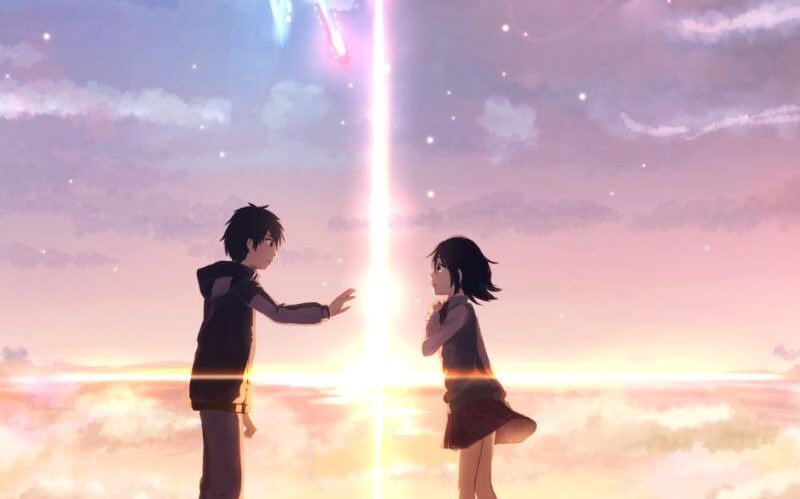
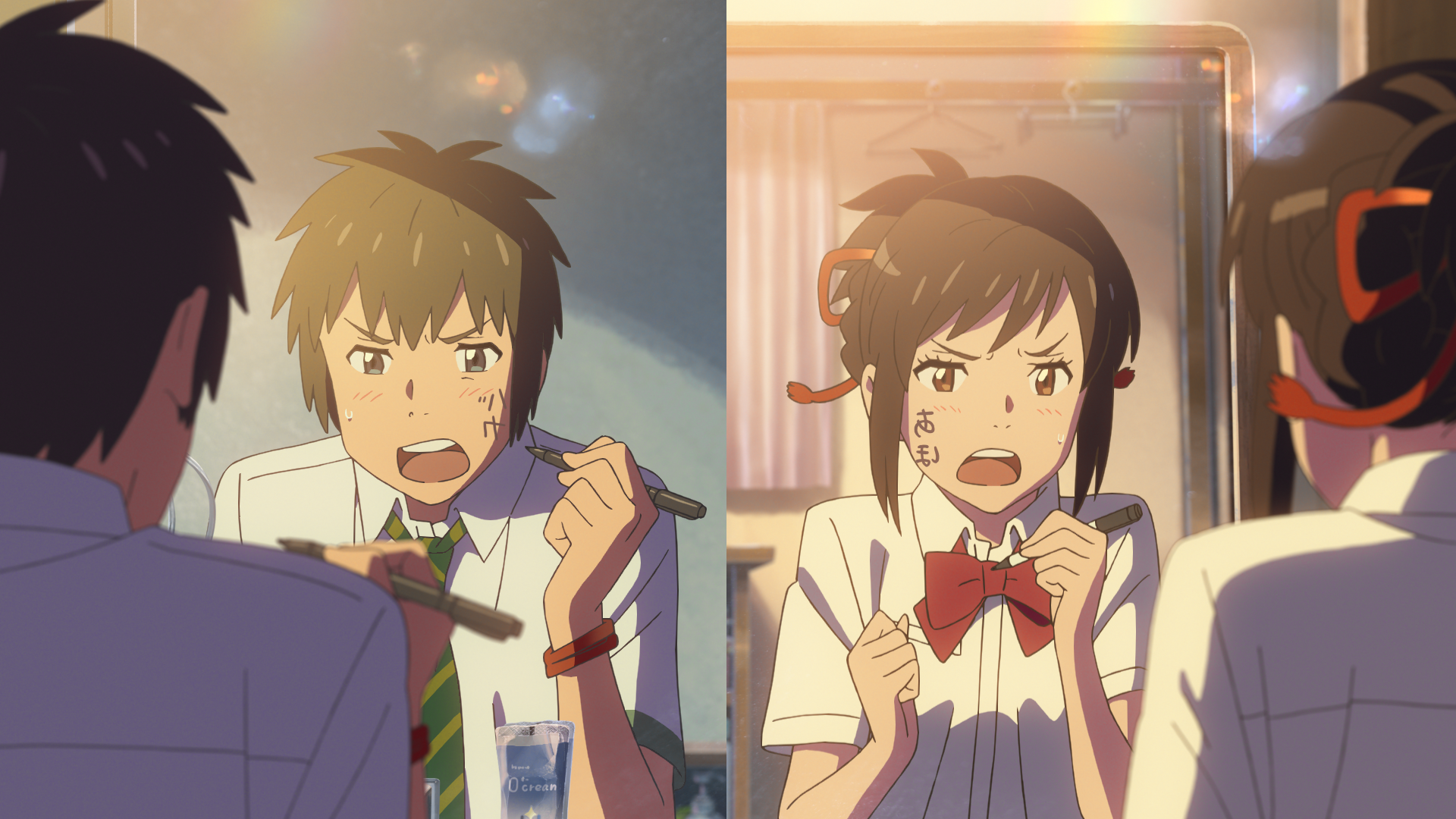
So what’s Your Name about and why is it so popular? It tells the story of Mitsuha, a high school girl living in the isolated countryside of Itomori, who makes a wish to be brought back as a handsome Tokyo high school boy in a future life. The next morning Taki, a high school boy living in Tokyo, wakes up in Mitsuha’s body, whilst she is now living in his body. It’s a classic body-swap setup that has served many good (and bad) films well in the past.

Or as it’s known by the poorly educated, You’re Name

The film may start in the most simple of ways, but as Mikota Shinkai throws a couple of devastating curveballs into the robust script to juxtapose the well-balanced comedic elements, it quickly becomes apparent where the success has come from. It’s a story driven by two characters that develop at a perfect rate to drive the plot forwards, and a serendipitous romance that is easy to get engrossed in.

Visually, the quality of the animation is very reminiscent of the best work of Studio Ghibli, particularly in the Itomori countryside scenes, away from the bright city lights of Tokyo. It’s such a relief to see something like this being released as Ghibli are finished as a motion picture production house, or at least going on a prolonged hiatus. Shinkai is being hailed as the new Hiyao Miyazaki, which seems far fetched on paper but in reality may not be so unrealistic. Unsurprisingly, he sites Miyazaki’s Castle in the Sky as his favourite film. His passion and dedication to follow in Miyazaki’s footsteps is abundantly on show here, from the beautifully-realised backdrops to the organic growth of the lead characters as the story progresses.

Put simply, it’s a beautiful film with a lot of heart and an engrossing story. What more could you ask for?

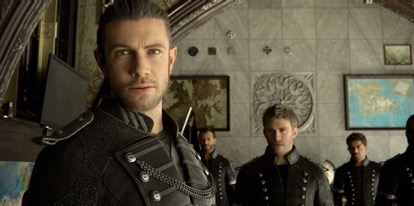
Film review – キングスグレイブ ファイナルファンタジーXV / Kingsglaive: Final Fantasy XV (Takeshi Nozue)

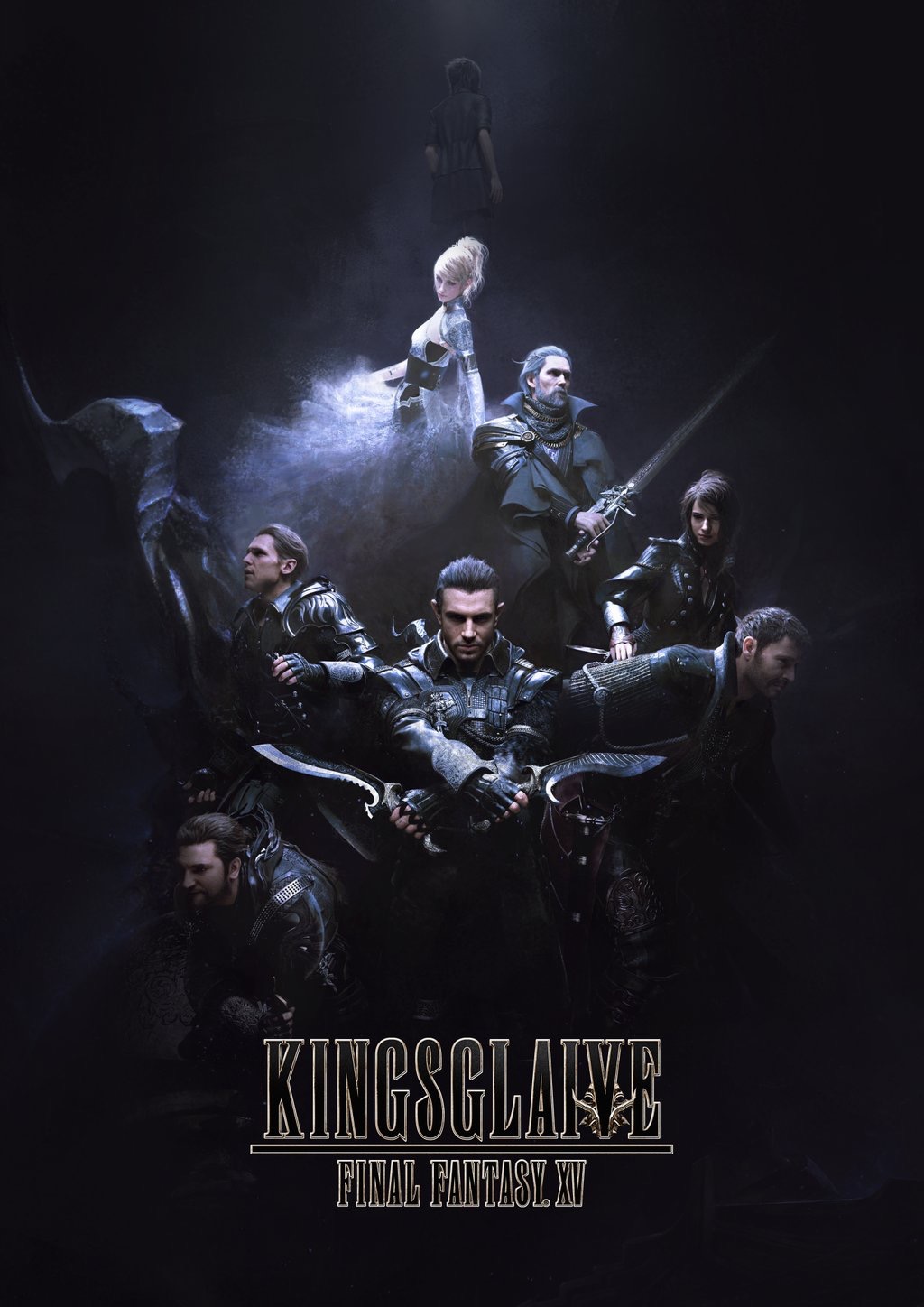
The latest Final Fantasy cinematic release, titled rather awkwardly Kingsglaive: Final Fantasy XV, sits in the Fabula Nova Crystallis universe first explored in 2009’s Final Fantasy XIII. If that opening sentence doesn’t float your boat, I’m afraid things are about to get a lot worse.

The storyline concentrates on characters we’ve previously seen in animated web series Brotherhood, and who will be the main stars of the upcoming Final Fantasy XV games that will hit the shelves in just under a week from now. It is set on Eos, an earth-like planet divided into six regions based on their historical ownership of various crystals. Central to the plot is Nyx Ulric (Aaron Paul), the main protagonist in this film but only a bit-part in the upcoming game. He is a member of the Kingsglaive, an elite guard that channel the mythical powers bestowed on them by the ruler of Regis Lucis Caelum CXIII (Sean Bean), ruler of Lucis. The military-rich Niflheim are at war with Lucis but a treaty is offered that includes as part of the bargain the marriage of Regis’s daughter to Lunafreya Nox Fleuret (Lena Headey) to Noctis Lucis Caelum (Ray Chase), the main protagonist of the upcoming game but scantly featured here.

Huh?


Still with me? It sounds complex on paper but in reality the film’s pace and tendency towards action ensures it isn’t another fantasy bore fest. With a rich cast of individuals that do their best to pepper the script with flavour, it is actually a surprisingly enjoyable experience.

One aspect that is particularly impressive is the match up of the audio to the movement of the mouth, which is usually a huge problem with foreign films being dubbed into English. CGI motion capture is perhaps the only medium where this is possible and it makes for a much less distracting experience.

With all films like this, the market is very niche. A single screening in the East Midlands in a small screen and reduced price still didn’t lead to a sell-out, though this could be blamed on the fact it has been on available on Blu-ray for the last month or so.

If you get chance to see this before playing the upcoming game then it will definitely provide an engrossing way to get used to the background to the plot. If you’re not a fan of the series and don’t plan the 100-hour slog that will inevitably be demanded by the RPG, then it probably won’t give you much enjoyment. 

Disney’s Moana – Everything you need to know

Walt Disney Animation Studios will be releasing their 56th animated film globally on 23rd November 2016. Titled Moana (or Vaiana or Oceania, depending where you live), the film follows a 16-year-old as she embarks on a quest to a mystical Polynesian island to find the demigod Maui and uncover the island’s secrets.

This article should bring you up to speed with everything you need to know.

Who’s directing the film?

The directors are Ron Clements and John Musker, the directorial duo who have been responsible for some of the greatest Disney films over the last thirty years.

Here’s what they’ve made:

That’s a tremendous track record, with two of the films stone-wall classics and the remaining four well-regarded if a little under-appreciated. Their last work – The Princess and the Frog – may well be the best Walt Disney Animation Studios film released in the last decade.

Where is the film set?

The titular character is a native of the fictional island Motunui, which is said to be in the Pacific Ocean.

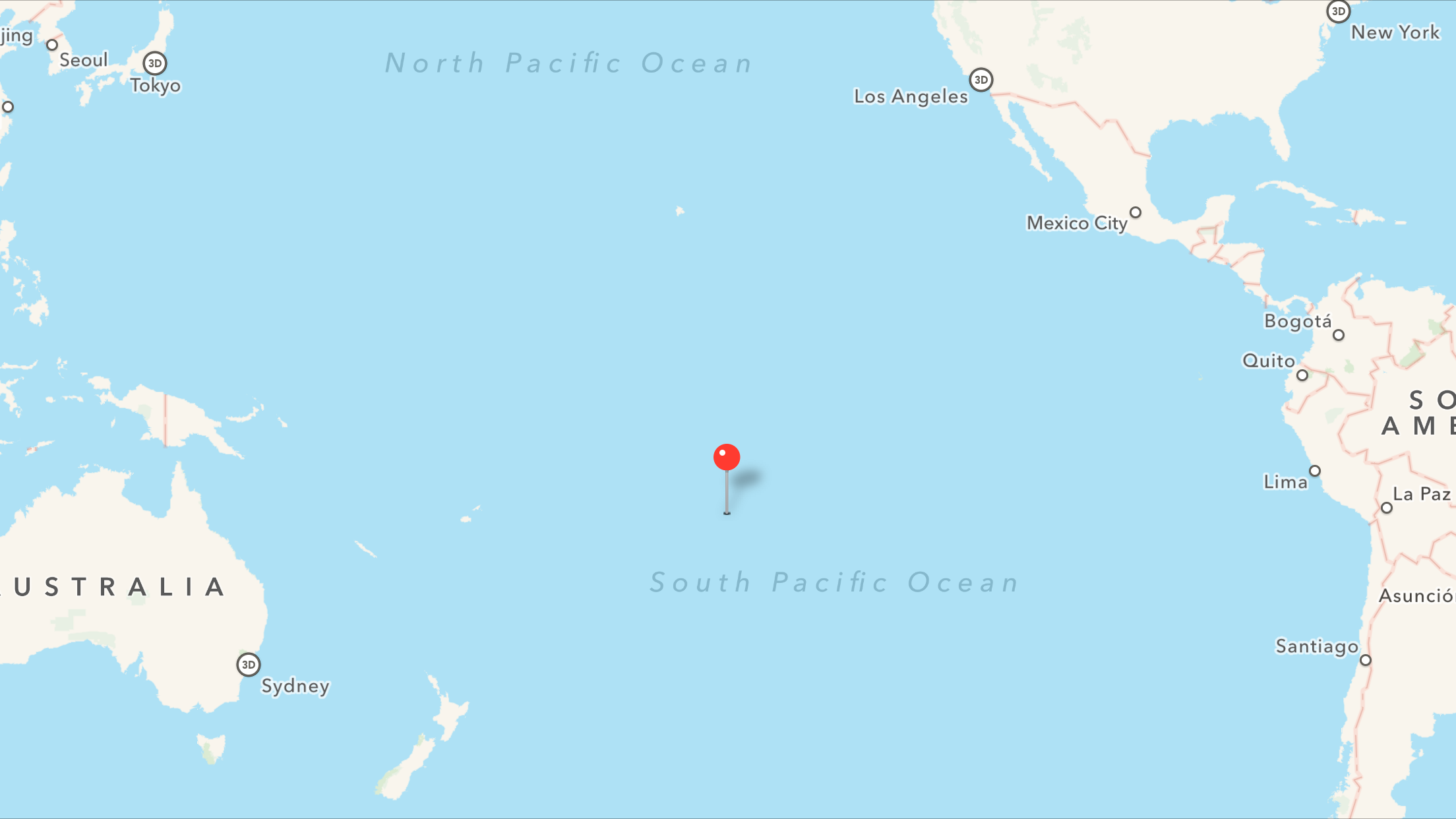
There is a coastal town in New Zealand that shares its name, and there is also an island just south of Easter Island, but neither of these is the setting for the film. Instead, the inspiration for the setting is said to be Teti’aroa, a different Polynesian island most famed for being bought by Marlon Brando in the 1960s.

This is located about where the pin is on the following map (courtesy of Apple Maps).


Basically, it’s in the middle of the South Pacific Ocean in French Polynesia. By all accounts, it’s a beautiful part of the world to visit and, thanks to the Marlon Brando Estate you can!

I’ll be, erm, saving up my pennies.

Who’s in it?

The lead character of Moana Waialiki is voiced by Auli’i Cravalho, a 15-year-old newcomer to the film industry. The video above shows you how thrilled she is to effectively be the next Disney princess. A huge role and it’s a nice touch they managed to find someone from Hawaii to take on the role.

Dwayne “The Rock” Johnson voices legendary demigod Maui, the unlikely buddy for Moana to set off on her journey with.

Elsewhere there are contributions from Pussycat Doll Nicole Scherzinger as Moana’s mother Sina, Temura Morrison (Episode II’s Jango Fett) as Moana’s father Chief Tui, Flight of the Conchord’s Jermaine Clement as the crabby Tamatoa, Rachel House (who you may remember as the over-zealous welfare services officer Paula in Hunt for the Wilderpeople) as Moana’s grandmother Tala and Disney regular Alan Tudyk as idiotic bird Hei Hei.

On top of that, there are musical contributions from Lin-Manual Miranda, who has managed to fit this in between the massive success of Hamilton and the preparation for the Mary Poppins reboot he’s just been cast in. Oh, and Star Wars.

There’s a short clip of the song “You’re Welcome” below.

Are there any trailers or clips available now?

Disney have been releasing a slow trickle of scene previews and trailers. Here’s a selection:

Official Trailer

https://youtu.be/LKFuXETZUsI

International Trailer 1 (Japanese)

https://youtu.be/Ljik3zsGNF4

International Trailer 2 (Portuguese)

https://youtu.be/4ojO2luxMc4

International Trailer 3 (Russian)

https://youtu.be/_NGlIDDeSfI

International Trailer 4 (German)

https://youtu.be/DHeBo2M3GoY

International Trailer 5 (Italy)

https://youtu.be/_ZpA-PtXhf4

Official Teaser Trailer

https://youtu.be/C6PbWhWGUrY

Clip – Is there something you want to hear?

https://youtu.be/YWBSxmcQGqo

Song – “We Know The Way”

https://youtu.be/unoJii5PJV4

Clip – Moana meets Maui

https://youtu.be/88_Ailmf8Z4

When is it released?

It has various release dates. The key one for me is the UK release date of 2nd December, although it will be hitting USA screens a few weeks earlier on 14th November.

Most of Europe will have it before Christmas, apart from Scandinavia who won’t be able to enjoy it until 2nd and 3rd February. The last country to get it is Japan on 10th March, a full four months after its initial release date.

Film review – Psiconautas, Los Niños Olvidados / Psychonauts, The Forgotten Children (Alberto Vázquez & Pedro Rivero, 2016)

Somewhere deep inside me was a sworded hope that maybe, just maybe, a family was in the screening of Psiconautas at Prince Charles Theatre and had a truly miserable time watching one of the most bizarre 75 minutes of cinema I have ever seen. Harsh, I know, but variety is the spice of life and Trolls 3D sold out weeks ago despite being in every cinema across the land in about two weeks.

Sorry.. what just happened?

The plotline is a difficult one to nail down. Based on a graphic novel by Alberto Vazquez, its origins lie in a 2011 short film titled Birdboy. After a short prologue, we are introduced to our two main protagonists. The aforementioned Birdboy is a fatherless creature who can only function whilst under the influence of drugs. His former girlfriend Dinki – a mouse – is trapped in a life ruled by her religion-mad mother, her father (who isn’t a mouse but wears a mouse mask) and a half-man-half-dog brother called Jonathan who his parents adore. She longs to escape with her two friends, but doing so proves to be not so easy when they live on a distopian hell island and are being hunted down by hilarious sentient alarm clocks.

They meet other characters along the way, from a panicked rubber duck to the titular tribe of forgotten children. There is a sense that Vázquez and Rivero are bursting with ideas and this bodes well for future works.

I’m so confused.

It is a wholly confusing experience that had no intentions of letting the audience expect the expected. There were moments of real hilarity and moments of true horror – a real rollercoaster of bemusement. The climax is nothing short of terrifying.

If you like your animation to be all warm and fuzzy then clearly this isn’t for you. But if you’ve ever wondered what it would be like to get trapped inside a Stanley Donwood nightmare then there could well be something here for you.