The Intern (Nancy Meyers, 2015)

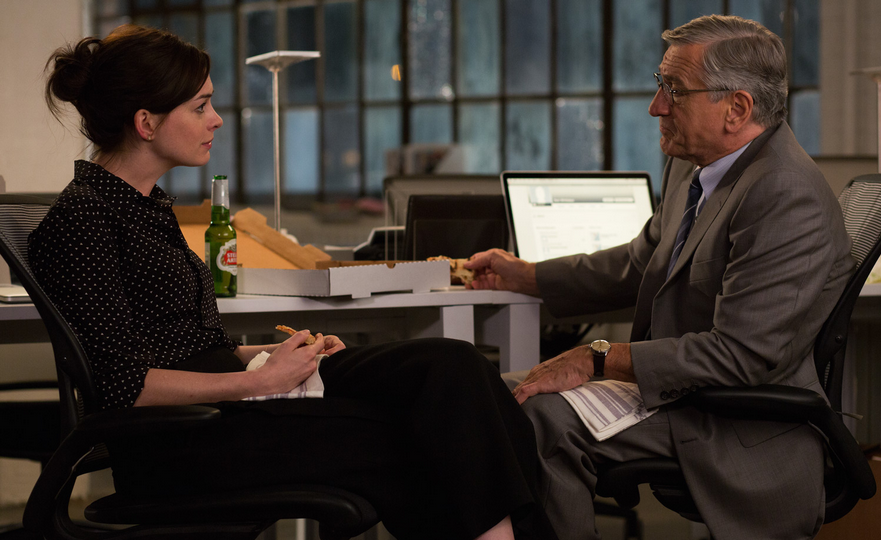
Nancy Meyers has a rich history in crowd-pleasing comedies. Her writing and directing credits include What Women Want, both Father of the Brides, It’s Complicated, The Holiday and Something’s Gotta Give. The basic premise of her latest, The Intern, is that a 70-year-old widower Ben Whittaker (Robert De Niro) signs up the the senior intern programme of a rapidly-growing start-up business, only to be assigned as the personal assistant to company director Jules (Anne Hathaway), a woman seemingly struggling to keep up with the demands of her new-found success whilst balancing it with her house-husband Matt (Anders Holm) and daughter Paige (JoJo Kushner). Initially resistant of Ben, she soon grows to his warm personality and old-fashioned sentiments, leading to doubts over the future of her personal and professional life.

This may sounds like middle-of-the-road schmaltz, but it works. Some softening colour washes, a pleasant-on-the-ear soundtrack, straight-from-GAP outfits, showroom offices and houses. It’s a look at the modern world from the rose-tinted perspective of middle-to-upper-class old people, coming together to appeal to women of anywhere between the age of about 30 upwards. It is easy on the eye and easy on the soul, but to dismiss it as just that would be wholly unfair.
internscreen

By design, Meyers has created a picture that on the surface is just a pleasant and slow-paced monorail ride through the life of Ben and Jules. However, there is quite a lot of power in the messages it is portraying. First of all, it is telling women to not lie down and take the easy road when it comes to business, despite constantly being told that attempting to be the CEO of a business isn’t correct of a woman. Secondly, just because you have a child, don’t assume that you need to forfeit your career to ensure your partner can maintain his whilst you stay at home and look after your child. Thirdly, don’t feel guilty if your partner doesn’t get any of this.

I’m not sure how this film would fair in the Bechdel Test, which scores films on how sexist the content is by checking how many named female characters are involved with conversations with other women about something that isn’t men. Unfortunately, it would probably score low because the film drowns Jules in a sea of men to highlight the isolation she is experiencing in her career (other key female characters in the office are her emotional assistant and a masseuse). It may also be seen as unfortunate that she relies on a father-figure to guide her through her issues rather than working them out herself, but that’s the nature of the beast and it isn’t at all detrimental to the overall impact of the film in the final act.

There are a few failures. Husband Matt completely loses his essence about halfway through and doesn’t seem fixed in reality, undermining the effect of his actions and Jules’s reaction to them. Too often she brings emotion to the forefront of the company – one scene is obviously playing for laughs but when she’s prioritising the retrieval of a personal e-mail over issues that could destroy the company, the thought can’t be avoided that perhaps she isn’t the right person to sit at the top.

Overall, the film is a success and will no doubt please the crowds to which its box office rivals won’t appeal. It’s slightly early for the Christmas crowds and will not be remembered when the awards season is upon us, but it if you need some surprisingly thought-provoking entertainment there are far worse ways to spend two hours.

The Intern is released at cinemas in the UK on 2nd October 2015.

Irrational Man (Woody Allen, 2015)

Another year, another Woody Allen film. It must be getting tiring, all this. Coming up with excellent idea after excellent idea, living with the pressure of high expectations. Sickening then that despite this film being another example of style over substance, the substance is unquestionably absorbing and the style is abundant. Much like all of his other recent films, then.

This is the tale of university philosophy professor Abe Lucas, who arrives at a Braylin College, New England with a reputation for being both an alcoholic and a womaniser. He immediately attracts the attention of married chemistry professor Rita (Parker Posey) and philosophy student Jill (Emma Stone), the former of which is married and the latter of which is in a long term relationship to which she is seemingly dedicated. He strikes up  an intellectual friendship with the Jill that eventually leads to the suggestion of more. However, lacking enthusiasm for life, Abe seems lost until an unexpected twist of fate turns his life around and with it his attitude towards it.

A fantastic screen couple.

A fantastic screen couple.

There are six listed cast members here, but there really are only two stars here. Phoenix and Stone make a formidable pairing. He may have put on some weight for this role, but Phoenix’s allure is still very much there and his convincing lost soul act is enough to make his appeal to the much younger Stone quite believable. The conversations she has with her family, friends and an increasingly frustrated boyfriend (Jamie Blackley) are so natural they could be eavesdropping. The ability Woody Allen has to enter the mind of a young and impressionable individual is uncanny. It’s subtle but enchanting.

When the twist arrives there is inevitably a risk that it will derail the film, drawing away from the realism of the first act as it blossoms into a full-blown thriller. Thankfully it doesn’t stray too far from the mark, walking a fine line but concentrating on Abe’s irrational justifications of his actions rather than spiralling out of control, which probably would have been the easier option.

It doesn’t quite reach the joyful heights seen in Midnight In Paris, though is streets ahead of the unfathomably popular Blue Jasmine. Well worth checking out if you can find it.

Irrational Man is at UK cinemas now.

Paper Moon (Peter Bogdanovich, 1973)

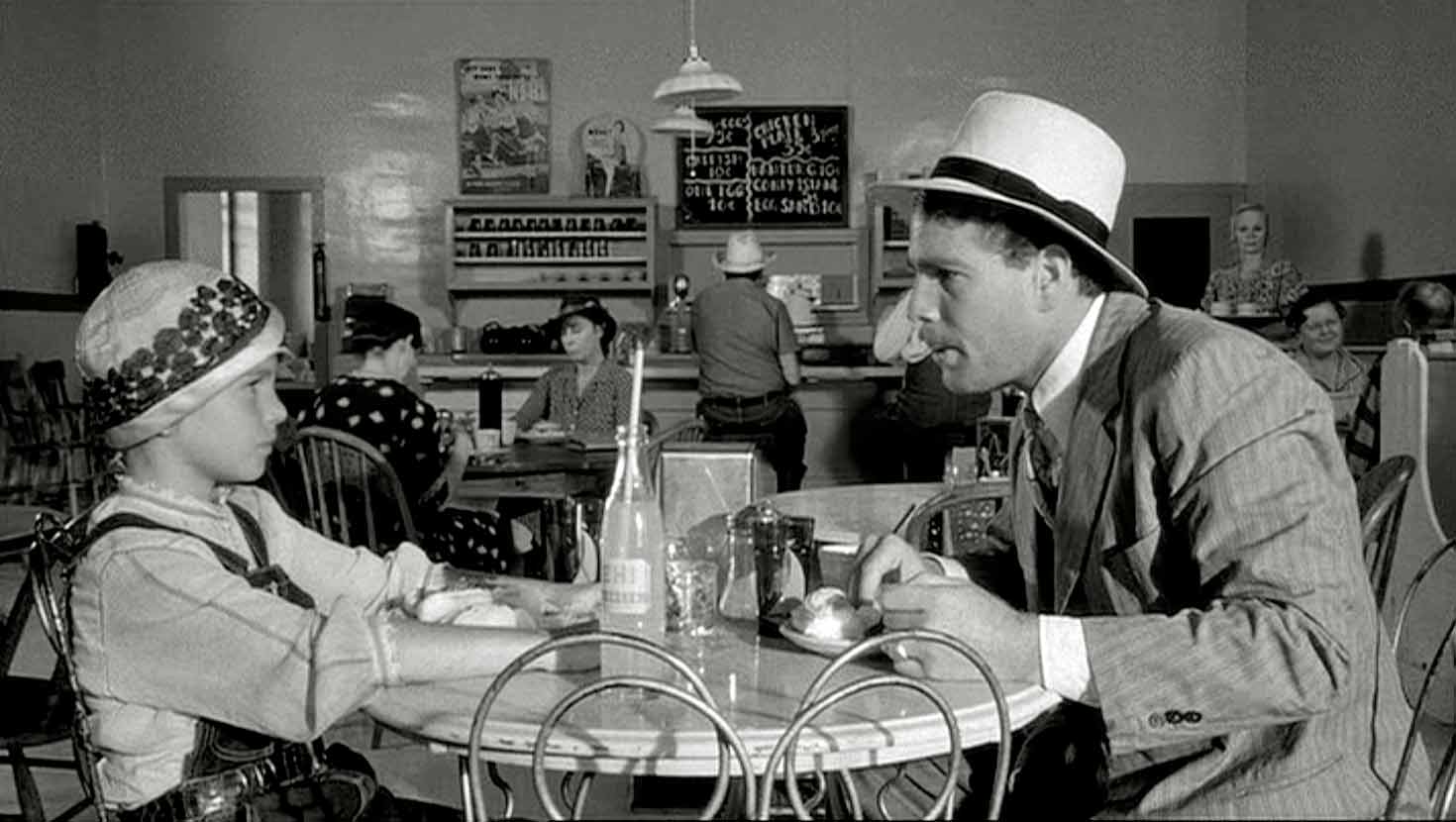
One of the most sure-fire ways of making an enjoyable and effective film is to ensure the chemistry between the two lead characters is strong. What better way to achieve this than by casting a father and daughter in what is essentially a buddy film?

In Paper Moon, we follow the story of tomboy orphan Addie Loggins (Tatum O’Neal) as she is taken under the wing of con-man Moses Pray as he agrees to take her from her mother’s funeral to her aunt’s house in Missouri. She is convinced he is her real father, a point that is hinted at throughout, despite his continued denial of the fact. One thing that they’re both convinced of, however, is that they make a great pair as a scamming duo, going door-to-door convincing recent widows that their recently deceased husbands had ordered them a personalised bible. This serves as an excuse for them to go on a prolonged adventure of dishonesty, an adventure that seems far more appealing than their other limited options.

The chemistry between the O'Neals is excellent.

The chemistry between the O’Neals is excellent.

Much was made at the time – and has been since – of Tatum O’Neal’s performance. Indeed, she remains to this day the youngest person to win an Academy Award for Acting. At 1 hour, 6 minutes and 58 seconds, it is also the longest performance to receive a Supporting Actor/Actress Academy Award. It is playful and at times unintentionally comedic, but the playoffs with father Ryan are brilliant to watch. One memorable scene involves a long one-shot as they drive and argue, both livid at each other before turning it around to agree despite their tones still being that of an argument. It’s almost so good it doesn’t feel like they’re acting, although it allegedly took 39 takes over two days to get right.

One thing the film never answers is the question of whether the two are really father and daughter. The decision is made instead to leave it open as they head off into the sunset, presumably to continue much as they did in this film (a relationship explored in a panned TV sitcom spin-off series starring Jodie Foster). It is a nice decision – the fact they need each other, either as a father figure or as a driver to act responsibly, is to them more important than finding out this truth, at least at this stage in their relationship.

The bonus features are worth watching and provide a valuable insight into the making of the picture. The highlight is an anecdote involving Tatum repeatedly fluffing a line, resulting in her father having to eat countless amounts of waffles, much to the delight of Tatum. In fact, this was deemed so important as an example of their chemistry that the outtake was incorporated into the original trailer.

The cinematography by the Hungarian László Kovács adds a great deal to the authenticity of the film and its success in recreating 1935 Kansas. Coupled with a timeless soundtrack and a great attention to detail in the scenery and costumes, the result is that it transports the viewer completely into the environment, adding further embellishment to the excellent performances of both stars and their supporting cast.

A unique film with a lot to offer even the most ambivalent of viewers, this is one of the best re-releases of the year.

Paper Moon is available on Masters of Cinema Blu-ray now.

Vacation (Jonathan Goldstein and John Francis Daley, 2015)

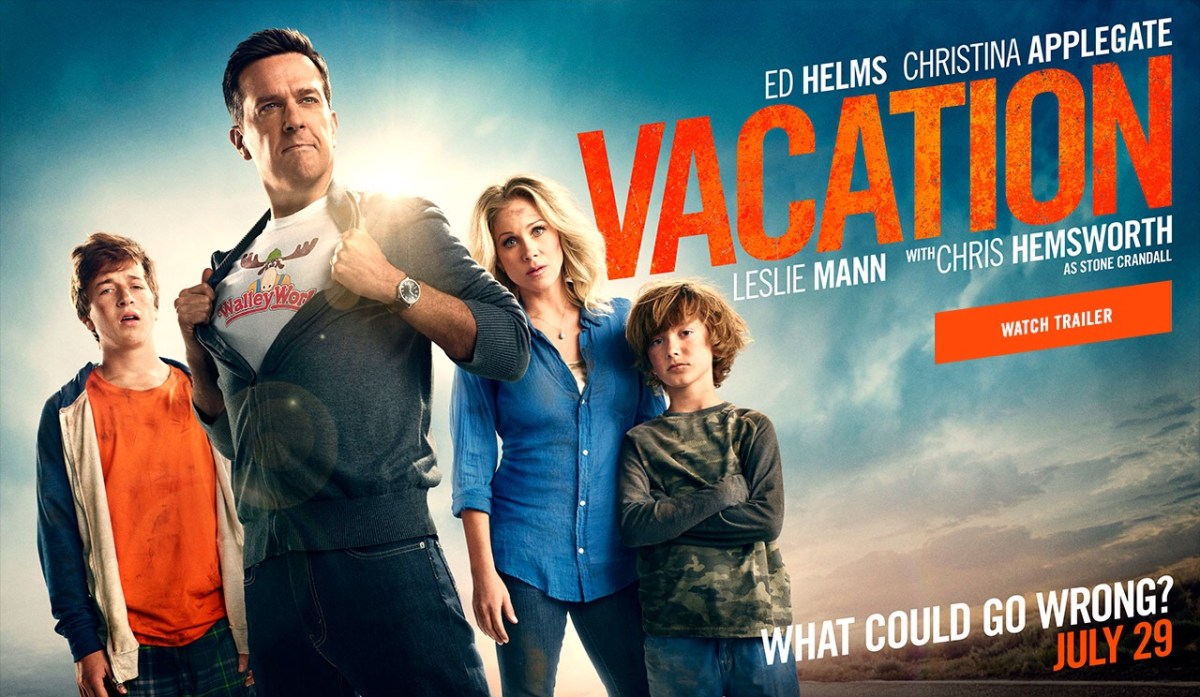
The newest addition to the Vacation legacy is an attempt to reboot the previously successful franchise and bring the story to a whole new audience. It’s a shame then that it fails to do either and also tarnishes the memory of the originals in the process.

It stars Ed Helms as the now grown up Rusty, who we know as the son of the old Griswold family. He now has a family of his own to look after. Following in his father’s footsteps, he decides to reboot their family bonds by taking his wife Debbie (Christina Applegate) and two sons Kevin (Steve Stebbins) and James (Skyler Gisondo) to Walley World. Hilarity ensues.

The opening twenty minutes or so as they set up the characters is delivered in a very tedious manner and doesn’t really achieve the desired results of showing a truly dysfunctional family. There are some cheap gags as the four family members conform to some stereotypical character traits before the real action gets going and some fun starts, but to have such a slow start to a big summer comedy is a risky move that contributes to the film’s downfall.


The best moments come when the Griswolds interact with other characters appearing in cameo roles. Most notable are Chris Hemsworth as Stone, the well-endowed brother-in-law, and Charlie Day as Chad, a depressive river rafting guide. Both spawn some great moments that are let down by the punctuating gags between about rim jobs and swimming in poo.

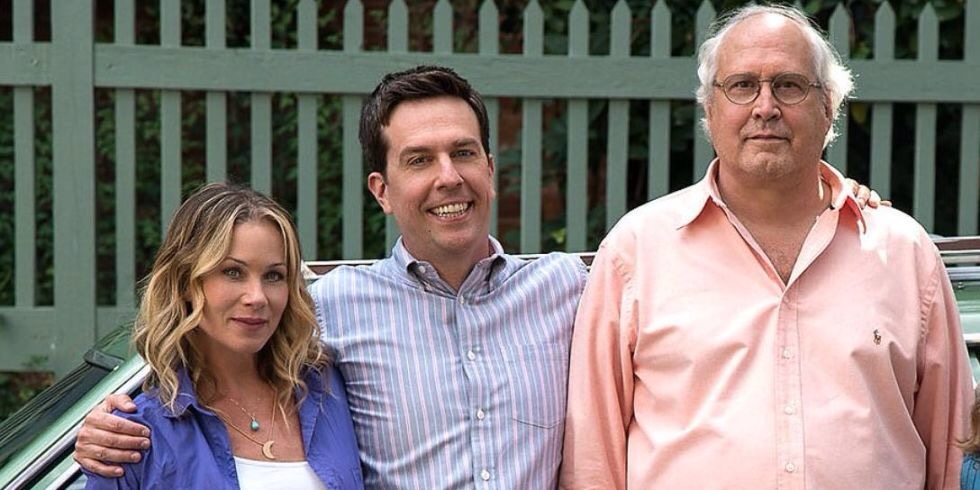
The lowest point is when Chevy Chase appears in a wholly unfunny late scene. Watching him attempt to make the removal of a medium sized guitar from a large cabinet look awkward and clumsy for over ten seconds is simply excruciating.

It’s a valiant attempt to bring the kind of humour that made the originals so successful to a new audience but it actually tarnishes the originals as I’m now questioning whether they were all of this quality. Avoid this film unless your main priorities are familiarity with a rehashed storyline and a lack of anything remotely thought-provoking.

Network (Sidney Lumet, 1976)

“Get up out of your chairs, open the window, stick your head out, and yell, and say it: “I’M AS MAD AS HELL, AND I’M NOT GOING TO TAKE THIS ANYMORE!””

When Sidney Lumet’s scathing attack on the televisual media hit the big screen in 1976, this was one of many quotes from lead character Howard Beale (Peter Finch) that resonated with the public psyche. It was a huge critical success and would eventually prove to be Lumet’s defining moment as a director.

“I’M AS MAD AS HELL, AND I’M NOT GOING TO TAKE THIS ANYMORE!”

The film opens spectacularly. We’re introduced to television news presenter Beale and the news that he has been sacked from his role at UBS due to his declining ratings. He has been given two weeks’ notice by his long-time friend Max Schumacher (William Holden in fine form) but his reaction is to go onto his next live broadcast and announce “I’m going to blow my brains out right on this program a week from today. So tune in next Tuesday.” This causes mixed reactions amongst those at the studio. The conservative Frank Brackett (Robert Duvall) leads a campaign to get rid of him immediately, whilst Diana Christensen (Faye Dunaway) sees it as a potential ratings spinner, eventually facilitating him receiving his own evening slot in which he rants about the media, advertising, indoctrination and the state of American society. It proves an instant hit and the internal politics of the situation spiral.

The entire cast are on fine form, not just those in lead roles. One stunning sequence involves Beatrice Straight’s Louise Schumacher, wife of Holden’s Max, occupies the screen for only five minutes and two seconds but this was long enough for her to win the Academy Award for best actress. It is far shorter than any other performance that has ever won an Academy Award. It’s hard to say in isolation whether it is wholly deserving of such accolades, though it is possible that the Academy couldn’t bring themselves to award the prize to Jodie Foster, the then 13-year-old who was nominated for her controversial role as Iris “Easy” Steensma in Taxi Driver. You can watch the clip in a sub-standard quality below, if that’s your thing.

The topics covered in Network resonate louder today than they ever have. The anger felt by Beale at the state of the network he works for isn’t necessarily centred around the network itself but rather the people who consume it without question. Ironically, the people who begin to love his show begin to accept it and consume it, thus keeping them watching the television rather than switching it off altogether and avoid potential further indoctrination. We now live in a society four decades later where the way information is fed to consumers is controlled more tightly than imagined in Network, be it on television, in newspapers or online. The latter of these is crucial – one of the biggest opportunities civilisation has had to take over the way information is consumed and what that information is has been hijacked by corporations and advertising. That Lumet so closely predicted this future makes this essential but somewhat eerie viewing.

Network is available on Arrow Video Blu-ray now.

Stalag 17 (Billy Wilder, 1953)

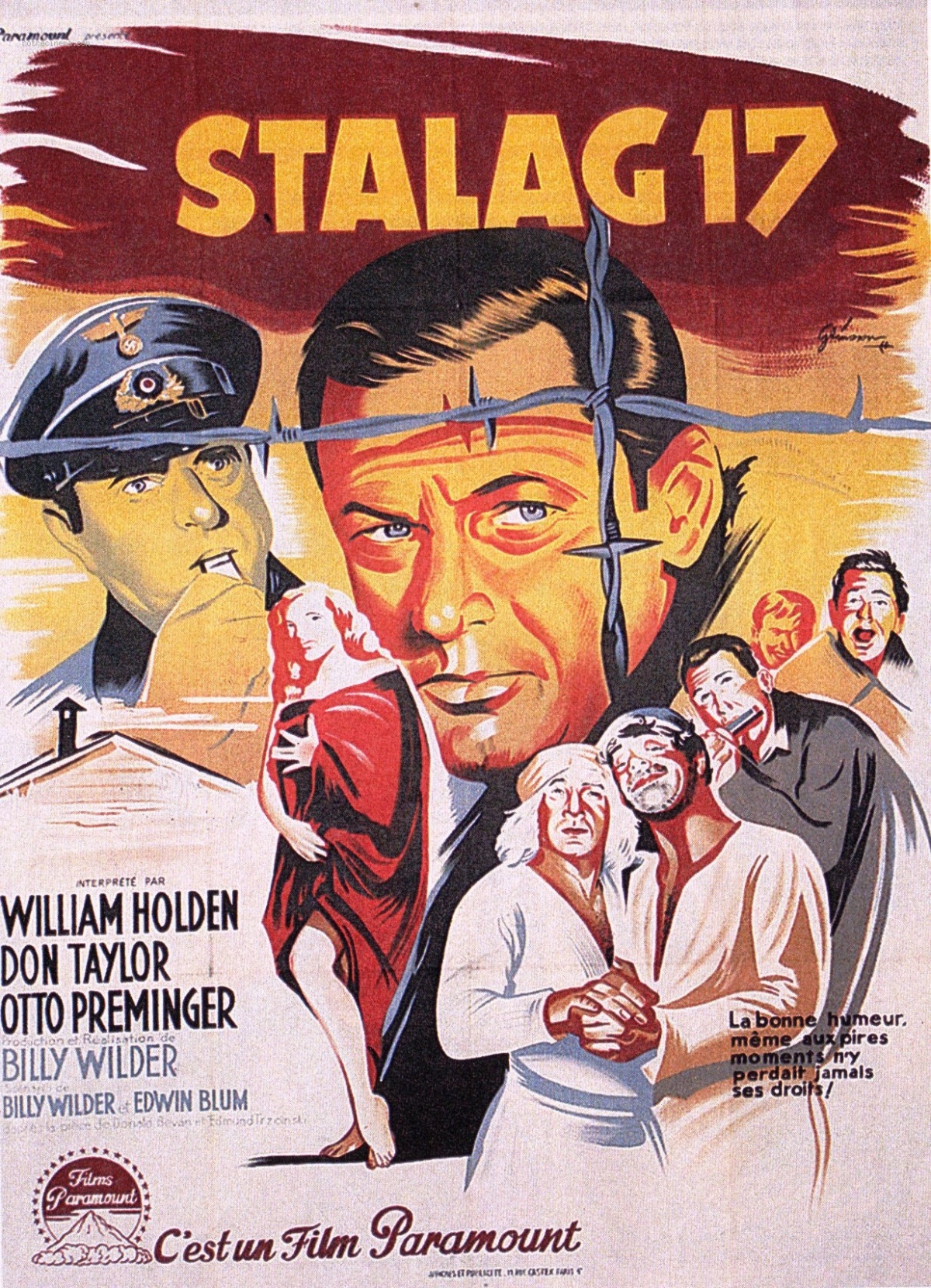
Billy Wilder made a habit of directing films that are arguably the quintessential examples of their genre. In 1944’s Double Indemnity he defined the film noir genre. Then in 1950 Sunset Boulevard hit the big screen, perhaps the best film to ever tackle Hollywood itself. With Stalag 17, a film released in 1953, he directed what many people consider to be the greatest Prisoner of War (POW) film ever released. Of course, fans of The Bridge on the River Kwai and The Great Escape may argue the toss, but Stalag 17 is up there with the best of them.

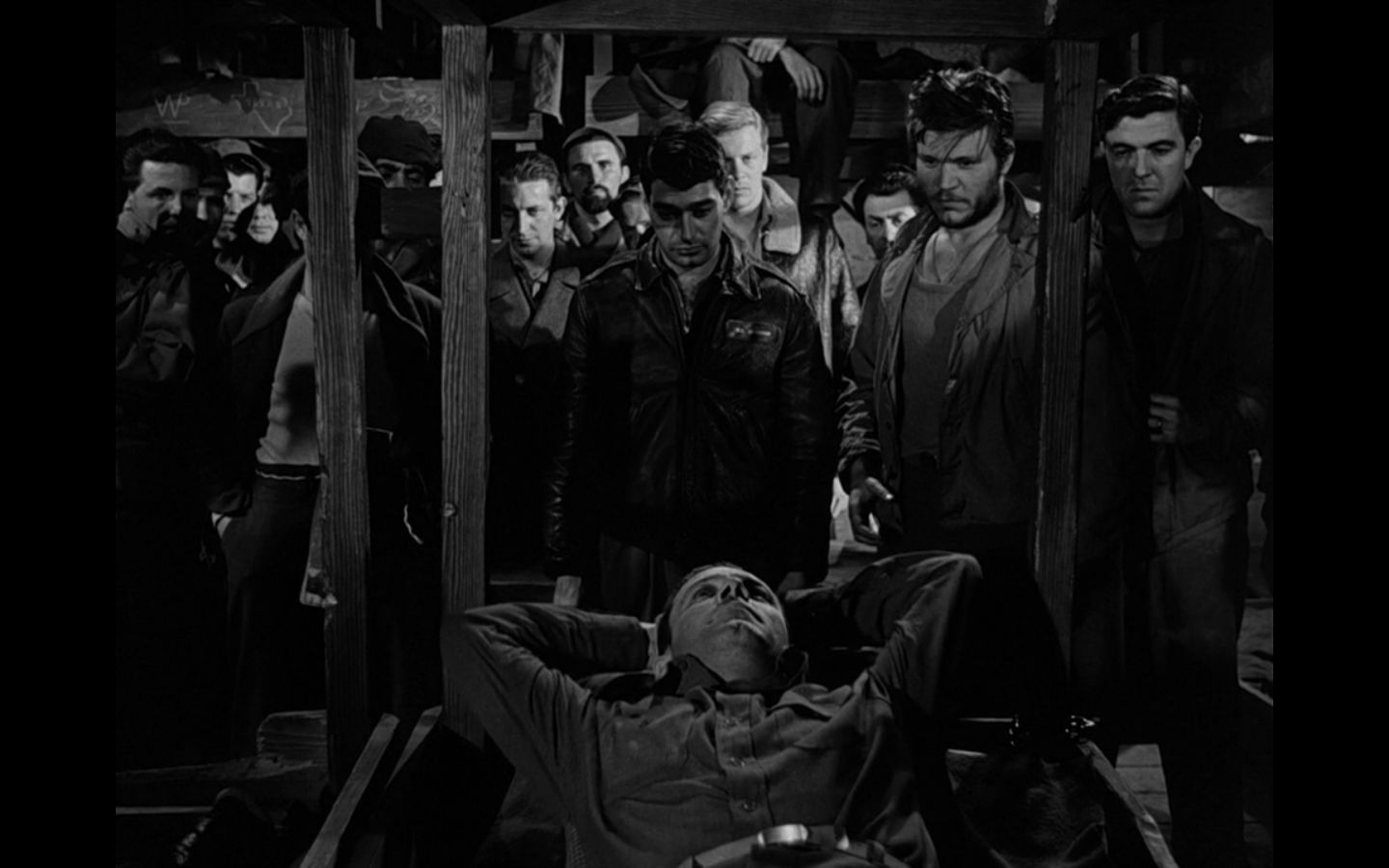
One of the most memorable scenes of the film, expertly framed.

One of the most memorable scenes of the film, expertly framed.

Set in 1944, the film focuses on the titular Luftwaffe POW camp where 640 American captured sergeants reside alongside Polish, Czech and Russian captives. It is narrated by Clarence “Cookie” Cook (Gil Stratton), reminiscing on his time in the camp. The opening sequence shows two men trying to escape from the camp, whilst the remaining men in their block argue with Sefton (William Holden) about their potential success at escaping as he takes their bets. As the only person sure of their failure, Sefton wins a large supply of cigarettes from his comrades. As the men come around to the thought that their failure may have been caused by a tip off to one of the Nazi officers, suspicion falls on the ever-cynical Sefton, who appears to be profiting nicely from various trades and deals far more than anyone else held captive. Unwilling to protest his innocence, Sefton resolves to find the real informer and expose him before another there are any more casualties.

What strikes most prominently about this film is its inclination towards comedy. It is certainly rooted in the seriousness of being held as a POW in Nazi Germany, but the comradeship and light-heartedness with which the Americans deal with their situation sets it apart from other films in this genre. It doesn’t just stop at the relationship between those of the same nationality. Indeed, it takes on quite a comical depiction of the relationship between the guards and the captives, illustrating a softer side to the Nazi officers that is seldom depicted elsewhere.

As the film progresses, however, the comical aspects fade somewhat to allow the seriousness of the situation to take centre stage. This contrast is less harsh than, say, Life is Beautiful (Roberto Benigni, 1997), but it works perfectly. The light-heartedness encourages the viewer to warm to all the characters quicker than would have otherwise been possible and by the time the final act plays out the tension is at its peak.

William Holden rightly won an Oscar for his performance as Sefton, spoiling the party that year for the likes of Marlon Brando (Julius Caeser) and Richard Burton (The Robe). The popularity of the film can be put down to two factors at the time. Firstly, the film was withheld from release until 1953 because Paramount Pictures didn’t believe anyone would be interested in a POW film; only when the release of prisoners following the end of the Korean War did it have a widespread political context (both the US release and the end of the Korean War occurred in July 1953). Secondly, the backdrop of the film industry itself was focused on the Hollywood Blacklist, a list of those industry professionals considered to be supportive of communism. This was at its height in 1953, but no studios would dare release a film to directly tackle these issues. The storyline of a lone man being singled-out by his peers based on false circumstantial evidence will no doubt have gained extra resonance against this ongoing issue.

Stalag 17 deserves to be seen, for its excellent performances, magnificent direction and historical relevance. With it being a Masters of Cinema release, there has never been a better time to check it out.

Stalag 17 is available to purchase now from Masters of Cinema on Blu-Ray.

Film review – The Interview (Seth Rogen and Evan Goldberg, 2014)

So, here we have it. The film that almost started World War III. The film that Sony were so adamant it was going to release they refused to listen to threats from North Korea, even ignoring the fact that they were being infiltrated by “The Guardians of Peace”, a hacking group from North Korea.

It’s a shame it’s such a terrible film.

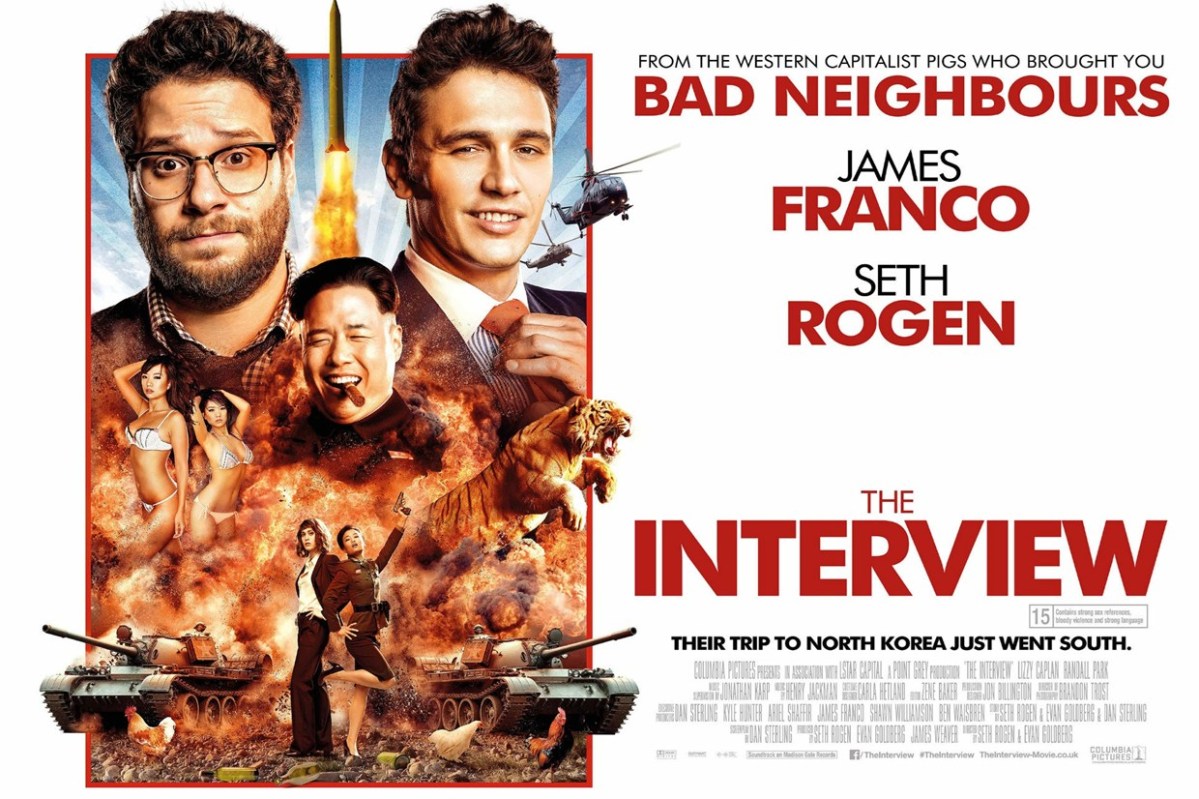
Another failed attempt at the "water sprinkler" dance move.

Another failed attempt at the “water sprinkler” dance move.

The premise of the film is thus. Dave Skylark (James Franco) is a popular trash entertainment TV presenter in USA and has his own show called Skylark Tonight. However, as they reach their 1000th show his producer Aaron Rapaport (Seth Rogen) longs to produce something with a bit more depth. When an unlikely interview with North Korean leader Kim Jon-Un (Randall Park) becomes a reality, their breakthrough into high-brow entertainment is quickly turned into an undercover CIA mission to assassinate the leader. Hilarity ensues.

The humour in the film is generally derived from one of two sources: poking fun at the North Koreans or crude toilet humour gags. At one point a botched administering of ricin leaves the two stranded in North Korea without the ability to complete the mission. The CIA, in a continuity-challenging move, send over two additional ricin doses in a small rocket. Rogen, by this point facing imminent death due to a stray tiger (what?) and a group of about 15 guards closing in on him decides the only way to save the day is the insert the entire capsule into his anus.

Elsewhere we discover that Kim Jong-Un is a huge fan of cocktails and Katy Perry. He has emotional issues due to disconnection and lack of approval from his father. He regularly spends time with prostitutes. Despite their differences to the Western world, North Korea is a proud nation with a lack of understanding of the ways of the west. On this level it is understandable why this film would cause them a serious issue.

It’s a shame that this film has no sense of intelligent writing that has been on display in the creative outputs of both of its lead characters. Of all the films to fall flat with, it’s most unfortunate that it happened with a film that had the eyes of the world focused on it.

The Interview is out now on Blu-Ray and DVD.

Film review – Ant-Man (Peyton Reed, 2015)

The problem that many British viewers of this film will have when viewing this film is a pining for what could have been. Edgar Wright and Joe Cornish had for a long time both been attached to the film, the former as director and both as co-writers. Both are extremely well-known amongst the geeks of Britain and the fact they were teaming up was an absolute dream. Edgar Wright proved what he could do when given the freedom of the source material when he directed the excellent Scott Pilgrim vs The World in 2010. Whilst the Ant-Man series wasn’t as well known as the likes of X-Men and Spiderman, in the right hands it had the potential to be a great film.

Phenomenal powers, itty bitty living space.

Phenomenal powers, itty bitty living space.

However, it slowly became apparent that Marvel had a different idea of the direction it should take. In an interview with Mike Ryan of the Huffington Post, Edgar Wright said “It is pretty standalone in the way we’re linking it to the others. I like to make it standalone because I think the premise of it needs time. I want to put the crazy premise of it into a real world, which is why I think Iron Man really works because it’s a relatively simple universe; it’s relatable.” Clearly Marvel wanted the film to be set in the Marvel Cinematic Universe and the compromises required to slot it in with Thor, Iron Man and the clan didn’t sit well with Wright and Cornish. With not long to go before release date – 420 days to be precise – the pair (along with director of photography Bill Pope) co-announced with Marvel Studios that they were leaving the project, citing “differences in their vision of the film”.

So what are we left with? Well, Peyton Reed has come on board as emergency director. His previous work has been pretty much exclusively romantic comedies (Down With Love, The Break-Up) and the impression is that he was brought in to do what the studio needed rather than drive his own vision of the narrative. Ironically that makes him a kind of yes man. [1]

What’s really frustrating is that the script has some very Wright/Cornish-esque humour in there. One of the large scale fights near the climax of the film happens around a Thomas the Tank Engine toy train track. Anyone familiar with Joe Cornish’s route to fame in the 90s will see the likelihood that this was one from him. Or maybe Peyton Reed is a big fan of Series 2, Episode 18 of the original Thomas the Tank Engine series “Thomas Comes To Breakfast”, which first aired in the UK in October 1986.

The one saving grace of the film is Paul Rudd doing and excellent job as Scott Lang, the thief-turned-hero who wants to make up for lost time with his daughter. His humour and sharp wit make the journey through the film entirely pleasurable. He is a great comedic actor and the film has benefited from his presence on the rewriting team.

However, for all the good that is done by some great work in the cast (Michael Peña is hilarious throughout), we keep getting reminders that this is two films woven into one. The worst moment of the film comes when there’s an oblique reference to The Avengers, which sticks out like a sore thumb. Just as we are forgetting about it, Falcon arrives on the scene. Yes that’s right, Anthony Mackie has his very own cameo role in everyone’s eleventh-favourite Avenger (12th if you include Ant-Man, 13th if you include Nick Fury… who knows where by the time Civil War is released). It’s so pointless and so clearly an afterthought that it not only doesn’t help fit it in with the Marvel Cinematic Universe but rather actually just causes a detrimental effect on the absorbing world that was almost being created in this film.

It’s a shame that we will never see that Wright/Cornish film that never was. It must be said that it was unlikely to ever see the light of day without some serious compromises, but as two huge fans of Marvel comic books that was never going to happen. Instead we’re left with a reasonable film with some rewarding moments, which never really gets going because it is so disjointed.

Ant-Man is out at cinemas globally now.

[1] Yes I went there.

Hot Rod (Akiva Schaffer, 2007)

The tagline on the poster of a film says a lot about it. When it announces to the world that it’s going to “Smack Destiny in the Face”, it probably isn’t going to take itself too seriously.

Hot Rod is the story of Rod Kimble, an aspiring stuntman trying to step into the great shoes left behind by his father, a man Rod believes to be one of the greatest stuntmen of all time. One of his greatest goals in life is to earn the respect of his step-father Frank (Ian McShane), which apparently will be achieved by “beating the crap out of him”. This goal is a long way from being realised and time is running out as Frank’s health is deteriorating. To save his life, Rod decides to pull off a series of publicised stunts to earn money for his operation, whilst fighting for the affections of his love interest Denise (Isla Fisher) with her boyfriend Jonathan (Will Arnett), with the ultimate aim of getting Frank back to full health so he can have a fair fight with him.

“Who wants to see me do a big-ass stunt?”

Admittedly, the premise is somewhat flimsy when written out like that, but it’s a film that defies expectations. It tempts you to set the bar low, aims low, but yet somehow works. Many critics hate films that ask the viewer to accept what they’re seeing at face value. Indeed, it is usually a recipe for disaster (see Freddy Got Fingered, a film I consider to be one of the worst ever made). On the rare occasion that a studio gets it right, the results can be hilarious.

It was written initially by Pam Brady (South Park, Team America) for Will Ferrell. After a period of production hell, it was released by Paramount for use by The Lonely Island, who at the time were rapidly gaining popularity through their work on Saturday Night Live. It’s hard to see Will Ferrell in Samberg’s lead role, likely because Samberg has evidently evolved the character way beyond the original concept.

Hot Rod was a commercial failure at the time of release, exactly eight years ago today. The critics weren’t too kind either. It has since taken on something of a cult following. If you’ve ever heard someone say “cool beans”, “Hi I’m Rod and I like to party”, “Hwhiskey”, “I’m too legit to quit” or “ultimate punch”, then it’s quite possible you’ve let a cult quote slip right over your head. Throughout the film there are highly memorable scenes, not least the many failed stunts Rod attempts and the Footloose parody. At times it’s as quotable as Anchorman, perhaps the epitome of modern cult comedies.

When films like this misfire, studios can end up with a total embarrassment on their hands. When they get it spot on, as they have here, it can be pure comedy gold. As with most cult comedies it won’t be for everyone, but it would be criminal not to try it. It’s legit.

One, Two, Three (Billy Wilder, 1961)

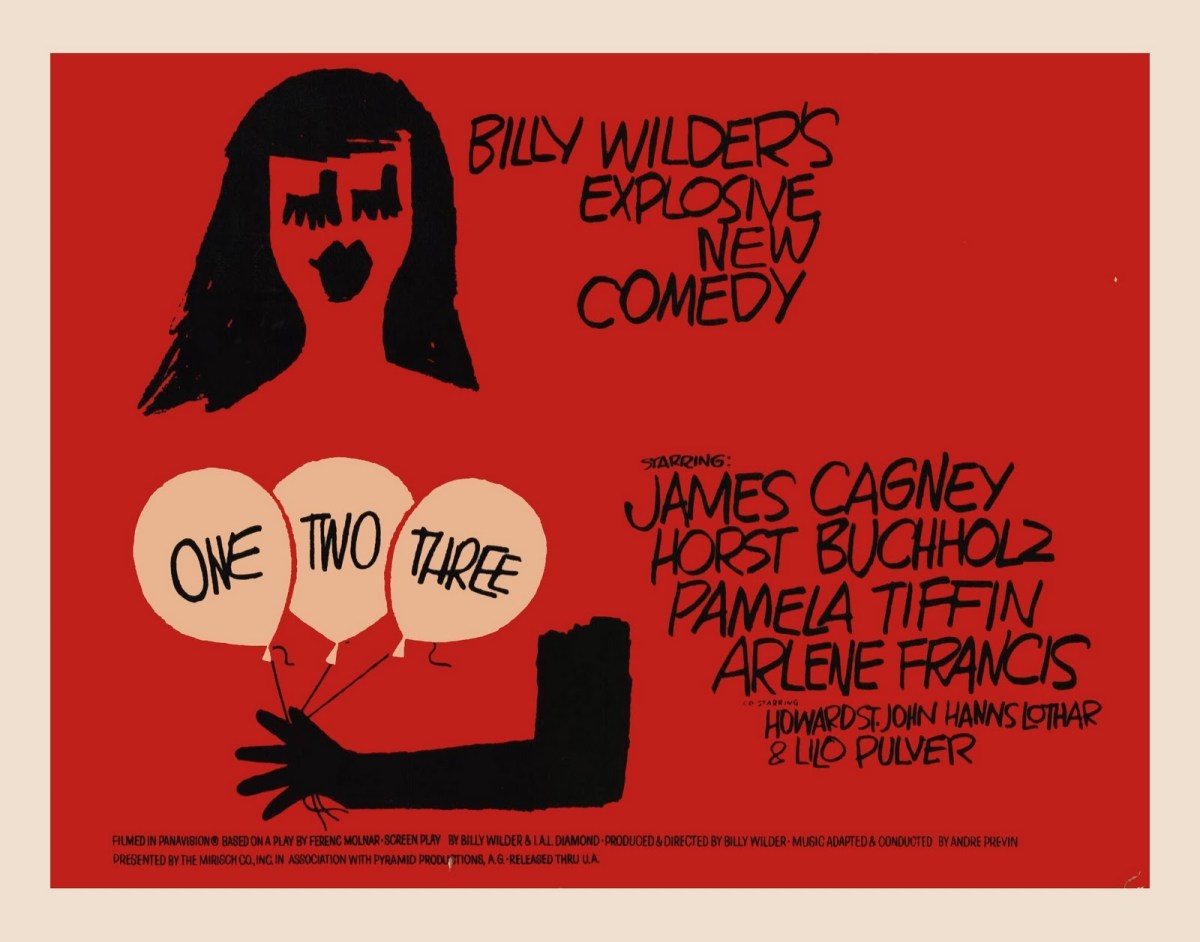
One of Wilder’s less fondly remembered films, “One, Two, Three” treads safe ground for Wilder by being adapted into a Hollywood blockbuster comedy from a European play (in this case the 1929 Hungarian one-act play “Egy, Kettő, Három” by Fenenc Molnár). It stars James Cagney as C.R. “Mac” MacNamara, the general manager of Coca-Cola’s operations in West Berlin, tasked with looking after his manager’s teenage daughter Scarlett Hazeltine (Pamela Tiffin) for a brief period as she visits the city. Seeing it as his chance to impress his boss Wendell P. Hazeltine (Howard St. John) and be handed a golden opportunity to take over operations in London, Mac sees it quickly unravel in the hands of a precocious 17-year-old girl, her East Berlin revolutionary fiancée Otto (Horst Buchholz) and a smattering of bad luck MacGuffins along the way.

There’s a reason why this film isn’t popular anymore. The jokes tend to point towards poking fun at former Nazi officers, caricatured communists and a disjointed society recovering from devastation. Considering Wilder himself lost three close family members in the war and only escaped the Nazi onslaught by some good fortune, however, it is perhaps incorrect to dismiss it as being simply dated. Wilder had a motive to make this film, which is in deep contrast to his former documentary short Death Mills – he wanted to bring his unique blend of humour to a topic close to his heart.

It is unfortunate, then, that the jokes themselves fall short on so many occasions. Wilder achieved timelessness in many of his feature films but the sort of slapstick fast-paced humour seen here hasn’t aged well. It’s actually hard to see what joy 1961 audiences would have found in its farcical plot.

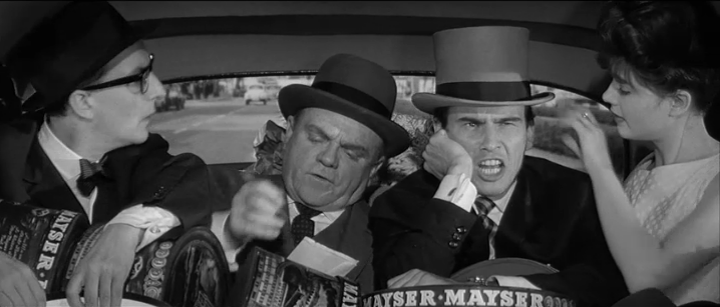
"Are we there yet?" "No, there are still fifteen minutes of dated jokes to go, son."

“Are we there yet?” “No, there are still fifteen minutes of dated jokes to go, son.”

There is some deep-seated commercialism on show too. The film is entirely set in and around Coca-Cola’s operations in West Berlin, providing ample opportunity for product placement. Not wishing to spoil the punchline to the final joke, the one reference at this point to Pepsi-Cola underlines the focus on advertising Coca-Cola. There’s no evidence to suggest there was a sponsorship deal with them, but in the modern age of cinema this kind of product placement has become tiresome so it is retrospectively detrimental to the integrity of the film.

It’s fast paced and hard to keep up with but die-hard Wilder fans will find some enjoyment here. Just don’t seek it out hoping for anything special.