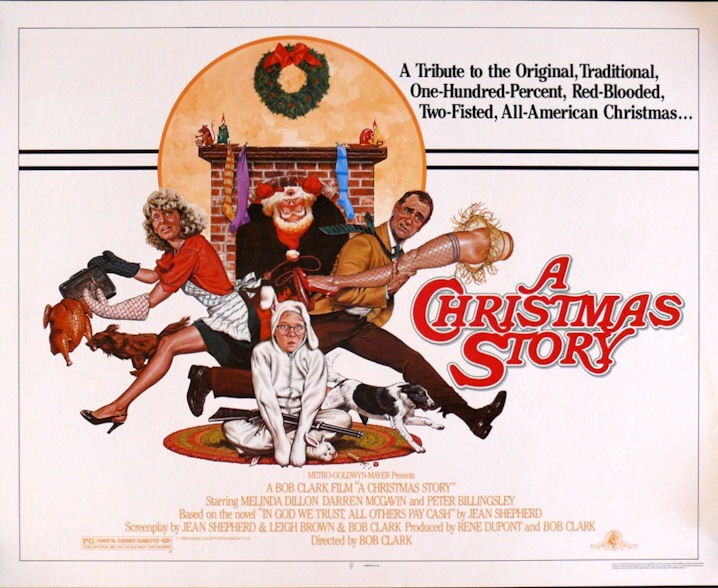
An infrequent but nevertheless joyous family tradition of mine is to catch up with the tales of nine-year-old Ralphie Parker and his family in Bob Clark’s adaptation of Jean Shepherd’s semi-autobiographical stories. It covers his pursuits in the lead up to Christmas to convince his family, teacher and a department store Santa to deliver him a Red Rider Carbine Action 200-shot Range Model Air Rifle for Christmas, despite the fact he will inevitably poke his eye out.
The famous tongue on the lamppost scene
The film was made in 1983, but is set in early 1940s USA. It is heaped in nostalgia for an era that many of us now can’t remember, but somehow feel represents our past. It is a past that is entirely more innocent: be it the kids crowding around the radio for their favourite show, or the punishment for swearing (the classic bar of soap in the mouth), the music and the cars. It sends a strange shot of emotion across me as it reminds me of growing up, despite the fact I was born after the film was released.
The script doesn’t really follow any real character development, instead taking on a mode of storytelling via a series of vignettes that dip into various tales. It works because each mini-tale is absolutely hilarious, and the actors are all clearly having a lot of fun with the material. I defy anyone to not find at least one part of the story they can relate to.
Above all else, it’s simply hilarious.
Please seek it out and spread the word. This film needs to be enjoyed by more people than are aware of it today.
‘Life, Animated’ explores the life of Owen Suskind, an American man who, at the age of just three, became unable to speak and interact with those around him. This was a complete mystery for his parents who were desperate to rescue their son from the depths of silence. As he grew older his parents realised that he could communicate through his love of Disney animated films such as The Little Mermaid, Aladdin and The Lion King. Finally they were able to understand his reasoning through the films he began to quote verbatim.
This is a balanced cross-examination. To watch Owen when he’s on his own is a fascinating study for those interested in the condition of autism. He has learnt most of the lines from his beloved films, including facial expressions and accents. Yes, he is nothing short of animated when he’s lost in his world.
There is some beautifully animated moments as we are guided through his inner thoughts in the form of his younger self and his band of Disney sidekicks, including Iago, Baloo, Abu, Rabbit, Sebastian the Crab and Rafiki. These short animated sequences were supplied by company Mac Guff (Despicable Me, The Lorax) and are equally evocative and breathtaking.
But the standout moment of the film is when his father, Pulitzer Prize-winner Ron Suskind, recalls a moment when he first reconnected with Owen via an Iago hand puppet. It’s a must-see moment.
The film may take a look at only one man’s struggles with autism, but the focus shifts from him to those around him: his parents, his brother, his girlfriend, the professionals helping him through his condition. In this way, we see how his autism affects those around him. The result is arguably one of the most important films about autism ever made.
Life, Animated is available to download on iTunes and is also at select theatres throughout Britain.
Note: Roger Ross Williams’s last documentary film was the short subject piece ‘Blackface’ for CNN, which explored the unbelievable holiday tradition still at large in the Netherlands called Sinterklaas. It may be rooted in tradition (as the Dutch argue), but it is also rooted in racism and white supremacy and has no place in a modern and progressive society.
The film is fortunately available in full on YouTube as below.
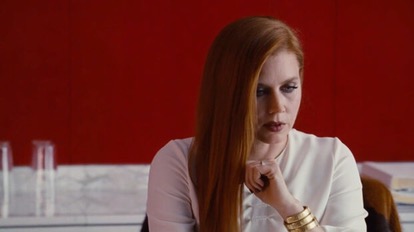
Whilst Nocturnal Animals may be one of the most stylish and effecting pieces of cinematic art released in 2016, it may also suffer from being the second biggest Amy Adams film released in the month of November (Arrival is set to hit cinemas later this month). The films are targeted at a completely different audience, and if you’re interested in seeing Tom Ford’s latest then you need to know what you’re getting yourself in for. It’s a veritable misery-fest. And it’s absolutely breathtaking.
The film stars Adams as Susan Morrow, a hugely successful art gallery curator married to a handsome but unrelatable husband (Armie Hammer). Feeling like her life is unfulfilled, she unexpectedly receives a manuscript for a novel through the post from her ex-husband Eddie Sheffield (Jake Gyllenhaal). The book, titled ‘Nocturnal Animals’, is dedicated to her. As she delves deeper into the grippingly horrific story – which plays out for the viewers with fabulous turns from Gyllenhaal, Aaron Taylor-Johnson and Michael Shannon – we come to discover the history between Susan and Eddie and the inspiration for the story.
There were long periods of the film where I was so absolutely gripped by the fictional tale Gyllenhaal’s character was spinning – the film within a film – that I almost dated to forget that we were reading it with Adams’s Susan as she struggles with her insomnia. The meta-tale is brutally horrific, with the male central character experiencing the some of the worst experiences imaginable in life. It takes until quite near the end of the film to realise why he has written this story, and at this point we also remember the times Susan has thrown the book down in disgust. It’s easy enough to play out a story and leave a reveal until the very end. It’s quite something else to leave the audience so gripped in the journey.
Tom Ford executes every moment of the film with an unrivalled stylishness that was evident in his debut feature ‘A Single Man’. It is in the L.A. art scene that we see the characters inhabit the sort of regal living spaces most people can only dream of, despite their thin veneers here only acting as a cover for a desperately hollow existence.
The resoundingly successful final scene is an absolutely devestating act by Eddie. Susan is left emotionally drained following the reading of the manuscript that finally reveals his potential as a brilliant writer. It is also laced with accusations at Susan. She is left with no resolution. This is a clearly a reflection of how he felt after their relationship originally broke down. The answer is never clearly spelled out, with the audience left as smartly frustrated as Susan. This is a really intelligent move that epitomises the ability of Ford to sit the viewers firmly in the position of the people on the screen and ask themselves how they really feel.
It is a wonderful piece of cinema that I’ll be recommending to anyone who will listen.
British-born Andrea Arnold may have created a cutting piece of social commentary in ‘American Honey’, delivered with a refreshingly natural voice, but with a running time of 163 minutes it does feel like there was scope to say the same thing in about half the time.
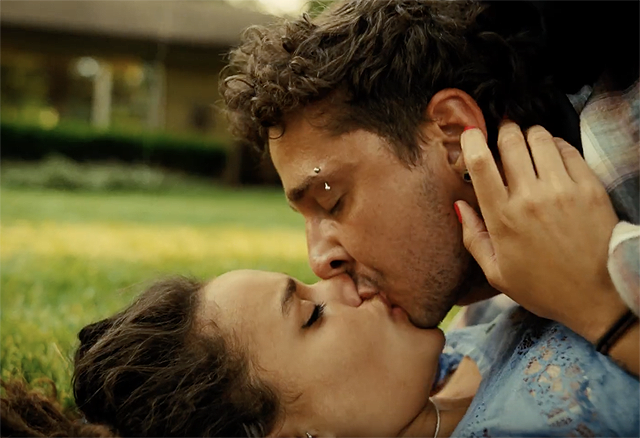
It follows troubled 18-year-old Star (Sasha Lane), a free-spirited girl looking after two young children for ambiguous purposes (they’re not her children and the connection she has to them is never clearly stated). A chance encounter with Jake (Shia LeBeouf) leads to an opportunity with a random group of youngsters selling magazines from town-to-town, led by Krystal (Riley Keough), and she opts to run away from an inevitable life of domestic imprisonment and abuse.
One of the principal achievements by Andrea Arnold is creating a truly realistic world for the cast to inhabit. She was involved in the principal photography and had essentially completed the entire road trip before they started filming, finding locations to realise her vision.
The cast was mainly taken from the streets with no experience, supplemented by more familiar faces. With no history of being in USA at that time of her life (she was busy doing children’s TV show No. 73 with Sandi Toksvig and Neil Buchanan) she has done wonders with a reflection of an oft-ignored part of society.
The cast are also tremendous and natural in front of the camera, usually feeling like they are simply being captured rather than working from a script. Indeed, many scenes were shot without a script so there’s an element of reality about that statement. The result is that each segment feels absolutely real, partially due to the fact that nothing is rushed. Unfortunately the lack of focus belies this, with pacing being the true victim.
Lane and LeBeouf have real chemistry
Arguably, LeBeouf does need to remind everyone that he is a pretty decent actor, especially after that dreadful performance in Nymohomaniac. He does a solid job here, with his real-life fame adding to the gravitas afforded to him by his fellow cast members (which reflects his character’s position in the group’s pecking order). He has always been a good actor, though the rest of the world may never realise it.
The plaudits must go to Sasha Lane, a complete newcomer to acting who was picked up on a beach in Florida whilst on spring break. She’s a complete natural on camera. When she gets angry, you believe her. When she feels lust towards Jake, you believe her. Star is a girl being given the chance to be her own woman for the first time, still having to demean herself due to her vulnerability, still dogged by feelings of maternal responsibility to the children that, in all likelihood, weren’t hers to feel responsible about. A truly thought-provoking performance.
The ambiguous ending, however, cemented the feeling that the story was overlong. To take so long to build up to a suggestion that Star was probably going to leave the group just seemed like a disappointment when it had taken so long to get there.
A great story has been sabotaged here by a lack of ruthlessness in the edit. Perhaps it’s an indication that Arnold had grown too close to the material and couldn’t bear to cut any of it out. That’s not necessarily a bad thing – plenty of directors don’t care enough of their final product – but it was a lot to ask of this audience member.
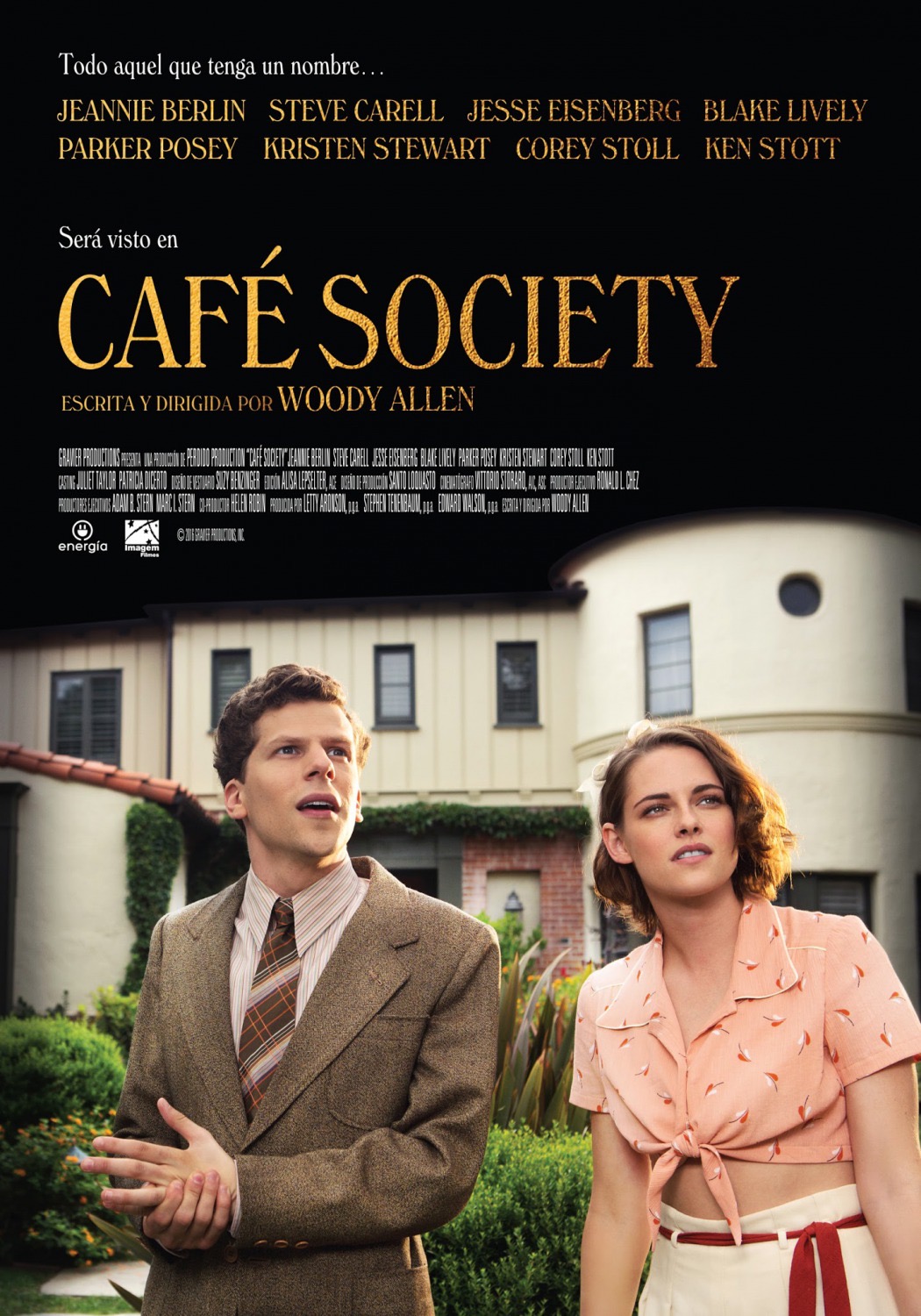
There is a moment in Café Society where the magic of 1950s Hollywood romance is really captured: a chance glance, an excited exchange, the promise of unfolding romance recognised instantly. That this exquisite one-shot involves not Kristen Stewart – the woman we need to believe is Jesse Eisenberg’s raison d’etre – but rather Blake Lively, reveals everything we need to know about why this Woody Allen effort fails to hit the heights of his more recent successes. That is, Kristen Stewart simply isn’t a believable love interest. At least not in this kind of film.
The 1930s-set story centres around Bobby (Eisenberg), a young Jewish man who has moved to Hollywood to pursue new career opportunities under the supervision of his uncle Phil (Steve Carell), a powerful and well-connected film talent agent. He instantly falls in love with Veronica (Stewart), an assistant at Phil’s office, unaware of the fact that his uncle is on the verge of breaking off his marriage to pursue his affair with Veronica.
The film hangs together on Jesse Eisenberg’s shoulders, as he starts off by doing his best Woody Allen impression and progresses towards his final position that is ever-so-slightly more alpha male than that. It is genuinely an excellent performance, bringing energy to the screen whenever he graces it.
He works best playing off against the plethora of supporting characters who never fail to exude the feel of the time and he’s clearly having fun under the supervision of one of the greatest living film directors. It’s a beautiful homage to the heyday of Hollywood, as Bobby develops into a socialite, bouncing from party to party first in Hollywood and then later on his return to New York.
Whenever Stewart appears on screen, she feels like a woman out of place in the era and unable to match the authentic performances of those around her. This goes against some excellent post-Twilight performances that have given her a route out of potential typecasting (American Ultra is a great example of this), but a classic Hollywood leading starlet she is not.
The film is not a complete failure. A hilariously delivered exchange between Bobby and a first-time prostitute is just one example of the smart comedic dialogue we’ve come to expect in Allen’s recent film. The jazz-centric score heightens the positioning in the era.
It’s just a shame that I was routing for he wrong girl.
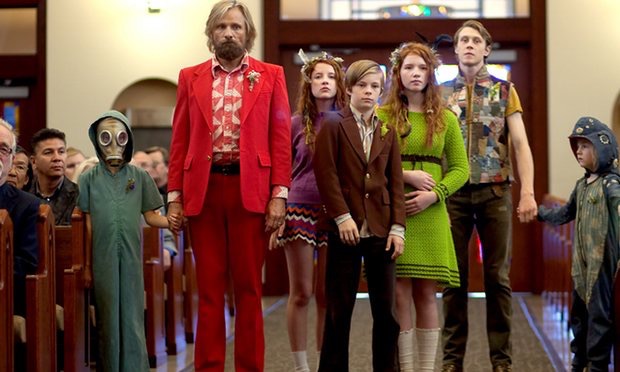
Captain Fantastic is not the latest in the never-ending chain of Marbel superhero films. Nor is it a profile of former Liverpool captain Steven Gerrard, who is fantastic for about half of Liverpool and few others.
No, despite the title, Captain Fantastic is the directorial debut full-length feature from Matt Ross, better known as Gavin Belson from Silicon Valley. Beyond the superficial veneer of a twee, heartwarming, quirky indie flick, there is something a little more substantial and special at work here.
Viggo Mortensen takes the lead role as Ben Cash, a father raising six children as an only parent after his wife is hospitalised with bipolar disease. Nurturing them off-grid in a sort of wilderness commune, he is forced to bring them back into society when he receives the news that his wife has committed suicide. The journey to New Mexico for the funeral forces him to re-evaluate his choices in bring up his children, exposing them all to a world they have shunned.
Many of the greatest films to grace our screens have us questioning are inner-most philosophies. Whilst this isn’t likely to be considered an all time great, it does push the right buttons in its ability to be thought-provoking. The six children are for the most part absolutely happy, well educated, physically fit individuals that seem to have had no ill-effects from the unique brand of homeschooling afforded by their father Ben. The portrayal from them is so convincing that I was left seething when their families began to interfere and bring them back into “normality”.
One thing that was very evident was the chemistry between the six children and Mortensen. George MacKay takes centre stage as eldest child Bo on the brink of leaving for college but struggling to find the best way to tell a father to whom he is completely devoted. Samantha Isler and Annalise Basso are great as the inseperable pair Kielyr and Vespyr. Charlie Shotwell, Nicholas Hamilton and Shree Crooks all have extremely bright futures in the industry, the latter of the three having a charismatic charm that brought an element of hilarity to everything she said.
It is this sense of comradery and unbreakable dedication that is essential to the success of the film and without it we’d be left with nothing. Thankfully it’s here in abundance.
The music from Alex Somers (Sigor Ros producer) plays into the mood perfectly, reflecting the subtle charm of the visuals on screen. It’s non-offensive but beautifully balanced.
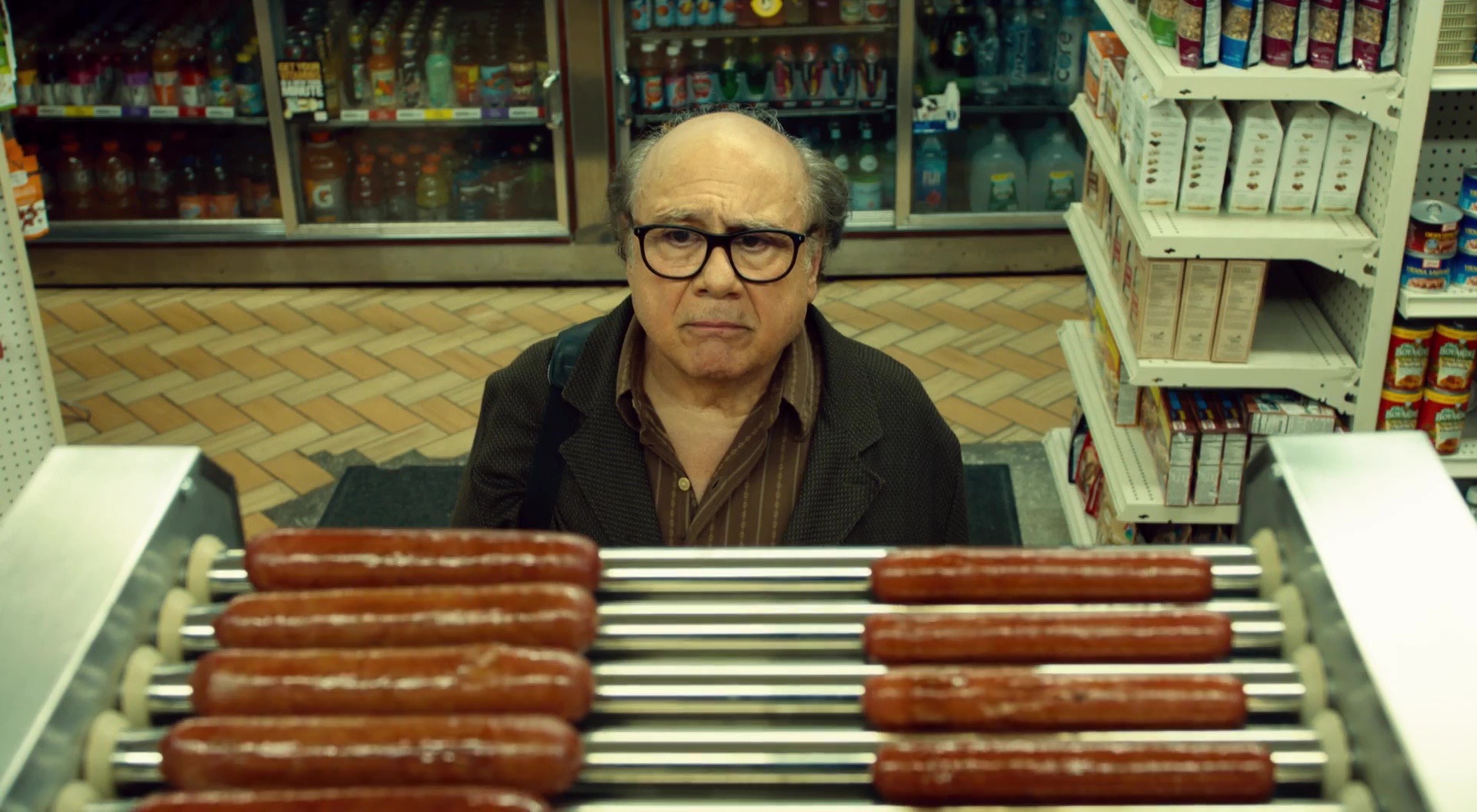
Wiener-Dog is a 2016 portmanteau black comedy written and directed by Todd Solondz. The phrase “black comedy” in this sense is somewhat skewed, for whilst the comedy is sporadic, the blackness of the story is fairly consistent. There are four separate tales told, each with the tenuous common theme of the titular wiener-dog.
Of the four tales, only Danny DeVito’s Professor Schmerz ignites the script and leaves any sense of desire to expand on his story. This doesn’t mean the segment is too short – its length is spot on – it’s just that the character was interesting enough to warrant a follow-up story. Solondz, a film school lecturer himself, clearly drew on real life experiences to portray a wholly negative view of that world. There are several meaty laughs along the way (the clueless interviewee that failed to name a single film despite his enthusiasm sticks out), and the pay-off on the punchline is well worth investing in this captivating tale.
Sadly, the same cannot be said of the remaining three segments. Whilst there are moments in each that redeem them – a heartwarming brotherly chat, a wonderful moment of freedom with a pillow fight, a truly shocking hit and run accident – they are few and far between. The pairing of the painfully irritating Greta Gerwig and the uninspiring Kieran Culkin was inevitably enough to derail any movie just as it needed to get going.
It’s almost as if Solondz was deliberately trying to antagonise his audience, setting their expectations only to pull the rug out from underneath them. Even the layout of the stories does this, providing a minimal thread from segment one to segment two, only to punctuate the second with a bizarre intermission and start the third with an entirely unrelated tale.
Solondz is considered by many as one of the great modern social commentary filmmakers. On the evidence here, that’s not the case. Better examples of his work are out there.
Danish director Nicolas Winding Refn has been carving out his own route to the forefront of spectacularly stylised cinema, oozing with what can only be described as Refnisms. His films all inhabit the same universe in a way that all great genre film makers do. So it is with his latest, The Neon Demon, which has all the hallmarks of a hedonistic night in a stae-of-the-art nightclub whilst not giving up on the brutal bloodbaths we’ve come to expect of Refn’s work.
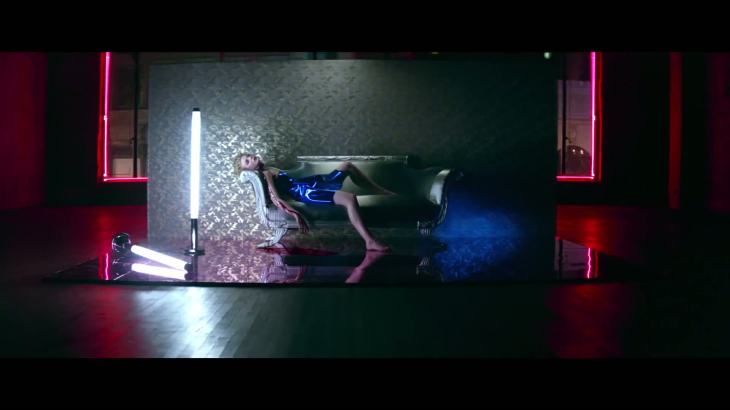
The opening shot is breathtaking – a slow dolly-out on a female model who sits motionless with a sliced throat. That girl is Jesse (an initially unrecognisable Elle Fanning). We learn quite quickly that she is in the middle of her first photo shoot, but this shot lingers long enough to have us right in the palm of the hands of the storytellers. It is simple yet brilliant film making.
Elle Fanning as Jesse
The film takes us on a journey with Jesse, an orphan who has moved to Los Angeles soon after her 16th birthday to pursue a modelling career. Bright eyed and innocent in every way, she has no time to learn who she can and can’t trust. As the focal point of a powerful story she is brilliant in the way she carries the film on her shoulders.
The supporting cast are excellent. Abbey Lee and Gigi Bella Heathcote put in a great turn as the jealous models Sarah and Gigi. Keanu Reeves’s Hank is reminiscent of his abusive husband Donnie in The Gift, full of brutality and intimidation. It is Jena Malone’s portrayal of doting makeup artist Ruby that really comes close to stealing the show, her face betraying everything she says throughout to brilliant effect.
The Cliff Martinez soundtrack feeds into the visuals perfectly. A frequent NWR collaborator, Martinez’s sparse electronic score blends the contemporary setting with the horrific events that are unfolding on screen. This is a work of art for which he won best soundtrack at the Cannes Film Festival. It’s easy to see why.
This is a sensational film with a powerful leading performance from a girl just seventeen at the time of filming. Pairing this with such bold film making and the result was never going to be anything but an overwhelming success.
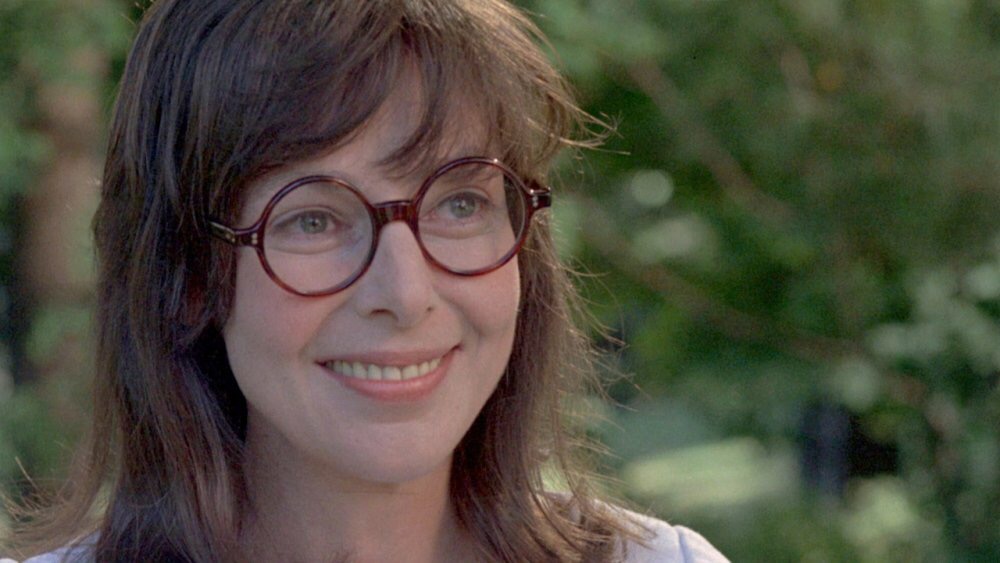
A New Leaf, the 1971 debut feature film from Elaine May, tells the story of Henry Graham (Walter Matthau), a wealthy man who finds himself broke through misfortune and bad money management. Striking a deal with his rich uncle Harry, he borrows $50,000 to help facilitate a temporary extension to his rich lifestyle, with the hope that in the time he has to pay Harry back he can find a rich single woman to marry and regain financial security. He happens upon Henrietta Lowell (Elaine May), a shy and clumsy botanical professor who may well provide the solution to his problems.
The film is definitely a black comedy, even though its light on the latter. Much of the humour here is based on Matthau being in situations of discomfort or unfamiliarity. Initially suicidal after realising he has now money, then more so at having to say farewell to his favourite upper class haunts, his pain is worsened by having to act like he has feelings of affection and compassion for a woman he has little interest in. Driven solely by money, he is shocked at how poorly her finances are managed, sacking her entire house staff team in one memorable scene.
The film plays out like an extended and scripted episode of Curb Your Enthusiasm. It’s hard to think that Larry David hasn’t seen this and been influenced by it in some way, though admittedly the comedy in David’s work is much more realised.
However, as a one-trick pony the joke tends to wear thin as we progress towards the inevitable climax of the film. According to the extensive liner notes – a gift we come to expect with the Masters of Cinema releases – there was a much extended version of A New Leaf (running at a whopping 180 minutes) that never saw the light of day, and probably never will. Whilst it’s always a shame to think a director’s vision hasn’t been fully realised, and the normal response from film enthusiasts is that the director’s cut is the ultimate version of a film, it appears that what we do have access to is probably as good as it gets. Indeed, Matthau preferred the shortened version, which cuts out a murder subplot and provides a happy resolution at the end.
That’s not to say that May’s vision is unworthy of viewing. Certainly, as a writer-director-star she succeeded in creating a solid picture. Her character in the film is by far the most interesting. She is a scientific professor, despite seemingly not needing to work (having inherited her wealth). She is essentially a philanthropist if we look at the way she treats her overpaid and underworked house staff. She is a loving and dedicated wife to her new husband, despite getting nothing in return for her devotion. In many ways, despite her introverted geekiness and inherent clumsy nature, she is a strong female role model. Subtly, the plot of the film is a slight on men in general, which was unusual for the era.
Unfortunately, however, it’s a little known film for a reason. It’s not groundbreaking or unique enough to warrant any kind of extensive praise. It has its fans and at times we are watching vintage Matthau, but the pacing, lack of a cutting script and predictable plotline undermine what could have been a much better end product.









 Cinema, etc.