Wiener-Dog is a 2016 portmanteau black comedy written and directed by Todd Solondz. The phrase “black comedy” in this sense is somewhat skewed, for whilst the comedy is sporadic, the blackness of the story is fairly consistent. There are four separate tales told, each with the tenuous common theme of the titular wiener-dog.
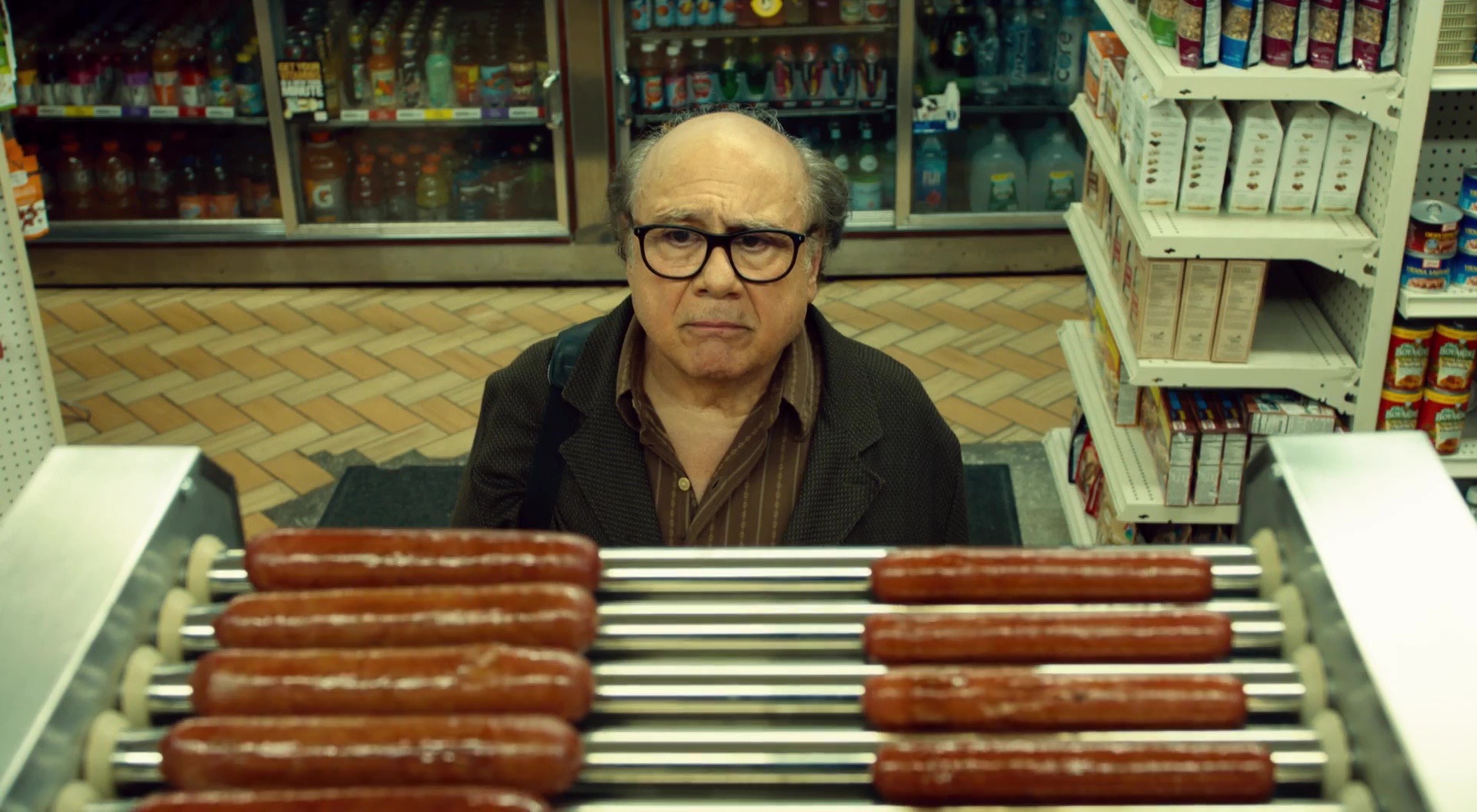
Of the four tales, only Danny DeVito’s Professor Schmerz ignites the script and leaves any sense of desire to expand on his story. This doesn’t mean the segment is too short – its length is spot on – it’s just that the character was interesting enough to warrant a follow-up story. Solondz, a film school lecturer himself, clearly drew on real life experiences to portray a wholly negative view of that world. There are several meaty laughs along the way (the clueless interviewee that failed to name a single film despite his enthusiasm sticks out), and the pay-off on the punchline is well worth investing in this captivating tale.
Sadly, the same cannot be said of the remaining three segments. Whilst there are moments in each that redeem them – a heartwarming brotherly chat, a wonderful moment of freedom with a pillow fight, a truly shocking hit and run accident – they are few and far between. The pairing of the painfully irritating Greta Gerwig and the uninspiring Kieran Culkin was inevitably enough to derail any movie just as it needed to get going.
It’s almost as if Solondz was deliberately trying to antagonise his audience, setting their expectations only to pull the rug out from underneath them. Even the layout of the stories does this, providing a minimal thread from segment one to segment two, only to punctuate the second with a bizarre intermission and start the third with an entirely unrelated tale.
Solondz is considered by many as one of the great modern social commentary filmmakers. On the evidence here, that’s not the case. Better examples of his work are out there.
Danish director Nicolas Winding Refn has been carving out his own route to the forefront of spectacularly stylised cinema, oozing with what can only be described as Refnisms. His films all inhabit the same universe in a way that all great genre film makers do. So it is with his latest, The Neon Demon, which has all the hallmarks of a hedonistic night in a stae-of-the-art nightclub whilst not giving up on the brutal bloodbaths we’ve come to expect of Refn’s work.
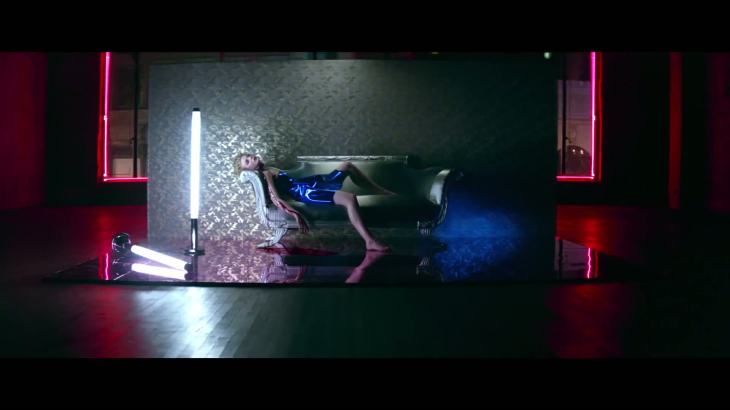
The opening shot is breathtaking – a slow dolly-out on a female model who sits motionless with a sliced throat. That girl is Jesse (an initially unrecognisable Elle Fanning). We learn quite quickly that she is in the middle of her first photo shoot, but this shot lingers long enough to have us right in the palm of the hands of the storytellers. It is simple yet brilliant film making.
Elle Fanning as Jesse
The film takes us on a journey with Jesse, an orphan who has moved to Los Angeles soon after her 16th birthday to pursue a modelling career. Bright eyed and innocent in every way, she has no time to learn who she can and can’t trust. As the focal point of a powerful story she is brilliant in the way she carries the film on her shoulders.
The supporting cast are excellent. Abbey Lee and Gigi Bella Heathcote put in a great turn as the jealous models Sarah and Gigi. Keanu Reeves’s Hank is reminiscent of his abusive husband Donnie in The Gift, full of brutality and intimidation. It is Jena Malone’s portrayal of doting makeup artist Ruby that really comes close to stealing the show, her face betraying everything she says throughout to brilliant effect.
The Cliff Martinez soundtrack feeds into the visuals perfectly. A frequent NWR collaborator, Martinez’s sparse electronic score blends the contemporary setting with the horrific events that are unfolding on screen. This is a work of art for which he won best soundtrack at the Cannes Film Festival. It’s easy to see why.
This is a sensational film with a powerful leading performance from a girl just seventeen at the time of filming. Pairing this with such bold film making and the result was never going to be anything but an overwhelming success.
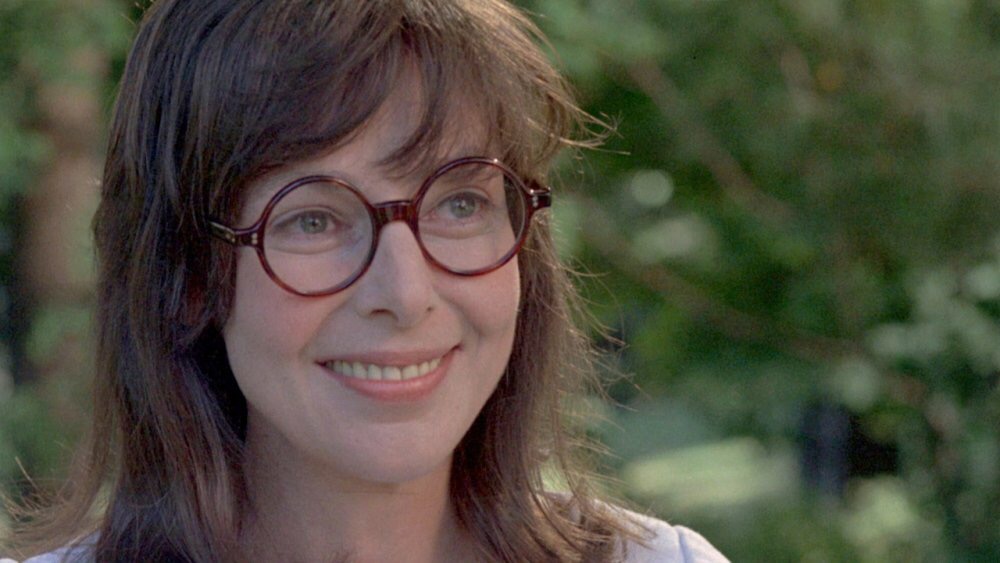
A New Leaf, the 1971 debut feature film from Elaine May, tells the story of Henry Graham (Walter Matthau), a wealthy man who finds himself broke through misfortune and bad money management. Striking a deal with his rich uncle Harry, he borrows $50,000 to help facilitate a temporary extension to his rich lifestyle, with the hope that in the time he has to pay Harry back he can find a rich single woman to marry and regain financial security. He happens upon Henrietta Lowell (Elaine May), a shy and clumsy botanical professor who may well provide the solution to his problems.
The film is definitely a black comedy, even though its light on the latter. Much of the humour here is based on Matthau being in situations of discomfort or unfamiliarity. Initially suicidal after realising he has now money, then more so at having to say farewell to his favourite upper class haunts, his pain is worsened by having to act like he has feelings of affection and compassion for a woman he has little interest in. Driven solely by money, he is shocked at how poorly her finances are managed, sacking her entire house staff team in one memorable scene.
The film plays out like an extended and scripted episode of Curb Your Enthusiasm. It’s hard to think that Larry David hasn’t seen this and been influenced by it in some way, though admittedly the comedy in David’s work is much more realised.
However, as a one-trick pony the joke tends to wear thin as we progress towards the inevitable climax of the film. According to the extensive liner notes – a gift we come to expect with the Masters of Cinema releases – there was a much extended version of A New Leaf (running at a whopping 180 minutes) that never saw the light of day, and probably never will. Whilst it’s always a shame to think a director’s vision hasn’t been fully realised, and the normal response from film enthusiasts is that the director’s cut is the ultimate version of a film, it appears that what we do have access to is probably as good as it gets. Indeed, Matthau preferred the shortened version, which cuts out a murder subplot and provides a happy resolution at the end.
That’s not to say that May’s vision is unworthy of viewing. Certainly, as a writer-director-star she succeeded in creating a solid picture. Her character in the film is by far the most interesting. She is a scientific professor, despite seemingly not needing to work (having inherited her wealth). She is essentially a philanthropist if we look at the way she treats her overpaid and underworked house staff. She is a loving and dedicated wife to her new husband, despite getting nothing in return for her devotion. In many ways, despite her introverted geekiness and inherent clumsy nature, she is a strong female role model. Subtly, the plot of the film is a slight on men in general, which was unusual for the era.
Unfortunately, however, it’s a little known film for a reason. It’s not groundbreaking or unique enough to warrant any kind of extensive praise. It has its fans and at times we are watching vintage Matthau, but the pacing, lack of a cutting script and predictable plotline undermine what could have been a much better end product.
I’ve never been a huge fan of Westerns. It’s a slight bugbear of mine and I hate to be so sweepingly dismissive of an entire genre, but until recently they’ve always seemed so formulaic and lacking in unique characters.
That’s not to say I don’t have many fond memories of Westerns. My grandfather was a huge fan of any films with cowboys in. Growing up, I lived away from most of my family and so getting to my grandparents’ house was a long journey that would usually have us arriving in the early afternoon, by which point my grandfather would often be settling in to watch a good Western. At the time, the subtleties of the character development or the most intense of standoffs was undoubtedly lost on my pre-teen self.
With the trusted Master of Cinema label now lovingly releasing a select few Western films (with the typical smorgasbord of bonus material to help put the films into context), I’m giving the genre a second chance, if nothing else to prove my smarmy little 10-year-old self that he was wrong all along.
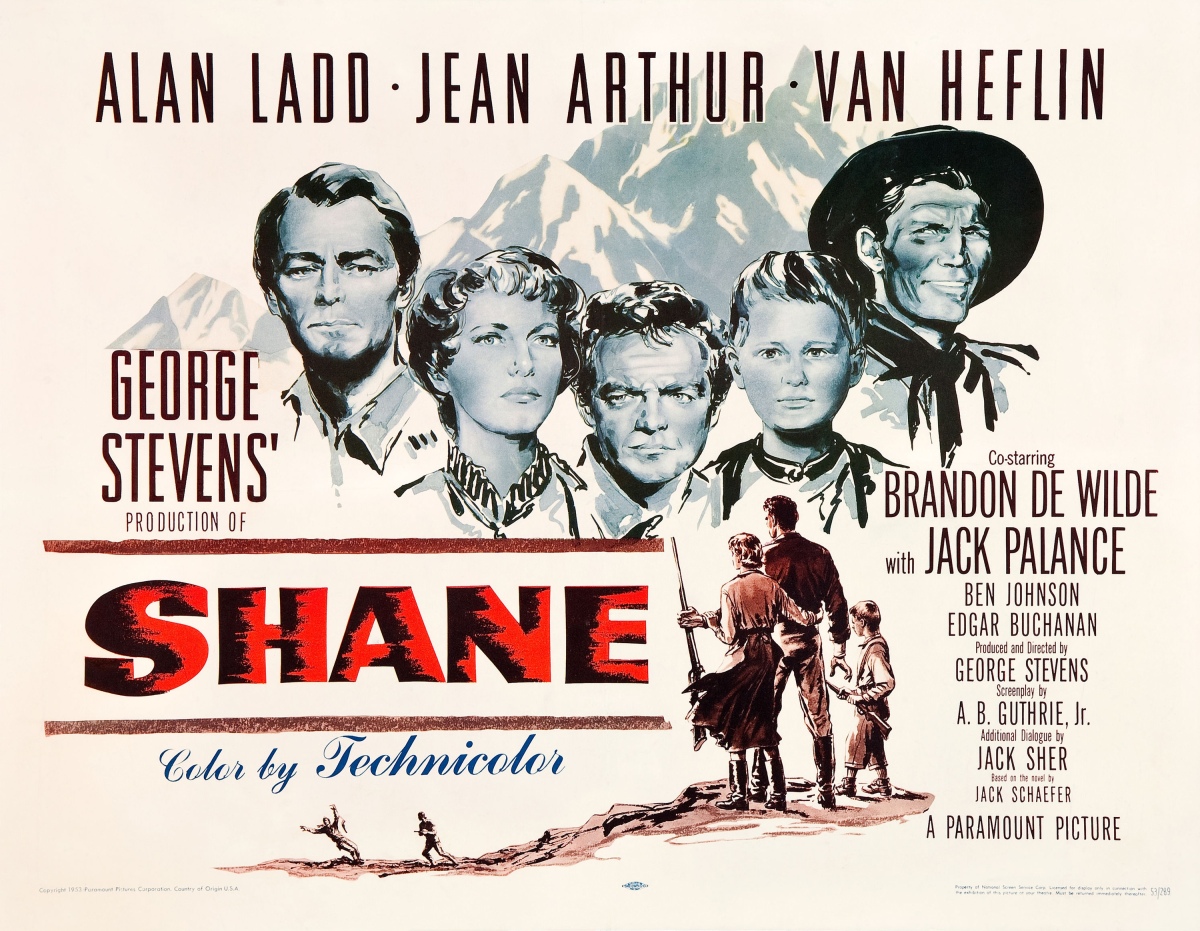
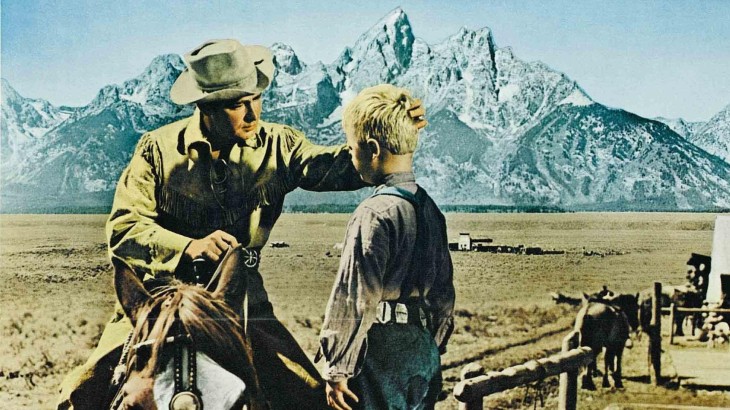
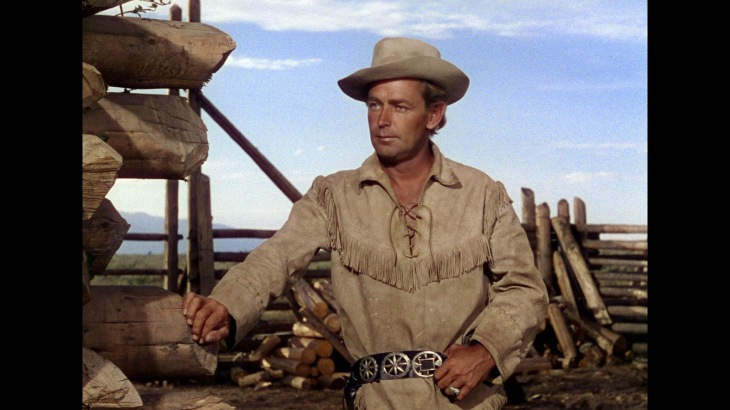
Shane tells the story of the titular hero, played by Alan Ladd. As the opening credits play out, he rides into a small isolated town in Wyoming to meet the Starrett family. He has a mysterious past but quickly wins their favour before the father Joe (Van Heflin) invites him to stay on their property to help out on the ranch.
Over dinner, he learns that the entire town is being terrorised by Rufus Ryker (Emile Meyer) and his gang, who are driving out families one-by-one to gain total control over the land in the area in order to better herd their cattle.
Thus, the story plays out with Shane and Joe forming a stern partnership to rally against the gang and save the town for those families already settled. As the conflict escalates, Shane emerges as the classic lone gunman hero in which the whole town’s hopes lie.
Whilst the story itself is quite familiar, befitting of any good cowboy or samurai film, director George Stevens gets away with the over-idolisation of Shane as the all-American hero by the inclusion of the young Joey Starrett (Brandon deWilde). It is through his eyes that we see everything happen. This has one of two effects. Firstly, it allows Shane to be as formulaic as he needs to be by virtue of the fact that the story can be considered as a retelling of the tale through Joey’s memory of the fact. If that doesn’t sit well as an interpretation, then at the very least the saintly actions of Shane can be seen as a means to leave a positive impression on the child – which he certainly does.
He is clearly a man wrestling with the wrongs of his past, and spends most of the film trying to hide this from the Starrett family. When he finally reveals his gunslinging credentials in front of the Joey, he decides it’s time to move on, presumably to the next place he stumbles upon that needs rescuing.
Whether he makes it to that next town is open to interpretation. Indeed, in the final shootout, he does take what looks like a fairly serious wound to the torso. He plays this down for his final leaving speech for Joey, but as he rides off I couldn’t help but wonder whether he was going to survive. After all, he’s spent the best part of two hours putting a brave face on for every other aspect of his life – he certainly wouldn’t let on to Joey that he was about to die.
The romantic subplot between Shane and Joe’s wife Marian (Jean Arthur) adds an interesting subtext to the situation. Clearly she is pining for him, and her interest is underlined in every scene they share. It feels a little shallow, and does nothing for Marian as a character as she follows every stereotype in cinematic history. Alas, it was typical of the time and her only purpose is to add some sex appeal to Alan Ladd’s handsome hero.
Shane may be a typical Western, but it is a fine and pure example of the genre that is rightly being held up as one of the best of its kind.
[Note 1] The second screenshot in this review is how the film should look on your widescreen television, with black bars down the left and right sides of the picture. This is due to the aspect ratio used (1.37:1). There is a second aspect ratio available on the disc, though as Adam Naymar explains in the booklet note “Don’t Fence Me In” this is a controversial version of the film. I’ll let you read it for yourselves should you make the purchase.
[Note 2] Below is the theatrical trailer for Shane. It is proof that cinema goers in 1953 cared not for spoilers, as the critical climax of the final scene of the film is included. Quite why this was done is a mystery to me as it completely ruins the entire film, but since the film is now 63 years old I don’t feel it is fair to be angry towards me for including it in this article. After all, I’ve given you fair warning…
From a fairly clunky and drawn-out start, Green Room quickly becomes a truly shocking horror film, made all the more horrific by a believable plot line and some relatable characters.
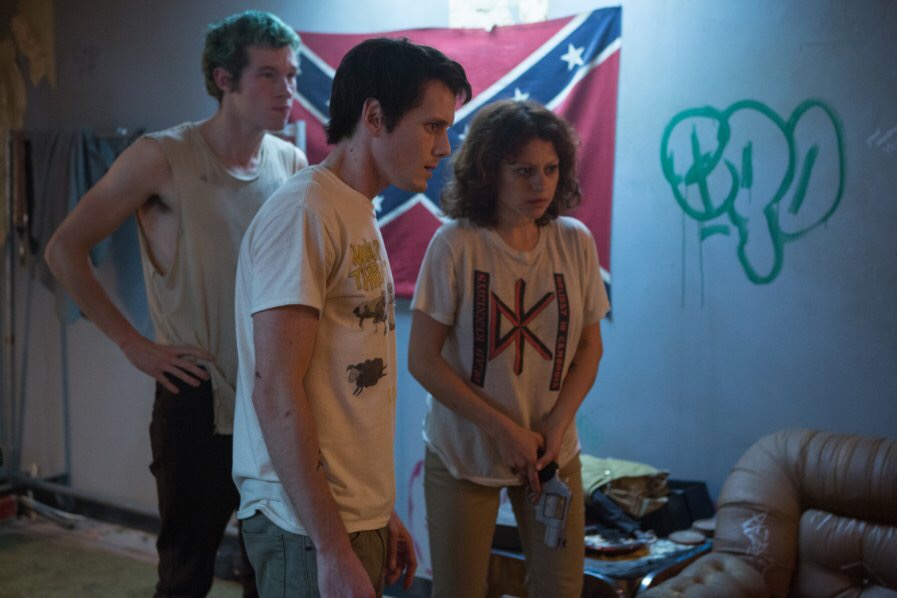
It delivers a lot in just over 90 minutes. Punk band The Ain’t Rights (including Anton Yelchin as Pat, Alia Shawkat as Sam, Joe Cole as Reece and Callum Turner as Tiger) are living food-to-mouth and on the edge of calling it quits due to lack of funds. A particularly bad gig in Seaside, Oregon leads to the promoter setting them up with a more lucrative performance in an out-of-town area of Portland. What they don’t know is that the gig is for a group of Nazi extremists, and when one of the band members witnesses the aftermath of a murder, things take a turn for the worse and a standoff ensues between the four band members (and another bystander Amber, portrayed by Imogen Poots) and the owners of the club, led by Darcy Banker (Patrick Stewart).
“Now, whatever you saw or did is no longer my concern. But let’s be clear, it won’t end well.” So says Patrick Stewart in an uncharacteristically sinister turn as Darcy. Despite a spine-tingling turn, it’s a character that never really shows his worth as a truly horrific antagonist, instead allowing some fairly useless goons to try and largely fail at his handy work. He’s got 100s of neo-Nazis under his thumb – but why? It would have been much more satisfying to get a taste of his evil mind.
Far more relatable are the four band members, who we join in this rollercoaster of misery and trauma. There are a couple of gruesome moments when the film starts to get really bloody, and it is in these moments that the film shows its excellence. Having successfully placed the viewers in the shoes of the band members, the film unravels into a slasher horror and there are some truly shocking moments to shake up the audience. What unfolds feels like a very personal experience despite being something that (hopefully) hasn’t happened to many people.
Imogen Poots is a fantastic actress, though her appearance some time into the film seemed like an after thought. Joining at a point where the band members were already well established is a factor they just about get away with, though I never really felt the same compassion as I did for the band themselves.
If you like your horrors slashy, then this will reward you. If horror to you is a CGI ghost in a mirror, then you may well be sadly disappointed.
Before I start, I must confess that I’m a closet Peanuts fan. The comic strip wasn’t something I grew up with and outside the odd Snoopy t-shirt or pencil case, I wasn’t particularly affectionate towards the series.
Sometime during my university years, I discovered the brilliance of the comic strips first, then the films and TV specials. I don’t think it was something I was particularly vocal about, but I was secretly picking up compendiums of the originals strips and box sets of the films that I still watch to this day.
There is something wholly endearing about the characters that has somehow stood the test of time. I’m sure studies could be conducted on why it remains so popular despite most definitely being most definitely of the era it was created in.
I wasn’t overly thrilled when I saw the trailer for this franchise reboot, with the brilliant colours and perfectly rendered faces seemingly betraying the source material. However, I was willing to give it a chance and see what direction the estate was happy for it to go in in 2015, some fifteen years after the death of its creator Charles M. Schulz.
Thankfully, for the most part, the film is a success. The use of modern graphics doesn’t really detract from the fact that it genuinely sits well next to any other instalment. Indeed, the storyline could well be a rehash of an older film, with Charlie Brown spending the entire film trying to win the affections of the Little Red-Haired Girl whilst Snoopy lives in his imaginary world as a fighter pilot in World War II. This is a smart move – taking these familiar characters out of their comfort zone and attempting something unusual can be saved for another time.
When efforts are made to openly appeal to the younger demographics, the film does lose its way somewhat. When Meghan Trainor’s ‘Better When I’m Dancing’ kicked in and the kids started dancing away, the sudden urge to turn off came over me. Heck, even Snoopy! The Musical didn’t stoop this low.
Peanuts aficionados will also berate the fact that Charlie Brown talks to the Little Red-Haired Girl. Then they will be positively irate when she responds and we hear her speak for the first time ever. Or was it just me?
There have been better interpretations of Peanuts in moving pictures and there have been worse, but this should place the characters in the minds of at least a few children for the next few years and, in that sense, the film has achieved what it likely set out to. Just don’t watch it expecting it to wow you.
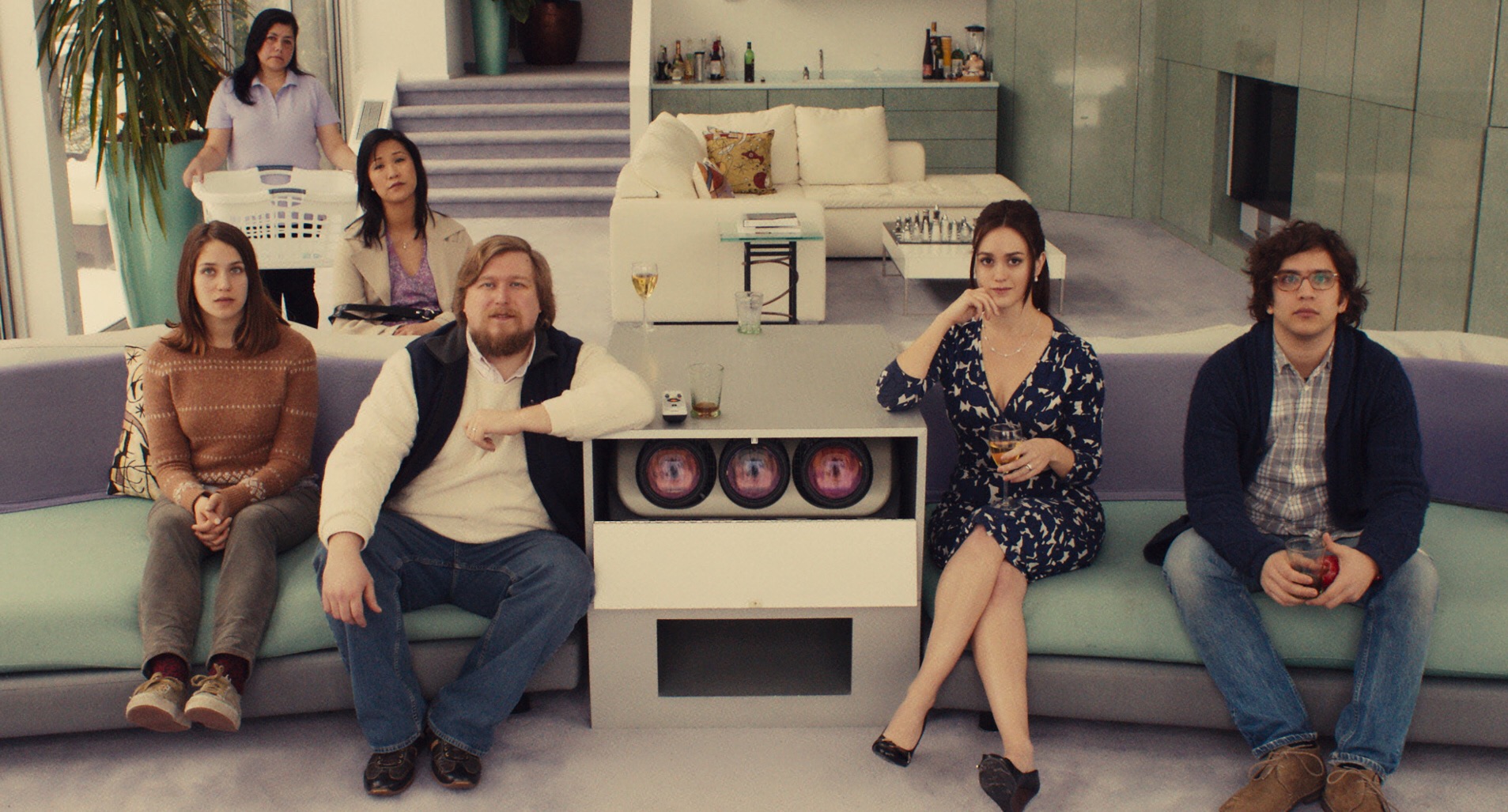
Mistress America tells the story of two sisters-to-be: college freshman Tracy Fishco (Lola Kirke) and aspiring entrepreneur Brooke (Greta Gerwig). Their respective mother and father are soon to be wed so Tracy contacts Brooke to get to know her and is immediately taken into the whirlwind of her seemingly colourful lifestyle.
The characters portrayed in Mistress America are the self-indulged types with delusions of grandeur that inspired me when I was a late teenager going into my early 20s. Watching the story play out and seeing remnants of me in a earlier life was a cringeworthy experience.
On the rare occasion that they respond directly to someone talking to them, it is usually to spin the conversation back to focus on themselves. There is little or no consideration for anyone around them, flaws that are a result of not really having any likeable personality traits nor tangible skill to offer the world.
It makes for some snappy and quirky exchanges but shortly becomes highly irritating as you realise how shallow and lacking in the fundamental characteristics of life these people are. They are typically lonely and disparate people struggling to find their way, perhaps because they are so self-indulgent beyond reproach that they have been ignored by anyone they have come into contact with.
In one almost triumphant scene, Brooke is put on the spot to pitch her new business idea to her ex-boyfriend in an attempt to gain financial backing for a conceptual café that sounds like a mess of non-ideas. It was the only scene in the film that I derived any enjoyment from as her lack of business acumen and a basic idea concept resulted in an embarrassment of a presentation. When sister Tracy stepped in to save the day, the triumphant music belied the fact that she also didn’t add anything to the pitch, just spurted more idealistic jargon with no real substance. My real enjoyment came when the whole room erupted in applause. Why were they clapping. A raised voice and some positive music doth not a business idea make.
I don’t think I’ve ever checked the progress of a film so much as when watching this, and it was making painfully slow progress. I certainly don’t think it’s the worst film I’ve ever seen, but it comes close and it isn’t something I could ever recommend to anyone.
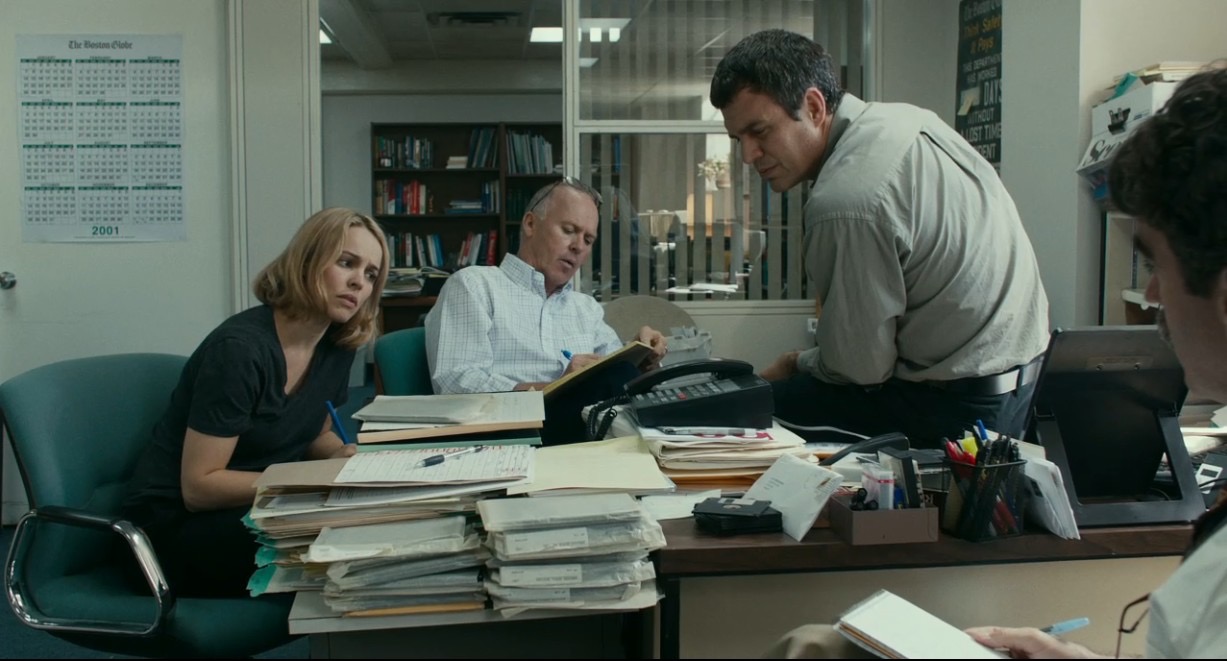
There are obvious paths to go down to tell a story about victims of child abuse. This film eschews the story of the individuals who have suffered the abuse, instead concentrating on the journalistic team that fought hard to uncovered the abuse. It deliberately attempts to portray just how difficult it was to reveal the truth about something when nobody wants to listen and everybody involved is trying to cover up what has happened. It is an effective but devastating success.
The title of the film is taken from an investigative journalistic unit that tackles stories it deems of necessary interest to the readers of The Boston Globe. In 2002 it published an exposé on Roman Catholic priests in the Boston area, offering evidence of not only child molestation and rape, but also of the systemic cover-up of the evidence by the church. The truths they found were horrific in both nature and magnitude.
Whilst the movie is truly an ensemble piece, there are three wonderfully nuanced performances that help make this film so effective.
The first comes from Stanley Tucci as the attorney Mitchell Garabedian. Tucci is a really special actor and he’s in fine form here. Garabedian has represented innumerable victims of the abuse and each time has been unable to affect change, with critical documents being suppressed by the church. Reminiscent of his role in Margin Call as Eric Dale, he is a man with knowledge of the wider secret dying for those around him to find out what’s truly going on.
A smaller but memorable turn comes from Neal Huff as Phil Saviano, head of the Survivors Network of those Abused by Priests. Based on a real person going by the same name, he makes the most of his limited screen time when he provides a harrowing monologue the first time he meets the Spotlight team. A frustrated picture of a man that likely represents the emotions felt by each and every survivor.
The finest performance, however, is from Michael Keaton as the Chief Editor of Spotlight, Walter “Bobby” Robinson. Throughout the story Bobby is a man wrestling with his conscience. He knows that to make the story as effective as possible he needs to wait for all the facts to be in place and make a thorough, damning article that cannot be ignored. However, doing this means sitting on the information whilst the abuse continues in the city. Late in the picture when he finds out he was actually tipped off about the scandal twenty years previously, he must conclude that he is finally bringing justice to the city despite potentially having the power to prevent generations of systemic abuse. Keaton nails it, reminding us all once again how great it is to have him back on the big screen in a role of substance.
I’m surprised Mark Ruffalo and Rachel McAdams have been selected for an Oscar nomination ahead of those they share the screen with. Fine actors though they are, it must have been a tough call to select two from a long list of solid performances. Ruffalo seemed to be holding back slightly, though that was perhaps a deliberate choice I didn’t pick up on fully.
It is rare that a whole audience is left in absolute silence at the end of a screening, but even on a busy Saturday afternoon there didn’t seem to be anyone that felt anything other than stunned. The reason for this was a devastating list of all the locations they have uncovered scandals in since the publishing of the initial article in 2002, firstly in the USA, then globally.
For this reason the film is now serving the same purpose as the original article: to shine a spotlight on a diabolical scandal that should have been eradicated decades ago. It is possibly the most important film you will see this year.
Sometimes cinematic events so huge occur that they transcend cinema and infiltrate the wider global conversation. To not see a film, occasionally, is to almost deliberately stand out from the crowd and, in some cases, refuse to be a sheep. Because everyone else is in love with a film but perhaps didn’t get it at first, the desire to take a stand gets in the way of allowing yourself to be interested.
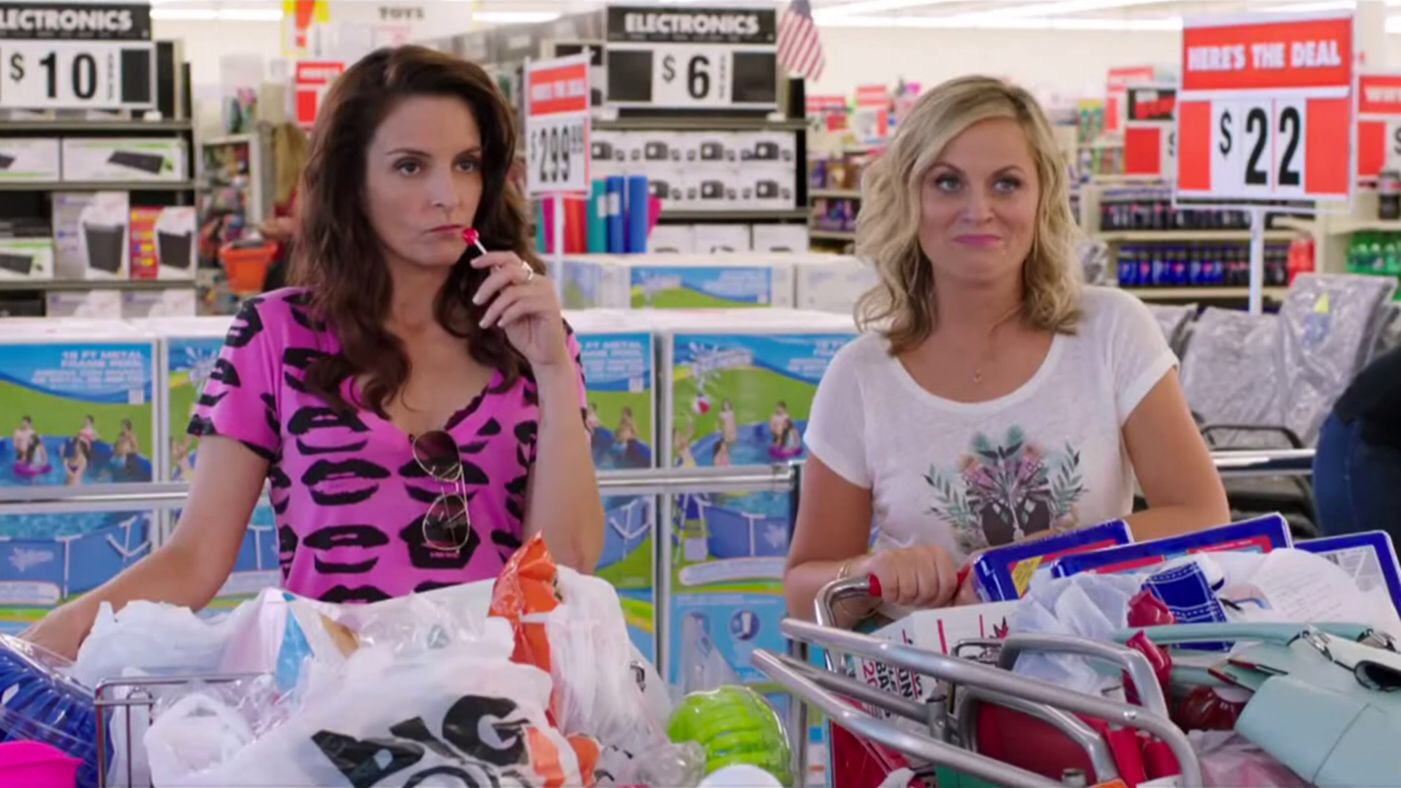
If you’re in that boat and have taken a stance against Star Wars: The Force Awakens, then perhaps Sisters is the film for you. It is in so many ways the antithesis of an epic and excellent space opera. Yes, it isn’t very good. Yes, it vastly underused its two lead stars. But someone had to take the hit and be THAT film that was released the same week as the film that looks set to be the most successful in box office terms since Avatar.
The story is as banal as the majority of the jokes. Sisters Maura (Amy Poehler) and Kate (Tina Fey) find out that their parents are selling their childhood home and have to go home to clear out their rooms. They do just that, but in the process decide to throw a huge house party. Things get out of hand and they wreck the house, though in doing so learn some valuable lessons.
It isn’t without merit. Some jokes are downright hilarious. However, these appear to be the ones that were ad libbed by the two leads. There are a few examples of this is when they are trying on dresses ahead of the party. Additionally, the scenes with Maya Rudolph are all highlights and almost give a feeling of a rewarding experience. Most of the remainder, however, falls disappointingly flat.
A truly entertaining time was had by all. Just not in this screen.
After about half-an-hour I found myself in such deflated amazement that I started to enjoy it out of disbelief that it was such a waste of their talent. This twisted enjoyment sustained until the final section when it started to feel protracted – the party kept going slightly too long and the joke was wearing thin.
The final segment, which awkwardly ties it to Christmas and thus tried to justify it as a festive film doesn’t really convince with conviction. This was clearly an afterthought to a film that was obviously intended for a summer market but that the studios didn’t dare release into clear air when excuses would have been harder to come by than the Star Wars card.