Unknown's avatar

Posts by hutchwp

Chief writer and editor at Cinema, Etc.

Film review – Alien: Covenant (Ridley Scott, 2017)

I have to lay out some home truths before we start. After five years, it appears the dust has settled and most of us have decided Prometheus was a pile of rubbish.

The Alien prequel was a return to the helm for Ridley Scott after a 33-year hiatus. Despite the anticipation, the disappointment amongst the hard-core fans stemmed from some convenient plot points that seemed to allow progression of the story despite not really making sense (“Why did she run in a straight line?”, “Why did the navigator guy get lost?”, “She’s just had a caesarean… how is she running?”).

I saw the film as a midnight screening and I remember coming out of the cinema buzzing with excitement. The film was, in my opinion, a return to form for the franchise after the overwhelmingly disappointing Alien v Predator films (which worked better as a toy line than as a film). It wasn’t a patch on the first two – Alien and its sequel Aliens – but probably stood alongside or better than any of the other instalments.

Yes, that’s right. I am a fan of Prometheus.

I went into an early screening of Covenant with the same kind of excitement and anticipation as I had five years ago. The advertising campaign has been nothing if not relentless, so finally getting to see the film on the big screen felt as much a trip to the cinema as it was a way to quench my carefully manipulated thirst for a next instalment.

The film is set in 2104, ten years after the main events of Prometheus and around twenty years before the events of Alien. The opening sequence, which features a reprisal cameo from Guy Pearce as Peter Weyland, explores the themes of humanity’s desire to meet its creator. It could easily have been a part of the first instalment, but bridges the gap and reminds viewers of the unhinged nature of David, one of two robots played by Michael Fassbender.

The main body of the film focuses on a colonisation mission from Earth to to a remote planet Origae-6, aboard the titular spaceship Covenant. The main crew includes Captain Branson (James Franco) and third in command Daniels (Katherine Waterston), a terraforming expert and wife to Branson. Christopher Oram (Billy Crudup) is a man of faith who is unexpectedly promoted to captain shortly into the mission. Michael Fassbender’s second character in the film is a synthetic android named Walter, a more advanced version of David. The crew also includes Chief Pilot Tennessee (Danny McBride), Sergeant Lope (Demián Bichir) and Karine Oram (Carmen Ejogo). Aboard their ship is around 2,000 human embryos, with the purpose of populating their destination planet upon arrival.

After a neutrino shockwave hits the ship, the main crew are woken up to deal with the repairs on the ship. They are seven years away from their destination planet but a matter of weeks away from an alternative planet that appears to offer the same prospects as Origae-6. New captain Oram makes the decision to land on the newly-found planet, which turns out to be the one Dr Elizabeth Shaw (Noomi Rapace) and David set sail for at the end of Prometheus. Needless to say, the story goes downhill from here for our crew, with disastrous consequences.

Given the popular misgivings about Prometheus, I couldn’t help but pick fault with a couple of major issues with the decision making of the crew of the Covenant. Most glaringly, none of them seem keen to wear masks when they leave the spaceship, even though there’s no obvious investigations into how viable to atmosphere is to breathe. It just seemed odd that they were so confident only minutes after being so worried. Surely that’s rule number one for space travel?

All the people on the ship have a partner on there, meaning everyone is at risk of losing a loved one at every turn. This falls down, however, when you throw a couple of red coats onto the first expedition. Where were the devastated husbands and wives grieving their loved ones? Do they not get to show emotion because their rank is too low? I’m looking at Ledward here. Surely he has a wife or girlfriend on board?

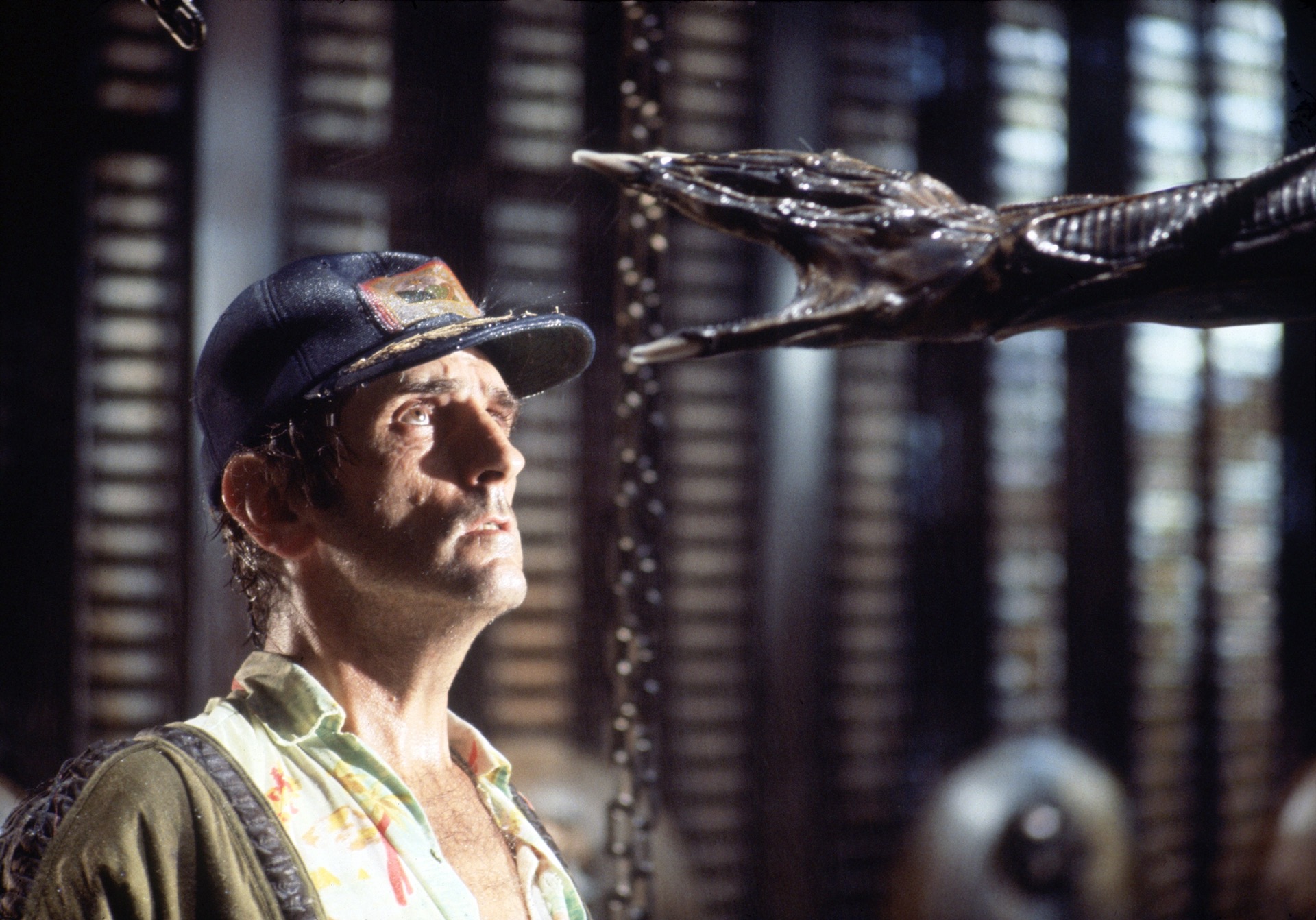
Aside from picking nits, the film is genuinely a great effort, probably a lot better than Prometheus. There are a number of great nods to previous films – the face-hugger makes its comeback – and it feels like Scott has set out to make a crowdpleaser. That’s definitely not a bad thing.

The partner element is an intelligent way to add depth to all of the characters. Shortly into the main plot, James Franco’s Captain Branson dies, immediately answering the question of why he wasn’t featured more prominently in the advertising campaign (a missed trick in my opinion). This plunges Katherine Waterston’s Daniels into immediate emotional turmoil, though she quickly rises out of it and continues with her mission objectives.

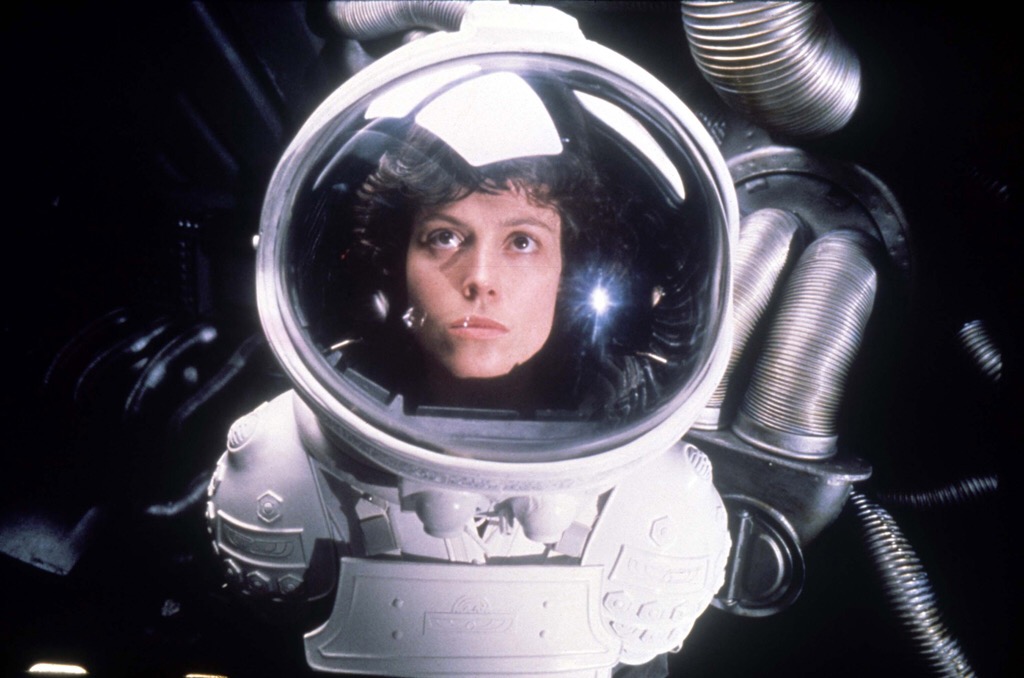
Waterston has some big Sigourney Weaver sized shoes to fill in terms of taking the female lead role. I’m sure she has felt the pressures of her predecessor, though it doesn’t show on screen. She does a fantastic job and at times carries the film, acting as the sensible decision maker, the natural leader and the only one with the will to fight back when everything goes pear shaped. Sure, the strong and intelligent female protagonist is becoming a bit of a broken record in modern cinema, but it shouldn’t be forgotten that Signourney Weaver in Alien is probably the best early example of it being done so well, certainly in terms of Blockbuster films in genres usually associated with male audiences.

The final act is wholly worth of the Alien canon, rescuing a film that at times had threatened to go off the rails. It’s here that Scott ramps up the tension and action, paying off the setup over the previous 90-ish minutes.

If the final 30 minutes is great, then the final ten seconds is utter genius.

If you have any misgivings about the Alien franchise, Covenant is the film that will bring you back on track.

Video game review – Yooka-Yaylee (Playtonic Games, 2017)

Version reviewed: Xbox One

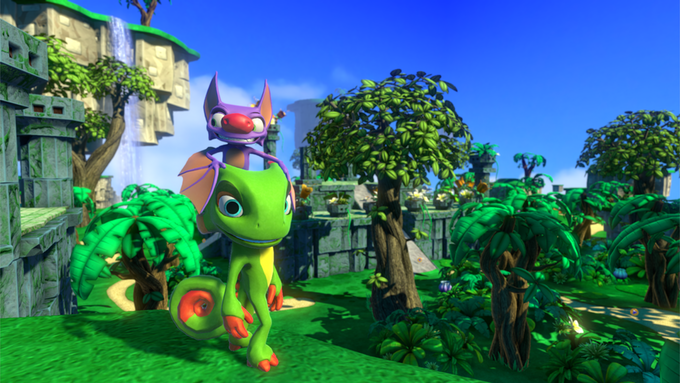
Yooka-Laylee has finally arrived on Xbox One and PlayStation 4, bringing to an end one of the most successful video game crowd-sourced campaigns of all time. Launched on Kickstarter on 1st May 2015, it reached its initial target of £175,000 within 38 minutes and its stretchiest of stretch goals (£1,000,000) in 21 hours. Clearly this indicated a thirst from the fans of the studio, Playtonic Games, which had behind it four of the key players from Rare’s heyday in the mid 1990s:  Chris Sutherland, Steve Mayles, Steven Hurst, and Grant Kirkhope. 

If you’re unsure, Rare was the video gaming powerhouse that came to prominence in the 1990s with games such as Goldeneye 007, Banjo-Kazooie, Perfect Dark and Donkey Kong Country. Both Banjo-Kazooie and its sequel Banjo-Tooie were laced with a charm and humour typical of Britain, with sign-posted gags coupled with animation that stood out at the time as exemplary. The games were also a lot of fun to play through, with the right amount of collecting and story development to keep even the most easily distracted 10-year-old interested. 

So it’s understandable that the gaming community was so enthusiastic about getting a spiritual sequel to Banjo-Kazooie.

When I started up Yooka-Laylee, the memories of Banjo-Kazooie came flooding back. As these memories engulfed my mind I couldn’t help but wonder whether time hadn’t been quite as kind to the original games as my romanticised view of them. 

The opening sequence is extremely pedestrian, with the criminal mastermind called General B. at his headquarters called Hivory Towers. There is no big wow factor, just a bit of a conversation that introduces the characters. He has created an evil device that has stolen a magical book from our heroes. This book has golden pages and within a short while we are told we must retrieve all of the pages (named “pagies”) to restore balance in the universe. Or something like that. It’s a McGuffin typical of 1990s platformers – go to several worlds and collect everything to complete the game. 

The look and feel of the game is brilliantly nostalgic for an era that doesn’t often get treated as being retro, although sadly it definitely is now. It harkens back to the Nintendo 64 era, so it’s 3D but not as beautifully rendered as more recent titles.

This is both a good and bad thing.

I don’t know whether it was intentional, but the camera issues that blighted video games for years has come back to bite us again. It’s highly frustrating and was the cause of several issues in the opening world when all I was doing was simply jumping between platforms. It’s poor design that this can cause failure and unfortunately my patience isn’t quite the same as two decades ago – I genuinely don’t have hours and hours to sink into video games per week so wasting 30 minutes jumping up some platforms just isn’t something I enjoy.

The soundtrack, however, is on the positive side of nostalgia and one that brilliantly fits with the retro design of the game. David Wise, Grant Kirkhope and Steve Burke are behind it, and these were frequently involved with Rare’s most famous soundtracks. I’m annoyed I didn’t opt for the soundtrack option when I originally backed it, but I’m sure there will be a way to rectify this soon! 

Rextro can go swivel


As the game progresses, so does the difficulty. This generally means that the collectibles aren’t sat in such obvious positions on the level, hidden in holes and requiring more skill to unlock. By the final world, the frustration at poor controls and cameras comes back and you’re left wishing you’d never started the mini-golf challenge in the first place.

A key part of the game is the Rextro Arcade challenges, which take 8-bit-inspired gaming and set mini challenges to beat the game and then the high score. These largely provide a lot of fun to proceedings until the bugs take over and you’re left short of a high score through no fault of your own.

The end result on initial play through is one that almost hits the spot but makes me wish they’d had a longer player testing period. This often gets pushed back if programming overruns, and there will doubtless been a lot of back and forth between the coding and testing departments. I just wonder whether everyone’s view became muddied before the final release of the game.

Film review – Alien (Director’s Cut) (Ridley Scott, 1979)

I’m not sure exactly when I first saw Alien. I’m sure I was far too young. I know this because I remember I was really sad I couldn’t see Alien 3 at the cinema. I’ve calculated that I was eight years old at the time. Why was I gutted? Because I’d already seen the first two films and didn’t want to wait.

Yes, that’s right. Somehow either my mum was supremely lenient or we pulled a fast one on her and managed to get a VHS copy of both films.

Looking back on the 1979 debut, it’s easy to see what the appeal was for a eight-year-old. Sure, the heart of the film lies in a character-driven plot and it’s powered by Scott’s unwavering ability to build suspense. At the time I wasn’t sat there thinking “Well, Parker and Brett have an agenda now because of this pay dispute, so this is going to get really interesting.” No. I was looking at the alien, the guns, the space travel and the explosions.

All of these things are, unquestionably, of great appeal to a child. Or, at least, they were to this child.


It was great, then, to finally see this masterpiece of cinema on the big screen as part of Alien Day. As an adult. And, completing the circle, with my mum as well. 

It’s a film that deserves to be seen on the big sceeen, away from disturbances that home viewing might detract from the experience. 

The film was originally released in 1979, in the midst of the wave of hysteria for space-based films created by Star Wars. However, it is very much the antethesis of the 1977 space opera. The distant past setting is replaced with a not-too-distant future. The bright and open planets are replaced with a singular, isolated spaceship. The droids played for light relief are dropped in favour of a malfunctioning synthetic human with a hidden agenda.

Indeed, whilst the film may have seemed like a lucrative prospect for 20th Century Fox after Star Wars, Alien owes a lot more to films like Jaws or Forbidden Planet in both tone and pacing.

It is a film about isolation, playing on the claustrophobia of being trapped in the middle of nowhere and allowing your survival instincts to take over. 


Jerry Goldsmith’s score, conducted by Lionel Newman and performed by the London Philharmonic Orchestra, may be one of the most perfectly-suited film scores ever crafted. It starts off exactly where the audience do at the beginning of the film – somewhere between romanticism and intrigue. As the horror unfolds, the score increases in intensity and loses any sweetness it ever had, heightening every moment we see on screen.

The set design and the Alien itself was famously designed by surrealist artist H. R. Giger. It’s as iconic as the film itself, critical to the story and heightening the horror when we eventually see the creature fully formed in the final act of the film.

It was a hard act to follow and they’ve spent 38 years trying to reach the heights of the original film. James Cameron’s sequel may be preferred by some, but for me you simply can’t compare that to the original. They are in the same universe but are completely different genres, one wrapped in suspense and the other all-out action.

Film review – Wings (William A. Wellman, 1927)

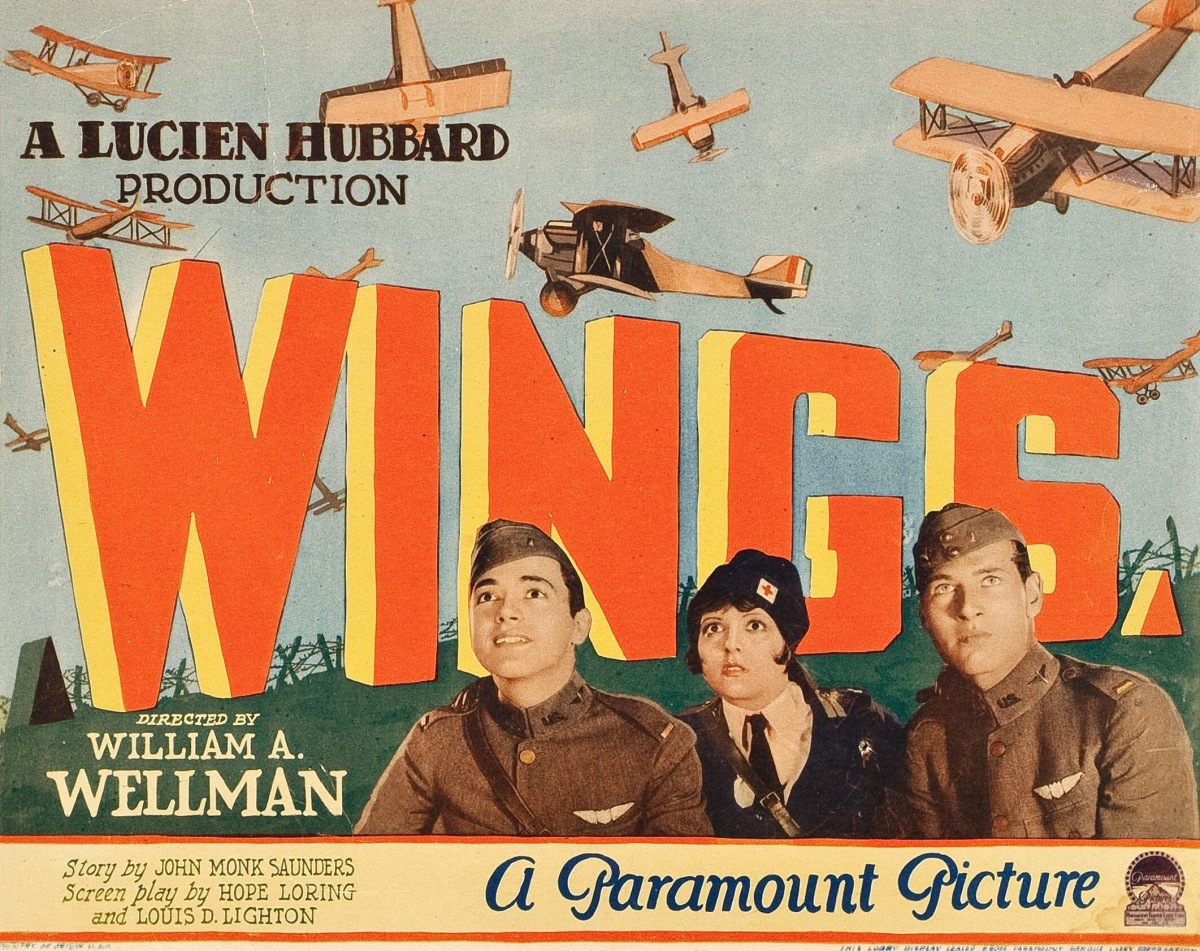
For all its technological achievements and successes as a great tale, William A. Wellman’s 1927 cinematic epic is remembered for one thing – it’s the first film to win the Best Picture Academy Award.

The ceremony was far removed from what we know today. The winners were announced three months before the ceremony and it was a much smaller affair than the modern interpretation, with the awarding of prizes taking around fifteen minutes to complete. Wings actually won a prize called “Outstanding Picture”, later renamed to Best Film, making it famous at the expense of F. W. Murnau’s Sunrise. The latter won the similarly-named “Unique and Artistic Picture” on the same night, though on the night it is unlikely this was treated as a runner-up prize.

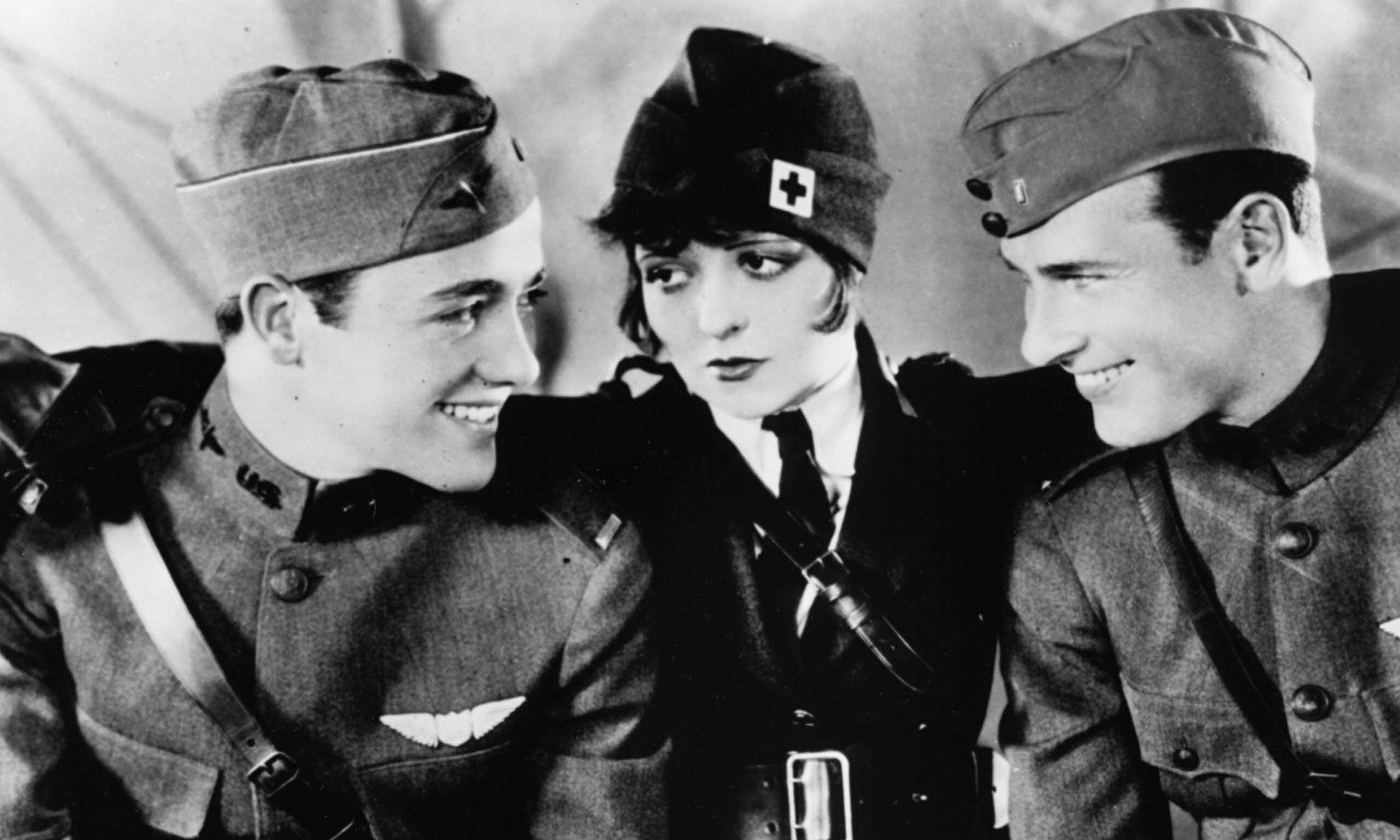
Wings concerns two love rivals – Jack Powell (Charles “Buddy” Rogers) and David Armstrong (Richard Arlen) – who are fighting for the attention and affection of Sylvia Lewis (Jobyna Ralston). Jack’s persistence is so committed that he fails to notice his tomboyish next-door neighbour Mary Preston (Clara Bow), despite her continuous effort to get him to notice her. They enlist in the Air Service as trainee fighter pilots. It covers their time in World War I as they complete training, launch into their first battles and become close friends.

It is perhaps a simple plot by today’s standards, but it’s often not the premise that makes a film great but the delivery. This is close to perfection.

Films like this may have been wonders when they were released, but few stand the test of time and allow enjoyment and excitement for the viewers today. Indeed, we are now 90 years further on in cinematic technological advancements and there isn’t a single person involved with the film that is alive today.

The world of cinema should be eternally grateful that Paramount decided to invest £900,000 in restoring this picture. The results are worth considering so you know exactly what you’re seeing and hearing.

On the positive, the picture is absolutely crystal clear. Many segments of the film were unseen for years by the general public, and whenever Wings did surface it was in a severely compromised form. A duplicate negative was found in Paramount’s archives, though this too suffered from significant damage baked into the print. However, digitising the original negatives and painstakingly restoring the film has done wonders for the visual experience. Credit must be given to Executive Director of Restoration Tom Burton and the team at Technicolor Creative Services for such a wonderful result, utilising tinting techniques of the era for added authenticity.

This has been matched up with a new recording of J. S. Zamecnik’s original score by Dominik Häuser and Michael Aarvold. The score was for a 14 reel version of the film that was edited down to 13 reels for the theatrical and roadshow release. Therefore there was a portion of freedom given to the scoring pair, but it is clear the right decisions have been made at each step, as evidenced by the moving results contained on the restored masterpiece. 

Controversially, the sound features sound effects that match to the visual image. Will McKinley has written a fantastic article about the positives and negatives of this, arguing both sides of the toss in a far more eloquent way than I could manage. It’s well worth a read. For me, these additional sounds are 100% in the score and I can see the restoration team’s predicament. If they omitted them it would sound more “authentic”, but only in as much as it’s what a modern audience expects from a 1920s sound film. This score was steeped in innovation and, like the technological risks taken in shooting the visuals, was way ahead of its time. I’m happy the music sticks to the original score, and if you don’t like it you can try an alternative option on the disc (provided by Gaylord Carter), or even mute the whole thing!

Utilising the trainee pilot angle, director Wellman was able to draw on his experience as a First World War pilot to create some absolutely astonishing sequences. They were all filmed on brilliantly blue but cloudy days, which gives the planes some scale and improves the dynamic nature of the dogfights. 

There is also a cinematic first in the film, with the first onscreen man-to-man kiss. It comes in one of the most heartbreaking scenes I’ve ever seen in a film. David has become stranded behind enemy lines and steals a plane to return home. Jack, already believing his friend has died, is on a suicide mission to take down as many enemy pilots as possible to help the war efforts, in careless abandonment of his own safety. Miraculously he survives his plan, shooting down innumerable enemy aircrafts. On returning, he spots one last pilot heading towards the Allied base. He goes in for the kill, without knowing that it is in fact his best friend David. When he lands and seeks the enemy to seal his victory, he realises what he has done. As David dies in Jack’s arms, the complex emotions get the better of them and there on screen is the first same-sex kiss, albeit perhaps accidental. It simply couldn’t have been cut or reshot – it’s integral to the plot and seals their respective positions in their friends’ lives.

The Masters of Cinema team are the perfect choice to take control of such a historic release. There are three bonus features on the Blu-ray disc: one covering the restoration, one that puts the flight aspects of the film into context and one that covers the legacy of the film. The accompanying booklet is full of additional information and essays on the film and director. It just fits the gravitas deserved of the film.

That we can now sit in our front rooms and see a film of this importance in such high quality is a wonderful feeling. The history of cinema is too important to simply let go. It’s fantastic that an entire new generation have the opportunity to see where cinema started and Wings certainly represents a significant piece of the puzzle.

Life after Ghibli?

Two new trailers have been released for Mary and the Witch’s Flower, the debut film from Japanese animation company Studio Ponoc.

Watch them first, then read on to find out more.

Trailer #1

Trailer #2

Studio Ponoc is a new Japanese animation house based in Tokyo. The head of the company is Yoshiaki Nishimura, who was lead producer for two Studio Ghibli films: When Marnie Was There and The Tale of Princess Kaguya.

It is clear to see the similarities with the best of Ghibli in the above clips, and it’s not just Nishimura who connects the two studios.

Hiromasa “Maro” Yonebayashi is directing the feature, having also directed Ghibli films The Secret World of Arriety and When Marnie Was There. He also worked as an animator on the likes of Spirited Away, Princess Mononoke, Howl’s Moving Castle and Ponyo on the Cliff by the Sea. Essentially, he was a key player at Ghibli. 

Maro pens the script alongside Riko Sakaguchi, the screenwriter of The Tale of Princess Kaguya, another excellent Ghibli film released in 2013 to critical acclaim.

Takatsugu Muramatsu returns as film composer, having provided the score for When Marnie Was There.

There is currently no official U.K. release date for Mary and the Witch’s Flower, but it is scheduled to hit cinemas sometime in 2017. Traditionally Ghibli films took around a year to make the transition to English and finally get a release in the U.K., but who knows if the same rules will apply here.

Whatever happens, there will be a huge amount of interest in the film when it surfaces.

Theatre Review – Hello, Dolly! (Jerry Zaks, Sam S. Shubert Theater, 17th March 2017)

Note: This is a review of a preview of Hello, Dolly! Out of respect for the performance I only published it after the opening night. 

The first time I saw Hello, Dolly! was when I was 27 and preparing for an amateur production of the great musical in England. I had been cast in the role of Cornelius Hackl, the employee of Horace Vandergelder who has just been promoted from impertinent fool to chief clerk. Popping out of the store room box in the opening scene is exciting for all Cornelius-portrayers the world over – for two reasons. Firstly, you get to deliver your hotly-anticipated opening line in the show and finally get a glimpse of the audience. Secondly, it means you can breathe properly for the first time since lights down – you’ve been trapped with your assistant Barnaby in a tiny box for the last 15 minutes as the rest of the characters are introduced to the audience at a seemingly excruciatingly slow pace.

I was relaying this information to the perfectly lovely gentleman who was stood next to me at Broadway’s Shubert Theatre on Friday night when I asked him “So are you involved in this production at all?”. “Why yes,” he responded, “I’m the director.”

That would be four-time Tony Award-winning director Jerry Zaks. [1]

Outside the theatre

His production of Hello, Dolly!, set to run at the Sam S. Shubert Theater from 20th April, is exactly what you would hope to see from a Broadway version of a musical that has been around for the last 50 years. It simply oozes quality and class.

The opening number “Call On Dolly” is full of bright and wonderful costumes with perfectly-precise movement from the ensemble. Warren Carlyle’s choreography at this point is nothing too complicated, but there’s a certain beauty in its simplicity – a matter counterbalanced with “The Waiters’ Gallop” in the second half.

The real star of the show, inevitably, is Bette Midler. As the titular character she is able to sweep from playful to heartbroken in the space of a song. Done correctly, it is a surprisingly nuanced character. She is larger than life when she’s entertaining guests, putting on a show for the cast and the audience in equal measures. However, when she is alone she reveals what drives her throughout the story – her lost love and former husband Ephram Levi. Midler may have the audience in stitches when she’s slowly eating a delicious chicken dinner, but they’re eating the palm of her hand when she’s speaking from her heart.

David Hyde Pierce is a great counterpoint for Midler as the angry shop owner and “half-millionaire” Horace Vandergelder. He is a seasoned Broadway star, winning a Tony Award in 2008 for his role in Curtains. It was great to finally see “Penny in my Pocket” restored and performed in front of the curtain at the start of the second act. It’s a song that’s great for someone like Pierce – full of characterisation and expression. It was cut from previous Broadway runs to shorten the second half.

Gavin Creel (Cornelius Hackl), Kate Baldwin (Irene Molloy), Taylor Trensch (Barnaby Tucker) and Beanie Feldstein (Minnie Fay) are all brilliant in their Horace-avoiding storyline, with “Elegance” a particular highlight in the second half. Creel’s rendition of “It Only Takes A Moment” with Baldwin was simply beautiful; a clear sign that musical director Andy Einhorn can get the best out of his performers.

The tickets for this production may well sell because Bette Midler is such a huge star and is massively popular on Broadway, with David Hyde Pierce also offering added interest. However, what audiences will find is a musical that is excellent across the board, from the back row of the ensemble to the lead star, with not a thread on a costume out of place.

To think that what I saw was supposed to be a preview, I only wish I could see it when it hits the full run.

It will be a smash.

[1] It was to my shame that I didn’t recognise Jerry Zaks. He was the perfect gentleman. By the time we had started chatting he had already noticed that we hadn’t got a Playbill and found an usher to retrieve a couple for us. What kind of director does that?! He seemed genuinely interested in whether we were enjoying the show, seeking us out at the end to garner our opinion before signing our programme. Great job sir and thank you for finding the time to talk to us.

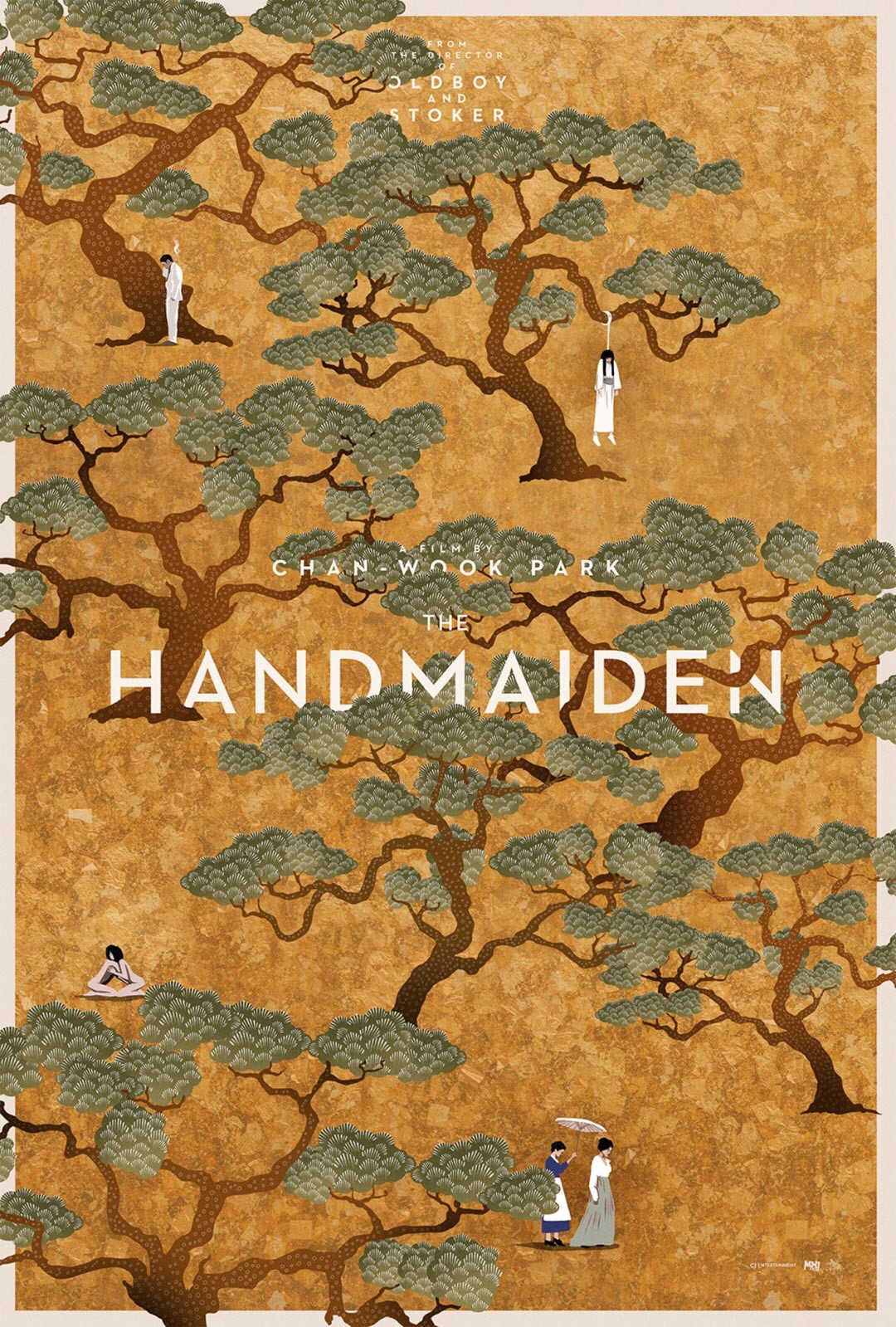
Film review – 아가씨 / The Handmaiden (Park Chan-wook, 2017)

Park Chan-wook’s latest release is a twisting psychological thriller steeped in eroticism and oozing class that works its audience brilliantly. The only drawback was that I didn’t have time to see it a second time.

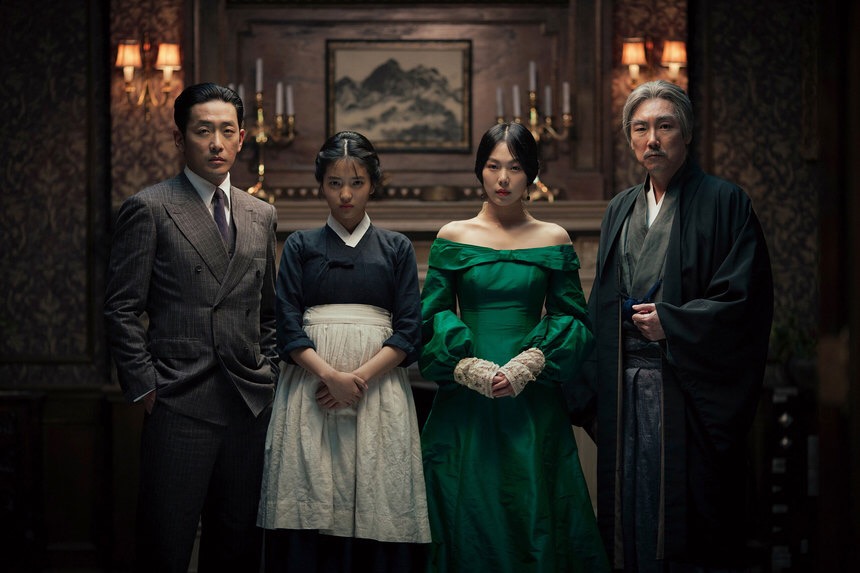
Set in Japan-occupied South Korea, the film tells the story of an elaborate plot to rip-off a rich Japanese heiress named Lady Izumi Hideko (Kim Min-hee), who is living in an extravagant and luxurious mansion under the authoritarian Uncle Kouzuki (Cho Jin-woong). The plot is being masterminded by a conman calling himself Count Fujiwara (Ha Jung-woo), and involves him marrying Lady Hideko and subsequently committing her to an asylum to steal her inheritance. To do this, he brings in Sook-hee (Kim Tae-ri), who is a professional pick-pocket, to work as Lady Hideko’s handmaiden in order to get close to her and influence her feelings towards the Count.

This fantastic plot is based on English novel “Fingersmith” by Sarah Waters. It is brought to life with perfect execution by director Chan-wook. As is typical of his films, The Handmaiden inhabits a uniquely-realised world that features traditional elements mixed in with gothic undertones. It’s a stunning visual achievement and one that is completely absorbing. 

Central to the plot is Uncle Kouzumi’s outlandish book collection, mainly erotic in nature and all extremely rare. He is producing forgeries of the books but is involving Lady Hideko in highly-exclusive book readings of the most sought-after novels, usually for an all-male audience who each will bid on the books in auctions after the readings. Whilst the forgeries provide an additional reason to hate Kouzumi – other than his generally disgusting appearance and the contents of his mysterious basement – it is the contents of the book that also serve to further the sexual drive of the story.

The scenes where Lady Hideko reads excerpts from the books whilst the audience listens intently are some of the best moments of the film, creating suspense with nothing more than an authoritative delivery from Min-hee and some attentive camerawork.

Indeed, the sly glances and subtle reactions are what makes the acting performances so believable. This is a game of tension, both mentally and sexually. The two central female characters are falling in love with each other, but they are also engulfing their desires in a sexual lust that makes Soo-kee’s original plan increasingly difficult to carry out. It is surprising as an English viewer that this traditional period drama setting doesn’t portray this desire with mere suggestion and topped-and-tailed sexual encounters. There is literally no holding back, which I’m sure many will find crass, but I found it essential to the plot and executed with enough artistic integrity to not be considered as superfluous.

This is simply one of the best films I’ve seen all year and one I can’t wait to see again once the extended cut is released on home media later this year. I can’t recommend it enough.