Film review – Star Wars: The Last Jedi (Rian Johnson, 2017)

CONTAINS SPOILERS – ONLY READ AFTER WATCHING THE LAST JEDI

Well, it’s finally arrived. After an almost-two-year wait, we finally got to see what happens on Ahch-To immediately after the infamous closing sequence of The Force Awakens. The highly-anticipated interaction between Luke and Rey was anything but grandiose – Luke simply tosses the lightsaber over his shoulder and walks away.

This may not have been the first thing we see in the film, but it certainly set the tone. There are some serious plot developments going on here, but they’re always delivered with a smattering of humour. Indeed, The Last Jedi may be one of the best examples of a script being so well-written that the overarching plot’s many loopholes can be forgiven.

In many ways, the tone of the script is essential to ensure the entire spectrum of potential viewers stays on board. Those expecting to see the darkest of dark sides of the force will certainly be pleased – it gets very dark –  but there’s a lighthearted feel to this film that means no fan will feel alienated.

The basic plot is split into three threads, essentially focused around the three main new heroes introduced in The Force Awakens: Rey (Daisy Ridley), Finn (John Boyega) and Poe (Oscar Isaac).

Rey is wrestling with the dark and light sides of the force – a development that clearly has ramifications for the future of the galaxy. She spends the early parts of her journey with Luke Skywalker (Mark Hamill), before taking off to see Kylo Ren (Adam Driver). Our heroine is a truly engaging character and Ridley is the perfect actor to take on the role, taking us on a journey to find out more about herself at the same pace as the viewers.

Elsewhere, Finn wakes up from the coma we left him in at the end of The Force Awakens, before a chance happening sees him forming a bond with resistance mechanic Rose Tico (newcomer Kelly Marie Tran), herself mourning the death of her resistance fighter sister.

Poe Dameron is busy on the main resistance fleet ship attempting tactical dogfight missions to attack the First Order, before attempting a rescue/escape plan with Princess Leia (Carrie Fisher) and Admiral Holdo (Laura Dern).

If great films are remembered so for their show-stopping visual moments, then The Last Jedi delivers them in buckets. The dogfights are absolutely real, comprehensible and exhilarating, clearly showing the influence of the film ‘Twelve O’Clock High’, which director Rian Johnson cited as a key reference point. The final fight sequence on the salt land of Crait contrasts the crystalline white of the ground with the kicked-up red chalk as the fighter vehicles slice through them towards the enemy.

A surprising and memorable fight sees Rey and Kylo team up together to wonderful effect. It’s a sequence reminiscent of ‘Three Outlaw Samurai’, with very few cheat editing or confusing cuts. It’s delivered masterfully. There are two specific deaths that really caused some great whooping and fist-pump scenes at the midnight screening: one involving a lightsaber-in-the-head death for a Praetorian Guard, and one involving the brutal death of a major character.

The McGuffin for Finn and his new partner in crime Rose allows them to develop something of a romance. It’s a romance that remains almost entirely unkindled by the end of the film – allowing plenty of  scope to further develop or completely nix their relationship before episode IX. The cynic in me believes this will probably depend on how popular Rose is as a character.

It must be said that the whole story thread for this pair of characters is mainly pointless. There is a largely disappointing sequence on the casino planet of Canto Bight that serves the sole purpose of introducing DJ (Benicio Del Toro). It is framed in a world that is wholly reminiscent of Final Fantasy on a plot level – casino-based planets are common in most games in the franchise, with Chocobo races being a clear inspiration for the Fathier creatures being forced to race for entertainment on Canto Bight. It’s also fairly identical on a visual level, suffering from a common issue in present-day cinema where physical sets and props are lovingly built and filmed, only to be touched-up in post with some less-than-realistic CGI, making for a wholly underwhelming result (see Unkar Plutt in Episode VII for a further reference point).. Fortunately there was no need to reproduce an entire human character a la Peter Cushing in Rogue One, but the visuals are so important after the failings of the prequel trilogy and it’s almost unfathomable that this can still go wrong.

As a side note, there is a wonderful tracking shot whilst we’re on Canto Bight that felt like a tribute to 1927 silent film Wings, which can be seen below.

Unfortunately, this Finn-Rose sideplot always feels like an unwelcome distraction from the Rey-Kylo thread. We were left hanging for two years and so most of the build up has been about what happens next to Luke and Rey, who Rey’s parents are (nobody, it turns out), how her training will play out and how she’ll defeat Kylo Ren. It’s frustrating that we keep getting the rug pulled from under our feet with unwelcome distractions from what is emerging as the main plot, and contributes to a sagging middle act. Indeed, should this have been missing from the film entirely, there would have been little impact on the outcome.

Poe’s character gets many of the best lines for laughs, but there are also big visual gags from BB-8 and some friction between Chewbacca and the furry little creatures called porgs. These porgs are destined to be something of a Marmite character for the franchise – I’m still trying hard to warm to them.

All is forgiven by the final act. If anyone was left unconvinced at any point, the film gets firmly back on track with a lovingly-balanced reintroduction of Yoda as a force ghost. It was surprising but absolutely welcome. Frank Oz provides the voice and yes, it is a real puppet operated by real people. This is how it’s done Mr Lucas.

This kick-starts a long stretch towards the end that is entirely satisfying, exhilarating and feels like a genuinely fresh take n the franchise. It sets up the Resistance in a perilous predicament that gives J.J. Abrams a meaty starting point for the final installation of this trilogy.

It makes the failings pale into insignificance and provides a perfect ending to a not-quite perfect film.

The clocks are officially reset and I’m now on countdown again for the next instalment.

Check out From Real to Reel’s Christmas Limerick Advent Calendar

I’ve been featured on From Real to Reel, a blog about film run by my good friend Daniel Robinson.

It’s a cracking blog from a young cinephile who writes passionately about films. He’s also a great actor and a promising director.

As it’s December, he’s running a Christmas film limerick advent calendar with one limerick every day up to Christmas Day. I chose the film ‘A Christmas Story’, a film family favourite and one I’ve loved for years.

You can find the poem here.

Check it out!!

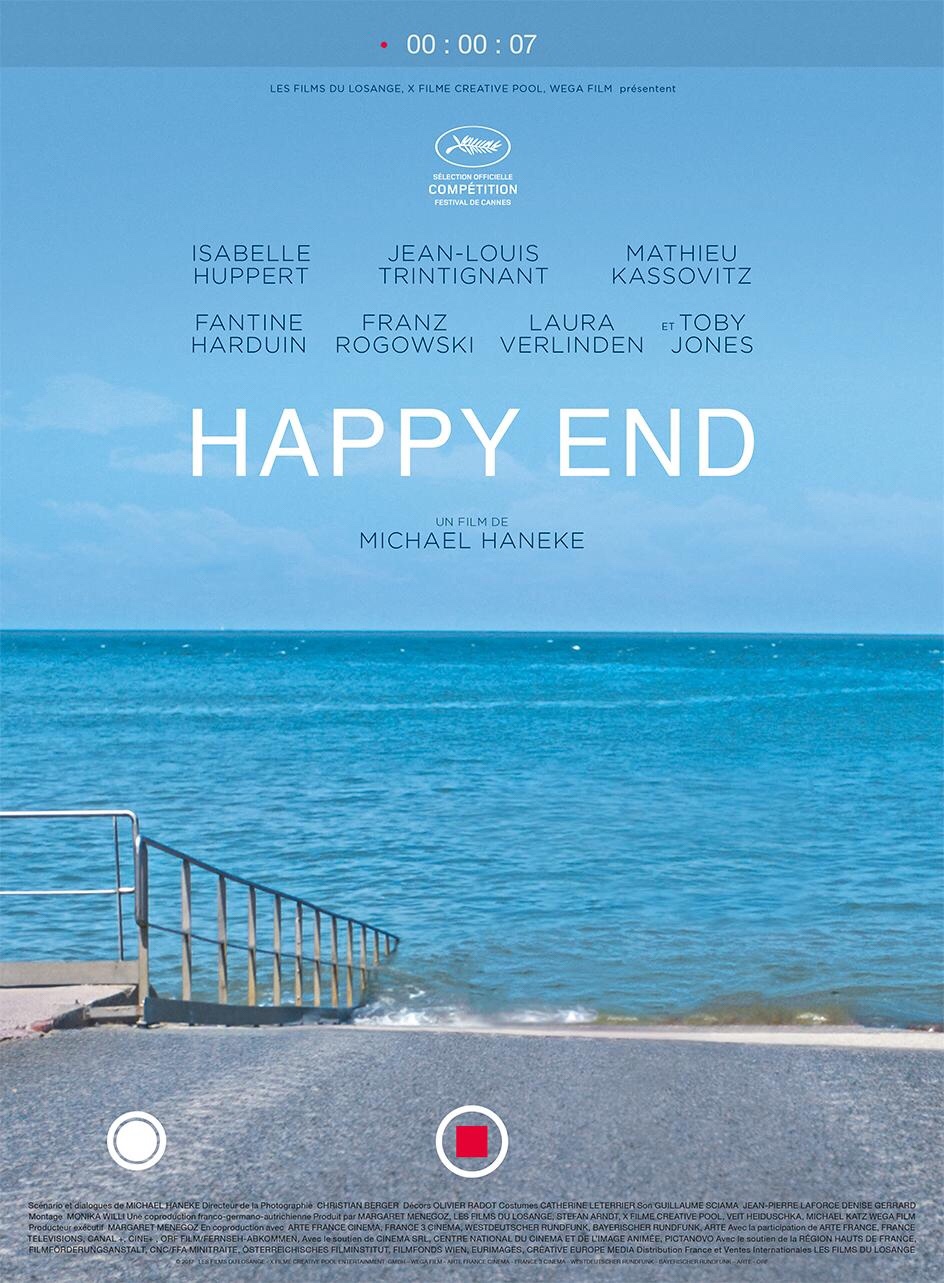
Film review – Happy End (Michael Haneke, 2017)

Michael Haneke’s latest picture is a twisted look into the wealthiest ways of living in the north of France, as seen through the eyes of a dysfunctional family hell-bent on self-destruction. A mixture of humour and satire litters the script to create a solid effort that, despite its best efforts, fails to deliver the same impact as the most dedicated of Haneke fans would hope for.

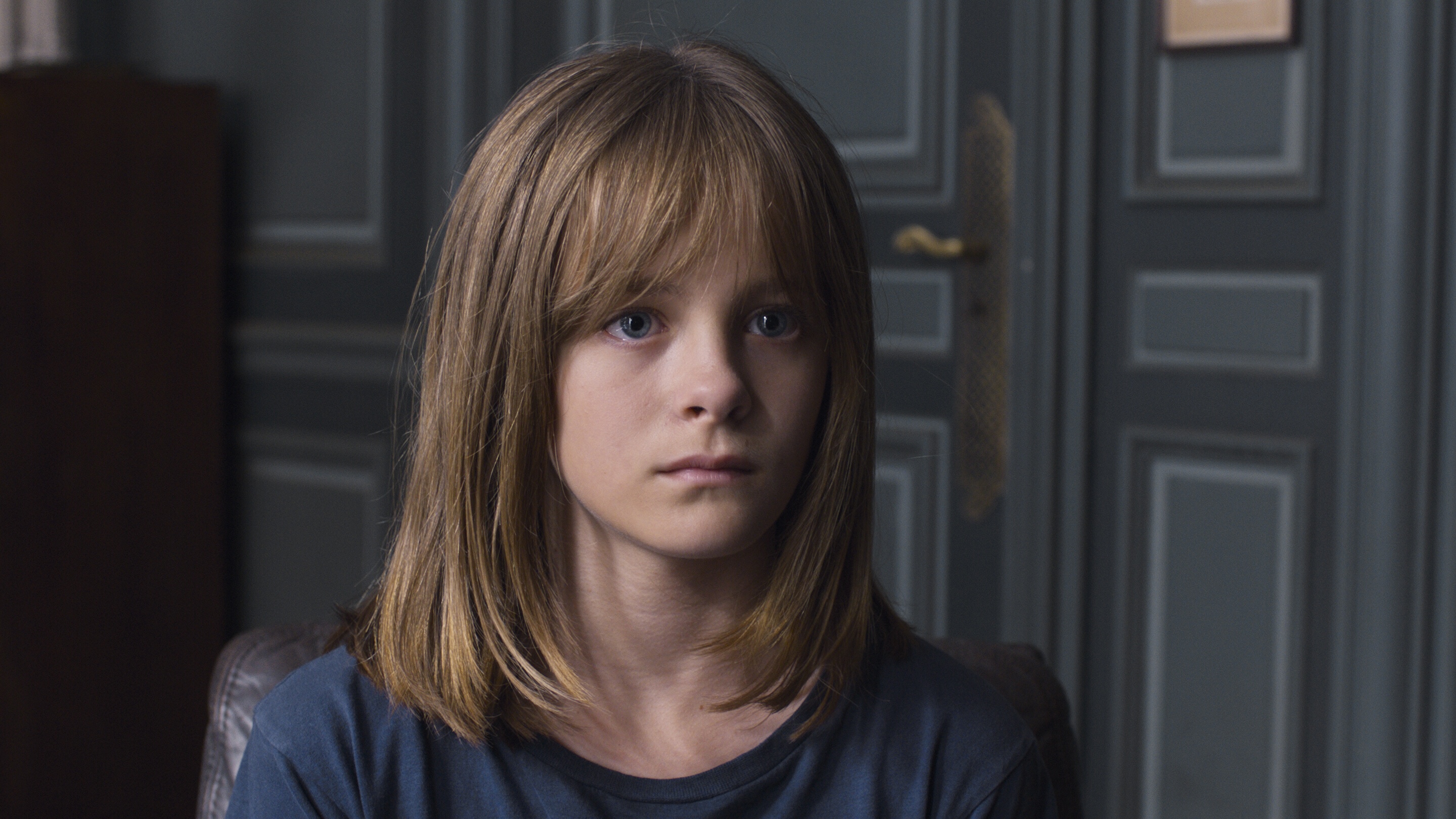
The film opens with a slow series of voyeuristic shots through the camera phone of 13-year-old Eve Laurent (Fantine Harduin), transmitting through a social media platform that looks similar to Snapchat. We see her murder her pet hamster and then, in the final shot, we see her unconscious mother, whilst an overlay of text chat show young Eve admitting she has poisoned her.

In the next shot we see the CCTV footage of a construction site where a huge disaster occurs, critically injuring one of the employees. It is in the aftermath of these two opening gambits that the rest of the film hangs its developing intertwining plots.

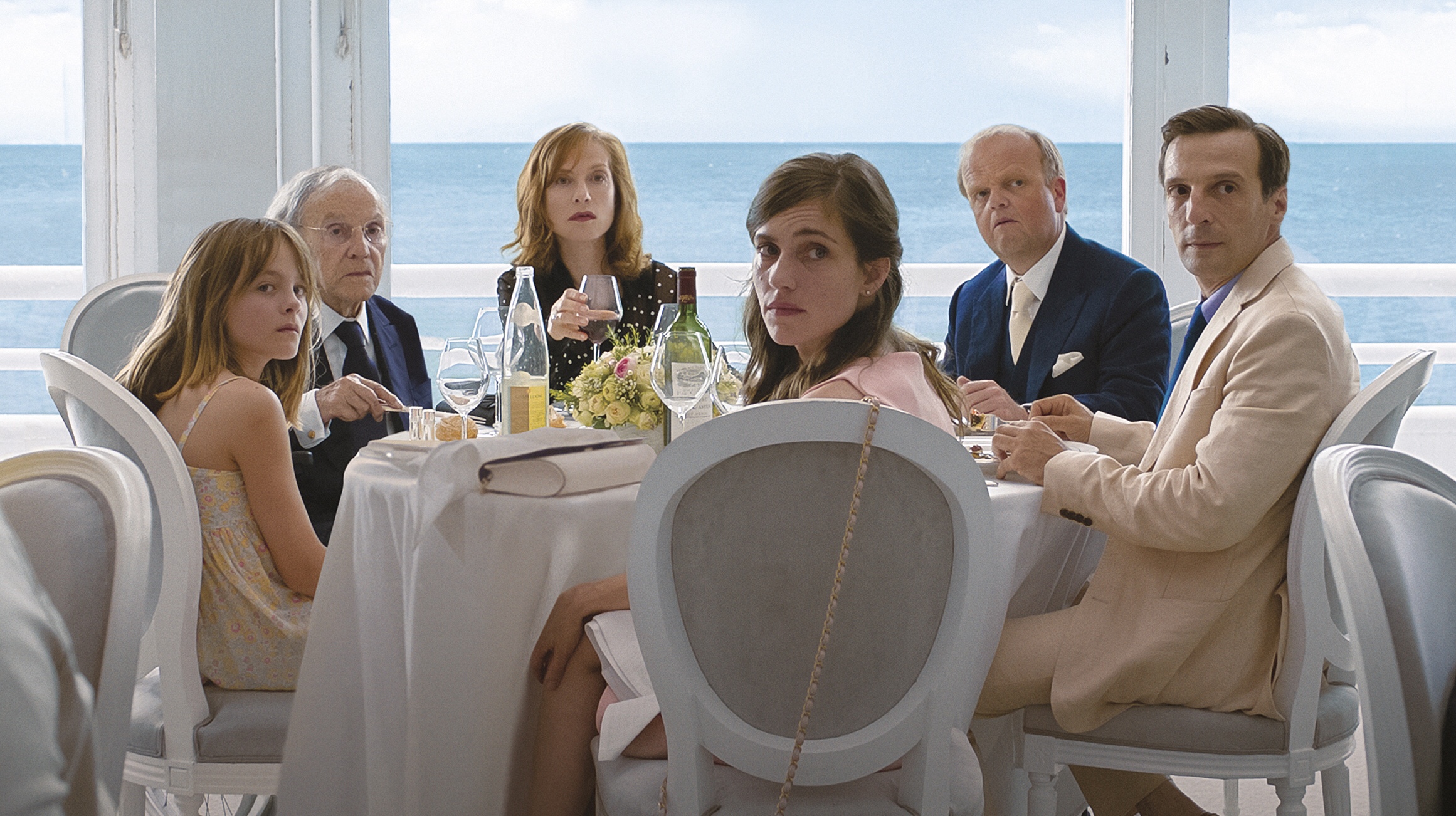
We later find out that this workplace accident was due to negligence at the hands of site supervisor and alcoholic Pierre Laurent (Franz Rogowski), whilst firm owner Anne Laurent (Isabelle Huppert) is left to pick up the pieces and deal with an impending lawsuit. Eve is now living with this family in a large mansion in Calais, along with depressed grandfather Georges (Jean-Louis Trintignant).

The ironically-titled Happy End is a good film, but not a great one. The cast is substantial and the dialogue is sharp, but somehow the plot doesn’t feel like it takes us on a journey with enough of the characters. It’s more of a satirical social commentary piece rather than a meaty piece of fiction, with too many of the characters used as fodder for the main characters.

Trintignant and Huppert reunite here with Haneke after the successes of 2012’s Amour, a film that won the Best Picture Academy Award and the Palme d’Or at the Cannes Film Festival. It is clear why Haneke was so keen to work with them both again. They don’t share much screen time together, but with the former’s desire to end his life and the latter desperate to keep the dysfunctional family together and presentable, there is enough to go on to maintain the interest. With the addition of the young Harduin to the cast, this triangle of strength is enough to carry the film.

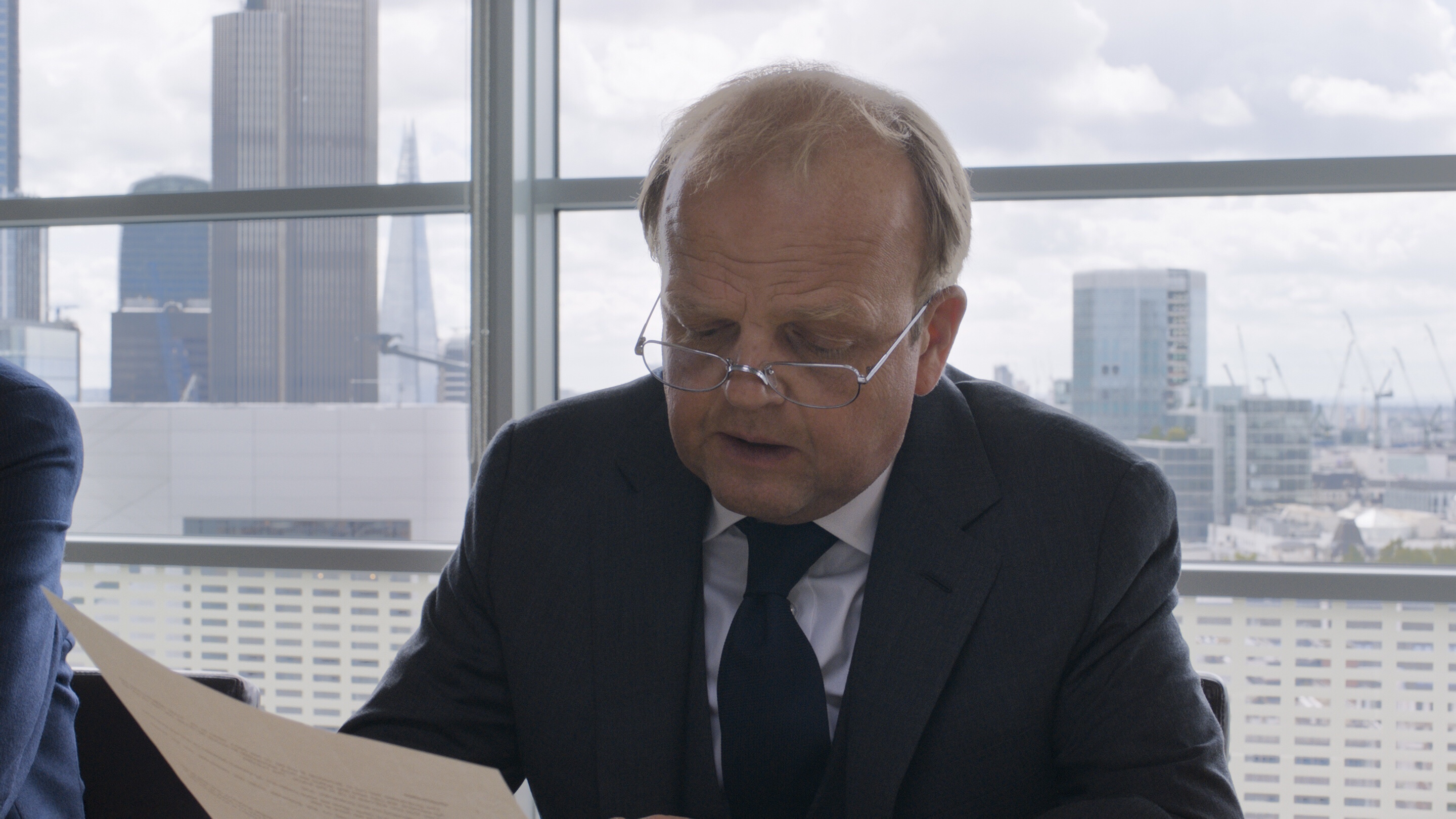
It could be argued that Toby Jones’s inclusion is on the cynical side. His role is very minor, though his prominence in the advertising campaign will undoubtedly have helped ticket sales in the UK, a place where his acting credentials need no introduction – least of all in the arthouse cinemas in which Happy End will play. If this is true, I don’t mind. It’s just smart advertising and a good way to carve out a niche in the market away from the impending Star Wars: The Last Jedi Release next week. For those of us who go to see more than the most mainstream of films, options and variety are required.

It feels unlikely that Happy End will repeat the award season successes enjoyed by many of his previous efforts, but it’s not without merit.

Film review – The Florida Project (Sean Baker, 2017

The moment lead character Halley, played by Bria Vinaite, has had enough of her landlord Bobby (the ever-brilliant Willem Dafoe) is a touch of genius. Her constant trouble-making, lack of responsibility for her own life and the conseqeut poor behaviour of her daughter has come to a head. Bobby counts to three, demanding she leaves his office. She relents, but as a parting shot removes the sanitary towel from her pants and slaps it on the glass window of the reception, punctuated by a flip of the middle finger in his direction.

It reveals a lot about her character. It’s one of the most disgusting visual moments of the cinematic year and (hopefully) goes far beyond the imagination of most viewers even on their worst of days.

That Bobby also shortly after is again protecting her from trouble beyond this action says a lot for his character too, presumably a reason Dafoe was attracted to the role. He delivers a typically nuanced performance. He’s rough and tough on the exterior, largely through necessity. Inside he is a man who clearly recognises the peril all his residents face – most are one missed payment away from homelessness and without any hope to get out of the predicament.

The film achieves what it aims to do, which is to shine a light on the horrific living conditions for many people living in Florida in the shadow of the self-proclaimed “happiest place on earth”. Disney World’s original work-in-progress name was The Florida Project, though here the name is repurposed to represent the social housing slums of America, all too familiar to so many of the nation’s population.

The film takes the form of a series of vignettes, each showing another layer to the life of Halley and her daughter Moonie (Brooklynn Prince). Prince is as brilliant as she is irritating, her idea of hyjinx ranging from spitting on her neighbour’s car to burning down a disused house.

The plot is laced with humour throughout, and there were certainly some huge laugh-out-loud moments. But for all the laughter, there was an element of sadness and horror to think about how real these situations are.

The result is effective, though the overall sum feels less than the parts. By the end of the film it felt like it was dragging, meandering towards a final set piece that didn’t really feel as triumphant as the filmmakers had hoped. It’s a film that I wanted to like more than I did, but I just couldn’t get behind the characters enough to really allow myself to enjoy the film.

It’s an interesting but disappointing watch that is more thought-provoking than it is entertaining.

The Greatest Showman’s Misleading Trailers

‘The Greatest Showman’ is one of the most anticipated films of the festive period. A host of huge name stars is topped by Hugh Jackman, Zac Efron and Michelle Williams. Bill Condon has co-written the screenplay, following successful involvement in the films ‘Chicago’ and ‘Gods and Monsters’, getting an Oscar nomination for one and a win for the other. Seamus McGarvey is involved as cinematographer, a man whose successes are so great its hard to list.

One thing is distracting me when watching the trailers though. For all the brilliant theatrics, set pieces, costumes and star power, there appears to be no mention of the fact this is a musical. Well, that’s not strictly true. There’s a brief mention right at the end of each trailer to “music from Academy Award and Tony Award winners Benj Pasek and Justin Paul”. Not much of a way to sing the praises of the central crux of the film.

My question is: why? In 2017 we’ve already had proven to us that cinema-goers love musicals. ‘La La Land’ achieved a global box office of $445,669,679 (as of 25th November 2017), based on a budget of $30m. Admittedly, this may be an exceptional and unexpected success, but it sets a precedent that there is certainly an appetite for a well-delivered musical.

It’s not as if this hasn’t bitten other films before. When Tim Burton’s Sweeney Todd was released in 2008, cinema-goers in the UK were seen to walk out of screenings due to the misleading nature of the trailers. Complaints were made to the Advertising Standards Authority. It looked like a horror film but turned out not only to be a musical, but a faithful version of a Sondheim musical. Guess what? Sondheim famously makes his musicals extremely musical-y, with seemingly the entire film being delivered in song form.

It just feels incredible that a studio would make the same mistakes again. The craziest thing is that the music is absolutely brilliant and should be being trumpeted to help sell the film. The lead cast are all seasoned musical professionals – a huge improvement on the likes of ‘Beauty and the Beast’ and ‘The Jungle Book’, which featured the more experienced musical performers in minor roles.

You can listen to a couple of tracks below and make your mind up yourself.

I’m a great believer that audiences are intelligent enough to make their own decisions. We hate to be lured into an auditorium under false pretences.

I guess we’ll find out if there’s any backlash this Christmas.

Film review – Insyriated (Philippe van Leeuw, 2017)

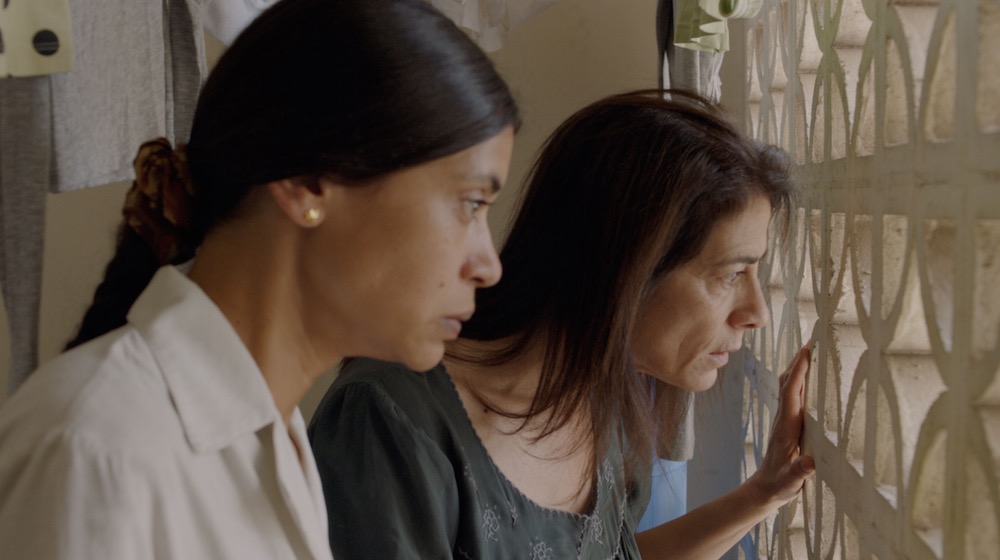
Philippe Van Leeuw May have taken a cheap shot with the title of this film, but the shallowness starts and ends there. It’s an imperfect but nonetheless powerful film that takes a gripping story and frames it within the resonatingly-threatening streets of the modern-day war-torn Syrian capital Damascus.

Inspired by a real anecdotal stories of people living in Damascus, the action takes place entirely within the confines of a small flat over a 24-hour period. Inside the flat lives the matriarchal Oum Yazan (Hiyam Abbass), a mother trying to keep her family together, alive and safe through the ongoing battles. Lodger Halima (Diamand Bou Abboud) is planning to escape from Damascus with her husband Samir (Moustapha Al Kar)) and newborn baby.

The story starts in earnest when housemaid Delhani (Juliette Navis) witnesses a sniper shooting Samir, who collapses in plain sight of one of the windows. Confiding in Oum Yazan, the pair decide to keep the shooting a secret to help maintain the peace inside the besieged flat.

It’s a powerful story no doubt, but its strengths are heightened by some excellent performances by the three central female characters. It is essentially a cross-analysis of how far people go to maintain their own lives and the lives of those they love.

Of the three central roles, none are better delivered than the performance given by the relatively unknown Diamand Bou Abboud. It is certainly the most substantial of the roles: they are relatively outcasts in the group, she has a newborn baby and wants to protect it, but is new to motherhood. It is one late scene when there are two intruders in the house that serves as one of the most memorable and horrific of the year, proving that what we don’t see on screen can be far more powerful that what we do see. It is a heartbreaking and sickening moment in the woman’s life and challenges the viewer to decide what they’d do in her shoes or in those of her cohabiters. Abboud really proves her acting mettle here.

There is little in the way of musical accompaniment in the film, and the cinematography is tough to view critically due to the filming style and confined location. These facts don’t detract from the overall impact, which is more about telling a powerful story than wowing the audience with an elaborate production. As Van Leeuw states in his production notes for the film, “there are no tricks, no special effects, it is just a plain look at the drama of the situation.” [1]

Historically, Arabic-language films have limited appeal at the global box office. True, there have been a number of success stories in recent years (notably Naji Abu Nowar’s 2014 drama ‘Theeb’, which took $774,556 globally [2][3]), but it doesn’t appear as though Insyriated has bucked the trend. Its inevitably sluggish performance at the UK box office (£10,706 from 19 arthouse theatres [4]) means that the film will have to perform well on home streaming platforms in order to recoup the money. Fortunately it is available now through Curzon On Demand and iTunes for the same price as a cheap cinema ticket, along with the standard DVD releases.

It’s not an outstandingly brilliant film, but it is in turns moving, horrific, heartbreaking, shocking and thought-provoking. A solid achievement by the Belgian director and the strong cast. It deserves an audience and will hopefully get that over the coming months.

Notes:

[1] https://curzonblob.blob.core.windows.net/media/6010/insyriated-production-notes.pdf

[2] http://www.boxofficemojo.com/movies/?page=intl&id=theeb.htm

[3] http://www.the-numbers.com/movie/Theeb/United-Kingdom#tab=summary

[4] http://www.the-numbers.com/movie/Insyriated-(Lebanon)#tab=summary