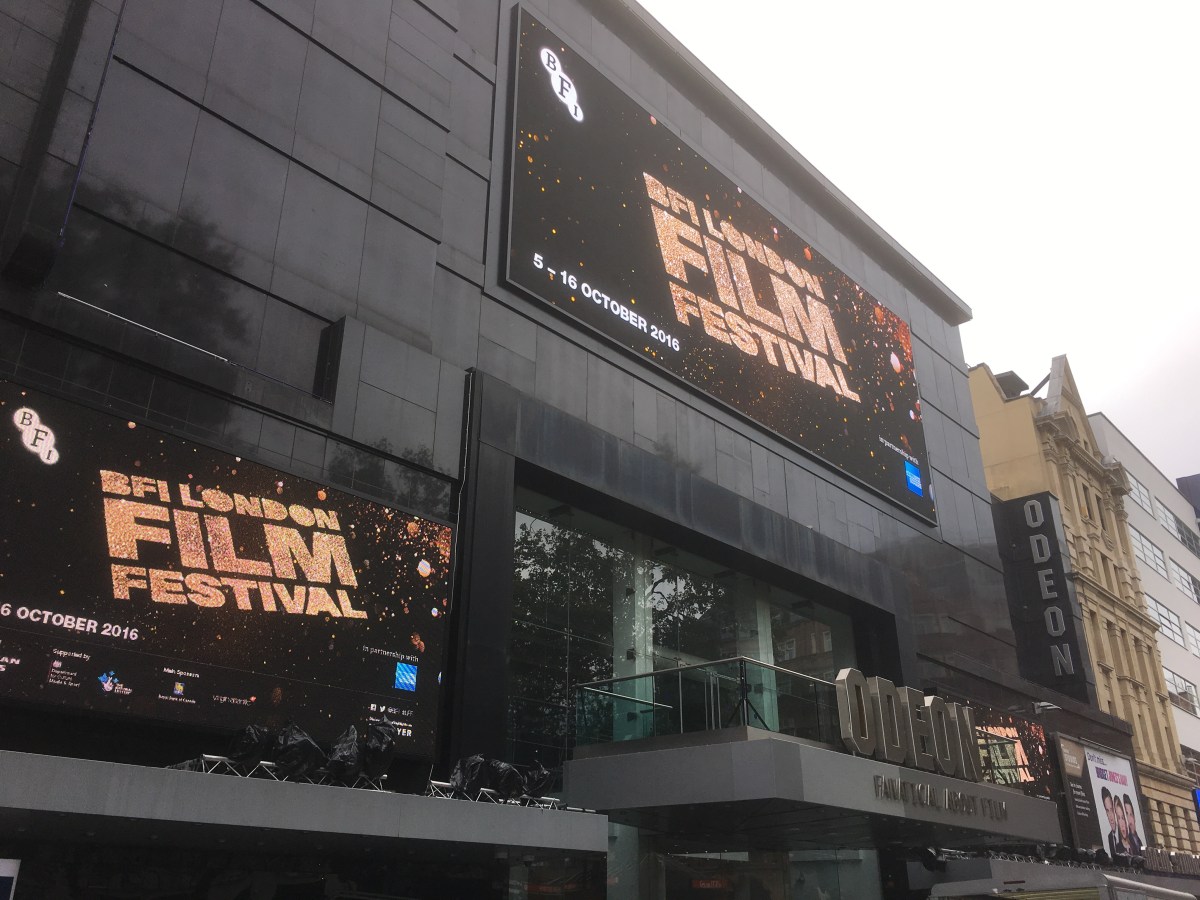
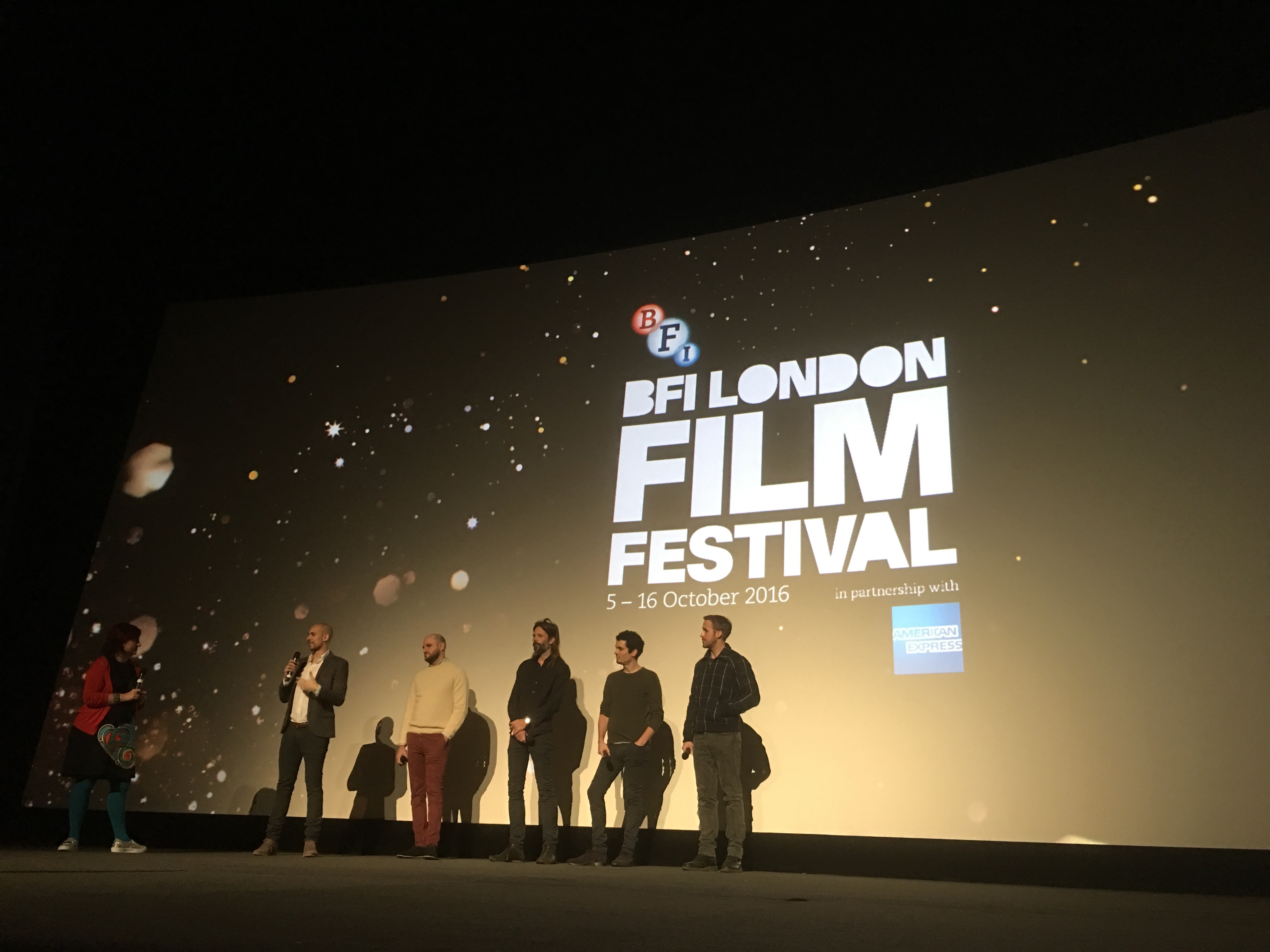
BFI London Film Festival 2016 – First weekend review

I’ve had a fantastic time over the first week of the BFI London Film Festival. I’ve laughed, cried, been angry and been confused by a rich plethora of cinematic delights.

Here is a link to all the films I’ve managed to catch so far:

A United Kingdom
La La Land
Frantz
Dancer
Creepy
Psychonauts: The Forgotten Children
Queen of Katwe

Here’s to the second week of the festival!

Film review – Frantz (François Ozon, 2016)

Set primarily in Germany in the immediate aftermath of the First World War, François Ozon’s latest film is an emotional story portrayed almost entirely in black and white. It revolves around Anna (Paula Beer), a woman who is living with the parents of her lost lover and supporting each other in their collective grief. That man is the titular Frantz (Anton von Lucke), who we learn has lost his life in battle during the war. When a Frenchman by the name of Adrien (Pierre Niney) shows up at Frantz’s grave to give his respects, he tells them of his close friendship to their mutually lost friend.

Adrien (Niney) and Anna (Beer)

Ozon is something of a prolific filmmaker on almost the same level as Woody Allen. Since his celebrated debut feature length film Sitcom in 1998, he has written and directed sixteen films, amongst them the critically acclaimed Swimming Pool and the highly successful Potiche. Yet Frantz is, by all accounts, a departure in style for him and sees him in relatively unfamiliar territory with a historical war drama.

It is based on the play ‘L’homme que j’ai tué’ by Maurice Rostand. Before writing his script, Ozon was unaware that the play had already been adapted by legendary filmmaker Ernst Lubitsch as the film Broken Lullaby in 1931, though when he watched the film he realised that it was a completely different treatment to the direction he wanted to go with Frantz. He wanted to give the focus of the film to Anna, who was on the losing side of the war, providing more empathy to her as the central character.

There is an interesting chemistry between Beer and Niney, both of whom are playing extremely complex characters. They share this individual that has had a huge affect on their respective lives and begin to grow closer. Providing convincing characterisations of such  conflicting emotions is a challenge both rise to and it is this that elevates the film above being a wartime drama.

It was amazing to learn that this was Beer’s first performance acting as a French-language character. Many successful actresses couldn’t achieve what she has here in their first language let alone their second one. She revealed in a post-screening discussion that she had to learn and develop the script twice. Initially she developed the emotional responses to the words in her native German, before relearning the entire segments in French to ensure her delivery wasn’t lacklustre.

This is a truly moving film that gives an interesting point of view to the fallout from war that hasn’t often been explored before. Superb delivery from the two complex central characters means this comes highly recommended.

Film review – Dancer (Steven Cantor, 2016)

Documentary filmmaker Steven Cantor’s latest cross-examination comes in the form of Dancer, which tells the story of Ukrainian ballet dancer Sergei Polunin, who in 2010 became the youngest man to become the British Royal Ballet’s leading principal.

Sergei Polunin dances to Hozier

The film uses talking heads interviews blended with some exclusive home video footage to creature a portrait of a fragile artist. Polunin is shown as a man who knows little outside his art and is desperate to change the future for upcoming ballet dancers who he fears will make the same mistakes as he did. These mistakes led to him quitting the British Royal Ballet Feeling at the tender age of twenty-two, shocking the ballet world and disappointing his fans.

Most insightful are the interviews with his mother and father. Clearly huge sacrifices were made throughout his life to get him to where he is now. The film leaves it open as to whether either of them regret putting him through it, and it’s not something that ever really needs an answer. He certainly has a different life to the one he would have had if he’d stayed in Khersan, Ukraine.

The focal point of the film comes in the form of the Dave LaChapelle-directed video that went viral earlier this year. I urge you to stop reading and watch the video below on the largest screen you can find.

This video has, at last count, been viewed 16.3m times in the last eight months. That is an astonishing amount, but then it is an astonishing piece of art. It was choreographed by Jade Hale-Christophi, a ballet dancer with Polunin met at the British Royal Ballet and one of his closest friends. The purpose of the film was to announce his retirement and have that as his “final dance”, but the response was so great he decided to change tact, and instead wants to do guest appearances and one-off pieces of art.

This is a crucial thing for him. The reason he has struggled throughout his career is a lack of time to step back, ask himself what he really wants, and make an informed decision about the next career choice.

He also spoke after the screening about where ballet’s David Beckham is. I suspect after that video and this film, he need only look in the mirror to find him.

A fascinating examination of a tortured artist now seemingly on the straight and narrow.

Dancer will receive a DVD release in April via Dogwoof.

Film review – Psiconautas, Los Niños Olvidados / Psychonauts, The Forgotten Children (Alberto Vázquez & Pedro Rivero, 2016)

Somewhere deep inside me was a sworded hope that maybe, just maybe, a family was in the screening of Psiconautas at Prince Charles Theatre and had a truly miserable time watching one of the most bizarre 75 minutes of cinema I have ever seen. Harsh, I know, but variety is the spice of life and Trolls 3D sold out weeks ago despite being in every cinema across the land in about two weeks.

Sorry.. what just happened?

The plotline is a difficult one to nail down. Based on a graphic novel by Alberto Vazquez, its origins lie in a 2011 short film titled Birdboy. After a short prologue, we are introduced to our two main protagonists. The aforementioned Birdboy is a fatherless creature who can only function whilst under the influence of drugs. His former girlfriend Dinki – a mouse – is trapped in a life ruled by her religion-mad mother, her father (who isn’t a mouse but wears a mouse mask) and a half-man-half-dog brother called Jonathan who his parents adore. She longs to escape with her two friends, but doing so proves to be not so easy when they live on a distopian hell island and are being hunted down by hilarious sentient alarm clocks.

They meet other characters along the way, from a panicked rubber duck to the titular tribe of forgotten children. There is a sense that Vázquez and Rivero are bursting with ideas and this bodes well for future works.

I’m so confused.

It is a wholly confusing experience that had no intentions of letting the audience expect the expected. There were moments of real hilarity and moments of true horror – a real rollercoaster of bemusement. The climax is nothing short of terrifying.

If you like your animation to be all warm and fuzzy then clearly this isn’t for you. But if you’ve ever wondered what it would be like to get trapped inside a Stanley Donwood nightmare then there could well be something here for you.

Film review – La La Land (Damien Chazelle, 2016)

WARNING: This review is effusively positive. If you’re a misery-guts then please look away now.

Every once in a while you will go into a film knowing almost nothing about what you’re going to see and get absolutely blown away by a surprisingly perfect masterpiece. As you get further into your film-watching life, enjoying these moments becomes increasingly rare, so when a film like ‘La La Land’ comes along, you can’t help but be overcome by giddy excitement.

Damien Chazelle shot to fame in 2014 with his critically acclaimed and rather special jazz-bully drama ‘Whiplash’. ‘La La Land’ shares very few similarities with it, bar an affinity to jazz that also featured prominently in his debut feature ‘Guy and Madeline on a Park Bench’. It does expand on a topic explored in ‘Whiplash’: the ongoing internal conflict of artists pursuing their dream at the expense of every other aspect of their life.

If you enjoyed his first two feature films but thought he couldn’t “do” mainstream, then prepare to be proven absolutely wrong seconds into the start. It opens with an over-the-top musical song and dance number set amidst a traffic jam. It’s an explosive one-shot (though there may have been some clever linking between extended shots) that received a round of applause at the end from an appreciative audience. Rightly so – it was jaw-dropping.

‘La La Land’ is, at heart, a homage to traditional musicals, with a joyful soundtrack matched by a couple of mesmerising performances from the lead performers Ryan Gosling and Emma Stone. Gosling stars as Sebastian, a struggling jazz pianist going from poor gig to poor gig in LA, with dreams of owning his own jazz club to fend off the death of jazz. Stone is Mia, a young actress moonlighting as a barista at the Warner Brothers Studio sets who can’t get a break she deserves in the film industry. After a number of serendipitous meets, Seb and Mia start to fall for each other and, with both a figurative and a literal song and a dance, their romance explodes.

With Seb being a jazz expert/enthusiast/nerd and them both being performers, Chazelle has given himself the platform on which to produce a naturalistic musical that will doubtless make it more acceptable to those who don’t normally class themselves as musical fans. There is also evidence of a significant amount of effort put in by Gosling to perfect the piano shots, which were impressively all performed by him.


It’s a film so visually stunning it’s hard to take your eyes away from it. There is, however, never a risk that it was simply a platform to reference more familiar films of old. In a breathtaking final segment, we take a walk through memory lane with nods to a number of classic musicals, but they are simply nods in what amounts to one of the most perfectly-balanced final sequences I’ve seen in cinema. Gasps were audible around the auditorium.

The soundtrack is destined to stick around for years to come. Gosling/Stone duets “City of Stars” and “A Lovely Night” are both standouts, but it will be “Audition (The Fools Who Dream)” that will be vying for an Oscar early next year. A beautiful number written by Justin Harwitz, Benj Pasek and Justin Paul, it is left to Emma Stone to deliver an emotionally raw live performance.

The only downside for me is that I have to wait for another two months to see it again. A must see.

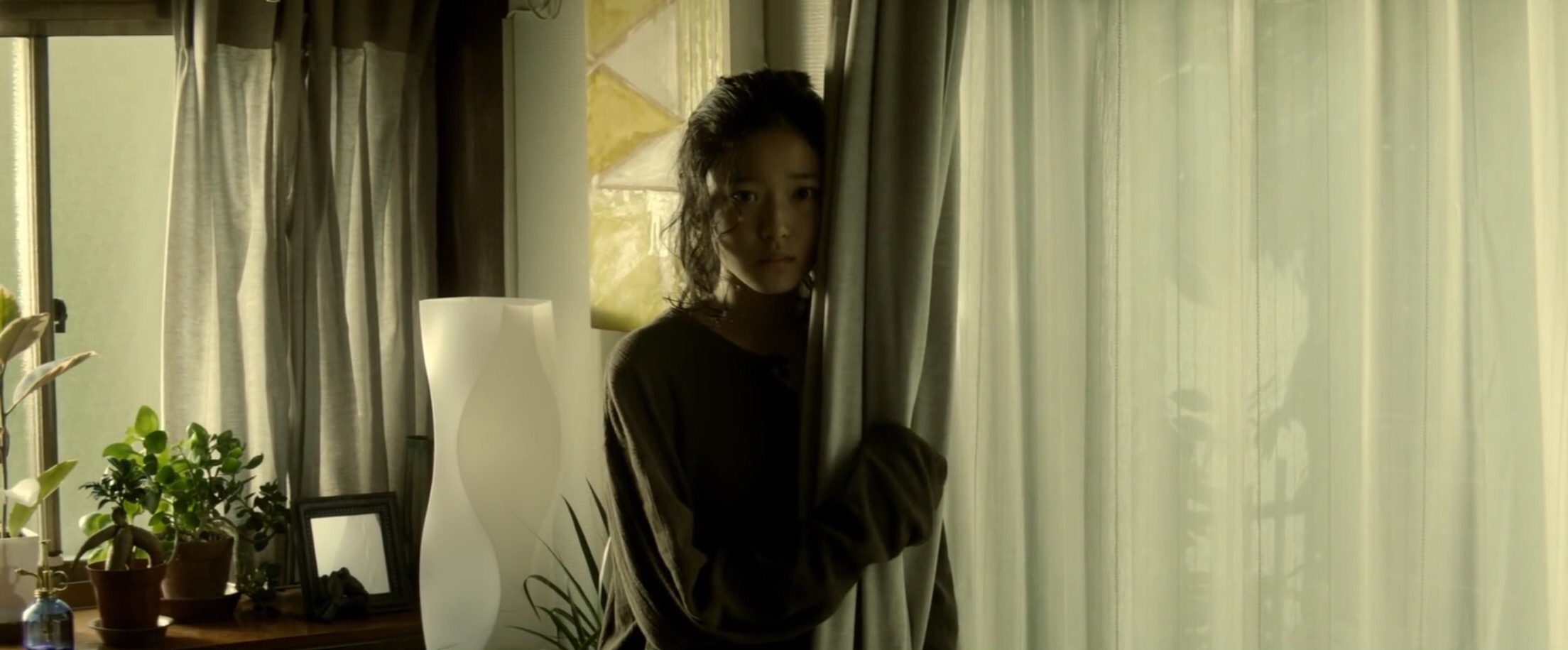
Film review – 偽りの隣人 / Creepy (Kiyoshi Kurosawa, 2016)

Kiyoshi Kurosawa’s latest release Creepy received its U.K. premiere tonight as part of the London Film Festival. It blends elements of police drama, suspense and mild horror to create an intriguing film that achieves much but ultimately falls down due to a lack of ruthlessness in editing that would have helped the pacing.

Set in approximately 2009, it tells the story of a retired policeman Takakura (Hidetoshi Nishijima) who has changed careers to work as a criminology professor at a local university. Having moved to a new part of town with his wife Yasuko (Yūko Takeuchi) and dog Max, they begin to become suspicious of the titular creepy neighbour Nishino (Teruyuki Kagawa) and his daughter Mio (Ryoko Fujino), whilst Takakura attempts to solve an old case that has come out of the woodwork.

Creepy Nishino

The casting of the genuinely creepy Kagawa is a solid choice. Director Kurosawa is on familiar ground, having worked with him on 2009’s Tokyo Sonata, though this role is very much a departure from the jobless family man we saw previously. When the results are this good there’s no need to change.

Kurosawa, working again with cinematographer Akiko Ashizawa, achieves a lot with natural lighting to create darkness for the lead characters as they delve into their inner-most thoughts. This was an effective technique used previously by the pair in Journey To The Shore and is mined more subtly here to arguably better effect, especially in one particular witness interrogation scene.

However, there are flaws. The ending could genuinely have happened about twenty minutes prior to when it finally occurs, and when the story is finally resolved the relief I felt wasn’t for any of the particular characters but more for the fact it signalled the end was in sight. It’s unfortunate that the ending is so shocking and powerful with some great acting that was undermined by the preceding needless plot extension.

There were a few ideas throughout the film that seemed to fizzle out. Saki (Haruna Kawaguchi) was really prominent for a good portion of the film but was clumsily written out before the resolution of her storyline; her family went missing but she doesn’t seem to care why in the end. A police chief is written into the key part of the story to get Takakura out of a dead end in the plot. There’s a mind control element to the story that isn’t ever fully explained, instead expecting the viewer to just go with it. 

After a long setup, this film is genuinely exhilarating for about an hour. With a shorter ending and a little more clarity, it could have been much better than the final result. For me, it is a missed opportunity.

Film review – Hunt for the Wilderpeople (Taika Waititi, 2016)

SPOILER ALERT – There’s a spoiler pretty much immediately in the first paragraph of this review. Sorry, it just turned out that way. Come back when you’ve seen the film and rejoice in its excellence with me. General  and spoile-free review: it’s excellent and well worth watching.

Here we go…

There is a moment, about twenty minutes into Hunt for the Wilderpeople, where the laughs start rolling in and the set up falls into place, proving that very good things come to those who wait. That this happens in the middle of the funeral of one of the lead characters, who is unexpectedly killed-off in the middle of the opening act, proves the point that comedy doesn’t have to be routine to be absolutely hilarious.

Indeed, looking at the two lead actors, there is nothing to suspect they would work on a comedy duo level. Sam Neill has been doing fantastic work for years, delivering memorably serious performances in the likes of The Hunt for Red October, Dead Calm, The Piano and Jurassic Park. His partner in crime in Hunt for the Wilderpeople, Julian Dennison, is pretty much a newcomer to the industry, having starred in 2015’s Paper Planes and not much else (at least not much that has troubled the international market).

It’s strange then that they have formed a bizarre chemistry around which this film’s many successes hang, taking turns to be the straight man when the time is right. It’s a successful combination and one that takes what could have been a simple live-action remake of Pixar’s Up and turns it into an enjoyable romp through the New Zealand countryside.

Dennison is, ultimately, the real find of the film. As the rebellious youth that nobody wants, he is privy to some of the best lines in the film. His delivery is natural and faultless.

Taika Waititi may be in the process of directing the upcoming next instalment of the Thor film series (set for release in late 2017), but he is staying rooted to what he knows best for as long as possible. One can only hope that Marvel allow him to finish his journey with the film rather than lose faith at the eleventh hour as they did with the last quirky comedy director they went with: Edgar Wright.

On this evidence, they would be wise to not make the same mistake twice.

Hunt for the WIlderpeople is available now on DVD.

Film review – A United Kingdom (Amma Asante, 2016)

Kicking off the 2016 BFI London Film Festival in style tonight was Amma Asante’s triumphant ‘A United Kingdom’. After the glitz and glamour of the red carpet, the film’s central themes proved to be an apt starting point for a programme that festival director Clare Stewart claims will focus on diversity.

The film tells the true story of Ruth Williams (Rosamund Pike) and Seretse Khama (David Oyelowo). Khama is the King of Bechuanaland (the country now known as Botswana) and in 1948 he marries London girl Williams amid opposition from their families and countries, sparking a political debate that led to the country’s independence movement.

Asante is the first black woman ever to direct an opening night film at the London Film Festival, and she was keen to point out the relevance of her being the person at the helm telling this important story.

“[The Botswanians] were comforted that it was going to be told through the gaze of a woman of colour… There was relief, and of course a curiosity, as to how their country, and they as a people, would be reflected on screen.”

Pike and Oyelowo

The resulting picture is a moving portrayal of a changing time in two countries with a message that is as valid today as it was then. True, there has been much progress in the world since 1948, but looking back at the changes in the past 70 years should give humanity hope that as much progress can be made again in the next 70 years. Indeed, many comments from the stars on the red carpet referenced that there is still much wrong with the world and a film like ‘A United Kingdom’ serves to highlight that we should never give up the fight. This is a fact not lost on Asante, especially given the marginal bandwidth available in the film industry to both people of colour and women – something that should be considered one of the big talking points of this year’s festival.

Oyelowo and Pike work together perfectly, each delivering powerful performances worthy of the story they are telling. The film’s genesis lies with Oyelowo, who started writing the script six years ago after reading the Susan Williams book Colour Bar, and his passion for the story seeps into his emotional delivery.

The film perhaps suffers from appearing saccharine, with the story telling us that their love was so strong it overcame political opposition and brought a continent together. The truth is that the film isn’t too far from being perfectly accurate, with only a couple of timeline changes for the benefit of pacing.

This is a story that is one piece of a much larger puzzle that can be filled in with what can be seen as companion films: Mandela – Long Walk To Freedom (2013) and Hotel Rwanda (2011) are two good recent examples. There is a rich history that is still being written in Africa, from which deeply moving stories continue to be drawn in both film and literature.

It is remarkable that the actors and actresses involved knew little of the source material before receiving the script. It is likely that the same can be said of the many viewers this film will eventually reach – I have to admit that I was also blissfully unaware of the history of Botswana before seeing this film. Khama’s story isn’t one that has been well-documented and that is something that Oyelowo and Asante will be more than happy to rectify.

A truly important story told in such a captivating manner deserves to be seen. A wonderful start to the festival.


Film review – Julieta (Pedro Almodóvar, 2016)

The latest film from Pedro Almodóvar, Julieta, is a stunning interwoven story of mystery and intrigue that the director takes great care in unraveling for our viewing pleasure.

Centred around the titular character, we are introduced to Julieta as she plans to move from central Madrid to Portugal with her boyfriend Lorenzo. However, a chance encounter with a friend of her daughter causes her to completely rethink her decision. Her daughter, Antía, has been missing for several years and moving will mean any chance of reconnecting with her will be lost. She opts to stay behind and rent an apartment in the last known address that her daughter could contact her. She fills her time hand writing her thoughts on the events that led to her daughter’s disappearance, which play out in the form of a long flashback that makes up the bulk of the film.

It is an adaptation of three stories by Alice Munro taken from her 2004 award winning book Runaway, which Almodóvar first hinted at in his brilliant 2011 horror thriller The Skin I Live In via a Spanish-language version of the book being prominently read by one of the central characters.

The music in Julieta plays a critical part in setting the tone, switching it from serious drama to something slightly more sinister. It borders on sounding like a horror film at times, with the implied effect of hinting that whatever story has been revealed thus far still has more secrets within.


The success of the film ultimately lies on the two actresses who portray Julieta at various times through it her life. Fortunately, both Emma Suarez and Adriana Ugarte provide brilliant turns as the older and younger incarnations of Julieta, respectively. They are very different takes, resting either side of a devastating incident in her life. It works perfectly well and the change is handled with a certain elegance that ensures buy in from the audience.

Some ardent Almodóvar fans have been disappointed with his recent output, with some pointing to airplane-disaster-comedy  I’m So Excited as an indication that he’d lost his edge. Any doubts about how seriously he takes his work can be put to bed with Julieta – a beautiful work of art and a must see for anyone with a penchant for high quality cinema.

Julieta is available now on DVD.

Film review – Café Society (Woody Allen, 2016)

There is a moment in Café Society where the magic of 1950s Hollywood romance is really captured: a chance glance, an excited exchange, the promise of unfolding romance recognised instantly. That this exquisite one-shot involves not Kristen Stewart – the woman we need to believe is Jesse Eisenberg’s raison d’etre – but rather Blake Lively, reveals everything we need to know about why this Woody Allen effort fails to hit the heights of his more recent successes. That is, Kristen Stewart simply isn’t a believable love interest. At least not in this kind of film.

The 1930s-set story centres around Bobby (Eisenberg), a young Jewish man who has moved to Hollywood to pursue new career opportunities under the supervision of his uncle Phil (Steve Carell), a powerful and well-connected film talent agent. He instantly falls in love with Veronica (Stewart), an assistant at Phil’s office,  unaware of the fact that his uncle is on the verge of breaking off his marriage to pursue his affair with Veronica.

The film hangs together on Jesse Eisenberg’s shoulders, as he starts off by doing his best Woody Allen impression and progresses towards his final position that is ever-so-slightly more alpha male than that. It is genuinely an excellent performance, bringing energy to the screen whenever he graces it.

He works best playing off against the plethora of supporting characters who never fail to exude the feel of the time and he’s clearly having fun under the supervision of one of the greatest living film directors. It’s a beautiful homage to the heyday of Hollywood, as Bobby develops into a socialite, bouncing from party to party first in Hollywood and then later on his return to New York.

Whenever Stewart appears on screen, she feels like a woman out of place in the era and unable to match the authentic performances of those around her. This goes against some excellent post-Twilight performances that have given her a route out of potential typecasting (American Ultra is a great example of this), but a classic Hollywood leading starlet she is not.

The film is not a complete failure. A hilariously delivered exchange between Bobby and a first-time prostitute is just one example of the smart comedic dialogue we’ve come to expect in Allen’s recent film. The jazz-centric score heightens the positioning in the era.

It’s just a shame that I was routing for he wrong girl.

Cafe Society is available now on DVD, along with the sumptuous Vince Giordano soundtrack.