Yoshi’s Woolly World / Yosshī Ūru Wārudo ヨッシーウールワールド (Nintendo, 2015)

The latest entry into the Yoshi game series, Yoshi’s Woolly World, has been released in Europe and Japan as a Wii U exclusive. Due to a delay in the release of the Wii U Legend of Zelda game it is also getting a little more focus as one of two big games released by Nintendo this summer, the other being the unexpectedly popular Splatoon, released in May of this year.

The game is set in a thoroughly gorgeous knitted world made entirely of wool. The aim of the game is to take control of Yoshi and rescue your friends following an attack by the evil wizard Kamek, who has turned the rest of the Yoshi species into balls of yarn.

If you're looking for a challenge, you're in the wrong place.

If you’re looking for a challenge, you’re in the wrong place.

Gameplay

If you’re picking this up as a fan of any of the Wii U Mario games and hoping for a new challenge, you may well be bitterly disappointed. The core gameplay is very slow in pace. The lack of time-limit gives players the opportunity to appreciate the environment around them, which sets it apart from, say, New Luigi Bros U, which gives a 100 second time-limit to each level and ensures you have no time to look around at any point. There is no way to significantly speed up a playthrough, at least not until all the collectables have been discovered.

Another factor that means players have an easy ride is the fact there is no way to die. If Yoshi meets his demise, he simply respawns at a convenient position earlier in the level. This respawning has been commonplace in the increasingly forgiving world of video games – especially those considered to be for hardcore gamers – for the last few years but has been conspicuous in its absence in the Mario franchise. It’s a disappointment to see it here and with no lives to manage it is lacking in any concern for success at all.

Remarkably, there is also an additional Mellow Mode, which allows players to fly through the stages. Literally. Yoshi grows wings and takes flight to find all the collectables and avoid all of the obstacles in half the time. Fantastic.

The only thing keeping this from being a very easy interpretation of a Mario-esque 2D platformer is the inclusion of four different collectables. To fully complete each stage you must collect five balls of yarn, five flower heads, finish the stage with full health (you start each stage with half-health) and collect twenty stamp tokens. It’s quite a lazy way to make a game challenging but it does ensure that there’s a degree of replayability.

With its handmade feel it looks very similar to the Wii game Kirby’s Epic Yarn / 毛糸のカービィ, probably because it is from the same development house, Good-Feel. Indeed, they also share a producer in Etsunobu Ebisu and the same composer in Tomoya Tomita. That game itself was inspired at least in part by Yoshi’s Story on the Nintendo 64, so it’s nice the design has come full circle. If there is one redeeming factor it is the wonderfully realised world it inhabits.

Amiibo Support

The amiibo support is minimal at best. All that can be accessed is a reskinning of the controlled character with unusual character colours. It’s a nice touch but doesn’t really add much after the initial chuckle (which lasts around two seconds).

The amiibo support is minimal at best.

The amiibo support is minimal at best.

The amiibo functionality isn’t clearly explained in-game. It is activated by tapping an amiibo on the gamepad (the one with the screen) during the playing of a stage. In single player, this causes an additional second Yoshi to appear to assist Player 1. In Co-op mode, Player 1 Yoshi will simply be reskinned. The amiibo can also be activated in the amiibo hut on the main map.

Summary

It’s difficult to determine how popular this game will be. It definitely has a market out there. It is perfect for younger players and will undoubtedly be enjoyed by parents wanting some entertainment for them to enjoy with their children. For those players who enjoyed the likes of Champions Road in the excellent Super Mario 3D World, there’s not much to be found here.

Yoshi’s Woolly World is available to purchase in Japan and Europe now. It will be released in USA in October 2015.

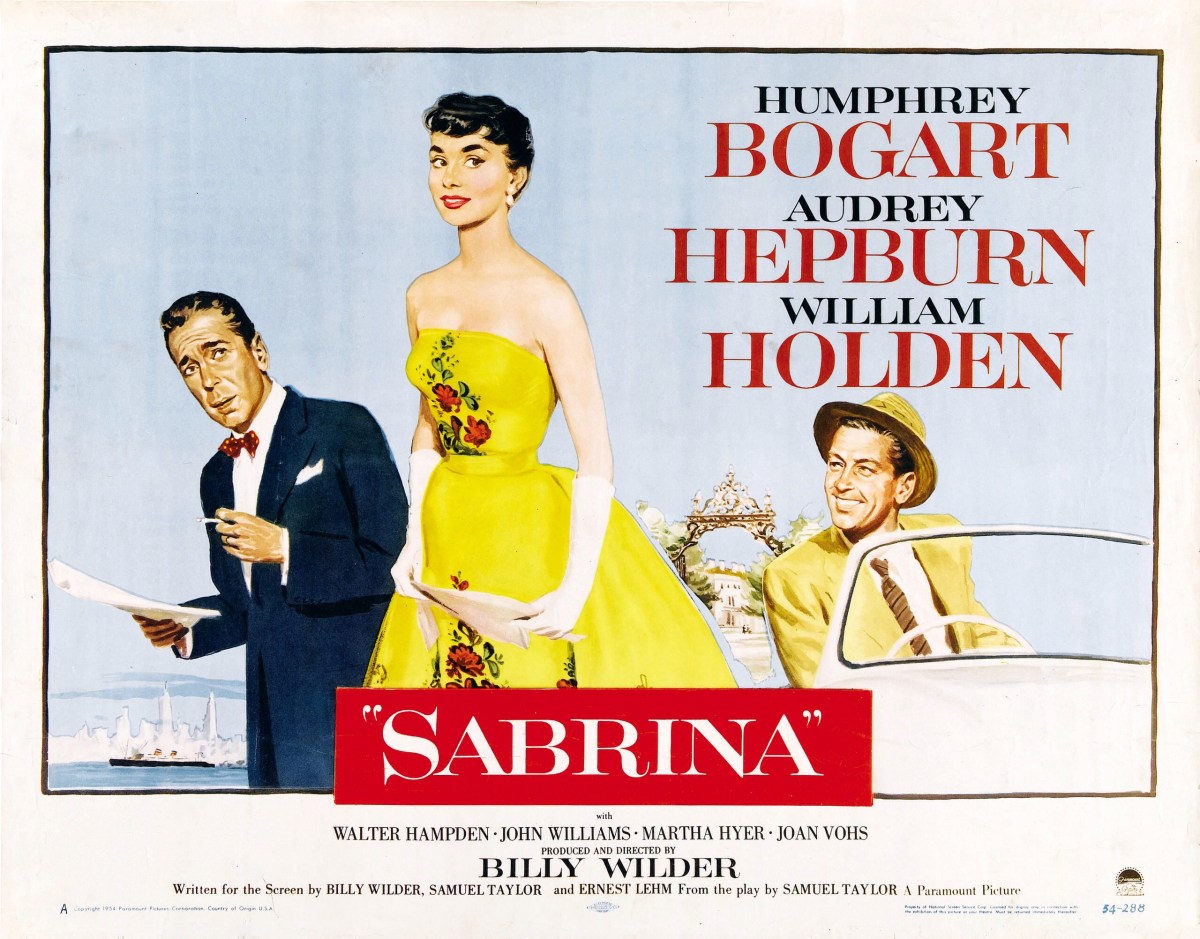
Sabrina (Billy Wilder, 1954)

In 1954, Audrey Hepburn was at the start of a run that saw some of her most popular roles, having been nominated for an Academy Award for her role in Funny Face the year before and also winning a Tony Award for her title role in the stage production of Ondine in 1954. Sabrina’s release saw her cement her position as a global star, providing an Academy Award nomination for her role, a win for the costume design for Edith Head [1] and garnering critical and commercial success worldwide. 

[SPOILER ALERT] 

The following paragraph summarises the synopsis, but potentially has spoilers for the first fifty minutes of the film. I’ve not seen the trailer, but I imagine it reveals more. Also, the film was released 61 years ago, so it’s hard to complain about spoilers. Skip it if you’re concerned. 

Audrey Hepburn stars as title character Sabrina Fairchild, the young daughter of the chauffer to the Larrabee family. Sabrina has been in love with the playboy David Larrabee (William Holden) all her life, despite the fact he barely notices her. Sabrina begrudgingly agrees to go to Paris to attend a culinary school, but on her return two years later she is a completely changed woman, full of style, charm and sophistication. Inevitably, David immediately takes notice, and his attraction to Sabrina jeopardises a pre-arranged marriage that has been organised to benefit the family business, much to the dismay of workaholic older brother Linus (Humphrey Bogart), who formulates a plan to get the deal back on track.

[SPOILERS DONE]

It marked the first time Hepburn had worked with Billy Wilder, who was one of the most prominent film directors at the time. By this point he’d already notched up Double Indemnity (1944), The Lost Weekend (1945), Sunset Boulevard (1950), Ace In The Hole (1951) and Stalag 17 (1953), amongst others. His films had by this time won 8 Academy Awards and been nominated an additional 28 times. Ultimately, Sabrina would prove to be equally popular, adding an additional win and three further nominations to his belt.

The successes were completely justified. Wilder may be on comfortable territory with a fairly standard love triangle, but few director-screenwriters could inject so much life into the script. If you want to see Wilder capturing Hepburn at her most playfully charming, there are few finer examples than her journey back from the airport with Holden’s David. It’s perfectly written and delivered and is one of the film’s many highlights.

Much has been made of Bogart’s awkwardness on set. He was one of the most established actors in Hollywood and at the time was still one of the biggest box office draws. He frequently had disagreements with Wilder and Holden, and later publicly denounced Audrey Hepburn’s acting ability. The friction doesn’t really transfer to the screen, with all the actors apparently on top of their game. 

The only thing that stands out is the age of the actors in the love triangle. William Holden was 36, Hepburn 24 and Bogart 54. I agree to the much-discussed theory that Holden would have been better as the older brother Linus, with a younger actor appearing as David. Holden had proved to Wilder his depth as an actor in both Sunset Boulevard and Stalag 17 and by comparison the character of David seems a little shallow. He handles it well, but age-wise having Sabrina fall in love with a man 30 years her senior seems unusual.

Sabrina has been remembered as one of Audrey Hepburn’s finest moments. It’s a quintessential part of her filmography: she was in the process of becoming a star, was able to show off her acting ability, had one of the greatest directors of all time directing her and was wearing de Givenchy’s costumes for the first time. If you’ve seen Breakfast at Tiffany’s and My Fair Lady, then this is your next stop.

Sabrina can be purchased as part of the Hepburn Collection Blu-Ray boxset.

[1] The costumes that Audrey Hepburn wears are absolutely beautiful, much like the actress herself. Edith Head was credited with the Academy Award for Best Costumes, but there is an ongoing suggestion that they were mainly created by Hubert de Givenchy. Both were adamant that they were responsible for the costume design until their deaths, though the fact that de Givenchy became Hepburn’s go-to costume designer for much of her career suggests it is more than likely that Head had little involvement with her clothing. Whilst there were many other characters to dress, the Oscar was clearly given as a merit to Hepburn’s memorable costumes.

Tasting a scoop of The Magic Whip

Earlier this week an message was sent around to all those on Blur’s UK fan e-mail list to reveal that there would be a new ice cream available exclusively at Co-op stores across the UK from Wednesday 8th July. Moreover, each pack would come with a download code for an exclusive from the sessions for The Magic Whip but not featured on the album. This was music to my ears (figuratively and literally).

However, it isn’t all great news. The track being given away is called “Y’All Doomed”, which was previously available on the Japanese version of the album (and subsequently all over YouTube, including here). The song is fine but is obviously an outtake from the sessions, rather than a great song that didn’t fit with the album. Additionally, it was previously available to HMV customers on 7” vinyl back in March. So it’s not a new song, but it’s free, so we can’t complain.


The ice cream itself is actually really nice. We’re in great hands – The Licktators are experienced in creating some really delicious flavours (Marshmellow Law is particularly tasty). The Magic Whip is an old British favourite: raspberry ripple with vanilla ice cream. At £1.74 per 290ml I’d definitely buy it again. The packaging puts it firmly in the canon of the album, and it all sits together quite nicely.

So if you’ll excuse me, I’ve got to finish the rest of my serving. This third tub won’t eat itself.

[Note] I bought a few tubs of The Magic Whip so have a couple of spare codes to download the new single “Y’All Doomed”. Let me know if you want one of them.

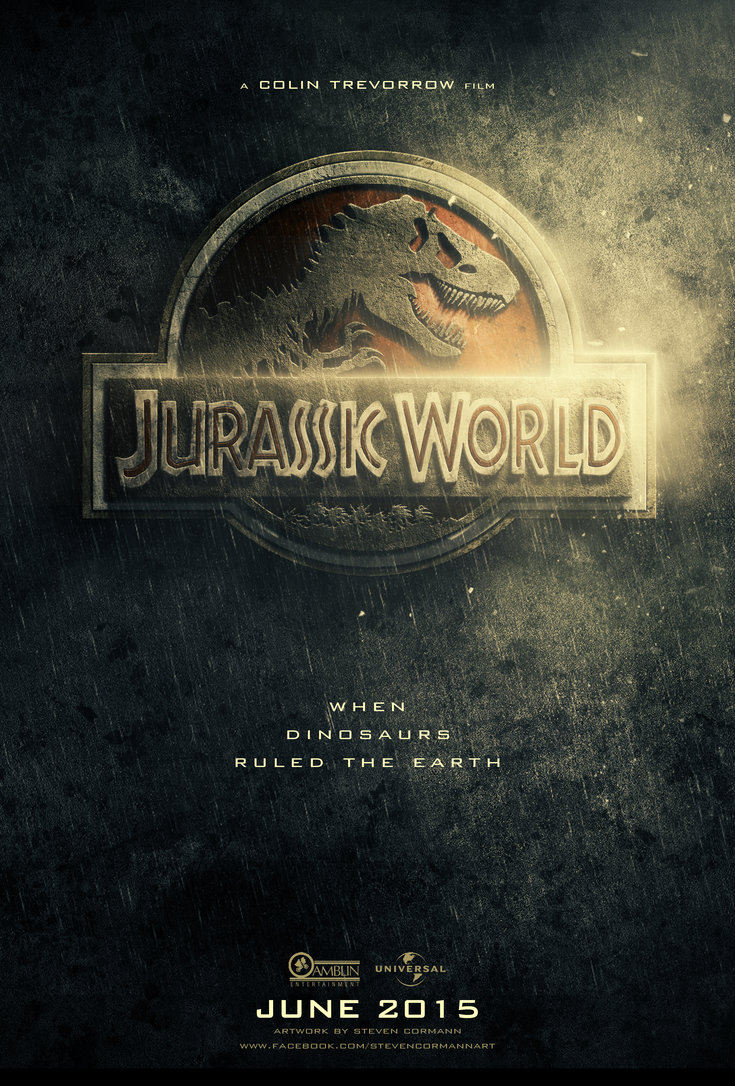
Jurassic World (Colin Trevorrow, 2015)

One of my earliest cinema memories involves Jurassic Park, the 1993 action blockbuster directed by Steven Spielberg that has gone down in history as one of the greatest action films of all time. Sat at my local cinema – Apollo / Unit Four Cinemas in Brierfield in the heart of Lancashire [1] – with my brother and mum, we were all on the edge of our seats as Dr Alan Grant attempted to get Alexis and Timothy over a soon-to-be-electrified fence. As the shots flicked between the party on the fence and Ellie Sattler in the control room re-powering the park, the alarms start to blast out and the suspense was way too much for my brother. With perfect timing, he stood up with clenched fists and shouted “JUST JUMP!” at the top of his voice. It’s a story that is still retold at family functions to this day. Occasionally I just send him a text saying “JUST JUMP!”. It never gets old.

Actually, what is interesting about this highly memorable scene is the fact it doesn’t really involve any dinosaurs. It doesn’t require any special effects or CGI until an entirely believable puppet raptor bursts through a wall over Sattler’s shoulder. It’s just a bit of tense music and some mild panic for some characters we all really care about.

Throughout the whole film the exhilarating pacing was always there and the effects were obviously well thought out to ensure a realistic and believable option was utilised. This kind of intelligent movie making was sadly missing from the two installations we’ve had to endure in the intervening years. Fans of the original were hopeful that this would all be corrected with this year’s franchise reboot. Sadly their hopes won’t be realised with Jurassic World.

Despite Chris Pratt's great performance, he can't save the film from its underachievements.

Despite Chris Pratt’s great performance, he can’t save the film from its underachievements.

The premise is excellent. Twenty-two years after the events of the first film, Isla Nublar, an island off the coast of Costa Rica, has been converted into the visionary park that Dr Hammond always dreamed of. Led by Dr Wu (the returning B. D. Wong) at the behest of Simon Masrani (Irrfan Khan), the scientific research team has secretly been working on genetic splices of dinosaurs in an attempt to turn around dwindling attendance figures. When their prize creation – an Indominus Rex – escapes from its enclosure, it is down to velociraptor trainer Owen Grady (Chris Pratt) and clueless park operations manager Claire Dearing (Bryce Dallas Howard) to rescue Dearing’s two visiting nephews Gray and Zach Mitchell (Ty Simpkins and Nick Robinson respectively).

Much has been made about Dearing as a weak role model for girls. I have to say that when I stumble across these kinds of articles I tend to roll my eyes, but in this case the anger is very much justified. As operations manager for such a huge island resort, she is immediately shown as weak-minded and out of her depth in her job, lacking in the basic facts required for her position and wholly reliant on people around her to bail her out. When she finally decides to knuckle down and help out the cause, she decides to keep her high-heels on. In the end she spends the remainder of the film hiding behind her alpha male counterpart, being rescued and generally not being much use. The only other prominent female is Zara Young, Dearing’s personal assistant, who is too engrossed in her phone to do her job. When the original film had two very likable and head-strong female characters, this comes as a bit of a disappointment.

Indeed, there are only two characters of any substance. Chris Pratt’s Owen Grady is a blast from the past, no nonsense hero who makes decisions by taking matters into his own hands and has superior knowledge of pretty much everything in the park. He is a little cliched, but it’s something that can be forgiven when everyone around him is so difficult to get behind. Ty Simpkins’s Gray Mitchell, the younger of the siblings, follows up assured performances in Iron Man 3 and the Insidious series with a solid turn as the know-it-all excited teenager. He may be Tim Murphy reincarnated but in comparison to his wooden older brother he is a breath of fresh air.

The only thing less believable than the majority of the cast is the woeful CGI. There were a couple of moments that impressed, though these were generally in the dark and in short bursts. For the most part and especially in the day time shots, the effects were a distraction and this is a sin in the art of storytelling through film. The best films take you into a world and fully immerse you in what you are experiencing. An overarching question hanging over this film is how they managed to actually make the dinosaurs less believable than Jurassic Park, despite the fact they spent more money doing it. The mind baffles.

Jurassic World is certainly better than Jurassic Park III, and perhaps on a par with The Lost World, but for all the hype around it, it never quite lives up to the expectation.

Jurassic World is in cinemas worldwide now.

[1] From my childhood home in Burnley, the Brierfield Apollo was definitely the closest to get to. It was the setting for almost all of my earliest cinema memories: Teenage Mutant Ninja Turtles (a hugely exciting 6th birthday treat in November 1990), The Never Ending Story II (December 1990), Robin Hood Prince of Thieves (July 1991), Hook (April 1992), Aladdin (another birthday trip in November 1992) and Jurassic Park (July 1993). The cinema shut down in 1997 upon the opening of Apollo Cinema in my home town Burnley, which then became the home of my teenage year’s of cinema (I think I saw two of the opening four films available in the first week – Batman and Robin then Beavis and Butt-head Do America – because there was a promotional offer to get people through the door). I think, however, all of these were preceded by a trip to see a re-release of Snow White and the Seven Dwarves at Loughborough’s Curzon Cinema in July 1987, which was abandoned because my grandma was ill.

Kronk’s New Groove (Elliot M. Bour, Saul Andrew Blinkoff, 2005)

Having recently watched The Emporer’s New Groove, Disney’s 2000 animated film that failed to light up the box office but did go some way to maintaining their credibility amongst an otherwise troubled period, I decided to watch the sequel. Inevitably, Kronk’s New Groove was a direct-to-video release and it also has many of the hallmarks of most of the other Disney films that bypassed the cinema: short running time, sub-par animation and almost none of the magic of the original release.

One thing that is retained is the talented voice cast, including David Cross as Emperor Kuzco (cameo only), John Goodman as Pacha (cameo only), Eartha Kitt as Yzma (cameo only) and, of course, Patrick Warburton as the titular Kronk. It’s quite impressive that everyone was convinced back based on the premise of a flimsy sequel to a five-year-old film, though the fact they were probably only in the studio for a day may have helped.

We do, however, lose Sting’s excellent songs and score that were present in the original (though many of his songs missed out on the original, as fully explained in the excellent documentary film The Sweatbox). Indeed, there are only a couple of songs in the film and they’re pretty forgettable.

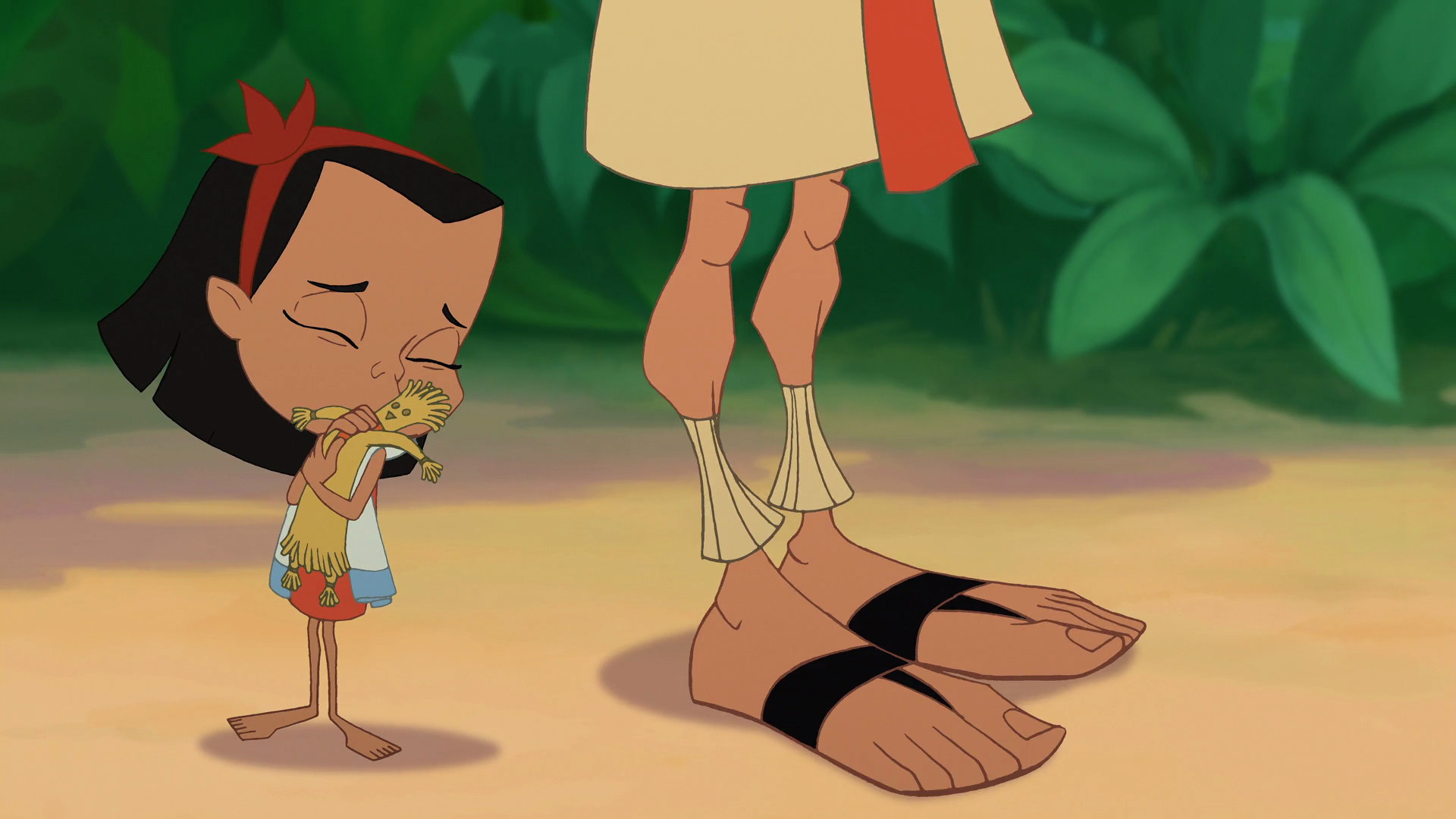
The film was so bad it brought some viewers to tears.

The film was so bad it brought some viewers to tears.

Many criticisms on this film centre on the lack of storyline. In truth, the basic premise isn’t even half as off-the-wall as the first film. In this one, Kronk tries to achieve the lifelong ambition of winning the approval of his father (“the big thumbs up from Papi”), trying to hide the fact he is a chef in a restaurant and pretend he has been more of a success. He takes on a scout team (of sorts), falls in love, rips off some old people with an elixir of life. It isn’t too bad, though it is a bit straightforward. It isn’t the storyline itself that causes the issues, but rather the pacing and lack of imagination therein. There’s obviously been a strict budget applied that goes beyond the poor animation and this certainly goes for the lack of time spent on the script and the fact that nobody realised it was completely lacking in humour.

In my opinion, this last point is the over-arching issue. Whilst the first film is full of huge laughs, most of which were memorable and quotable, there is nothing on that level this time around. Most of the gags are parodies of other films but they themselves are outdated: The Matrix and Titanic were both almost a decade old by the time of release, meaning the jokes were no doubt lost on the children at which this is aimed. Not only that, but they would have also failed to ignite any laughter in the parents sitting through it with them.

I don’t think this is quite as bad as the majority of reviews would have us believe (it holds a 0% rating on Rotten Tomatoes). It isn’t a classic, and I can’t recommend you watch it unless you’re a hugely keen fan of the original, but it isn’t a film with out any redeeming qualities.

Kronk’s New Groove is available now on DVD. Strangely a standalone Blu-Ray hasn’t appeared yet.

Wilko Johnson live at the William’s Green Stage, Glastonbury Festival, 25th June 2015

Live Performance

Setlist:

1. All Right
2. Barbed Wire Blues
3. Unknown
4. Unknown
5. Unknown [1]

The second day at Glastonbury is when the fun starts to get interesting. A few familiar acts start to pop up and by and large nobody has a 50 minute pilgrimage with a 40kg weight strapped to their back to kick-off the day.

Our first act of the day was Wilko Johnson on the William’s Green Stage. It was a short set (about 30 minutes) followed by a long interview (about 30 minutes) followed by an exclusive screening of the new Julien Temple documentary The Ecstasy of Wilko Johnson.

I’m largely unfamiliar with Wilko’s music but the set gave me a flavour of what he’s about. I’ve seen many bad versions of this band in pubs across the country on a Friday night, playing vintage 12-bar-blues to an older audience. We drink ale, they play music. It’s a great night even though the band aren’t always great. Well, imagine how much fun you’d have if the band were actually really top quality. This is what you get from Wilko Johnson.

The first thing you notice when watching Wilko Johnson is that he has thunderously focused eyes. It brings an intensity to the music I can’t quite describe. Whilst doing that, he’s also carrying his Fender Telecaster like it’s a machine gun. It’s wholly intimidating. [2]

Those unfamiliar with his music might be more familiar with his role in Game of Thrones as the executioner Ilyn Payne. He wasn’t in many episodes but when you see his eyes on stage it instantly brings it back. You can see why he was cast.

So there you have it. Instead of reviewing his gig all I’ve done is talk about his eyes, the machine gun guitar technique and Game of Thrones. Oh how the true Wilko fans will be fuming. It was a brilliant gig though, it has to be said. I’m hoping I get to see the band in a full set soon.

Wilko and Julien speak in the pre-screening Q&A

Wilko and Julien speak in the pre-screening Q&A

Film + Q&A

Prior to the film was an extended interview with Wilko, Julien Temple and Dorian Lynskey of The Guardian. Wilko stated early on that he isn’t a fan of seeing footage of himself, so seeing a film based entirely on himself would be hard work to watch.

The film is ostensibly about Wilko’s battle with cancer as he was given ten months to live. It covers this period, then goes on to what he describes as “extra time” and then his miraculous recovery following some radical treatment.

He talked in the Q&A about the difference between being told you have cancer and being told you have the all-clear. “You go and see the doctor and he says you have cancer and, like that, the universe changes. You go back after a year and they give you the all-clear and it’s not instant at all. I had an 11-hour operation to remove a 3.5kg tumour from my stomach… and then weeks of recuperation with post-operative-infections. So I had time to feel sorry for myself.” Of course, when he announces he’s all-clear, the crowd erupts in joy and applause.

Speaking on the album he did with The Who’s Roger Daltrey, Wilko was in a reflective mood: “I think of all the things I did that year. I was in a bubble. Doing the record with Roger was just one of the many strange things that happened to me that year. It was the first thing I’d done in “extra time”. I was walking around outside the studio thinking ‘this is going to be the last thing I do, this is freaky, I’m going to die soon'”.

He also spoke humorously about the fact he never got his coffee from a backstage assistant, and reflected that he was looking forward to the end but now has to keep gigging because people keep coming back for more.

This mixture of lighthearted humour with honest reflection is indicative of the tone of the film, which is far more than just a rockumentary on a band’s final tour. It is in fact a hugely emotional journey and a fascinating insight into people battling with terminal illness. It’s well worth watching when it appears later this year.

[1] Can anyone help me with these?
[2] After you’ve finished absorbing the awesomeness of Wilko himself, you may find yourself drawn to the equally bizarre bassist Norman Watt-Roy. He’s unique.
[Note] Massive thanks to Scott Wetherill for the video. Hope you’re okay with me using it! Let me know if not.

Film review -トウキョウ トライブ / Tokyo Tribe (Sion Sono, 2014)

Movies should aspire to be the best in their genre. There’s no point existing as a movie unless you can at least be better than everything that has gone before in your genre. If you can’t do that, then why not mold yourself a new genre completely?

With that in mind, I am proud to announce that Tokyo Tribe is the best Japanese-language rap-musical in the tribal gang realm.

The story is pretty hard to explain. To summarise, we are let into a highly stylised version of modern Tokyo, where tribal gangs vie to rule the city. Set over one night, we see the heightening tensions as ganglord Buppa (Riki Takeuchi), his henchman Mera (Ryuhei Suzuki) and son Nkoi (Yosuke Kubozuka) declare war on all other tribes in Tokyo, announcing as much by killing the popular peace advocate Tera (Ryuta Sato). The uprising against their power trip is led by central heroine Sunmi (Nana Seino), and multiple stylised battles culminate in a dawn all-out-war.

Sunmi beat the living daylights out of another bunch of extras

Sunmi beat the living daylights out of another bunch of extras


Amazingly, the intertwining of multiple storylines and characters is reminiscent of Love Actually, though the comparisons inevitably end there. In fact, at times it’s simply hard to follow just who the central characters are. About 90% of the dialogue is delivered as rapping, so as an English native who barely speaks any Japanese it is hard to follow what are clearly some very fast and rhythmical lyrics. On this occasion, it really pays to speak the language.
Another issue is the excessive number of characters that are continuously being introduced into the mix. It felt at times like several characters were frivolously being added in too late for us to care about who they are, often getting only a handful of lines to describe who they are, what tribe they represent and a little about themselves before disappearing for the rest of the film.

That said, there is a memorable turn from Cyborg Kaori as a beatboxing servant, which is worth watching out for. She does things with her voice that seem completely unnatural. The results are fascinating and her various YouTube videos are worth checking out. This is an example of a distinct character being given the chance to shine; it’s a shame that the cast wasn’t smaller so more focus could be given to each of the talented artists involved.

Many of the featured actors and actresses, however, are new to the hip hop world and the intriguing on-disc Making Of documentary reveals a lot of the insecurities of the stars, particularly with standout performer Nana Seino. She’s clearly a talented actress but it’s sad she was the focus of such a lot of “fan-service” throughout the film.

Stylisitically, the film is top notch. From start to finish there is no break in the feeling that the characters inhabit this entirely alternate reality and in that sense it is a great success.

The same cannot be said for the storyline.

At times it’s a brilliantly unique film that threatens instant cult-classic status. Often it’s just a complete mess that loses itself in style over storyline. If you know of Sono Shion and liked his previous efforts then you know you’ll enjoy this. If not, then approach with caution.

Tokyo Tribe can be purchased on Blu-Ray in the UK now and was released by Eureka films.

Paul Weller live at the Pyramid Stage, Glastonbury Festival, 28th June 2015

Setlist:

White Sky
The Changingman
From the Floorboards Up
I’m Where I Should Be
Long Time
That’s Entertainment
Above the Clouds
Saturn’s Pattern
Going My Way
Friday Street
Porcelain Gods
Broken Stones
You Do Something to Me
Start!
Peacock Suit
Whirlpool’s End
Town Called Malice

Well, there we have it. Another year of good-hearted, fun-loving live music done and dusted as Glastonbury 2015 comes to a close. All the flaws my body has developed over its first thirty years have come to the surface and I am out of both alcohol and money. It has been emotional.

The highlight set on the Sunday was a crowd-pleasing effort from Paul Weller. With a career spanning 40 years he had plenty to go on and the song selection was spot on.

Fittingly, he opened the set with a storming rendition of “White Sky”, the lead track from the new album Saturn’s Pattern. It’s a great song, though I don’t think I was alone in the crowd wondering whether the set was just going to be full of songs from his recently-released album.

This concern was put to bed with second track “The Changingman”. It immediately got the packed crowd singing along and on-side and truly kicked-off a night of fun with The Who just around the corner.

Indeed, the mid-nineties tracks he played – including “Peacock Suit”, “Broken Stones”, “Friday Street”, “Porcelain Gods” and “You Do Something To Me” – were only the tip of the iceberg. Whilst The Style Council were completely bypassed, he found space for three of The Jam’s biggest hits: “Start!”, “That’s Entertainment” and “Town Called Malice”.

The highlight for me was “Above The Clouds”, a track from his eponymous debut solo album. It has always been a favourite of mine and the rendition here was one of the highlights of a very special festival.

His voice didn’t even have a hint of cracking at any point, which bodes well for a long future of touring yet, something not possible for every artist that has been around for as long as Mr Weller. It was also nice to see Ocean Colour Scene guitarist Steve Cradock on stage with him again.

Well done sirs. It was a stunning set.

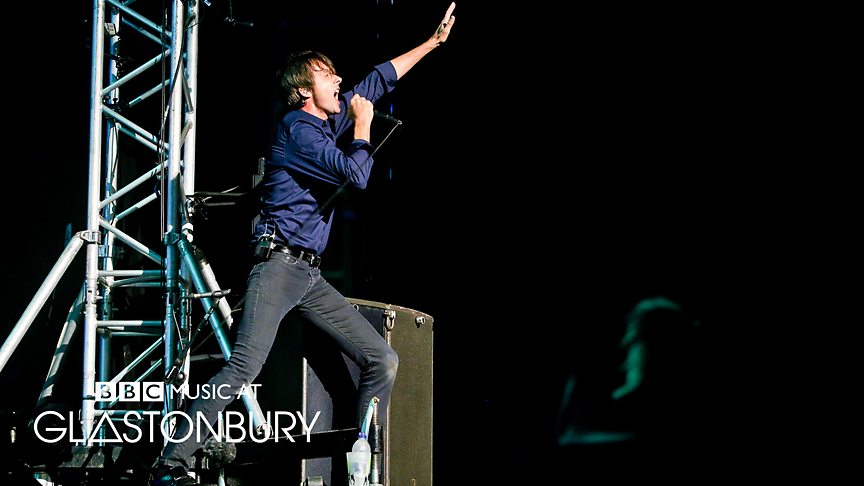
Suede live at the John Peel Stage, Glastonbury, 27th June 2015

Main Setlist:
Pantomime Horse
Moving
Trash
Animal Nitrate
We Are the Pigs
Killing of a Flashboy
It Starts and Ends With You
He’s Dead
Pale Snow
I Don’t Know How to Reach You
The Living Dead
The Drowners
So Young
Metal Mickey
Beautiful Ones

Encore:
She’s in Fashion (acoustic)
New Generation

Today was the big day. Kanye West arrived at Glastonbury with his own brand of Yeezus-y goodness, set to wow the crowds and berate anyone who tried to stop him. Probably. I didn’t go to his crappy set because I was too busy being blown away by a breathtaking performance from Suede on the John Peel Stage. Brett Anderson had the audience in the palm of his hand and the whole band were on top tight form from start to finish. I’d waited for 15 years to actually see them live and it was well worth the wait.

I first got into Suede in 2000 when my first proper girlfriend bought me three Suede albums for my birthday. I didn’t know much about them outside the then-recent hit singles “Electricity” and “She’s In Fashion”, but she was a huge fan and I thought I’d go along with it. After all she was slightly older than me and seemed to know a lot more about music (and life) than me. Whilst the relationship sadly didn’t last much longer, those three albums (the Bernard Butler ones, if you’re interested) stuck with me for a long time through to the end of my education and subsequent career.

So it was a thrilling moment when Suede took to the stage and burst into “Pantomime Horse” and then “Moving” from their eponymous debut album. The fact they were crowd-pleasers shows how much of an impact that debut has had over the years, given both were actually album tracks. Brett Anderson looked as fit as he did when they first appeared on the Glastonbury line-up some 22 years ago. The years have withered neither the angst in his eyes nor the emotional electricity of the performances. He owned the stage in a way so few performers manage.

The next song was “Trash”, a timeless slice of outsider pop rock. They absolutely nailed it, the crowd went ballistic and the band used it as a platform to launch into a string of huge hits (and noted b-side “Killing of a Flashboy”), sporadically taken from various points of their career. It was a sight to behold and has fortunately been captured beautifully by the BBC who have turned a intoxicating live performance into a cinematic work-of-art.

Not many songs featured that post-date 1996 album Coming Up. Of those that did, “She’s In Fashion” stood out as particularly poignant. In its altered form as an slow acoustic song in the encore, the focus shifted more to the lyrics and melody in a way that was hidden by the oddly aged production of the original album recording.

“Pale Snow” and “I Don’t Know How To Reach You”, both new songs yet to be released, hinted at a lot of promise for the future material and will have the Suede fans around the world buzzing with interest. The former is a slightly sparse song built around a repeating guitar riff by Richard Oakes, whilst the latter has a slightly fuller sound and a catchy chorus that sits it alongside the great work they put out some twenty years ago.

For all the excitement around hearing their new material, being floored by a stunning rendition of “Beautiful Ones” will doubtless be one of the lasting memories of this festival for me and the many 1000s inside the rammed tent. It was a long wait but well worth it. If only Kanye could have been there to see it.

Film review – Lava (James Ford Murphy, 2014)

The opening short film you will see before Inside Out later this summer is a sweet film called Lava, probably the first musical love story to take place over millions of years. It involves two volcanoes and is set to a beautiful song sung by Kuana Torres Kahele.

This volcano is in lava.

This volcano is in lava.

It was met with audible gasps, sighs and whoops in the screening I saw at this year’s Glastonbury Festival. Please make sure you get there in time to see this volcano’s story!