Film review – Spotlight (Tom McCarthy, 2016)

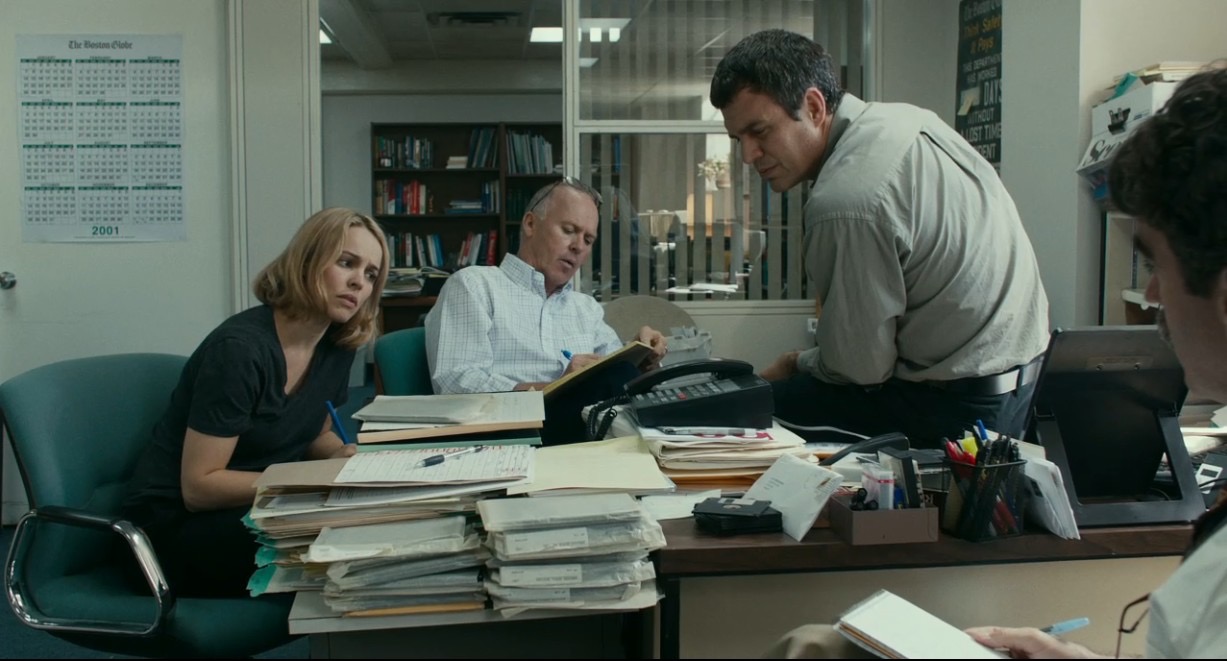
There are obvious paths to go down to tell a story about victims of child abuse. This film eschews the story of the individuals who have suffered the abuse, instead concentrating on the journalistic team that fought hard to uncovered the abuse. It deliberately attempts to portray just how difficult it was to reveal the truth about something when nobody wants to listen and everybody involved is trying to cover up what has happened. It is an effective but devastating success.

The title of the film is taken from an investigative journalistic unit that tackles stories it deems of necessary interest to the readers of The Boston Globe. In 2002 it published an exposé on Roman Catholic priests in the Boston area, offering evidence of not only child molestation and rape, but also of the systemic cover-up of the evidence by the church. The truths they found were horrific in both nature and magnitude.

Whilst the movie is truly an ensemble piece, there are three wonderfully nuanced performances that help make this film so effective.

The first comes from Stanley Tucci as the attorney Mitchell Garabedian. Tucci is a really special actor and he’s in fine form here. Garabedian has represented innumerable victims of the abuse and each time has been unable to affect change, with critical documents being suppressed by the church. Reminiscent of his role in Margin Call as Eric Dale, he is a man with knowledge of the wider secret dying for those around him to find out what’s truly going on.

A smaller but memorable turn comes from Neal Huff as Phil Saviano, head of the Survivors Network of those Abused by Priests. Based on a real person going by the same name, he makes the most of his limited screen time when he provides a harrowing monologue the first time he meets the Spotlight team. A frustrated picture of a man that likely represents the emotions felt by each and every survivor.

The finest performance, however, is from Michael Keaton as the Chief Editor of Spotlight, Walter “Bobby” Robinson. Throughout the story Bobby is a man wrestling with his conscience. He knows that to make the story as effective as possible he needs to wait for all the facts to be in place and make a thorough, damning article that cannot be ignored. However, doing this means sitting on the information whilst the abuse continues in the city. Late in the picture when he finds out he was actually tipped off about the scandal twenty years previously, he must conclude that he is finally bringing justice to the city despite potentially having the power to prevent generations of systemic abuse. Keaton nails it, reminding us all once again how great it is to have him back on the big screen in a role of substance.

I’m surprised Mark Ruffalo and Rachel McAdams have been selected for an Oscar nomination ahead of those they share the screen with. Fine actors though they are, it must have been a tough call to select two from a long list of solid performances. Ruffalo seemed to be holding back slightly, though that was perhaps a deliberate choice I didn’t pick up on fully.

It is rare that a whole audience is left in absolute silence at the end of a screening, but even on a busy Saturday afternoon there didn’t seem to be anyone that felt anything other than stunned. The reason for this was a devastating list of all the locations they have uncovered scandals in since the publishing of the initial article in 2002, firstly in the USA, then globally.

For this reason the film is now serving the same purpose as the original article: to shine a spotlight on a diabolical scandal that should have been eradicated decades ago. It is possibly the most important film you will see this year.

Film review – Joy (David O’Russell, 2016)

Of all the stories of all the people that have ever existed on this planet, perhaps one of the last you’d think to turn into a film would be that of Joy Mangano, inventor and telesales presenter. It’s not that she’s unremarkable or boring, but she is far from a controversial character. What she does encompass, however, is both a traditional tale of the American dream and a figurehead for strong-minded women that have ever felt oppressed in work or at home.

If you’re wondering what Joy Mangano looks like in real life, there’s a popular video below of her selling her first major breakthrough invention: The Miracle Mop. From then on she became a self-made millionaire, invented many more successful products and created a business empire.

It has to be said that whilst she may be a household name across the USA, the rest of the world remains unaware of her background. Or at least they did. That was until the film Joy came along. Starring Jennifer Lawrence in the title role alongside the likes of Robert De Niro, Isabella Rossellini and Bradley Cooper, the film reveals the journey she went on to get to where she is today – from divorced mother-of-two working for Eastern Airlines right up to her first business successes.

The first forty-ish minutes of the film try really hard to give us a potted history of the causes of Joy’s personality traits, actions and outlook. It usually works on a scene-by-scene basis but the pacing causes issues and seems to lack direction until Joy herself finds a focus in her life.

joyscreenshot

From this point on the film has hit its stride and she breaks free from the oppression and the doubters. There are moments of humour (which surely explains the Comedy Golden Globe nomination, no?), edge-of-the-seat excitement (her first sell on QVC springs to mind) and fist-pumping success (I recall here a scene near the end set in a California hotel room). This is all driven by a remarkable performance by Jennifer Lawrence, reminding the world again that she isn’t just the girl from The Hunger Games but rather a girl with acting talent far beyond her years.

So whilst this film has its merits, the scatter-gunned first act and lack of consistency mean it won’t go down as one of the great films of the year, though Lawrence’s performance is worth the ticket money.

Joy is on general release globally now.


Film review – Room (Lenny Abrahamson, 2015)

Much more understated in its promotional campaign than its awards season rivals – and a much harder film to describe with any vigor and make it sound interesting – Room is a film that simply needs to be seen. It may not seem it but it’s a wonderful hidden gem, the quality of which will only become apparent once you’ve seen it.

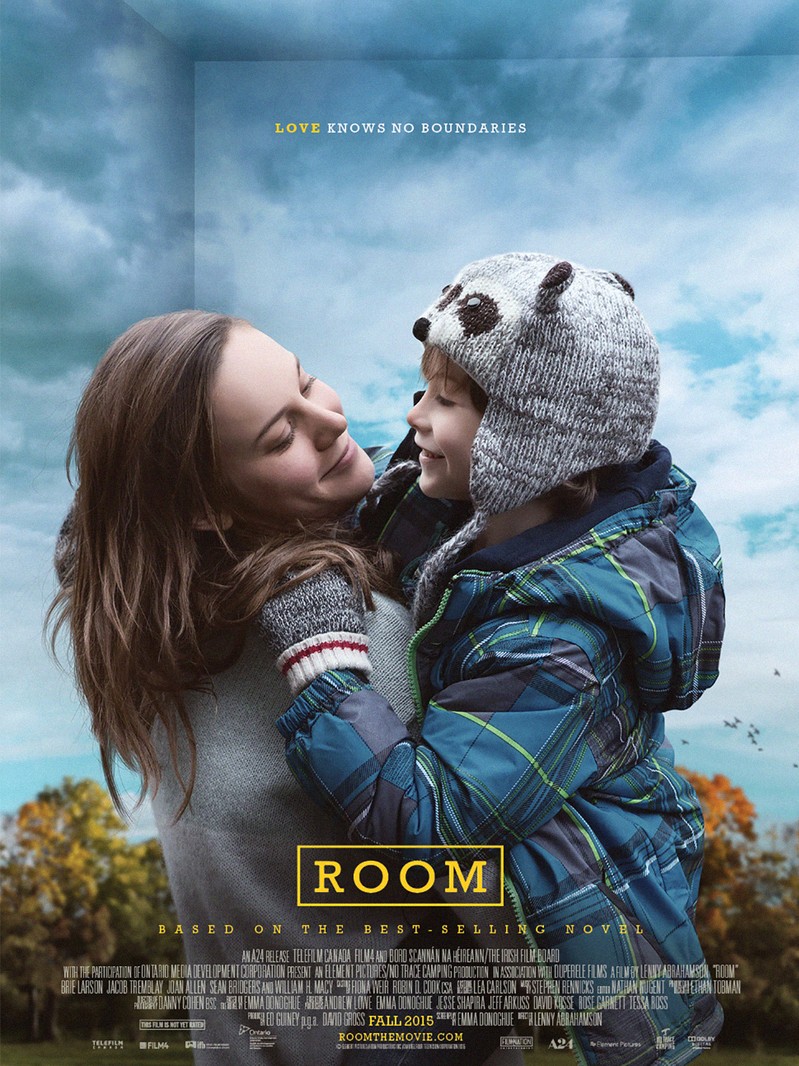
It is a film set in two distinct acts. The first act is based entirely in the room in which a woman known as Joy (Brie Larson) and her five-year-old son Jack (Jacob Tremblay) have been held captive by the mysterious Old Nick (Sean Bridgers). Following their release, they are reunited with Joy’s family and the outside world – a world that has left Ma behind and that Jack has never even experienced. Overwhelmed by their new freedom and affected by their psychological damage, we follow Joy and Jack as they try to find any kind of normality in their new life.

roomscreenshot

Jacob Tremblay and Brie Larson in Room.

The tiny room is suffocating in its lack of space and the feeling of being trapped is never more convincingly portrayed than when Jack is hiding in his cupboard. Looking primarily from his point of view in this first act, the room comparatively seems quite large – to him it is the whole world as he knows nothing else.

Through the unavoidable depressing nature of the situation, there are moments included that are truly uplifting. Seeing Jack finally open up to a family member is a beautiful moment. Indeed, it is surprising that Jacob Tremblay hasn’t been singled out for his stunning performance as Jack, a child who has gone through an impossible first five years of life. He has either been coached really well or is a true natural.

That said, Brie Larson can rightfully take the praise for her leading performance. Her character has taken the journey from childhood to motherhood within the confines of one small room and has remained strong for the sake of her child. The emotional turmoil is all there to be seen. It is deliberately difficult but equally rewarding to witness.

An early contender for one of my top films of the year.

Room is on general release globally now.

Big Hero 6 (Don Hall and Chris Williams, 2014)

As the first Disney-animated motion picture based on Marvel IP, Big Hero 6 was always going to be carefully scrutinised by both extremes of the target audience. At one end you have the die-hard Marvel comics fans, keen to see their beloved heroes done justice on the big screen. At the other end you’ve got fans of Walt Disney Studios, worried that hot on the heels of Frozen, Tangled and Princess and the Frog, Big Hero 6 might not be for them [1].

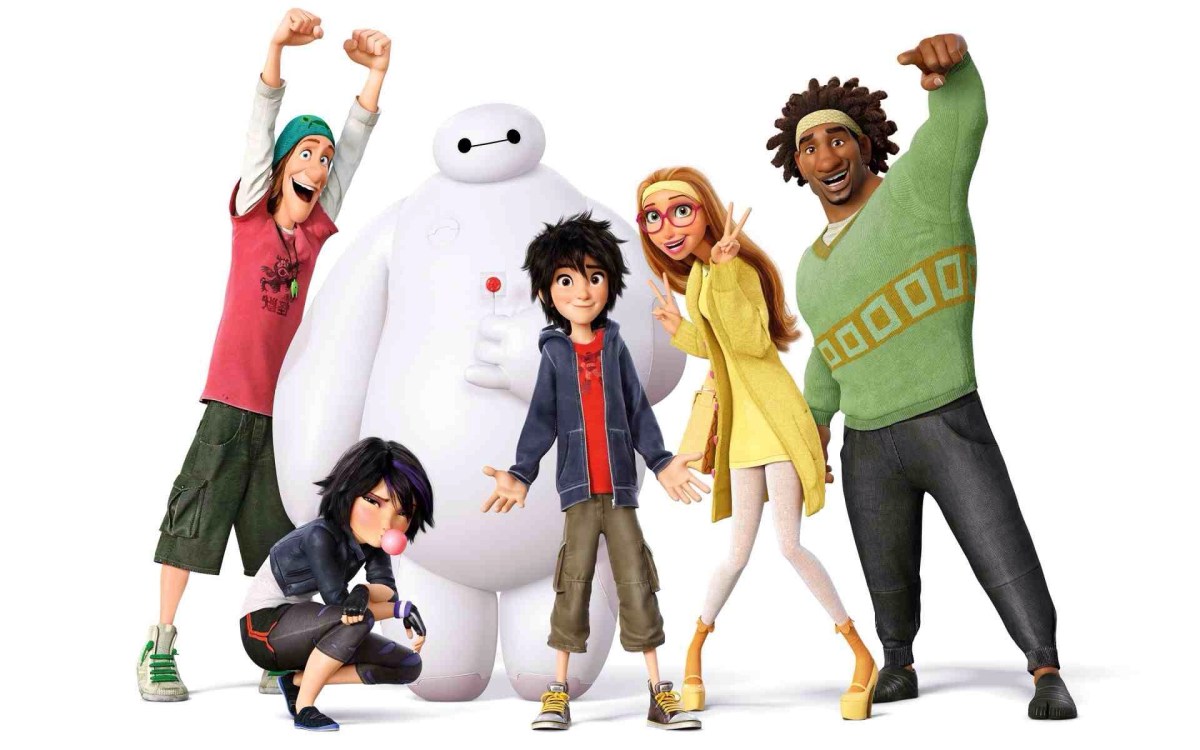
For the uninitiated (you mean you never read the comics!?), the story focuses on 12-year-old parentless robotics genius Hiro, who is being looked after by his aunt, along with his older brother and sort-of-guardian Tadashi, who also studies robotics at the local university. When further tragedy strikes through the death of his brother, he is left to pick up the pieces with the help of his brother’s greatest work – healthcare-robot Baymax. Banding together with Tadashi’s fellow student friends, Hiro goes on an adventure of vengeance and self-development as he finds taking matters into your own hands can lead to some shocking revelations.

IMG_0420

So the first thing to clarify is that the Big Hero 6 comics were never very popular. Very few people had heard of them before the film was announced, sparking a huge clamber across the internet to find the comics, read them, then form an opinion on why Disney was going to ruin them. They weren’t completely unknown, but they were nowhere near as popular as, say, Spider-man or X-Men. It was interesting to see the negative reaction the series got when it was announced. It’s amazing how many experts on everything we see now that people can form their arguments in one window whilst Google is open in another. I was one of the people who bought post-announcement – I managed to pick up all five of the 2008 comics and I read straight away (the original three-part series was by then already prohibitively expensive, much like the five-parter is now). They were obviously aimed at children, but were reasonably fun and easy to read. I thought they were a good choice for Disney to tackle, with plenty of characters and merchandising opportunities.

Secondly, I don’t know if you’ve seen any of the recent Marvel Animation films, but they are by-and-large terrible. I picked up the Ultimate Avengers steelbook about a year ago and watched one of the films, but couldn’t get through the second. The animation is really poor and the voice acting is clumsy and difficult to listen to. So if you’re a Marvel fanboy and want to square on an animated film that doesn’t do your source material justice, you should start there.

Finally, the recent films have been very successful, and I’m sure Frozen’s enduring popularity caused a delay to the release of Big Hero 6. I mean, it’s now on the West End in sing-along form! They just play the film on loop there all day. It has been out for 18 months! Princess and the Frog and Tangled were very successful too. But so was Wreck It Ralph, and that definitely wasn’t aimed at the female market. Neither was Bolt (directed by Chris Williams, by the way). Nor were half of the Pixar releases. Or, say, How to Train Your Dragon or Despicable Me. What I’m saying is – who knows what is going to capture the imagination of the children. Probably the main thing to go for is a great storyline, great characters and some top-drawer visuals. You get all three in abundance here.

I think the animation is the really mind-blowing element of a film that scores highly across the board. It’s fast-paced without ever feeling like it’s trying to lose you in action. The detail given to the plethora of uniquely designed characters is notable, too, and this serves to make each character feel worthy of your investment. If they’re going to spend that long making Hiro’s hair look so awesome, he must deserve a bit of attention on an emotional level too.

The storyline, to be fair, isn’t particularly original. I didn’t feel it was too detrimental overall. Its target audience is definitely under 12 years of age, and it was pitched perfectly.

There was, of course, a post-credits sequence that gave us some juicy details and opened the door to a sequel. I really hope this becomes a reality. I’m sure there are plenty more storylines to be told about these characters yet.

Big Hero 6 is out in cinemas in the UK now, and it has also just this week been released on Blu-ray and DVD in USA. If you’re quick and keen, you could buy the 3D Blu-ray steelbook from Zavvi.

[1] Anatomy of an unprofessional reviewer – I’ve deliberately put in several sweeping and largely incorrect statements in the first paragraph to allow me to argue against them later in the review. Oh how clever I am.

Academy Awards 2015 – Full List of Winners

Here’s a simple list of all the winners of Oscars at the 87th Academy Awards last night. I’ve not included the other nominees as I think the lists elsewhere have become cumbersome. Keep it simple!

Best picture
Birdman

Best director
Alejandro González Iñárritu for Birdman

Best actor
Eddie Redmayne for The Theory of Everything

Best actress
Julianne Moore for Still Alice

Best supporting actor
J. K. Simmons for Whiplash

Best supporting actress
Patricia Arquette for Boyhood

Original screenplay
Alejandro González Iñárritu, Nicolás Giacobone, Alexander Dinelaris, Armando Bo – Birdman

Adapted screenplay
Graham Moore – The Imitation Game

Best documentary feature
Citizenfour – Laura Poitras, Mathilde Bonnefoy, Dirk Wilutzky

Best foreign-language film
Ida – Paweł Pawlikowski

Best animated feature film
Disney’s Big Hero 6

Best animated short film
Disney’s Feast – Patrick Osborne, Kristina Reed

Best live-action short film
The Phone Call – Mat Kirkby, James Lucas

Best documentary short subject
Crisis Hotline: Veterans Press 1 – Ellen Goosenberg Kent, Dana Perry

Best production design
The Grand Budapest Hotel: Adam Stockhausen, Anna Pinnock

Best original song
Glory from Selma – Lonnie Lynn (Common), John Stephens (John Legend)

Best original score
Alexandre Desplat – The Grand Budapest Hotel

Achievement in sound mixing
Whiplash – Craig Mann, Ben Wilkins, Thomas Curley

Achievement in sound editing
American Sniper – Alan Robert Murray, Bub Asman

Achievement in costume design
The Grand Budapest Hotel – Milena Canonero

Achievement in makeup and hairstyling
The Grand Budapest Hotel – Frances Hannon, Mark Coulier

Achievement in visual effects
Interstellar – Paul J Franklin, Andrew Lockley, Ian Hunter, Scott R Fisher

Achievement in cinematography
Birdman: Emmanuel Lubezki

Achievement in film editing
Whiplash – Tom Cross

So there you go. I was really disappointed that “Everything Is Awesome” from The Lego Movie didn’t win Best Song, not least because the eventual winner was pretty dreadful (I talk about them here). I was happy about the Disney double of Big Hero 6 and Feast – both are excellent and I’ll no doubt be reviewing them on here when I get around to it. The really obvious ones won, of which for me there was only three: Eddie Redmayne for Best Actor, J. K. Simmons for Best Supporting Actor and Birdman for Achievement in Cinematography. That’s how tight it was elsewhere.

I’m thrilled that Birdman won Best Film over Boyhood and American Sniper. Birdman is a seriously effective piece of cinema and a work of art. It has things that appeal to the Academy: the struggling actor struggling to cope with his own relevance, a technically excellent piece of cinematography that (sort of) uses one shot, some fantastic performances from a range of excellent actors and actresses.

So today is for everyone to digest the results and look back on a fantastic year for cinema. Here’s to the next one.

Academy Awards Nominations (Full List)

Best picture
American Sniper
Birdman
Boyhood
The Grand Budapest Hotel
The Imitation Game
Selma
The Theory of Everything
Whiplash

Best director
Alejandro González Iñárritu – Birdman
Richard Linklater – Boyhood
Bennett Miller – Foxcatcher
Wes Anderson – The Grand Budapest Hotel
Morten Tyldum – The Imitation Game

Best actor
Steve Carell – Foxcatcher
Bradley Cooper – American Sniper
Benedict Cumberbatch – The Imitation Game
Michael Keaton – Birdman
Eddie Redmayne – The Theory of Everything

Best actress
Marion Cotillard – Two Days, One Night
Felicity Jones – The Theory of Everything
Julianne Moore – Still Alice
Rosamund Pike – Gone Girl
Reese Witherspoon – Wild

Best supporting actor
Robert Duvall – The Judge
Ethan Hawke – Boyhood
Edward Norton – Birdman
Mark Ruffalo – Foxcatcher
JK Simmons – Whiplash

Best supporting actress
Patricia Arquette – Boyhood
Laura Dern – Wild
Keira Knightley – The Imitation Game
Emma Stone – Birdman
Meryl Streep – Into the Woods

Best original screenplay
Alejandro González Iñárritu, Nicolás Giacobone, Alexander Dinelaris, Jr and Armando Bo – Birdman
Richard Linklater – Boyhood
E Max Frye and Dan Futterman – Foxcatcher
Wes Anderson and Hugo Guinness – The Grand Budapest Hotel
Dan Gilroy – Nightcrawler

Best adapted screenplay
Jason Hall – American Sniper
Graham Moore – The Imitation Game
Paul Thomas Anderson – Inherent Vice
Anthony McCarten – The Theory of Everything
Damien Chazelle – Whiplash

Best foreign film
Ida
Leviathan
Tangerines
Timbuktu
Wild Tales

Best documentary
CitizenFour
Finding Vivian Maier
Last Days in Vietnam
The Salt of the Earth
Virunga

Best animation
Big Hero 6
The Boxtrolls
How to Train Your Dragon 2
Song of the Sea
The Tale of Princess Kaguya

Best original song
Everything Is Awesome (music and lyric by Shawn Patterson, performed by Tegan & Sara feat The Lonely Island) – The Lego Movie
Glory (music and lyric by John Stephens and Lonnie Lynn, performed by Common and John Legend) – Selma
Grateful (music and lyric by Diane Warren, performed by Rita Ora) – Beyond the Lights
I’m Not Going to Miss You (music, lyric and performance by Glen Campbell) – Glen Campbell … I’ll Be Me
Lost Stars (music and lyric by Gregg Alexander and Danielle Brisebois, performed by Adam Levine) – Begin Again

Best documentary short
Crisis Hotline: Veterans Press 1
Joanna
Our Curse
The Reaper
White Earth

Best cinematography
Emmanuel Lubezki – Birdman
Robert Yeoman – The Grand Budapest Hotel
Lukasz Zal and Ryszard Lenczewski – Ida
Dick Pope – Mr Turner
Roger Deakins – Unbroken

Best editing
Joel Cox and Gary D Roach – American Sniper
Sandra Adair – Boyhood
Barney Pilling – The Grand Budapest Hotel
William Goldenberg – The Imitation Game
Tom Cross – Whiplash

Best sound editing
Alan Robert Murray and Bub Asman – American Sniper
Martin Hernández and Aaron Glascock – Birdman
Brent Burge and Jason Canovas – The Hobbit: The Battle of the Five Armies
Richard King – Interstellar
Becky Sullivan and Andrew DeCristofaro – Unbroken

Best Sound Mixing
John Reitz, Gregg Rudloff and Walt Martin – American Sniper
Jon Taylor, Frank A Montaño and Thomas Varga – Birdman
Gary A Rizzo, Gregg Landaker and Mark Weingarten – Interstellar
Jon Taylor, Frank A Montaño and David Lee – Unbroken
Craig Mann, Ben Wilkins and Thomas Curley – Whiplash

Best makeup and hair
Bill Corso and Dennis Liddiard – Foxcatcher
Frances Hannon and Mark Coulier – The Grand Budapest Hotel
Elizabeth Yianni-Georgiou and David White – Guardians of the Galaxy

Best original score
Alexandre Desplat – The Grand Budapest Hotel
Alexandre Desplat – The Imitation Game
Hans Zimmer – Interstellar
Gary Yershon – Mr Turner
Jóhann Jóhannsson – The Theory of Everything

Best production design
Adam Stockhausen and Anna Pinnock – The Grand Budapest Hotel
Maria Djurkovic and Tatiana Macdonald – The Imitation Game
Nathan Crowley and Gary Fettis – Interstellar
Dennis Gassner and Anna Pinnock – Into the Woods
Suzie Davies and Charlotte Watts – Mr Turner

Best Visual Effects
Dan Deleeuw, Russell Earl, Bryan Grill and Dan Sudick – Captain America: The Winter Soldier
Joe Letteri, Dan Lemmon, Daniel Barrett and Erik Winquist – Dawn of the Planet of the Apes
Stephane Ceretti, Nicolas Aithadi, Jonathan Fawkner and Paul Corbould – Guardians of the Galaxy
Paul Franklin, Andrew Lockley, Ian Hunter and Scott Fisher – Interstellar
Richard Stammers, Lou Pecora, Tim Crosbie and Cameron Waldbauer – X-Men: Days of Future Past

Best costume design
Milena Canonero – The Grand Budapest Hotel
Mark Bridges – Inherent Vice
Colleen Atwood – Into the Woods
Anna B Sheppard and Jane Clive – Maleficent
Jacqueline Durran – Mr Turner

Best short film (animated)
The Bigger Picture
The Dam Keeper
Feast
Me and My Moulton
A Single Life

Best short
Aya
Boogaloo and Graham
Butter Lamp
Parvaneh
The Phone Call

Birdman or the Unexpected Virtue of Ignorance (Alejandro González Iñárritu, 2015)

Wow. I just left the cinema after watching Birdman and I was blown away. It’s easy to see why it has been so heavily rewarded in both the Golden Globes and BAFTA nominations, and I would be surprised if the Academy Awards doesn’t follow suit.

Michael Keaton plays Riggan Thomson, an ageing actor who has enjoyed massive cinematic success some twenty years prior portraying superhero Birdman. In a bid to reignite his waning career on a more critically reputable path, he is directing himself in the lead role of his own rewrite of Raymond Carver’s “What We Talk About When We Talk About Love”. Also starring in it are Broadway newcomer Lesley (Naomi Watts), Riggan’s romantic-interest Laura (Andrea Riseborough) and late replacement actor and seat-filler Mike Shiner (Edward Norton in excellent form). Also in the mix is daughter Sam (Emma Stone) who is now working as Riggan’s P.A., and Zach Galifianakis as Brandon Vander Hey, Riggan’s lawyer.

It’s a film that’s hard to pigeonhole and I’m not sure I really want to. I’d hate to call it a comedy, only for someone to read this article and feel hard done by by the lack of belly laughs. Then again, it’s hardly a superhero film and you’d be bitterly underwhelmed should you think this is what you’ll be getting.

2015/01/img_0157.png

One thing that will strike you when you watch it is the use of long single-shot scenes. Actually, the film is essentially edited to look like a complete one-shot, though there are some subtle cuts where scenes have been interlinked. Whilst this technique is something I favour (for a great example of this you should take a look at the excellent opening sequence of Orson Welles masterpiece “Touch of Evil”), it can also be used as a means to show off by a director. I’m a big fan of theatre, so since this film deals with the run up to the opening night of a play, on a basic level I can make a connection with the desire to not have a cut between scenes as they run into each other. That’s clearly not what the director is doing here though. For me, in fact, the purpose of these long takes is to build up the relentlessness of the pressure Riggan is under as portions of his life blur into one another and his less-than-clear thoughts are muddied by his unwanted past as a Hollywood superhero and furthermore by an unexpected pregnancy. It’s a really effective method of storytelling and they completely nail it.

I find the casting of Keaton in this role as a masterstroke of genius too. Whilst he was one of the first big-screen superheroes, his subsequent roles have never looked like troubling the box office as much as his turn in Tim Burton’s Batman, released in 1989. Only Christopher Reeve had been part of a bigger superhero success when he took on the role of Superman, and Keaton’s career trajectory ended up mirroring somewhat Reeve’s problematic career post-Kent. There have been a smattering of successes (Jackie Brown, Toy Story 3 and The Other Guys), but with this in mind I don’t think Birdman’s likeness to the 1989 Dark Knight is a coincidence. This all makes Keaton’s portrayal of a man on the edge of a nervous breakdown (or worse) all the more effective, as he struggles to find relevance amongst his peers. It is ironic that this film is doing exactly that for Keaton.

The real-life-to-character comparisons don’t stop with Keaton. Edward Norton’s Mike Shiner is a character whose talent is only marred by his reputation for being difficult to work with. It’s almost as if the Norton and the screenwriting team of Alejandro González Iñárritu, Nicolás Giacobone, Alexander Dinelaris, Jr. and Armando Bo are having a bit of a chuckle at our expense. Norton recently had another reflective statement when interviewed by NPR about his experience when pulling out of the Avengers series of films, which ironically was the reason he was able to schedule in this film (along with both Moonrise Kingdom and The Grand Budapest Hotel). Clearly the fear for him was that his life would be consumed by a cycle of filming and promoting, when he could instead be part of several films that are both critically successful and reputable. The feeling I got when watching Shiner develop as a character was they had written him as the person everyone thinks Norton is, rather than what he is really like. With both Norton and Keaton both seemingly playing characters criticising the downsides of the superhero film franchises they were involved with, I wonder how Emma Stone, and more so her boyfriend Andrew Garfield, feel about the underlying commentary.

I’m going to single out Zach Galifianakis’s performance as a highlight. People know him very well for his character Alan Garner in the Hangover trilogy, which he effectively reprised in Due Date and The Campaign, and I was a little sceptical of his casting here. Harking back to Keaton, this is Galifianakis shedding his skin as proving he can take of a serious role with great aplomb if given the chance. A great choice for him at this stage in his career.

Of course, this multilayered overthinking of all the characters is all well and good, but the film has to be good to justify it. Otherwise you end up with something like David Lynch’s INLAND EMPIRE, which I will go on record as saying is one of the worst films of all time. Fortunately it’s completely not the case with Birdman.There are some brilliant moments of hilarity in here, some surprising and well-handled special effects and a few intensely emotional back-and-forths from actors giving their everything to their art.

This is the first truly great film I’ve seen this year. I can’t recommend it enough.

Birman or the Unexpected Virtue of Ignorance is out now at cinemas across the UK.

12 Years a Slave (Steve McQueen, 2014)

12 Years A Slave is a unique film in many ways. Most of the cast are complete unknowns. The budget was very low ($20m USD). There isn’t a massive push to advertise it anywhere, with very few trailers being seen at the cinema and on TV (I do the former quite regularly and I think I’ve seen one). Despite this, it has seemingly grown popular through word of mouth. This is something that’s very difficult to achieve when most of its momentum has come before the release date.

The pattern is similar to that of Shawshank Redemption, though at the time that film really didn’t start well at the box office. It became a sleeper hit and enjoyed success many months after the initial release, thanks to continued praise from critics and several awards nominations and wins.

Indeed, Shawshank’s Dufresne isn’t wholly unlike Northup, the main character in 12 Years. Both are imprisoned against their will for entirely the wrong reasons and are determined to see that justice is realised somehow. It is the kind of story that keeps you captivated and as time goes on you become more and more engrossed in the fact that these people should get the happy ending they deserve.

Steve McQueen is a very clever director. With his background in the visual arts (he won the Turner Prize in 1999), he adds an artistic flair to every shot he takes. Much like his debut Hunger, almost every shot could be framed and put on the wall to enjoy in its own right. The cinematography is just that good. Equally, he doesn’t shy away from allowing the camera to linger on our characters as they encounter struggles. One shot in particular sticks in your mind, when Soloman is partially hung in his first plantation and having to stand on the tips of his toes to draw the smallest of breaths. A less confident director would have cut away several times to show other subplots developing, sporadically cutting back to show he is still in pain. McQueen’s choice to stay with him is an example of how bold he is prepared to be and it is one of the most striking parts of the film.

I got confused by some of the sound editing. Several times there was an active choice to allow clashes between the score and the natural sounds of the scene, and most of the time it didn’t really work. The choice was obviously made to let the clash signify discomfort, and was occasionally exacerbated by bleeding audio into the following shots or scene, and in one particular scene, where Eliza was uncontrollably crying, it was overly confusing and distracted me from what I was supposed to be watching.

That aside, it is rightly being considered to sweep the board at this year’s Oscars. I don’t think it will, because there are too many very strong contenders with no outright frontrunner. If it gets none, there will of course be uproar. However, the same could also be said of Gravity, Dallas Buyers’ Club, Captain Phillips, American Hustle, The Wolf of Wallstreet. The list goes on. It is a tough year to pick a winner in each and every category. The deliberation forced on the Academy panel is a sign of what a fantastic year it has been to be a fan of cinema.

12 Years a Slave in out in UK cinemas now.

American Hustle (David O’Russell, 2014)

Director David O’Russell has had a sudden upsurge in fortune. With his last film – Silver Linings Playbook – he finally realised the promise hinted at with his earlier attempts at cinematic quirky humour. It was both critically lauded and a commercial triumph. It was a must-see film. If you hadn’t seen it you wanted to, and once you’d seen it once you probably wanted to see it again. O’Russell’s stock had never been higher.

It was important, then, that he chose his next film wisely. I’d say American Hustle was exactly that – a wise choice. It’s a film set in 1970s New Jersey, and this allowed a lot of fun to be had with costuming and recreating an authentic world in which the characters can play. To bring the characters to life, he enlisted three key actors from last year’s triumph: Robert De Niro, Jennifer Lawrence and Bradley Cooper. Added to this he also brought Amy Adams, Jeremy Renner and Christian Bale. That is a formidable lead cast if ever you saw one.

The music is spot on. Mixing a superb score from Danny Elfman with some choice cuts from the era (think Elton John, America, Chicago), it all blends together to further enhance the authentic experience.

Yet, after 138 minutes of buying in to the story, I left the cinema feeling a little short changed. There’s enough humour to keep us smiling, some great playoffs between Adams and Lawrence who are at each other’s throats throughout, and the mild twists and turns in the plot are entertaining if not thrilling. I admired the solid performances from the all-star cast, none of whom underperformed but at the same time didn’t shine. The film had the feeling of playing it safe, and I thought there could have been more to it. The final payoff was predictable and in turn disappointing.

The main problem for me was that none of the characters were likeable. Adams and Bale are both untrustworthy con artists, Cooper is an FBI career man who wants a quick rise to the top, Lawrence is a degenerate waster who’s slow on the uptake, De Niro is a mafia overlord. Renner’s Mayor Polito is the only one I felt sympathy for, getting mixed up with the wrong people for the right reasons, but he’s not really a central character. I didn’t have anyone I felt the urge to back and for me that’s a flaw in the scriptwriting. I understand that the aim of the film may have been to portray the fact that nobody in this circle is likeable, but it just wasn’t carried off successfully. With so much time to develop the characters and such an amazing array of talent on offer, it could have been so much more.

American Hustle is out now in UK cinemas.