The tagline on the poster of a film says a lot about it. When it announces to the world that it’s going to “Smack Destiny in the Face”, it probably isn’t going to take itself too seriously.
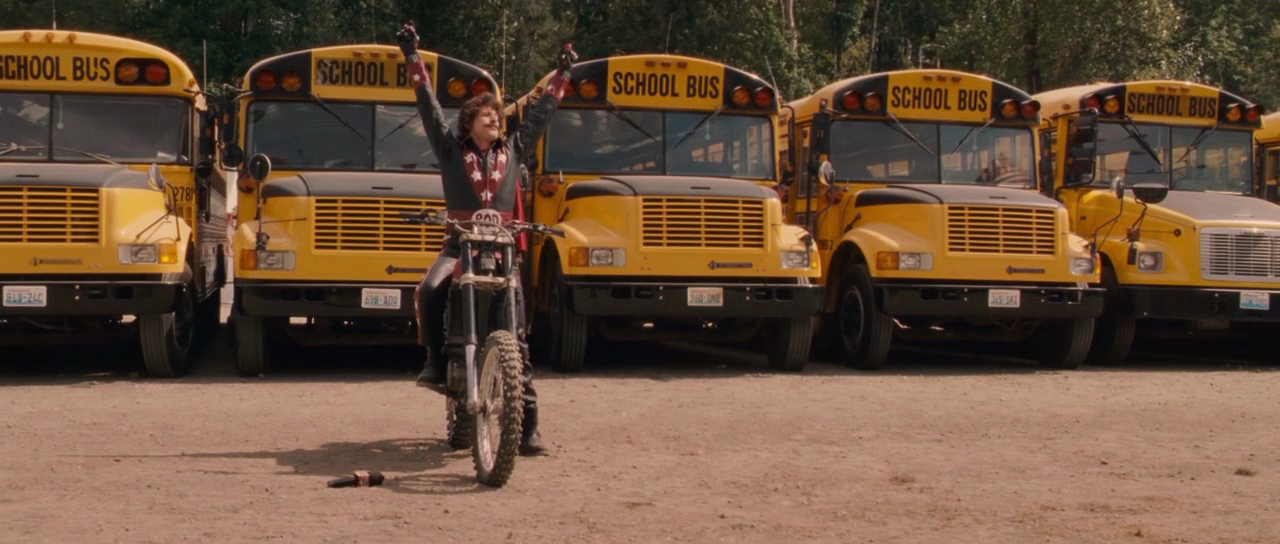
Hot Rod is the story of Rod Kimble, an aspiring stuntman trying to step into the great shoes left behind by his father, a man Rod believes to be one of the greatest stuntmen of all time. One of his greatest goals in life is to earn the respect of his step-father Frank (Ian McShane), which apparently will be achieved by “beating the crap out of him”. This goal is a long way from being realised and time is running out as Frank’s health is deteriorating. To save his life, Rod decides to pull off a series of publicised stunts to earn money for his operation, whilst fighting for the affections of his love interest Denise (Isla Fisher) with her boyfriend Jonathan (Will Arnett), with the ultimate aim of getting Frank back to full health so he can have a fair fight with him.
“Who wants to see me do a big-ass stunt?”
Admittedly, the premise is somewhat flimsy when written out like that, but it’s a film that defies expectations. It tempts you to set the bar low, aims low, but yet somehow works. Many critics hate films that ask the viewer to accept what they’re seeing at face value. Indeed, it is usually a recipe for disaster (see Freddy Got Fingered, a film I consider to be one of the worst ever made). On the rare occasion that a studio gets it right, the results can be hilarious.
It was written initially by Pam Brady (South Park, Team America) for Will Ferrell. After a period of production hell, it was released by Paramount for use by The Lonely Island, who at the time were rapidly gaining popularity through their work on Saturday Night Live. It’s hard to see Will Ferrell in Samberg’s lead role, likely because Samberg has evidently evolved the character way beyond the original concept.
Hot Rod was a commercial failure at the time of release, exactly eight years ago today. The critics weren’t too kind either. It has since taken on something of a cult following. If you’ve ever heard someone say “cool beans”, “Hi I’m Rod and I like to party”, “Hwhiskey”, “I’m too legit to quit” or “ultimate punch”, then it’s quite possible you’ve let a cult quote slip right over your head. Throughout the film there are highly memorable scenes, not least the many failed stunts Rod attempts and the Footloose parody. At times it’s as quotable as Anchorman, perhaps the epitome of modern cult comedies.
When films like this misfire, studios can end up with a total embarrassment on their hands. When they get it spot on, as they have here, it can be pure comedy gold. As with most cult comedies it won’t be for everyone, but it would be criminal not to try it. It’s legit.
Partly as story about criminal gangs, partly a love story and partly social commentary, Pigs and Battleships succeeds in many ways. Perhaps its biggest success is being a vehicle for Imamura to stick two fingers up at the Nikkatsu Corporation, who had forced him to product uncharacteristically light fare (such as Nishi-Ginza Station), returning to the electric edginess hinted at in his debut picture Stolen Desire (also featured here).
This tone would be the cornerstone of a rich career in the film industry and Pigs & Battleships was the first time the world saw what Imamura was capable of. The unexpected controversy coupled with a spiraling budget led to Imamura being banned from directing by Nikkatsu for two years.
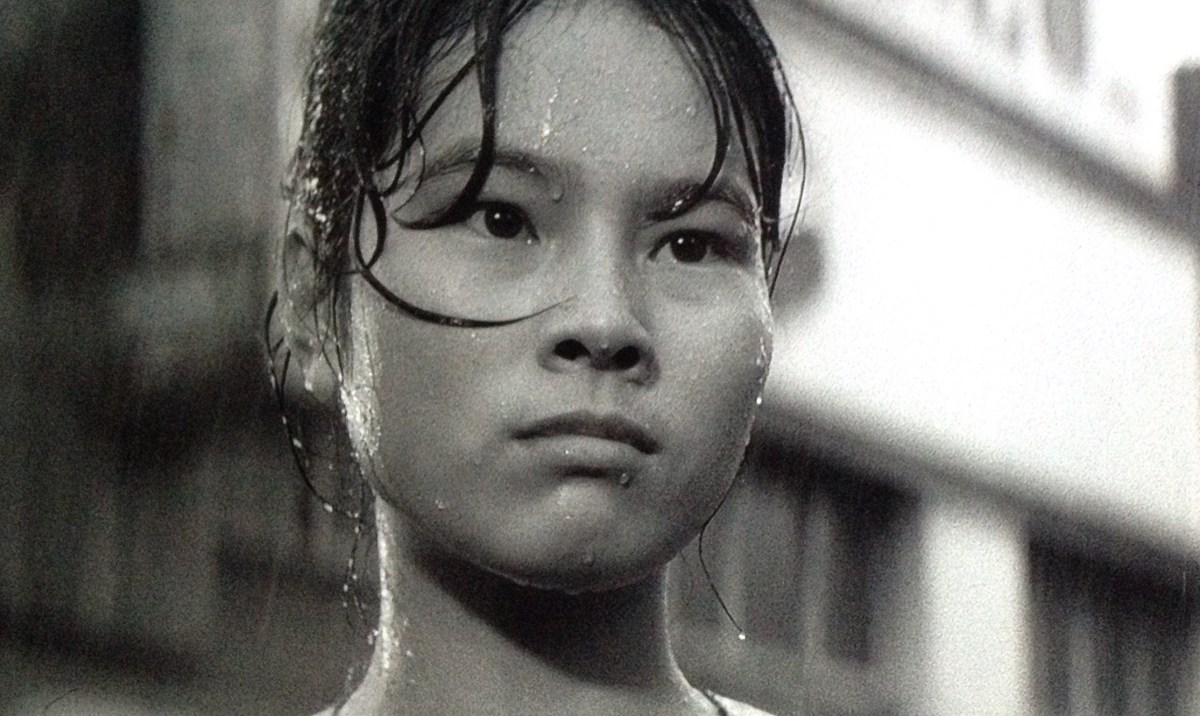
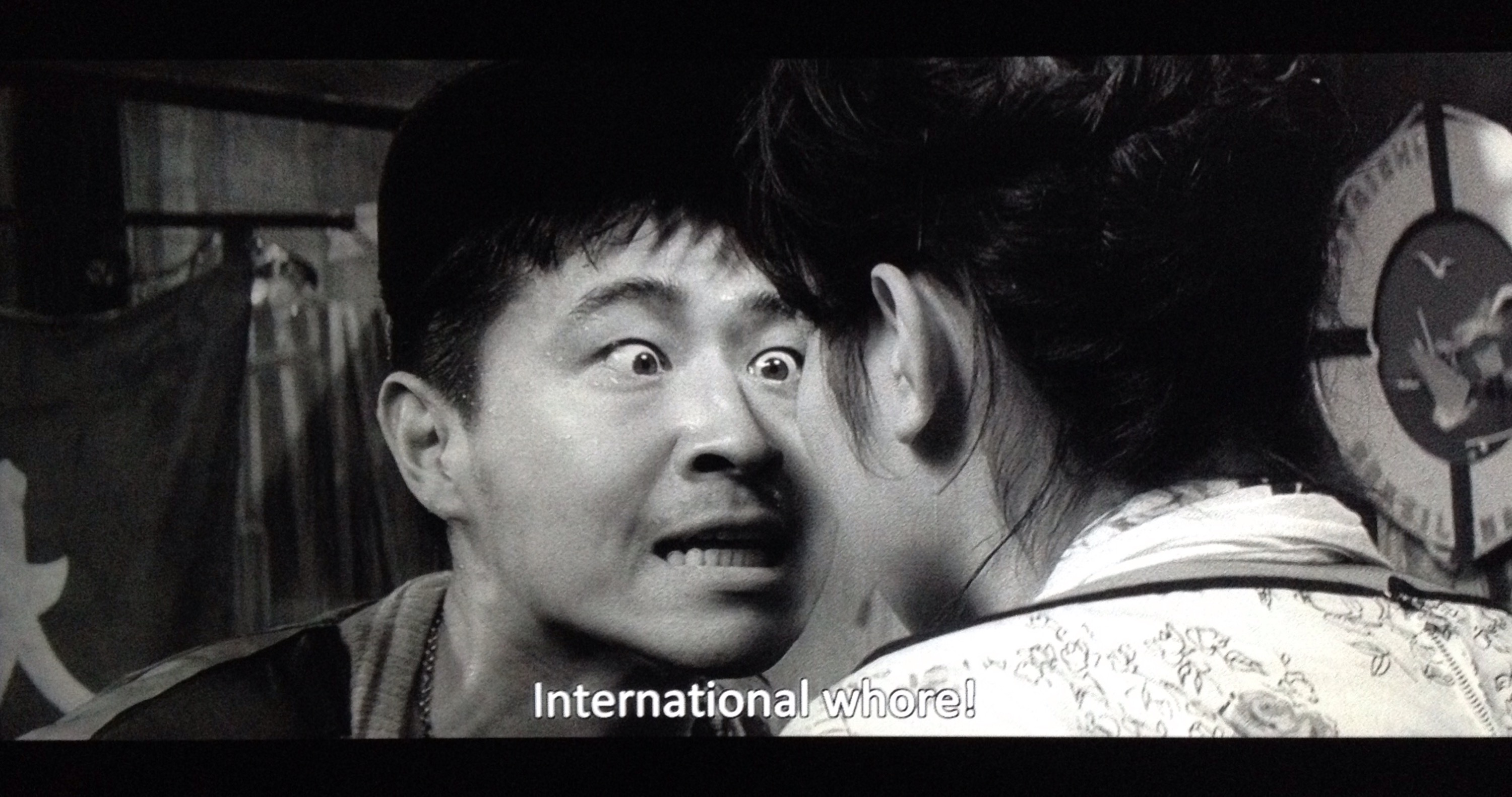
The plot of the film revolves around the frictional relationship between Kinta (Hiroyuki Nagato) and Haruko (Jitsuko Yoshimura). Kinta is a member of the local yakuza gang who are hatching a plan to farm and sell pork to the occupying US Naval Forces. Haruko is desperate for them both to move away from the tricky environment they both live in; she is two-months pregnant and still being sold by her mother for dates with US sailors. Kinta, though, is his own man and wants to make a name for himself and thus avoid becoming a slave to the wage.
A wonderful new put-down enters our lives.
Sinsaku Himeda’s cinematography contributes to a beautiful-looking picture and, coupled with some wonderfully-realised characterisation by Imamura, the film is extremely accessible and enjoyable even for those without an affinity for Japanese political films over half a century old. As the film progresses, the focus shifts from Kinta to Haruko, with the storyline almost outgrowing the former’s immature and selfish outlook to focus on Haruko’s determination to find a better life. This is the overarching statement achieved in the film, with Imamura drawing on his own experiences as a black-marketeer with American soldiers to clearly point out to any viewers willing to look under the cracking façade that the post-war occupation of Japan by the US Forces with creating a disjointed and self-destructive society in which nobody could hope to build a future for themselves.
The Masters of Cinema dual-format Blu-Ray and DVD of Pigs and Battleships + Stolen Desire is available to purchase now.
Hidden away on the Masters of Cinema Blu-Ray release of The Insect Woman is the second feature film directed by Shohei Imamura, Nishi-Ginza Station. It isn’t as fondly remembered as the main feature and for good reason, featuring almost none of the hallmarks of a director who would later come to be regarded as one of the greatest in Japanese film history.
The story plays second fiddle to the music, the recurring titular song as sung by Japanese crooner Frank Nagai. You’ll be forgiven for thinking you’re about to watch one of the worst musicals of all time after the first five minutes, though thankfully the support cast only get that one chance to derail both the song and the feature. What isn’t overly evident is that it is for all intents and purposes an extended music video for Nagai’s follow-up to his previous hit “Let’s Meet in Yarakucho”, a result of Imamura’s refusal to give the song a full playthrough at any point of the film.
One of Imamura’s finest hours in film… can be found elsewhere on the same disc.
The supporting story relates in no way to the words of the song, indeed contradicting it in many ways. It tells the story of a man name Oyama (Yanagisawa Shin’ichi), whose suppression at the hands of his wife Riko (Yamaoka Hisano) leads him to bouts of daydreams of his former days in the Japanese army, particularly a dream where he is trapped on an island with a beautiful girl named Sally (Hori Kyoko). When his wife and two children take a short break, he is encouraged by his friend Dr Asada (Nishimura Ko) to go out on the town and have a one night stand whilst he has the chance, under the pretense that he will clear his head, stop daydreaming and concentrate on his life as a family man.
It has its charms at times, but the rushed pace means it is littered with unexpected jumps that are at odds with the subtly developing romance between Oyama and love interest Igarashi Yuri (also played by Hori Kyoko). Imamura’s original screenplay was probably haphazardly chopped to get the running time down. Regardless, his third film of 1958 – Endless Desire – was on the horizon and there wasn’t time to make the film work.
Nishi-Ginza Station is certainly not amongst Imamura’s finest work, but will find a place in the interests of fans of his famed later works.
The Masters of Cinema dual-format release of The Insect Woman and Nishi-Ginza Station is available to purchase now.
On 14th July 1965, NASA’s Mariner 4 spaceship performed the first flyby of Mars, returning the first ever pictures of another planet and providing Earth with closeup observations of the surface. It was a time where the world was gripped by the space race, seeing two world powers at loggerheads to prove their technological superiority.
Just one month earlier, Ken Annakin’s epic ensemble comedy Those Magnificent Men in their Flying Machines hit cinemas globally. A homage to the beginnings of manned flight, the story follows fourteen pilots in brilliant replicas of 1910 aircraft as they attempt to fly from London to Paris (via Dover) to win a £10,000 prize put up by Lord Rawnsley (Robert Mawley), a British newspaper magnate. Mixing madcap humour with a loving recreation of the excitement once felt by the world for the flying machines now seen as highly primative, the film not only captured the essence of 1910 but also the imagination of the 1965 cinema-going public.
One of the main threads that runs throughout the film is the love triangle between the magnate’s daughter Patricia Rawnsley (Sarah Miles), her fiancé Richard Mays (James Fox) and rugged American Orvil Newton (Stuart Whitman), the latter two of which are also competing in the race. This thread serves as a springboard for a small amount of humour but allows the bigger laughs to be built around this central plot.
Many of the other characters conform to the national stereotypes: the Prussian Colonel Manfred von Holstein (Gert Fröbe, fresh from his titular role as bond villain Goldfinger) can’t do anything without a set of instructions; French womaniser Pierre Dubois (Jean Pierre Cassel) spends the whole film flirting with identical women (all played by Irena Demick) from different European countries in one of the film’s best running gags; Yamamoto (Japanese megastar Yujiro Ishihara) is a well-spoken Japanese naval officer who all the competitors fear will easily win the race. Elsewhere there are rewarding cameos from Tony Hancock, Benny Hill and Eric Sykes.
The main theme tune contains a highly infectious melody that has remained in the public conscience far beyond the popularity of the film itself. Ron Goodwin’s music is introduced alongside a humorous caricatured animation provided by Ronald Searle and it serves as the perfect introduction to the film. Beware – it gets stuck in your head and will refuse to leave for days.
There’s a hint of Wacky Races throughout.
Whilst the concept behind Those Magnificent Men in their Flying Machines closely follows It’s A Mad, Mad, Mad, Mad World – released two years earlier in 1963 – to dismiss it as a carbon copy is to do it a disservice. There’s more on offer here than a simple rehash.
It also spawned a sequel that would be more easily associated to this film but for the fact its name was changed for most releases from Those Daring Young Men in Their Jaunty Jalopies to Monte Carlo or Bust. That film has a nearly identical premise, with many reprised roles, but is set around cars rather than planes.
There’s plenty on offer here to warrant a first viewing and those that grew up with it won’t be disappointed by revisiting it.
Those Magnificent Men and Their Flying Machines is available to buy now from Amazon on extortionate Blu-ray or DVD.
[Note] Huge thanks to Ahoy Small Fry for the recommendation on this!
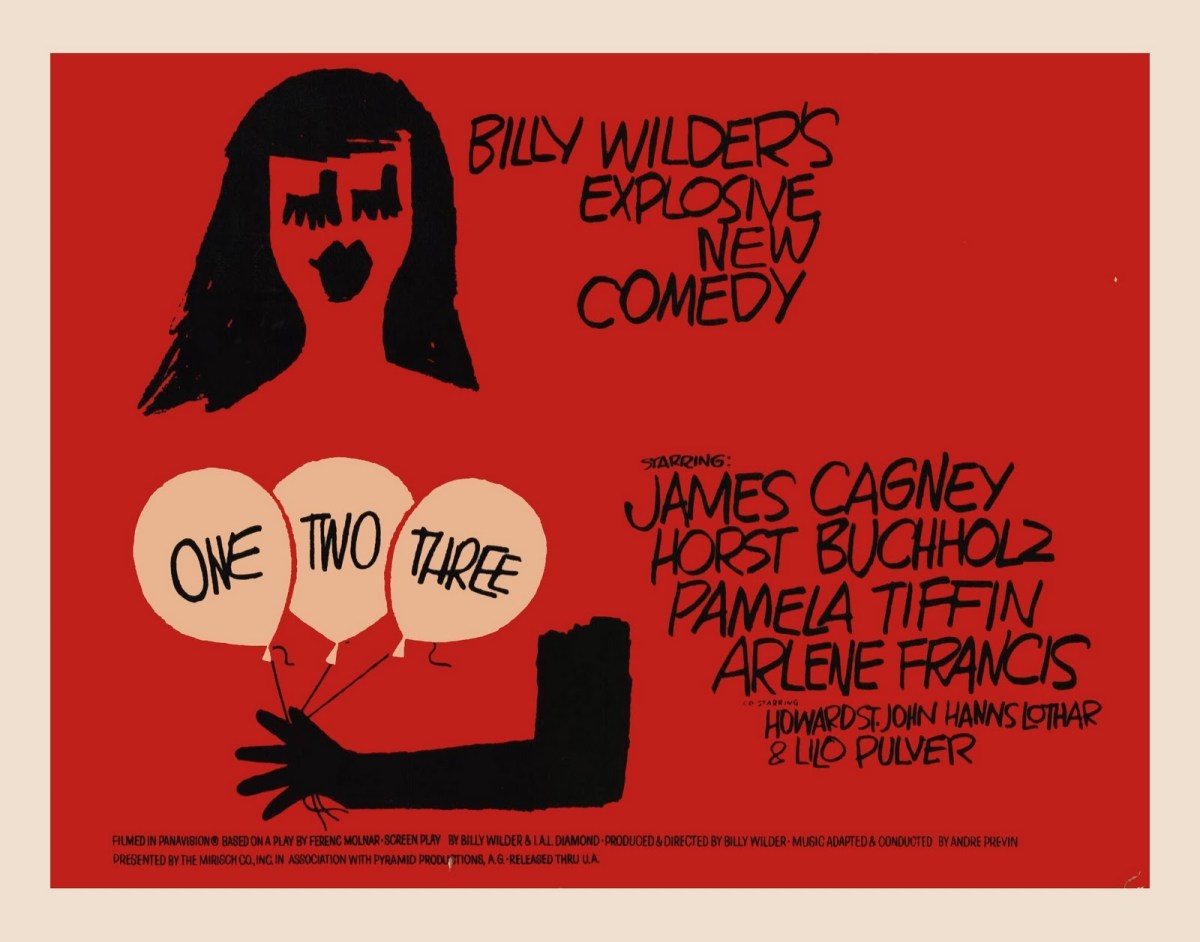
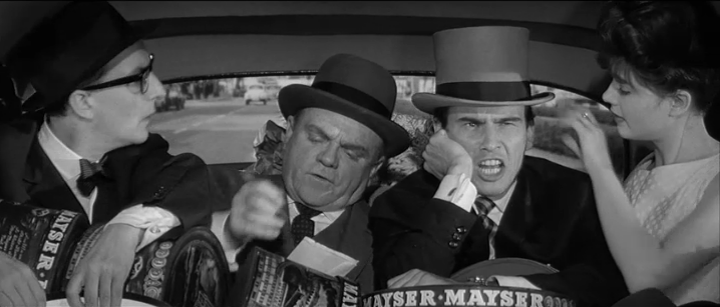
One of Wilder’s less fondly remembered films, “One, Two, Three” treads safe ground for Wilder by being adapted into a Hollywood blockbuster comedy from a European play (in this case the 1929 Hungarian one-act play “Egy, Kettő, Három” by Fenenc Molnár). It stars James Cagney as C.R. “Mac” MacNamara, the general manager of Coca-Cola’s operations in West Berlin, tasked with looking after his manager’s teenage daughter Scarlett Hazeltine (Pamela Tiffin) for a brief period as she visits the city. Seeing it as his chance to impress his boss Wendell P. Hazeltine (Howard St. John) and be handed a golden opportunity to take over operations in London, Mac sees it quickly unravel in the hands of a precocious 17-year-old girl, her East Berlin revolutionary fiancée Otto (Horst Buchholz) and a smattering of bad luck MacGuffins along the way.
There’s a reason why this film isn’t popular anymore. The jokes tend to point towards poking fun at former Nazi officers, caricatured communists and a disjointed society recovering from devastation. Considering Wilder himself lost three close family members in the war and only escaped the Nazi onslaught by some good fortune, however, it is perhaps incorrect to dismiss it as being simply dated. Wilder had a motive to make this film, which is in deep contrast to his former documentary short Death Mills – he wanted to bring his unique blend of humour to a topic close to his heart.
It is unfortunate, then, that the jokes themselves fall short on so many occasions. Wilder achieved timelessness in many of his feature films but the sort of slapstick fast-paced humour seen here hasn’t aged well. It’s actually hard to see what joy 1961 audiences would have found in its farcical plot.
“Are we there yet?” “No, there are still fifteen minutes of dated jokes to go, son.”
There is some deep-seated commercialism on show too. The film is entirely set in and around Coca-Cola’s operations in West Berlin, providing ample opportunity for product placement. Not wishing to spoil the punchline to the final joke, the one reference at this point to Pepsi-Cola underlines the focus on advertising Coca-Cola. There’s no evidence to suggest there was a sponsorship deal with them, but in the modern age of cinema this kind of product placement has become tiresome so it is retrospectively detrimental to the integrity of the film.
It’s fast paced and hard to keep up with but die-hard Wilder fans will find some enjoyment here. Just don’t seek it out hoping for anything special.
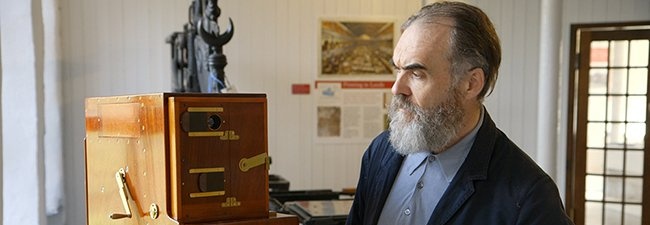
The First Film is an explorative documentary film that follows writer, producer, director and presenter David Nicholas Wilkinson in his quest to determine whether or not the first film footage ever recorded was done so in Leeds on 14th October 1888. The footage at the centre of the film is titled Roundhay Garden Scene, filmed by the Frenchman Louis Le Prince. It lasts only a few seconds but is possibly one of the most important breakthroughs in cinematic history.
Wilkinson explores the background of this footage and its claim to being either the first ever recorded film footage or simply the earliest surviving film footage. He also looks into the strange disappearance of Le Prince on 16th September 1890 on a train from Dijon to Paris, a disappearance that meant the argument of Le Prince being the inventor of the moving image cameras had lost its most important voice, paving the way for Thomas Edison to go down in the history books as the inventor of the movie camera. Things get very suspicious when the death of his son Adolphe in an unusual hunting incident in July 1901 lays his argument to rest.
A groundbreaking piece of cinematic history
When I caught up with David Nicholas Wilkinson to discuss the film, he reflected on the underwhelming appearance of the location as it stands today, a discovery that produces one of the most memorable scenes in the film.
“One of the first shots we filmed was of me finding the original location of the scene. I had to laugh. I had no idea what to expect but a cul-de-sac is about as banal a setting as I could imagine.” His presenting style is infectious even when he encounters disappointments like these, such is his passion for the subject matter. He remains upbeat despite such adversity: “I had hoped for something to be left, even if it was a tree.”
A key fact that the film explores is whether or not a photograph in a French morgue is that of Le Prince. It shows only the face of a deceased man who looks remarkably like the groundbreaking filmmaker, but David is not convinced. “I don’t really think it’s him. In 1890 the average height of a man in France was around 5ft 6in. Le Prince was actually 6ft 4in. In the accompanying notes for the photograph, anything unusual or out of the ordinary had been recorded for each person, though it was very scant in general. If it was definitely him it would have been recorded.”
Only one shot that had to be re-filmed, which meant both David and his co-writer Irfan Shan had to try their hand at acting surprised at discovering Le Prince’s grave. “He never wanted to be in it, but he knew most of the answers and stopped me making mistakes.”
The last-minute curveball
As we come to the end of the film, a late revelation throws the argument up in the air again through a discovery by Laurie Schneider. As David explains, “We had to delay. Everyone wanted me to cut it but once I knew what I’d found out about it I knew it was vital to the story.” The fact David’s discoveries are captured on camera means the audience goes on the journey with him, leaving the story open to these kinds of curveballs throughout.
Whilst the film explores the three most plausible explanations for the disappearance of Le Prince, David explains that there are many more doing the rounds. “There are around ten theories about what happened. One theory is that he was a spy for both Britain and USA during a time when there was a threat of a second French Revolution. Another is that he was filming snuff films with Jack The Ripper…” As he tails off there is something in his voice that gives the impression he doesn’t quite believe these avenues of thought.
It is clearly a labour of love and he has produced a compelling argument on what was likely a relatively small budget. One source of frustration for him came from the British Film Institution. “I went for a BFI distribution loan, which would allow me to visit colleges and universities around the UK. I had agreements with thirty out of a planned fifty and saw it as a great way to get the truth around. I was turned down because it was deemed “too educational”. I’m sure their remit is to promote the British film industry. I can’t come up with a tangible reason for it. Maybe they don’t believe me.”
David’s relentless passion for the project is infectious.
The driving force is Wilkinson himself and it becomes very easy to get wrapped up in his determined narrative. This determination comes despite concerns about the film’s viability. “It was a big worry because it had been rejected so many times. I’d been advised not to do it, but I knew people would be interested in this story.” It appears he is correct in this thought given the amount of coverage it is now getting in national newspapers. “It’s a forgotten story and an important part of our history as a film-making nation. People will now know the Le Prince name. In fact, the widespread coverage means the story is getting out even to people who haven’t seen the film.”
“The film has been thirty-three years in the making”, he states, referring to that point being the first time he pitched it to the BBC in 1982. “I’ve laid it to rest now though. Now that it’s out there I can move on. It’s often the case with filmmakers that the one project we’re really passionate about is the one that never gets made. People go decades without making a project and I often believe that they don’t really want it to get made.” It’s lucky that David’s one project was this one and we’re lucky to be able to hear the story, albeit 125 years late. The story deserved to be told and now it deserves to be seen.
The First Film is on limited release now, with the following cinemas offering screenings over the next month.
July
03.07.15 – Regent Street Cinema London
04.07.15 – Regent Street Cinema London
08.07.15 – Gate Cinema London
11.07.15 – Galway Film Fleadh – Ireland
14.07.15 – Triskel Arts Centre, Cork – Ireland
15.07.15 – IFI, Dublin – Ireland
16.07.15 – Queens Film Theatre, Belfast
20.07.15 – Greenwich Picturehouse London
23.07.15 – Ritzy, Brixton, London
26.07.15 – Cambridge Picturehouse
28.07.15 – Norden Farm, Maidenhead
30.07.15 – Kingston Arts Centre
August
01.08.15 – Bath Picturehouse
03.08.15 – Home Manchester
05.08.15 – Vue Leeds
06.08.15 – City Screen, York
07.08.15 – Sheffield Showroom
09:08:15 – Hebden Bridge Picture House
13.08.15 – Electric Palace, Hastings
18:08:15 – Picture House, Uckfield
One of my earliest cinema memories involves Jurassic Park, the 1993 action blockbuster directed by Steven Spielberg that has gone down in history as one of the greatest action films of all time. Sat at my local cinema – Apollo / Unit Four Cinemas in Brierfield in the heart of Lancashire [1] – with my brother and mum, we were all on the edge of our seats as Dr Alan Grant attempted to get Alexis and Timothy over a soon-to-be-electrified fence. As the shots flicked between the party on the fence and Ellie Sattler in the control room re-powering the park, the alarms start to blast out and the suspense was way too much for my brother. With perfect timing, he stood up with clenched fists and shouted “JUST JUMP!” at the top of his voice. It’s a story that is still retold at family functions to this day. Occasionally I just send him a text saying “JUST JUMP!”. It never gets old.
Actually, what is interesting about this highly memorable scene is the fact it doesn’t really involve any dinosaurs. It doesn’t require any special effects or CGI until an entirely believable puppet raptor bursts through a wall over Sattler’s shoulder. It’s just a bit of tense music and some mild panic for some characters we all really care about.
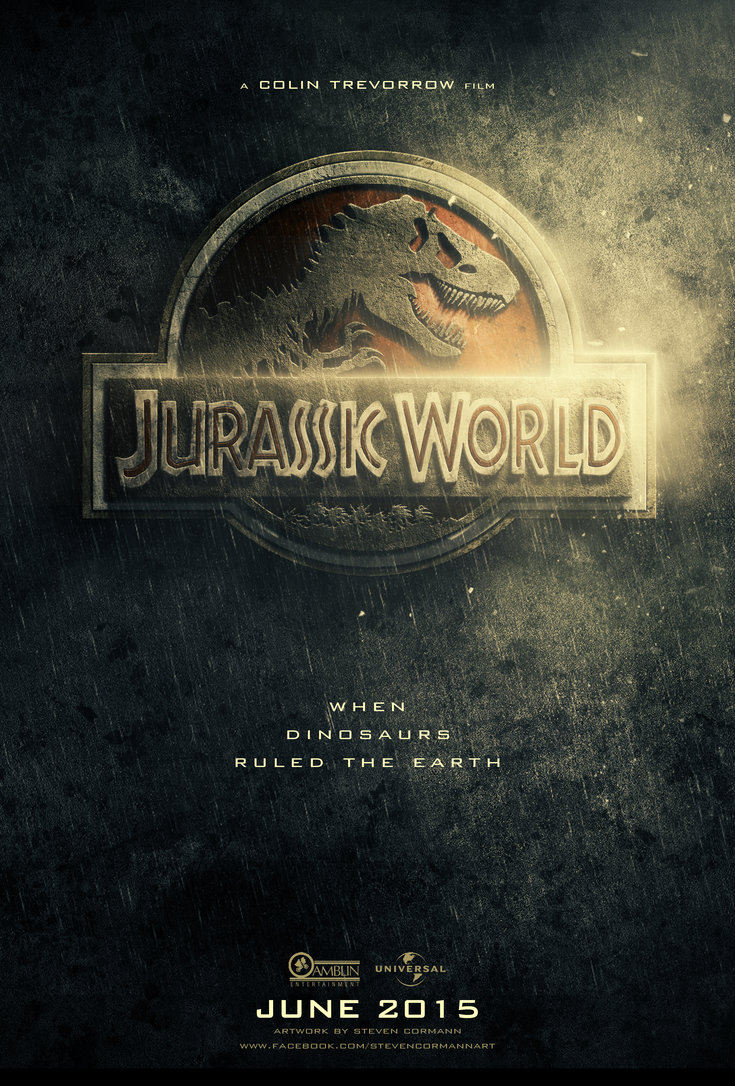
Throughout the whole film the exhilarating pacing was always there and the effects were obviously well thought out to ensure a realistic and believable option was utilised. This kind of intelligent movie making was sadly missing from the two installations we’ve had to endure in the intervening years. Fans of the original were hopeful that this would all be corrected with this year’s franchise reboot. Sadly their hopes won’t be realised with Jurassic World.
Despite Chris Pratt’s great performance, he can’t save the film from its underachievements.
The premise is excellent. Twenty-two years after the events of the first film, Isla Nublar, an island off the coast of Costa Rica, has been converted into the visionary park that Dr Hammond always dreamed of. Led by Dr Wu (the returning B. D. Wong) at the behest of Simon Masrani (Irrfan Khan), the scientific research team has secretly been working on genetic splices of dinosaurs in an attempt to turn around dwindling attendance figures. When their prize creation – an Indominus Rex – escapes from its enclosure, it is down to velociraptor trainer Owen Grady (Chris Pratt) and clueless park operations manager Claire Dearing (Bryce Dallas Howard) to rescue Dearing’s two visiting nephews Gray and Zach Mitchell (Ty Simpkins and Nick Robinson respectively).
Much has been made about Dearing as a weak role model for girls. I have to say that when I stumble across these kinds of articles I tend to roll my eyes, but in this case the anger is very much justified. As operations manager for such a huge island resort, she is immediately shown as weak-minded and out of her depth in her job, lacking in the basic facts required for her position and wholly reliant on people around her to bail her out. When she finally decides to knuckle down and help out the cause, she decides to keep her high-heels on. In the end she spends the remainder of the film hiding behind her alpha male counterpart, being rescued and generally not being much use. The only other prominent female is Zara Young, Dearing’s personal assistant, who is too engrossed in her phone to do her job. When the original film had two very likable and head-strong female characters, this comes as a bit of a disappointment.
Indeed, there are only two characters of any substance. Chris Pratt’s Owen Grady is a blast from the past, no nonsense hero who makes decisions by taking matters into his own hands and has superior knowledge of pretty much everything in the park. He is a little cliched, but it’s something that can be forgiven when everyone around him is so difficult to get behind. Ty Simpkins’s Gray Mitchell, the younger of the siblings, follows up assured performances in Iron Man 3 and the Insidious series with a solid turn as the know-it-all excited teenager. He may be Tim Murphy reincarnated but in comparison to his wooden older brother he is a breath of fresh air.
The only thing less believable than the majority of the cast is the woeful CGI. There were a couple of moments that impressed, though these were generally in the dark and in short bursts. For the most part and especially in the day time shots, the effects were a distraction and this is a sin in the art of storytelling through film. The best films take you into a world and fully immerse you in what you are experiencing. An overarching question hanging over this film is how they managed to actually make the dinosaurs less believable than Jurassic Park, despite the fact they spent more money doing it. The mind baffles.
Jurassic World is certainly better than Jurassic Park III, and perhaps on a par with The Lost World, but for all the hype around it, it never quite lives up to the expectation.
Jurassic World is in cinemas worldwide now.
[1] From my childhood home in Burnley, the Brierfield Apollo was definitely the closest to get to. It was the setting for almost all of my earliest cinema memories: Teenage Mutant Ninja Turtles (a hugely exciting 6th birthday treat in November 1990), The Never Ending Story II (December 1990), Robin Hood Prince of Thieves (July 1991), Hook (April 1992), Aladdin (another birthday trip in November 1992) and Jurassic Park (July 1993). The cinema shut down in 1997 upon the opening of Apollo Cinema in my home town Burnley, which then became the home of my teenage year’s of cinema (I think I saw two of the opening four films available in the first week – Batman and Robin then Beavis and Butt-head Do America – because there was a promotional offer to get people through the door). I think, however, all of these were preceded by a trip to see a re-release of Snow White and the Seven Dwarves at Loughborough’s Curzon Cinema in July 1987, which was abandoned because my grandma was ill.
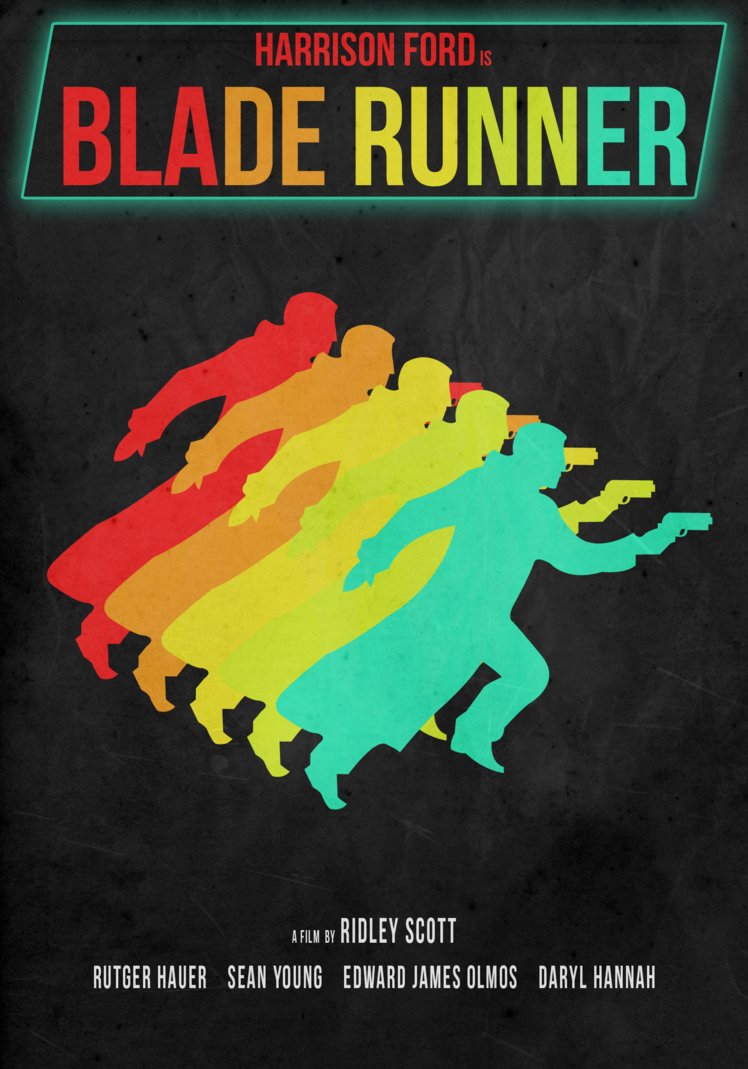
I think I’ve now seen the definitive version of Blade Runner. The Final Cut, which I’ve stupidly had in my possession for almost a decade, is now firmly in the number one spot. For the first time, Scott is firmly in charge and has been able to create the vision he had over 30 years ago. In beautiful HD transfer (4K, 6K or 8K depending on the scene) and 5.1 surround sound, it provides the ultimate viewing experience even before you consider the content of the film is spot on.
There are, if you are unaware, five common versions of the film: Workprint (1982), Original Theatrical Cut (1982), International Cut (1982), Director’s Cut (1992) and Final Cut (2007). However, there are more detailed in an excellent article on Wikipedia. [1]
That there are so many versions clearly implies that the fans of the film are so enthusiastic that they keep coming back for more. Different people have their favourites but I’m on the Final Cut bandwagon.
The film is based in 2019 L.A. and centres around police officer Deckard, played by Harrison Ford, as he comes out of retirement to complete one final task as a “Blade Runner”. His job is to track down and kill four Tyrell Corporation Nexus-6 replicants (bioengineered humanoid robots) who have come to Earth illegally, possibly to extend their lives beyond their standard four year lifespan. As he tracks each down, he begins to question his own moral outlook and the nature of the replicants and his own humanity.
It’s amazing what can be achieved when you eschew using digital effects.
Fans of sci-fi keep coming back to this film, and for good reason. Stylistically it was way ahead of its time and still looks stunning. It was a creation that predates CGI and the result is that there isn’t one set that doesn’t look like you could inhabit it. It’s a grim, dark look into a future which, at the time, seemed a long time away. Adjusted for inflation, the film cost just $70m, which is less than, for example, the entirely naff looking Dracula Untold.
A beautiful film with one of the greatest soundtracks of all time is all well and good, but it has to be driven by a gripping storyline. In my opinion, one of the enduring factors in the continued conversation is the many unanswered questions left after the original versions. The Final Cut does clear up at least one of the very critical questions. I imagine that advocates of previous versions would prefer to not have these questions answered but this is just the side of the fence I sit.
If you’ve not seen this film yet and have any inkling towards sci-fi of any kind, or indeed film noir, police dramas or classic cinema, then you need to put this right at the top of your “to watch” list. It simply needs to be seen and now that this definitive version is available there are no excuses.
I picked up this version of the film. It contains all five versions, heaps of bonus material, an artbook and a Syd Mead-designed collectible car model. There are other packages available but this, for me, is the ultimate package.
This 30th Anniversary Collector’s Edition package is the ultimate version available in the UK.
[1] The three additional versions are San Diego Sneak Preview version, the US Broadcast version and a four-hour version shown to studio execs by Ridley Scott early in the film’s edit.
[2] This beautiful poster was designed by Jeremy Romand otherwise known as Caparzofpc.
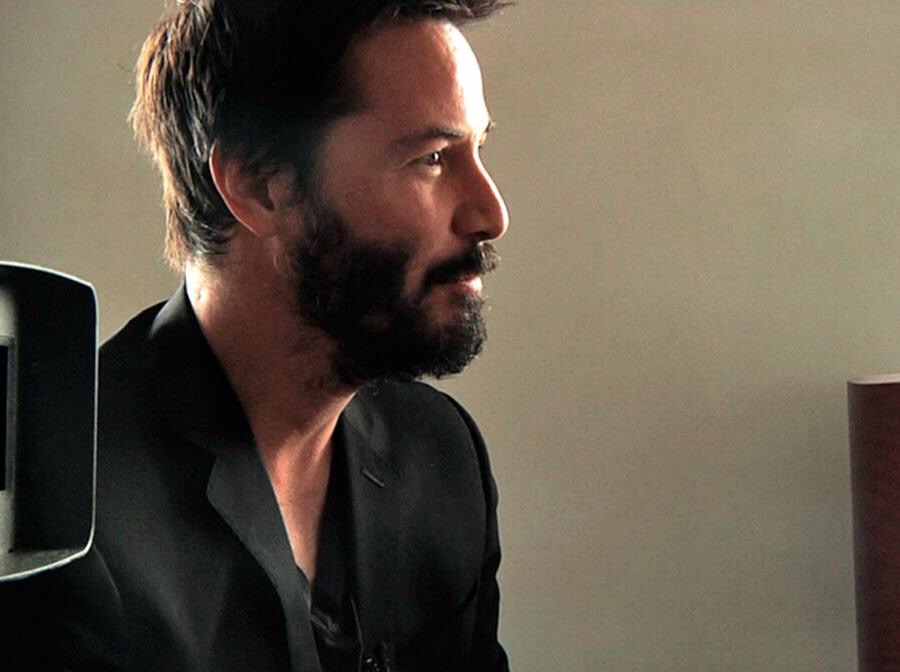
Keanu Reeves acts as the face for this documentary, which explores the argument of which offers a richer viewing experience in cinema: traditional photochemical methods of recording on film or modern digital methods.
The people interviewed to build up what results in a pretty varied and balanced argument is exhaustive and includes directors, cinematographers, colourists, scientists, artists and other people associated with films. George Lucas unsurprisingly falls on the side of digital as he was the first to release a wholly-digital film in the now-cheap-looking Star Wars Episode II: Attack of the Clones. Robert Rodriguez, also a digital advocate who uses his inspired methods to post-produce the graphic-novel-stylised Sin City as a springboard for his contributions, is an interesting contributor. Christopher Nolan comes across as a battle-hardened traditionalist who fights for every film he makes to not be done on digital film recorders. Danny Boyle offers an insightful discussion on the creative techniques used in 28 Days Later. Lara von Trier also discusses the Dogme 95 movement, which is so interesting it deserves its own film. Other interviewees include Phil Meheux, Martin Scorcese, Charles Herzfeld, Joel Schumacher and Alec Shapiro.
The documentary itself is rich in shots of masterpieces in cinema. It offers a great history of film and digital film, and a balanced opinion of which is better.
Keanu Reeves, in his role as the interviewer, is obviously very anti-digital. I couldn’t help wondering whether his passion for one side of the argument perhaps influenced everyone’s thought process on the subject matter when discussing, but it lifts it from a simple soundbite-style documentary by letting us know the creator actually has an opinion and wants to discuss the details with a host of interesting industry experts.
It’s a documentary that explores its subject thoroughly and in my opinion isn’t just for fans of the technical side of films. Each person has clearly been encouraged to be passionate about their anecdotes and the result is a highly entertaining documentary.
A fast-paced and uncompromising opening scene introduces us to our lead character Philip Lewis Friedman (Jason Schwartzman), a well-regarded writer on the cusp of releasing the follow-up to a popular and critically praised debut novel. On a rampage to rub his success into people from his previous life, he exposes all his character flaws. He’s rude, frank and cynical and it’s hard from this point to feel any sympathy for him, which on an emotional level makes it hard to connect with him as a central character. Indeed, not many of the characters emote any kind of solicitude at any point in the film, bar perhaps Philip’s long-suffering girlfriend Ashley (Elisabeth Moss). This, however, doesn’t necessarily make for a bad piece of cinema. Quite the contrary.
Schwartzman is at home in a role full of self-importance and low in empathy for those around him.
Philip’s story carries on from here, through the prolonged breakdown of his relationship with Ashley, making a connection with similarly cynical writer Ike Zimmerman (Jonathan Pryce) and his lonesome daughter Melanie (Krysten Ritter) and later on a young and jealous academic Yvette (Josephine de la Baume). It doesn’t refrain from taking gambles on the attention span of the audience, taking several sharp turns in the storyline to cover a lot of ground in a short time frame (109 minutes).
It is communicated in a form that serves as a kind of fake biography, with a narration taking a matter-of-fact tone that gives us a knowing reassurance, almost as if the person behind the voice is channeling his words from a future where it is known that Philip Lewis Friedman is one of the world’s most renowned writers. This is reinforced by the closing credits, where we see a montage of book covers released by the characters from the movie. To be honest, it is the only way the film could tie itself together. Each character is introduced to us from a position of imbalance and for the most part they spiral into a world of depression and failure. It wasn’t until a brilliant final scene that I felt like there was a reason to drag us through the emotional dirt; it perfectly balanced a fine moment of acting from Schwartzman with some clever lighting and cinematography, on top of which laid an overarching statement that justified the cause behind the story itself.
Elisabeth Moss gives an emotional charge to Ashley as she grows in confidence.
Schwartzman is in fine form throughout, in a role not too dissimilar to others we’ve loved to hate him in (Rushmore, Scott Pilgrim vs. The World). Irritating and overly-confident characters are something of his forte, which is funny if not just because he comes across as anything but irritating in interviews he gives. Moss is also given the opportunity to portray a character of real emotional depth who grows in confidence as the story progresses. It’s a shame that her segment of the film seems like something of a departure from the central thread that was otherwise progressing nicely, though overall it was necessary for the final payoff.









 Cinema, etc.