Blade Runner: The Final Cut (Ridley Scott, 1982/2007)

I think I’ve now seen the definitive version of Blade Runner. The Final Cut, which I’ve stupidly had in my possession for almost a decade, is now firmly in the number one spot. For the first time, Scott is firmly in charge and has been able to create the vision he had over 30 years ago. In beautiful HD transfer (4K, 6K or 8K depending on the scene) and 5.1 surround sound, it provides the ultimate viewing experience even before you consider the content of the film is spot on.

There are, if you are unaware, five common versions of the film: Workprint (1982), Original Theatrical Cut (1982), International Cut (1982), Director’s Cut (1992) and Final Cut (2007). However, there are more detailed in an excellent article on Wikipedia. [1]

That there are so many versions clearly implies that the fans of the film are so enthusiastic that they keep coming back for more. Different people have their favourites but I’m on the Final Cut bandwagon.

The film is based in 2019 L.A. and centres around police officer Deckard, played by Harrison Ford, as he comes out of retirement to complete one final task as a “Blade Runner”. His job is to track down and kill four Tyrell Corporation Nexus-6 replicants (bioengineered humanoid robots) who have come to Earth illegally, possibly to extend their lives beyond their standard four year lifespan. As he tracks each down, he begins to question his own moral outlook and the nature of the replicants and his own humanity.

It's amazing what can be achieved when you eschew using digital effects.

It’s amazing what can be achieved when you eschew using digital effects.

Fans of sci-fi keep coming back to this film, and for good reason. Stylistically it was way ahead of its time and still looks stunning. It was a creation that predates CGI and the result is that there isn’t one set that doesn’t look like you could inhabit it. It’s a grim, dark look into a future which, at the time, seemed a long time away. Adjusted for inflation, the film cost just $70m, which is less than, for example, the entirely naff looking Dracula Untold.

A beautiful film with one of the greatest soundtracks of all time is all well and good, but it has to be driven by a gripping storyline. In my opinion, one of the enduring factors in the continued conversation is the many unanswered questions left after the original versions. The Final Cut does clear up at least one of the very critical questions. I imagine that advocates of previous versions would prefer to not have these questions answered but this is just the side of the fence I sit.

If you’ve not seen this film yet and have any inkling towards sci-fi of any kind, or indeed film noir, police dramas or classic cinema, then you need to put this right at the top of your “to watch” list. It simply needs to be seen and now that this definitive version is available there are no excuses.

I picked up this version of the film. It contains all five versions, heaps of bonus material, an artbook and a Syd Mead-designed collectible car model. There are other packages available but this, for me, is the ultimate package.

This 30th Anniversary Collector's Edition package is the ultimate version available in the UK.

This 30th Anniversary Collector’s Edition package is the ultimate version available in the UK.

[1] The three additional versions are San Diego Sneak Preview version, the US Broadcast version and a four-hour version shown to studio execs by Ridley Scott early in the film’s edit.

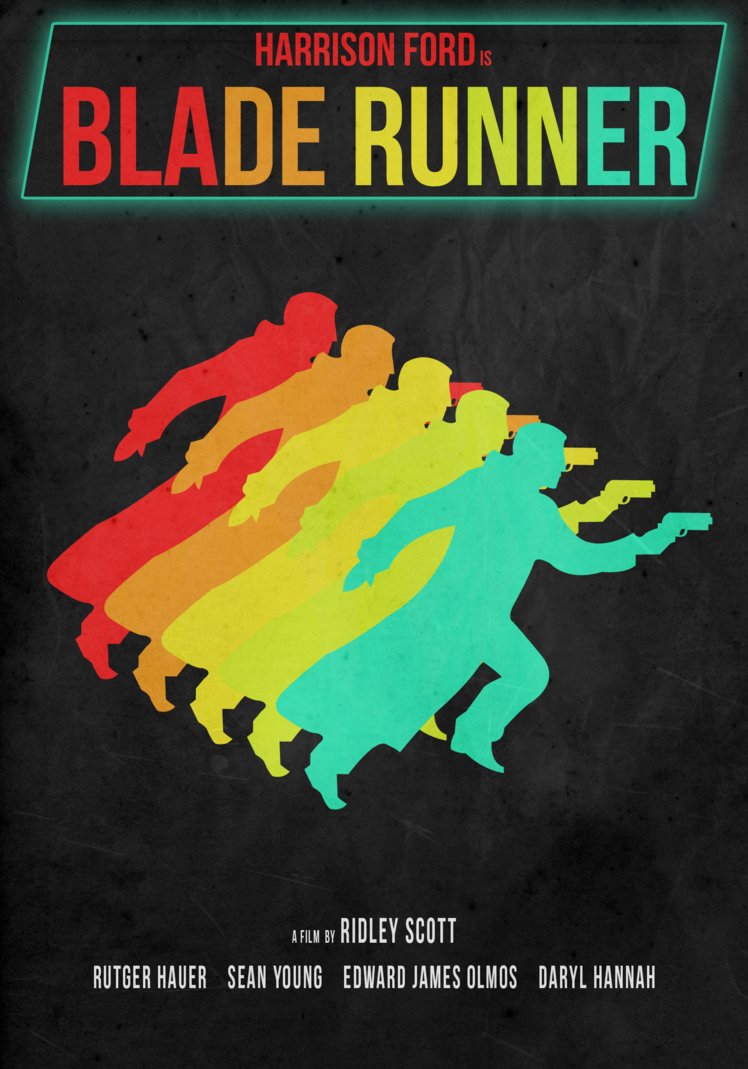
[2] This beautiful poster was designed by Jeremy Romand otherwise known as Caparzofpc.

Side by Side (Christopher Kenneally, 2012)

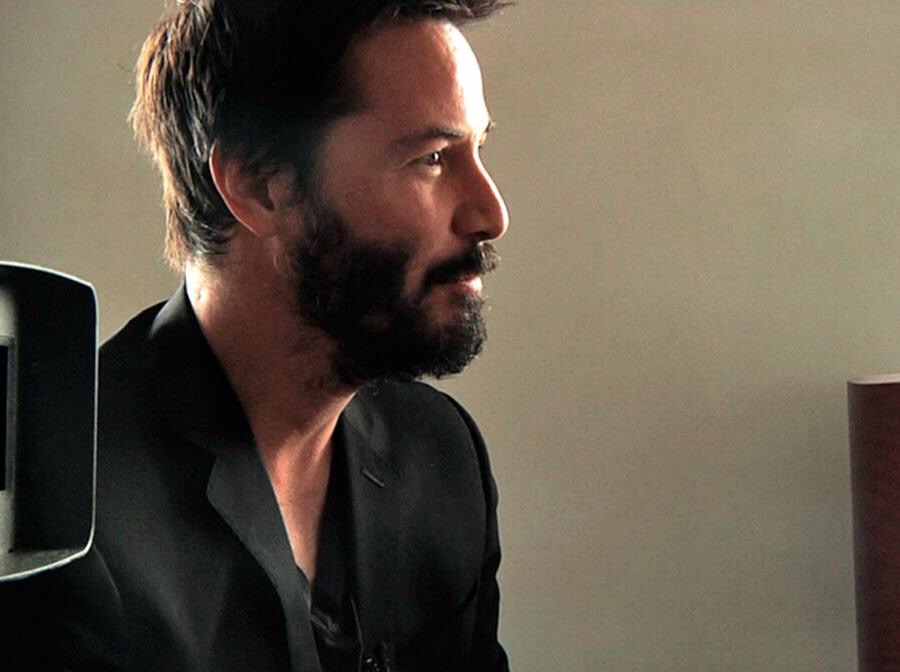
Keanu Reeves acts as the face for this documentary, which explores the argument of which offers a richer viewing experience in cinema: traditional photochemical methods of recording on film or modern digital methods.

The people interviewed to build up what results in a pretty varied and balanced argument is exhaustive and includes directors, cinematographers, colourists, scientists, artists and other people associated with films. George Lucas unsurprisingly falls on the side of digital as he was the first to release a wholly-digital film in the now-cheap-looking Star Wars Episode II: Attack of the Clones. Robert Rodriguez, also a digital advocate who uses his inspired methods to post-produce the graphic-novel-stylised Sin City as a springboard for his contributions, is an interesting contributor. Christopher Nolan comes across as a battle-hardened traditionalist who fights for every film he makes to not be done on digital film recorders. Danny Boyle offers an insightful discussion on the creative techniques used in 28 Days Later. Lara von Trier also discusses the Dogme 95 movement, which is so interesting it deserves its own film. Other interviewees include Phil Meheux, Martin Scorcese, Charles Herzfeld, Joel Schumacher and Alec Shapiro.

The documentary itself is rich in shots of masterpieces in cinema. It offers a great history of film and digital film, and a balanced opinion of which is better.

Keanu Reeves, in his role as the interviewer, is obviously very anti-digital. I couldn’t help wondering whether his passion for one side of the argument perhaps influenced everyone’s thought process on the subject matter when discussing, but it lifts it from a simple soundbite-style documentary by letting us know the creator actually has an opinion and wants to discuss the details with a host of interesting industry experts.

It’s a documentary that explores its subject thoroughly and in my opinion isn’t just for fans of the technical side of films. Each person has clearly been encouraged to be passionate about their anecdotes and the result is a highly entertaining documentary.

Side by Side is available now on DVD and Blu-Ray.

Listen Up Philip (Alex Ross Perry, 2015)

A fast-paced and uncompromising opening scene introduces us to our lead character Philip Lewis Friedman (Jason Schwartzman), a well-regarded writer on the cusp of releasing the follow-up to a popular and critically praised debut novel. On a rampage to rub his success into people from his previous life, he exposes all his character flaws. He’s rude, frank and cynical and it’s hard from this point to feel any sympathy for him, which on an emotional level makes it hard to connect with him as a central character. Indeed, not many of the characters emote any kind of solicitude at any point in the film, bar perhaps Philip’s long-suffering girlfriend Ashley (Elisabeth Moss). This, however, doesn’t necessarily make for a bad piece of cinema. Quite the contrary.

Schwarzman is at home in a role full of self-importance and low in empathy for those around him.

Schwartzman is at home in a role full of self-importance and low in empathy for those around him.

Philip’s story carries on from here, through the prolonged breakdown of his relationship with Ashley, making a connection with similarly cynical writer Ike Zimmerman (Jonathan Pryce) and his lonesome daughter Melanie (Krysten Ritter) and later on a young and jealous academic Yvette (Josephine de la Baume). It doesn’t refrain from taking gambles on the attention span of the audience, taking several sharp turns in the storyline to cover a lot of ground in a short time frame (109 minutes).

It is communicated in a form that serves as a kind of fake biography, with a narration taking a matter-of-fact tone that gives us a knowing reassurance, almost as if the person behind the voice is channeling his words from a future where it is known that Philip Lewis Friedman is one of the world’s most renowned writers. This is reinforced by the closing credits, where we see a montage of book covers released by the characters from the movie. To be honest, it is the only way the film could tie itself together. Each character is introduced to us from a position of imbalance and for the most part they spiral into a world of depression and failure. It wasn’t until a brilliant final scene that I felt like there was a reason to drag us through the emotional dirt; it perfectly balanced a fine moment of acting from Schwartzman with some clever lighting and cinematography, on top of which laid an overarching statement that justified the cause behind the story itself.

Elisabeth Moss gives an emotional charge to Ashley as she grows in confidence

Elisabeth Moss gives an emotional charge to Ashley as she grows in confidence.

Schwartzman is in fine form throughout, in a role not too dissimilar to others we’ve loved to hate him in (Rushmore, Scott Pilgrim vs. The World). Irritating and overly-confident characters are something of his forte, which is funny if not just because he comes across as anything but irritating in interviews he gives. Moss is also given the opportunity to portray a character of real emotional depth who grows in confidence as the story progresses. It’s a shame that her segment of the film seems like something of a departure from the central thread that was otherwise progressing nicely, though overall it was necessary for the final payoff.

I’ve intelligently reviewed this as this film exits cinemas, though it is seeing a home media release on Masters of Cinema Dual Format Blu-Ray & DVD in late July.

Death Mills (Billy Wilder, 1946)

I talked previously about my interest in the upcoming release of the film Concentration Camps: A Factual Survey (on limited release at the moment across the UK, though no sign of a Blu-ray/DVD release as yet). Whilst this BFI restoration has been receiving plenty of attention, it isn’t the only film of its type that exists. One other such film is Death Mills, directed by Billy Wilder. In truth, the film is actually a truncated version of the longer Factual Surveys, with Wilder selecting only 22 minutes of footage to create a short film.

The films in question had a very particular purpose: to capture the first looks inside the concentration camps that had been in operation during World War II; to ensure that the atrocities inside the camps were filmed for the whole world to see and could never be forgotten, despite the Nazi Party’s best attempts to cover them up. Another important purpose was to ensure they were shown to all Germans to show them exactly what was happening at the camps, to avoid any shadow of doubt for denial.

The contents of the film are visually shocking and not for the faint-hearted. It is a wholly distressing watch. The impact of the images, which speak for themselves, is heightened by an effective score and a doom-laden voiceover. It’s one thing to see the camps being portrayed in a fictionalised film, but something else completely to see the reality first-hand. The images, quite simply, are the darkest I have ever seen committed to film.

At the time this was made, Billy Wilder was one of the hottest directorial talents in the world. He had won the Academy Awards for Best Director and Best Original Screenplay for The Lost Weekend in 1945, a year after the release of critically acclaimed Double Indemnity (which was nominated for seven Academy Awards and still regularly appears on greatest films lists). Despite his Western-sounding name, he had in fact been born Samuel Wilder in Austria-Hungary (in a region now part of Poland) and later escaped in the early 1930s to Paris in light of the rise of the Nazi Party. He eventually made his way to Hollywood in 1933, though his family remained in Poland and were murdered during the Holocaust. It is for this reason that Wilder would have felt so passionately about taking part in the project, making his visit to the camp in Auschwitz all-the-more poignant as at the time he believed this to be the place of death for his mother, grandmother and stepfather (though in fact this was later disproved by Wilder biographer Andreas Hutter). Interestingly, the film doesn’t make a particular point of detailing quite how many Jewish people were killed in the Holocaust, perhaps because the exact figures weren’t quite understood at the time.

This is a deliberately distressing film but one of such importance as a historical document that it deserves to be watched. It is important it is made available now so that those who lost their lives so needlessly are never forgotten.

Film review – Identity Thief (Seth Gordon, 2013)

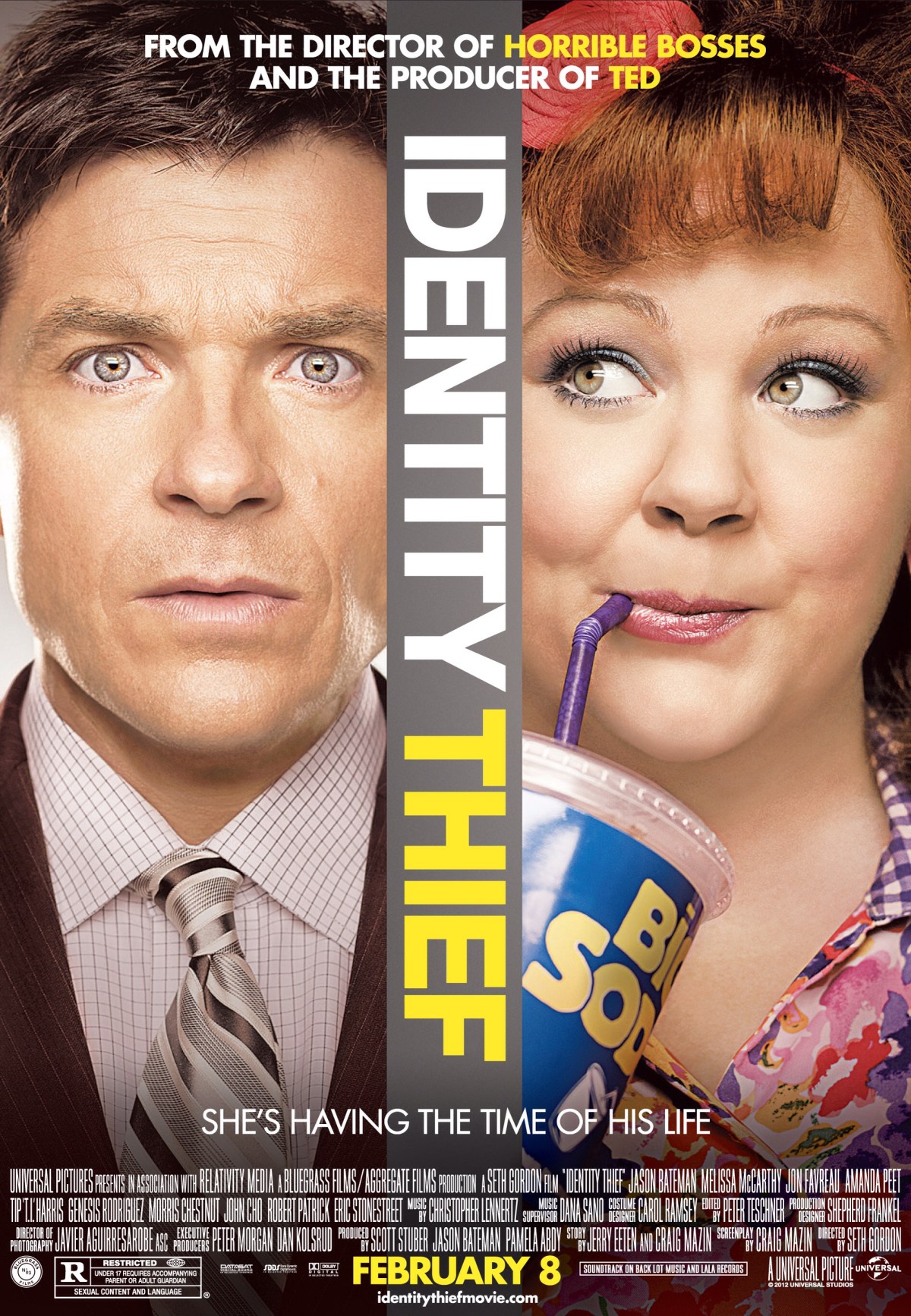
Sandy Patterson (Jason Bateman), an accounts processor from Denver, has his identity stolen by a woman (Melissa McCarthy) from Winter Park, Florida. When his accounts are frozen and the police get involved, his employer (John Cho) threatens to sack him. Realising the police will move too slowly, he chooses to travel to Florida himself to track the thief down, with hilarious consequences.
I imagine that’s how it was sold it anyway. The problem is that despite having an interesting premise and a few laughs at the beginning, it loses its way and sort of stops being funny by about halfway through. Both Bateman and McCarthy end up playing the same characters we’ve seen them play time and time again, in particular Bateman who could be the same character from Gordon’s previous film Horrible Bosses. There’s also some dreadful CGI work on a snake attack to endure.

It must have been a slow month for films in February 2013 as Identity Thief made $150m at the box office despite mainly negative reviews. I guess reviews, word-of-mouth and being entertained don’t count for everything.

Identity Thief is available now on Blu-ray, DVD and Netflix.

Spy (Paul Feig, 2015)

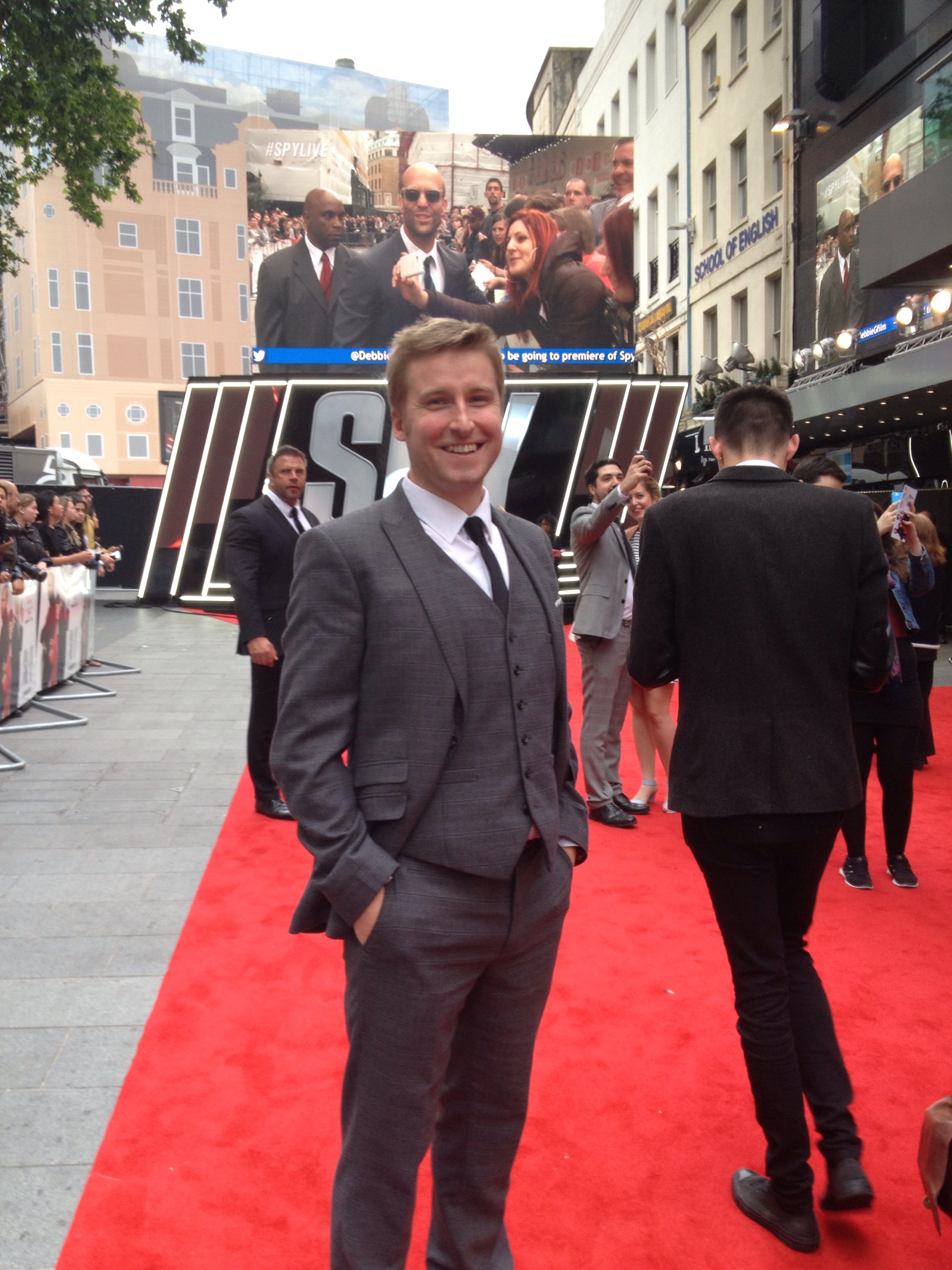
Earlier today, my wife and I found ourselves walking on the red carpet, alongside Melissa McCarthy, Jason Statham, Jude Law, Miranda Hart and Peter Serafinowicz, for the UK premiere of new film Spy. It was at the ODEON on Leicester Square. Here’s a photo of me on the red carpet.

I’ve been on the red carpet a couple of times before and it’s always a lovely experience. Of course, nobody cares who we are, though that doesn’t mean we didn’t ham it up a little. [1]

There’s been quite bit of interest for the film over the last few weeks and the anticipation was well justified. We laughed so much our faces hurt.

spy02

McCarthy and Law are hilarious throughout.

Spy is an action comedy about office-based CIA data analyst Susan Cooper (McCarthy), who is forced to go out onto the field when her partner Bradley Fine (Law) disappears and the identities of other top field agents – including Rick Ford (Statham) – are compromised. Going undercover to attempt to infiltrate arms dealer Rayna Boyanov (Rose Byrne) with the help of her office friend (Hart), the story is the perfect platform for some caper-based hilarity.

I was a little apprehensive going into it as the premise is quite familiar and hasn’t been done well for a long time. I was immediately pleasantly surprised, with an opening scene that sets the story up well, falsely draws us in to a serious film, then slaps us in the face with a huge laugh.

Jason Statham has never been so likeable. His character can best be described as Jay from the Inbetweeners if he somehow became a CIA agent. You can see he’s flexing his comedy muscles and really trying hard to make his co-stars laugh whilst holding back himself. His character is a highlight.

The real star, of course, is Melissa McCarthy. Her comic timing is impeccable and it’s easy to see this film becoming a critical and commercial success with her out front. She has had several opportunities to show us what she’s got, but she has fallen slightly short on several occasions (see Identity Thief). This is a comic actor at the top of her game.

The rest of the cast are excellent, especially Serafinowicz, and you can see they’re enjoying such a fun script. I can’t recommend it enough. I wouldn’t be surprised if this is the start of a franchise.

[1] About a month ago I speculatively tweeted a review of Furious 7 as an entry to a competition run by Stella Artois and Film4. Actually, it was a review of the trailer. I’ve not seen the film, nor have i seen the trailer. Indeed, of all the films in the series I’ve only seen Tokyo Drift. I didn’t think much of it. Anyway, that’s why I’m here. I’ve included the review here, in case you’re interested.

American Hustle (David O’Russell, 2014)

Director David O’Russell has had a sudden upsurge in fortune. With his last film – Silver Linings Playbook – he finally realised the promise hinted at with his earlier attempts at cinematic quirky humour. It was both critically lauded and a commercial triumph. It was a must-see film. If you hadn’t seen it you wanted to, and once you’d seen it once you probably wanted to see it again. O’Russell’s stock had never been higher.

It was important, then, that he chose his next film wisely. I’d say American Hustle was exactly that – a wise choice. It’s a film set in 1970s New Jersey, and this allowed a lot of fun to be had with costuming and recreating an authentic world in which the characters can play. To bring the characters to life, he enlisted three key actors from last year’s triumph: Robert De Niro, Jennifer Lawrence and Bradley Cooper. Added to this he also brought Amy Adams, Jeremy Renner and Christian Bale. That is a formidable lead cast if ever you saw one.

The music is spot on. Mixing a superb score from Danny Elfman with some choice cuts from the era (think Elton John, America, Chicago), it all blends together to further enhance the authentic experience.

Yet, after 138 minutes of buying in to the story, I left the cinema feeling a little short changed. There’s enough humour to keep us smiling, some great playoffs between Adams and Lawrence who are at each other’s throats throughout, and the mild twists and turns in the plot are entertaining if not thrilling. I admired the solid performances from the all-star cast, none of whom underperformed but at the same time didn’t shine. The film had the feeling of playing it safe, and I thought there could have been more to it. The final payoff was predictable and in turn disappointing.

The main problem for me was that none of the characters were likeable. Adams and Bale are both untrustworthy con artists, Cooper is an FBI career man who wants a quick rise to the top, Lawrence is a degenerate waster who’s slow on the uptake, De Niro is a mafia overlord. Renner’s Mayor Polito is the only one I felt sympathy for, getting mixed up with the wrong people for the right reasons, but he’s not really a central character. I didn’t have anyone I felt the urge to back and for me that’s a flaw in the scriptwriting. I understand that the aim of the film may have been to portray the fact that nobody in this circle is likeable, but it just wasn’t carried off successfully. With so much time to develop the characters and such an amazing array of talent on offer, it could have been so much more.

American Hustle is out now in UK cinemas.