Film review – A New Leaf (Elaine May, 1971)

A New Leaf, the 1971 debut feature film from Elaine May, tells the story of Henry Graham (Walter Matthau), a wealthy man who finds himself broke through misfortune and bad money management. Striking a deal with his rich uncle Harry, he borrows $50,000 to help facilitate a temporary extension to his rich lifestyle, with the hope that in the time he has to pay Harry back he can find a rich single woman to marry and regain financial security. He happens upon Henrietta Lowell (Elaine May), a shy and clumsy botanical professor who may well provide the solution to his problems.

The film is definitely a black comedy, even though its light on the latter. Much of the humour here is based on Matthau being in situations of discomfort or unfamiliarity. Initially suicidal after realising he has now money, then more so at having to say farewell to his favourite upper class haunts, his pain is worsened by having to act like he has feelings of affection and compassion for a woman he has little interest in. Driven solely by money, he is shocked at how poorly her finances are managed, sacking her entire house staff team in one memorable scene.

The film plays out like an extended and scripted episode of Curb Your Enthusiasm. It’s hard to think that Larry David hasn’t seen this and been influenced by it in some way, though admittedly the comedy in David’s work is much more realised.

However, as a one-trick pony the joke tends to wear thin as we progress towards the inevitable climax of the film. According to the extensive liner notes – a gift we come to expect with the Masters of Cinema releases – there was a much extended version of A New Leaf (running at a whopping 180 minutes) that never saw the light of day, and probably never will. Whilst it’s always a shame to think a director’s vision hasn’t been fully realised, and the normal response from film enthusiasts is that the director’s cut is the ultimate version of a film, it appears that what we do have access to is probably as good as it gets. Indeed, Matthau preferred the shortened version, which cuts out a murder subplot and provides a happy resolution at the end.
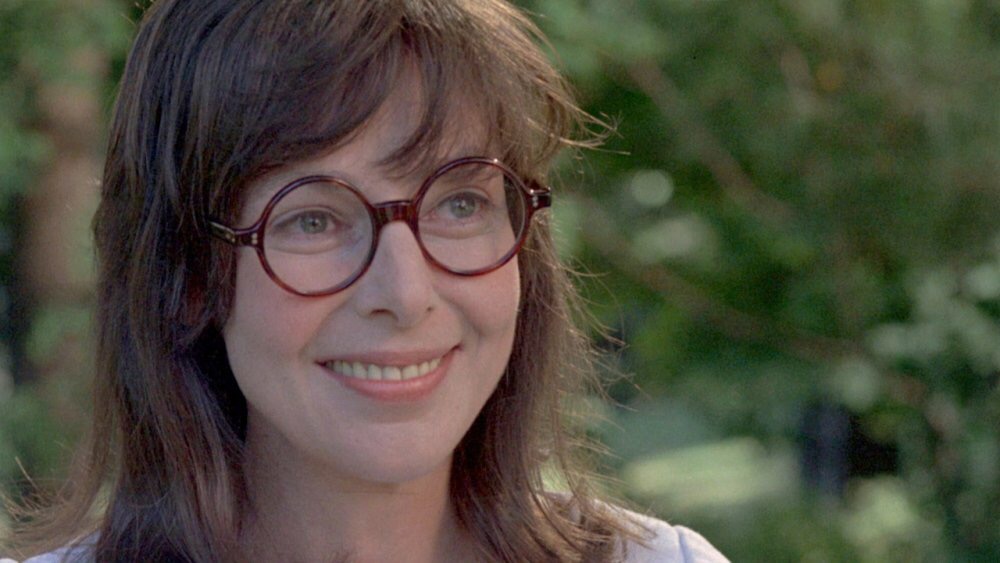
That’s not to say that May’s vision is unworthy of viewing. Certainly, as a writer-director-star she succeeded in creating a solid picture. Her character in the film is by far the most interesting. She is a scientific professor, despite seemingly not needing to work (having inherited her wealth). She is essentially a philanthropist if we look at the way she treats her overpaid and underworked house staff. She is a loving and dedicated wife to her new husband, despite getting nothing in return for her devotion. In many ways, despite her introverted geekiness and inherent clumsy nature, she is a strong female role model. Subtly, the plot of the film is a slight on men in general, which was unusual for the era.

Unfortunately, however, it’s a little known film for a reason. It’s not groundbreaking or unique enough to warrant any kind of extensive praise. It has its fans and at times we are watching vintage Matthau, but the pacing, lack of a cutting script and predictable plotline undermine what could have been a much better end product.

Film review – 思い出のマーニー / When Marnie Was There (Hiromasa Yonebayashi, 2016)

The latest film released from the Japanese animation powerhouse Studio Ghibli is also the final feature film they will ever release. At least, that’s the line they’re taking. There doesn’t seem to be any indication that this isn’t true, although secretly most Ghibli fans – myself included – hope there will be something else around the corner. 

A glimmer of hope has come in the suggestion that more short films will be produced for the Saturn Theatre, the small cinema that resides inside the Ghibli Museum in Tokyo. Unfortunately for those of us outside Japan, seeing the existing ones is quite the task – you’ll need at least a return plane ticket to Japan and some forward planning to get tickets to the museum itself. Oh, they only screen one film a day and you can only see it once. There isn’t any plan to screen any of them anywhere else in the world, so seeing the sequel to Totoro might not be something to add to your bucket list.

All this sadly leaves us with only one more Studio Ghibli film to enjoy at the cinema, finally seeing the light of day almost two years after its release in Japan. When Marnie Was There is based on the original novel of the same name by British author Joan G. Robinson, with many of the details changed from the original novel. Most notably, the location has been changed from Norfolk in England to Sapporo in Hokkaido, Japan.


The storyline deals with a young girl, Anna, who suffers from anxiety and asthma. A loner at her school and lacking in confidence, she is sent away to live with family friends in Sapporo on the advice of her doctor, who suggests that leaving the city for the clearer air and change of scenery will cure her ailments.

Once there, she struggles to settle until she happens on a mysterious building called The Marsh House, inside which a beautiful young girl name Marnie is living, a girl with whom she strikes up an immediate and very close friendship.

So how does When Marnie Was There fit into the greater Ghibli catalogue? Instantly it will strike you that it’s just as beautifully animated as anything we’ve seen before, with hand-drawn drawings taking us on the typically personal, solitary journey of the main character. Animation has seldom looked this good, and I include Disney’s output in this statement too.

The storyline will be familiar to those fans of previous Ghibli works. A young girl sent away from her comfort zone to new surroundings dealing with a secretive and mysterious occurrence, via an unlikely friendship. It is ground well worn, but that shouldn’t be a reason to dismiss it. 

Anna herself is a wonderfully realised creation. The sense of isolation as she sits at school having an asthma-induced panic attack is heartbreaking and as realistic as any live-action portrayal of anxiety I’ve ever seen. This is a critical achievement – get it wrong and we’re dealing with a whiny self-obsessed teenager for two hours.

It is perhaps not as immediate as some of the more celebrated works. It’s a frustrating time to be a Ghibli fan. It’s probably the last film to hit the big screen, but it’s not the best place to start if you’re unfamiliar with the studio. If you can, watch My Neighbour Totoro and Spirited Away straight away, then head to the cinema to catch this before you run out of time.

Film review – The Program (Stephen Frears, 2015)

In the midst of the Lance Armstrong doping scandal, Sunday Times journalist David Walsh published his book Seven Deadly Sins. The sole purpose of the book was to blow the cover on Lance Armstrong and reveal the truth about the complex doping program he was involved with during his supremacy in cycling, specifically the Tour de France. Whilst Armstrong was banned for life from cycling in October 2012, two months prior to the release of the book, vindicating David Walsh and the contents of his book.

The Program re-tells this story, with Chris O’Dowd as David Walsh and Ben Foster as Lance Armstrong.

There are narrow margins in its portrayal of Armstrong. Frears gives a fair portrayal of the man, allowing room within the character to justify his actions. It doesn’t shy away from the fact he spearheaded this complex program of systematic doping, on a level so widespread that USADA (U.S. Anti-doping Agency) referred to it as “the most sophisticated, professionalized and successful doping program that sport has ever seen“. However, to fully represent him, it must also be shown that he used a significant amount of his own time alongside the money earned to aide cancer research. The Program just about lands perfectly in the middle without feeling like it is sitting on the fence, only tipping into an out-and-out negative portrayal when he loses sight of his goal to beat cancer and instead gets addicted to winning at all costs.

When a massive scandal such as this is at the forefront of the public eye, it is easy to forget how successful and inspiring Lance Armstong was for both cyclists and cancer sufferers. It must be remembered that Lance Armstrong started doping, like most cyclists, because he couldn’t win a race without it. In this version of events, he was driven by the fact that doping was already widespread in the sport when he first considered it. It doesn’t strike me that Spears was condoning his actions; he wasn’t the first, nor was he the last. He was simply the most successful.


In hindsight, it was a win-win-win situation for everyone involved. Lance Armstrong won medals and tournaments every season, cancer research programs gained a lot of money and the profile of the sport was raised due to the success story playing out in the public’s eye. The only real losers were the honest cyclists who were unable to compete on the same level.

In time, this film won’t prove to be the definitive biopic on this subject, but with the media pursuit of truth as the approach it offers a unique angle on the situation. One wonders whether its success wasn’t hindered somewhat by the similarly-themed Spotlight, which was busy on the festival circuit at the same time as this. Spotlight may have not been everyone’s favoured choice for the Best Picture Academy Award in January, but it was certainly a more powerful film than The Program.

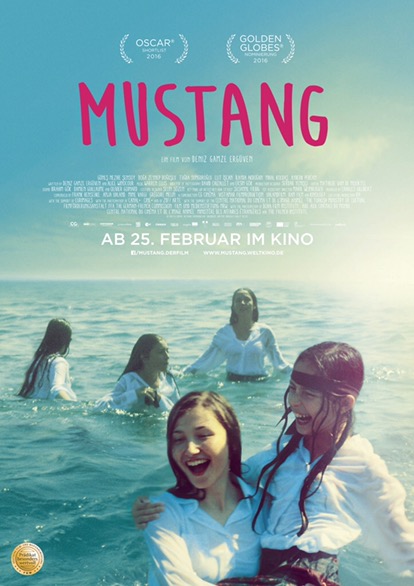
Film review – Mustang (Deniz Gamze Ergüven, 2016)

First-time director Deniz Gamze Ergüven’s Mustang is an astonishing debut. Dealing directly with women’s rights and the oppression of women in Islamic states, it’s bound to court controversy in many areas of the world, not least the country in which it’s set: Turkey.

The story revolves around five sisters. The central character Lale (Güneş Şensoy) is the youngest of the five and serves as the innocent viewpoint through which the story is told, a storytelling method reminiscent of Scout from To Kill A Mockingbird. Her sisters -Nur (Doğa Doğuşlu), Ece (Elit İşcan), Selma (Tuğba Sunguroğlu) and Sonay (İlayda Akdoğan as Sonay – are living with their traditionalist uncle Erol (Ayberk Pekcan) and fearful grandmother (Nihal Koldaş). After an incident at a beach that Erol deems to be too risqué, the five are effectively held on house arrest, taught to be “proper wives” and must wait their turn until a suitor is found.

The premise of the plot is one that brings out dormant anger towards the premise of pre-arranged marriages. The idea of this still happening to so many women in the modern world is an alien concept to those outside the most conservative of countries. Whilst it is known that this happens, Mustang manages to drive home a powerful message by focusing on just one tight family unit, in this case a close-knit group of girls who will likely never see each other again once they have been paired off. Perhaps it’s easier to pretend it doesn’t happen, or perhaps it’s easier to forget on a day-to-day basis as it is so uncommon in the Western world. All this just results in Mustang being a more shocking film.

It is hard to watch the storyline unfold without being reminded of Sophia Coppola’s 1999 indie flick ‘The Virgin Suicides’. Both films deal directly with the psychological effects of a group of five attractive teenage sisters being held under house arrest at the behest of their overbearing parents/guardians. I can’t see a situation where Ergüven hasn’t been influenced on some level by that film, but the repositioning of this basic plot makes it different enough to not dismiss its achievements.

Güneş Şensoy is a revelation in the lead role, playing perfectly the inquisitive innocence that the character demands. At such a young age and this being her debut performance, she is certainly one to watch in the future.

Mustang is a powerful film deserving of he widest of audiences. It’s at times heartbreaking, but there can never be enough attention shone on such a pressing humanitarian matter.

Film review – Zootropolis (Byron Howard and Rich Moore, 2016)

Zootropolis is the latest in the Disney Animated Studios classics range that certainly holds its own alongside its older brothers and sisters, with a well realised universe and some extremely likeable characters. It may not have the staying power of the greatest films of the studio, but serves as a fun way to entertain children for a couple of hours in the earl summer.

The film stars Ginnifer Goodwin as Judy Hopps, a tiny rabbit that has aspirations to go to Zootropolis to become a police officer. Driven on by a childhood incident, she finally reaches her goal via a fairly snappy montage sequence. Dsappointingly assigned parking duty by her new boss Chief Bogo (Idris Elba, providing a voice that doesn’t really match the character), she sets out to prove she is more than a small fish in a big pond. Striking up an unlikely love-hate friendship with sly fox Nick Wilde (Jason Bateman in an impressive role), she uncovers a clue to solving one of the city’s biggest mysteries: the location of a missing otter and a growing number of other missing predator mammals in the city.

Goodwin’s portrayal of Judy Hopps is delightful. Her voice is perfect and brings some distinctive characterisation to life. There’s clearly a lot of chemistry between her and the well-cast Bateman. When they fall out midway through the second act, you feel it, and the target audience will too. She has an unmistakable likability in her voice that’s hard to pin down – perfect for this kind of role.

The film excels in its underlying messages of racism and stereotyping, making it a timely release. Each main character’s driving force is as a result of some kind of prejudice they’ve had to fight against. Make no mistake – there is little effort to hide it, to the point of it feeling a little ham-fisted. Anyone who wants their cinematic experiences compartmentalised by separating pure entertainment from thought-provoking commentary may need to double-check the age rating on this film. 

Where it falls down is its lack of foresight in terms of future generation’s appreciation of it. The greatest animated films have been enjoyed for almost a century by parents and children alike. They always have a timeless quality to them, much like fairy-tales, allowing a Snow White or Cinderella to be picked up now and not feel of-its-time. For Zootropolis, one has to wonder how the children of 2040 will feel about the overused phone apps that are featured, or indeed the Breaking Bad and Frozen references that are thrown in for cheap laughs.

For now, however, Disney will sit back and count this as a huge success. It is now the highest-grossing film of 2016 and the 28th of all time (as of 16th May 2016).

Film review – Zinnia Flower (Tom Shu-Yu Lin, 2015)

I’m going to kick-off before I say anything else and let you know that if you’re looking for a film that will make you feel immediately happy, then Tom Shu-Yu Lin’s latest isn’t for you. If, however, you’re willing to invest the smallest amount of emotional sympathy with the characters then you’ll find yourself on a deeply effective journey as two characters deal with the mourning process of losing their loved-ones.

The film opens with a devastating multi-car crash. Yu Wei (Stone) loses his heavily-pregnant wife and their unborn child but escapes with just a broken arm. Shin Min (Karena Lam) also loses her fiancé in the same incident. They begin their traditional Buddhist mourning period of 100 days. Shin Min goes on the honeymoon to Okinawa she will never be able to have with her fiancé and Yu Wei turns to alcohol and anger to forget his sorrow.


The film is boldly intimate in its portrayal of grief, and its success is secured by two excellent performances from the lead actors, whose lives are intertwined but yet are dealing with almost identical situations in entirely different ways.

It is painful to watch at times, though I was unaware on first viewing that director Lin was drawing on personal experiences as inspiration for the story – he lost his wife in a car accident in 2012. Had I known this I would have viewed it through entirely different eyes.

Indeed, the film itself is representative of Lin’s journey through grief. Just as the two leads take their journey through the internal resolution of their losses, it appears as though Lin has used this to rationalise the pain he went through. I summise that each character represents a different part of his journey, neither of which is portrayed as a correct or incorrect way to deal with the death of a loved one. Simply, how can you possibly say what’s a right or wrong way to cope in such devastating circumstances? Lin intelligently doesn’t make that decision for us either; the film he is made is provocative enough to not need to spoon-feed its viewers on such a complex issue.

There is also a starkness in the portrayal of the juxtaposition between the pair attending their Buddhist mourning ceremonies and their mindset behind closed doors. In my opinion, this was done to underline the façade that those in the throes of grief assume in public, perhaps indicating that this defined method of grief is wholly outdated. I certainly didn’t feel like they were at the end of their grieving process by the end of the film. Perhaps Lin is in the same place?

This is essential viewing for anyone coping with grief and loss. A beautiful but heartbreaking picture that deserves wider coverage.

Film review – The Peanuts Movie (Steve Martino, 2015)

Before I start, I must confess that I’m a closet Peanuts fan. The comic strip wasn’t something I grew up with and outside the odd Snoopy t-shirt or pencil case, I wasn’t particularly affectionate towards the series.

Sometime during my university years, I discovered the brilliance of the comic strips first, then the films and TV specials. I don’t think it was something I was particularly vocal about, but I was secretly picking up compendiums of the originals strips and box sets of the films that I still watch to this day.

There is something wholly endearing about the characters that has somehow stood the test of time. I’m sure studies could be conducted on why it remains so popular despite most definitely being most definitely of the era it was created in.

I wasn’t overly thrilled when I saw the trailer for this franchise reboot, with the brilliant colours and perfectly rendered faces seemingly betraying the source material. However, I was willing to give it a chance and see what direction the estate was happy for it to go in in 2015, some fifteen years after the death of its creator Charles M. Schulz.

Thankfully, for the most part, the film is a success. The use of modern graphics doesn’t really detract from the fact that it genuinely sits well next to any other instalment. Indeed, the storyline could well be a rehash of an older film, with Charlie Brown spending the entire film trying to win the affections of the Little Red-Haired Girl whilst Snoopy lives in his imaginary world as a fighter pilot in World War II. This is a smart move – taking these familiar characters out of their comfort zone and attempting something unusual can be saved for another time.

When efforts are made to openly appeal to the younger demographics, the film does lose its way somewhat. When Meghan Trainor’s ‘Better When I’m Dancing’ kicked in and the kids started dancing away, the sudden urge to turn off came over me. Heck, even Snoopy! The Musical didn’t stoop this low.

Peanuts aficionados will also berate the fact that Charlie Brown talks to the Little Red-Haired Girl. Then they will be positively irate when she responds and we hear her speak for the first time ever. Or was it just me?

There have been better interpretations of Peanuts in moving pictures and there have been worse, but this should place the characters in the minds of at least a few children for the next few years and, in that sense, the film has achieved what it likely set out to. Just don’t watch it expecting it to wow you.

Film review – Victoria (Sebastian Schipper, 2015)

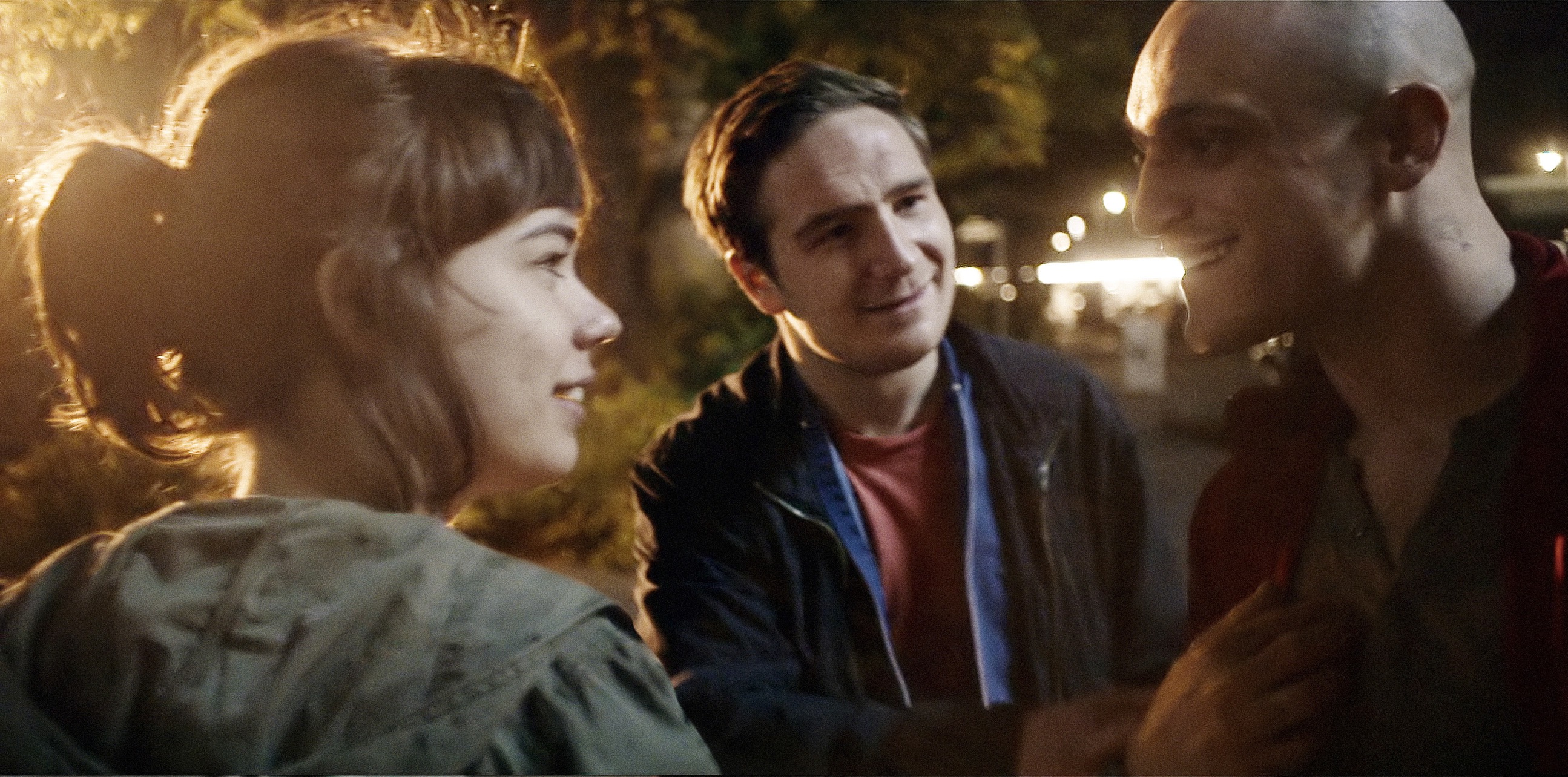
The latest film from director Sebastian Schipper is Victoria, a one-shot bank heist film set in modern day Berlin. When I say one-shot, I mean one-shot: no trickery, no cut-aways, no cheating. That’s 138 minutes of film in one continuous take – a bold move that took three attempts to get right. It’s a glorious achievement and a wonder to behold, even though the film is perhaps flawed as a result of its own triumph.

The story centres around the titular Victoria (Laia Costa), a girl we first join in a nightclub in the Kreuzberg district of Berlin. She’s alone but when she leaves the club she has a conversation with four men: Sonne (Frederick Lau), Boxer (Frank Rogowski), Blinker (Burak Yigit) and Fuss (Max Mauff). Getting embroiled in their night and swept away with the chemistry between herself and Sonne, she suddenly finds herself agreeing to take part in an early-morning bank heist that puts all of their lives at risk.

One of the greatest achievements involved with this film is the way that the single shot doesn’t get in the way of a well-told story. This is achieved by having five central actors that are focused and well-briefed. Any slip up at any point and the whole thing would fall down. Helping this was the fact the script was only twelve pages long, which meant the cast could improvise their scenes. 

What is lost, however, is the ability to maintain the pace by cutting sections that on reflection didn’t work. There are two instances where I felt they had faded out the audio and brought in the musical soundtrack from Nils Frahm solely to cover up a mess-up in dialogue. I may have been trying too hard to spot the errors knowing editing wasn’t a possibility, but with more freedom the film could have been chopped down to about 100 minutes to deliver a fast-paced action film.

So what would that achieve? Well, perhaps the film would be more accessible by being a faster tempo with no down time. Would I have seen it in an edited form? It’s doubtful. I’m a huge fan of the skill of acting, and thousands of actors achieve wondrous things night after night in theatres across the planet. It’s such a shame that directors and editors don’t have the balls to let them act for more than five seconds at a time in most Hollywood films.

Watching Victoria may require a bit of effort from the viewer, but seeing a group of actors achieve greatness with minimal scripting is worth it. Throw in the fact you are watching a director trying something technically astounding – and succeeding – and you have a film most worthy of your consumption.

A must see!

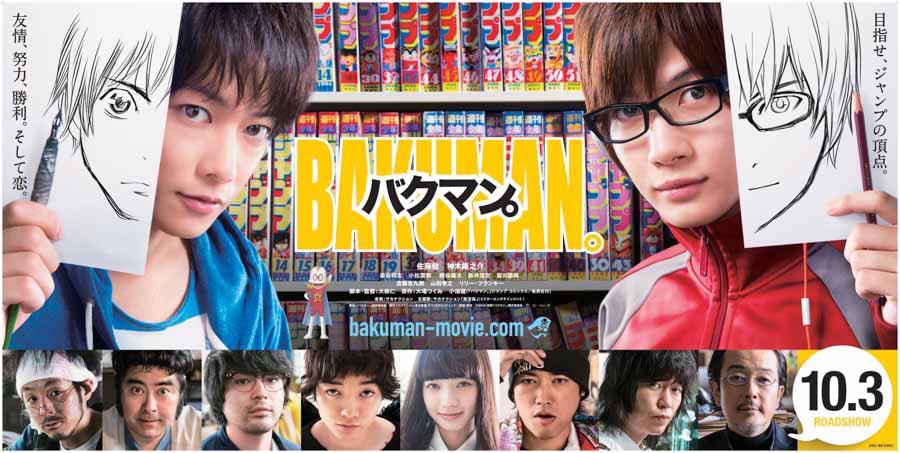
Film review – バクマン。/ Bakuman (Hitoshi Ohne, 2015)

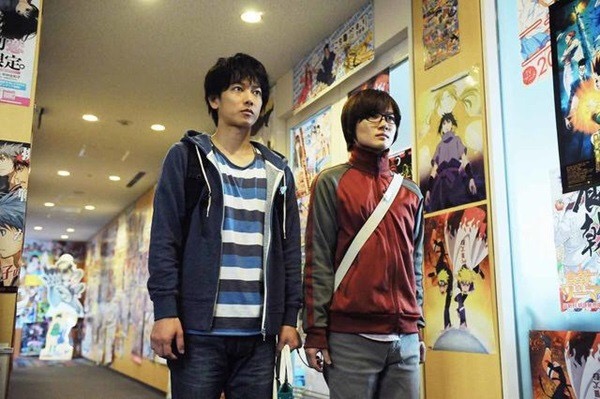
バクマン。/ Bakuman is a 2015 Japanese film based on a serialised manga of the same name. It depicts the exploits of two Japanese junior high school students, budding artist Mashiro (Takeru Satô) and aspiring writer Takagi (Ryûnosuke Kamiki), as they form a partnership to become mangakas for Japan’s most popular weekly Manga magazine Shonen Jump.

The film, like the manga on which it is based, is laced with introspection. The subject matter is such that the original manga was about two boys wanting to write for Shonen Jump, though it was serialised in that very magazine. The risk therefore is that it could have romanticised working there, but that couldn’t be further from the truth. Conversely, I was wondering how they ever got it signed off by Shonen Jump since working there seems to pose serious risks to ones health.

The overarching storyline is a romantic-comedy, because artist Mashiro is driven by the hope his success will be met with that of Azuki (Nana Komatsu), an aspiring voiceover actress with whom he has a pact should they both be successful. Whilst this is slightly by the numbers, the real magic comes from the attention given to the artistry and skill involved with making manga. I’d go as far as saying this is a perfect place to start if this is a career you want to go down as it gives you a warts-and-all depiction of how these artists live their lives.

  
There are some brilliant sequences involving the main characters as they battle against a rival artist in a nightmare world of manga artwork and paintbrushes that do for Japanese art what Scott Pilgrim did for videogame culture in 2010.

There might not be a lot in this for people who aren’t fans of manga or anime, but anyone who has ever picked up a copy of Shonen Jump would really find a lot on offer in this homage to the struggling manga artists at the magazine.