Film review – Happy End (Michael Haneke, 2017)

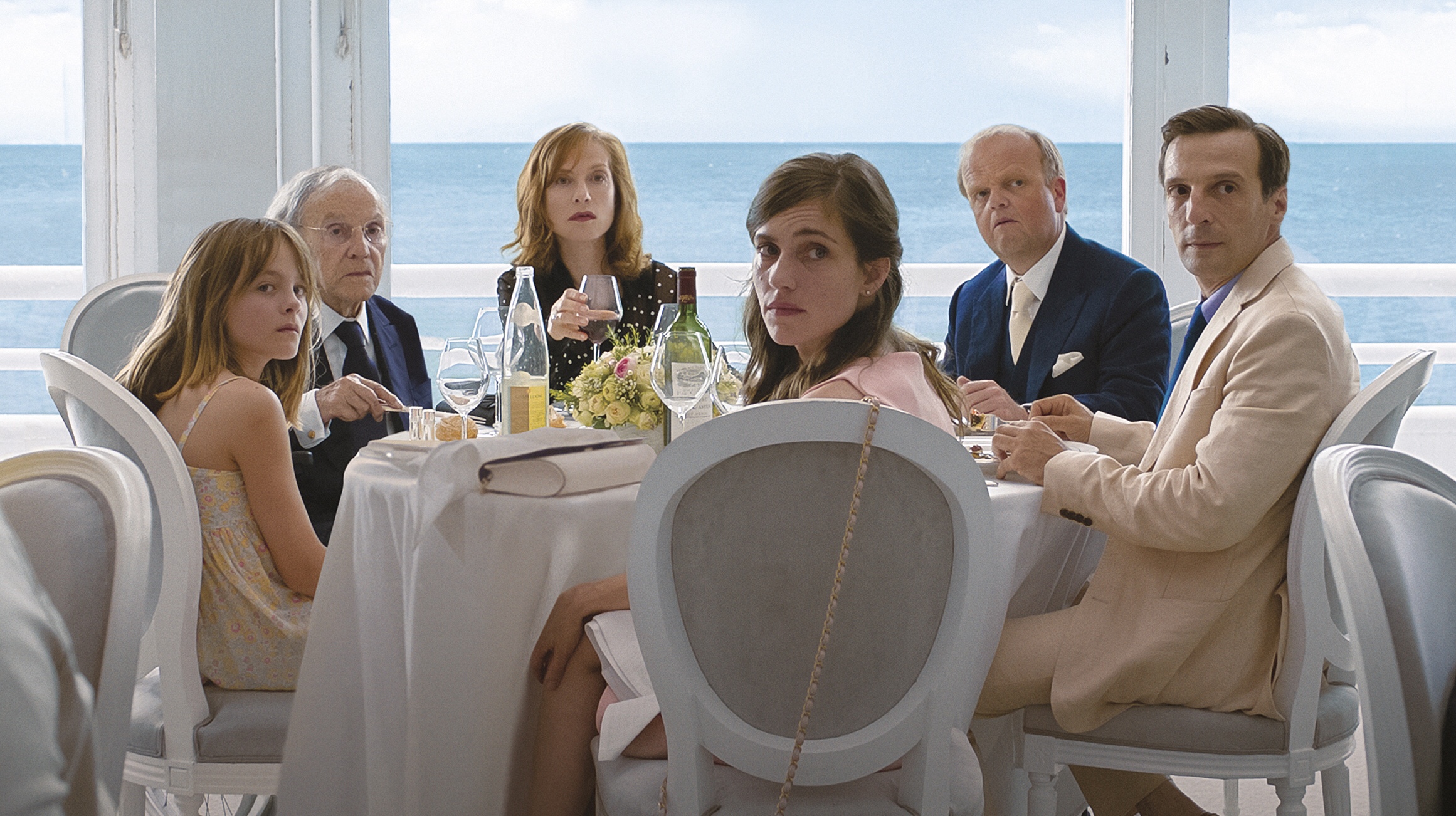
Michael Haneke’s latest picture is a twisted look into the wealthiest ways of living in the north of France, as seen through the eyes of a dysfunctional family hell-bent on self-destruction. A mixture of humour and satire litters the script to create a solid effort that, despite its best efforts, fails to deliver the same impact as the most dedicated of Haneke fans would hope for.

The film opens with a slow series of voyeuristic shots through the camera phone of 13-year-old Eve Laurent (Fantine Harduin), transmitting through a social media platform that looks similar to Snapchat. We see her murder her pet hamster and then, in the final shot, we see her unconscious mother, whilst an overlay of text chat show young Eve admitting she has poisoned her.

In the next shot we see the CCTV footage of a construction site where a huge disaster occurs, critically injuring one of the employees. It is in the aftermath of these two opening gambits that the rest of the film hangs its developing intertwining plots.
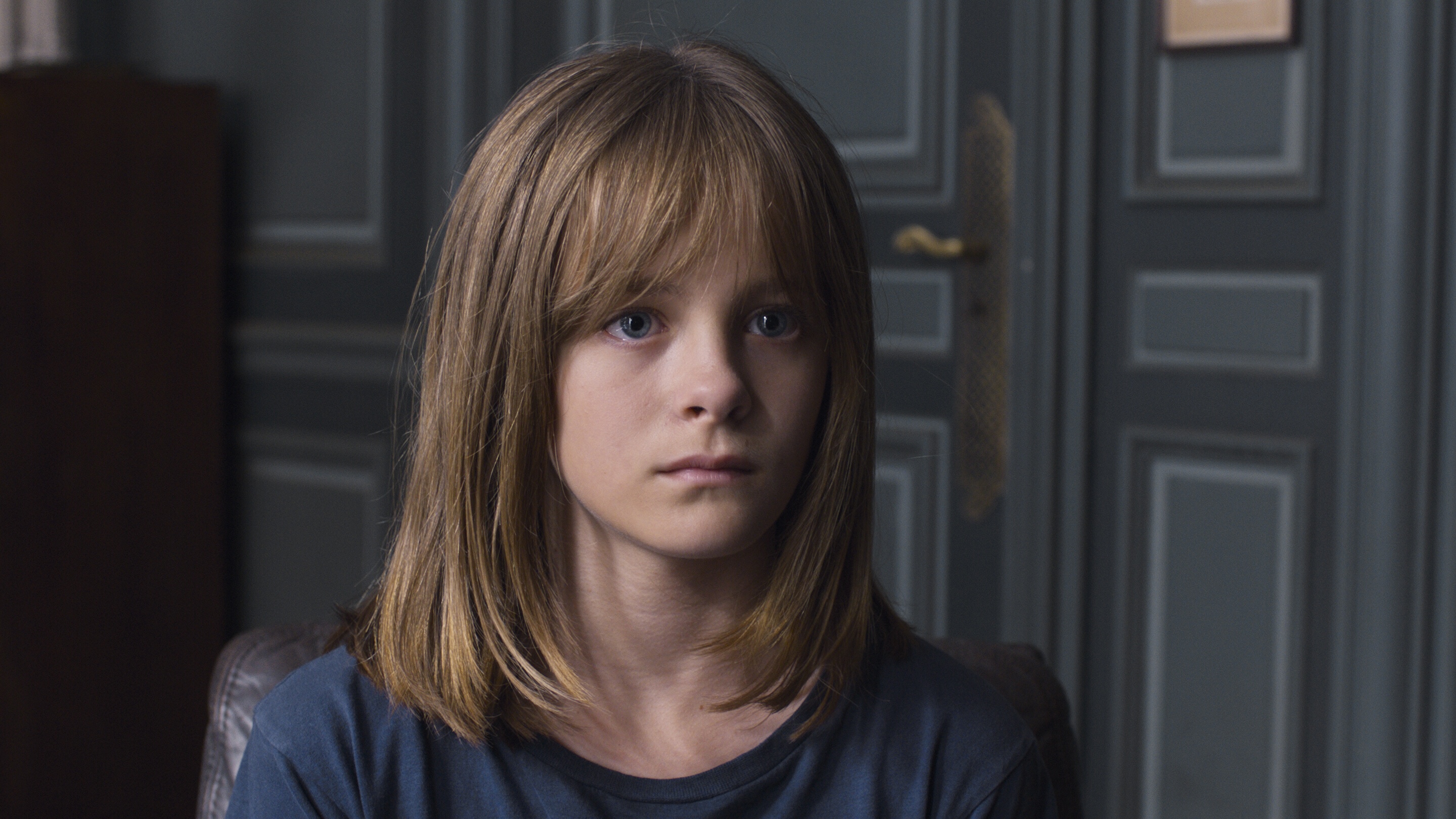
We later find out that this workplace accident was due to negligence at the hands of site supervisor and alcoholic Pierre Laurent (Franz Rogowski), whilst firm owner Anne Laurent (Isabelle Huppert) is left to pick up the pieces and deal with an impending lawsuit. Eve is now living with this family in a large mansion in Calais, along with depressed grandfather Georges (Jean-Louis Trintignant).
The ironically-titled Happy End is a good film, but not a great one. The cast is substantial and the dialogue is sharp, but somehow the plot doesn’t feel like it takes us on a journey with enough of the characters. It’s more of a satirical social commentary piece rather than a meaty piece of fiction, with too many of the characters used as fodder for the main characters.

Trintignant and Huppert reunite here with Haneke after the successes of 2012’s Amour, a film that won the Best Picture Academy Award and the Palme d’Or at the Cannes Film Festival. It is clear why Haneke was so keen to work with them both again. They don’t share much screen time together, but with the former’s desire to end his life and the latter desperate to keep the dysfunctional family together and presentable, there is enough to go on to maintain the interest. With the addition of the young Harduin to the cast, this triangle of strength is enough to carry the film.

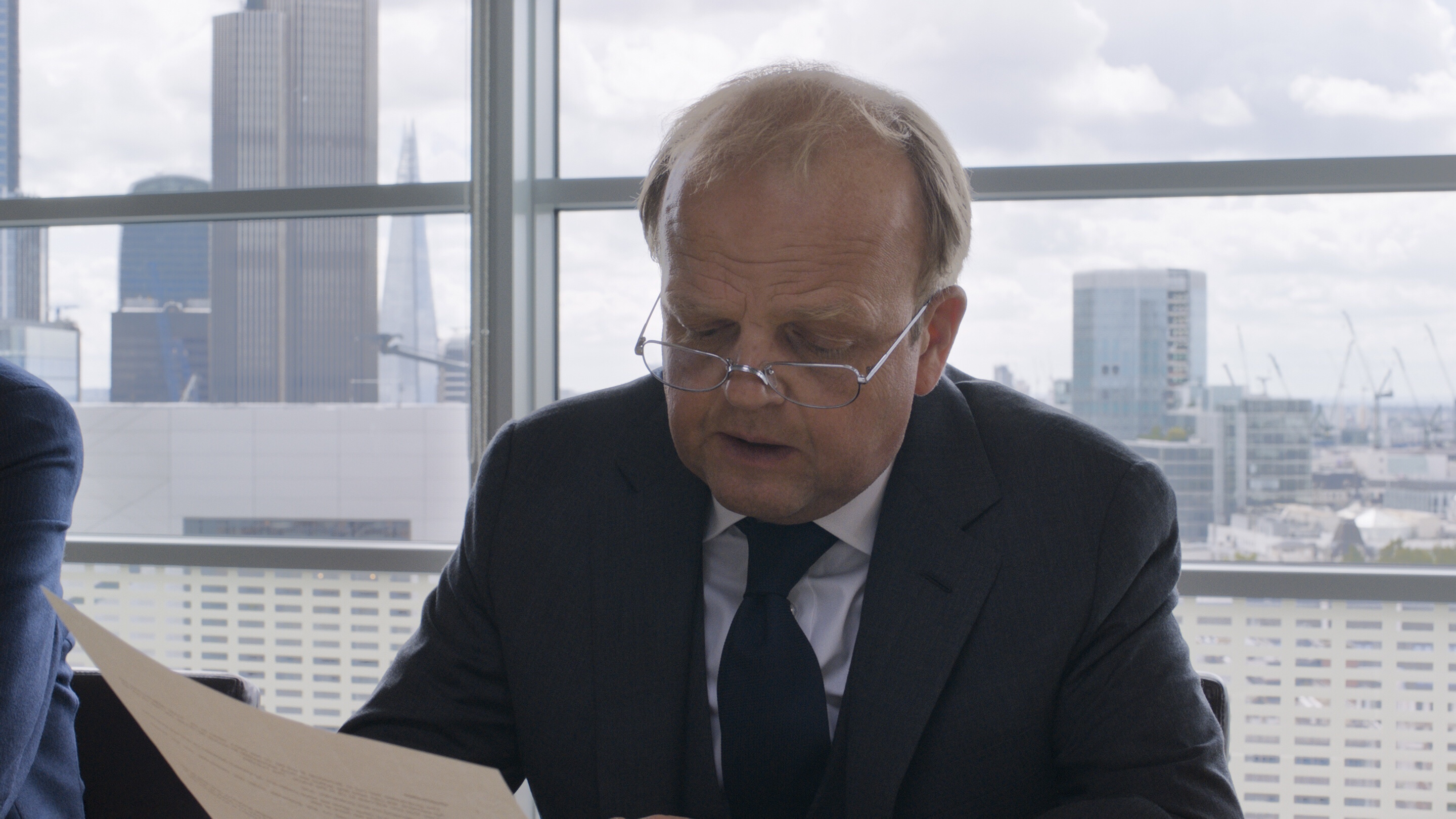
It could be argued that Toby Jones’s inclusion is on the cynical side. His role is very minor, though his prominence in the advertising campaign will undoubtedly have helped ticket sales in the UK, a place where his acting credentials need no introduction – least of all in the arthouse cinemas in which Happy End will play. If this is true, I don’t mind. It’s just smart advertising and a good way to carve out a niche in the market away from the impending Star Wars: The Last Jedi Release next week. For those of us who go to see more than the most mainstream of films, options and variety are required.

It feels unlikely that Happy End will repeat the award season successes enjoyed by many of his previous efforts, but it’s not without merit.

Film review – The Florida Project (Sean Baker, 2017

The moment lead character Halley, played by Bria Vinaite, has had enough of her landlord Bobby (the ever-brilliant Willem Dafoe) is a touch of genius. Her constant trouble-making, lack of responsibility for her own life and the conseqeut poor behaviour of her daughter has come to a head. Bobby counts to three, demanding she leaves his office. She relents, but as a parting shot removes the sanitary towel from her pants and slaps it on the glass window of the reception, punctuated by a flip of the middle finger in his direction.

It reveals a lot about her character. It’s one of the most disgusting visual moments of the cinematic year and (hopefully) goes far beyond the imagination of most viewers even on their worst of days.

That Bobby also shortly after is again protecting her from trouble beyond this action says a lot for his character too, presumably a reason Dafoe was attracted to the role. He delivers a typically nuanced performance. He’s rough and tough on the exterior, largely through necessity. Inside he is a man who clearly recognises the peril all his residents face – most are one missed payment away from homelessness and without any hope to get out of the predicament.

The film achieves what it aims to do, which is to shine a light on the horrific living conditions for many people living in Florida in the shadow of the self-proclaimed “happiest place on earth”. Disney World’s original work-in-progress name was The Florida Project, though here the name is repurposed to represent the social housing slums of America, all too familiar to so many of the nation’s population.

The film takes the form of a series of vignettes, each showing another layer to the life of Halley and her daughter Moonie (Brooklynn Prince). Prince is as brilliant as she is irritating, her idea of hyjinx ranging from spitting on her neighbour’s car to burning down a disused house.

The plot is laced with humour throughout, and there were certainly some huge laugh-out-loud moments. But for all the laughter, there was an element of sadness and horror to think about how real these situations are.

The result is effective, though the overall sum feels less than the parts. By the end of the film it felt like it was dragging, meandering towards a final set piece that didn’t really feel as triumphant as the filmmakers had hoped. It’s a film that I wanted to like more than I did, but I just couldn’t get behind the characters enough to really allow myself to enjoy the film.

It’s an interesting but disappointing watch that is more thought-provoking than it is entertaining.

Film review – Insyriated (Philippe van Leeuw, 2017)

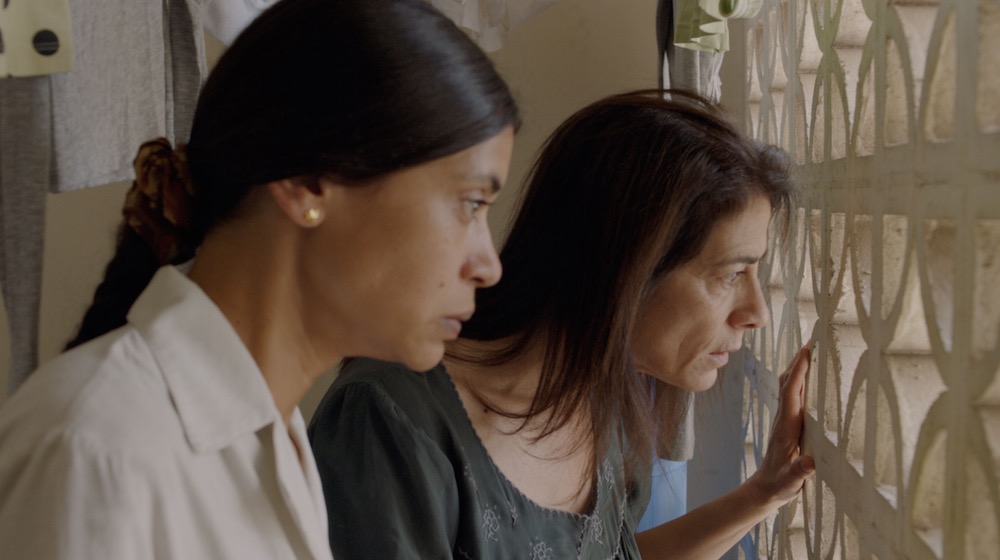
Philippe Van Leeuw May have taken a cheap shot with the title of this film, but the shallowness starts and ends there. It’s an imperfect but nonetheless powerful film that takes a gripping story and frames it within the resonatingly-threatening streets of the modern-day war-torn Syrian capital Damascus.

Inspired by a real anecdotal stories of people living in Damascus, the action takes place entirely within the confines of a small flat over a 24-hour period. Inside the flat lives the matriarchal Oum Yazan (Hiyam Abbass), a mother trying to keep her family together, alive and safe through the ongoing battles. Lodger Halima (Diamand Bou Abboud) is planning to escape from Damascus with her husband Samir (Moustapha Al Kar)) and newborn baby.

The story starts in earnest when housemaid Delhani (Juliette Navis) witnesses a sniper shooting Samir, who collapses in plain sight of one of the windows. Confiding in Oum Yazan, the pair decide to keep the shooting a secret to help maintain the peace inside the besieged flat.

It’s a powerful story no doubt, but its strengths are heightened by some excellent performances by the three central female characters. It is essentially a cross-analysis of how far people go to maintain their own lives and the lives of those they love.

Of the three central roles, none are better delivered than the performance given by the relatively unknown Diamand Bou Abboud. It is certainly the most substantial of the roles: they are relatively outcasts in the group, she has a newborn baby and wants to protect it, but is new to motherhood. It is one late scene when there are two intruders in the house that serves as one of the most memorable and horrific of the year, proving that what we don’t see on screen can be far more powerful that what we do see. It is a heartbreaking and sickening moment in the woman’s life and challenges the viewer to decide what they’d do in her shoes or in those of her cohabiters. Abboud really proves her acting mettle here.

There is little in the way of musical accompaniment in the film, and the cinematography is tough to view critically due to the filming style and confined location. These facts don’t detract from the overall impact, which is more about telling a powerful story than wowing the audience with an elaborate production. As Van Leeuw states in his production notes for the film, “there are no tricks, no special effects, it is just a plain look at the drama of the situation.” [1]

Historically, Arabic-language films have limited appeal at the global box office. True, there have been a number of success stories in recent years (notably Naji Abu Nowar’s 2014 drama ‘Theeb’, which took $774,556 globally [2][3]), but it doesn’t appear as though Insyriated has bucked the trend. Its inevitably sluggish performance at the UK box office (£10,706 from 19 arthouse theatres [4]) means that the film will have to perform well on home streaming platforms in order to recoup the money. Fortunately it is available now through Curzon On Demand and iTunes for the same price as a cheap cinema ticket, along with the standard DVD releases.

It’s not an outstandingly brilliant film, but it is in turns moving, horrific, heartbreaking, shocking and thought-provoking. A solid achievement by the Belgian director and the strong cast. It deserves an audience and will hopefully get that over the coming months.

Notes:

[1] https://curzonblob.blob.core.windows.net/media/6010/insyriated-production-notes.pdf

[2] http://www.boxofficemojo.com/movies/?page=intl&id=theeb.htm

[3] http://www.the-numbers.com/movie/Theeb/United-Kingdom#tab=summary

[4] http://www.the-numbers.com/movie/Insyriated-(Lebanon)#tab=summary

Film review – Thelma (Joachim Trier, 2017)

Supernatural horror ‘Thelma’ begins with an unforgettable opening scene. A girl called Thelma, no more than 7 years old, is hunting with her father Trond (Henrik Rafaelsen). The man allows her to walk ahead of him, entranced by the sight of a deer and the prospect of its impending doom. Trond instead points the gun at his daughter’s head, with a expressive face that reads as both fear and temptation.

It’s an arresting opening shot that is hard feel anything but intrigue for. Why was a man willing to kill his own daughter? What sort of emotional termoil are they both experiencing? It’s brilliant filmmaking.

It is followed up with a long shot of a pedestrianised square. The viewer is essentially challenged to a game of ‘Guess Who The Main Character Is’. Eventually, the slow pan begins, finally focusing on Eili Harboe, who portrays the titular Thelma, some ten years after the opening scene.

Director Joachim Trier, in these opening shots, is warning us what he is about to do with his film – drawing us in slowly and leaving us guessing until he, by design, reveals what we need to know, with maximum impact.

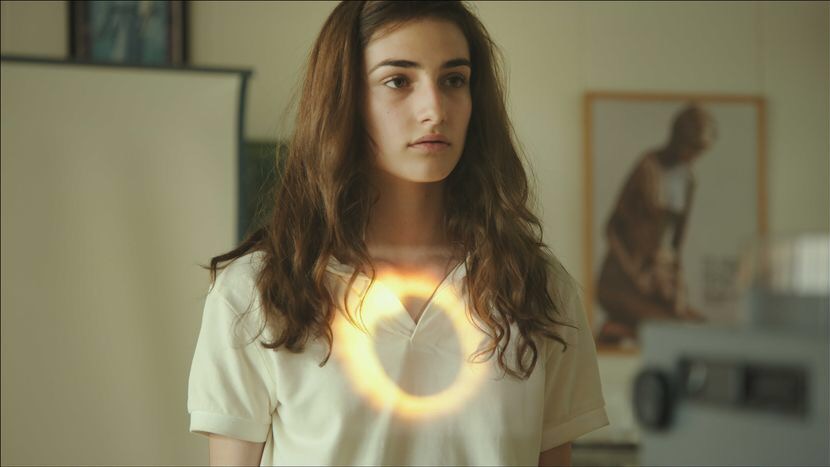
The square, we learn, is at the University of Oslo, where Thelma has just begun her studies. A deeply-religious girl who refrains from drinking, she struggles to settle in and make friends. However, when she has a seizure in the middle of the study area of a library, she is helped by a girl called Anja (Kaya Wilkins).

Becoming increasingly friendly with Anja, Thelma begins to express herself more, eventually becoming physically attracted to her. However, her journey of self exploration doesn’t stop at her growing lustful emotions for Anja and she begins to worry about the causes of her seizures and the dark secrets that lie behind them.

What Trier has achieved with this story is nothing short of remarkable.

It’s a visual wonder, full of memorable set-pieces that jump out of the screen and leave a lasting memory. A scene at the opera oozes with tension as Anja and Thelma search for each other’s hands in the safety of a dark public space. With the accompanying concerto raising the pace and increasing filling the auditorium with volumous classical music, Thelma begins to feel another seizure engulfing her mind. It’s a stressful thing to watch, and captures the threat she feels perfectly.

Harboe is the perfect casting for the title role. She has a naturally distant expression on her face that gives nothing away. It borders on cold, making her eventual emotional expressions feel genuinely surprising. When she finally kisses Anja, you can feel her blushing. She knows it goes against everything she has learned as a child and is scared and excited about her new discovery.

The flashbacks serve as a means to reveal to truth behind her story, what the seizures mean and the shocking reason her father was willing to murder her as a child. The make-up department has done a fantastic job of making these flashbacks believable, without trying too hard to make them look like the parents are caked in make-up – too often a failing of bigger-budget releases.

The culmination of the film hits like a crescendo, and Trier plays the audience perfectly with a balanced build up to the final pay-off.

This genuinely is an excellent film and one that should do well outside its home country. It has also been submitted as Norway’s nomination for the Best Foreign Language Film at the 90th Academy Awards, 11 years after Trier’s first feature film achieved the same accolade. Here’s hoping it goes one step further and makes the shortlist – it deserves to be seen by a wider audience and this will help ensure this happens.

Film review – Die Another Day (Lee Tamahori, 2002)

There is a scene two hours into Die Another Day. It takes a while to get to but it feels like the worthwhile pay off to the most patient of viewers. As Bond takes off a virtual reality headset we discover that the whole sexual fantasy had been in fact part of a simulation. Simple, effective, genuinely funny. That the Bond at the centre of the scene isn’t character James but actress Samantha portraying Miss Moneypenny is simply a stark and damning assessment of arguably the worst film in the franchise’s history.

Die Another Day, across the board, leaves a lot to be desired. The story feels messy and the dialogue makes it drag. Pierce Brosnan was never convincing as a womaniser, not in the charming way Sean Connery was that allowed the audience to both believe him and forgive him. It is a script laden with quips, come-ons and innuendo and I was left urging the women to slap him and ground the whole thing in some semblance of reality.

The technology is ridiculous even by Bond’s standards, with the inclusion of invisible Aston Martin the real calamity that lets the whole film down. The rhythm of the film makes this very much the centrepiece, utilised in the critical scenes right at the climax of the film in a pointless car chase and subsequent rescue mission. The wheels are revealed to have traction treads in them very late in the day, which would probably have saved the entire chase and… well the whole scene is very easy to get nitpicky about to be honest. I’m sure you’ll have as much fun as I did yelling at the screen.

The name’s Bad Guy. Unconvincing Bad Guy. – Image by © MGM/Corbis

The CGI just makes them all worse, though it reaches a trough when we see the destruction weapon called Icarus. This is clearly a matter of sheer terror that could cause the absolute destruction of entire countries, being that it focuses light from the sun and turns it into a giant flaming beam of light that rips through everything in its path. Director Lee Tamahori and the team at Eon Productions had 25 years to digest how George Lucas achieved this remarkable visual spectacle on a shoestring budget in 1977 for Star Wars, but yet they still managed to fail miserably in ripping it off here. You may also question why the icebergs don’t completely melt immediately when touched by the rays, or why the flaming beams stop instead of ripping through to the centre of the earth, or why nothing seems to be on fire. But hey, this is Bond. Am I right?

This also has the very worst Bond theme song of be lot, as well as the worst overall soundtrack that clumsily places modern tracks into scenes to miserable effect. Bond’s on his way to London? Throw in ‘London’s Calling’ by The Clash. That’ll do. It’s hard to escape Madonna’s terrible song too, running at the start and end of the film, sounding nothing like a Bond track, trying and failing to do something different with the well-trodden rules. In case you had managed to move on from it, Madonna pops up early in the film as a fencing teacher. She acts well but it’s a terrible scene that needlessly shows Bond struggling to keep up with someone to prove a point that he has a bit of rivalry with the film’s primary antagonist.

It is rarely so obvious that James Bond is punching above his weight. – Image by © MGM/Corbis

The whole Gustav Graves gene swap with Zao is very problematic for me. It is entirely pointless and seems superfluous to the script, borrowing heavily from Face/Off some five years after it had hit cinemas and proved that the follow-through doesn’t match the idea. Bond is a leading MI5 expert and the fact he didn’t have any suspicions at all is simply because the filmmakers made no attempt to leave any breadcrumbs for him nor the audience, making the Act 3 reveal a little hollow and a bit of a cheat. Could Graves perhaps have utilised some of the martial arts that had Bond struggling in an earlier fight sequence, given that he was actually Zao and an expert in martial arts. Instead he was portrayed as an expert in fencing, which is doable for sure but makes me begin to question the timeline for the switch.

Remarkably, there was a planned spin-off with Halle Berry reprising her role as Jinx, though this was canned following the lukewarm response to this film. Allegedly many of the plot points were reused for Casino Royale, which history has proven to be somewhat of a saviour of the franchise and a well-loved instalment for die-hard Bond fans and general film lovers. It’s a shame because Halle Berry clearly suited the role and was one of the few shining lights in a very poor film. It’s something that we’ll sadly never see now, with the franchise back on its own two feet and with no need of a spin-off to help maintain public interest.

Brosnan is, for me, not the worst Bond to have hit the silver screen. He was, by the end of his tenure, a Bond for the wrong era. As the Bourne series was launched, what cinema-goers wanted was exactly what Daniel Craig provided – roughness, realism and believability. He has proven himself over a four-film series and that is something that Brosnan, eventually, failed to do.

Film review – Lady Bird (Greta Gerwig, 2017)

In September 2003, I had reached my goal. Or so I thought. I spent 18 years building towards reaching university. I studied hard, behaved sensibly, stayed away from alcohol, achieved good grades, applied to a reputable university and chose a subject I knew would hold me in good stead for the future. I put the effort in and the hard work paid off. I was there, wherever “there” was.

I should have felt a distinct sense of achievement, but instead I stood there as my parents drove away, face in hands, sobbing my eyes out. Suddenly I was alone with nobody to turn to. Everything I’d done before, all the friends I’d made, all the information I’d been taught, right in that moment, meant nothing.

My university years were ahead of me, or a romanticised version of them. A chapter in my life was firmly shutting behind me as the next chapter started. It was, it must be said, one of the fearful moments of my life.

It was my memory of that moment, strangely seen through my parents’ eyes rather than my own – a trick of the mind I often play on myself when remembering my own memories – that flashed through me at some point near the start of the film ‘Lady Bird’, Greta Gerwig’s directorial debut. It’s a powerful piece of cinema that awakens such stark memories, but that is exactly what it did.

‘Lady Bird’ a small story about a girl in Sacramento, California. That person is Christine “Lady Bird” MacPherson (Saoirse Ronan) , a girl we are introduced to in an emotional rollercoaster of an opening sequence in a car journey with her mother Marion (Laurie Metcalf), which spirals down from a joyous reflection of an audiobook cassette of ‘The Grapes of Wrath’. Before long the pair are engaged in a wholesome argument unique to parents with teenage children, before Lady Bird finds a novel way to end the discussion with shocking and hilarious consequences.

The film serves as an exploration of a girl coming of age, fitting in, not fitting in, hoping to go to college in New York and dealing with the relationships and life surrounding her. It is, simply, a snapshot of a girl at a critical point in her life.

There is are many secondary relationships that help further explore the character of Lady Bird at a critical time of her life. Her best friend Julie (Beanie Feldstein) encourages her to join a theatre group, where she meets her first teenage love obsession Danny (Lucas Hedges). The scenes set in this plot strand provide some fantastic early laughs, though Danny’s story arc is one that allows Hedges to deliver a really beautiful characterisation when the story could have settled for a much lesser throwaway love interest. Indeed, the relationship between Ronan and Hedges shares a certain understated chemistry that is brought to fruition in one of the film’s most powerful scenes during an encounter behind a coffee shop. It’s a real showstopper.

The plot is brought to life with some extremely snappy dialogue that provides genuine laughs throughout. Greta Gerwig has had a mixed bag of output throughout her career, beginning with a strong association with the mumble core movement and an early success with ‘Frances Ha’. Whilst both Mistress AmericaandWiener-Dog’ had some drawbacks, her role in 20th Century Women in 2016 was a real high point in a career that had been under close scrutiny since her early success. She has grown into an actor, writer and director of real credentials, and ‘Lady Bird’ feels like the ultimate realisation of her talents.

img_4598

It is a love letter to the city of Sacramento, with Gerwig inevitably drawing on her own experiences and relationship to the city to create plot points. She herself grew up in the city and moved to New York to study at university. One can’t help but feel that Lady Bird’s quick switch of home city from Sacramento to San Francisco was a line Gerwig has used many times herself, partly to enhance her exoticism and partly to make explaining it much easier.

Stylistically, the costumes, sounds and stylisation of the film managed to achieve a sense of nostalgia for 2003, which can’t have been easy given that it feels so recent. As a house party scene begins and we hear Justin Timberlake’s ‘Cry Me A River over the sound system there is a real feeling that they were getting it right.

‘Lady Bird’ is, simply, a joy to watch. From start to finish the balance between humorous dialogue and well-paced plot progression is very fine indeed. The result puts it as a frontrunner for awards season next year.

‘Lady Bird’ will reach UK cinemas on 29th December 2017.

Film review – ការពារឧក្រិដ្ឋជន / Jailbreak (Jimmy Henderson, 2017)

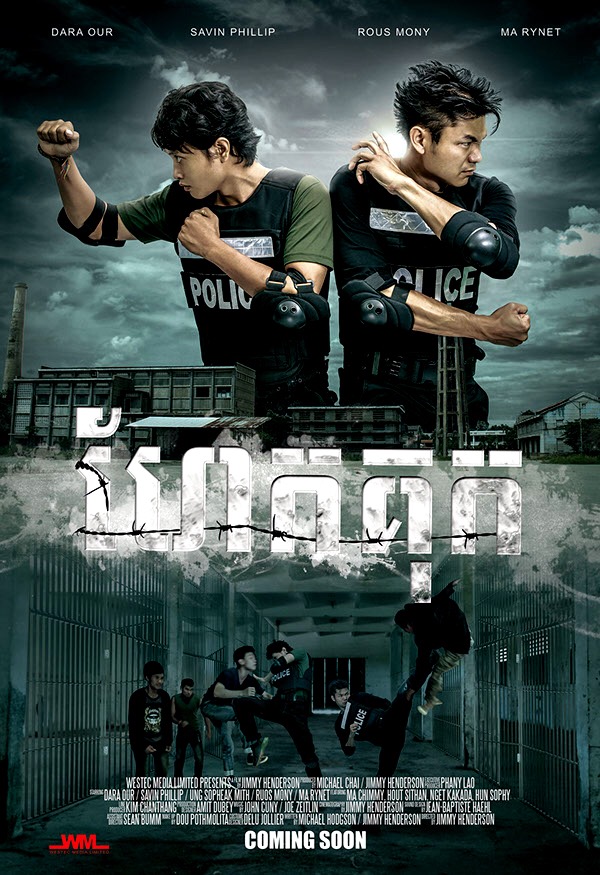
Shot on a budget of just $260,000, Jimmy Henderson’s latest release ‘Jailbreak’ is an impressive and resourceful film that is far beyond the sum of its parts.

The film is set almost entirely in the Phak Kai Prison complex, where a small team of police officers are sent to deliver the notorious criminal Playboy (Savin Phillip) to his cells under the belief he is the leader of the notorious Butterfly Gang. Aware that he is going to reveal her true identity, real gang leader Madame Butterfly (Céline Tran) instigates a prison riot to attempt to capture and murder Playboy, which leaves our team of police – including Jean-Paul Ly, Dara Our and Tharoth Sam – to fight their way out of the prison complex and avoid being killed.

London-based stuntman and actor Jean-Paul Ly was on hand to introduce the film before its screening at the London Film Festival. He has an illustrious stunt career, recently working on Lucy, Doctor Strange and Now You See Me 2. His role in Jailbreak was two-fold. Not only did he star in the picture but he also trained all the stunt team involved. “There is no action film industry in Cambodia, which means that there is no stunt actor industry in Cambodia,” he said, recollecting the project. “I said ‘Where are all the stunt people?’ and (producer Loy Te) said ‘There’s nobody any, so you’ll have to train extras!’, which I thought was a joke but he was deadly serious.” They trained every weekend for sixteen hours and ended up with 80 extras all capable of performing in action films.

The results are incredible, especially considering the background to the production. The bokator fighting style, one of the oldest traditional fighting systems in Cambodia, features heavily in the action sequences.

Te and Henderson enlisted Cambodian MMA champion Tharoth Sam as the sole female police officer. She’s capable of holding her own in a fight and is also responsible for most of the best one-liners, using great comic timing to stop the all-male cast dragging the film back into the 1980s.

Céline Tran also appears in her first action film role, following a successful career in the pornographic film industry. She’s a great antagonist as Madame Butterfly and clearly has a lot of fun in the role, eventually getting a one-on-one fight with Sam towards the end of the film.

The Cambodian action film industry is, essentially, in its infancy. With films like this and Jimmy Henderson’s previous effort Hanuman leading the light, there is every chance that we’ll see an swell of quality films over the coming years that will help to grow the industry.

If they can do this for $260,000, we can only imagine what they could do with a Hollywood budget.

Film review – Verónica (Paco Plaza, 2017)

Director/writer Paco Plaza latest horror film Verónica received its UK premiere at the BFI London Film Festival this week. The film’s short running time ensures that there are few dull moments, though a pulsating finalé does its best to make up for a lack of characterisation beyond the titular lead.

Based on a real life police report, the film opens with a frantic emergency call and response. It is June 1991. Madrid. A girl screams down the phone that there is someone in their house. Once there, the police officers discover evidence of paranormal activity and it becomes the first official officer report to corroborate evidence of the occult. It is that real-life report that Plaza uses as a starting point.

Verónica (debutant Sandra Escacena) is a teenager who is trying to cope with the death of her father. Busy with her school work, looking after her siblings full time (her mother is around but works long hours), but feeling outcast at school, Verónica is a girl mature beyond her years in many respects. However, she seeks an escape from her isolation in the form of a ouija board séance, which she plans to carry out during a solar eclipse with her school friends Rosa (Angela Fabian) and Diana (Carla Campra).

The three girls conduct the séance in a manner that ticks off very much every quintessential horror trope. The glass smashes, the lights go out, the board rips, panic ensues. It’s ticking all the right boxes but doesn’t ever feel like it’s convincing in any of it.

Indeed, throughout the film there are a number of typical plot points that serve to underline Plaza’s love of the genre, which some will see as a love letter to the genre. Many, however, will see it as a lack of ideas.

At times, it felt like there wasn’t enough time to explore the relationships between the main characters. Seemingly pivotal lead characters in the first act are largely forgotten by the end, whilst the mother changes from negligent workaholic to loving mother over the course of three days, without ever feeling like there’s a strong bond between her and her children.

Conversely, there is clearly a playful rapport between all of the children. Twin sisters Lucía and Irene (Bruna González’s and Claudia Placer respectively) have a real bond and it is in some of their natural banter that the film sparks into life. Their younger brother Antoñito inspires a lot of sympathy due to his hopelessness, which Iván Chavero portrays wonderfully. Together the results are great and the scenes they share are entirely believable.

Another positive is Plaza’s deliberate lack of use of CGI effects, which serves the film well. Black, monstrous hands appearing from out of a bed is something that is so easily done as a practical effect, but yet this seems to be something many modern directors would add in the CGI studio at a later date. The terror felt by the children is palpable.

By the conclusion of the film, I couldn’t help but wonder how much of the story had been embellished based on the police report. What we have is an isolated, depressed teenage girl who is obsessed with the occult. The police may have been called to the house, but it would be negligent to blame the occurrences on the occult based on the scant evidence available. This is clearly a girl in need of attention and mourning the loss of a father, unable to find an outlet.

In cinematic terms, that can all be forgiven with a pulsating climax that feels pacy and realistic, making any worries about the plot slightly moot. Sometimes horror is just about delivering thrills and making your audience share in the terror of the main characters. For the last fifteen minutes that’s exactly what we get.

Film review – 夜明け告げるルーのうた / Lu Over The Wall (Masaaki Yuasa, 2017)

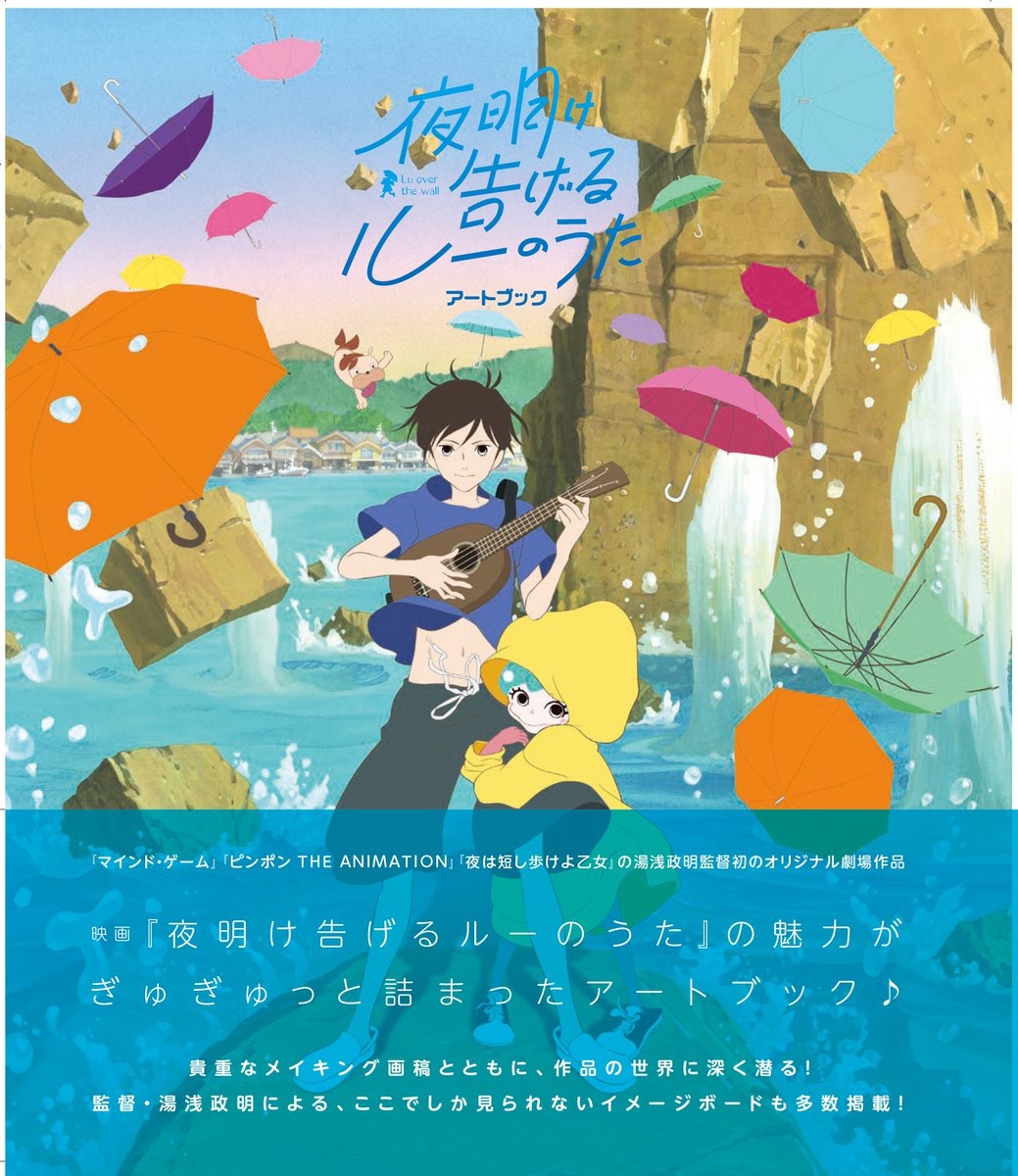
Japanese anime? Quirky soundtrack? Human forms an unlikely bond with a fish person? Yes, it may look on the surface to be just like Hayao Miyazaki’s 2010 film ‘Ponyo’, but Masaaki Yuasa’s ‘Lu Over The Wall’, which received its UK premiere at the BFI London Film Festival this weekend, is far from a simple rip-off.

The second release from the Science Saru Animation studio, after Yuasa’s earlier ‘The Night Is Short, Walk on Girl’, centres around Kai (voiced by Suma Saitō), a gloomy and distant music-creating teenager living in a small fishing town in Japan with his father and grandfather. Kai is pestered into joining a band by two of his schoolmates. Their first rehearsal, on the abandoned Mermaid Island, awakens the interest of Lu (voiced by Kanon Tani), a mermaid who is vulnerable to sunlight but loves to listen to music and dance. Following a confrontation with bullies the band catch illegally poaching fish, Lu comes to the rescue and forms an unlikely bond with Kai and his bandmates as she joins the group and they are handed the opportunity to perform at a local festival.

This is a bizarre film that provides some genuine laughs throughout. The music is quirky, leading to some pretty imaginative reactions from the villagers when they first hear Lu singing. One suspects that this scene was exactly what the director Yuasa had in mind when he started, building the rest of the general idea towards making sure he got the best laughs out of these scenes. It’s daftly entertaining and really hits the spot.

There are more laughs when Lu breaks into a centre for stray dogs and releases them to create a wave of mer-puppies. It’s easy to imagine how much fun the animators and story writers were having when they conceptualised that.

‘Lu Over The Wall’ won the top prize at this year’s Annecy Animation Film Festival, and there is good reason. Park the inevitable comparison to ‘Ponyo’ and seek out this fun and fancy free animation.

Then spend the rest of the day trying to get that music out of your head.

Film review – Beyond the Clouds (Majid Majidi, 2017)

Majid Majidi’s latest film ‘Beyond The Clouds’ received its world premiere on Friday night at the pop-up Embankment Garden Cinema, specially created for the BFI London Film Festival. The director was in attendance to introduce this most brilliant and vibrant of films, alongside cast members Ishaan Khatter and Malavika Mohanan and several members of the crew.

The Mumbai-set tale centres around Aamir (Khatter, in his cinematic debut), a 19-year-old who is making a living of kinds by dealing drugs around the slums and docklands of the city. After a drugs bust leads to a chase with the police, Aamir winds up at the doorstep of his sister Tara (Mohanan). She attempts to protect her brother, but she ends up in prison herself. He must quickly learn to take responsibility to save his sister and their relationship.

In its opening shot, striking in its simplicity, we see the overarching message of the film. We see a busy but cleanly neat overpass, cars flying by. An unknown boy stands at the side of the road. A car pulls up and hands him a package. As we follow this mystery person as the camera pans down, the short one-shot focuses on our protagonist as he takes a package through into the underbelly of the divided city. It is an underbelly littered with street-bound families and forgotten people.

Whilst this separation of classes is made clear, it is a film, first and foremost, about the brother-sister relationship between our two main characters. It is about how they have let their close bond slip, leaving them with nothing but emotional wounds and lost memories of better times before the death of their parents.

Given that getting this chemistry right was such an important piece of the filmmaking puzzle, it seems like a risk that director Majidi cast two relatively unknown actors in the lead roles. Speaking in the Q&A after the film, director Majidi said: “The presence of superstars is crucial for most Indian films, and perhaps particularly in India with 2000 films produced every year. The audience is really keen to see their favourite actors on the screen. Despite the fact that there are so many superstars in India I asked the producers to let me cast people who’d never acted in front of a camera before. I was lucky they agreed to let me do that.”

The actors may not be superstars now but they are clearly destined for greatness, providing two absolutely astonishing debuts to form the backbone to the plot. Mohanan has enjoyed previous successes in Malayalami films, though this is Khatter’s debut. “The casting process was extremely long and we’re very lucky that both main actors come from acting families,” he added.

Lead actress Mohanan was forthcoming in her surprise at the fast turnaround from casting to appearing on set. “I came on set one week before we started filming. The process started and it was incredible… we had so many creative highs.” She is clearly visibly excited to have been given an opportunity by a truly well-respected director, though it didn’t affect her on set. “I don’t think it really hit me until the shoot was over. I had no time to take it in! It was incredible and the journey was so beautiful. So many of my scenes were so intense. I’d never done that before and I didn’t think i could do that.”

Actor Khatter was equally positive about the process, praising the method Majidi used to get the most out of the cast. “He didn’t want to give us time to develop the character. He’d rather we did it on set.”

The results are astonishing.

A. R. Rahman provides the score. Rahman previously worked with Majidi on the film ‘The Prophet Mohammad: The Messenger of God’. In the two years it took to complete that soundtrack, they grew to be close collaborators. The score for ‘Beyond The Clouds’ ebbs and flows, allowing the picture to breathe around it. It is never more apparent than the opening scene, bringing to life an introductory montage that explains fully the character Aamir and illuminating the dark corners of Mumbai that the visuals reveal.

There are several key scenes that use silhouettes, which prove to be a recurring theme and are used to portray contrasting emotional situations. Early in the film Aamir witnessed the trafficking of women through a silhouetted screen, bringing him suspicion. Later on there’s a powerful scene involving an arresting sexual assault on a woman that plays out behind hanging sheets. It’s a simple framing device that runs throughout the film and each shot is captured perfectly by director Majidi working alongside cinematographer Anil Mehta.

Beyond the Clouds is a wonderful film. At 58, Majidi is still taking huge risks that are paying off. The result is a raw and believable story that has plenty of heart and a powerful message. Simply a must see.