The Fireman (Charlie Chaplin, 1916)

The second in the Mutual Comedies series (the first, The Floorwalker, I have previously reviewed), The Fireman is another great example of master craftsmanship from Chaplin. It involves an insurance fraud setup whereby a man (Lloyd Bacon) colludes with a local fire chief (Eric Campbell) to collect on the insurance money. However, things don’t quite go to plan when a real fire breaks out on the other side of town and the whole plot falls over to humorous results. Chaplin plays a fire engine driver who fails at everything he is involved with and this character is the source of most of the humour, especially in his interactions with the fire chief, played by the brilliant Campbell.

It’s not quite Chaplin at his best, nor is it really quite as effective as The Floorwalker, but it has its charm and is worth watching if only for the few big laughs dotted throughout. There are much worse ways to spend 28 minutes of your day.

I preferred the original Fotoplayer music and sound effects as performed by Robert Israel on this one, but both audio tracks compliment the original visuals perfectly well. It comes down to personal preference and I’m more of a traditionalist.

Charlie Chaplin – The Mutual Comedies is out now on BFI Blu-ray and DVD.

The Floorwalker (Charlie Chaplin, 1916)

On 25th February 1916, Charlie Chaplin signed a $670,000 deal with the Mutual Film Corporation to produce a film a month over a one-year period. This made him the highest-paid entertainer in the world. The deal came as a surprise to the film industry; many had expected him to sign with a larger studio and Mutual hadn’t really been considered as an option. However, the money (according to Dollar Times online calculator it was equivalent to $15.2m in 2015) and the creative freedom swayed him and production began in earnest.

The first of these films, all of which were short comedies, was The Floorwalker, released on 15th May 1916. The basic story involves a department store floorwalker (Lloyd Bacon) who is involved with embezzlement of money with the store manager (Eric Campbell). When they receive a letter informing them that detectives are on the way to investigate the finances, they decide to run. However, when the floorwalker spots a near-perfect lookalike in a tramp (Chaplin), he decides to offer to switch personas with him, without realising that the tramp himself is in trouble with the police for property damage in the shop.

The film has a couple of classic Chaplin comedy moments. The first (which is reused throughout to great hilarity) involves the tramp’s inability to go up or down an escalator. It is just pure comedy gold and though it has been imitated many times over, never has it been done so effectively. Another set piece that has had its imitators over the years is the first meeting of the trap and the floorwalker, in which they become intrigued by one-another and begin to mirror the other’s movement. It requires perfect comic timing and is brilliantly executed. It is perhaps more fondly remembered in The Marx Brothers’ comedy Duck Soup, though the gag in that film involved a mirror so isn’t strictly a copy.

All twelve films from the Mutual Film Corporation period are collected in an excellent Blu-ray (and DVD) released by BFI this month. The presentation of each includes two scores (all have one score by Carl Davis and an alternative score by a range of composers), an audio commentary and a brief discussion in the extensive booklet. The restorations are evidently full of care and attention to detail, which I’ve come to expect of BFI releases but will never stop appreciating.

Go out and buy a copy now and support the important restoration projects for classic cinema. You won’t be disappointed with this release.

Charlie Chaplin – The Mutual Comedies is out now on BFI Blu-ray and DVD.

Burnley v Manchester United (Unknown director, 1902)

This is a truly historic film artefact, badly damaged though it is: the very earliest footage of Manchester United, shot months after they changed their name from Newton Heath. The frenetic action shows United (in dark tops) apparently on the back foot against near-neighbours Burnley, although the home team ultimately lost 2-0. The result helps explain why the film was never advertised in Burnley. [1]

Watch Burnley v Manchester United from 6th December 1902

This is really interesting for me. I have been a Manchester United fan for as long as I remember, though I grew up in neighbouring Burnley where this film was recorded. I class Burnley as my second team, which generally means I want them to win in all but two weekends of the season.

The ground still stands in the same spot to this day at Turf Moor on Harry Potts Way, though it has obviously undergone a lot of developments. In this video you can see the single-tiered Brunshaw Road end (now the Bob Lord stand), to which a second tier was added a few years later. The ground looks fairly sparse, and a bit of research reveals that the attendance that day was around 4000.

There’s clearly a huge difference between the way the game is played today and how it was 113 years ago. Immediately the attire is completely different, with most wearing their shorts way higher up than their bellies. The pace of the game is much slower, probably due to the thicker clothing, longer grass, heavier ball and general lack of fitness of the players (note Bulldog cigarettes advertised above one of the stands). On the plus side, there are no free-kicks given for soft fouls, no diving, nobody shouting at the referees and no shirt advertising.

So what does it show? Is the game better or worse today? Well, it is certainly different. This is a fantastic early artefact of the game. There is earlier footage available – the earliest of which is thought to be Blackburn Rovers v West Bromwich Albion from 1898. It’s also only 1 minute and 35 seconds long, so you might as well watch it.

[1] From the BFI Player page for the video.

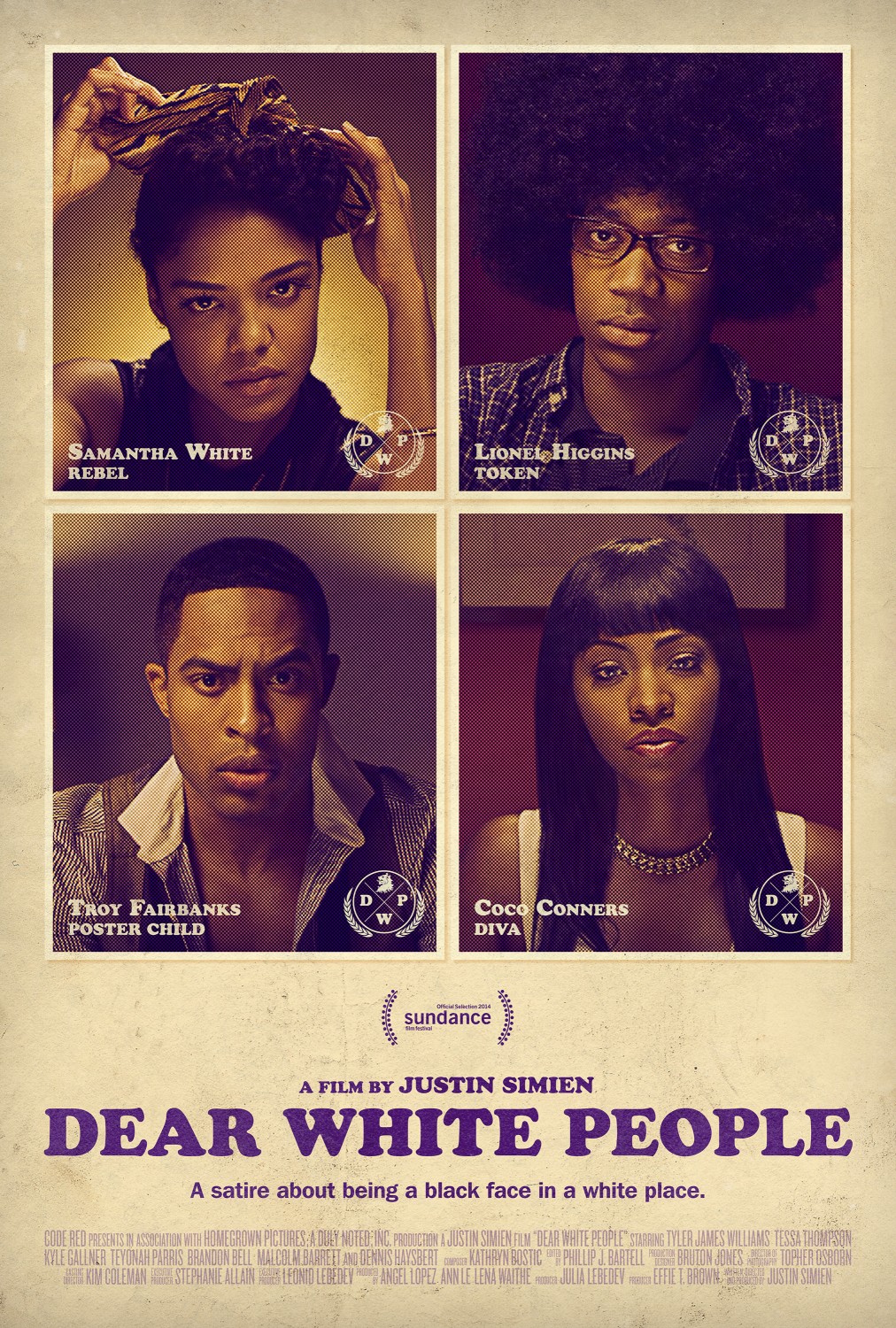
Dear White People (Justin Simien, 2014)

The second of two films I saw at this year’s BFI Flare Festival, Dear White People is an American satirical comedy set on Ivy League Winchester University campus. It centres around several students who attend the predominantly white university, in particular: Sam White (Tessa Thompson), a sharp-tongued mixed-race film production major who runs a popular campus radio show called Dear White People, which challenges the university policies and mind-sets of both the school administration and the students in a humorous but cutting manner; Lionel Higgins (Tyler James Williams), a homosexual black student struggling to fit in and find his voice as an aspiring journalist; Coco Conners (Teyonah Parris), a black student who is secretly trying to land a role on a reality TV show set around campus, whilst simultaneously trying to garner fame through her video blog; Troy Fairbanks (Brandon P Bell), Sam’s ex-boyfriend and current school head of Armstrong/Parker, the all-black house on campus; Kurt (Kyle Gallner), a white student and son of the school’s president, who organises a controversial Hallowe’en party with a blackface theme in response to Sam’s outspoken radio show; and Gabe (Juston Dobies), Sam’s white boyfriend.

Tessa Thompson is a revelation in her performance as Sam White.

Tessa Thompson is a revelation in her performance as Sam White.

I was lucky to see this film. It was the subject of an online petition to raise awareness of the film and increase the pitiful number of screenings it received last year in the UK – just two at the BFI London Film Festival. These Flare screenings were again over-subscribed, which begs the question – why hasn’t it received a wider release? Perhaps it’s the fact it deals with some pretty hard-hitting issues whilst not losing its ability to entertain. Maybe the questions posed were deemed as too sensitive for a large distributor to pick it up. Either way, it’s a massive shame. This is a film that needs to be seen, not just because of its important content but also because it’s a fantastic and hilarious film.

Praise is due for both Tyler James Williams and Tessa Thompson. The former, fresh from his recent role in The Walking Dead as Noah puts in an assured performance as someone who himself isn’t very self-assured for most of the film. However, I’m surprised he is the cover-star of the film as, for me, the central storyline and most interesting character was Sam White. Tess Thompson (recently of Selma) is a revelation in this role, playing the angry student to perfection. It’s a character with some important opinions and without her it would have risked being just a good campus comedy, but without the hard-hitting message. When the cracks in her prickly character reveal her fragility, the results are astounding. As a character, Sam galvanises the same provocative thoughts in the students within the film as it does the viewers of the film, and there aren’t many teen-comedy characters in recent years that I remember asking such important questions of the viewer. Frankly, the performance is a revelation.

IMG_0870

The excellent acting performances reach throughout the large cast.

Elsewhere, I felt the tones and cinematography added a lot to Simien’s well crafted script and impressive performances. Topher Osborn channeled elements of Wes Anderson in the beiges and attention to detail that are clearly evident in these well-composed shots.

If you get a chance to see this film, then I heartily recommend it. As a white heterosexual British man, I inevitably felt discomfort as I sat in the cinema being challenged to think about the questions posed by the film. In many ways that was the ultimate goal and it will be a shame if the wider cinema-going public doesn’t get to see this fantastic story.

Dear White People does not currently have a wide UK release date.

BFI Flare Film Festival

I’ll be heading down to the BFI Flare LGBT Film Festival later this month. I’ve tried to pick a couple of films that look really interesting and no set wide release date in the UK, as follows:

– Tiger Orange
– Dear White People

Both look fantastic and I’m looking forward to soaking up the atmosphere at the hub of British Film on London’s Southbank. See you there!!

The Party’s Over (Guy Hamilton, 1963)

The BFI Flipside series is, according to the back of the Blu-ray box, dedicated to “rescuing weird and wonderful British films from obscurity and presenting them in new high-quality editions.” I picked up a few of them when my local Zavvi finally closed down a couple of years ago (yes, there really did used to be Zavvi shops that you could walk into), meaning a lot of Masters of Cinema and BFI releases were reduced to about £7-8. One that I picked up and put at the bottom of my “to watch” list was The Party’s Over, Guy Hamilton’s 1963 controversial release.

Opening with a drunken Chelsea party, we’re immediately introduced to Oliver Reed’s pack leader Moise (pronounced “Mo-Eece”). He’s a handsome and popular guy, not afraid of being the centre of attention but equally happy to slip into the background. He shows off a bit and everyone looks on in admiration. This is then juxtaposed by a painfully cool opening sequence as Melina (Luoise Sorel) walks towards the camera, brilliantly soundtracked by Annie Ross and John Barry.
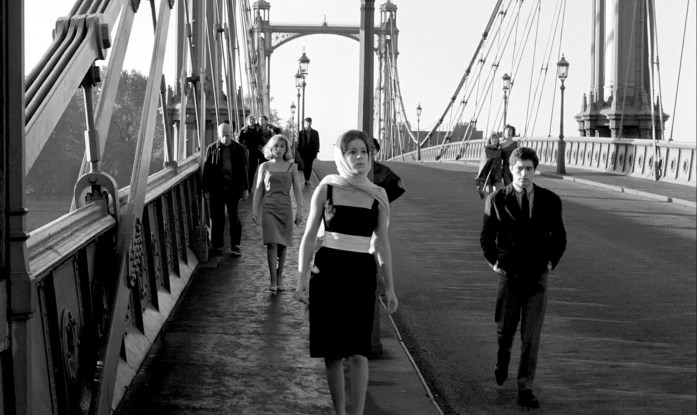
A shot from the cool opening sequence

A shot from the painfully cool opening sequence

It’s obviously a film that isn’t afraid to glamorise its subject matter and candidly display every part of their lives, and I suspect that was one of the reasons it was withheld from release subject to several cuts and changes. This was 1963 after all, and censor John Trevelyan perhaps thought an audience besotted by a young new group called The Beatles were unnerved enough without this kind of film further rotting their brain. In short, the world wasn’t quite ready for the subject matter [1].

Despite a decent range of characters, it is Oliver Reed who steals the show throughout. His is a character that snaps his fingers and gets what he wants immediately, such is the influence he has over his beatnik and largely non-descript gang members. As the plot develops through some shocking developments – including sexual assault and suicide – it is Reed that maintains his position as the driving force of the narrative, much as Moise is the driving force of the gang.

It is a shame that there are several lacklustre performances. The supporting cast look like they’re straight out of acting school and don’t look overly comfortable in front of the camera. Several of the leading cast either overact or lack conviction, which is quite an achievement in itself when you think about it. Carson (Clifford David), Meilna’s fiancé, provides a solid performance and rescues the film from being a poor one-man-show.

BFI Flipside has been responsible for a number of excellent releases, with as much care given to their release as any famous film. Whilst the audience is undoubtedly more niche, it’s great that we are able to watch a film like The Party’s Over without any edits as the production team originally intended [2]. It’s not a film that has changed my life, but it might have had a much greater impact on the landscape of cinema had the censors not got involved some 50 years ago [3].

The Party’s Over is out now on BFI dual-format Blu-Ray and DVD.

[1] This release contains extensive words on both the censoring of the film and the director’s recollection of making and editing the film in line with the increasing pressure from Trevelyan.

[2] According to the booklet, one edit was made at the request of the director, with the removal of the credits over the opening sequence. It is unnoticeable unless, I suspect, you vividly remember to original.

[3] The Wikipedia page suggests the film was made in 1965. It was eventually released in 1965, but I’ve decided to list the film as a 1963 release. This was done because the version presented is as close as we’ve ever got to a version director Guy Hamilton’s pre-censor vision. The film was completed in 1963 and this is the version I have reviewed. For completionists, the 1965 version is also included on the Blu-Ray disc.

Short film review – The Automatic Motorist (W. R. Booth, 1911)

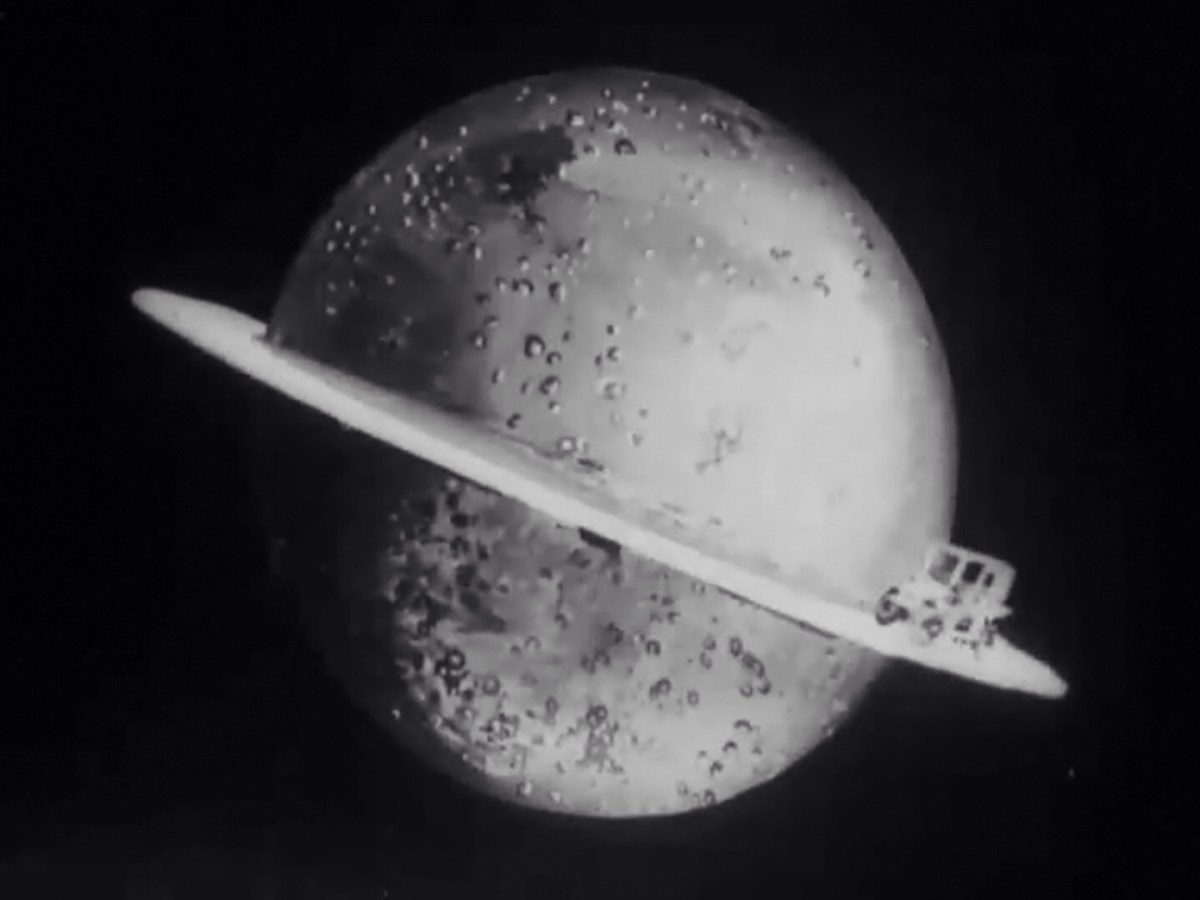
A bride, a motorcar, a robot chauffeur and a policeman – what could possibly go wrong? Fantasy and ‘trick’ film pioneer W.R. Booth uses cut-out animation and models to create a truly out-of-this-world sci-fi adventure. The mad-cap plot sees a newlywed couple transported from a country lane to outer-space (via St Paul’s Cathedral), where the policeman encounters some pretty feisty Saturnians…

http://player.bfi.org.uk/film/watch-automatic-motorist-1911/

Another curiosity from the BFI archives, The Automatic Motorist is a fun and playful short film that is full of science fiction. It’s completely bonkers and has the disjointed feel of a Michel Gondry music video – full of experimental shots that don’t add up to much of a story but that nonetheless provide the viewer with an enjoyable ride. Plus it’s only six minutes long, so you might as well watch it.

Dreams of Toyland (Arthur Melbourne-Cooper, 1908)

A young boy dreams that his toys come to life.

Watch here.

Another example of the fine curiosities available on the brilliant BFI Player. I recently discovered this was pre-loaded onto my TV (a Samsung) so I’ve been watching some pretty obscure silent films in my lounge in all their glory.*

This film is well worth watching as the director attempts a highly elaborate stop-motion sequence that lasts for well over half of the total running time. It must have taken hours to create and should be marvelled at given its age – 106 years old. You can imagine the painstaking attention to detail that has gone into it. There’s almost no chance he had a pre-written storyline for the characters and this free-spirited approach has lent itself to a lot of creativity, which in turn succeeds in reflecting a child’s dreams as inspired by a trip to the toy shop.

A must for fans of quirky silent cinema!

* I’ve also been suffering from insomnia recently but silent films are the perfect indulgence if you’re in bed and don’t want to disturb your wife whilst not wasting your time counting sheep!

Frankenstein Created Woman (Terence Fisher, 1967)

Terence Fisher’s 1967 Hammer Horror film Frankenstein Created Woman was screened as the opening film of the Mayhem Presents The Created Woman weekender at Broadway in Nottingham. It was a perfect way to kick off the festival.

Fisher had spent his career making a name for himself as a director of great Hammer Horror titles, including The Mummy, Dracula and The Hound of the Baskervilles. This film came towards the end of his career (he was 63 at the time), by which point he was clearly a very accomplished and well-established director. Despite this, there is nothing stale about this picture.

IMG_9865.JPG

He relied again on Peter Cushing to take the role of Baron Frankenstein, a tried and tested appointment. Yet it isn’t Cushing that takes centre-stage. Playboy centrefold Susan Denberg is absolutely brilliant as the shy and physically scarred Christina, whose body is the subject of Frankenstein’s latest experiment. Fusing her body with the soul of her deceased lover Hans (Robert Morris), she becomes a schizophrenic femme fatale, with a personal vendetta to murder those responsible for his death. Her role has two sides and both are played perfectly, though she is obviously more at ease with the second more sexually-confident character.

The film has a few loose points. It is responsible for one of the worst court scenes in cinematic history, in which Hans is sentenced to death for a crime with no evidence and no witnesses, even though the judge knows he is innocent, essentially because his father was a murderer. It’s in there for necessity and Fisher tries to see it through as quickly as possible. Elsewhere, three men essentially allow themselves to be killed, in reality because if they’d tried to struggle they would have easily overcome their attacker. Apparently it’s much easier to just lie still in shock and take the inevitable.

It’s probably not the best Frankenstein-based story ever told, but with a great performance from Denberg it is one that is worthy of the franchise and I recommend checking it out if you’re a big fan of the series, or indeed of Hammer Horror in general.

Frankenstein Created Woman is available on Blu-ray now.

Mayhem Presents The Created Woman (Broadway Cinema, Nottingham, 2014)

IMG_9862.JPG

This weekend I’ll be heading over to Mayhem Presents The Created Woman at Broadway Cinema, Nottingham. The festival is “a three day journey into Sci-Fi with film screenings, events and discussions”. So far I’ve only got tickets to the Friday night screenings of Terence Fisher’s 1967 film Frankenstein Created Woman and John Hughes’s 1985 cult classic Weird Science. There’s also a free screening of Dr Jekyll and Sister Hyde later on in the cafébar, which will be an interesting experience.

The events are on all weekend, including screenings of two different versions of Fritz Lang’s Metropolis on Saturday. I was lucky enough to see the original robot from Metropolis last month at le Musée de la Cinémathèque in Paris and it has reignited my interest in this picture, so I’ll be going to at least one of these screenings. The discussions and introductions look set to offer a lot of insight into the films.

At £5 a ticket, you can hardly go wrong!

Mayhem Presents The Created Woman runs at Broadway Cinema in Nottingham from 5th-7th December 2014.