Exodus: Gods and Kings (Ridley Scott, 2014)

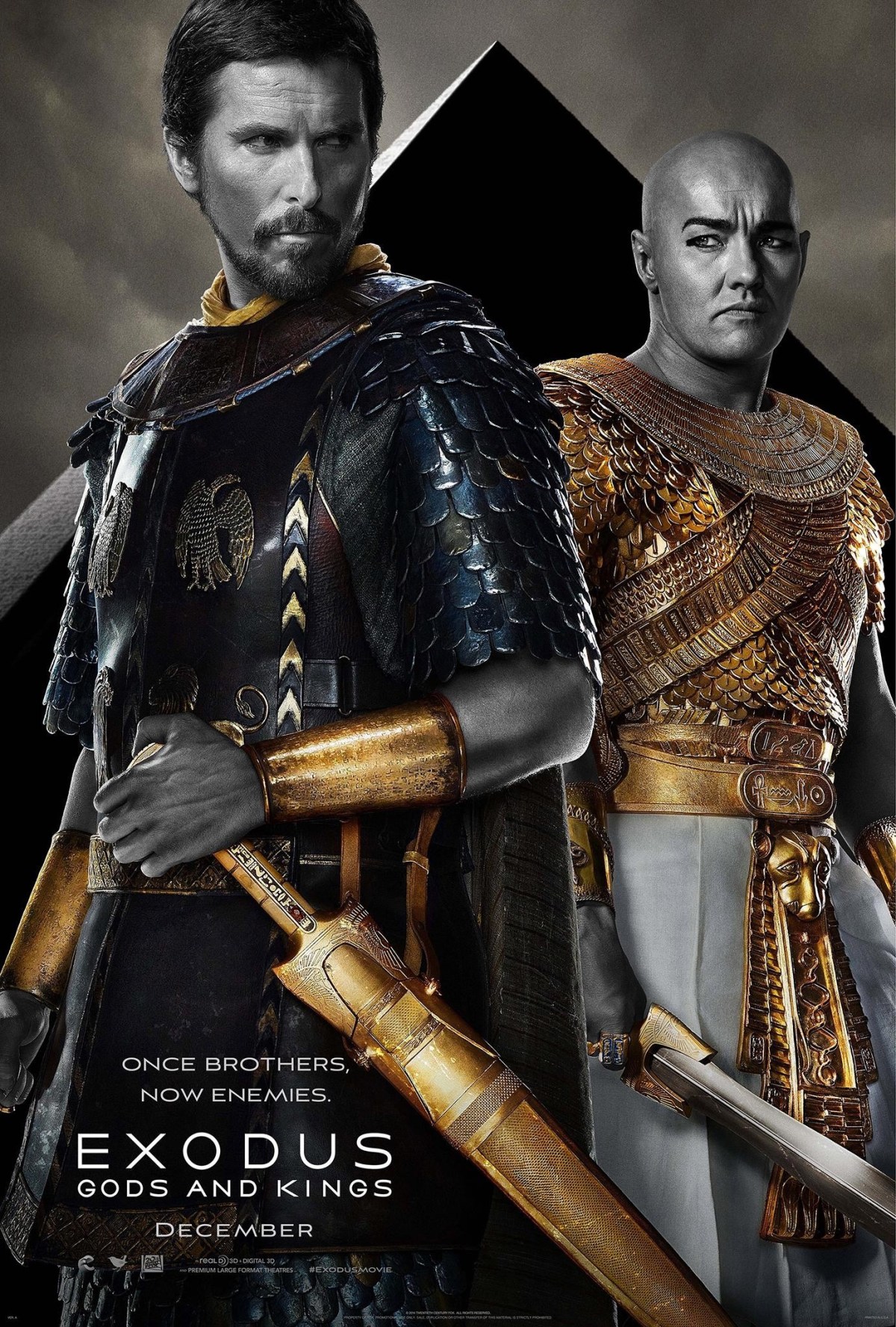
Ridley Scott as director. An all-star cast including Sir Ben Kingsley, Sigourney Weaver and Christian Bale. A modern retelling of The Book of Exodus. An estimated $140m budget. Epic battles. The scale and subject matter of Exodus: Gods and Kings means it’s destined for success. But is it any good?

Before I start, it’s important to note that my experience of the film has been informed by the fact I’m an atheist. Not only that, to my shame I actually went into the film without a clear memory of the story of Moses. I’m probably in the minority on that. I mean, I remember the stuff with the frogs and the locusts and the parting of the sea and the burning tree. It’s all in there, for sure. I just couldn’t remember why any of those things happened or what order any of it came in. I was approaching it with an air of naivety that was perhaps self-inflicted, both in my youth and subsequent life choices, but also in a lack of effort to remind myself of the story before I went in to the première.

To cut a long story short, I can’t tell you whether or not this is a faithful representation of the Book of Exodus. What I can tell you is that it’s a pretty spectacular experience. The story itself is a gripping tale of two brothers battling for power, one of whom is struggling to understand his own place in a world ravaged by slavery, elitism, poverty and racism, a world where he has grown up believing he is something he is not.

IMG_9854.JPG

It is the kind of tale that has been brought to the big screen many times before, though rarely on such a grand scale. Scott probably had his work cut out to keep all parties happy. He has stated that he would have had difficulty getting financial backing for the film had he not cast a white A-list actor in the lead role, though this has caused dissatisfaction amongst those that want something more accurate to the story (or is that disgust…?). Clearly, deviating from the Book of Exodus would have been a terrible move too, so most of the time he plays it safe. The story doesn’t need to be embellished to keep it interesting, so there’s no cause for panic there.

One of the things that impressed me most – and it’s something that has caused a lot of debate after the previews – was the scientific explanations of the various aspects of the story. In particular, the parting of the Red Sea is apportioned to a tsunami. Actually this is a pretty robust explanation and I can see how this would work, though I do wonder how the 400000 Israelites about 10ft above the wave on a small rock survived en masse whilst the Egyptians were wiped out as they were at sea level (sorry, spoiler alert). I also question how Ramses managed to be the lone-survivor when he was the worst positioned of everyone. That said, the fact an explanation is offered, along with the hints at Moses having hallucinations rather than seeing a real-life messenger, anchors the story in the real world and makes it far more believable. Whether a devout Christian would see it the same way is another question.

On a side note, anyone attempting to boycott a film before it has been released will probably never enjoy anything in their life. So much media attention has focused on the casting of the leads, with accusations of “white-washing” being the main issue. I was on review lockdown ahead of watching the film so I wasn’t aware of it ahead of the screening, but it wasn’t something that jumped out at me whilst I was watching. Maybe I need to see it again to see if I missed it, but it seems disrespectful to suggest that Scott would choose such a late point in his career to intentionally start showing racial bias in his films. Also, if the popular imagery of Christianity is going to be criticised then a better starting point might be the generally accepted depiction of Jesus as a tall, white man with long brown hair, which I think humanity will eventually agree probably isn’t what he would have looked like at all.

Despite some pre-film trepidation, I was pleasantly surprised that I could enjoy a Biblical film so much. The way Scott has constructed this retelling makes it accessible to all cinema goers. Hopefully it isn’t at the expense of the Christian market.

Exodus: Gods and Kings is released in the UK on 26th December 2014.

Mayhem Presents The Created Woman (Broadway Cinema, Nottingham, 2014)

IMG_9862.JPG

This weekend I’ll be heading over to Mayhem Presents The Created Woman at Broadway Cinema, Nottingham. The festival is “a three day journey into Sci-Fi with film screenings, events and discussions”. So far I’ve only got tickets to the Friday night screenings of Terence Fisher’s 1967 film Frankenstein Created Woman and John Hughes’s 1985 cult classic Weird Science. There’s also a free screening of Dr Jekyll and Sister Hyde later on in the cafébar, which will be an interesting experience.

The events are on all weekend, including screenings of two different versions of Fritz Lang’s Metropolis on Saturday. I was lucky enough to see the original robot from Metropolis last month at le Musée de la Cinémathèque in Paris and it has reignited my interest in this picture, so I’ll be going to at least one of these screenings. The discussions and introductions look set to offer a lot of insight into the films.

At £5 a ticket, you can hardly go wrong!

Mayhem Presents The Created Woman runs at Broadway Cinema in Nottingham from 5th-7th December 2014.

Film review – Elvis Costello: Mystery Dance (Mark Kidel, 2013)

I’ll throw it out there – I’m a huge, huge Elvis Costello fan. I can’t pinpoint an incident that served as a catalyst to get into him. As a 30-year-old Brit, the only major hit of his I remember is the Charles Aznavour cover “She” from the Notting Hill soundtrack, which, I think it’s fair to say, probably isn’t a great representation of his fantastic and varied body of work. Yet somehow the songs seeped into my psyche and I now rate him as one of my favourite artists.

This documentary serves as a biography of sorts, albeit potted around some key periods of Costello’s life. Aspects covered include his upbringing, his hometown, the politics of his lyrics and a small selection of his songs. Some huge guests are interviewed, including Paul McCartney, Mark Ellen and Nick Lowe.

Each element that is picked out is tended to perfectly. In particular, the collaborations with Paul McCartney really ignited my enthusiasm to seek out more information. Kidel has managed to get all this contributors to talk really enthusiastically about their part in the Elvis Costello journey and I as a viewer found myself swept along with it.

IMG_9541.JPG

Unfortunately, the documentary length doesn’t allow too much delving into each topic, whilst the shear bredth of his career means that a lot of his life is skipped over. It’s an impossible balance to achieve because his life and background are both so interesting, and perhaps his story is instead worthy of a series. Or perhaps that’s just the inner fan getting the better of me and I should just make do with what I’ve got.

The one lasting impression you get after watching this film is that Elvis Costello is overly enthusiastic about everything he has done. Be it having a string of top 10 albums, releasing an album of jazz soul music with Allen Toussaint, collaborating with one of the greatest songwriters of all time or creating an ill-received classical string album with The Brodsky Quartet, he has continually done so enthusiastically and been hugely successful in a variety of ways with every genre he has tried his hand at.

If you’re willing to be enthused by one of Britain’s greatest ever songwriters then check this out. Otherwise, the limited storytelling might have you searching for a biography that has a bit more detail.

Elvis Costello: Mystery Dance is available on the BBC iPlayer in the UK until 20th November 2014.


What We Do In The Shadows (Taika Waititi and Jermaine Clement, 2014)

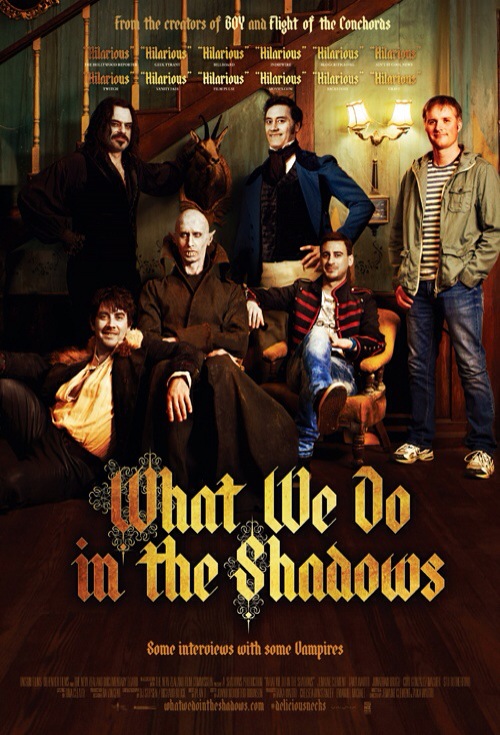
Taika Waititi and Jemaine Clement’s mockumetary What We Do In The Shadows follows a group of Wellington-based vampires as they try to come to terms with living in the 21st Century. It’s a nice new take on the vampire genre given the recent attempts by the Twilight Saga to ruin both vampires and werewolves for a whole generation, but it didn’t really get going until the final third.

A lot of the dynamics of the humour come from the fact that the three main characters – Viago (Waititi), Vladislav (Clement), and Deacon (Jonathan Brugh) – have their own separate issues in adapting to and accepting a modern domestic life. Viago is a bit of a stickler for cleanliness, moaning about the dishes not being done and putting tissues down to protect the carpets before he bites into victims’ necks. It works well for most of the film and they’re able to create a lot of humour from the situations.

IMG_9532.JPG

One thing it borrows on heavily from Waititi and Clement’s most successful collaboration – Flight of the Conchords – is the ability to inflate the mundane everyday goings-on of the main characters to create massive issues. They’ve clearly thought the subject matter through and found some humorous takes on what could happen if vampires had to, for example, go clubbing. First of all, they can’t check themselves out in the mirror as they have no reflection, so they have to draw pictures of each other to illustrate what they each look like. Secondly, the only clothes they have are salvaged from their victims, so outfit choices are limited. It is funny, but not side-splittingly hilarious.

Towards the end of the film, their relationship to the local werewolves provide some huge laughs and the situation at the annual social dinner with other vampires (plus zombies) is also well thought out and delivered. It was the pay-off for what at times felt a little contrived throughout the saggy middle of the film.

IMG_9533.JPG

Mockumentaries are a strange thing. Some people love them, some people hate them. They’re always going to get compared to the genre-defining Spinal Tap, which is probably never going to bettered. I saw past that, but couldn’t help thinking that it was both a great idea and a missed opportunity.

This isn’t a film that necessitates a trip to the cinema, but would be a worthy view once it becomes available on the various home entertainment channels early next year, especially if you’re a fan of their previous work.

What We Do In The Shadows is released in the UK on 21st November 2014 and in the USA on 13th February 2015.

Nightcrawler (Dan Gilroy, 2014)

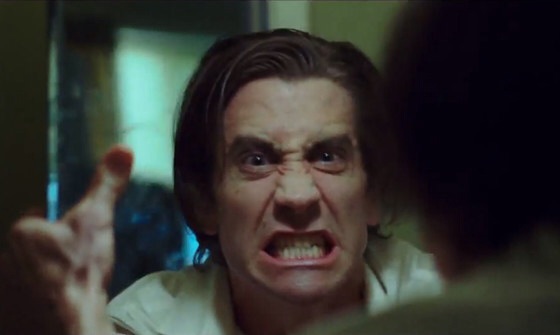
“The closer you look, the darker it gets” declares the poster for Dan Gilroy’s directorial debut Nightcrawler. And so it was. As I sat in the cinema wondering how far Jake Gyllenhaal’s character would take it, the answer tended to be “Oh, that far.”

The film is a bildungsroman tale of Lou Bloom (Gyllenhaal), a young man driven by money and success, and willing to go to any lengths to achieve it. He gets hooked on the idea of freelance crime journalism, specifically filming violent crimes and accidents with a personal camcorder, with the plan to sell them on to local news station KWLA manager Nina (Rene Russo). However, as his business grows and the stakes are raised, he goes to great lengths to ensure he rises to the top of the pile and stays there, no matter what the consequences are.

IMG_9506.JPG

Gyllenhaal is a wonder to watch in a film like this. He has chosen his films wisely over the years and has a body of work he can already be very proud of, including Donnie Darko, Jarhead, Brokeback Mountain, Zodiac and Source Code. This is definitely amongst his best overall, and I’d go as far as say that Lou is his most defined character yet. He plays sinister very well and clearly knows how to make his audiences tick. At times it’s a real joy to watch, at times it made me want to cover my eyes; both responses indicative that I was hooked.

The plot works as a game of oneupmanship unto itself, and this operates across the board. The characters become fuller and more dislikable as the time progresses, the gore gets gorier, the action gets more explosive and by the final act the whole movie had me whipped up into a frenzy of disbelief. Well played Gilroy.

IMG_9507.JPG

The supporting cast includes a top-form Bill Paxton (whoopee-fuckin’-do) as a rival video journalist, and a further emerging Riz Ahmed, who Brits may remember from the excellent Four Lions. Ahmed is one of my favourite British actors and it was a nice surprise to see him with such a big role in an American blockbuster.

As the finale approached, I found myself getting increasingly engrossed by Lou’s actions. His morals become so loose by the end that there is nothing remaining. His actions are fuelled by a desire to earn money, which is only possible because the viewers of KWLA are hungry to see the gruesome truth of their city. It’s an intelligent method of storytelling that we are enticed in the same manner into Lou’s own story, and by the end I found myself questioning my own morals, sitting on the edge of my seat, watching in excited disbelief.

This is an excellent film and it’s well worth seeking out whilst it’s still in cinemas. Check it out!

Nightcrawler is in cinemas worldwide now.

The Birth of a Nation (D. W. Griffith, 1915)

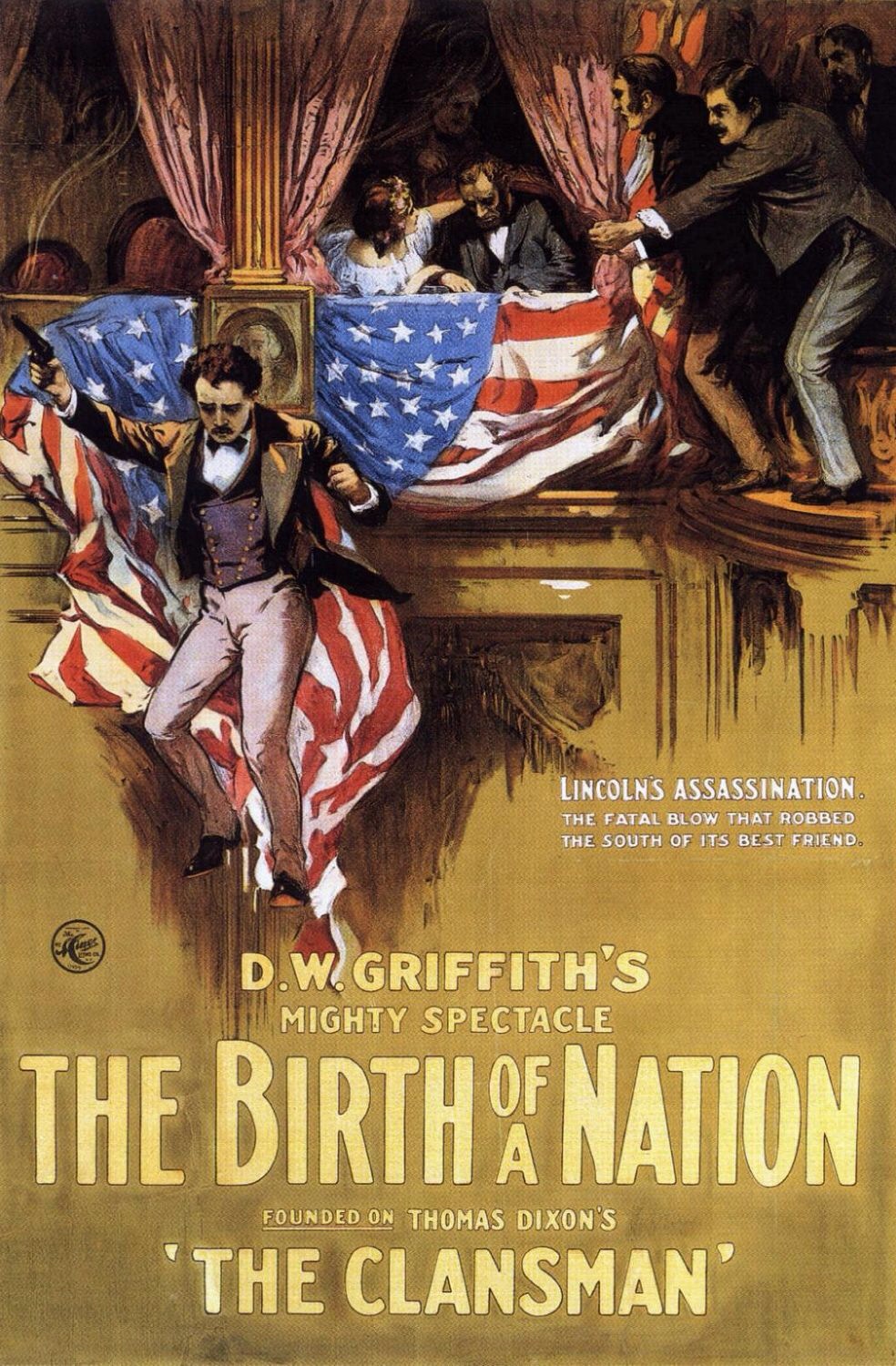
Why would I watch a film like The Birth of a Nation? It clocks in at 169 minutes long, and as a silent film that is now 100 years old I’d expect the narrative structure and storytelling to be a far cry from what I’m used to today. The storylines cover a period of history that I don’t associate with, and it is the history of a country that I have experienced first-hand only through Orlando theme parks, which despite their best intentions probably aren’t a fair representation of the rest of the USA.

There is a certain detachment from it that means it lacks the stigma I’m sure it holds for Americans. Perhaps it’s the challenge of being able to say I’ve watched it, or to see for myself what all the critics have discussed many times over. Let’s not forget that it holds a 100% fresh rating on Rotten Tomatoes, was the highest grossing film of all time until Gone With The Wind some 25 years later, and it is regarded as one of the most culturally significant films of all time. These facts alone should make it essential viewing for a fan of the history of cinema.

The film starts small and builds to encompass some of the biggest political changes the world has ever seen. Initially, we focus on two families: the Stonemans and the Camerons. The Stonemans are a pro-Union family from Northern US, and they set off to visit the Camerons, a South Carolina-based pro-Confederacy family. Romance and friendship fly between some of the younger members, but this is curtailed when the young men are forced to join their respective armies for the Civil War. Their stories and relationships are intertwined throughout the film, all with the backdrop of some great war battle scenes, some (at the time) shocking torture scenes, the assassination of Abraham Lincoln, the founding of the Ku Klux Klan and the entry into Reconstruction-era USA. It’s complex, it’s ambitious and on a purely story-driven level it really works. Films of this grand scale had never been attempted before and it’s not difficult to imagine the wow factor experienced by the audiences when they originally saw it.

IMG_9405.JPG

That said, it’s extremely difficult to cover everything necessary to put this film into context. I’m sure whole university courses have been taught on the subject. It is one that traverses cinema, film history and political history and it would take a braver man than I to tackle everything in a short review. The elements of the film that are now deemed to be racist are interesting only from a historical point of view. Indeed, it is alarming that they were ever considered to be not racist. This includes, but isn’t limited to: the romanticisation of the founding of the KKK; African Americans getting elected into parliament only to be shown drinking during parliamentary sessions once in power; the portrayal of white men as the victims for large periods of the second half of the film; the way that the mere suggestion of interracial marriage is shown as abhorrent to white people; and most offensively, the Ku Klux Klan being shown as simply upholding the good values of the land and being the savours of an honest and righteous USA.

One African American is portrayed as a sexual deviant in one scene depicting the attempted rape of a central white character, who opts for suicide in one of the most suspenseful and heartbreaking scenes of the film. It’s segments such as this that really underline both the achievements and the failings of the film, with some pioneering techniques used to create a real edge-of-the-seat experience juxtaposed by subject matter that should never have seen the light of day.

It’s an eye-opener for the political status of the USA in 1915 that this is the case. The fact is that there are quite blatantly racist depictions of African Americans, particularly in the second half, and on every level these are jarring for the modern viewer. Couple this with the length of the film and the fact it’s a silent film and you have something that is quite inaccessible for the casual viewer.

IMG_9406.JPG

Certainly Griffith, directing what would come to be his defining picture, felt he had to add a pre-title screen statement clarifying and justifying the existence of the film (this was added to a re-release of the film after its exceptionally successful initial run). Later, riddled with guilt about the success of the film and – more importantly – who it was finding success with, he released Intolerance in 1916, which went a long way to protect his reputation and show other sides of the argument by heavily criticising racism and prejudice. Later he released the first cinematic portrayal of interracial romance (Broken Blossom, 1918). Also included on this disc (the Masters of Cinema PAL release) is a seven minute interview that introduced the film from 1930 onwards, where he attempted to justify the release further. It must have been a tough situation to be in for Griffith, being lauded for a film that you no longer wished to be associated with.

I’m glad I watched it, and I would highly recommend it to anyone interested in the history of film. For a casual viewer who wants to be entertained, I see nothing for you here.

The Birth of a Nation is out now on Masters of Cinema Blu-ray and DVD dual-format release, whilst Griffith’s later film Intolerance will be released on Blu-ray, also via Masters of Cinema, on 8th December 2014.
The Toxic Avenger (Lloyd Kaufman and Michael Herz, 1984)

What a terrible disappointment. The Toxic Avenger was a film I watched when I was probably far too young to see such graphic violence. Sometimes, when you revisit films like this, you’re pleasantly surprised. Unfortunately, despite my anticipation, this wasn’t the case with The Toxic Avenger.

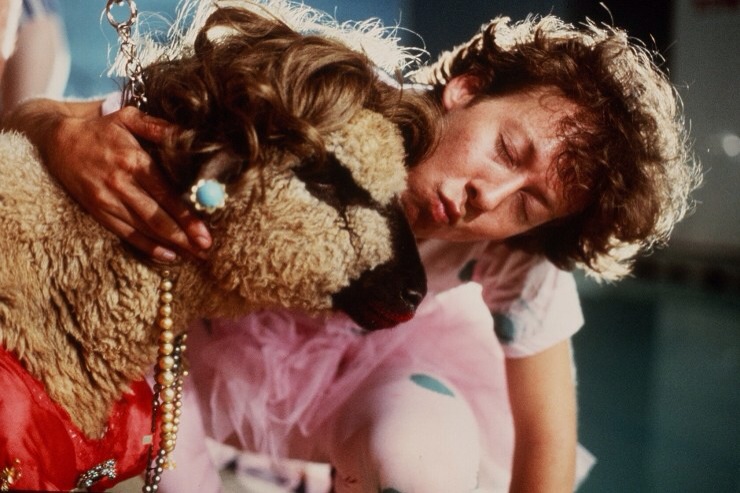
Set in Tromaville, the film stars Mark Torgl as Melvin Ferd, the janitor at a local fitness centre. Melvin is portrayed as a complete moron, with his low self-esteem trumped only by his lower intelligence. He is openly despised by everyone in the whole town for this, but in particular by two steroid-addicted gym-goers Bozo and Slug, who it is established early on are also murderers, of course. There’s a bit of a bit of light-hearted bullying where Melvin accidentally kisses a sheep whilst wearing a tutu, and he runs out of a window on the first floor, falling head-first into an inconveniently-positioned toxic waste lorry. From then on the story becomes really ridiculous. To cut a long story short, Melvin becomes a mutated unflinching powerhouse of a monster, and goes on a vigilante rampage across the town, killing anyone he deems to be immoral. They’re quite easy to spot, because they’re usually laughing sinisterly, holding a gun or a knife, doing Class A drugs, deliberately driving into children on bikes, or are doing all of these things and are called Bozo or Slug.

By the time he started dating Sara, who must be one of the worst-acted and most offensively-portrayed blind people in the history of cinema, I was contemplating turning it off. I just don’t know what the message was. Blind people can have a relationship too, as long as the person they are seeing has been hideously disfigured in a contrived toxic waste accident? People with bizarre deformities and burns scars could get lucky as long as the person they love is blind and doesn’t know what they look like? Either way, it’s a poor message.

IMG_9486.JPG

The story is unfathomably far-fetched, which I guess is the point, but it’s so poorly acted that it never looks anything more than a homemade film where someone with a camera has assembled a bunch of friends to act out his flimsy story. Everything is hammed up beyond comprehension, and the characters are so black and white you wonder whether directors Kaufman and Herz think everyone watching needs every detail to be spelled out as obviously as possible. Perhaps its enduring success as a B-Movie horror classic is down to the fact it is so mind-numbing, and that’s what the people who keep watching it are looking for.

The one saving grace for it is the special effects, which are clearly a cut above everything else on offer here. The transformation scene was pretty gruesome and realistic, and the scene where Bozo and Slug drive a poor child off his bike to his horrific death was startling and effective. It’s a shame that this is juxtaposed with such dreadful acting and some ridiculously chosen music, which is either camp 80s pop rock, or classical music. Nothing in between.

IMG_9485.JPG

It’s also interesting comparing the then-horrific violence to what is regularly on television today. In the preceding years, things like crushed skulls, burst eyeballs and dismembered bodies has gone from something that would potentially see a film banned to standard fair for the likes of The Walking Dead and Game of Thrones. Clearly at the time a film like The Toxic Avenger would sell itself on the depicted violence, whereas now it is becoming a quirk of cinematic history as we become desensitised to what we deem shocking.

One good reason to buy is the plethora of bonus features on offer on this 88 Films release, including trailers, interviews, worthwhile commentary from the director, two lengthy introductions, and a whole different Japanese cut of the film. If you are a huge fan of the film then these would make it a worthy repurchase. There’s also the intro credits for the Toxic Crusader cartoon series, which I vividly remember from my childhood. Like the film, though, I ended up underwhelmed by my memory not living up to the reality.

I’m sure there’s something for someone in this, but I’m not that someone. I applaud 88 Films for releasing a home-video transfer worthy of the fans, but I can’t endorse the film because it’s just so bad. I really can’t believe that this film holds a rating more than 10% higher than, say, Home Alone on Rotten Tomatoes (65% to 54%). This is proof enough that you can’t account for taste. Or lack of.

The Toxic Avenger is available now on 88 Films Blu-ray.

Films I’m Excited About – Autumn/Winter 2014

There are quite a few films in dying to see at the moment. Here are a handful of them: Big Hero 6, Bayonetta: Bloody Fate, Interstellar, The Hobbit: The Battle of the Five Enemies and Shoah.

Big Hero 6 (Don Hall and Chris Williams, 2014)
Release date: 7th November 2014
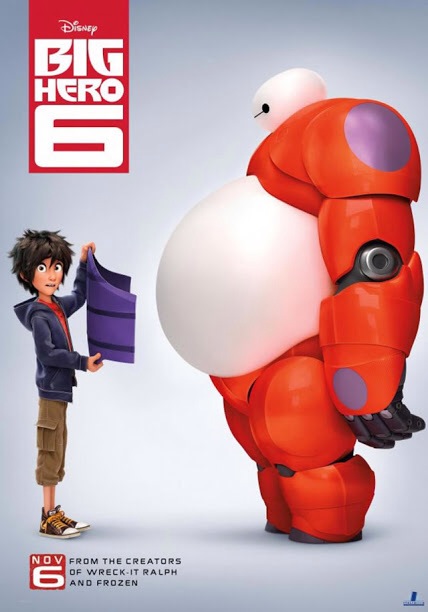
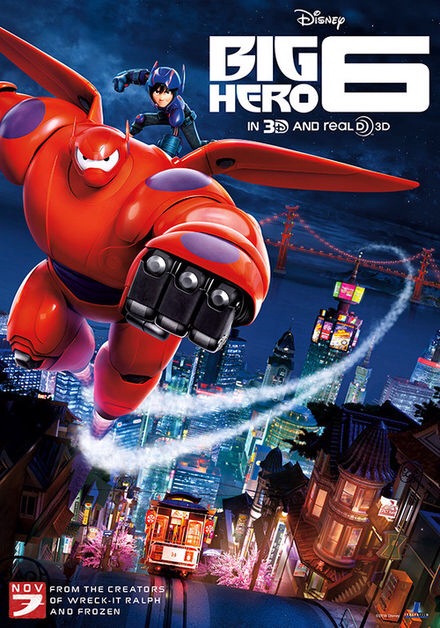
This came out in Japan earlier this week. It’s an interesting prospect. Disney have capitalised on their purchase of Marvel Studios and raided their vaults for untapped stories and potential franchises. The first one, Big Hero 6, concerns a child genius Hiro, his self-designed personal robot Baymax, their team of crime fighters and a sinister plot they fight to get to the bottom of. So not really classic Disney. This will enter as 54th on the list of Walt Disney Animated Classics, and I suppose Disney are hoping it will do well both at the cinema and in merchandising. For me, I’m really excited about it. I am, however, cautious. There is a huge risk that it pitches itself right in the middle of everyone who could like it, alienating all of them in the progress. It certainly won’t be as successful as Tangled or Frozen, and films traditionally aimed at boys (gender stereotyping alert but you know what I mean) tend to be less successful – even excellent films like Meet The Robinsons often get overlooked and then forgotten. However, with solid reviews and a hilarious trailer it could hit the ground running next month.

IMG_9356.JPG

Bayonetta: Bloody Fate / ベヨネッタ ブラッディフェイト (Fuminori Kizaki, 2013)
Release date: 24th November 2014
Okay so it has been out for over a year in the Asian markets, but Bloody Fate will finally see an English-language release next month courtesy of Funimation. It has received mixed reviews so far, but the trailer shows off just how over the top it is and it promises to be of a similar tone to the games. Unfortunately we’ll have to settle for a Blu-ray release as I don’t know any cinemas that will show it.

IMG_9357.PNG

Interstellar (Christopher Nolan, 2014)
Release date: 7th November 2014
Because… Have you seen the trailer?! Christopher Nolan is one of the greatest filmmakers of out generation and keeps turning out films in new genres that challenge and excite audiences the world over. Having been linked for a long time with the upcoming Star Wars trilogy, it’s almost intentional that he has made a film set in outer space, like he’s pointing out the downside of getting involved with an already established franchise whilst making a mind-blowing one-off that is sure to be a huge success. This is one that has to be seen at an IMAX, apparently. To be fair, I wholeheartedly believe this is the case with Gravity, so I can fully see why people are saying the same about this one.

IMG_9358.JPG

The Hobbit: The Battle of the Five Enemies
Release date: 12th December 2014
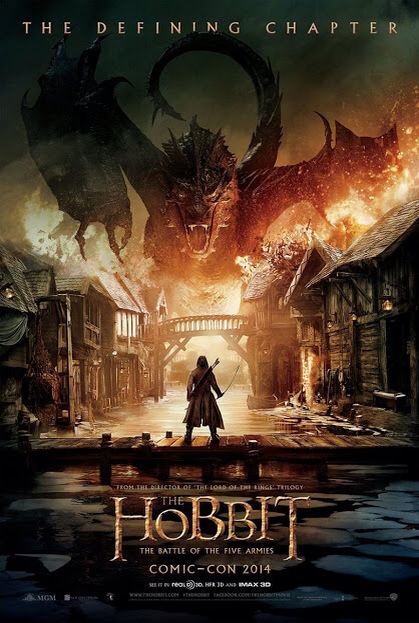
I think by now we’re all in agreement that this trilogy should have been a maximum of two films. There has been a thorough exploration of everything in the book, but perhaps this came at the expense of a faster pace and a set of films that grips viewers from start to finish. That said, they have been a visual spectacle and I’ve enjoyed seeing a great collection of fine British actors uniting on the big screen to tell such a fantastical story. I’ll be there on opening weekend making sure I don’t miss out on the fun.

IMG_9360.JPG

Shoah (Claude Lanzmann, 1985)
Release date: January 2015
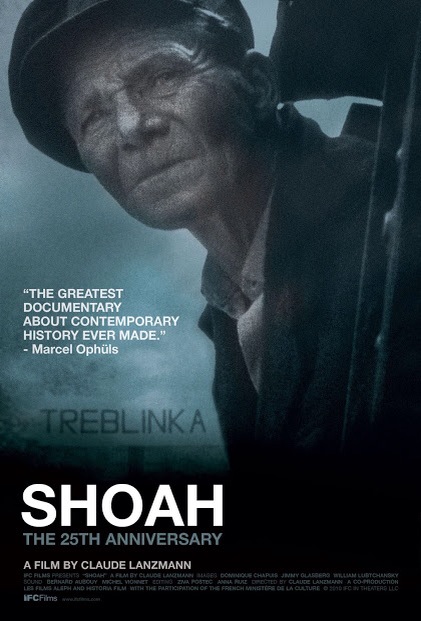
Released in the middle of the 1980s and clocking at a huge nine hours and twenty-three minutes long, Shoah is not a documentary to be entered into lightly. It has a controversial reputation but on a critical level the film has always been highly rated. Now seeing an HD release courtesy of the Masters of Cinema, now is your chance to see this masterpiece in the comfort of your own home – crucially with ultimate control over when you take a break from the action.

IMG_9361.JPG

Gate of Hell / 地獄門 (Teinosuke Kinugasa, 1953)

Teinosuke Kinugasa’s film Gate of Hell was a global smash upon its original release, winning the Palme d’Or at the Cannes Film Festival in 1954, plus a couple of Academy Awards. Now re-released sixty years on by Masters of Cinema and Criterion, cinemaphiles are able to enjoy the film all over again, allowing a whole new generation to appreciate a masterful piece of cinema.

Set in 1159 Japan, the plot centres around Morito Endo (played by Kazuo Hasegawa), who is involved with evacuating Sanjō Palace in Kyoto during a revolt. A woman, Lady Kesa (Machiko Kyō) volunteers as decoy for the shogun’s sister, and he is amongst those asked to transport her out of the palace and lure the attackers away from the real princess. The plan is successful, and as a reward for his heroism he is offered a gift of his choosing. Unfortunately, he requests Kesa’s hand in marriage, only to find out that she is already wed. For a proud samurai, this is a disastrous embarrassment, and the film from then on deals with the emotional effect this has on Morito, Kesa and Kesa’s husband Wataru Watanabe (played by Isao Yamagata).

IMG_9354-0.JPG

The film looks and sounds brilliant from the start, with the recently developed Eastmancolor used to bring 12th Century Japan to life. It is an alternative view of the shogun era of Japan, which so often at the time had been detailed in popular films by the likes of Akira Kurosawa and Yasujirō Ozu, but in black and white. I can only imagine what it must have been like to see this film back in 1954 and be blown away by the loud visuals and intricate costumes.

That said, a film wouldn’t endure for sixty years without a fantastic story and excellent acting, and this film has those in abundance. It’s paced perfectly and at 90 minutes there isn’t much in the way of filler. The actors are on top form too, harking back to the recently-diminished silent film era with long periods of silence counteracted with extreme close ups as emotions engulf their faces. It is a clever technique and one that would have helped set it apart when it reached Western audiences.

IMG_9353-0.JPG

Sourced from the 1954 New York Times review of Gate Of Hell, the comments from Jun Tsuchiya, Consul General of Japan, add context to the success of the film and the impact it had on the wider reputation of Japan globally. Speaking at the premiere, he said “The successful entree of Japanese films in the world market, may well have not only cultural, but also, I venture to suggest, economic consequences for both our countries. To me, it is entirely conceivable that the export of superior films will greatly help my country in its present unremitting struggle to become self-sufficient, to rely on trade, not aid.”

It is interesting to think of those comments in terms of the global view of Japan today. Buoyed by the hyper-acceleration of popularity of new technology and most global brands from Japan being technology-based (Sony and Nintendo spring to mind), it is ironic that they pulled themselves out of financial struggles to launch themselves forwards by looking so far into their past, especially when in this case the film’s initial popularity seems to be in part down to the use of cutting-edge film colouring technology.

Gate of Hell is out now on Masters of Cinema and Criterion Blu-ray and DVD.

Gone Girl (David Fincher, 2014)

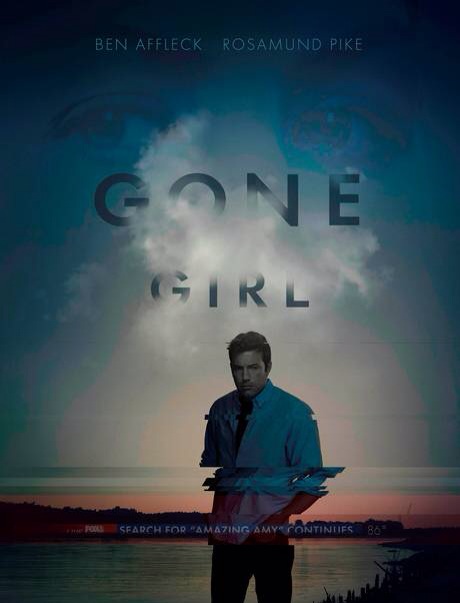
Based on the novel of the same name by Gillian Flynn, Gone Girl deals with some pretty hefty topics: dishonesty, the media, the recession. It’s a powerhouse of a film and one that will surely be busy come the awards season next year.

The film opens with a title sequence of quickly cut still-camera shots of various (at the time) inconsequential locations, soundtracked by an uneasy score by Fincher favourites Trent Reznor and Atticus Ross. The manner in which this is portrayed, as if someone is recounting evidence from memory, is designed to throw the viewer. The cast and main crew are also listed, but they aren’t on screen for long before fading away. It put me on edge and was a very original and effective way to set the tone before any of the plot unfolded. This discomforting tone was continued throughout, usually exacerbated by the jarring score.

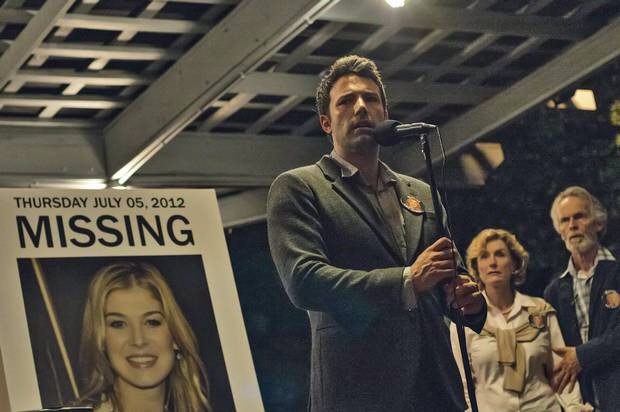
The plot centres around Affleck, very effective in the role of Nick Dunne, a man accused of murdering his wife Amy (played by Rosamund Pike). He vehemently denies the accusations, but slowly realises that proving his innocence is not going to be a straightforward task. The journey is one that had me gripped from start to finish, and on several occasions my wife and I looked at each other in shock at the new twists we were being thrown – the sign of a wonderful thriller.

IMG_9339.JPG

Affleck’s career about-turn is quite astonishing. After starting off promisingly in the late 1990s, by 2005 his reputation within the industry had withered and it was even worse amongst the general public, his name being dragged through the tabloids time-after-time and dwarfing any positive publicity that might have been doing the rounds for his cinematic outputs (though when you release Daredevil and Gigli in consecutive years those kinds of reviews are harder to find). When he finally came back with critically-acclaimed films like Hollywoodland and Gone Baby Gone, the cinema-goers didn’t jump on the bandwagon immediately, probably because by this point he was seen as tabloid fodder rather than a respectable artist. It is perhaps this experience with the wider media that gave Affleck a reality on which to base such a memorable performance, with Dunne struggling against the media to maintain his reputation amid accusations that seem to take on a life of their own, certainly beyond the police investigation (and probably influencing their opinions too). It’s a perfectly pitched performance from a highly skilled actor.

The film is not without its limitations. The ending seemed a little bit confused, as though everyone involved couldn’t decide where or how to end it and tagging on a couple of extra scenes that maybe could have been cut. There is a lack of resolution that leaves us wanting a little bit more, which isn’t always a bad thing but in this case frustrating. It was perhaps intentional, though I can’t immediately offer a reason why it was intentional. It’s hard to discuss without ruining the ending, so I’ll leave it there.

Rosamund Pike is an absolute revelation as Amazing Amy. I’d be surprised if she’s overlooked in Oscar season for a performance as good as this. Equally, Neil Patrick Harris plays a convincing and effective role as Desi Collings, the disturbed and disturbing ex with twisted motives to get involved with the situation.

This is the first feature film adaptation of Flynn’s work – the second will be released next month in the form of the Charlize Theron-starring Dark Places – and you can clearly see the influence of her background working in the media. The subtext of the plot is really a lambasting of the modern media and their influence on people’s lives, sacrificing one person’s privacy for the sake of a good story for the wider population to enjoy.

Ben Affleck is going from strength to strength and Gillian Flynn has given us a completely gripping story and one that offers plenty of promise for her future writing output. With the mighty David Fincher at the helm and adding another top quality title to his catalogue of first class films, seeing it is a no brainer.

Gone Girl is out in cinemas worldwide now.