Time for another Masters of Cinema review, this time for Jia Zhangke’s 2004 Chinese film 世界 / The World. Originally screened in competition at the Venice Film Festival, it soon found its way onto the Eureka label on DVD and subsequently again on a Blu-ray/DVD dual-format release.
The story covers a short period of time of two workers at Beijing World Park: Tao (Zhao Tao) and Taisheng (Chen Taisheng) Tao’s boyfriend and a security guard at the park, whose relationship becomes increasingly strained throughout the period of the gloomy film. The theme park (a real park in Beijing) recreates famous cities and landmarks from around the world but in reduced scales, mainly for tourists. The story delves into the emotional and financial instability of the two lead characters and their colleagues, and how these two factors go closely hand-in-hand in modern China.
At 135 minutes long and with an extremely slow pace, The World is a tough film to sit through and maintain focus. The dialogue isn’t very focused, with the effect of making the characters feel wholly depressed. Unfortunately, whilst it’s fine to do this, when you’ve not really getting very far along the characters’ journeys your mind does start wonder. I had to take a couple of breaks to get through it, and that’s doesn’t really indicate a story that has me gripped.
There were some clever techniques utilised. Lead character Tao continually lost herself in her inner thoughts, removing herself from her own depression into a world represented by brightly coloured animation. This is something I saw more recently in Giovanni’s Island, probably to much better effect, but it doesn’t detract from the solid concept.
By the end of the film, I didn’t really feel emotionally involved in any of the characters and was quite relieved when it was all over. It’s not a film I will be revisiting any time soon.
世界 / The Worldis available on Masters of Cinema Blu-ray and DVD dual-format release now.
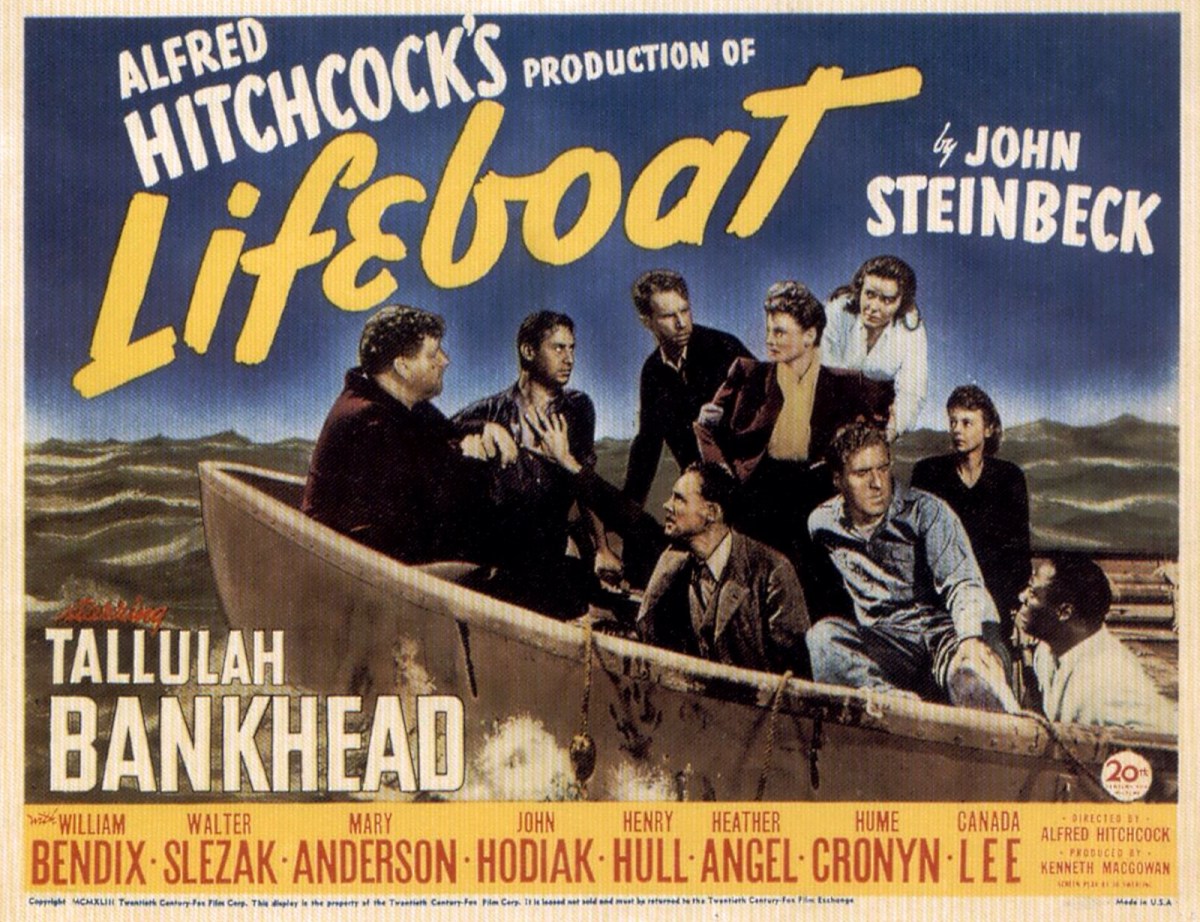
Lifeboat, the first of Hitchcock’s limited-setting pictures, follows the story of British and US civilians, merchant marines and service members in the aftermath of a battle that sees the sinking of their boat and a German U-Boat. When a German man Willi (Walter Slezak) is also rescued, the tension on the boat increases and coping with the harsh environment and the claustrophobic arrangement takes its toll. Pretty soon suspicion and accusations take the place of compassion and reasoning, with a plot that keeps the audience guessing way beyond the final scene.
Released towards the end of World War II, the film was shrouded in controversy due to the seemingly fair portrayal of a German man who turns out to be a Nazi soldier. This was enough to make the studio give it only a limited release – a surprise given that Rebecca, Saboteur and Shadow of a Doubt had all been box office successes in the immediately preceding years. Furthermore, John Steinbeck (who wrote the original novel) distanced himself from the adaptation, unhappy with the way Hitchcock had dealt with his work.
It is perhaps only years later that we can appreciate this film for what it is – a good film heavily influenced by the times and heaped with elements of propaganda. In that sense it’s as much a film as it is a historical document. In a way, all cinema is the same.
Lifeboat isn’t amazing, certainly not one of Hitchcock’s finest. I had hoped that the lack of popularity was because of the controversy surrounding its release, but in truth it’s probably because it just doesn’t pack as many punches as the likes of Vertigo and Psycho. It’s worth watching out of interest and worth buying the Masters of Cinema release for the detailed bonus features and two additional little-seen Hitchcock shorts Bon Voyage and Aventure Malgache, though these are more for the avid fans, even more so than the main feature. It’s worth watching, but not as a Hitchcock starting point.
Lifeboat is available on Masters of Cinema and SteelBook Blu-ray now.
I’ll be heading down to the BFI Flare LGBT Film Festival later this month. I’ve tried to pick a couple of films that look really interesting and no set wide release date in the UK, as follows:
– Tiger Orange – Dear White People
Both look fantastic and I’m looking forward to soaking up the atmosphere at the hub of British Film on London’s Southbank. See you there!!
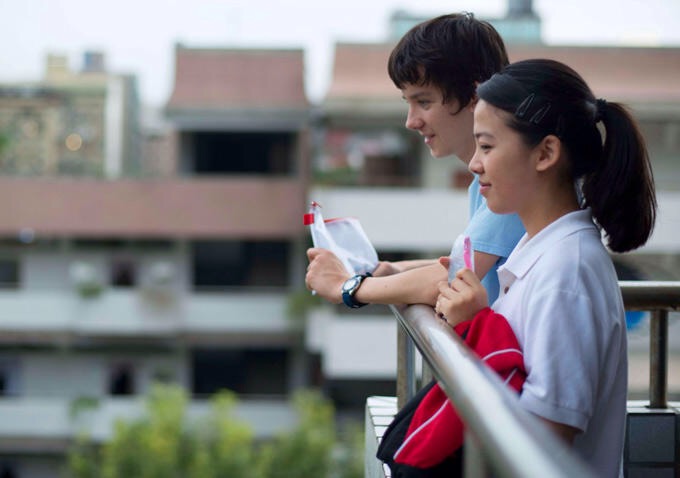
X+Y is a British film from BBC Films that follows the story of Nathan (Asa Butterfield), a teenage mathematics prodigy who is more comfortable dealing with numbers than he is with people. When he is selected to represent Great Britain on the International Mathematical Olympiad, he is forced to travel to Taiwan. As pressure to perform in the tournament grows and he finds an unlikely source of romance in Zhang Mai (Jo Yang), he soon finds that being out of his comfort zone is the starting point for a challenging journey of self-realisation.
One thing I was worried about as I sat there in the cinema waiting for it to start, was how they were going to portray autism. Inevitably we’re going to compare lead character Nathan to Dustin Hoffman in Rain Man or Russell Crowe in A Beautiful Mind, probably the two most iconic on-screen portrayals of people on the autistic spectrum. Unfortunately for sufferers of autism, this drastically sells the condition short to people who aren’t overly aware of it. Autism is a condition that affects those close to someone on the spectrum as much as the person themselves, and to assume that they will simply be a bit awkward around people and good at maths is doing it a misjustice. Many sufferers find comfort in the strict rules set out in maths – it’s an emotionless interest. However, others find the same solace in a regimented interpretation of music, with its repetitive patterns and melodies and set mathematics behind complimentary frequencies of notes. Others become obsessive over lists and facts, whatever the topic might be. Others just don’t. There are mild forms of autism and severe forms, which is why diagnosis can be tricky as early signs can’t be placed on the spectrum by someone unfamiliar with the condition.
So it’s unfortunate that autism has been portrayed on screen by means of a maths genius yet again, even though the director has previous work on autism (2008’s Beautiful Young Minds), which covers it in a more factual manner. However, X+Y is by no means just a light-hearted walk in the park and I enjoyed the fact a lot of time was spent with Nathan’s mother Julie (Sally Hawkins) as she came to terms with the loss of a close relative with no emotional support from her son. This was an important portion of the film that gave the right emphasis to the right areas and should be applauded.
I felt Butterfield’s portrayal of a child suffering from autism was very accurate, and I felt the frustration seeping through his inability to understand others. He has become a very accomplished actor throughout the three or four major films he has been part of so far, and as long as he keeps his feet on the ground for a couple more years he will continue to be successful for a long time.
Another great performance was from Jake Davies as Luke, whose character was a much more acute sufferer of autism. One scene involving a dead prawn stuck out for me and I’m sure we’ll be seeing more from him in the future.
The comradery of the maths students didn’t ring true for me. From first hand experience (I partook in mathematics competitions as a child, to some success), these competitions are far from a sociable affair, with most children very much “in the zone” and either unable or unwilling to communicate with their peers. It was a case of get in, do maths, win. Anything else was just unneccesary. So when there’s laughing and joking and, most notably, a cringeworthy rap session (including an awful rhymical recitation of Pi), I just thought back to the suits and classical music I had to endure and wondered how much it really could have changed.
I felt let down by the end. I’m not going to go into details as the film is yet to be released, but it just didn’t ring true to me and seemed to undo a lot of hard work they’d put in earlier in the film in a manner that suggests to me they got lost with the message they wanted to send out. I’ll let you make your own mind up on that one.
Overall it’s a very accomplished film and has many enjoyable points, but I didn’t feel it quite fulfilled its potential.
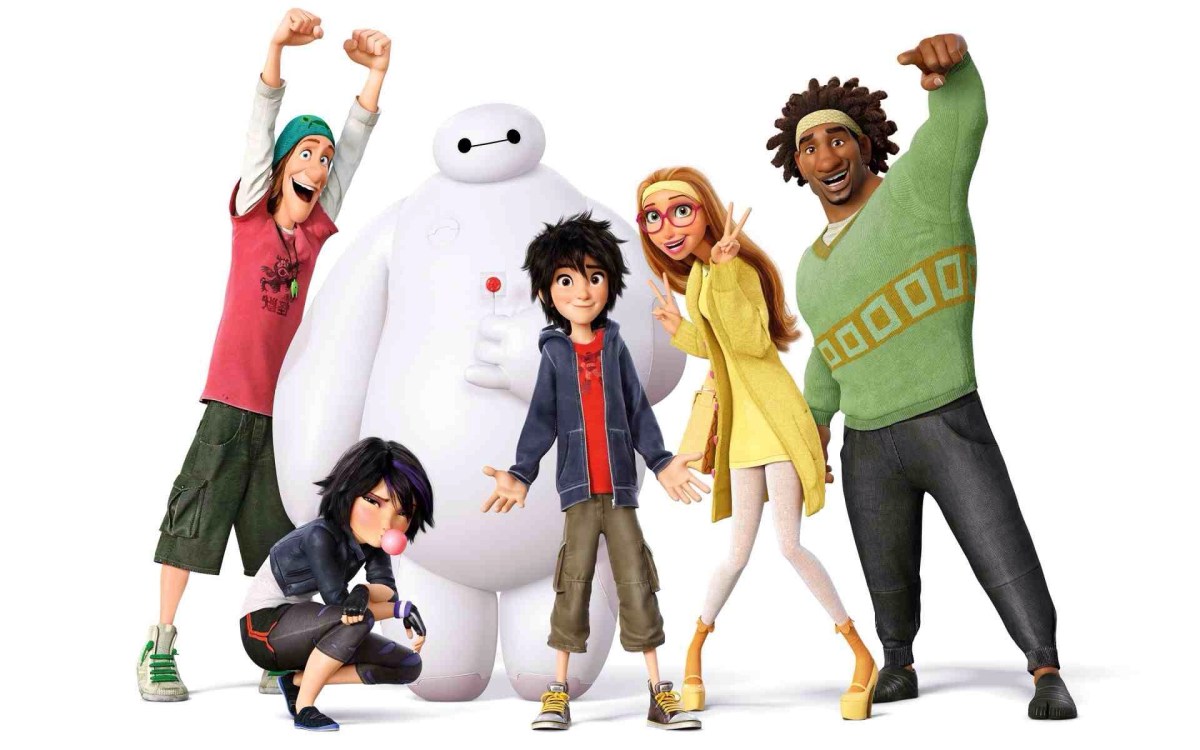
As the first Disney-animated motion picture based on Marvel IP, Big Hero 6 was always going to be carefully scrutinised by both extremes of the target audience. At one end you have the die-hard Marvel comics fans, keen to see their beloved heroes done justice on the big screen. At the other end you’ve got fans of Walt Disney Studios, worried that hot on the heels of Frozen, Tangled and Princess and the Frog, Big Hero 6 might not be for them [1].
For the uninitiated (you mean you never read the comics!?), the story focuses on 12-year-old parentless robotics genius Hiro, who is being looked after by his aunt, along with his older brother and sort-of-guardian Tadashi, who also studies robotics at the local university. When further tragedy strikes through the death of his brother, he is left to pick up the pieces with the help of his brother’s greatest work – healthcare-robot Baymax. Banding together with Tadashi’s fellow student friends, Hiro goes on an adventure of vengeance and self-development as he finds taking matters into your own hands can lead to some shocking revelations.
So the first thing to clarify is that the Big Hero 6 comics were never very popular. Very few people had heard of them before the film was announced, sparking a huge clamber across the internet to find the comics, read them, then form an opinion on why Disney was going to ruin them. They weren’t completely unknown, but they were nowhere near as popular as, say, Spider-man or X-Men. It was interesting to see the negative reaction the series got when it was announced. It’s amazing how many experts on everything we see now that people can form their arguments in one window whilst Google is open in another. I was one of the people who bought post-announcement – I managed to pick up all five of the 2008 comics and I read straight away (the original three-part series was by then already prohibitively expensive, much like the five-parter is now). They were obviously aimed at children, but were reasonably fun and easy to read. I thought they were a good choice for Disney to tackle, with plenty of characters and merchandising opportunities.
Secondly, I don’t know if you’ve seen any of the recent Marvel Animation films, but they are by-and-large terrible. I picked up the Ultimate Avengers steelbook about a year ago and watched one of the films, but couldn’t get through the second. The animation is really poor and the voice acting is clumsy and difficult to listen to. So if you’re a Marvel fanboy and want to square on an animated film that doesn’t do your source material justice, you should start there.
Finally, the recent films have been very successful, and I’m sure Frozen’s enduring popularity caused a delay to the release of Big Hero 6. I mean, it’s now on the West End in sing-along form! They just play the film on loop there all day. It has been out for 18 months! Princess and the Frog and Tangled were very successful too. But so was Wreck It Ralph, and that definitely wasn’t aimed at the female market. Neither was Bolt (directed by Chris Williams, by the way). Nor were half of the Pixar releases. Or, say, How to Train Your Dragon or Despicable Me. What I’m saying is – who knows what is going to capture the imagination of the children. Probably the main thing to go for is a great storyline, great characters and some top-drawer visuals. You get all three in abundance here.
I think the animation is the really mind-blowing element of a film that scores highly across the board. It’s fast-paced without ever feeling like it’s trying to lose you in action. The detail given to the plethora of uniquely designed characters is notable, too, and this serves to make each character feel worthy of your investment. If they’re going to spend that long making Hiro’s hair look so awesome, he must deserve a bit of attention on an emotional level too.
The storyline, to be fair, isn’t particularly original. I didn’t feel it was too detrimental overall. Its target audience is definitely under 12 years of age, and it was pitched perfectly.
There was, of course, a post-credits sequence that gave us some juicy details and opened the door to a sequel. I really hope this becomes a reality. I’m sure there are plenty more storylines to be told about these characters yet.
Big Hero 6 is out in cinemas in the UK now, and it has also just this week been released on Blu-ray and DVD in USA. If you’re quick and keen, you could buy the 3D Blu-ray steelbook from Zavvi.
[1] Anatomy of an unprofessional reviewer – I’ve deliberately put in several sweeping and largely incorrect statements in the first paragraph to allow me to argue against them later in the review. Oh how clever I am.
Version reviewed: The Park Circus UK Region B/2 2010 Blu-ray/DVD dual format release as part of The Charlie Chaplin Collection.
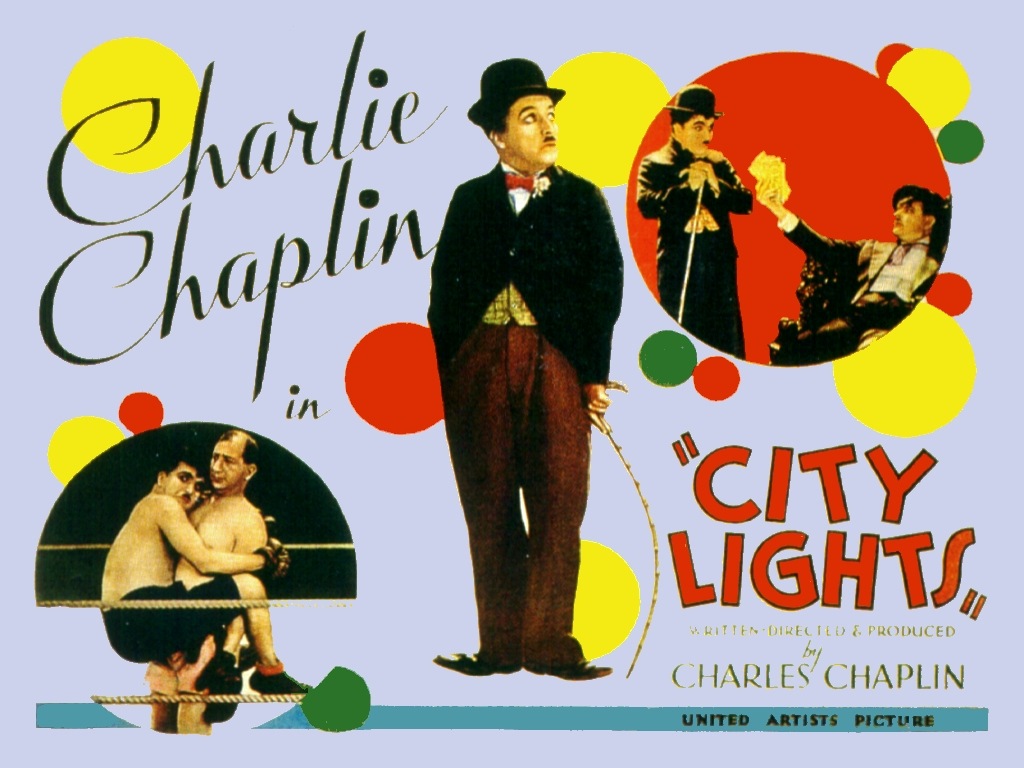
Considered by critics as not only one of Chaplin’s greatest films, but also one of the greatest films of all time, City Lights is a wonder to behold. Fantastic from start to finish, equally hilarious and touching, wonderfully scored and acted, it’s a film that needs to be seen and the continued praise is more than justified.
The (spoiler-free [1]) storyline goes something like this: A tramp (Charlie Chaplin) falls in love with a beautiful blind flower girl, who is in dire financial trouble. The chance befriending of a wealthy and frequently drunk man plus a series of money-making schemes play out as the tramp attempts to find the money that will help the girl’s family and pay for an operation to fix her blindness.
The storyline is the perfect basis for some hilarious moments, including a legendary boxing match and the following clip I found on YouTube. Is there a more hilarious way to introduce his most well-known character?
It’s not just a series of old-fashioned silent pantomime comedy routines, though. I’ve seen a handful of Chaplin’s most popular films and anyone who has even dipped their toes in will know that he’s way more than just a performer of slapstick comedy. There are moments throughout his films that really pack an emotional punch, with his tramp rarely getting a fair deal in life. Equally, when it comes to romance, Chaplin is nothing short of astonishing, never more so than in the final sequence of City Lights film. Despite the film being over 80 years old, I’m going to avoid any spoilers. Just watch it.
The film is classed as a silent film and for the most part it is, though there are some parts where the audio and visuals synchronise up, most notably when the tramp accidentally swallows a whistle. I’m not going to sit here and claim to be all-knowing about what is a silent film and what isn’t, but it was nice to see Chaplin making use of the more advanced audio-recording techniques that had become available after his last film’s release, 1928’s The Circus.
It is fortunate that we are even able to see City Lights as we do today. Following the release of Al Jolson’s The Jazz Singer in 1927 (which featured large sections of synchronised audio, though was not entirely a talkie), the end of the silent era of films was put into motion. By 1931, when City Lights hit cinemas, the major studios had stopped producing silent films and were following the desires of the cinema-goers by producing talkies. As Chaplin was the producer, writer, director and star, he was able to follow his instincts and released another silent film, a decision which was vindicated by the exceptional box office receipts (it turned a profit of around $3.5m, and was the fourth-highest grossing film of the year). It is somewhat strange that its popularity has maintained given it was technically behind the times upon release, though that is just a sign of its timeless quality.
Speaking of timelessness, I found it remarkable how little the content of the film had aged. Indeed, I wonder how the top-grossing comedic actors of 2015 would handle the content of the film. With a blind woman as the main love interest, would Adam Sandler have been able to resist a cheap joke at the expense of her disabilities? Indeed, Will Ferrell touched on blindness in a sequence in Anchorman 2, which, whilst pretty funny, lacked a little tact. There is no suggestion here that Chaplin was going to undermine blindness – this woman is beautiful and that’s all that matters.
Chaplin’s Tramp with his nameless love interest
There are some bonus features on this release, however they are limited to the DVD version as they are standard definition. I haven’t got to them yet, but they look interesting: video footage of Winston Churchill visiting the set, seven minutes of outtakes, an introduction by David Robinson (Chaplin biographer), a 26 minute documentary about the film called Chaplin Today: City Lights and a photo gallery. What I would say is this – the video quality on the Blu-ray is not so exceptional that there is no room left on the disc for the bonus features on the DVD, though I wonder whether this is more due to the source material than anything else. I plan to write a separate blog charting my frustrations with buying Chaplin in the UK, but that’s for another day. To summarise: I wish Criterion releases were cheaper to buy outside of the US.
As a side note, I was looking for a featured image for this article and came across a wide variety of English-language and foreign alternative posters for the film. Some of them are really impressive and are a good indicator of how studios used their perception of the local markets to gauge the tone of the poster. The following is one I found from Germany that I found particularly interesting.
Alternative German poster for City Lights (or Lichter der Gross Stadt)
[1] I class any description that can be deduced from the DVD/Blu-ray box or trailer, or that only covers events in the opening sequence of the film, as spoiler-free.
Here’s a simple list of all the winners of Oscars at the 87th Academy Awards last night. I’ve not included the other nominees as I think the lists elsewhere have become cumbersome. Keep it simple!
So there you go. I was really disappointed that “Everything Is Awesome” from The Lego Movie didn’t win Best Song, not least because the eventual winner was pretty dreadful (I talk about them here). I was happy about the Disney double of Big Hero 6 and Feast – both are excellent and I’ll no doubt be reviewing them on here when I get around to it. The really obvious ones won, of which for me there was only three: Eddie Redmayne for Best Actor, J. K. Simmons for Best Supporting Actor and Birdman for Achievement in Cinematography. That’s how tight it was elsewhere.
I’m thrilled that Birdman won Best Film over Boyhood and American Sniper. Birdman is a seriously effective piece of cinema and a work of art. It has things that appeal to the Academy: the struggling actor struggling to cope with his own relevance, a technically excellent piece of cinematography that (sort of) uses one shot, some fantastic performances from a range of excellent actors and actresses.
So today is for everyone to digest the results and look back on a fantastic year for cinema. Here’s to the next one.
The BFI Flipside series is, according to the back of the Blu-ray box, dedicated to “rescuing weird and wonderful British films from obscurity and presenting them in new high-quality editions.” I picked up a few of them when my local Zavvi finally closed down a couple of years ago (yes, there really did used to be Zavvi shops that you could walk into), meaning a lot of Masters of Cinema and BFI releases were reduced to about £7-8. One that I picked up and put at the bottom of my “to watch” list was The Party’s Over, Guy Hamilton’s 1963 controversial release.
Opening with a drunken Chelsea party, we’re immediately introduced to Oliver Reed’s pack leader Moise (pronounced “Mo-Eece”). He’s a handsome and popular guy, not afraid of being the centre of attention but equally happy to slip into the background. He shows off a bit and everyone looks on in admiration. This is then juxtaposed by a painfully cool opening sequence as Melina (Luoise Sorel) walks towards the camera, brilliantly soundtracked by Annie Ross and John Barry.
A shot from the painfully cool opening sequence
It’s obviously a film that isn’t afraid to glamorise its subject matter and candidly display every part of their lives, and I suspect that was one of the reasons it was withheld from release subject to several cuts and changes. This was 1963 after all, and censor John Trevelyan perhaps thought an audience besotted by a young new group called The Beatles were unnerved enough without this kind of film further rotting their brain. In short, the world wasn’t quite ready for the subject matter [1].
Despite a decent range of characters, it is Oliver Reed who steals the show throughout. His is a character that snaps his fingers and gets what he wants immediately, such is the influence he has over his beatnik and largely non-descript gang members. As the plot develops through some shocking developments – including sexual assault and suicide – it is Reed that maintains his position as the driving force of the narrative, much as Moise is the driving force of the gang.
It is a shame that there are several lacklustre performances. The supporting cast look like they’re straight out of acting school and don’t look overly comfortable in front of the camera. Several of the leading cast either overact or lack conviction, which is quite an achievement in itself when you think about it. Carson (Clifford David), Meilna’s fiancé, provides a solid performance and rescues the film from being a poor one-man-show.
BFI Flipside has been responsible for a number of excellent releases, with as much care given to their release as any famous film. Whilst the audience is undoubtedly more niche, it’s great that we are able to watch a film like The Party’s Over without any edits as the production team originally intended [2]. It’s not a film that has changed my life, but it might have had a much greater impact on the landscape of cinema had the censors not got involved some 50 years ago [3].
The Party’s Over is out now on BFI dual-format Blu-Ray and DVD.
[1] This release contains extensive words on both the censoring of the film and the director’s recollection of making and editing the film in line with the increasing pressure from Trevelyan.
[2] According to the booklet, one edit was made at the request of the director, with the removal of the credits over the opening sequence. It is unnoticeable unless, I suspect, you vividly remember to original.
[3] The Wikipedia page suggests the film was made in 1965. It was eventually released in 1965, but I’ve decided to list the film as a 1963 release. This was done because the version presented is as close as we’ve ever got to a version director Guy Hamilton’s pre-censor vision. The film was completed in 1963 and this is the version I have reviewed. For completionists, the 1965 version is also included on the Blu-Ray disc.
I’ve been on something of a Billy Wilder binge recently, having recently sat down and enjoyed Ace in the Hole, The Lost Weekend and Double Indemnity (three excellent Masters of Cinema releases), Oscar-winning Sunset Boulevard and the classic Some Like It Hot. It was just a matter of time before I picked up The Apartment, which is considered to be amongst his best works. When I saw it in my local FOPP for £4 it was an insta-purchase [1].
The story is the perfect basis for a romantic comedy. Jack Lemmon plays “Buddy” Baxter, a lonely man working at an insurance company in New York. However, he has a secret that is allowing him to rise up the corporate ladder much faster than his peers – he is loaning his apartment out to senior members of the company so they can carry out extra-marital affairs. However, when company boss Jeff F. Sheldrake (Fred MacMurray) hears about it, he decides that rather than reprimand Baxter, he is going to make use of his hospitality himself. As bad luck would have it, the woman he is planning to take there is the woman of Baxter’s dreams: Fran Kubelik (Shirley MacLaine). With the next promotion in the bag and his career blooming, Baxter has to make the most difficult choice of his life: is his love life more important than his career?
The 1960 film won the Best Film, Best Director, Best Writing (Original Screenplay), Best Film Editing and Best Art Direction (Set Decoration, Black and White) Oscars, whilst being nominated for a further five. This was in a relatively slow year for films, though there were a couple of highly reputable releases: Psycho (no wins) [2] and Spartacus (four wins). The Apartment was the big winner that year.
Probably the most surprising result on the night was Jack Lemmon missing out to Burt Lancaster (Elmer Gantry) in the Best Actor category, such was the brilliance of his performance. I think there’s a risk when looking back at Lemmon’s career that we now see him as just a comedic actor. That couldn’t be further from the truth and if you want to know why then watch this film. Kevin Spacey dedicated his Best Actor Oscar win in 1999 for American Beauty to Lemmon’s performance in this film, and there are a lot of similarities to both the characters and their characterisations. Baxter is a man used by all those around him, but yet is happy to take his lot in life. There is a dark humour to his actions, knowing they will have negative repercussions on his life but either afraid or unable to say no. There are moments of real hilarity, all centred around Baxter, but by the final third of the film it is way beyond that and as a viewer it was quite distressing seeing how much he was hurting himself.
There is also a lot to be said for a comedy that is happy to centre a huge period of the plot around a botched suicide attempt by one of the main characters, whilst characterising five of the six leading male characters as adulterers (along with their willing female partners). There is a reason why this Christmas-set romantic comedy isn’t a perennial favourite over the festive season – it’s just too depressing!
So it’s six watched and six enjoyed films in the Billy Wilder back-catalogue. I’ve still got some big guns to go; Sabrina, Stalag 17 and The Seven Year Itch will hopefully be sourced soon at a reasonable price. I doubt I’ll find a bad one any time soon. The Apartment is available to buy now online, though as stated above I doubt you’ll find anything cheaper than the £4 price point in FOPP at the moment.
[1] = FOPP is still an excellent source of films and is still my favoured physical-purchase shop when I need to just have a browse and see what’s available. It’s nice to use my own instincts and memory to recommend a purchase to myself. You know, like the old days when you weren’t force-fed what to buy next by an algorithm.
[2] The letter below is some recomendation, from Hitchcock himself. What a wonderful thing to have been unearthed.
I have never read Victor Hugo’s novel Les Misérables. I have never seen the stage musical of “Les Miz”. I have never seen any of the three silent film adaptations of the book, nor have I seen any of the eight spoken-word non-musical adaptations of the film. I have not seen a single other film directed by Bernard, nor have I seen a single film starring any of the actors and actresses that are in this version. Therefore, I have only one reference point. Yes, you guessed it. It’s Hugh Jackman, Anne Hathaway, Russell Crowe and Sacha Baron Cohen’s film-of-the-musical from 2012. For this, I can only apologise.
To call this a single five-hour epic would be to bend the truth slightly, not least because it clocks in at a mere 4 hours 40 minutes. Actually, it was released as separate films in an episodic manner over a period of three weeks starting on 9th February 1934.
The first and longest part, Une tempête sous un crâne (Tempest in a Skull) tells the story of Jean Valjean (Harry Baur) as he finishes his prison sentence, then becomes increasingly frustrated that his past life as a convict blights him (his only crime being stealing a loaf of bread), having to hand in his prison documentation every time he enters a new town and constantly being pursued by Javert (Charles Vanel). Seeking a new start, he disposes of his papers and assumes a new identity, beginning a new life as Champmathieu.
The second part, Les Thénardier (The Thenardiers), concentrates primarily on the titular family acting as guardians to Cosette (Gaby Triquet, who sadly passed away two years ago), milking her mother for money and treating her like a slave. Her mother Fantine (Florele) is slowly approaching death due to the illnesses contracted through overworking to pay for Cosette’s falsely expensive upkeep. As this chapter concludes, we leave Champmathieu seeking to take sole custody of Cosette.
The third part, Liberté, liberté chérie (Freedom, dear Freedom) is set around the 1832 June Rebellion in Paris, as the various interweaving plots come to dramatic conclusions.
I know a lot of people who class themselves as Les Miserables aficionados. You know, the type that has been to see the show 180 times, know every word inside out and tell you “You might have liked the film but I’m not sure you’d like the stage musical.” Well, I didn’t like the 2012 film because some of the main cast can’t sing. This was worsened by the contrasting excellent vocal performances from Hugh Jackman and Samantha Barks. It makes you wonder why they didn’t cast performers from one of the many stage adaptations there have been in the last 35 years. Of course, that’s because putting Borat in one of the main roles puts more bums on seats in the cinema, so it was clearly not an attempt to do a great piece of art justice, just an attempt to make money.
The main reason I say all of this is because if you want to get to the root of the purpose behind the original book, you have to read it. If you don’t have time (like me), then this is a great place to start. It is apparently the closest adaptation to the original source material there has been. What struck me was how deeply effective the characterisation was by Hugo of each of the characters. Each person is driven by a clear motive, and nothing is glossed over. It’s no small task to fully realise two or three major but conflicting characters in a story, let alone eight or more whose storylines are intertwined so tightly. It’s like Love Actually for the 19th Century. But good.
There are significant differences between this and the 2012 adaptation. Most surprising is the appearance of Valjean. Hugh Jackman he is not, so don’t expect to be swooning over him at any point. The Thenardiers are explored in great detail and are far more despicable, eliciting a far greater emotional response in me. Overall it’s just a more rounded experience, and far more satisfying as we journey through an epic story to a fittingly intense climax.
Visually, it is clear the 2012 film has borrowed from the 1934 interpretation. Most significantly I couldn’t help seeing the two stand-offs at the end with the rebellion fighters barricaded in the streets of Paris as being essentially identical shots. The tension was recreated blow-for-blow with very similar cinematography techniques. Why change something that works so well?
The Masters of Cinema release is fully loaded. The Pathé 4K transfer is extremely detailed, giving the film space over two discs to avoid unnecessary compression. The second disc features only Part III of the trilogy, so we are also treated to a large amount of supplementary features including documentaries, a 1905 short film Le Chemineau (The Vagabond) by Albert Capellani’s short film, a theatrical trailer, news reels and more. We also get a (now standard of Masters of Cinema) lavish 28-page booklet with five essays on the film.
So at almost five hours this is not for the faint-hearted, but you can cut it into three parts and digest this very faithful interpretation of the original story as you please. It’s a far cry from the 2012 musical film but it has a lot more to offer.