Film review – The Hateful Eight – 70mm Ultra Panavision Presentation (Quentin Tarantino, 2015)

Tarantino and controversy seem to go hand in hand these days. Django Unchained, his last release, was shrouded in negative press. Firstly there was criticism for over-use of racial slurs in the film. This led to a range of action figures being pulled from shelves (now worth a small fortune if you have any). Then he “shut down” an interview with Krishnan Guru-Murthy on Channel 4 News when he was questioned about overuse of violence in his films (see below).

The Hateful Eight has been just as rocky in the run up to release. Firstly, he pulled the film because the script was leaked, an act that Tarantino described as a “personal betrayal”, publicly naming either Bruce Dern, Tim Roth or Michael Masden as the perpetrators. There was some “brouhaha” (his word not mine) involving the American police forces that have led several states’ police forces to boycott the film. More recently, several UK-based cinema chains – Cineworld, Picturehouse and Curzon –  have announced they won’t carry Tarantino’s eighth film due to the distributors Entertainment opting for Odeon as the exclusive screener of the 70mm extended roadshow version of the film.

Now, whether this is the definitive version of the film will remain open for debate. Tarantino is saying this is the case, so as such the hardcore fans of his films are keen to see this hard-to-find version. Indeed it’s so hard to find that if you’re in the UK you can only see it at one screen for four weeks. That screen is Odeon’s Leicester Square screen, which is where I journeyed to for my screening.

The Film

The film opens around a decade after the American Civil War with a powerful Ennio Morricone score coupled with a mysterious wagon stuck in a snow storm. Inside is bounty hunter John Ruth (Kurt Russell), on his way to Red Rock, Wyoming with a bounty in tow: gang member Daisy Domergue (Jennifer Jason-Leigh). With a $10,000 reward on her head, he is suspicious when they happen upon second bounty hunter Major Marquis Warren (Samuel L. Jackson) and later Red Rock Sheriff Chris Mannix (Walton Goggins) before arriving at the isolated outpost Minnie’s Haberdashery. It is there we come across the final four main characters in the film: hangman Oswaldo Mobray (Tim Roth), Bob The Mexican (Demián Bichir Nájera), former Confederate General Sanford Smithers (Bruce Dern) and cowboy Joe Gage (Michael Masden) waiting out the storm. Set for the likelihood of two days holed up in this outpost, tensions rise as the characters’ personalities and history slowly reveal themselves and friendliness gives way to suspicion.

It is easy to see why this film is being considered for an adaptation to the stage. It is mainly set inside the interior of the Haberdashery, giving the focus back onto actors and actress. True, it is a violent and bloody film, but it is also extremely enthralling because of some wonderfully colourful performances across the whole cast. Jennifer Jason Leigh is almost unrecognizable as she snarls and spits her way through her lines, spending most of the film bloodied and beaten.

hatefuleightscreenshot

It is also important not to take for granted two other roles around which the film is built. Jackson’s Warren is a man with a layered past and the portrayal is very well balanced – somehow making him an almost likable character despite his many flaws. He has been doing this for years now, often with Tarantino, and it would be easy to forget how much quality he puts into each performance. Elsewhere, Goggins is pitifully dislikable in his role as Mannix, though offers enough to ensure his character enjoys equal status with some of the films more prominent stars as he takes his character on a tangible personal journey. It’s a shame he was overlooked at the Academy Awards, but it has been a year of tough competition for supporting actors.

This is a psychological mystery that isn’t afraid to maintain the whole story in complete isolation. It intertwines some laugh-out-loud moments with shocking gore in a way that only Tarantino knows how. It may not be his greatest achievement but it certainly doesn’t disappoint.

70mm Ultra Panavision Presentation – is it worth it?

Seeing the roadshow version added a huge amount to the experience. The inclusion of an overture meant that the audience was truly settled by the time the film started in earnest – most of the much-needed extra large popcorn was all but finished by the start of the film. The intermission was quite unique as it meant the group I went with had fifteen minutes to reflect on the first half and a pretty crucial cliffhanger we’d just been served up.

There are apparently an additional four minutes of footage somewhere along the lines, but it wasn’t obvious where they came in. Certainly nothing felt expendable.

The traditional feel of the screening served the content really well. This is, after all, a Western at heart and the theatre and screening method both hark back to the late 1940s and early 1950s when Westerns ruled the silver screen. It added an authenticity to the experience, though the additional cost  may have the studio executives wondering if it was all worth it.

It is a great way to remind the audience of the beauty of the experience of going to the cinema. In a time when 200,000 people think it’s okay to illegally download a film when it has been leaked online, it takes something like this to prove that films are not just a commodity.

I’m just about to watch the standard version at a nearby screening, so that gives a fair indication of how much I enjoyed it.
Academy Award for Best Original Song 2016

There are five songs nominated in the shortlist for the Academy Award for Best Original Song Academy Award. Here’s a complete list with the videos.

“Earned It” from the film Fifty Shades of Grey
Music and lyric by Abel Tesfaye, Ahmad Balshe, Jason Daheala Quenneville and Stephan Moccio; performed by The Weeknd

“Manta Ray” from the film Racing Extinction
Music by J. Ralph; lyric by Antony Hegarty; performed by J. Ralph and Antony

“Simple Song #3” from the film Youth
Music and lyrics by David Lang; performed by Sumi Jo

“Til It Happens to You” from the film The Hunting Ground
Music and lyric by Diane Warren and Lady Gaga; performed by Lady Gaga

“Writing’s on the Wall” from the film Spectre
Music and lyric by Jimmy Napes and Sam Smith; performed by Sam Smith

Academy Awards 2016 – Nominations in Full

BEST PICTURE
The Big Short
Bridge of Spies
Brooklyn
Mad Max: Fury Road
The Martian
The Revenant
Room
Spotlight

BEST ACTOR
Bryan Cranston, Trumbo
Matt Damon, The Martian
Leonardo DiCaprio, The Revenant
Michael Fassbender, Steve Jobs
Eddie Redmayne, The Danish Girl

BEST ACTRESS
Cate Blanchett, Carol
Brie Larson, Room
Jennifer Lawrence, Joy
Charlotte Rampling, 45 Years
Saoirse Ronan, Brooklyn

BEST SUPPORTING ACTOR
Christian Bale, The Big Short
Tom Hardy, The Revenant
Mark Ruffalo, Spotlight
Mark Rylance, Bridge of Spies
Sylvester Stallone, Creed

BEST SUPPORTING ACTRESS
Jennifer Jason Leigh, The Hateful Eight
Rooney Mara, Carol
Rachel McAdams, Spotlight
Alicia Vikander, The Danish Girl
Kate Winslet, Steve Jobs

DIRECTING
Adam McKay – The Big Short
George Miller – Mad Max: Fury Road
Alejandro G. Iñárritu – The Revenant
Lenny Abrahamson – Room
Tom McCarthy – Spotlight

ADAPTED SCREENPLAY
The Big Short
Brooklyn
Carol
The Martian
Room

ORIGINAL SCREENPLAY
Bridge of Spies
Ex Machina
Inside Out
Spotlight
Straight Outta Compton

ANIMATED FEATURE FILM
Anomalisa
Boy and the World
Inside Out
Shaun the Sheep Movie
When Marnie Was There

ANIMATED SHORT
Bear Story
Prologue
Sanjay’s Super Team
We Can’t Live Without Cosmos
World of Tomorrow

DOCUMENTARY FEATURE
Amy
Cartel Land
The Look of Silence
What Happened, Miss Simone?
Winter on Fire

DOCUMENTARY SHORT
Body Team
Chau, Beyond the Lines
Claude Lanzmann
A Girl in the River: The Price of Forgiveness
Last Day of Freedom

MAKEUP AND HAIR STYLING
Mad Max: Fury Road
The Hundred-Year-Old Man Who Climbed Out the Window and Disappeared
The Revenant

ORIGINAL SONG
The Weeknd’s “Earned It” (from the film Fifty Shades of Grey)
J. Ralph and Antony’s “Manta Ray” (from the film Racing Extinction)
David Lang’s “Simple Song #3” (from the film Youth)
Lady Gaga’s “Til It Happens to You” (from the film The Hunting Ground)
Sam Smith’s “Writing’s on the Wall” (from the film Spectre)

SOUND EDITING
Mad Max: Fury Road
Sicario
Star Wars: The Force Awakens
The Martian
The Revenant

FILM EDITING
The Big Short
Mad Max: Fury Road
The Revenant
Spotlight
Star Wars: The Force Awakens

FOREIGN LANGUAGE FILM
Embrace of the Serpent
Mustang
Son of Saul
Theeb
A War

ORIGINAL SCORE
Bridge of Spies
Carol
The Hateful Eight
Sicario
Star Wars: The Force Awakens

PRODUCTION DESIGN
Bridge of Spies
The Danish Girl
Mad Max: Fury Road
The Martian
The Revenant

VISUAL EFFECTS
Ex Machina
Mad Max: Fury Road
The Martian
The Revenant
Star Wars: The Force Awakens

COSTUME DESIGN
Carol
Cinderella
The Danish Girl
Mad Max: Fury Road
The Revenant

David Bowie R.I.P.

Well, today started off on an awful note. I woke up at my normal hour after a particularly banal dream to a string of texts from a variety of people, many of whom hadn’t been in touch for years. I immediately knew something was awry.

Scrolling through the messages, I pieced together that something had happened to David Bowie. Whether it was good or bad news wasn’t immediately obvious. The first was actually from my mum. “Have you seen the news about Bowie?” it read. My immediate hope was that he would be touring again – it was nice my mum thought it was such urgent news! This was ambushed by the slow realisation of what had happened. He wouldn’t be touring again. He had passed away after an 18 month battle with liver cancer.

Devastated just doesn’t cover it.

The following is going to be a cathartic and self-indulgent diarised memory of me discovering David Bowie as an artist, character and chameleon.

1996-2002

David Bowie has been a part of my life for a very long time. I would still be classed as a relative newcomer to the party. My first memory of him was listening to ‘Little Wonder’ on one of those cheap compilation double CDs that were the rage when I was younger. This isn’t his best song by a long way, though it is a great example of him producing something special and cutting edge in a genre previously unfamiliar to him. At the time, of course, I didn’t really think that, though I was probably influenced by the fact the CD didn’t even list him on the front cover of the album as one of the top artists (Gina G, 3T and Mark Morrison did make the cut). He was just some old guy doing weird dance music that I didn’t understand.

As time went on, I began to see his influence more and more. Oasis covered “Heroes” as the b-side to ‘D’You Know What I Mean?’ in 1997. Nirvana covered ‘The Man Who Sold The World’ for the MTV Unplugged in New York album, which I picked up when I reached my angsty phase (which lasted, all told, about six months). I was absorbing the snippets I was hearing but not really taking the bate.

When the album Heathen was released in 2002, it had a quality that finally made me take notice. The song ‘Slow Burn’ was a regular on UK radio stations and that alone convinced me to pick it up. It was Bowie’s 22nd album but it was my first Bowie album. Sitting alongside Gemma Hayes, Elbow and Doves, my year in music was certainly very melancholic and reflective; the tones reflecting the mood of the world in 2001 when most of the songs were written and recorded. This formed the soundtrack to my A-Level studies.

Slowly working backwards and learning more and more about Bowie, I was able to reward my patience with a thorough look at his different periods as I discovered them. This was a deliberate choice. That’s one of the great things about discovering an older artist – they usually have years of releases that you can pick up as you read more about them. So if, as I did, you get stuck on Hunky Dory for a whole year, then you don’t need to worry as the other 20+ albums will wait for you to finish with it.

2003-2012

As time progressed, I become progressively more aware that everything had gone quiet on the Bowie front. After two albums in quick succession (Heathen was followed shortly after by 2003’s Reality), I’d managed to sweep up the last of the Bowie albums by around 2010. Somewhat inevitably this went to the much derided Never Let Me Down from 1987, an album that I felt had merits but lacked any reason to hold my attention beyond his better work.

Now well versed in Bowie’s music, it dawned on me that the length of time he’d been away from the music scene could be construed as him having retired without really telling anyone. If he’s retired, then that meant he probably wouldn’t tour again. Had I missed my chance to see The Thin White Duke? Surely not.

I began to think back to when I had considered going to see him during his Reality tour. My friends and I were debating which music festival to go to. The choice was either V Festival or T in the Park. We opted for the former, getting a day ticket to see Dido and Muse. Yep. That actually happened. As it turned out, Bowie pulled out of T in the Park due to ill health and he never toured again.

I will forever regret never getting to see Bowie live. But it is something I have come to terms with over the last ten years.

2013-2016

When Bowie announced a surprise album in 2013, it almost felt like a hoax. Out of the blue on 8th January, a new single titled ‘Where Are We Now?’ was delivered to radio stations across the world and played simultaneously. For a surprise return to the music industry, it was a far cry from anything that could be considered immediate or upbeat. This, I’d come to learn, was typical Bowie.

Given that Bowie was now effectively a recluse, he had taken on the kind of godlike status usually afforded only to artists that had already passed away. Nobody thought they’d hear from him again. In a way The Next Day felt like the first posthumously released album put out during an artist’s lifetime. It was a wonderful present to fans old and new, many of whom were in the exact same boat as myself.

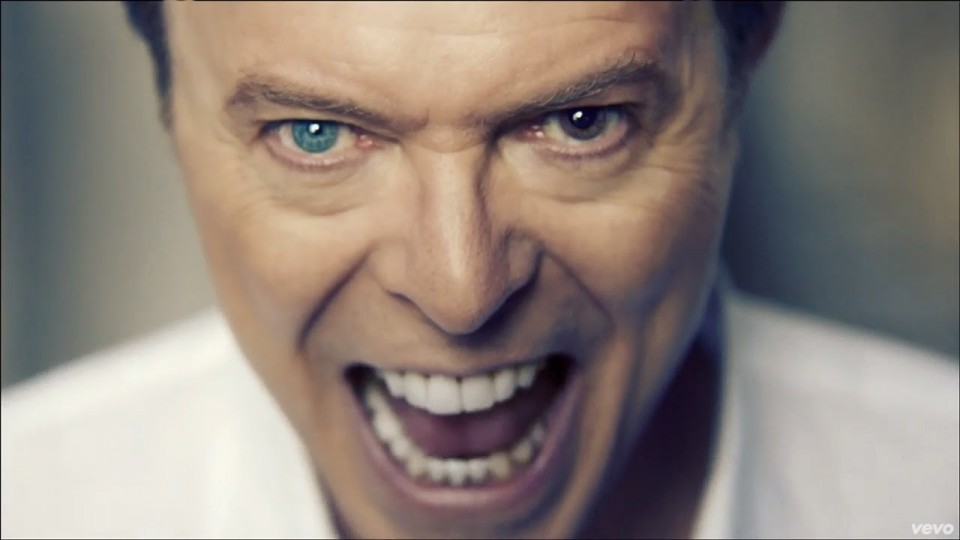
Blackstar was announced in November and was set for release on 8th January 2016. It arrived with no special mention of what was going on behind the scenes. A couple of weird videos with a hard to decipher message, the usual Bowie-esque ambiguities in the lyrics. It is a fantastic album and I listened to it almost non-stop for the first weekend of release. 

Then on the morning of 11th January the news of Bowie’s death hit the world and suddenly the content of the album all fell into place. He had written and recorded his own obituary and released it to the world without anyone realising.

And with that, Bowie confirmed himself as one of the most confident artists of all time. Who else in the history of music would look on his own death as his final chameleonic transformation?

Today has been a day that may have started off in a depressing manner, but became one of listening, watching and consuming all things Bowie. It has been a completely beautiful experience. A sad but beautiful experience.

Film review – 千と千尋の神隠し / Spirited Away (Hayao Miyazaki, 2001)

Whilst Studio Ghibli has been a powerhouse of cinema in the East for many decades – since being born of the release of 風の谷のナウシカ / Nausicaä of the Valley of the Sea in 1984 – many Western cinema-goers weren’t introduced to the wonders of the animation house until 2003. This was the year that Spirited Away reached the wider audiences after being nominated and winning the Academy Award for Best Animated Feature.

Those whose interest was peaked enough were rewarded with a fantastic picture realised in beautiful 2D traditional animation. Its use magically imaginative turns that seemed uniquely Eastern mesmerised the audiences, allowing its popularity to grow through word of mouth and causing a renewed interest in the studio’s back catalogue. 

The story itself follows ten-year-old girl Chihiro who is moving house to a new and unfamiliar location with her parents (a familiar opening gambit in a Ghibli picture). Accidentally stumbling upon an abandoned amusement park, her mother and father greedily consume some mysterious but luxurious food whilst Chihiro investigates the surroundings. By the time she returns, her parents have turned into pigs and she cannot escape, forcing her to go deeper into the mysterious world to try to work out how to turn her parents back to humans and allow her life to return to normality.

SpiritedAwayscreenshot

In its most basic form, it is a coming of age tale akin to Alice in Wonderland, with a setting that is just as supernatural as the western equivalent. She is forced to find her identity as an adult after having her childhood identity removed from her – including her name – and only by doing so can she bring back her parents.

Whether this means the film is set in a supernatural world, or the middle portion of the film is simply a figment of her imagination is open to debate. Certainly the possibility is there that she has slipped into a dream and this is a manifestation of her fears and resistance to growing up. However, Miyazaki clearly decided to show that Zeniba’s hair band was still in her hair after her return to the “normal” world, a move to clearly show this wasn’t a dream at all. A subtle but sweet reveal.

It was a reminder of how to do it properly. Disney was yet to move away from traditional animation in favour of the 3D animation being celebrated by the likes of Pixar and Dreamworks, instead releasing both Lilo and Stitch and Treasure Planet in the year this reached western cinemas.

In contrast, Studio Ghibli wasn’t afraid to aim squarely at a more adult audience, and hadn’t been for years. Spirited Away was just the tip of the iceberg – representative of a rich body of work but standing out as one of their greatest achievements.


浪華悲歌 / Osaka Elegy (Kenji Mizoguchi, 1936)

浪華悲歌 / Osaka Elegy, now eighty years old, came midway into director Kenji Mizoguchi’s career. Despite this, it is one of the earliest examples of Kenji Mizoguchi’s work readily available to view by the general public and has just been restored and released by Artificial Eye as part of a boxset titles The Mizoguchi Collection.

By today’s standards, it has a strange narrative that seemingly unravels itself from a reasonably happy place to a completely unhappy place for everyone unlucky enough to be wound up in the story. It is built around telephone operator Ayako (Isuzu Yamada), a girl who uses manipulation out of desperation for her own family. Her father is struggling to keep afloat financially after finding himself unemployed and owing 300 JPY. Her brother is also in desperate need of money to pay for his tuition fees or he will be thrown off his course. A solution presents itself in the form of Sumiko Asai (Yoko Umemura), the owner of a successful drugs company who has taken a shine to Ayako. Agreeing to be his mistress to solve the financial issues, she soon realises that the solution isn’t quite as simple as she had hoped.

The topics covered by the film are explored and exploited. It’s a clever technique as the initial story seems quite bland. As the reality is revealed to those involved Ayako comes out as the only person to be perceived to be in the wrong. Several men have had an affair with a girl under half their age, effectively buying her time, but they are above the law due to their standing in society. Since she is perceived to be of a lower class, it is on her that the blame is left.

She was in fact trying to live by her giri morals – the duty to do right by ones family. Whilst her methods may be unorthadox, she never sways far from these morals. The most upsetting part is her final line in the film, revealing that she believes herself to be a delinquent.

The quality of the film is lost slightly by the poor condition of the remaining footage. Throughout the film there are issues with sound – the constant background hiss is quite off-putting, there’s the odd loud pop and the dialogue can feel muffled. It’s not inaudible, but a far cry from perfect.

Similarly, the picture quality is poor, particularly in the darkened interiors of the traditional Osakan houses where the blacks appear muddy. This, like the sound, is not the fault of Artificial Eye. They’ve clearly made a decent job of some imperfect source material. It’s a shame, but realistically this is a business venture and spending the money to restore relatively obscure Mizoguchi films would be hard to justify.

As I understand, the other three films in this box set (The Story of the Last Chrysthanthemum, Utamaro and His Five Women, Sisters of the Gion) are all in the same boat, with imperfections in both audio and visuals (I haven’t watched them yet). That these films have surfaced at all is enough to be grateful for and those looking for more Mizoguchi after enjoying the Master of Cinema releases will be well served. As such, despite the flaws this box set is a recommended purchase.


The Skull (Freddie Francis, 1965)

Freddie Francis’s 1965 Amicus Productions film The Skull was recently restored and released by Eureka Entertainment in the UK. It’s perhaps not the most gripping of horror films ever made, but with the classic pairing of Christopher Lee and Peter Cushing in the leads roles it offers a lot to fans of Amicus and Hammer.

The film follows Christopher Maitland (Cushing), an antiques dealer with a penchant for the obscure and curious, particularly pertaining to the occult. He acquires the valuable skull of Marquis de Sade, a man we learn about in the opening prelude set over 100 years previous. The skull has been stolen from Sir Matthew Philips (Lee), a fellow antiques dealer. Valuable though the skull is, Philips has no interest in reclaiming it, for reasons that are initially unapparent.

  
When watched alongside modern horror films, The Skull may be hard to appreciate. This is to do with pacing. Watching a horror film celebrating its 50th anniversary needs to be watched with a mindfulness of the context. The cheap shots and by-the-numbers techniques used today are nowhere to be seen. The horror in a film like this is drawn from the suspense built up by every element of the film working together and a quality acting performance of the lead character. You simply can’t view any film like this out of the context of the landscape of cinema at the time of original release.

Lee is atypically subdued in his performance as Sir Matthew Philips. It is a supporting role but it’s really worth checking out to see him portraying someone likeable for a change.

The plaudits should go to Cushing though. He carries it towards a tremendous climax in a film that actually has almost no dialogue for the final act. He may have more popular roles – or indeed more mainstream roles – but this is an off-the-radar performance that warrants at least one viewing to underline his acting credentials.

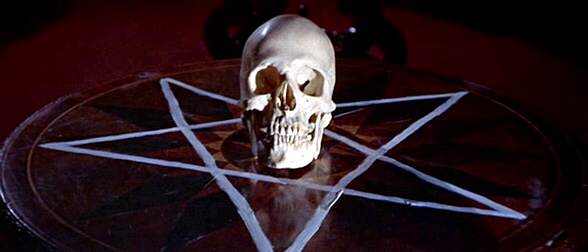
Enhancing Cushing’s performance is some excellent camerawork and framing from director Francis and cinematographer John Wilcox. It’s all about intelligence in angles and getting close enough to feel the sheer panic on Maitland’s face as the cursed skull becomes increasingly threatening. They do such a great job that the skull becomes a character itself, especially when we’re seeing the world through its empty eye sockets.

A thoroughly enjoyable horror film for anyone looking for an unusual and obscure Cushing-Lee release.

The Skull is available to purchase on Eureka Blu-ray now.

Note: The poster I used for the featured image of this article was by the excellent Andy Potts. His website is full of fantastic posters he’s done for various reasons. Check it out.

Films of the Year 2015

I couldn’t decide on just ten films this year, so I went with twelve instead.

Birdman: The Unexpected Virtue of Ignorance
UK release date: 2nd January 2015
Review: “There are some brilliant moments of hilarity in here, some surprising and well-handled special effects and a few intensely emotional back-and-forths from actors giving their everything to their art. The first truly great film I’ve seen this year. I can’t recommend it enough.”

The Theory of Everything
UK release date: 2nd January 2015
Review: “Redmayne’s performance was astonishing. He completely nails it, working as both a great piece of acting and an uncanny impersonation. The frustration that must be felt by the thousands of sufferers of MND is channelled directly to the viewer by coupling some intimate close-up camera work with some exceptional acting. If Redmayne wins the Oscar next month it will be because of the latter parts of the film.”

Whiplash
UK release date: 16th January 2015
Review: “In the history of cinema, there have been a small number of characters so full of evil they barely resemble human beings anymore. We’re talking Louise Fletcher’s Nurse Ratched, Ian McDiarmid’s The Emporer. I think we can add another one to the list after seeing Whiplash.”

Big Hero 6
UK release date: 30th January 2015
Review: “The animation is the really mind-blowing element of a film that scores highly across the board. It’s fast-paced without ever feeling like it’s trying to lose you in action. The detail given to the plethora of uniquely designed characters is notable, too, and this serves to make each character feel worthy of your investment. If they’re going to spend that long making Hiro’s hair look so awesome, he must deserve a bit of attention on an emotional level too.”

The Duke of Burgundy
UK release date: 20th February 2015
Review: “A highly satisfying, twisting and twisted tale that deserves a wide audience.”

listenupphilip

Listen Up Philip
UK release date: 5th June 2015
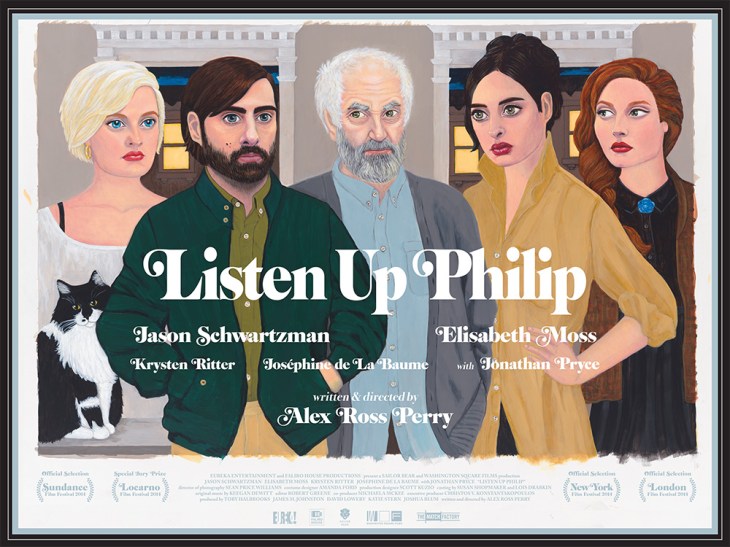
Review: “Each character is introduced to us from a position of imbalance and for the most part they spiral into a world of depression and failure. Schwartzman is in fine form throughout, in a role not too dissimilar to others we’ve loved to hate him in. Irritating and overly-confident characters are something of his forte, which is funny if not just because he comes across as anything but irritating in interviews he gives.”

Inside Out
UK release date: 24th July 2015
Review: “This is truly up there with the best Pixar films, no easy achievement given they have been responsible for so many of the best animated films over the last twenty years. It’s the perfect emotional rollercoaster to ride on whilst celebrating reaching the start of their third decade in the motion picture business.”

Irrational Man
UK release date: 11th September 2015
Review: “There are six listed cast members here, but there really are only two stars here. Phoenix and Stone make a formidable pairing. He may have put on some weight for this role, but Phoenix’s allure is still very much there and his convincing lost soul act is enough to make his appeal to the much younger Stone quite believable. It doesn’t quite reach the joyful heights seen in Midnight In Paris, though is streets ahead of the unfathomably popular Blue Jasmine. Well worth checking out if you can find it.”

Orion: The Man Who Would Be King
UK release date: 25th September 2015
Review: “Orion is a documentary worth watching, and it’s an experience enhanced if you know nothing about Ellis. It goes a long way into intimately portraying a man torn between being forced to hide behind a mask and enjoying the limited success he was achieving. It is balanced and as such avoids over-celebrating Ellis, concentrating on his personality rather than his success.”

Suffragette
UK release date: 12th October 2015
Review: “This is a powerful piece of cinema and a relevant work of art. It is essential viewing for all women, any of the 33.9% of the UK public who decided not to vote in the 2015 general election, and anyone with a passion for excellent cinema.”

Bridge of Spies
UK release date: 27th October 2015
Review: “This is an ode to traditional storytelling and any movements it makes to remind us of Spielberg’s supreme talents are trumped by its underlining of Tom Hanks as one of the greatest living actors. This is not a story about espionage, politics or the Cold War. It is a film about one man’s unwavering desire to stick to his principles.”

Star Wars Episode VII: The Force Awakens
UK release date: 17th December 2015
Review: “J. J. Abrams has managed to pull off a minor miracle. In just over two hours he has erased most of the memories of the prequel trilogy, reminded us of the best of the original trilogy and set up a new storyline that has the whole world anticipating where the next steps will take us. The prospects for the future of the franchise all of a sudden look extremely rosy.”

Cinema Etc. – Most Popular Film Reviews 2015

There have been quite a few reviews posted here this year, so I thought it would be of interest to frequent visitors to find out which were the most popular posts on the website for the year. These are all reviews of new films release in 2015, counting down from ten to one.

10. Into The Woods (Rob Marshall, 2015)

9. Big Hero 6 (Don Hall and Chris Williams, 2014)

8. No Manifesto (Elizabeth Marcus, 2015)

7. Spy (Paul Fieg, 2015)

6. My Dad (Marcus Armitage, 2015)

5. Fußball, Wie Noch Nie / Football as Never Before (Hellmuth Costard, 1971)

4. Tiger Orange (Wade Gasque, 2014)

3. Esio Trot (Dearbhla Welsh, 2015)

2. City Lights (Charlie Chaplin, 1931)

1. Elstree 76 (Jon Spira, 2015)

I suppose the thing about all these films is that they are slightly less covered in popular media so searches would place each review higher. Football as Never Before has picked up a huge amount of interest over the last couple of months after an article was published about it on a popular British news website. City Lights is a strange one as it’s one of Chaplin’s most popular films, though it was recently rereleased on Blu-ray, which could explain it.

Enjoy catching up on those articles if you missed any of them this year!

Film review – Hasta La Vista / Come As You Are (Geoffrey Enthoven, 2011) 

As road movies go, Come As You Are follows a well-worked formula quite closely. It goes something like this: a group of young friends decide to go on a road trip together to overcome a fear or hang-up. In the process of doing so they also learn a lot more about themselves and thus the purpose of the trip changes despite the goal remaining the same. 

That opening paragraph drastically does this film a disservice, because the unique plot elements are more than enough to allow this film to feel fresh and deliver an effective message. The three Flemish friends in this case all suffer from a form of physical handicap: Lars (Gilles de Schryver) is wheelchair-bound due to a debilitating and aggressive brain tumour; Philip (Mariano Vanhoof) suffers from paraplegia and has vastly restricted physical movement, thus needing constant care; Jozef (Tom Audenaert) is almost fully blind and can only see vague outlines of objects. The story starts with Philip, who has recently discovered that there is a brothel set up in the south of Spain especially for men with physical disabilities, so they decide they need to trick their parents into letting them go on a holiday to the vineyards of Europe, with the brothel as their real destination. 

The basic hilarity of this situation would be easy to play for cheap laughs, but director Geoffrey Enthoven and writer Pierre De Clercq thankfully find a more pertinent voice in the bittersweet frustration of their situation. Whilst the holiday should be a huge release to finally get away from their parents and see the outer world at their own pace, the day-to-day reality of their disabilities is far too restrictive. 

One of the more interesting story arcs is actually for the backup minibus driver Claude